
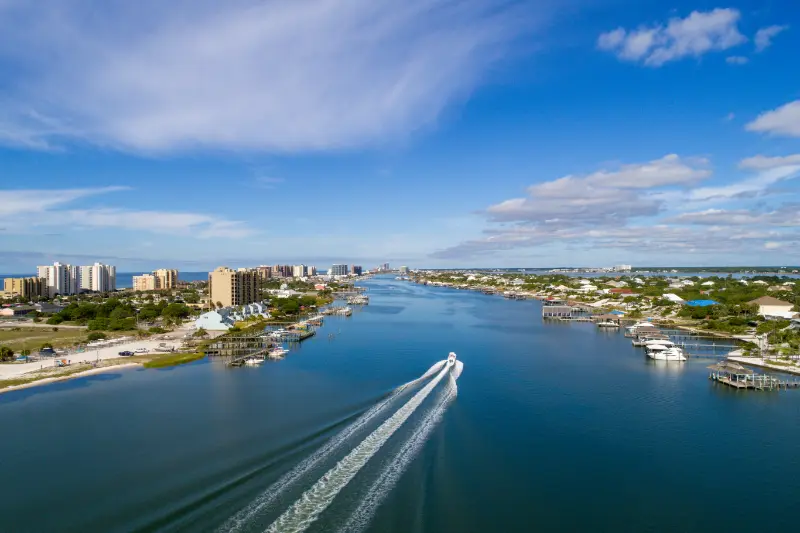
Gulf Breeze sits between Pensacola and the beaches of Santa Rosa Island, but it deserves to be more than the road everybody drives through on the way to the Gulf. Here the wooded shores of Santa Rosa Sound meet a nationally protected landscape of live oaks, picnic areas, and walking trails. The town is an excellent base for travelers who want a quieter day between Fort Pickens, downtown Pensacola, and the beach. This guide keeps the geography clear: Naval Live Oaks is on the mainland and sound side, while Pensacola Beach is reached by crossing onto the barrier island. Some visitors will be happiest with a shaded nature walk and a waterfront lunch; others can use Gulf Breeze as the beginning of a larger two-day stay. A straightforward plan avoids mixing up national park boundaries, toll crossings, and beaches that are several miles apart.
Begin at the Naval Live Oaks area, not at the busy beach road
The Naval Live Oaks area of Gulf Islands National Seashore is one of the most useful places to understand this part of Florida. The National Park Service maintains a picnic area and several trail options among live oaks and pine woods, beside the calmer waters of Santa Rosa Sound. Begin at a marked public access area off U.S. 98 and take time to orient yourself: the park administrative headquarters is not a visitor-center attraction, so do not try to enter staff-only rooms. The southern entrance has a gate with posted hours; the northern gate is not simply open to ordinary traffic at all times. Travelers arriving in two cars should agree on a precise parking location because U.S. 98 is a busy corridor. The picnic stop works well for three generations traveling together: some can walk, others can remain near seating and enjoy the trees and water. Bring food and water, as the park's official guide notes that concessions are not available here. Respect protected vegetation and keep children away from the roadway and unguarded shoreline.
Use Brackenridge Nature Trail as an accessible starting point
Not every visitor wants a seven-mile hike. The National Park Service identifies the Brackenridge Nature Trail as a shorter, accessible option of approximately 0.8 mile, making it a more realistic beginning for families with strollers and many wheelchair users than a sandy forest track. Accessibility is still individual: surfaces, the weather, and the distance from parking can affect how comfortable the outing feels. Start with the interpretive area and follow signs rather than stepping onto unmarked paths. If older family members want to stop at an overlook, make that the planned highlight rather than an apologetic interruption. Readers interested in environmental history can consider the importance of live oak timber to early naval shipbuilding. Children might sketch leaf shapes or compare the sound-side landscape with the open dunes visible later on Santa Rosa Island. A slow walk of under an hour can be a fulfilling outing when accompanied by observation, snacks, and pauses. Verify trail notices before arrival because storms and maintenance can alter access even in normally year-round parks.
Choose longer trails only when the group is prepared
Naval Live Oaks has multiple routes over several miles, but the landscape should not be confused with a paved urban greenway throughout. Sandy ground, roots, wet stretches, and less frequent shade in some patches can make a short distance feel longer. For a longer outing, bring a map downloaded before arrival, charged phone, water, sun protection, and insect repellent. Decide on a turnaround time rather than setting an ambitious distance without regard to heat. The trail system connects distinct natural communities, so pay attention to changes from dense oaks to brighter pine forest and waterside habitat. Bird calls can be more revealing than an immediate sighting; binoculars are useful but not essential. Do not leave children to explore a different trail on their own. Visitors with chronic joint pain or limited stamina should stick to established, shorter access routes. Wildlife should be viewed from a respectful distance, and pets must follow National Park Service rules, which differ between trails and beaches. The longest possible walk is not automatically the best one.
Understand the difference between Santa Rosa Sound and Gulf surf
Santa Rosa Sound provides a quieter waterscape than the exposed Gulf shore, but calm-looking water is not guaranteed to be safe for swimming or paddling. The sound is affected by weather, tides, vessel traffic, and water-quality advisories. A shoreline picnic is not the same as a supervised swimming beach. If you want to kayak, use a designated launch and confirm whether the route is suitable for beginners; do not carry a rental boat to an arbitrary gap in the vegetation. Small children often enjoy watching boats or wading birds while remaining on dry ground. Anglers must review Florida fishing-license requirements and any national-seashore restrictions before casting a line. A boat tour booked elsewhere in Pensacola Bay should be scheduled separately, allowing time to drive and park at its actual departure point. The town's strategic location is appealing precisely because visitors can choose either the protected sound or the high-energy barrier-island beach. Treat them as different experiences with different safety decisions.
Add Pensacola Beach without pretending it is in the same park
From mainland Gulf Breeze, the Bob Sikes Bridge leads toward Pensacola Beach on Santa Rosa Island. This crossing and its traffic patterns influence a family itinerary, especially on holidays or sunny weekends. Rather than promising a drive of only a few minutes, leave a buffer for bridge queues and parking. A beach afternoon can pair nicely with a morning among the live oaks: shower, lunch, and a short scenic stop before heading back. If the group has very young children, choose one beach access with restrooms and avoid carrying a full day's equipment between several lots. For older travelers, look for accessible crossings and confirm available beach-wheelchair services with the beach operator or relevant authority. Remember that the preserved National Seashore areas and the commercial center of Pensacola Beach are not governed by identical rules or fees. If parking becomes difficult, remain on the mainland and enjoy an unhurried waterfront meal. A flexible plan reduces stress more effectively than a rigid list of every nearby attraction.

One-day and two-day itineraries that actually work
A satisfying single day starts at Naval Live Oaks, includes a short nature walk and picnic, and ends with either a view of Santa Rosa Sound or an afternoon at Pensacola Beach. With young children, the woodland morning is often enough before lunch and a rest. Travelers seeking an active day can extend the hike or plan a guided water outing, but should not add both without checking weather and energy levels. On a second day, explore a different part of Gulf Islands National Seashore, such as Fort Pickens, or spend time in historic Pensacola across the bay. These are real additional destinations, not minor detours within Gulf Breeze itself. If your lodging is in Pensacola, reverse the route to avoid unnecessary driving. If you stay on the island, the morning mainland excursion offers shade before the beach grows hot. In every version, keep an alternative for lightning or heavy rain: an indoor meal or a museum in Pensacola can replace an unsafe outdoor hike without spoiling the trip.
Where to stay and the trade-off between three bases
Gulf Breeze makes sense for visitors who want ready access to both Pensacola and the barrier island, but accommodation choice should be based on the type of day you intend to have. A mainland property may simplify driving and offer easy access to groceries, while a beach hotel reduces the need to cross the bridge for each swim. A room in downtown Pensacola is more convenient if museums, evening restaurants, and urban activities dominate the plan. Before paying, check parking charges, bridge tolls, minimum-stay requirements, and the actual driving route at your expected time of day. A waterfront view does not establish wheelchair accessibility or beach access; ask for precise information about entrances and bathroom fixtures. Families with infants should look at room configurations and whether a crib can be confirmed in writing. Travelers who need regular breaks benefit from a location that allows an easy return at midday. Compare total trip convenience rather than choosing the lowest nightly price in isolation.
Family, senior, and mobility planning on the mainland
The most inclusive itinerary in Gulf Breeze may be surprisingly simple: a brief boardwalk, a picnic, and a scenic drive with a good lunch stop. Infants do not need miles of hiking, and preschoolers can enjoy collecting observations without collecting shells or plants. School-age children can connect the historic naval use of live oaks with a tree they can examine from the path. Teenagers may prefer the additional option of a beach afternoon or photography on the sound. Older visitors who are sensitive to heat should plan the outdoor section early and keep a shaded seating alternative available. For users of mobility aids, call the park about current accessible routes and restroom conditions, not only what a general website icon suggests. People with hearing or visual differences may prefer a self-guided route that allows descriptions, tactile learning where permitted, and slower conversation. A family group rarely moves at the same pace; the attraction here is the ability to enjoy adjacent experiences without separating everyone across a huge complex.
Seasons, mosquitoes, storms, and water safety
Autumn through spring often offers more comfortable hiking weather, but cool fronts can bring strong wind that affects the sound and bridges. Summer heat and humidity build quickly; storms can be sudden, and lightning is a serious reason to leave open beaches and waterside sites. Mosquitoes may be more noticeable in wooded or low-lying places, especially after rain. Carry repellent, water, hats, sunscreen, and a change of clothes if children will play near sand. Monitor National Weather Service alerts and any rip-current statements for Gulf beach time. The quiet appearance of the sound should not be interpreted as lifeguard supervision. Check public-health advisories when swimming anywhere, and never enter a water body because an old travel blog calls it safe. A visitor who hates crowds can choose a weekday or early morning, but should still be realistic about traffic over the bridge. Extra time in a shady park is often a better response to congestion than rushing along an unfamiliar coastal road.
Fees, official information, and responsible travel
The National Park Service provides maps, gate information, pet rules, and current notices for Naval Live Oaks; use these instead of assuming the same entrance system applies throughout Gulf Islands National Seashore. Fort Pickens and other areas may have different admission arrangements. Bring a modest budget for transport, meals, and any optional rental or guided activity, but avoid quoting a single total that ignores a group's choices. Parking rules in Pensacola Beach can change with season and events; confirm them with the actual operator before leaving the hotel. Help protect the natural shoreline by staying on designated paths, packing out trash, and not feeding birds. Families can turn this into a simple lesson about why live oaks, seagrasses, and dunes serve different purposes. The best Gulf Breeze visit is not defined by how many attractions you can list: it is a practical combination of a nationally significant woodland landscape, protected sound views, and convenient access to the broader Pensacola area.
Practical visit plan
| When | Stop | Planning note |
|---|---|---|
| Morning | Naval Live Oaks | Park at designated NPS access |
| Late morning | Brackenridge Trail | Shorter accessible nature option |
| Lunch | Sound-side picnic | Pack provisions; no on-site concessions |
| Afternoon | Pensacola Beach or rest | Allow bridge traffic and check weather |
Frequently asked questions
Is Naval Live Oaks at Pensacola Beach? No. It is in mainland Gulf Breeze beside Santa Rosa Sound.
Is Brackenridge Trail suitable for a short walk? The NPS lists an accessible route of approximately 0.8 mile, subject to current conditions.
Can you buy lunch inside Naval Live Oaks? The NPS advises visitors that concessions are not available; carry food and drinking water.
Can dogs use every beach in the park? No. Pet rules differ between trails, developed areas and sand; consult the National Park Service.
Can you do Gulf Breeze without the beach? Yes. A picnic, short woodland walk and sound views make a worthwhile inland itinerary.