

Miami is not one destination but several very different trips sharing the same metropolitan area. South Beach, Brickell, Little Havana, Wynwood, Coconut Grove, Coral Gables and the quieter northern beaches can all produce a completely different vacation. That variety is the city’s strength, but it is also why first-time visitors sometimes choose the wrong base and spend too much of the trip in traffic. The key is to decide whether your priority is beach, nightlife, culture, food, family time, a cruise connection or access to the Everglades and Keys.
A good Miami trip balances the iconic experiences with practical reality. South Beach is worth seeing, but Miami is larger than Ocean Drive. Little Havana is more rewarding when you slow down for food and conversation; Wynwood makes more sense paired with the Design District or Midtown; and the southern part of the county opens the door to Homestead, the Redland and Everglades National Park. A range of visitors can enjoy the experience, including families, couples, solo visitors and seniors.
Quick planning summary
- Best for: Beach lovers, food travelers, couples, families, cruise passengers, art and architecture fans, nightlife visitors and South Florida road-trippers.
- Ideal stay: 4–6 nights for a first visit; 2–3 nights if Miami is combined with the Florida Keys or a cruise.
- Getting around: A car is useful for the wider county and day trips, but parking can be expensive in Miami Beach and central neighborhoods. Transit and rideshare can work well for focused stays.
- Best planning principle: Choose your neighborhood according to the trip you want, not simply because it is the most famous address.
Miami Beach or mainland Miami?
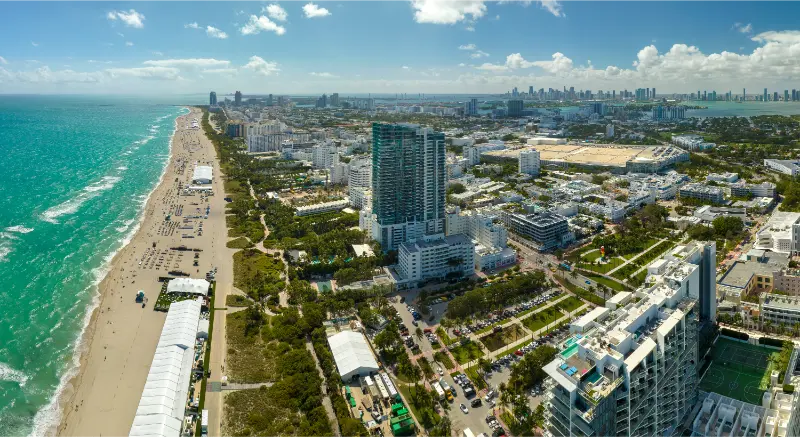
Miami Beach is the natural base for travelers who want to walk to the ocean, spend mornings on the sand and experience Art Deco architecture and nightlife without driving every time. South Beach is the most famous section, but Mid-Beach and North Beach can feel calmer and may suit families, couples and senior travelers better. Staying directly on the beach is convenient, although resort fees, parking and restaurant prices can be higher than in other areas.
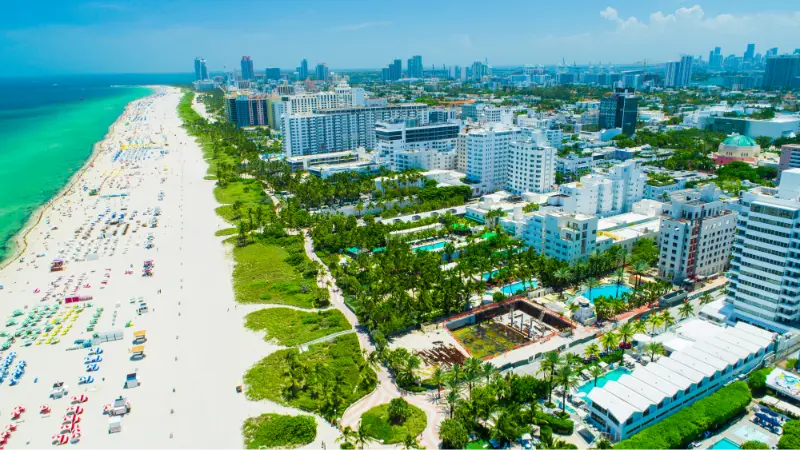
Mainland Miami works better when food, neighborhoods, business districts and road access matter more than being steps from the ocean. Brickell offers modern high-rise hotels and dining, Downtown is convenient for attractions and cruise logistics, Coconut Grove feels greener and more residential, while Coral Gables has a polished historic character. For a mixed itinerary, choose the neighborhood that reduces the number of long cross-city journeys rather than chasing the lowest nightly rate.
The first-time essentials
South Beach and the Art Deco Historic District deserve time, but visit early in the day if you want architecture and beach atmosphere without the busiest crowds. Little Havana is strongest when experienced through food, music, coffee, domino culture and local businesses rather than as a single photo stop. Wynwood remains a major art and dining district, and nearby neighborhoods add galleries, design and restaurants. Biscayne Bay brings a completely different perspective through waterfront parks, boat outings and skyline views.
Families may also appreciate museums and science attractions, while couples can build an excellent day around architecture, a long lunch and sunset. Senior travelers often enjoy Miami more when the itinerary uses shorter neighborhood blocks with air-conditioned breaks. The city rewards depth: two well-chosen neighborhoods in a day usually produce a better experience than trying to cross the county repeatedly.
Beaches: what first-time visitors should know
The Atlantic beach is a central part of the Miami experience, but different stretches have different personalities. South Beach is energetic and visually iconic. Mid-Beach offers resort-style stays with easier access to quieter sand. North Beach and Surfside can be calmer, and farther north Bal Harbour is known for a more polished atmosphere. Beach conditions, currents and lifeguard coverage should always be checked locally rather than assumed from appearance.
Heat and sun exposure are serious planning factors, especially for babies, older adults and anyone not acclimated to South Florida. Early mornings and later afternoons can be far more comfortable than midday. Bring water, use shade, and treat thunderstorms as a reason to leave the beach promptly. If accessibility is essential, confirm beach-access facilities, mats, wheelchairs and parking with the local authority or hotel before arrival because services vary by location.
Little Havana, Wynwood and local neighborhoods
Little Havana is not a theme park, and the best visits respect that it is a living neighborhood. Walk Calle Ocho, stop for Cuban coffee or a meal, browse local businesses and allow enough time to notice how culture is expressed through food, music, murals and everyday life. Wynwood is more visually concentrated, with murals, galleries, restaurants and nightlife, but it changes frequently; checking current openings is worthwhile.
Coconut Grove and Coral Gables show another side of the region through banyan-lined streets, historic architecture, parks and quieter dining. These areas are useful on hot or stormy days because the schedule can be built around restaurants, museums and shorter walks. For repeat visitors, they often become more memorable than another afternoon spent moving between the most photographed locations.
Transportation and parking
Miami has rail, buses, free local trolleys in several areas and a large rideshare market, but no single transport mode is ideal for every trip. Miami Beach can be easier without a car when your hotel, beach and dining are close together. Brickell and Downtown have stronger rail connections. A rental car becomes more useful for Coral Gables, Homestead, the Redland, Everglades National Park or the Florida Keys.
Parking can change the economics of a hotel significantly. Always compare the nightly parking charge before booking a car for the full stay. Some travelers save money and stress by spending the first few days car-free in Miami Beach and renting a vehicle only when they leave for the Everglades or Keys. Cruise passengers should also separate airport, hotel and port transfers rather than assuming one hotel shuttle will solve every segment.
Miami with children, teenagers and seniors
Families should avoid building the trip around long midday walks. Use the beach early, move indoors for lunch or museums, then return outside later. Toddlers often do better with one main outing per day. Teenagers may enjoy art, food, shopping, boat rides and more independent beach time. Families should also choose accommodation with easy food access and a realistic route from room to beach rather than relying on a broad “oceanfront” description.
Senior travelers can have an excellent Miami vacation with the right base. A hotel with direct elevator access, nearby restaurants and short rides can reduce fatigue. Wheelchair users should confirm accessible transit, room configuration and beach access in advance. Miami’s appeal does not depend on walking for hours: bay cruises, scenic drives, museums, restaurants and neighborhood tours can all create lower-exertion days.
When to visit Miami
Winter is popular because humidity is lower and temperatures are generally comfortable, which also means stronger demand and higher hotel rates. Spring can be excellent, while summer is hotter, wetter and more humid. The warm season brings regular afternoon storms and requires more indoor backup plans. The Atlantic hurricane season runs from June through November, so flexible booking and weather awareness are particularly important for late-summer and fall travel.
Special events can transform prices and traffic, so check the calendar before booking. A week that looks inexpensive at first can become costly if a major festival, art event, sports weekend or cruise surge overlaps your stay. The best “time” depends on what you value: beach warmth, walking comfort, nightlife, lower rates or family school schedules.
Use Miami as a gateway to South Florida
Miami is one of the best starting points for the Florida Keys and Everglades National Park. The important mistake to avoid is treating both as casual half-day detours. The Keys deserve at least an overnight for most first-time visitors, and the Everglades should be planned around a specific entrance because the park’s major entrances do not connect internally. Homestead can be a useful transitional base between Miami, Everglades and the Keys.
If you have only one extra day, choose the experience that contrasts most with Miami. Nature-focused travelers should choose the Everglades; travelers wanting a scenic drive and island atmosphere may prefer Key Largo or Islamorada. Trying to reach Key West and return to Miami in a single day is technically possible but usually too much driving for a satisfying vacation day.
Budget and practical planning
Accommodation and parking are usually the largest flexible costs. Food can range from inexpensive local counters to high-end dining, which makes Miami surprisingly adaptable if you decide where to spend. A strong budget plan might combine a simple breakfast, one destination lunch, beach time and a neighborhood evening. Reserve expensive restaurants, tours and boat trips only when they are central to the experience.
Keep valuables out of sight in vehicles, use normal city awareness at night and choose well-lit routes. Heat, dehydration and sudden storms are often more likely to disrupt a visitor’s day than dramatic safety concerns. Travel insurance and flexible cancellation become more valuable when a trip falls during hurricane season or includes a cruise connection.
Common Miami mistakes to avoid
Miami works best when you plan by neighborhood and leave room for the city’s rhythm. The biggest planning errors are geographic: booking far from your priorities, crossing the bay repeatedly, and treating Key West or the Everglades as quick add-ons. A second set of mistakes comes from climate—underestimating sun, humidity and thunderstorms.
- Assuming Miami and Miami Beach are the same place.
- Choosing a rental car without checking hotel parking costs.
- Planning long outdoor walks at midday in summer.
- Trying to see South Beach, Wynwood, Little Havana and Coral Gables in a few hours.
- Treating the Florida Keys as a simple same-day side trip to Key West.
- Ignoring hurricane-season flexibility for late-summer and fall bookings.
Useful Wonderful Florida guides to read next
Continue planning with Ochopee and Big Cypress, Chokoloskee and the Ten Thousand Islands, Loxahatchee National Wildlife Refuge and Panama City Beach travel guide.
Official resources to check before you travel
Opening hours, road conditions, park rules, transportation services, weather alerts and reservation requirements can change. Check the official source again shortly before the trip whenever a specific attraction, route or service is essential to your plans.
Final thoughts
Miami becomes much easier when you stop trying to treat it as one attraction district. Pick the right neighborhood, group activities geographically, protect the hottest part of the day and give at least one local area time to unfold slowly. That creates a trip that feels like Miami rather than a sequence of famous addresses.