

Panama City Beach is one of Florida’s most recognizable Panhandle destinations, but a good trip is more than simply booking a condo and walking to the nearest patch of sand. The city stretches along a long Gulf shoreline, has very different personalities from the quiet west end to the busier central resort area, and sits close to state parks, undeveloped islands, family attractions and the bayside city of Panama City. The easiest way to enjoy it is to decide what kind of vacation you want before choosing where to stay.
For a first visit, the goal is not to collect every possible stop. Build the day around the experience that matters most to your group, then use nearby beaches, food or short walks as supporting activities. That approach makes the trip more resilient when traffic, Gulf conditions or summer thunderstorms change the schedule.
Quick planning summary
- Best for: beaches, families, Gulf sunsets, boat trips, shopping and easy first-time Panhandle vacations
- Local time: Central Time
- Public beach access: nearly 100 access points across Bay County
- Car: useful for state parks, Panama City and west-end attractions
- Recommended stay: 3–5 nights for a first visit
Important current-status note
October 2026 information snapshot: this article is scheduled for 2028. Hours, prices, construction, beach access, shuttle schedules, wildlife rules, parking systems and local ordinances can change before publication. The practical details below are a verified 2026 planning baseline, not a promise that every condition will still apply in 2028. Recheck the linked official source shortly before travel.
Current practical baseline
Official visitor information currently lists nearly 100 public beach access points in Bay County, and the City operates paid public parking lots near the beach. The local beach-flag system is essential: double red means the water is closed to the public, while red and yellow indicate progressively lower but still meaningful hazards. The visitor center at 17001 Panama City Beach Parkway currently publishes daily 8 a.m.–5 p.m. Central Time hours.
How Panama City Beach is laid out
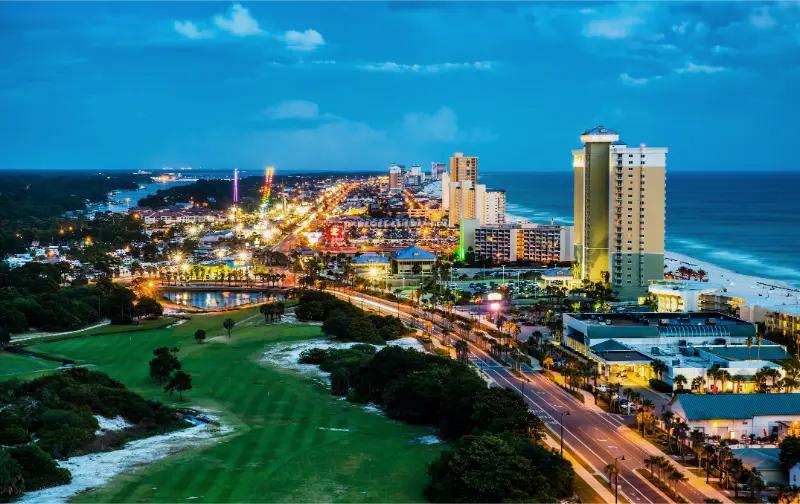
The resort corridor is long enough that “near the beach” does not automatically mean near everything else. The west end around Pier Park and the Lake Powell/Camp Helen side tends to feel different from the central Front Beach Road zone, while the Thomas Drive and Grand Lagoon side is convenient for St. Andrews State Park and many boat departures. Choose lodging around your highest-priority activities, not around a generic map pin.
Beach access and parking
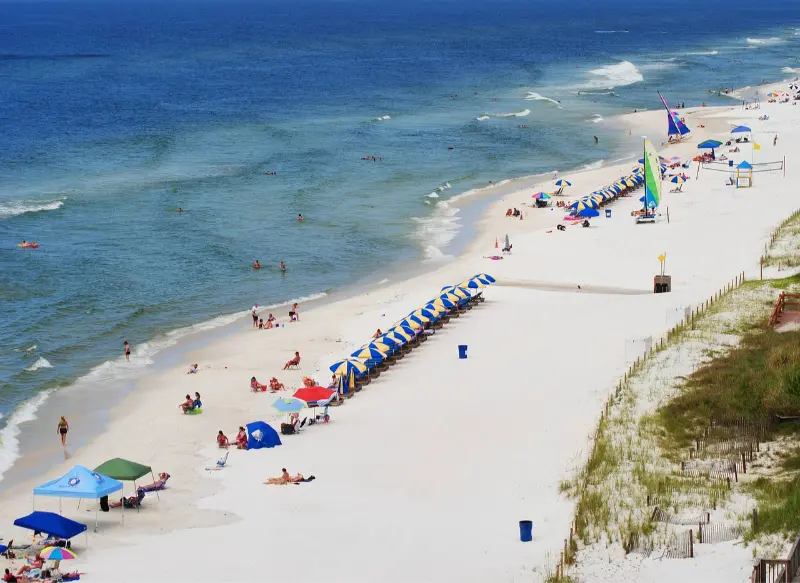
Bay County states that its beaches are public and maintains dozens of access points. Some have parking and accessible features; many are simple walkovers without large lots. The City currently operates paid public lots at 9941 Thomas Drive, 600 Henley Drive and 11209 Front Beach Road, with a 2026 baseline of $2 per hour, $12 per day and $84 per week. Recheck rates before 2028.
Understand the beach flag system
Rip currents are one of the most important trip-planning realities. Flags communicate water hazards, and double red closes the water to the public. Do not treat a red flag as a challenge or assume strong swimmers are exempt from risk. Check current conditions every beach day because yesterday’s calm surf says nothing about today.
Best things to do beyond the sand
A first trip can combine a state-park morning, a natural island outing, shopping and dining, a family attraction, and an afternoon in Panama City’s historic districts. This variety matters on rainy or windy days because it keeps the vacation from depending entirely on perfect Gulf conditions.
Where to stay
Beachfront condos are practical for families who want kitchens and easy sand access. The Pier Park area works well for shopping and evening walking. Thomas Drive is convenient for St. Andrews and Grand Lagoon excursions. Travelers who value quiet more than nightlife may prefer the west end. Compare total price, parking, resort fees, beach chair policies and walking distance rather than only the nightly rate.
How long to stay
Three nights can cover one major beach day, one nature or boat day and one mixed attraction day. Four or five nights create a much better margin for weather. A week makes sense for families who prefer slower mornings and do not want every day to involve driving.
Spring break and high-impact periods
Panama City Beach applies additional rules during designated high-impact periods. Current visitor guidance says alcohol is not permitted on sandy beaches during March and highlights extra safety measures during late-March/early-April dates. Travelers should verify the exact rules for their travel year rather than relying on older spring-break habits.
Dog beach and active travelers
The west side of the Russell-Fields City Pier currently has a designated dog-friendly beach where dogs must be leashed. The area also supports volleyball, pier walking, fishing, biking and long beach walks. Active travelers should still schedule around heat because humidity can make a moderate route feel much harder than the mileage suggests.
Is Panama City Beach right for you?
Choose PCB if you want a broad range of lodging, restaurants and activities with a famous Gulf beach always nearby. If your priority is solitude, low-rise development and a small-town feel, you may prefer Mexico Beach, Cape San Blas or the Forgotten Coast and use PCB as a shorter stop rather than the entire vacation.
Families, teenagers and senior travelers
Families with young children usually enjoy the area most when the day alternates between movement and recovery: beach or trail first, then lunch or an indoor stop, then another short activity later. Teenagers may prefer snorkeling, wildlife, biking, shopping or interactive exhibits over a long sequence of passive sightseeing. Senior travelers often appreciate the broad choice of scenic drives, museums and waterfront stops, but midday heat and soft sand can make apparently short distances tiring. Keep the schedule flexible enough for different energy levels.
Weather, water and seasonal planning
Bay County has a long warm season, strong summer sun, frequent afternoon thunderstorms and a hurricane season that can affect beaches, roads and attraction hours even when the center of a storm is far away. Summer is excellent for warm-water trips but demands more shade, hydration and schedule flexibility. Spring and fall often provide a comfortable compromise for walking, wildlife viewing and beach time. Winter can be quiet and pleasant for museums and trails, but Gulf water and wind can feel cool. Check radar, marine conditions and official beach flags before committing to swimming, boating or a long exposed walk.
Accessibility and multigenerational travel
Accessibility changes dramatically between paved attractions, shopping districts, boardwalks, soft sand and natural trails. A destination described as “easy” may still involve heat, uneven surfaces or a long walk from parking. Travelers using a wheelchair, walker or stroller should verify the exact route and available accessible facilities rather than relying only on distance. Multigenerational groups generally do best by pairing one higher-effort activity with one lower-effort stop, then building in a shaded or air-conditioned break during the hottest part of the day.
Budget and value
Panama City Beach can be as inexpensive or as activity-heavy as you make it. Public beach access and several parks cost little or nothing, while boat trips, animal encounters, equipment rentals, dining and beachfront lodging can increase the daily total quickly. Compare the full cost of an experience rather than the headline price: parking, state-park admission, equipment, food, taxes and optional upgrades may matter. Families often save money by carrying water and snacks, grouping stops geographically and choosing one paid attraction per day rather than stacking several.
What to bring
- refillable water and extra drinks for hot outdoor days
- broad-spectrum sunscreen, hat and sunglasses
- insect repellent for marshes, trails and evenings
- comfortable walking shoes plus sandals or water shoes when useful
- a light rain layer during the warm season
- small power bank for navigation and beach-condition alerts
- dry bag or waterproof phone pouch for boat and beach days
Common planning mistakes
- assuming calm-looking Gulf water means there is no rip-current risk
- underestimating traffic and parking time during peak weekends
- planning every hour with no weather backup
- assuming every beach access has restrooms, lifeguards or large parking areas
- relying on old social-media prices instead of the current official source
- forgetting that Central Time applies locally even when arriving from Eastern Time areas
- packing too many distant stops into one day instead of grouping them geographically
A better daily rhythm
Put the most weather-sensitive activity first. Beach time, wildlife viewing, long walks and boat trips generally work best early, while museums, shopping, lunch and other indoor stops are useful during the hottest or stormiest part of the afternoon. Leave at least an hour unassigned. That margin absorbs traffic, a longer meal, changing surf, a thunderstorm or the simple decision to stay longer at a place your group genuinely enjoys.
Parking and driving strategy
Front Beach Road, Thomas Drive, Panama City Beach Parkway and the routes across St. Andrews Bay can become slow at busy times. Put the exact entrance or parking lot into navigation before leaving rather than searching by a broad destination name. The City of Panama City Beach currently operates paid public lots near the beach and also maintains multiple public accesses, while individual parks and attractions use their own systems. Never create an improvised parking space on dunes, grass or private property simply because a legal space is not immediately visible.
Food, restrooms and practical breaks
Facilities are easy to find around the resort strip and Pier Park but become less predictable on natural beaches, islands and longer trail systems. Families should use restrooms before a remote outing, carry snacks and keep drinking water in the car. Restaurants can be busy in summer and spring-break periods, so an early lunch or dinner often produces a calmer experience. For a boat or ferry day, never assume food and shade will be available at the destination unless the operator explicitly says so.
Continue the Panhandle road trip
If you are arriving from the east, the transition from Mexico Beach to Panama City Beach is an easy way to see how quickly the Panhandle changes from small-town shoreline to a larger resort destination. Travelers who want a quieter comparison can also review Cape San Blas before deciding how much time to spend in Bay County.
Central Time reminder
Panama City Beach and Panama City use Central Time. This matters for travelers arriving from Port St. Joe, Cape San Blas and much of Gulf County, which use Eastern Time. A relatively short drive can change the clock by one hour. Confirm the local time shown on ferry departures, attraction tickets, restaurant bookings and check-in instructions rather than relying on the time zone of the place you left that morning.
Photography and responsible visiting
Bay County offers easy sunset, wildlife, street-art and beach photography, but access rules still apply. Stay out of dunes and nesting zones, keep a respectful distance from wildlife and never block traffic or private property for a photograph. Drone rules can differ between state parks, city property and federal or private land; verify permission for the exact location instead of assuming open sky means unrestricted use.
If the weather changes
Have one indoor or low-exposure backup ready. A museum, Historic St. Andrews, Pier Park, a long lunch or a short shopping stop can replace a beach or trail session during lightning or strong wind. After tropical weather, official city, county, state-park and attraction updates should take priority over old reviews because access conditions can change quickly.
Final planning advice
Use the guide to decide whether the experience fits your group rather than treating every attraction as mandatory. Bay County works best when you choose one anchor experience, add one or two nearby stops and leave enough room for Gulf weather, traffic and spontaneous beach time. A relaxed day with one memorable activity usually creates a better vacation than racing between five separate attractions.
Official information
Check the official source shortly before travel for current hours, prices, closures, event schedules, parking rules and safety notices.