

Category: Bay County Florida

  • Solo Travel in Panama City Beach: Safety, Beaches, Nature, Dining and Easy Itineraries

    Solo Travel in Panama City Beach: Safety, Beaches, Nature, Dining and Easy Itineraries

    Solo travel in Panama City Beach is easiest when the trip is built around daylight beach time, nature, simple meals and a well-chosen base rather than around the idea that every vacation must be social. The destination gives a solo traveler space to walk, read, photograph sunsets, visit parks and choose exactly how much activity feels right. The practical questions are transportation, where to stay, how to handle the beach when no one is watching your belongings and how to keep evenings comfortable rather than aimless.

    Explore this guide

    Quick planning summary

    • Best for: Independent travelers who enjoy beaches, walking, nature, photography, casual dining and flexible schedules.
    • Ideal trip length: 2–4 nights is an easy first solo stay; longer trips suit travelers combining the beach with a Panhandle road trip.
    • Getting around: A car adds freedom, but a Pier Park or central base can reduce the number of solo drives after dark.
    • Most important planning point: Keep valuables minimal on the beach and choose accommodation and evening plans that feel comfortable for you personally.

    Choose a base that reduces friction

    A solo traveler often benefits more from location than from room size. Near Pier Park, you can combine beach time, food, shopping and an evening walk without repeatedly getting into the car. A quieter West End stay may be better if the purpose is reading, walking and rest. If you plan to explore parks and Panama City, free parking and easy road access become more important.
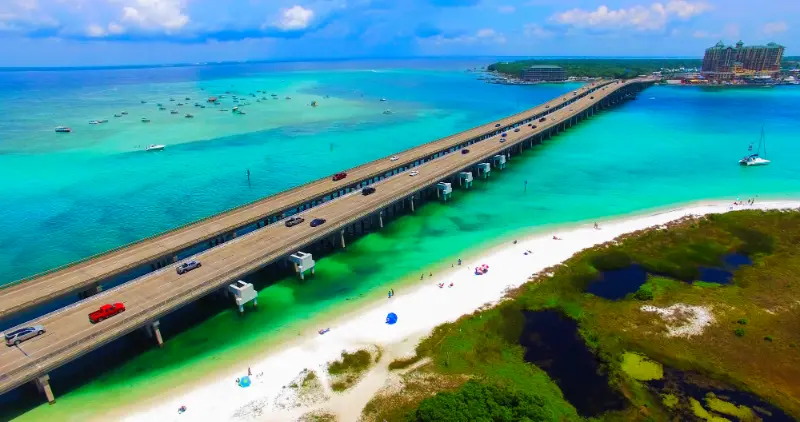
    Panama City Beach Florida Pier over Turquoise Sea

    The beach is easy alone when you travel light

    Bring only what you need: towel, water, sun protection, a small bag and perhaps a book. The less valuable equipment you leave unattended, the easier it is to take a short swim. Consider a waterproof pouch for keys and essential cards, and avoid bringing a laptop or unnecessary electronics to the sand. Choose busier public access or lifeguarded areas if that makes you more comfortable, especially when swimming.

    Nature gives structure to a solo day

    Panama City Beach Conservation Park is useful for walking or cycling, while St. Andrews State Park adds beach, wildlife and scenic variety. Solo travelers should tell someone their plan for longer trails, carry water and avoid treating quiet natural areas as risk-free simply because they are close to a resort destination. Start early and choose routes that match the heat and your fitness level.

    Eating alone is straightforward if you choose the right setting

    Counter seating, casual seafood restaurants, cafes and places around Pier Park can make solo dining feel normal rather than formal. Lunch is often the easiest time for a destination restaurant, while dinner can stay close to the hotel. If you enjoy a longer meal, bring a book or sit where there is a view. There is no need to fill every evening with entertainment simply because you are traveling alone.

    Evenings can be intentionally simple

    Sunset, ice cream, a short Pier Park walk or an early dinner may be enough after an active day. If nightlife is part of your plan, research the venue and transportation in advance, limit alcohol enough to stay aware of your surroundings and arrange the return before the night becomes complicated. A beach vacation does not need late-night activity to feel complete.

    Solo driving and day trips

    Driving alone makes it easy to change plans, but it also means you are responsible for navigation, parking and fatigue. Group stops geographically, avoid long detours after a full beach day and keep fuel above the point where it becomes another task. If you are arriving by air and do not want a car, test the exact transit and rideshare plan from your accommodation before booking.

    Choose accommodation for the trip you are actually taking

    Panama City Beach stretches for miles, so the cheapest room is not automatically the best value. A property near Pier Park can reduce evening driving, the West End can feel calmer, Middle Beach keeps many attractions reasonably close, and the Grand Lagoon side can be convenient for boating and St. Andrews State Park. Compare the real route from the room to the beach, parking area, elevator, pool and restaurants rather than relying on the phrase “beachfront” alone.

    For solo travel, I would prioritize a property with a staffed or well-managed arrival process, good lighting, a convenient parking route and enough nearby activity that evenings do not require long drives. A smaller room in the right location can be a better solo choice than a cheap large condo far from everything.

    Always compare the total accommodation price. Parking, resort fees, cleaning charges, taxes and cancellation conditions can change the ranking between a hotel and a condo. For longer stays, a kitchen and laundry may save both money and time. Travelers with mobility needs should confirm the complete accessible route directly with the property, including parking, entrances, elevators, bathrooms and access to any advertised beach or pool facilities.

    Driving, transit and realistic distances

    The destination is long rather than compact. Front Beach Road can make a short mileage look deceptively easy on a map, especially during busy periods, so group activities by area. A car remains the simplest option for travelers who want state parks, Panama City, grocery runs and day trips, but it is not the only possibility. Bayway provides public transportation in Bay County and also operates flexible services in defined zones; schedules, service areas and fares should be checked close to travel because they can change.

    If you plan to rely on walking, rideshare or transit, choose the accommodation first and then test every important trip from that exact address. A resort that works beautifully without a car for beach, dinner and Pier Park may be inconvenient for St. Andrews State Park or an early-morning boat departure. Likewise, renting a car for one or two targeted days can be more efficient than keeping one for an entire resort-focused stay when parking costs are high.

    Beach safety should shape the day, not interrupt it

    Panama City Beach uses a beach warning flag system, and the safest habit is to check the current flag before anyone enters the Gulf. Green still means use caution, yellow indicates a medium hazard, red indicates a high hazard, purple warns of dangerous marine life, and double red closes the water to the public. Water can look attractive from a balcony while currents remain strong, so visual impressions are not a substitute for the posted warning. When lifeguarded areas are available, they are the better choice for families, less-confident swimmers and anyone unfamiliar with Gulf conditions.
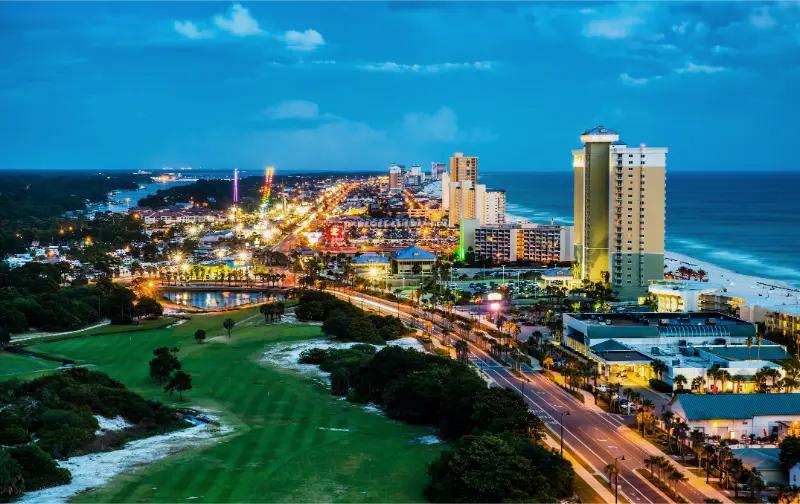
    Panama City Beach Hotels by the Gulf Aerial

    Rip currents, lightning, heat and changing surf are the hazards most likely to alter an otherwise ordinary beach day. Keep children within the level of supervision their swimming ability requires, do not treat inflatables as lifesaving devices, and move indoors when thunderstorms approach rather than waiting for the rain to become heavy. A flexible itinerary makes this much easier: if the Gulf is unsafe, switch to a park, museum, shopping block or long meal and return only when conditions are appropriate.

    Food and budget planning without making the trip feel cheap

    Planning tipThe easiest way to control spending is to decide which experiences deserve money before arrival. Beach time, sunset, public parks and walking can fill large parts of the day, leaving room for one paid attraction, boat trip or special meal that actually matters to the group. A condo kitchen is useful for breakfast, cold drinks, snacks and simple lunches, while a hotel traveler can still save by keeping fruit, water and familiar snacks in the room.

    Avoid driving across the entire beach for every meal. Choose restaurants close to the activity you are already doing, and treat one destination meal as the exception rather than the daily rule. Families should compare children’s menus and waiting times, while couples and solo travelers may get better value from an early dinner or a casual seafood lunch followed by sunset. Prices and operating schedules change, so check current menus and ticket pages before building a day around a specific offer.

    Common solo-travel mistakes

    • Taking too many valuables to the beach.
    • Choosing an isolated bargain property without considering evening logistics.
    • Swimming beyond your ability because nobody in your group is there to notice fatigue.
    • Overloading the itinerary because there is no one else to slow the pace.
    • Leaving late-night transportation decisions until the end of the evening.
    • Treating quiet trails and natural areas as if normal solo-hiking precautions do not apply.

    Useful Wonderful Florida guides to combine with this article

    Continue planning with one-day Panama City Beach itinerary, Panama City Beach without a car, Panama City Beach Conservation Park and where to stay in Panama City Beach.

    Official information to check before travel

    Opening hours, parking arrangements, beach conditions, transportation services and local rules can change. If a specific feature is essential to the day, confirm it with the operator or public agency shortly before leaving your accommodation.

    Final planning advice

    Panama City Beach can be an easy solo destination when the trip is deliberately simple. Stay somewhere that makes evenings comfortable, travel light to the beach, use nature for daytime structure and keep transportation decisions clear. The benefit of going alone is flexibility—use it to follow the weather and your own energy rather than creating a schedule that would impress a group.

    One more practical planning point

    Share the basic itinerary with someone at home, especially if you plan early-morning walks, trails or a long solo drive. You do not need to report every restaurant change, but a simple message with the day’s main area and expected return can add a useful layer of safety without making the trip feel constrained.

    One more practical planning point

    Share the basic itinerary with someone at home, especially if you plan early-morning walks, trails or a long solo drive. You do not need to report every restaurant change, but a simple message with the day’s main area and expected return can add a useful layer of safety without making the trip feel constrained.
  • Rainy Day in Panama City Beach: Indoor Attractions, Museums, Shopping and Family Backup Plans

    Rainy Day in Panama City Beach: Indoor Attractions, Museums, Shopping and Family Backup Plans

    Rain in Panama City Beach does not automatically mean a lost vacation day. Summer showers can be short, thunderstorms can force a longer indoor break, and an occasional gray day can become the best time to use attractions that feel less appealing under perfect beach weather. The useful strategy is to decide in advance which indoor options fit your group and which reservations are flexible, so the family is not searching from a hotel lobby while everyone is already bored.

    Explore this guide

    Quick planning summary

    • Best for: Families, couples and multigenerational groups who want a practical backup plan for thunderstorms, heat or a full wet-weather day.
    • Ideal trip length: Treat rainy-day planning as a half-day module that can be inserted into any trip length.
    • Getting around: Keep indoor choices geographically close to the accommodation when storms make traffic slower.
    • Most important planning point: Lightning matters more than rainfall; leave the beach early when thunderstorms approach.

    First decide whether this is a shower or a storm day

    A light shower and an active thunderstorm require different responses. If radar suggests a short rain window without dangerous conditions, lunch, shopping or a hotel break may be enough. When lightning is present, move indoors rather than sheltering under a beach tent or staying near the water. A full gray day is the best time to choose a museum or major indoor attraction and stop waiting for the sky to become perfect.

    WonderWorks can anchor several indoor hours

    WonderWorks is one of the obvious wet-weather choices because the experience is designed around interactive indoor exhibits. It can work well for school-age children, teenagers and adults who enjoy hands-on activities. Check current ticket options, attraction restrictions and hours before leaving the hotel. On a rainy day, many other visitors will have the same idea, so arriving near opening or later in the afternoon may be more comfortable than joining the busiest mid-morning rush.

    Science & Discovery Center is a quieter family alternative

    The Science & Discovery Center of Northwest Florida in Panama City offers a different pace from the large beach-strip attractions. It can be a useful choice for younger children, families who enjoy educational exhibits and travelers who want to combine an indoor visit with lunch or a waterfront stop in Panama City. Because it is not directly on the central resort strip, plan the drive and avoid crossing the area repeatedly for small activities.

    Panama City Beach Hotels by the Gulf Aerial

    Pier Park works when the weather is mixed, not dangerous

    Pier Park combines shops, restaurants and entertainment, which makes it useful when showers come and go. It is not a fully indoor mall, so it should not be treated as shelter during severe weather, but it can keep a mixed-age group occupied when the day alternates between dry and wet periods. Choose a meal, a few shops and one indoor entertainment option instead of wandering without a plan for hours.

    Use Historic St. Andrews when the rain is light

    Historic St. Andrews and Downtown Panama City can work on an overcast or intermittently wet day because the visit can be broken into short indoor and outdoor blocks. Browse local businesses, stop for lunch, see waterfront areas when conditions are safe and keep the schedule loose. This is a better choice for couples and older travelers than for a family that needs constant indoor entertainment during heavy rain.

    The hotel can be part of the rainy-day plan

    Families often overlook the simplest option: return to the room, let children nap, use an indoor pool if available, do laundry, order food and save energy for a clear evening. A vacation does not need to be productive every hour. This is particularly useful after several active beach days. A three-hour storm break can become recovery time instead of an emergency that demands an expensive attraction.

    Do not turn dangerous weather into sightseeing weather

    Heavy rain can create poor visibility and standing water, and thunderstorms can make outdoor waterfront areas unsafe. If local authorities or your accommodation advises staying off the roads, do that. A rainy-day list is meant to protect the vacation from ordinary weather changes, not to justify driving through severe conditions. During tropical systems or major storms, follow official emergency guidance rather than a tourism itinerary.

    Choose accommodation for the trip you are actually taking

    Panama City Beach stretches for miles, so the cheapest room is not automatically the best value. A property near Pier Park can reduce evening driving, the West End can feel calmer, Middle Beach keeps many attractions reasonably close, and the Grand Lagoon side can be convenient for boating and St. Andrews State Park. Compare the real route from the room to the beach, parking area, elevator, pool and restaurants rather than relying on the phrase “beachfront” alone.

    Panama City Beach Florida Pier over Turquoise Sea

    If rainy-day flexibility matters, a larger room, balcony, kitchen, comfortable lobby or indoor pool can be worth more than a slightly cheaper basic room. Families staying a week should think about what everyone will do during a four-hour storm, not only how the property looks under sunshine. A central location also reduces the temptation to make long cross-town drives for indoor entertainment.

    Always compare the total accommodation price. Parking, resort fees, cleaning charges, taxes and cancellation conditions can change the ranking between a hotel and a condo. For longer stays, a kitchen and laundry may save both money and time. Travelers with mobility needs should confirm the complete accessible route directly with the property, including parking, entrances, elevators, bathrooms and access to any advertised beach or pool facilities.

    Driving, transit and realistic distances

    The destination is long rather than compact. Front Beach Road can make a short mileage look deceptively easy on a map, especially during busy periods, so group activities by area. A car remains the simplest option for travelers who want state parks, Panama City, grocery runs and day trips, but it is not the only possibility. Bayway provides public transportation in Bay County and also operates flexible services in defined zones; schedules, service areas and fares should be checked close to travel because they can change.

    If you plan to rely on walking, rideshare or transit, choose the accommodation first and then test every important trip from that exact address. A resort that works beautifully without a car for beach, dinner and Pier Park may be inconvenient for St. Andrews State Park or an early-morning boat departure. Likewise, renting a car for one or two targeted days can be more efficient than keeping one for an entire resort-focused stay when parking costs are high.

    Beach safety should shape the day, not interrupt it

    Panama City Beach uses a beach warning flag system, and the safest habit is to check the current flag before anyone enters the Gulf. Green still means use caution, yellow indicates a medium hazard, red indicates a high hazard, purple warns of dangerous marine life, and double red closes the water to the public. Water can look attractive from a balcony while currents remain strong, so visual impressions are not a substitute for the posted warning. When lifeguarded areas are available, they are the better choice for families, less-confident swimmers and anyone unfamiliar with Gulf conditions.

    Rip currents, lightning, heat and changing surf are the hazards most likely to alter an otherwise ordinary beach day. Keep children within the level of supervision their swimming ability requires, do not treat inflatables as lifesaving devices, and move indoors when thunderstorms approach rather than waiting for the rain to become heavy. A flexible itinerary makes this much easier: if the Gulf is unsafe, switch to a park, museum, shopping block or long meal and return only when conditions are appropriate.

    Food and budget planning without making the trip feel cheap

    Planning tipThe easiest way to control spending is to decide which experiences deserve money before arrival. Beach time, sunset, public parks and walking can fill large parts of the day, leaving room for one paid attraction, boat trip or special meal that actually matters to the group. A condo kitchen is useful for breakfast, cold drinks, snacks and simple lunches, while a hotel traveler can still save by keeping fruit, water and familiar snacks in the room.

    Avoid driving across the entire beach for every meal. Choose restaurants close to the activity you are already doing, and treat one destination meal as the exception rather than the daily rule. Families should compare children’s menus and waiting times, while couples and solo travelers may get better value from an early dinner or a casual seafood lunch followed by sunset. Prices and operating schedules change, so check current menus and ticket pages before building a day around a specific offer.

    Common rainy-day mistakes

    • Waiting until lightning is overhead before leaving the sand.
    • Assuming every shopping area is fully indoors.
    • Driving across the entire beach for a minor activity during heavy rain.
    • Buying several nonrefundable tickets in advance for the same day.
    • Forcing tired children into an attraction when a hotel rest would work better.
    • Treating tropical-weather warnings like an ordinary afternoon shower.

    Useful Wonderful Florida guides to combine with this article

    Continue planning with WonderWorks Panama City Beach, Science & Discovery Center of Northwest Florida, Pier Park and Historic St. Andrews and Downtown Panama City.

    Official information to check before travel

    Opening hours, parking arrangements, beach conditions, transportation services and local rules can change. If a specific feature is essential to the day, confirm it with the operator or public agency shortly before leaving your accommodation.

    Final planning advice

    The best rainy-day plan is short enough to change. Keep one major indoor attraction, one low-cost alternative and the option to simply rest. When the sky clears, return to the beach or sunset; when it does not, you will still have used the day well without turning bad weather into an expensive scramble.

  • Accessible Panama City Beach: Wheelchair-Friendly Beaches, Attractions, Hotels and Planning Tips

    Accessible Panama City Beach: Wheelchair-Friendly Beaches, Attractions, Hotels and Planning Tips

    Accessible travel in Panama City Beach is improving, but a good trip still depends on checking the exact feature you need. The destination promotes its ‘Fun. For. All.’ initiative and has worked with accessibility-focused partners, while selected beach accesses and attractions provide mobility-friendly features. That does not mean every hotel room, beach crossover, boat or restaurant will work for every traveler. Accessibility is personal: a ramp may solve one problem but not a transfer, restroom or sand issue. The most reliable strategy is to build the trip around verified routes from parking to entrance to activity—not around a generic accessibility label.

    Explore this guide

    Quick planning summary

    • Best for: Wheelchair users, travelers with limited mobility, families using walkers or strollers, and anyone who benefits from reduced walking, accessible entrances and detailed pre-trip planning.
    • Ideal trip length: 3–7 nights, depending on how much time you want for beach access, parks, attractions and slower transitions.
    • Getting around: A car gives the most flexibility across Panama City Beach, state parks and Panama City, but a resort-focused stay near one activity cluster can reduce driving.
    • Safety priority: Check current beach warning flags before entering the Gulf and move indoors early when thunderstorms approach.

    How to use this guide

    Wheelchair users, travelers with limited mobility, families using walkers or strollers, and anyone who benefits from reduced walking, accessible entrances and detailed pre-trip planning. The goal is not to create a schedule that looks impressive on paper. Panama City Beach is easiest when the most weather-dependent activity happens early, the middle of the day includes shade or indoor time, and the evening stays flexible. Travel time along Front Beach Road can be longer than the mileage suggests during busy periods, so group activities by area.

    Panama City Beach Skyline and Shoreline Aerial

    Start with Beach Access 22 and verify current conditions

    Edward F. Hickey Jr. Park at Beach Access 22 on Surf Drive has been highlighted by the destination as an accessible beach-access project, with mobility-oriented features designed to reduce barriers between parking and the shoreline. It can be a useful starting point for planning, but check the current destination listing before travel because mats, ramps and storm-related conditions can change. Wheelchairs that perform well on pavement may not work on loose sand, so ask whether a beach wheelchair or other mobility equipment is available where you plan to go.

    Treat attraction accessibility as a route, not a checkbox

    Pier Park, WonderWorks, selected piers, Conservation Park, state parks and other attractions are promoted within the destination’s accessibility resources, but travelers should still verify the parts that matter personally. Ask about parking, curb cuts, entrance thresholds, elevator access, restroom configuration, seating, queue surfaces and whether staff can accommodate a transfer need. For attractions with rides or water activities, accessible building entry does not necessarily mean every experience is usable without transfer. Call or email when a specific feature will determine whether the visit is worthwhile.

    Book accommodation only after asking specific questions

    Do not rely on a room category name alone. Ask for the bed height if transfers matter, the shower or tub configuration, grab-bar placement, door clearance, balcony threshold, pool lift availability, elevator route and distance from accessible parking. If beach access is a priority, ask how the accessible route works from the room or lobby all the way to the sand. Request written confirmation for essential features when possible. Photos can help, but a wide-angle image may hide thresholds or turning-space limitations.

    Plan transportation around the whole party

    A rental car can provide the most flexibility, but confirm hand controls, vehicle height, ramp or lift compatibility and pickup procedures well before arrival if those features are required. Rideshare availability does not guarantee an accessible vehicle at the time you need one. If the group travels with a folding wheelchair or walker, test luggage capacity in your planning rather than assuming a standard vehicle will fit everyone comfortably. Build extra time around arrival and departure because mobility equipment may require additional handling.

    Use heat management as an accessibility tool

    Heat, humidity and direct sun can amplify fatigue, pain and mobility challenges. Put the longest outdoor route in the morning, identify shaded rest points and carry more water than you expect to need. An attraction that is technically accessible may still be difficult if the route is exposed and crowded at midday. Indoor lunch, an afternoon rest and a later sunset outing can transform the day. People traveling with temperature-sensitive medication or medical equipment should confirm safe storage at the accommodation.

    Create a backup for equipment or access changes

    Storms, construction, maintenance or crowded parking can change an accessible plan quickly. Save at least one alternative beach access and one indoor attraction before the trip. Bring essential repair items for mobility equipment and know who can service specialized equipment locally if necessary. Keep chargers, batteries and medications where they cannot be separated from you during travel. A backup plan is particularly important when only one feature—such as a lift, mat or roll-in shower—makes an activity workable.

    Families, age groups and different travel styles

    Accessible planning benefits travelers of every age. A child using a mobility device may need family-friendly restrooms and play opportunities, while an older adult may care more about seating and short walking distances. Strollers can benefit from many of the same ramp and surface improvements, although stroller-friendly should never be assumed to mean wheelchair-accessible. Build the plan around the individual traveler rather than a broad age category.

    For a mixed-age group, decide which activity everyone truly wants to share and let the rest of the day be modular. A vacation becomes easier when a toddler can nap, a teenager can choose an activity and an older traveler can skip a long exposed walk without the group treating those choices as problems.

    Where to stay

    Accessible lodging exists in different parts of Panama City Beach, including around Pier Park and along the beachfront. The best area is the one that reduces your most difficult daily transfer. If rolling long distances is tiring, being close to restaurants may matter more than a broad ocean view. If the beach is the priority, verify the complete beach route. The destination’s accessibility resources can help identify candidates, but the accommodation itself should confirm the room and property details you require.

    Panama City Beach Aerial View with Turquoise Sea

    Compare the total accommodation cost rather than only the first nightly rate shown. Parking, resort fees, cleaning charges, taxes and cancellation rules can materially change the value. For families and longer stays, laundry and a kitchen may save time as well as money. For travelers with mobility needs, confirm the route from parking to room to beach or pool directly with the property.

    Beach safety: the rule that should shape every itinerary

    Panama City Beach uses a beach warning flag system. A green flag still means use caution; yellow indicates a medium hazard; red signals high hazard; purple warns of dangerous marine life; and double red means the water is closed to the public. Conditions can look calm from a balcony while currents remain dangerous. Check the current flag status before entering the Gulf and follow lifeguard and local-authority instructions.

    Rip currents are a major Gulf hazard. Swim near lifeguarded areas when possible, keep children within direct reach appropriate to their ability and do not use inflatable toys as safety devices. If lightning develops, leave the water and beach early and move to a safe indoor location. A trip can be rearranged; water and thunderstorm warnings should not be negotiated with an itinerary.

    Weather, heat and the best daily rhythm

    In warm months, an early outdoor block followed by lunch, indoor time or a hotel break usually works better than staying exposed through the hottest hours. Afternoon thunderstorms can be localized and fast-moving, so keep one indoor alternative available. In cooler months, mornings may require a light layer even when the afternoon is pleasant. Check the actual forecast shortly before travel instead of relying on long-term climate averages.

    Sun, humidity and saltwater add fatigue gradually. Drink water throughout the day, reapply sun protection and schedule recovery time after long beach or boat sessions. This matters for children, senior travelers and visitors arriving from cooler climates, but it also affects healthy adults who underestimate how much energy a full day outside requires.

    Driving, parking and getting around

    Panama City Beach is long rather than compact. Before leaving, enter the exact parking area or attraction—not only the destination name—into navigation. Group stops on the same side of town, and avoid driving from east to west and back again for minor errands. During busy seasons, add buffer time for Front Beach Road and popular access points. Never park on dunes, landscaped areas or private property because a map pin appears close to the beach.

    If you are flying into ECP and plan to explore state parks, Panama City, the West End or other Panhandle destinations, a rental car is usually the most flexible choice. Resort-focused travelers may be able to combine transfers or rideshare with walking, but compare the real cost against parking and rental fees before deciding.

    Food and budget planning

    Use geography to control both cost and stress. Eat near the activity you are already doing instead of driving across the city for every meal. A condo kitchen can make breakfast, snacks and one simple dinner inexpensive, leaving more budget for a boat trip or attraction that matters. Families should keep water and familiar snacks available, while travelers with dietary restrictions should identify a few reliable options before arriving.

    Ticket prices and operating schedules can change, so compare current official prices shortly before travel. Do not assume a multi-attraction day is automatically better value. One well-chosen paid experience plus free beach time, a park walk and sunset can create a stronger day than several rushed admissions.

    Common mistakes to avoid

    • Assuming an accessible entrance means the entire experience is accessible
    • Booking an accessible room without confirming the bathroom setup
    • Expecting a standard wheelchair to work well on loose sand
    • Relying on one beach access without a backup
    • Scheduling long exposed routes at midday without shade or rest
    • Leaving no flexibility for Gulf weather, traffic or a tired traveler.

    Useful Wonderful Florida guides to combine with this article

    Depending on your itinerary, continue with Panama City Beach for seniors guide, Conservation Park guide, WonderWorks guide, M.B. Miller County Pier guide and Pier Park guide.

    Official information to check before travel

    Opening hours, access conditions, beach flags, parking arrangements, attraction restrictions and transportation services can change. Use official or primary sources shortly before travel when a specific feature is essential to your day.

    Final planning advice

    Panama City Beach is easiest to enjoy when the beach is treated as part of the schedule rather than the entire schedule. Choose one anchor experience, leave room for weather and rest, and keep the final hours of the day simple. That approach works for families, couples, teenagers, senior travelers and visitors with accessibility needs because it gives the trip enough structure to be useful without turning a Florida vacation into a sequence of deadlines.

  • Pet-Friendly Panama City Beach: Dog Beach, Parks, Lodging, Restaurants and Rules

    Pet-Friendly Panama City Beach: Dog Beach, Parks, Lodging, Restaurants and Rules

    Panama City Beach can work for a vacation with a dog, but it is not a destination where pets can simply use any stretch of sand. The city has a designated Dog Beach near Russell-Fields City Pier, along with dog parks and trails, while most sandy beach areas remain off-limits to pets except qualifying service animals. A good pet-friendly trip therefore depends on choosing the right accommodation, understanding the beach rule before arrival and planning several non-beach outlets for exercise.

    Explore this guide

    Quick planning summary

    • Best for: Travelers bringing a dog who want a beach atmosphere while respecting local pet rules and Florida heat.
    • Ideal trip length: 2–5 nights is easy for a first pet-friendly stay; longer trips work when the accommodation has good outdoor access.
    • Getting around: A car is usually useful because pet-friendly spaces are spread out and hot pavement can make long walks impractical.
    • Most important planning point: Use only designated pet areas and plan exercise for cooler morning and evening hours.

    The Dog Beach is the key Gulf option

    The designated Dog Beach is on the west side of Russell-Fields City Pier near Pier Park. Dogs must be leashed, and owners are expected to clean up after them. Because local rules can change, confirm the current boundaries and requirements before travel rather than assuming the entire Pier Park shoreline is pet-friendly. A short morning or late-afternoon visit is generally more sensible than a long midday session in hot weather.

    Panama City Beach Skyline and Shoreline Aerial

    Most of the sandy beach is not a dog beach

    This is the rule that prevents the most common disappointment. A beachfront hotel or condo does not mean the dog can automatically walk onto the sand in front of the property. Service animals have separate legal treatment when they meet the applicable definition and are assisting their handler; emotional-support animals are not the same category for beach access. Travelers should use official city information if this distinction affects the trip.

    Frank Brown Park and trails add real exercise options

    Frank Brown Park includes designated dog-park areas, and nearby Gayle’s Trails provide another way to add walking outside the sand. Conservation Park can also be useful depending on current pet rules and trail conditions. Florida wildlife, heat and insects are part of the environment, so keep dogs leashed where required, carry water and avoid allowing a curious pet to investigate brush or water edges carelessly.

    Heat changes the daily schedule for dogs

    Hot pavement and sand can become uncomfortable quickly. Plan longer walks early or after sunset, use shaded breaks and carry more water than a normal neighborhood walk requires. Brachycephalic breeds, senior dogs and pets with medical conditions may tolerate heat poorly; ask a veterinarian about travel-specific concerns before a hot-weather trip.

    Pet-friendly lodging needs more than a “pets allowed” label

    Check weight limits, breed restrictions, number of pets, cleaning fees and whether the policy applies to the exact room category. Ask where dogs are permitted to relieve themselves and whether elevators or long indoor corridors will make repeated walks difficult. A ground-floor unit can be convenient, but noise and outdoor access should also be considered.

    Restaurants and patios require current confirmation

    Panama City Beach has restaurants that welcome dogs in outdoor areas, but policies can change with staffing, weather and local requirements. Call or check the current restaurant information before arriving with a dog. A pet-friendly patio may still be uncomfortable at midday, so combine outdoor dining with cooler hours and always bring water.

    Beach gear should include pet-specific cleanup and shade

    Bring leash, waste bags, water bowl, towel, identification and any medication the dog needs. A shade setup can help, but it does not make high temperatures safe indefinitely. Rinse saltwater and sand from paws and coat when appropriate, and inspect paws after beach time. Never leave a pet in a parked vehicle while you “quickly” visit an attraction or restaurant.

    Choose accommodation for the trip you are actually taking

    Panama City Beach stretches for miles, so the cheapest room is not automatically the best value. A property near Pier Park can reduce evening driving, the West End can feel calmer, Middle Beach keeps many attractions reasonably close, and the Grand Lagoon side can be convenient for boating and St. Andrews State Park. Compare the real route from the room to the beach, parking area, elevator, pool and restaurants rather than relying on the phrase “beachfront” alone.

    Panama City Beach Florida Pier over Turquoise Sea

    For a pet trip, the best property is usually one with an easy outdoor route, clearly stated fees and a neighborhood where morning and evening walks are practical. A beautiful high-floor condo can become inconvenient if every bathroom break requires several elevators and a long walk across hot pavement. Read the property policy itself rather than relying only on a booking-site filter.

    Always compare the total accommodation price. Parking, resort fees, cleaning charges, taxes and cancellation conditions can change the ranking between a hotel and a condo. For longer stays, a kitchen and laundry may save both money and time. Travelers with mobility needs should confirm the complete accessible route directly with the property, including parking, entrances, elevators, bathrooms and access to any advertised beach or pool facilities.

    Driving, transit and realistic distances

    The destination is long rather than compact. Front Beach Road can make a short mileage look deceptively easy on a map, especially during busy periods, so group activities by area. A car remains the simplest option for travelers who want state parks, Panama City, grocery runs and day trips, but it is not the only possibility. Bayway provides public transportation in Bay County and also operates flexible services in defined zones; schedules, service areas and fares should be checked close to travel because they can change.

    If you plan to rely on walking, rideshare or transit, choose the accommodation first and then test every important trip from that exact address. A resort that works beautifully without a car for beach, dinner and Pier Park may be inconvenient for St. Andrews State Park or an early-morning boat departure. Likewise, renting a car for one or two targeted days can be more efficient than keeping one for an entire resort-focused stay when parking costs are high.

    Beach safety should shape the day, not interrupt it

    Panama City Beach uses a beach warning flag system, and the safest habit is to check the current flag before anyone enters the Gulf. Green still means use caution, yellow indicates a medium hazard, red indicates a high hazard, purple warns of dangerous marine life, and double red closes the water to the public. Water can look attractive from a balcony while currents remain strong, so visual impressions are not a substitute for the posted warning. When lifeguarded areas are available, they are the better choice for families, less-confident swimmers and anyone unfamiliar with Gulf conditions.

    Rip currents, lightning, heat and changing surf are the hazards most likely to alter an otherwise ordinary beach day. Keep children within the level of supervision their swimming ability requires, do not treat inflatables as lifesaving devices, and move indoors when thunderstorms approach rather than waiting for the rain to become heavy. A flexible itinerary makes this much easier: if the Gulf is unsafe, switch to a park, museum, shopping block or long meal and return only when conditions are appropriate.

    Food and budget planning without making the trip feel cheap

    Planning tipThe easiest way to control spending is to decide which experiences deserve money before arrival. Beach time, sunset, public parks and walking can fill large parts of the day, leaving room for one paid attraction, boat trip or special meal that actually matters to the group. A condo kitchen is useful for breakfast, cold drinks, snacks and simple lunches, while a hotel traveler can still save by keeping fruit, water and familiar snacks in the room.

    Avoid driving across the entire beach for every meal. Choose restaurants close to the activity you are already doing, and treat one destination meal as the exception rather than the daily rule. Families should compare children’s menus and waiting times, while couples and solo travelers may get better value from an early dinner or a casual seafood lunch followed by sunset. Prices and operating schedules change, so check current menus and ticket pages before building a day around a specific offer.

    Common pet-travel mistakes

    • Assuming every beach in front of a pet-friendly hotel allows dogs.
    • Walking on hot sand or pavement during the middle of the day.
    • Booking a room before reading weight, breed and fee restrictions.
    • Taking a dog to a patio without confirming the current restaurant policy.
    • Letting a pet approach wildlife or unfamiliar water edges.
    • Leaving a dog unattended in a vehicle or on a balcony.

    Useful Wonderful Florida guides to combine with this article

    Continue planning with Russell-Fields City Pier, Pier Park, Panama City Beach Conservation Park and where to stay in Panama City Beach.

    Official information to check before travel

    Opening hours, parking arrangements, beach conditions, transportation services and local rules can change. If a specific feature is essential to the day, confirm it with the operator or public agency shortly before leaving your accommodation.

    Final planning advice

    A pet-friendly Panama City Beach trip is easiest when you plan around the places where the dog is actually welcome. Use the designated Dog Beach, parks and trails, walk during cooler hours and choose lodging with simple outdoor access. That is much more enjoyable than arriving with the assumption that every Gulf beach and restaurant patio will accept a pet.

    One more practical planning point

    Keep a digital copy of vaccination information, microchip details and the contact information for your regular veterinarian. Most trips will never need it, but having the records available is easier than trying to retrieve them during a weekend problem. Also identify an emergency veterinary option near the accommodation before you need one.

  • Where to Stay in Panama City, Florida: Historic St. Andrews, Downtown or a Bayfront Hotel?

    Where to Stay in Panama City, Florida: Historic St. Andrews, Downtown or a Bayfront Hotel?

    Panama City and Panama City Beach have similar names but are different places to stay. Panama City sits on St. Andrews Bay and offers historic neighborhoods, marinas, restaurants and cultural stops. Panama City Beach is the better-known Gulf resort destination with long sandy beaches and a different concentration of accommodations. This distinction is crucial when choosing a hotel: “bayfront” in Panama City is not the same as “Gulf-front” on Panama City Beach. If you want a quieter town base with occasional beach excursions, Panama City can work very well. If you expect to step out of the room onto the Gulf every morning, choose your address much more carefully.

    Which area should you choose?

    AreaBest forConsider before booking
    Historic St. AndrewsMarina atmosphere, restaurants and walksBayfront rather than Gulf beach
    Downtown Panama CityCulture and harbor public spacesVerify precise walkable blocks
    Bayfront and marina hotelsWater views and boating outingsNot automatic swimming access
    Inland Panama City hotelsRoad-trip convenience and parkingDaily beach transfer required

    Historic St. Andrews for an atmospheric waterfront stay

    Historic St. Andrews is one of the most distinctive parts of Panama City, with a former fishing-village setting, marina activity, restaurants and a bayfront atmosphere. Staying nearby can be enjoyable for couples and visitors who want short evening walks and meals close to the room. The neighborhood's appeal is not the size of a resort complex but its sense of place. It gives travelers a reason to linger instead of treating the hotel as somewhere to sleep between highway drives.

    Check the specific location of the accommodation. A listing advertised as “St. Andrews area” may not put you within a pleasant walking distance of the historic waterfront. Look for the actual route to the marina or dining streets, including road crossings. Restaurants and bars can make some blocks lively; if quiet sleep matters, inspect the room's position and ask whether nearby events are scheduled during your stay.

    The waterfront here faces the bay, not an open Gulf swimming beach. Enjoy the scenery and harbor activity for what it is, and plan a separate beach visit if sand and surf are important to your vacation.

    Downtown Panama City for culture and convenient local outings

    Downtown Panama City has its own restaurants, streets and bayfront public spaces. The city has been developing and revitalizing parts of its center, so the experience can differ from that shown in older guidebooks. A central hotel may suit travelers who enjoy local arts, historic context and one or two relaxed evenings out. It can also be a useful stop on a longer trip across northwest Florida.

    Before reserving, investigate whether the accommodation is genuinely near the places you want to visit, not merely inside the city's broad boundary. A property near a major road or commercial strip can be convenient for driving yet less satisfying for evening walks. If a listing advertises a view of St. Andrews Bay, verify whether it is available from the reserved room, the restaurant or only a rooftop communal space.

    Downtown is especially appealing when you are not planning a full week of daily Gulf swimming. For travelers combining dining, small museums and occasional boat activities, its local character may matter more than a standard resort lobby.

    Panama City Beach is a separate lodging decision

    If the first wish on your list is a balcony overlooking white sand and Gulf surf, look at the beachfront communities across the bay rather than assume a Panama City address offers the same experience. Panama City Beach has its own accommodation districts, attractions and public beach-access systems. Driving between the two cities takes planning, and traffic can be heavy at popular times. A small saving on a Panama City hotel may disappear if the family pays for transport and beach parking every day.

    On the other hand, a Panama City Beach resort might not be the best base if your trip is focused on historical St. Andrews, visiting relatives in the city or regional boating. Choose according to your daily plan. The right city name on the booking is more important than the marketing phrase “near the Gulf.”

    For a mixed vacation, count beach days and city days. If beaches dominate, stay closer to the sand. If you want one beach outing and several local-town experiences, Panama City can be the more relaxed choice.

    Bayfront hotels, marinas and vacation rentals

    Panama City lodging may look toward the water, sit beside marinas or occupy inland commercial areas. A bayfront room can be attractive for watching boats or sunrise light, but it should not be described as a beach room unless the property has a genuine, lawful beach. A canal or marina does not imply swimming access, and docks may be restricted to registered boat owners. Ask exactly where you may walk and which waterfront amenities guests can use.

    Florida Bayfront Skyscrapers at Night

    Vacation rentals can offer kitchens and additional space for families, but the arrangements vary. Look for clear parking permissions, reliable check-in, a local emergency contact and written rules for visitors or boats. If children will stay beside open water, inspect doors, balcony railings and dock access carefully. A hotel with a staffed reception may be simpler for a short stay, especially after a late arrival.

    For anyone requiring accessible facilities, obtain specific details about the bathroom, elevator, route to parking and any marina or boat-boarding arrangements. “Waterfront accessible” is not a complete description of what will work for a particular traveler.

    What to do from a St. Andrews or downtown base

    Historic St. Andrews lends itself to a local walking outing, a meal beside the bay and learning about the city's working-waterfront history. Official Destination Panama City information includes a self-guided walking-tour resource for the neighborhood. That is a useful option for visitors who enjoy exploring at their own pace rather than committing to a fixed group departure. Confirm current access and the locations of any stops before setting out in very hot weather.

    Boat trips and fishing excursions can be worthwhile, but all depend on weather, operator rules and departure points. Ask about boarding, life jackets, shade and restrooms. A family with children should be realistic about attention spans and the length of an outing on open water. There is no need to book a boat trip simply to enjoy the harbor; watching boats return while having lunch is also a pleasant experience.

    For a rainy afternoon, look for local galleries or indoor activities, checking current opening times directly. The best schedule leaves room for unexpected changes rather than assuming every storefront is open every day.

    Planning an actual Gulf beach day from the city

    A visit to Panama City Beach requires a deliberate plan for the destination, legal beach access, parking and the return. Do not drive toward the coastline without choosing a named access point. Popular areas can be busy, and conditions change after storms or construction. Consult city or county guidance for public parking and any temporary restrictions before departing.

    Families should pack water, shade, snacks and dry clothes, especially if the lodging is far enough away that returning for a forgotten item would be inconvenient. Follow posted surf warnings and watch for lightning. The Gulf can be rough on some days despite looking calm in marketing material. If the weather makes swimming unsuitable, an organized city outing or indoor break is better than forcing a beach session.

    A visitor planning daily beach trips should reconsider whether a Panama City hotel is truly the best value. Several short drives and paid parking sessions may cost more—in both time and money—than a hotel closer to a suitable beach entrance.

    Families, teenagers and visitors of different ages

    Panama City can be comfortable for families that enjoy combining local culture with selected outdoor activities. A room with a refrigerator, simple breakfast options and convenient parking helps when the group includes younger children. Teenagers may enjoy waterfront dining or a scheduled boating experience, but not every activity needs to be prebooked. Allow time for the family to rest, especially after a hot afternoon outside.

    For grandparents, an easy walking route with benches can be more enjoyable than a long beach crossing. Choose accommodation near the kinds of places they want to see, and inspect elevator and bathroom arrangements before paying. A larger room does not necessarily mean a more accessible one. If several generations travel together, consider whether a suite with a living area will allow some guests to rest while others continue exploring.

    For solo travelers, the ease of arriving late and returning from dinner matters. Review the immediate neighborhood and confirm transport availability rather than assume every waterfront street is equally active in the evening.

    Arriving, driving and parking without unpleasant surprises

    Northwest Florida Beaches International Airport is one gateway for the area, though the best arrival route depends on flights and onward travel. Verify the route to your particular hotel instead of relying on an estimated distance to the city center. A late arrival makes a reliable check-in method essential, especially when renting privately. Ask whether there will be staffed reception, a code or a key pickup at another property.

    Panama City is largely car-oriented outside selected walking districts. Regional transit options can be useful for specific journeys but require current route and timetable checking. If the vacation involves beaches, marinas and attractions across the bay, renting a car may simplify the itinerary. Include bridge traffic and time spent parking in the day's plan.

    If towing a boat or carrying large equipment, verify parking dimensions and rules with the property. A regular hotel space does not necessarily accommodate a trailer. Save the hotel's full address and arrival instructions before leaving the airport.

    Seasonal conditions and after-storm practical checks

    The Florida Panhandle experiences hot, humid summers, thunderstorms and periods of tropical-weather risk. Conditions can change boat schedules, outdoor dining and beach access. Read local authority notices close to travel dates rather than relying on a saved guide from a previous season. A waterfront location deserves particular attention to weather-related cancellation rules and the availability of alternate indoor activities.

    A pleasant spring or fall visit may bring different crowds and temperatures from peak summer. Check whether the amenities you are paying for—pool, dining, boat service or breakfast—operate during the chosen period. Even in mild weather, some businesses have seasonal schedules. It is sensible to reserve only essential activities far in advance and leave the rest of the time adaptable.

    For any severe-weather warning, follow official guidance. Never drive through flooded streets to reach the hotel or a sightseeing destination. Coastal travel is more enjoyable when flexibility is built into the booking and daily plan.

    A two- or three-day city-and-coast itinerary

    On arrival day, explore the closest waterfront district and eat nearby rather than crossing the bay for a late-night attraction. Dedicate the first full day to historic St. Andrews and a relaxed local outing, with time for lunch and an indoor rest. On the second full day, choose a Gulf beach visit if conditions are suitable, or stay in the city for another cultural activity. This gives the family a mixture without spending the entire holiday moving between parking lots.

    For a short one-night stop, select a single walkable area and a comfortable hotel rather than planning multiple excursions. Older visitors and families with small children may find an early dinner and bayfront stroll more memorable than a hurried list of attractions. If staying longer, add an unscheduled day for weather and for whatever part of the region appeals most once you arrive.

    Keep checkout and flight logistics separate from ambitious morning activities. A final coffee with a waterfront view is often a better ending than rushing to a distant beach before the airport.

    Choosing the room and avoiding the wrong kind of waterfront

    Book Historic St. Andrews when dining and a local harbor setting are central to your plans. Choose downtown Panama City for city-oriented activities, waterfront public spaces and regional sightseeing. Consider inland hotels for straightforward overnight stops and driving-based vacations. Choose Panama City Beach instead if your principal goal is a classic Gulf resort with sand at the door.

    Check the exact address, type of water view, elevator, parking, total fees, local construction and cancellation policy before reserving. Ask whether the room rate includes the amenities shown in photographs. None of these details is glamorous, but they determine whether the stay feels relaxed. Understanding the difference between the bay and the Gulf is the first—and most useful—step in choosing the right Panama City base.

    Frequently asked questions

    Is Panama City the same as Panama City Beach?

    No. Panama City is a city on St. Andrews Bay; Panama City Beach is a separate Gulf resort city.

    Does a Panama City bayfront room have a Gulf beach?

    Usually not. Confirm the property’s shoreline and plan separate Gulf beach access.

    Is historic St. Andrews good for a short stay?

    It can be appealing for waterfront dining and a walkable local neighborhood when the exact lodging address is suitable.

    Official visitor resources

  • Russell-Fields City Pier Guide: Fishing Fees, 24/7 Access, Beach, Sunset and Panama City Beach Tips

    Russell-Fields City Pier Guide: Fishing Fees, 24/7 Access, Beach, Sunset and Panama City Beach Tips

    Russell-Fields City Pier is one of the easiest places in Panama City Beach to combine a Gulf view, fishing, a beach stop and an evening at Pier Park without moving the car repeatedly. The pier extends more than 1,500 feet into the Gulf and sits directly across Front Beach Road from Pier Park, making it useful even for travelers who do not fish.

    Explore this guide

    The key is to decide what kind of visit you want before arriving. A short spectator walk at sunset, a serious fishing session and a family beach day use the same location very differently. Planning around that purpose keeps the visit simple and helps you budget for the correct pier fee, parking needs and amount of time.

    Quick planning summary

    • Best for: Gulf views, fishing, sunsets, beach access and Pier Park combinations
    • Current pier access: 24 hours a day, 365 days a year
    • Length: more than 1,500 feet
    • Current daily spectator fee: $4; fishing fee: $7
    • Seasonal lifeguards: currently April 1 through September 30, 10 a.m.–6 p.m.
    • Dog-friendly beach: west side only
    • Address: 16201 Front Beach Road
    • Time needed: 30–60 minutes for a walk; several hours for fishing or a beach visit

    Important 2026 information note

    This article is scheduled for 2028, so fees, staffing, beach-wheelchair procedures and operating details may change. The practical numbers below are the official 2026 baseline. Recheck the City of Panama City Beach page shortly before travel.

    Panama City Beach Skyline and Shoreline Aerial

    What the pier is like

    The long wooden structure gives you a much wider Gulf perspective than a normal beach walk. Benches and the slower pace make it useful for travelers who want scenery without spending hours on the sand. Marine-life sightings are never guaranteed, but the city notes that visitors may see fish, sea turtles, rays, dolphins, manatees and pelicans from the pier.

    Because the pier is exposed, comfort changes quickly with wind and sun. A breezy summer evening can feel pleasant, while midday glare can be intense. In winter, the same wind can make a short walk feel much cooler than the temperature suggests.

    Current fees

    The city currently lists a $4 daily spectator fee and $7 daily fishing fee. Children six and under are free. Reduced daily rates of $3 are listed for seniors 65+, active or retired military visitors and disabled visitors with appropriate documentation. Multi-visit, three-month and annual passes are also offered, and city-pier passes are currently honored at the M.B. Miller County Pier.

    Treat these as a 2026 baseline rather than a 2028 promise. If price matters to your budget, check the official fee table before leaving your accommodation.

    Fishing from Russell-Fields

    Fishing is one of the pier’s core uses. Species vary with season and conditions; the city lists catches including cobia, king and Spanish mackerel, redfish, pompano, flounder, sheepshead and others. Experienced anglers will already know that a Gulf pier changes through the year. First-time visitors should ask locally what is actually running rather than buying tackle for a species that was active two months earlier.

    The official city page currently says the bait shop is closed, while destination information may still reference rentals or tackle services. That is exactly the kind of detail to verify before relying on on-site supplies. Bringing your own essential equipment is safer if fishing is the main purpose of the day.

    Beach access and the dog-friendly area

    The pier is also a major beach access point. The city identifies the west side as dog-friendly, so pet owners should stay within the designated area and verify current leash and beach rules. The surrounding beach can be much busier than quieter neighborhood accesses because the pier and Pier Park naturally concentrate visitors.

    Family tipFor families, the advantage is convenience. You can build a beach morning, rinse off, walk the pier and move to an early dinner without a long cross-town transfer. The disadvantage is popularity: if your only goal is quiet sand, another access may fit better.

    Lifeguards and swimming

    The city currently lists lifeguards from April 1 through September 30, 10 a.m.–6 p.m., although staffing can change with weather. Guarded water is not risk-free water. Check the beach flags before swimming, supervise children closely and follow official instructions during rough surf.

    Accessibility

    Russell-Fields is listed as accessible. The city currently offers three beach-accessible wheelchairs for public use at no charge after completing a form and presenting valid identification. Beach Access 56 on the west side of the ticket office has an accessible ramp designed to help users reach the beach.

    If this service is important to your visit, call or check the official page before arrival. Equipment availability can change, and an accessible route on a calm morning may feel different during crowded or stormy conditions.

    Best time for a spectator walk

    Sunset is the classic choice because the pier gives an unobstructed Gulf horizon and can be paired with dinner at Pier Park. Sunrise is quieter and cooler, while midday offers the brightest water color but the least shade. If photography matters, arrive early enough to walk to your preferred position before the sun reaches the horizon.

    Pairing the pier with Pier Park

    Pier Park sits directly across the road. That makes the combination unusually efficient: beach or pier first, then food, shopping or indoor entertainment. If you have young children, senior travelers or someone who tires easily, avoid turning the combination into an endless walk. Decide which part is the anchor and treat the other as optional.

    Is Russell-Fields worth it if you do not fish?

    Yes for most first-time visitors who like views, sunsets or easy wildlife watching. The spectator fee is modest compared with a boat excursion and the time commitment can be short. It is less compelling if your group dislikes exposed walking, if conditions are stormy or if you already have multiple pier experiences planned elsewhere along the Panhandle.

    Official information

    Check the City of Panama City Beach Russell-Fields Pier page for current fees, access, lifeguard dates, accessibility information and operational notices.

    Families, teenagers and senior travelers

    Panama City Beach works well for multigenerational groups when the schedule is built around energy level rather than age labels. Families with younger children generally need shade, restroom access and shorter activity blocks. Teenagers often enjoy activities that give them some independence, whether that means fishing, interactive exhibits, water rides or a walk around Pier Park. Senior travelers may prefer the same attractions but benefit from a slower pace, more seated breaks and less time on exposed pavement or soft sand during the hottest hours.

    A practical family rule is to choose one anchor activity and one optional add-on. If everyone is still enjoying the day, add the second stop. If heat, crowds or weather have already used up the group’s energy, stop without treating the change as a failed itinerary.

    Accessibility and comfort

    Accessibility in a Gulf Coast destination is not only about ramps. Heat, glare, long walks from parking, wet surfaces, sand and sudden storms can affect how comfortable a visit feels. Travelers using wheelchairs, walkers or strollers should verify the exact route from parking to the attraction, not just whether the destination describes itself as accessible. When beach access is part of the plan, mobility mats and beach-wheelchair programs can make a major difference, but availability can change.

    Weather and seasonal planning

    Summer brings warm Gulf water, long daylight and the fullest attraction schedule, but also intense sun, high humidity and frequent afternoon thunderstorms. Spring and fall can be easier for walking and outdoor attractions. Winter is quieter and often pleasant for museums, piers and sightseeing, although water temperatures and wind may make a beach day feel very different from summer.

    Lightning is the condition that should change plans immediately. Do not wait on an exposed pier, beach or waterpark deck because a storm still appears distant. Use radar and official attraction updates, and keep one indoor backup available for days when the Gulf weather refuses to cooperate.

    Beach safety still matters

    Even when the attraction itself is the reason for the visit, many travelers combine it with the beach. Check the current Panama City Beach flag system before entering the Gulf. Rip currents are not always obvious from shore, and a calm-looking surface is not proof that conditions are safe. Lifeguard coverage is seasonal and limited to specific areas, so never assume every public access is guarded.

    Budget and value

    Compare the complete day rather than only the headline ticket price. Parking, food, drinks, equipment, souvenir photos, lockers and optional upgrades can change the total quickly. A lower-cost day can pair a paid attraction with a beach walk, sunset or public park. Families often get better value by choosing one substantial paid activity instead of stacking several expensive stops simply because they are close together.

    What to bring

    • refillable water bottles
    • sunscreen, sunglasses and a hat
    • comfortable walking shoes
    • a light rain layer during the warm season
    • a portable phone charger
    • any required identification for discounts
    • a small dry bag or waterproof phone pouch when water is involved

    Common planning mistakes

    • using an old social-media post as the source for current prices or hours
    • forgetting that Panama City Beach uses Central Time locally
    • planning a long exposed activity at the hottest point of the afternoon
    • assuming parking is free because beach access itself is public
    • waiting until arrival to check height, health or participation restrictions
    • filling every hour of the day and leaving no room for weather delays

    A better daily rhythm

    For most visitors, the easiest rhythm is an early outdoor activity, a shaded or indoor break around midday, and a flexible late-afternoon or evening plan. This reduces heat stress and gives the schedule room to absorb traffic or a thunderstorm. If sunset matters, choose the final stop geographically before lunch so you are not crossing the entire resort strip at the busiest time of day.

    Driving and parking strategy

    Front Beach Road can move slowly in peak periods. Enter the exact attraction or parking area in navigation before leaving, and allow more time than the mileage suggests. If your group includes someone with limited mobility, use a legal passenger drop-off when possible before the driver searches for a more distant space. Never improvise parking on dunes, grass or private property.

    Continue your Bay County trip

    Use the Panama City Beach travel guide as the broader planning hub. Travelers arriving from the east can also compare the resort atmosphere with Mexico Beach.

    Final planning advice

    The best version of a Panama City Beach day is usually simpler than the longest possible checklist. Decide what experience matters most, verify the current official information shortly before travel and leave enough flexibility for weather, traffic and the possibility that your group simply wants to stay longer at one place.

  • Panama City Beach with Toddlers and Preschoolers: Beaches, Naps, Safety and Easy Family Days

    Panama City Beach with Toddlers and Preschoolers: Beaches, Naps, Safety and Easy Family Days

    A Panama City Beach trip with toddlers is not a smaller version of an adult beach vacation. The destination works best when the room, beach access, nap schedule and meals are treated as part of the itinerary. Young children can love soft sand, shallow-edge play, pools, boats seen from shore and simple attractions, but heat, saltwater, noise and long waits can change their mood very quickly. The practical goal is to make the easy moments easier: reach the beach without a long carry, return to the room before everyone is exhausted, keep food predictable and save one indoor option for rain or midday heat.

    Explore this guide

    Quick planning summary

    • Best for: Parents and grandparents traveling with children roughly five and under who need naps, predictable meals, shade and short transitions.
    • Ideal trip length: 4–6 nights is easier than a fast weekend because young children need recovery time and plans often change around sleep and weather.
    • Getting around: A car gives the most flexibility across Panama City Beach, state parks and Panama City, but a resort-focused stay near one activity cluster can reduce driving.
    • Safety priority: Check current beach warning flags before entering the Gulf and move indoors early when thunderstorms approach.

    How to use this guide

    Parents and grandparents traveling with children roughly five and under who need naps, predictable meals, shade and short transitions. The goal is not to create a schedule that looks impressive on paper. Panama City Beach is easiest when the most weather-dependent activity happens early, the middle of the day includes shade or indoor time, and the evening stays flexible. Travel time along Front Beach Road can be longer than the mileage suggests during busy periods, so group activities by area.

    Panama City Beach Aerial View with Turquoise Sea

    Choose lodging for logistics, not for the prettiest lobby

    With toddlers, the difference between a good room and a difficult room is often measured in minutes. A short route from parking to the elevator, a refrigerator, microwave or kitchen, laundry access, blackout curtains and a separate sleeping area can matter more than resort extras. Confirm whether a crib or pack-and-play is available and whether it must be reserved. If your child naps midday, staying close to the beach means you can return without turning a twenty-minute rest break into an hour of traffic and parking.

    Keep beach sessions short and repeatable

    An early beach visit followed by a nap or indoor lunch is usually better than trying to remain on the sand until late afternoon. Toddlers often spend more time digging, carrying shells and moving between wet and dry sand than actually swimming, so bring simple toys rather than an entire wagon of equipment. Use sun protection, shade and drinking water from the beginning of the session rather than after a child already looks hot. When the beach flags indicate dangerous conditions, switch to sand play, a pool or another activity instead of assuming shallow water is automatically safe.

    Pick calm, low-complexity attractions

    Preschoolers do not need the biggest attraction to have a memorable day. A short animal visit, a gentle nature walk, a playground, an early mini-golf attempt or a few interactive exhibits can be enough. At larger attractions, check height rules and identify what the youngest child can actually do before everyone gets excited about the headline rides or slides. Parents traveling with multiple children may want to divide responsibilities so an older sibling can enjoy age-appropriate activities without keeping the toddler waiting in a hot queue.

    Protect naps and bedtime when you can

    A beach destination can tempt families to push bedtime every night, but sleep debt makes the following day harder. If your child still naps, use that time as an adult reset rather than treating it as lost vacation time. One parent can rest, organize dinner, sit on a balcony or handle groceries while the child sleeps. For evening outings, choose one or two nights for sunset and keep the others close to the accommodation. A vacation with enough sleep often feels longer because fewer hours are lost to meltdowns and recovery.

    Make food predictable without making it boring

    Young children may be less adventurous after a hot day, so keep familiar breakfast and snack options in the room even if the adults want to explore local restaurants. An early dinner avoids the longest waits and reduces the chance that bedtime happens at the table. Ask about high chairs and outdoor seating if those are important. Pack a small cleanup kit, reusable water bottle and a change of clothes in the vehicle. The best meal is not necessarily the restaurant with the highest rating; it is the one that fits the child’s current energy level.

    Have a lightning plan

    Thunderstorms are not the moment to improvise with small children. Decide in advance which indoor attraction, shopping area, restaurant or room activity will replace the beach if lightning develops. Leave open water early and move indoors. A balcony or covered outdoor walkway is not a substitute for a safe indoor location during a thunderstorm. If the forecast looks unstable, put the most important outdoor activity in the morning and leave the afternoon flexible.

    Families, age groups and different travel styles

    This guide is intentionally centered on the youngest travelers. Babies need reliable shade, feeding and temperature control; mobile toddlers need simple boundaries around pools, balconies, parking lots and the Gulf; preschoolers often do best with short, concrete activities and choices between two options. Older siblings may need a separate activity block so the entire vacation does not revolve around the youngest child.

    For a mixed-age group, decide which activity everyone truly wants to share and let the rest of the day be modular. A vacation becomes easier when a toddler can nap, a teenager can choose an activity and an older traveler can skip a long exposed walk without the group treating those choices as problems.

    Where to stay

    The most practical base is usually the one that minimizes transitions. Beachfront or very near-beach lodging can justify a higher nightly rate if it lets you return for naps without loading the car. The quieter West End can work well for families seeking less stimulation, while Pier Park is convenient for easy meals and evening walks. Check balcony locks, pool access, parking distance, elevator setup and the true walking route to the sand before booking.

    Compare the total accommodation cost rather than only the first nightly rate shown. Parking, resort fees, cleaning charges, taxes and cancellation rules can materially change the value. For families and longer stays, laundry and a kitchen may save time as well as money. For travelers with mobility needs, confirm the route from parking to room to beach or pool directly with the property.

    Beach safety: the rule that should shape every itinerary

    Panama City Beach uses a beach warning flag system. A green flag still means use caution; yellow indicates a medium hazard; red signals high hazard; purple warns of dangerous marine life; and double red means the water is closed to the public. Conditions can look calm from a balcony while currents remain dangerous. Check the current flag status before entering the Gulf and follow lifeguard and local-authority instructions.

    Rip currents are a major Gulf hazard. Swim near lifeguarded areas when possible, keep children within direct reach appropriate to their ability and do not use inflatable toys as safety devices. If lightning develops, leave the water and beach early and move to a safe indoor location. A trip can be rearranged; water and thunderstorm warnings should not be negotiated with an itinerary.

    Weather, heat and the best daily rhythm

    In warm months, an early outdoor block followed by lunch, indoor time or a hotel break usually works better than staying exposed through the hottest hours. Afternoon thunderstorms can be localized and fast-moving, so keep one indoor alternative available. In cooler months, mornings may require a light layer even when the afternoon is pleasant. Check the actual forecast shortly before travel instead of relying on long-term climate averages.

    Sun, humidity and saltwater add fatigue gradually. Drink water throughout the day, reapply sun protection and schedule recovery time after long beach or boat sessions. This matters for children, senior travelers and visitors arriving from cooler climates, but it also affects healthy adults who underestimate how much energy a full day outside requires.

    Driving, parking and getting around

    Panama City Beach is long rather than compact. Before leaving, enter the exact parking area or attraction—not only the destination name—into navigation. Group stops on the same side of town, and avoid driving from east to west and back again for minor errands. During busy seasons, add buffer time for Front Beach Road and popular access points. Never park on dunes, landscaped areas or private property because a map pin appears close to the beach.

    If you are flying into ECP and plan to explore state parks, Panama City, the West End or other Panhandle destinations, a rental car is usually the most flexible choice. Resort-focused travelers may be able to combine transfers or rideshare with walking, but compare the real cost against parking and rental fees before deciding.

    Food and budget planning

    Use geography to control both cost and stress. Eat near the activity you are already doing instead of driving across the city for every meal. A condo kitchen can make breakfast, snacks and one simple dinner inexpensive, leaving more budget for a boat trip or attraction that matters. Families should keep water and familiar snacks available, while travelers with dietary restrictions should identify a few reliable options before arriving.

    Ticket prices and operating schedules can change, so compare current official prices shortly before travel. Do not assume a multi-attraction day is automatically better value. One well-chosen paid experience plus free beach time, a park walk and sunset can create a stronger day than several rushed admissions.

    Common mistakes to avoid

    • Assuming a stroller will roll easily on loose beach sand
    • Skipping the nap because the vacation schedule looks too full
    • Choosing lodging that requires a drive for every beach session
    • Relying on restaurant waits to line up with toddler meal times
    • Letting calm-looking water override the official beach warning flags
    • Leaving no flexibility for Gulf weather, traffic or a tired traveler.

    Useful Wonderful Florida guides to combine with this article

    Depending on your itinerary, continue with Panama City Beach with kids guide, Panama City Beach travel guide, ZooWorld guide, WonderWorks guide and Pier Park guide.

    Official information to check before travel

    Opening hours, access conditions, beach flags, parking arrangements, attraction restrictions and transportation services can change. Use official or primary sources shortly before travel when a specific feature is essential to your day.

    Final planning advice

    Panama City Beach is easiest to enjoy when the beach is treated as part of the schedule rather than the entire schedule. Choose one anchor experience, leave room for weather and rest, and keep the final hours of the day simple. That approach works for families, couples, teenagers, senior travelers and visitors with accessibility needs because it gives the trip enough structure to be useful without turning a Florida vacation into a sequence of deadlines.

  • Pier Park Panama City Beach Guide: Shops, Dining, Parking, Hours and Family Tips

    Pier Park Panama City Beach Guide: Shops, Dining, Parking, Hours and Family Tips

    Pier Park is Panama City Beach’s easiest all-weather evening anchor and a useful break from full-day beach plans. The open-air center sits across from the Russell-Fields City Pier and combines national retailers, local shops, restaurants, movies and entertainment in one walkable district. It is most valuable when used strategically: not as an entire vacation day by default, but as a flexible place for dinner, shopping, a rainy spell or an activity that works for mixed-age groups.

    Explore this guide

    For a first visit, the goal is not to collect every possible stop. Build the day around the experience that matters most to your group, then use nearby beaches, food or short walks as supporting activities. That approach makes the trip more resilient when traffic, Gulf conditions or summer thunderstorms change the schedule.

    Quick planning summary

    • Best for: shopping, dining, evening walking, movies and mixed-age groups
    • Current center hours: Mon–Sat 10 a.m.–9 p.m.; Sun noon–6 p.m.
    • Scale: 120+ stores and restaurants
    • Time needed: 2–4 hours for most visitors
    • Location: 600 Pier Park Drive

    Important current-status note

    October 2026 information snapshot: this article is scheduled for 2028. Hours, prices, construction, beach access, shuttle schedules, wildlife rules, parking systems and local ordinances can change before publication. The practical details below are a verified 2026 planning baseline, not a promise that every condition will still apply in 2028. Recheck the linked official source shortly before travel.

    Current practical baseline

    Simon currently describes Pier Park as a one-million-square-foot open-air complex with more than 120 stores and restaurants. Regular 2026 center hours are listed as Monday–Saturday 10 a.m.–9 p.m. and Sunday noon–6 p.m., with individual businesses and entertainment venues using their own schedules.

    How Pier Park is organized

    The center is large enough that parking near the wrong end can add unnecessary walking in heat. Check the current directory before arriving if you have one specific restaurant, store or entertainment venue in mind. If you are browsing without a target, park once and treat the center as a walking district.

    Shopping

    Pier Park mixes major chains, beach-oriented shops and specialty retailers. The practical advantage is variety rather than uniqueness. Travelers looking for local character should combine it with Historic St. Andrews or Downtown Panama City, while families needing familiar brands, last-minute supplies or an easy shopping evening may find Pier Park extremely convenient.

    Dining

    Restaurant options range from quick snacks to sit-down meals. Peak dinner periods can involve waits, especially during summer and spring-break weeks. If your group includes small children or older travelers who dislike queues, reserve where possible or eat slightly earlier than the standard dinner rush.

    Entertainment

    Movies and other entertainment venues make Pier Park useful on stormy afternoons. Attraction lineups can change more quickly than the shopping center itself, so verify the current directory rather than planning around an older list. Indoor entertainment is also a good recovery option after a hot morning on the beach.

    Russell-Fields City Pier across the road

    The City Pier is directly across from the main entrance and can turn a shopping trip into a sunset walk. The city currently lists the pier as open 24/7 with separate spectator and fishing fees. The beach west of the pier includes a designated dog-friendly area, while lifeguard service is seasonal.

    Panama City Beach Hotels by the Gulf Aerial

    Parking and accessibility

    Simon lists on-site parking and accessible parking. During major events and peak summer evenings, allow more time than the driving distance suggests. Drop off passengers who have limited mobility near the relevant entrance before searching for a farther space.

    Families and teenagers

    Teenagers often appreciate the independence of a defined pedestrian center, while younger children benefit from a dinner-and-entertainment plan that does not involve another long drive. Set a meeting point before separating, because the center is too large to rely on “we’ll find each other later.”

    Best time to visit

    Late afternoon into evening works best for many visitors: the heat eases, dinner becomes part of the plan and you can walk to the pier around sunset. On a rainy day, arrive earlier but remember that the center itself is open-air, so you may still be moving between buildings in rain.

    Families, teenagers and senior travelers

    Families with young children usually enjoy the area most when the day alternates between movement and recovery: beach or trail first, then lunch or an indoor stop, then another short activity later. Teenagers may prefer snorkeling, wildlife, biking, shopping or interactive exhibits over a long sequence of passive sightseeing. Senior travelers often appreciate the broad choice of scenic drives, museums and waterfront stops, but midday heat and soft sand can make apparently short distances tiring. Keep the schedule flexible enough for different energy levels.

    Weather, water and seasonal planning

    Bay County has a long warm season, strong summer sun, frequent afternoon thunderstorms and a hurricane season that can affect beaches, roads and attraction hours even when the center of a storm is far away. Summer is excellent for warm-water trips but demands more shade, hydration and schedule flexibility. Spring and fall often provide a comfortable compromise for walking, wildlife viewing and beach time. Winter can be quiet and pleasant for museums and trails, but Gulf water and wind can feel cool. Check radar, marine conditions and official beach flags before committing to swimming, boating or a long exposed walk.

    Accessibility and multigenerational travel

    Accessibility changes dramatically between paved attractions, shopping districts, boardwalks, soft sand and natural trails. A destination described as “easy” may still involve heat, uneven surfaces or a long walk from parking. Travelers using a wheelchair, walker or stroller should verify the exact route and available accessible facilities rather than relying only on distance. Multigenerational groups generally do best by pairing one higher-effort activity with one lower-effort stop, then building in a shaded or air-conditioned break during the hottest part of the day.

    Budget and value

    Panama City Beach can be as inexpensive or as activity-heavy as you make it. Public beach access and several parks cost little or nothing, while boat trips, animal encounters, equipment rentals, dining and beachfront lodging can increase the daily total quickly. Compare the full cost of an experience rather than the headline price: parking, state-park admission, equipment, food, taxes and optional upgrades may matter. Families often save money by carrying water and snacks, grouping stops geographically and choosing one paid attraction per day rather than stacking several.

    What to bring

    • refillable water and extra drinks for hot outdoor days
    • broad-spectrum sunscreen, hat and sunglasses
    • insect repellent for marshes, trails and evenings
    • comfortable walking shoes plus sandals or water shoes when useful
    • a light rain layer during the warm season
    • small power bank for navigation and beach-condition alerts
    • dry bag or waterproof phone pouch for boat and beach days

    Common planning mistakes

    • assuming calm-looking Gulf water means there is no rip-current risk
    • underestimating traffic and parking time during peak weekends
    • planning every hour with no weather backup
    • assuming every beach access has restrooms, lifeguards or large parking areas
    • relying on old social-media prices instead of the current official source
    • forgetting that Central Time applies locally even when arriving from Eastern Time areas
    • packing too many distant stops into one day instead of grouping them geographically

    A better daily rhythm

    Put the most weather-sensitive activity first. Beach time, wildlife viewing, long walks and boat trips generally work best early, while museums, shopping, lunch and other indoor stops are useful during the hottest or stormiest part of the afternoon. Leave at least an hour unassigned. That margin absorbs traffic, a longer meal, changing surf, a thunderstorm or the simple decision to stay longer at a place your group genuinely enjoys.

    Parking and driving strategy

    Front Beach Road, Thomas Drive, Panama City Beach Parkway and the routes across St. Andrews Bay can become slow at busy times. Put the exact entrance or parking lot into navigation before leaving rather than searching by a broad destination name. The City of Panama City Beach currently operates paid public lots near the beach and also maintains multiple public accesses, while individual parks and attractions use their own systems. Never create an improvised parking space on dunes, grass or private property simply because a legal space is not immediately visible.

    Food, restrooms and practical breaks

    Facilities are easy to find around the resort strip and Pier Park but become less predictable on natural beaches, islands and longer trail systems. Families should use restrooms before a remote outing, carry snacks and keep drinking water in the car. Restaurants can be busy in summer and spring-break periods, so an early lunch or dinner often produces a calmer experience. For a boat or ferry day, never assume food and shade will be available at the destination unless the operator explicitly says so.

    Continue the Panhandle road trip

    If you are arriving from the east, the transition from Mexico Beach to Panama City Beach is an easy way to see how quickly the Panhandle changes from small-town shoreline to a larger resort destination. Travelers who want a quieter comparison can also review Cape San Blas before deciding how much time to spend in Bay County.

    Central Time reminder

    Panama City Beach and Panama City use Central Time. This matters for travelers arriving from Port St. Joe, Cape San Blas and much of Gulf County, which use Eastern Time. A relatively short drive can change the clock by one hour. Confirm the local time shown on ferry departures, attraction tickets, restaurant bookings and check-in instructions rather than relying on the time zone of the place you left that morning.

    Photography and responsible visiting

    Bay County offers easy sunset, wildlife, street-art and beach photography, but access rules still apply. Stay out of dunes and nesting zones, keep a respectful distance from wildlife and never block traffic or private property for a photograph. Drone rules can differ between state parks, city property and federal or private land; verify permission for the exact location instead of assuming open sky means unrestricted use.

    If the weather changes

    Have one indoor or low-exposure backup ready. A museum, Historic St. Andrews, Pier Park, a long lunch or a short shopping stop can replace a beach or trail session during lightning or strong wind. After tropical weather, official city, county, state-park and attraction updates should take priority over old reviews because access conditions can change quickly.

    Final planning advice

    Use the guide to decide whether the experience fits your group rather than treating every attraction as mandatory. Bay County works best when you choose one anchor experience, add one or two nearby stops and leave enough room for Gulf weather, traffic and spontaneous beach time. A relaxed day with one memorable activity usually creates a better vacation than racing between five separate attractions.

    Official information

    Check the official source shortly before travel for current hours, prices, closures, event schedules, parking rules and safety notices.

  • ZooWorld Panama City Beach Guide: Hours, Animals, Encounters, Tickets and Family Tips

    ZooWorld Panama City Beach Guide: Hours, Animals, Encounters, Tickets and Family Tips

    ZooWorld Zoological Park gives Panama City Beach families a non-beach activity without requiring a long drive into another county. It is a compact zoo experience rather than a full-day megazoo, which can be an advantage for travelers with young children or for anyone trying to fit one paid attraction around beach time. The best visit starts early, before the strongest heat, and treats animal encounters as optional upgrades rather than something guaranteed with general admission.

    Explore this guide

    For a first visit, the goal is not to collect every possible stop. Build the day around the experience that matters most to your group, then use nearby beaches, food or short walks as supporting activities. That approach makes the trip more resilient when traffic, Gulf conditions or summer thunderstorms change the schedule.

    Quick planning summary

    • Best for: families, animal lovers and a half-day away from the beach
    • Current hours: 9:30 a.m.–4 p.m. daily
    • Last admission: 3 p.m.
    • Time needed: about 2–4 hours
    • Location: 9008 Front Beach Road

    Important current-status note

    October 2026 information snapshot: this article is scheduled for 2028. Hours, prices, construction, beach access, shuttle schedules, wildlife rules, parking systems and local ordinances can change before publication. The practical details below are a verified 2026 planning baseline, not a promise that every condition will still apply in 2028. Recheck the linked official source shortly before travel.

    Current practical baseline

    ZooWorld currently lists daily hours of 9:30 a.m.–4 p.m., rain or shine, with last admission at 3 p.m. and closures on Thanksgiving and Christmas. The zoo advertises optional animal experiences such as giraffe feeding and selected close encounters; availability, age rules and extra charges should be confirmed for the travel date.

    What kind of zoo is it?

    ZooWorld is compact enough that visitors can see a broad range of animals without walking the distances typical of a large metropolitan zoo. That makes it practical for a beach vacation, but it also means you should not expect an all-day safari-scale property. Quality matters more than acreage for this type of stop.

    Animal encounters

    The zoo currently advertises add-on experiences including giraffe feeding and selected close animal encounters. These can have separate prices, schedules, age limits and capacity. If one encounter is the main reason for visiting, reserve or confirm it before buying the rest of the day around that assumption.

    Best time to arrive

    Go near opening in warm months. People and animals are generally more comfortable before midday heat builds, and you preserve the option to return to the beach later. Arriving close to the 3 p.m. last-admission time is a poor strategy if you want to explore slowly.

    Families with young children

    The manageable scale is useful for strollers and shorter attention spans. Build in snack, water and shade breaks, and do not promise every optional encounter. Children can become overstimulated by a long sequence of feeding and touching experiences, so one special interaction may be enough.

    Teenagers and adults

    Older visitors may enjoy photography, specific species and behind-the-scenes style encounters more than generic zoo walking. Check current keeper talks or experience schedules. Adults should also model respectful behavior around barriers instead of encouraging children to shout for an animal’s attention.

    Rain and heat

    The zoo states that it operates rain or shine. Light rain can actually make an outdoor attraction more comfortable, but lightning and severe weather are different. Bring a rain layer and follow staff instructions. In extreme heat, shorten the visit rather than pushing through every area.

    Tickets and budgeting

    General admission and animal encounters should be considered separate budget categories. Membership information can also change yearly. Compare the total for your family before arrival if you plan multiple upgrades.

    Animal welfare and visitor behavior

    Follow staff rules, use only approved food in feeding experiences and never tap on enclosures or cross barriers for a photograph. A respectful visit is safer for both animals and people and creates a better experience for other families.

    Families, teenagers and senior travelers

    Families with young children usually enjoy the area most when the day alternates between movement and recovery: beach or trail first, then lunch or an indoor stop, then another short activity later. Teenagers may prefer snorkeling, wildlife, biking, shopping or interactive exhibits over a long sequence of passive sightseeing. Senior travelers often appreciate the broad choice of scenic drives, museums and waterfront stops, but midday heat and soft sand can make apparently short distances tiring. Keep the schedule flexible enough for different energy levels.

    Weather, water and seasonal planning

    Bay County has a long warm season, strong summer sun, frequent afternoon thunderstorms and a hurricane season that can affect beaches, roads and attraction hours even when the center of a storm is far away. Summer is excellent for warm-water trips but demands more shade, hydration and schedule flexibility. Spring and fall often provide a comfortable compromise for walking, wildlife viewing and beach time. Winter can be quiet and pleasant for museums and trails, but Gulf water and wind can feel cool. Check radar, marine conditions and official beach flags before committing to swimming, boating or a long exposed walk.

    Accessibility and multigenerational travel

    Accessibility changes dramatically between paved attractions, shopping districts, boardwalks, soft sand and natural trails. A destination described as “easy” may still involve heat, uneven surfaces or a long walk from parking. Travelers using a wheelchair, walker or stroller should verify the exact route and available accessible facilities rather than relying only on distance. Multigenerational groups generally do best by pairing one higher-effort activity with one lower-effort stop, then building in a shaded or air-conditioned break during the hottest part of the day.

    Budget and value

    Panama City Beach can be as inexpensive or as activity-heavy as you make it. Public beach access and several parks cost little or nothing, while boat trips, animal encounters, equipment rentals, dining and beachfront lodging can increase the daily total quickly. Compare the full cost of an experience rather than the headline price: parking, state-park admission, equipment, food, taxes and optional upgrades may matter. Families often save money by carrying water and snacks, grouping stops geographically and choosing one paid attraction per day rather than stacking several.

    Panama City Beach Skyline and Shoreline Aerial

    What to bring

    • refillable water and extra drinks for hot outdoor days
    • broad-spectrum sunscreen, hat and sunglasses
    • insect repellent for marshes, trails and evenings
    • comfortable walking shoes plus sandals or water shoes when useful
    • a light rain layer during the warm season
    • small power bank for navigation and beach-condition alerts
    • dry bag or waterproof phone pouch for boat and beach days

    Common planning mistakes

    • assuming calm-looking Gulf water means there is no rip-current risk
    • underestimating traffic and parking time during peak weekends
    • planning every hour with no weather backup
    • assuming every beach access has restrooms, lifeguards or large parking areas
    • relying on old social-media prices instead of the current official source
    • forgetting that Central Time applies locally even when arriving from Eastern Time areas
    • packing too many distant stops into one day instead of grouping them geographically

    A better daily rhythm

    Put the most weather-sensitive activity first. Beach time, wildlife viewing, long walks and boat trips generally work best early, while museums, shopping, lunch and other indoor stops are useful during the hottest or stormiest part of the afternoon. Leave at least an hour unassigned. That margin absorbs traffic, a longer meal, changing surf, a thunderstorm or the simple decision to stay longer at a place your group genuinely enjoys.

    Parking and driving strategy

    Front Beach Road, Thomas Drive, Panama City Beach Parkway and the routes across St. Andrews Bay can become slow at busy times. Put the exact entrance or parking lot into navigation before leaving rather than searching by a broad destination name. The City of Panama City Beach currently operates paid public lots near the beach and also maintains multiple public accesses, while individual parks and attractions use their own systems. Never create an improvised parking space on dunes, grass or private property simply because a legal space is not immediately visible.

    Food, restrooms and practical breaks

    Facilities are easy to find around the resort strip and Pier Park but become less predictable on natural beaches, islands and longer trail systems. Families should use restrooms before a remote outing, carry snacks and keep drinking water in the car. Restaurants can be busy in summer and spring-break periods, so an early lunch or dinner often produces a calmer experience. For a boat or ferry day, never assume food and shade will be available at the destination unless the operator explicitly says so.

    Continue the Panhandle road trip

    If you are arriving from the east, the transition from Mexico Beach to Panama City Beach is an easy way to see how quickly the Panhandle changes from small-town shoreline to a larger resort destination. Travelers who want a quieter comparison can also review Cape San Blas before deciding how much time to spend in Bay County.

    Central Time reminder

    Panama City Beach and Panama City use Central Time. This matters for travelers arriving from Port St. Joe, Cape San Blas and much of Gulf County, which use Eastern Time. A relatively short drive can change the clock by one hour. Confirm the local time shown on ferry departures, attraction tickets, restaurant bookings and check-in instructions rather than relying on the time zone of the place you left that morning.

    Photography and responsible visiting

    Bay County offers easy sunset, wildlife, street-art and beach photography, but access rules still apply. Stay out of dunes and nesting zones, keep a respectful distance from wildlife and never block traffic or private property for a photograph. Drone rules can differ between state parks, city property and federal or private land; verify permission for the exact location instead of assuming open sky means unrestricted use.

    If the weather changes

    Have one indoor or low-exposure backup ready. A museum, Historic St. Andrews, Pier Park, a long lunch or a short shopping stop can replace a beach or trail session during lightning or strong wind. After tropical weather, official city, county, state-park and attraction updates should take priority over old reviews because access conditions can change quickly.

    Final planning advice

    Use the guide to decide whether the experience fits your group rather than treating every attraction as mandatory. Bay County works best when you choose one anchor experience, add one or two nearby stops and leave enough room for Gulf weather, traffic and spontaneous beach time. A relaxed day with one memorable activity usually creates a better vacation than racing between five separate attractions.

    Official information

    Check the official source shortly before travel for current hours, prices, closures, event schedules, parking rules and safety notices.

  • Panama City Beach in Winter: Weather, Snowbird Season, Quiet Beaches and What to Expect

    Panama City Beach in Winter: Weather, Snowbird Season, Quiet Beaches and What to Expect

    Winter changes the personality of Panama City Beach. The shoreline is still the visual center of the trip, but the vacation becomes less about guaranteed swimming and more about walking, sunsets, seafood, parks, cycling, quiet mornings and a slower rhythm. For travelers escaping colder climates, the milder Gulf Coast weather can feel excellent; for anyone expecting tropical heat, it can feel surprisingly cool and changeable. The key is to pack for layers and plan a trip that remains satisfying even if the water is too cold for long swims.

    Explore this guide

    Quick planning summary

    • Best for: Snowbirds, couples, retirees, walkers, photographers and families who value space and mild outdoor weather more than hot-water beach days.
    • Ideal trip length: 3–7 nights for a winter break; longer stays suit travelers who want a residential rhythm.
    • Getting around: A car is useful because winter trips often include parks, Panama City and day trips rather than only resort activities.
    • Most important planning point: Plan for variable temperatures and choose activities that do not depend on warm Gulf water.

    What winter actually feels like

    Winter on the Florida Panhandle is mild compared with much of the United States, but it is not South Florida. Some afternoons can be comfortable in the sun while mornings, windy beach walks and cold fronts may require a jacket. The Gulf also retains a seasonal chill. Build expectations around fresh-air time, not around spending every day waist-deep in warm water.

    The advantage is comfort for walking. Conservation Park, St. Andrews State Park, piers and long shoreline walks can be much more pleasant without summer heat. Photographers also gain softer light and quieter spaces. Keep one indoor option available for windy or rainy days, and check the actual short-term forecast before packing.

    Winter beach days are still real beach days

    A winter beach day can mean coffee and a sunrise walk, shell searching, reading in a protected sunny spot, pier views and sunset rather than swimming. That still delivers the atmosphere people travel for. Bring a light blanket or extra layer, and remember that wind can make the beach feel colder than the temperature shown on a weather app.

    Use nature and parks as the main attractions

    St. Andrews State Park, Panama City Beach Conservation Park and nearby natural areas become especially attractive in cooler weather. Walking, birding and cycling are easier when humidity is lower. Choose trail length conservatively if recent rain has affected surfaces, and carry water even when temperatures feel mild. Winter sun can still cause sunburn during long outdoor days.

    Panama City Beach Skyline and Shoreline Aerial

    Longer winter stays need a different accommodation checklist

    Travelers staying several weeks should think beyond ocean view. A usable kitchen, laundry, comfortable living area, desk, grocery access and parking become much more important. Balcony orientation matters too: a sunny protected balcony may be useful on a cool day, while a windy exposed one may not. Ask about construction or maintenance work because winter is sometimes used for property projects.

    Restaurants and attractions may run a different rhythm

    Winter is not the same operating environment as peak summer. Some seasonal businesses reduce hours, close on certain days or schedule maintenance. Do not assume that a list from July applies in January. Check the current hours of any attraction or restaurant that would be disappointing to miss and keep several alternatives nearby. The quieter pace is part of the appeal, but it rewards travelers who plan lightly rather than rigidly.

    Winter residents and community life

    Panama City Beach attracts longer-stay winter visitors, which creates a different social rhythm from a short summer vacation. Recreation programs, casual gatherings and repeat-visitor communities can matter more than theme-park-style sightseeing. If you are staying for a month or longer, look at local recreation calendars, library programs, walking groups and other everyday activities rather than trying to fill every day with tourism.

    Choose accommodation for the trip you are actually taking

    Panama City Beach stretches for miles, so the cheapest room is not automatically the best value. A property near Pier Park can reduce evening driving, the West End can feel calmer, Middle Beach keeps many attractions reasonably close, and the Grand Lagoon side can be convenient for boating and St. Andrews State Park. Compare the real route from the room to the beach, parking area, elevator, pool and restaurants rather than relying on the phrase “beachfront” alone.

    For winter, I would prioritize a comfortable interior and useful neighborhood over the most dramatic beachfront tower. A unit with reliable heating, good natural light, laundry and a real kitchen can make a long stay much easier. If you still want daily Gulf views, confirm balcony exposure and wind protection, and ask whether pools are heated rather than assuming they will be comfortable.

    Always compare the total accommodation price. Parking, resort fees, cleaning charges, taxes and cancellation conditions can change the ranking between a hotel and a condo. For longer stays, a kitchen and laundry may save both money and time. Travelers with mobility needs should confirm the complete accessible route directly with the property, including parking, entrances, elevators, bathrooms and access to any advertised beach or pool facilities.

    Driving, transit and realistic distances

    The destination is long rather than compact. Front Beach Road can make a short mileage look deceptively easy on a map, especially during busy periods, so group activities by area. A car remains the simplest option for travelers who want state parks, Panama City, grocery runs and day trips, but it is not the only possibility. Bayway provides public transportation in Bay County and also operates flexible services in defined zones; schedules, service areas and fares should be checked close to travel because they can change.

    Panama City Beach Aerial View with Turquoise Sea

    If you plan to rely on walking, rideshare or transit, choose the accommodation first and then test every important trip from that exact address. A resort that works beautifully without a car for beach, dinner and Pier Park may be inconvenient for St. Andrews State Park or an early-morning boat departure. Likewise, renting a car for one or two targeted days can be more efficient than keeping one for an entire resort-focused stay when parking costs are high.

    Beach safety should shape the day, not interrupt it

    Panama City Beach uses a beach warning flag system, and the safest habit is to check the current flag before anyone enters the Gulf. Green still means use caution, yellow indicates a medium hazard, red indicates a high hazard, purple warns of dangerous marine life, and double red closes the water to the public. Water can look attractive from a balcony while currents remain strong, so visual impressions are not a substitute for the posted warning. When lifeguarded areas are available, they are the better choice for families, less-confident swimmers and anyone unfamiliar with Gulf conditions.

    Rip currents, lightning, heat and changing surf are the hazards most likely to alter an otherwise ordinary beach day. Keep children within the level of supervision their swimming ability requires, do not treat inflatables as lifesaving devices, and move indoors when thunderstorms approach rather than waiting for the rain to become heavy. A flexible itinerary makes this much easier: if the Gulf is unsafe, switch to a park, museum, shopping block or long meal and return only when conditions are appropriate.

    Food and budget planning without making the trip feel cheap

    Planning tipThe easiest way to control spending is to decide which experiences deserve money before arrival. Beach time, sunset, public parks and walking can fill large parts of the day, leaving room for one paid attraction, boat trip or special meal that actually matters to the group. A condo kitchen is useful for breakfast, cold drinks, snacks and simple lunches, while a hotel traveler can still save by keeping fruit, water and familiar snacks in the room.

    Avoid driving across the entire beach for every meal. Choose restaurants close to the activity you are already doing, and treat one destination meal as the exception rather than the daily rule. Families should compare children’s menus and waiting times, while couples and solo travelers may get better value from an early dinner or a casual seafood lunch followed by sunset. Prices and operating schedules change, so check current menus and ticket pages before building a day around a specific offer.

    Common winter mistakes

    • Packing only shorts because the destination is in Florida.
    • Assuming the Gulf will feel warm enough for long swims every day.
    • Choosing a long-stay condo based only on the view.
    • Expecting every seasonal attraction and restaurant to keep summer hours.
    • Forgetting sun protection during cool, breezy outdoor days.
    • Over-scheduling when the main advantage of winter is the slower pace.

    Useful Wonderful Florida guides to combine with this article

    Continue planning with best time to visit Panama City Beach, Panama City Beach Conservation Park, St. Andrews State Park and where to stay in Panama City Beach.

    Official information to check before travel

    Opening hours, parking arrangements, beach conditions, transportation services and local rules can change. If a specific feature is essential to the day, confirm it with the operator or public agency shortly before leaving your accommodation.

    Final planning advice

    Winter works best when you stop measuring Panama City Beach against a summer postcard. Treat the Gulf as scenery and an occasional bonus for wading or swimming, use the cooler weather for walking and nature, and choose lodging that feels comfortable after sunset. For the right traveler, the quieter season can be more relaxing than peak beach weather.

    One more practical planning point

    For a long winter stay, treat Panama City Beach more like a temporary home than a resort. Learn the nearest grocery store, pharmacy, walking route and medical options early. That practical familiarity reduces daily driving and lets the enjoyable parts—sunrise, beach walks, coffee and local events—become a routine rather than a list of things to complete.