
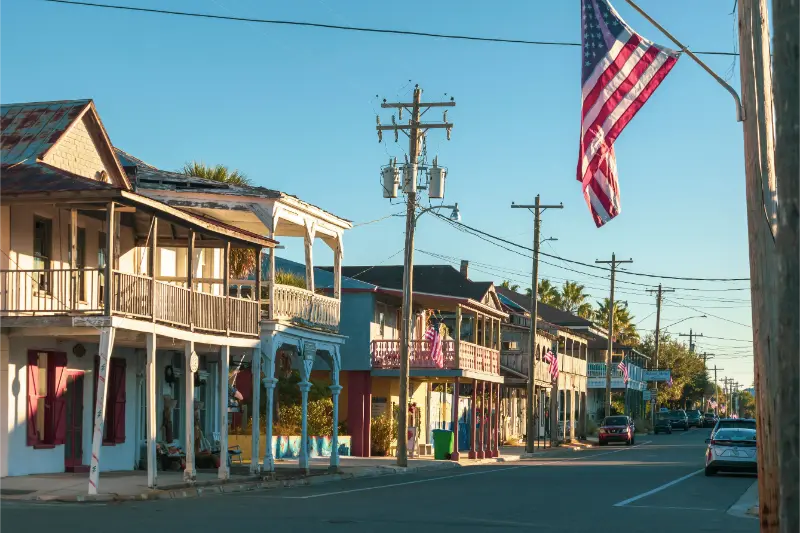
North Central Florida is best understood as a region rather than a checklist of famous stops. Its strongest mix is springs, university towns, state capital history, forests, rivers and small communities with a slower pace. A first-time visitor can build a satisfying trip by choosing one or two bases, then using day trips to add contrast instead of changing hotels every night.
I would start by deciding whether the trip is mainly about coast, nature, cities, attractions or a combination. Good bases include Tallahassee, Gainesville, High Springs, Lake City or Cedar Key. The distances are manageable when the itinerary follows one direction, but they become tiring when the same highways are repeated every day. The options suit couples, families, teenagers, senior travelers and multigenerational groups, with practical attention to accessibility and pacing.
Quick planning summary
- Best for: springs, university towns, state capital history, forests, rivers and small communities with a slower pace.
- Best bases: Tallahassee, Gainesville, High Springs, Lake City or Cedar Key.
- Recommended stay: 4–7 nights for one part of the region; 7–10 nights for a broader road trip.
- Transport: a car is usually the easiest option outside compact downtowns and selected rail corridors.
- Best planning rule: choose fewer bases and spend more time actually experiencing each place.
In this guide
- Tallahassee and the capital region
- Wakulla Springs and Big Bend nature
- Gainesville: museums, campus and nature
- High Springs, Ichetucknee and spring country
- Cedar Key and the Gulf edge
- Suwannee River country and Lake City
- Small towns worth building into the route
- Families, seniors and accessibility
- Best time to visit
- Getting around and airports
- Where to stay
- A realistic 5-day regional itinerary
- Budget and booking strategy
- Common mistakes to avoid
- Related Wonderful Florida guides
- Official resources to check
- Final advice
Tallahassee and the capital region
Tallahassee is a useful starting point because it combines state history, university energy, museums, gardens and wooded landscapes that feel different from the peninsula’s resort centers. The Capitol area and historic sites can fill a cultural day, while nearby parks and trails make it easy to alternate indoor and outdoor activities. The city is also a practical base for exploring Wakulla County and the Big Bend without changing hotels constantly.
Plan cultural attractions in the hotter part of the day and outdoor walks earlier or later. College football weekends and legislative events can change hotel prices and traffic patterns. For a regional trip, the practical question is not how many stops can fit on a map but how much time the group wants to spend outside the car. Cluster attractions by base, preserve one lighter half-day, and avoid moving hotels simply to save a short drive. This matters for families with small children, senior travelers and anyone who values relaxed evenings.
Wakulla Springs and Big Bend nature
South of Tallahassee, spring-fed rivers, cypress scenery and coastal marshes introduce the Big Bend environment. Edward Ball Wakulla Springs State Park is known for its large spring and wildlife-rich river, while roads toward St. Marks and the Gulf reveal a less developed side of Florida. This is not a conventional beach-resort trip; the attraction is wildlife, paddling, birding and landscapes.
Wildlife sightings and water clarity vary naturally. Check boat-tour operations, weather, river conditions and refuge or park notices shortly before the visit rather than building the entire day around one expected sighting. Road-trip distances in Florida can be deceptive because bridges, beach traffic, weather and urban congestion change the real journey. I would plan around realistic door-to-door time, include a food or restroom stop, and keep a second nearby option for days when thunderstorms or capacity limits alter the original plan.
Gainesville: museums, campus and nature
Gainesville balances a lively college-town atmosphere with excellent museums and easy access to preserves and springs. The Florida Museum of Natural History and nearby cultural attractions make strong rainy-day options, while trails, sinkholes and nearby rivers broaden the trip outdoors. Gainesville is one of the best North Central bases for travelers who want restaurants and services at night but nature during the day.

Avoid scheduling every outdoor activity for midday in warm months. If visiting during a major University of Florida event, reserve accommodation early or consider a base outside the immediate campus zone. Accommodation location has a larger effect on the experience than a small difference in room price. Compare parking, resort fees, breakfast, laundry, kitchen facilities and the first drive of the morning. A well-located base often reduces both cost and fatigue over several days.
High Springs, Ichetucknee and spring country
High Springs and surrounding communities are gateways to some of Florida’s clearest freshwater experiences. Tubing, paddling and swimming can be unforgettable, but spring parks may use capacity controls, reservations or seasonal access rules. Water temperatures remain cool, which is welcome in hot weather but can surprise young children or anyone sensitive to cold.
Arrive early when entry is first-come, carry dry clothing and use a backup spring or town activity. Never assume a social-media swimming spot is legal or open; use official park access points. Outdoor days are easiest when they start earlier, especially in warm months. Use midday for museums, lunch, pools or rest, then return outside later when conditions improve. Florida weather can change quickly, so a flexible sequence is usually better than a rigid hour-by-hour plan.
Cedar Key and the Gulf edge
Cedar Key provides a compact waterfront base with seafood, birding, kayaking and sunset views. Its appeal is scale: this is a place to slow down rather than chase a long checklist. The drive west crosses rural country, and services thin out as you approach the coast. Weather and storm impacts can matter more here than in larger resort cities.
Before you goCheck current local access and business status before a dedicated trip, particularly after severe weather. A two-night stay is often more rewarding than a rushed lunch detour because sunrise, tides and evening light shape the experience. When an activity depends on wildlife, water, launches, ferries or park capacity, treat the schedule as conditional. Verify the responsible agency or operator shortly before travel and plan a nearby alternative that would still make the day worthwhile.
Suwannee River country and Lake City
The Suwannee corridor brings together springs, river parks, forest roads and small towns. Lake City is practical for interstate access, while river communities work better for paddling-focused trips. Distances can look short on a state map but involve slower rural roads. This area suits campers, RV travelers, hikers and families who enjoy outdoor days with fewer commercial attractions.
Download maps before leaving major roads, carry water and fuel conservatively, and confirm river or trail conditions. Cell coverage and food options can be uneven around remote recreation areas. For a regional trip, the practical question is not how many stops can fit on a map but how much time the group wants to spend outside the car. Cluster attractions by base, preserve one lighter half-day, and avoid moving hotels simply to save a short drive. This matters for families with small children, senior travelers and anyone who values relaxed evenings.
Small towns worth building into the route
Micanopy, Monticello, Quincy and other North Central towns can add architecture, antiques, cafes and local history between nature stops. They work best as part of the route rather than as a race to collect town names. One well-timed lunch and a slow main-street walk can be more memorable than several rushed stops.
Check opening days because small museums and independent shops may have limited hours. Pair a town with a nearby park or spring so the day still works if one small attraction is closed. Road-trip distances in Florida can be deceptive because bridges, beach traffic, weather and urban congestion change the real journey. I would plan around realistic door-to-door time, include a food or restroom stop, and keep a second nearby option for days when thunderstorms or capacity limits alter the original plan.
Families, seniors and accessibility
North Central Florida can work extremely well for mixed-age trips if the day has one shared highlight rather than a long sequence of mandatory stops. Families with babies and toddlers benefit from short transfers, reliable restrooms, shade and accommodation where naps do not end the day. Teenagers often enjoy having one active or self-selected element such as surfing, kayaking, a sports event, shopping or a theme-park attraction. Senior travelers may prefer scenic drives, boat tours, museums and shorter walking loops.
Accessibility should be checked at the level of the specific beach access, park, museum, boat, trail and hotel. A destination can be broadly accessible while one dune crossing, historic building or temporary route is not. Verify step-free access, beach mats or wheelchairs, elevators, accessible restrooms and parking directly when these features are essential. Build extra transition time into multigenerational days so the group does not have to move at the pace of its fastest member.
Best time to visit
The best season for North Central Florida depends on the trip. Winter and early spring often bring comfortable outdoor weather but can also bring higher demand in popular coastal areas. Late spring can offer warm beach conditions before the most humid period. Summer is useful for school-holiday travel but requires earlier outdoor starts, frequent hydration and realistic thunderstorm backups. Fall can be quieter, but tropical-weather risk remains part of planning through hurricane season.
Do not reduce the decision to a single statewide temperature chart. North Florida can feel much cooler than Miami in winter, Gulf and Atlantic water conditions differ, and inland afternoons can feel hotter than breezy beaches. For trips built around swimming, wildlife, fishing or festivals, check the seasonal pattern for that specific activity as well as the general weather.
Getting around and airports
A rental car is the most flexible way to explore North Central Florida because many beaches, springs, preserves and small towns are not connected by frequent regional transit. In cities, however, parking can be expensive or inconvenient, so rideshare, trolleys, local buses or walking may be better for individual days. Build tolls, parking and one-way rental fees into the transport budget rather than treating the advertised car rate as the total cost.
For flights, compare the airport closest to the first and last hotel rather than choosing solely by airfare. A cheaper flight that lands several hours from the actual destination may require an extra rental day, fuel and a tiring final drive. If the itinerary is linear, an open-jaw flight or one-way rental can sometimes save more time than it costs.
Where to stay
The strongest bases for North Central Florida include Tallahassee, Gainesville, High Springs, Lake City or Cedar Key. Beachfront lodging is valuable when sunrise, sand access and midday breaks are central to the trip. A downtown hotel is usually better when restaurants, museums and evening walks matter more. Vacation rentals can be useful for families and longer stays, but compare cleaning fees, parking, cancellation terms and legal occupancy rules before deciding they are cheaper.

For a regional road trip, two well-chosen bases usually beat five one-night stops. Unpacking less often protects morning time and gives the group a place to recover after a long outdoor day. I would change hotels only when it removes a substantial drive or creates a genuinely different experience, not simply because another town appears on the route.
A realistic 5-day regional itinerary
Day 1: arrive and explore Tallahassee and the capital region at an easy pace. Day 2: give the main beach, park or signature attraction a full day. Day 3: use Wakulla Springs and Big Bend nature for a contrasting experience. Day 4: choose Gainesville: museums, campus and nature or another nature-focused excursion. Day 5: finish with High Springs, Ichetucknee and spring country, a relaxed meal and departure without adding a distant final stop.
If the trip lasts a week, add one unstructured weather day and one smaller town or wildlife area. If it lasts only three nights, remove a destination rather than compressing all five days. A successful regional itinerary should have enough space for a beach morning to run long, a child to need a nap, or a storm to push an outdoor plan to the following day.
Budget and booking strategy
The biggest cost variables are usually accommodation location, school-holiday timing, theme-park or attraction tickets, rental cars and restaurant frequency. Save by choosing the right base first, then compare a room with breakfast or kitchen facilities against a lower headline rate. Free beaches, state parks, downtown walks, scenic drives and wildlife areas can balance expensive attractions without making the trip feel cheap.
Reserve genuinely capacity-limited experiences early, but avoid prepaying every hour of the trip. Check cancellation terms for hurricane season and for trips built around boat excursions. Prices, parking systems and reservation rules can change, so confirm the official source shortly before payment when a detail materially affects the budget.
Common mistakes to avoid
- Trying to cover the entire region from one hotel when the daily drive becomes repetitive.
- Judging beach safety only by how calm the water looks.
- Scheduling every outdoor activity for the hottest part of the afternoon.
- Assuming every spring, refuge, ferry or boat tour operates the same way year-round.
- Choosing accommodation by price without adding parking, resort fees and transport.
- Planning wildlife encounters as guaranteed sightings.
- Ignoring a weather backup and then losing a full day to thunderstorms.
Related Wonderful Florida guides
Gainesville travel guide, Best natural springs in Florida, Best Florida state parks, Florida kayaking guide, Best small towns in Florida.
Official resources to check
Opening hours, prices, event calendars, park capacity, water access, ferry or tour operations and storm-related conditions can change. Verify any detail that is essential to the trip with the responsible agency, attraction, accommodation or operator shortly before travel.
Final advice
North Central Florida is most rewarding when the itinerary reflects what the region does best instead of trying to imitate another part of Florida. Choose a base that matches the group, protect the mornings for the experiences that matter most, and leave enough unscheduled time for weather and discovery. A slower regional trip usually creates better memories than a statewide checklist completed from the car.