
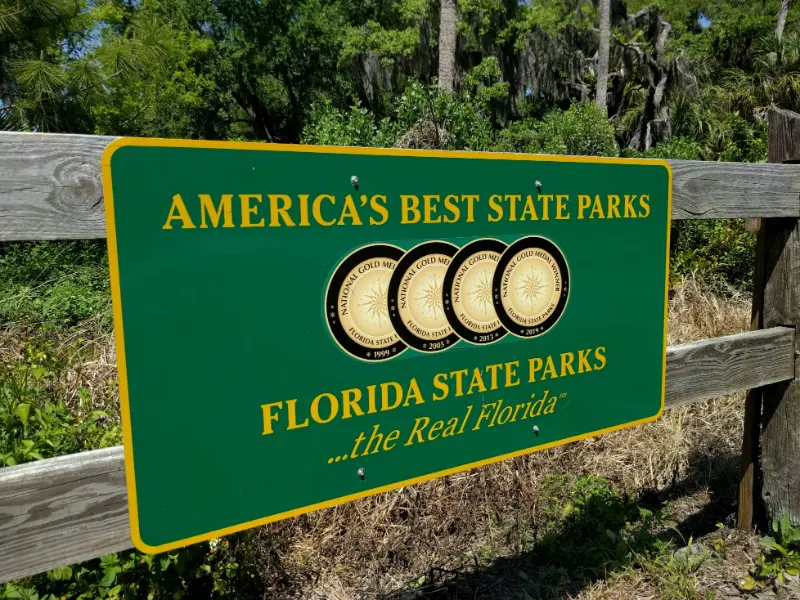
Florida’s state parks are one of the best ways to understand the state beyond beaches and theme parks. The system protects springs, barrier islands, coral reefs, forests, historic forts, rivers and wildlife habitat, and many parks are inexpensive enough to become the backbone of a longer road trip. The difficulty is not finding a good park; it is choosing the right one for your season, age group and activity level.
For a first trip, I would not chase a list of ‘top ten’ parks across hundreds of miles. Instead, choose two or three parks that fit the route you already want to drive. A spring park near Orlando, a beach park on the Gulf and a historic or wildlife park in North Florida will show more variety than five similar beach parks visited in a rush.
Quick planning summary
- Best for: nature, beaches, springs, wildlife, camping, history, families, seniors and low-cost Florida days.
- How many parks? One substantial park per day is enough when swimming, paddling or hiking is involved.
- Reservations: Some popular parks now require day-use reservations; rules can change, so check the individual park page.
- Annual pass: Frequent visitors should compare day-use fees with the current individual or family annual entrance pass.
- Most important habit: Check capacity, weather, water conditions and closures the day before you go.
How the Florida State Parks system works
Florida State Parks currently promotes a system of 175 parks. Most are generally open from morning to sunset, but museums, historic buildings, boat tours and concession activities can have different schedules. Camping and cabins use a reservation system, and the booking window differs for Florida residents and nonresidents.
Day-use entry has also changed at several high-demand parks. As of 2026, Wekiwa Springs, Rainbow Springs, Henderson Beach and Blue Spring require reservations for at least certain day-use entry. That is exactly why I avoid publishing a permanent ‘just arrive early’ rule: the correct procedure depends on the park and date.
Best Florida state parks for a first trip
Blue Spring State Park — best for winter manatees
Blue Spring near Orange City is famous for manatee season, a long spring run and boardwalk views. It works for families and seniors because much of the wildlife experience can be enjoyed without entering the water. Swimming rules change during manatee season, and day-use reservations are currently required, so plan this park rather than improvising it.
Silver Springs State Park — best for glass-bottom boats
Silver Springs near Ocala combines one of Florida’s most historic attractions with clear water, wildlife, paddling and trails. The glass-bottom boats make the park unusually inclusive for visitors who do not swim or paddle, while kayakers can experience the river at water level.
Rainbow Springs State Park — best for swimming and scenery
Rainbow Springs near Dunnellon is a classic clear-water destination with headsprings swimming, gardens and access to the Rainbow River. The park has introduced reservation requirements for the main day-use entrance, and tubing uses a separate area, so confirm the exact entrance for your activity.
Ichetucknee Springs State Park — best for tubing
Ichetucknee is the spring-river day many visitors imagine when they think about North Florida. Tubing, paddling and swimming are seasonal and access-specific, so read the park’s current instructions before driving there with rental equipment or a tightly timed schedule.
Wekiwa Springs State Park — best spring day near Orlando
Wekiwa gives Orlando visitors a dramatically different day without crossing the state. Swimming, paddling and trails make it useful for families and active adults. Because day-use reservations are required, it is now a park to book into the itinerary rather than treat as a spontaneous backup.
Henderson Beach State Park — best easy Gulf beach park
In Destin, Henderson Beach protects sugar-white dunes and a beautiful stretch of Gulf shoreline. It is one of the easiest state parks to understand immediately: beach, boardwalks, picnics and camping close to a major resort area. Vehicle day-use reservations are currently part of the entry system.
St. Andrews State Park — best for beach plus snorkeling
Near Panama City Beach, St. Andrews offers Gulf and pass-side water, jetties, snorkeling potential, camping and access toward Shell Island. Water conditions matter, so families should follow flags and local safety guidance rather than assuming the protected-looking shoreline is always calm.
Bahia Honda State Park — best Florida Keys scenery
Bahia Honda is a Keys classic for turquoise water, beaches, snorkeling and views of the old bridge. Its remote geography means it works best inside a Keys itinerary rather than as a day trip from mainland South Florida.
John Pennekamp Coral Reef State Park — best for reef access
Key Largo’s Pennekamp is the marine counterpart to inland spring parks. Snorkel and glass-bottom boat trips bring visitors toward reef environments, while paddling and shoreline activities work for travelers who prefer to stay closer to land.
Myakka River State Park — best for big landscapes
Near Sarasota, Myakka combines wetlands, prairies, wildlife and a sense of scale. It is a strong choice for travelers who want birding and alligator habitat without driving deep into South Florida. Heat and sun exposure make early starts valuable.
Paynes Prairie Preserve State Park — best for wildlife near Gainesville
Paynes Prairie protects a huge basin landscape where bison, wild horses, birds and alligators may be seen. Wildlife is never guaranteed, but the park is worth visiting for the scenery alone. Choose trails and overlooks based on current water levels and mobility.
Fort Clinch State Park — best history-plus-beach combination
On Amelia Island, Fort Clinch combines a substantial historic fort, maritime forest, beaches and trails. That makes it especially good for families whose interests are split between history and the coast.
Honeymoon Island State Park — best Tampa Bay beach escape
Honeymoon Island is a convenient Gulf-coast nature day from the Tampa Bay area, with beaches and trails. Coastal storms and restoration work can affect facilities, so check current park notices before promising a particular access point.
Weeki Wachee Springs State Park — best for classic Florida spectacle
Weeki Wachee is different from a typical state park because its mermaid shows and spring attraction are the main draw. Families can combine the cultural icon with water recreation, but capacity and attraction schedules make advance planning important.
Florida Caverns State Park — best unexpected landscape
Near Marianna, Florida Caverns shows a side of the state many visitors do not expect: guided cave tours, forest and camping. It is especially valuable on a Panhandle road trip because it adds geology and an indoor component to a region often planned only around beaches.
Reservations, fees and annual passes
Florida State Parks lists an individual annual entrance pass and a family annual entrance pass, with separate rules for special attractions and additional fees. The annual pass covers entrance rather than every activity; boat tours, tubing, camping, gardens or special events may cost extra.
For camping, the official reservation system is the source to trust. Current policy allows Florida residents a longer advance window than nonresidents. If a particular campsite or cabin matters, book when your window opens; if the road trip is flexible, midweek dates and less famous parks can be easier.
Families, seniors and accessibility
A state-park vacation can work from toddler age through senior travel, but the right park matters more than the label. Glass-bottom boats, boardwalks, beaches with accessible mats, paved gardens and wildlife drives are very different experiences from remote paddling or long sand trails.
Florida State Parks has an Access for All program and states that wheelchairs and manually powered mobility aids are allowed wherever foot traffic is allowed. Some parks have all-terrain wheelchairs, accessible boat tours or other accommodations. Because equipment and terrain vary, contact the individual park when a feature is essential.
Best state parks by travel style
- With toddlers: Silver Springs, Blue Spring boardwalks, Fort Clinch and parks with short paved routes.
- With teenagers: Ichetucknee tubing, snorkeling at St. Andrews or Pennekamp, paddling and mountain-bike opportunities.
- For seniors: Glass-bottom boats, scenic drives, historic forts, gardens and boardwalk wildlife areas.
- For beach lovers: Henderson Beach, St. Andrews, Bahia Honda, Honeymoon Island and Gulf barrier-island parks.
- For wildlife: Myakka River, Paynes Prairie, Blue Spring and wetland-rich parks.
- For camping: Reserve around the park experience you want, not just campsite availability; coastal, spring and forest campgrounds create very different trips.
Common mistakes to avoid
- Driving to a famous park without checking whether day-use reservations are required.
- Assuming a state-park annual pass covers camping, boat tours or every special activity.
- Planning exposed trails at midday in summer.
- Getting too close to alligators, bison, horses or manatees for a photograph.
- Trying to collect parks as checkmarks instead of spending a full day in the landscapes that interest you.
- Ignoring individual park alerts after storms, wildfire, flooding or construction.
Useful Wonderful Florida guides
- Blue Spring State Park guide
- Silver Springs State Park guide
- Rainbow Springs State Park guide
- Henderson Beach State Park guide
- Paynes Prairie guide
Official resources
Final thoughts
The best Florida state park is not the one with the most famous photograph; it is the one that fits your route, season and group. Build the road trip around a few different landscapes, reserve the high-demand parks early, and give each place enough time to become an experience rather than a parking lot. That approach is cheaper, calmer and far more memorable than trying to visit a different park every few hours.