Category: North Central Florida

  • Don Garlits Museum of Drag Racing Guide: Admission, Hours, Cars and Ocala Tips

    Don Garlits Museum of Drag Racing Guide: Admission, Hours, Cars and Ocala Tips

    Don Garlits Museum of Drag Racing is one of the easiest ways to add a completely different type of Florida experience to an Ocala trip. After several days of springs, horse farms and forest roads, walking through rows of dragsters, engines, memorabilia and classic cars is an indoor reset—and for motorsport fans it can be a destination in its own right.

    Allow 2–3 hours for a normal visit, or closer to 3–4 hours if you read exhibits carefully and spend equal time in the drag-racing and antique-car collections.

    Quick planning summary

    • Location: 13700 SW 16th Avenue, Ocala, FL 34473
    • Current hours: daily, 9 a.m.–5 p.m.; closed Thanksgiving and Christmas
    • Current adult admission: $22
    • Current discounts: seniors 60+, military/veterans/first responders, college students and teenagers currently $17; children 5–12 currently $10
    • How much time: 2–3 hours
    • Best for: motorsport fans, multigenerational families, rainy or very hot days and road-trip travelers

    Important current-status note

    October 2026 snapshot: The practical details in this guide reflect information published in October 2026. Because this article is scheduled for 2028, recheck admission, operating hours, closures, reservation rules, water conditions and event calendars shortly before traveling. In North Central Florida, spring access can also change after storms, high water, construction or capacity-control measures.

    The museum currently advertises daily 9 a.m.–5 p.m. hours and the admission schedule above. It also describes itself as pet-friendly for leashed pets or pets in strollers. Prices, holiday closures and policies can change before 2028, so verify directly before travel.

    Why this museum is more interesting than it sounds

    Even people who do not follow drag racing may recognize the value of seeing how rapidly the sport evolved. Early machines look almost improvised beside later purpose-built dragsters. That visual progression makes the museum work as an engineering and design story, not just a collection of famous names.

    The second strength is scale. This is not a single-room roadside display. The museum has enough vehicles and memorabilia that enthusiasts can spend several hours, while a less committed companion can still enjoy the color, craftsmanship and oddities without understanding every racing class.

    What to focus on during your visit

    • Historic dragsters: Look for the way chassis, engines, safety equipment and aerodynamics change across decades.
    • Don Garlits memorabilia: The personal history gives context to why the museum exists and why Ocala became its home.
    • Antique and classic cars: This section broadens the visit for travelers who care more about general automotive history than drag racing.
    • Engines and technical displays: Teenagers interested in mechanics may get more from these than from the trophy cases.
    • Photography: Allow extra time because dense rows of vehicles make quick phone photos easy but thoughtful compositions slower.

    Families, teenagers and older travelers

    This is a useful mixed-age stop. Young children may not read much, but they usually respond to brightly colored race cars and unusual shapes. Teenagers who enjoy engineering, gaming, motorsport or car culture can stay engaged far longer than at a traditional history museum. Older adults often connect the vehicles with eras they remember personally.

    Classic American Vintage Cars on a Florida Street

    For mixed-age groups, the most reliable rhythm is one demanding activity and one easy activity per day. Babies and toddlers need predictable shade and breaks; school-age children usually respond well to a clear mission such as spotting fish or horses; teenagers appreciate independence, photography and an activity with some movement; older adults benefit when heat, walking distance, seating and restroom access are considered before arrival.

    Accessibility and pace

    The museum is largely an indoor, walk-through experience and is generally easier on mobility than trails or spring parks. Visitors who require wheelchair access or a specific seating/rest schedule should still confirm current details directly. The most practical strategy is to slow down and use the visit as a low-heat day rather than rushing simply because the exhibits are indoors.

    Best time to visit

    Rainy afternoons and the hottest part of summer are obvious choices, but that also means the museum can be a valuable weather backup. If you are driving I-75, its south-Ocala location makes it easier to combine with a travel day than attractions deep inside the national forest.

    How it fits into an Ocala itinerary

    Pair the museum with Downtown Ocala for dinner and a walk, or use it after a short visit to Sholom Park. I would not pair it with a full spring-and-paddling day unless your group genuinely has the energy; the museum deserves attention rather than becoming an afterthought.

    Budget planning

    A family of four can spend noticeably more here than at free parks, but the visit is predictable: admission is the main expense, parking is straightforward, and there is no need to rent equipment. If only one person in the group is a serious motorsport fan, decide in advance whether everyone wants to visit or whether this is a good split-group activity.

    Common mistakes to avoid

    • assuming it is only interesting to professional racing fans
    • allowing less than an hour
    • saving every exhibit for the end and getting museum fatigue
    • forgetting to check holiday closures
    • trying to squeeze it between two large outdoor attractions with no recovery time

    Official information to check before you go

    Check the official Don Garlits Museum of Drag Racing website for current admission, hours, group policies and any special events before your visit.

    Final thoughts

    The museum works because it changes the texture of an Ocala trip. Springs explain the landscape, horse venues explain the local economy and identity, and Don Garlits explains another piece of Florida’s enthusiasm for speed and mechanical experimentation. Even if you are only moderately interested in cars, two hours here can be more memorable than adding a fourth similar outdoor stop.

    A simple way to organize the museum

    Instead of moving randomly from case to case, divide the visit into three questions: how did the cars become faster, how did safety evolve, and which personalities pushed the sport forward? That structure prevents exhibit fatigue and gives non-experts something concrete to look for. Children can choose a favorite car in each section; adults can compare engine placement, tires and body shape.

    If you have a serious motorsport fan in the group, agree on a meeting point and give that person extra time in the technical sections. Mixed-interest groups enjoy the museum more when nobody feels forced to read every label at the same pace.

    How to use the museum on a travel day

    Its location near the I-75 corridor makes the museum particularly useful on arrival or departure day. Check out of the hotel, spend two to three hours at the museum, have lunch nearby and continue south or north without crossing the entire county. That is often a better use of time than squeezing it into a day already devoted to springs or horse country.

    For visitors who are not drag-racing fans

    Give yourself a simple mission: choose one decade and compare the cars, or focus on the engineering progression from early machines to later aerodynamic designs. The museum becomes easier to enjoy when you stop trying to memorize names and instead look for how speed changed the shape and safety of vehicles.

    Couples with different interests can also split attention: one person reads technical displays while the other focuses on styling, photography and social history. You do not have to understand racing statistics to appreciate the collection.

    Practical planning checklist

    • save the official address and current operating information before leaving your hotel
    • check weather, heat index and lightning risk on the morning of the visit
    • keep water, dry clothing and basic first-aid supplies in the vehicle
    • confirm any reservation or timed-entry requirement separately from admission
    • leave enough time between activities for food, restrooms and traffic

    Ocala and Marion County are easiest to enjoy when the schedule has room to absorb a change. A delayed tour, full parking lot or sudden storm should alter the order of the day, not destroy the entire itinerary.

    Extra planning advice for a smoother Ocala trip

    Ocala looks compact when viewed on a statewide map, but the county spreads across horse country, the I-75 corridor, Silver Springs, Dunnellon and the Ocala National Forest. Before committing to a schedule, plot the exact entrances of the places you intend to visit. A route that appears to involve three nearby attractions can become several hours of driving when one stop is west of the city and another is deep in the forest. Grouping activities by area usually improves the trip more than adding one extra attraction.

    Weather deserves the same attention. From late spring through early fall, start strenuous outdoor activities early, protect the hottest part of the afternoon for lunch or an indoor stop, and keep a rain alternative available. Thunderstorms can arrive quickly and may close swimming areas, outdoor arenas or trails even when the morning was clear. In winter, the opposite problem appears: spring water remains relatively constant while cool air makes getting out of the water uncomfortable, especially for children and older travelers.

    Carry drinking water in the car even when the attraction sells beverages. Rural recreation areas may have limited service, and a short delay can become uncomfortable in heat. Download maps, reservation confirmations and important phone numbers before leaving strong cell coverage. If you have medication, mobility equipment or food that must stay cool, plan for those needs before entering the forest rather than assuming facilities will be equivalent to a city attraction.

    Finally, leave at least one flexible block in every day. Ocala is most enjoyable when a spring, horse event, museum or scenic drive has enough time to breathe. The region is not improved by rushing from one parking lot to another. A slower schedule also makes it easier to respond to capacity limits, delayed shows, a child who needs a rest, or a storm that changes the order of the day.
  • Salt Springs Recreation Area Guide: Swimming, Snorkeling, Camping, Fees and Ocala National Forest Tips

    Salt Springs Recreation Area Guide: Swimming, Snorkeling, Camping, Fees and Ocala National Forest Tips

    Salt Springs is one of the best choices in the Ocala National Forest for travelers who want a classic spring swim without making the entire day about a long paddle. The spring pool is large enough for snorkeling and floating, the water carries a slight mineral taste and salinity that gives the site its name, and the campground makes it practical for RV travelers who want to stay inside the forest rather than commute from Ocala.

    Allow 3–6 hours for swimming, snorkeling, a picnic and a short walk. Campers can easily turn Salt Springs into a two-night base for the northern part of the forest, Lake George and nearby springs.

    Quick planning summary

    • Location: 13851 N Highway 19, Salt Springs, FL 32134
    • Current day-use admission: about $14.50 per person plus tax; children 5 and under free according to the current concession information
    • Water temperature: roughly 72°F year-round
    • How much time: 3–6 hours for day use; longer if boating or camping
    • Best for: swimmers, snorkelers, RV travelers, families and visitors exploring the northern Ocala National Forest

    Important current-status note

    October 2026 snapshot: The practical details in this guide reflect information published in October 2026. Because this article is scheduled for 2028, recheck admission, operating hours, closures, reservation rules, water conditions and event calendars shortly before traveling. In North Central Florida, spring access can also change after storms, high water, construction or capacity-control measures.

    The recreation area changed concession operations in 2026, so it is especially important to verify admission and campground procedures. The current campground information also notes that pets are allowed in the campground but not in the day-use area, and that cell coverage can be poor or nonexistent.

    Why Salt Springs is worth a separate visit

    Salt Springs has a different feel from Juniper Springs. Juniper is shaded and intimate; Salt Springs is more open and recreation-oriented. The large spring pool is easier for a family to understand immediately: find a shaded base, swim, snorkel, take a break and repeat. It is less about completing a signature activity and more about spending a comfortable half-day outside.

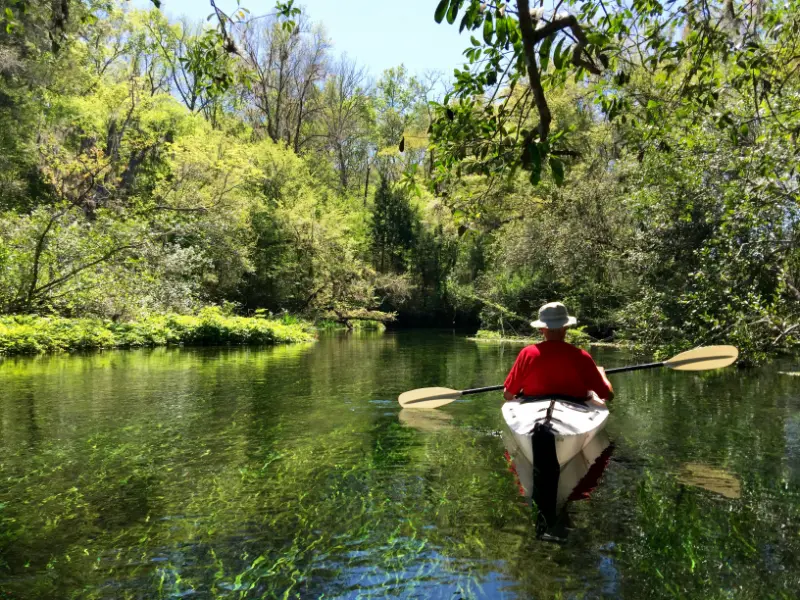
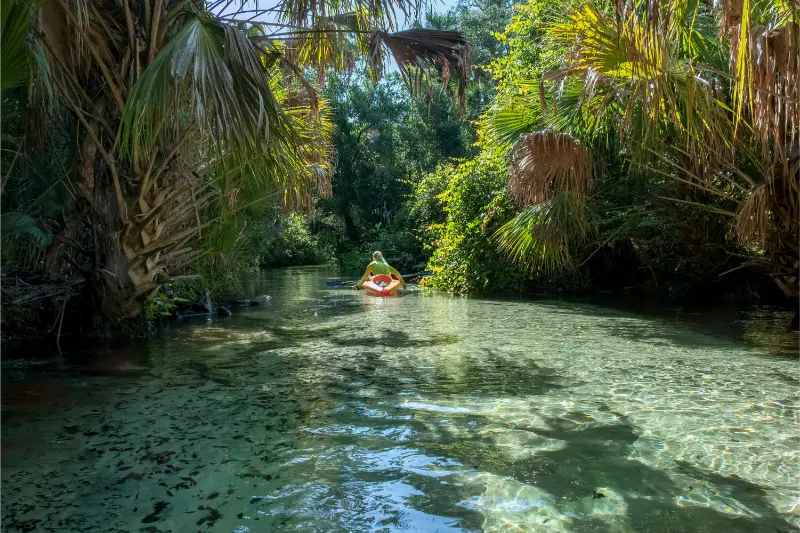
    Kayaking on Juniper Springs Creek Florida

    The mineral content also makes it physically distinct. Potassium, magnesium and sodium salts create a slight salinity, and the spring empties into Salt Springs Run toward Lake George. That connection to a much larger water system is one reason the area attracts both swimmers and boaters.

    Best things to do at Salt Springs

    • Swim in the designated spring area: The clear water is the main reason most day visitors come.
    • Snorkel: Bring your own mask if underwater visibility is important to you; conditions can vary after weather events.
    • Walk the Bear Swamp Trail: The easy loop adds a dry-land activity when part of the group wants a break from the water.
    • Paddle or boat the run: The waterway connects toward Lake George, but boating logistics are separate from the swimming area.
    • Camp: Salt Springs has one of the most developed campgrounds in the national forest, including full-hookup RV sites.

    Swimming area versus marina: do not confuse them

    The recreation area’s spring pool is the place for swimming and snorkeling. The separate Salt Springs Marina is a boat-launch facility, and current rules specifically prohibit swimming and wading there. If you are towing a boat, confirm the correct entrance and the current launch fee rather than assuming your day-use spring admission covers every facility.

    Families, teenagers and older travelers

    Salt Springs is a strong multi-generation choice because everyone can use the same base. Young children can stay near shallower portions under close supervision, school-age kids can snorkel, teenagers can spend longer in the water and older adults can alternate between shade and short swims. The biggest limitation is not age but comfort with cool water, sun exposure and walking on wet surfaces.

    For mixed-age groups, the most reliable rhythm is one demanding activity and one easy activity per day. Babies and toddlers need predictable shade and breaks; school-age children usually respond well to a clear mission such as spotting fish or horses; teenagers appreciate independence, photography and an activity with some movement; older adults benefit when heat, walking distance, seating and restroom access are considered before arrival.

    Accessibility and mobility

    Current site information lists accessible parking and restrooms, but spring entry itself can still be slippery and physically demanding. Travelers who need handrails, specific transfer points or very short routes should confirm the current condition of the swimming access before arrival. A picnic-focused visit can still work even if not everyone enters the water.

    Best time to go

    Weekday mornings are the easiest choice in late spring and summer. The spring stays cool even when the air is hot, and midday crowds can make the pool feel much busier. Fall is underrated: warm afternoons, fewer school-break crowds and a forest that is still green. Winter visitors should pack dry layers because the 72°F water feels very different when the air is cool.

    Camping at Salt Springs

    Campers should reserve early for popular weekends. The campground is unusually useful for RV travelers because it includes full-hookup sites, but tent camping is also available. Current rules limit stays and require food storage because bears and raccoons are active. Treat those rules as part of the destination, not administrative fine print.

    Food, water and connectivity

    Bring enough food and drinking water for the day. The forest is not a place where I would rely on quick delivery apps or last-minute errands. Cell service can be limited, so save directions, reservation confirmations and emergency contacts offline before leaving Ocala.

    Common mistakes to avoid

    • driving to the marina when your plan is to swim
    • assuming pets can enter the day-use spring area
    • relying on mobile service for every payment or reservation
    • forgetting that cool spring water can chill young children quickly
    • trying to combine Salt Springs with too many distant Ocala attractions on the same day

    How to combine Salt Springs with nearby springs

    A full Salt Springs day does not need another swimming stop. If you are staying in the forest for several nights, compare it with Silver Glen Springs on another day, or use Alexander Springs for a separate day. Travelers based in Ocala should allow a meaningful drive each way and avoid treating the national forest as a quick downtown detour.

    Official information to check before you go

    Check Recreation.gov for Salt Springs and the official local visitor listing for the latest day-use, campground and access information.

    Final thoughts

    Salt Springs is at its best when you give it enough time to slow down. It is not a checklist attraction. Set up in the shade, swim more than once, take a walk and let the day feel like a spring day rather than a race between stops. For families and RV travelers in particular, that simplicity is the appeal.

    Who should choose Salt Springs over other springs?

    Choose Salt Springs if you want a broad swimming day, a developed campground or an RV-friendly base. It is also a good option when some people want to snorkel while others simply want shade and a picnic. Skip it if your only goal is a guided boat tour, an easy urban-style visitor center or a short stop on a tightly timed road trip.

    Compared with the eastern spring sites, Salt Springs feels more like a place to settle in for several hours. That is a strength when you are camping, but a weakness if you are trying to fit it between Downtown Ocala and a horse event on the same afternoon.

    A practical day-use timetable

    Aim to arrive in the first hour after opening, choose your picnic base and swim before the strongest sun. Take a long midday break for lunch and the Bear Swamp Trail, then return to the water for a shorter second session. Leave before everyone is exhausted; the drive back toward Ocala or your campground will feel longer after a full day in cold water and sun.

    A better plan for a full day at Salt Springs

    Arrive early, choose a shaded picnic base, swim before the brightest midday sun, then take a long lunch break. Walk Bear Swamp Trail after the first swim while everyone is still comfortable, and return to the water only if the group wants a second session. This rhythm works better than staying in the spring continuously for four hours.

    Campers can move boating, fishing or a longer trail to a separate day. The value of staying overnight is that you do not need to compress every forest activity into one visit.

    Practical planning checklist

    • save the official address and current operating information before leaving your hotel
    • check weather, heat index and lightning risk on the morning of the visit
    • keep water, dry clothing and basic first-aid supplies in the vehicle
    • confirm any reservation or timed-entry requirement separately from admission
    • leave enough time between activities for food, restrooms and traffic

    Ocala and Marion County are easiest to enjoy when the schedule has room to absorb a change. A delayed tour, full parking lot or sudden storm should alter the order of the day, not destroy the entire itinerary.

    Extra planning advice for a smoother Ocala trip

    Ocala looks compact when viewed on a statewide map, but the county spreads across horse country, the I-75 corridor, Silver Springs, Dunnellon and the Ocala National Forest. Before committing to a schedule, plot the exact entrances of the places you intend to visit. A route that appears to involve three nearby attractions can become several hours of driving when one stop is west of the city and another is deep in the forest. Grouping activities by area usually improves the trip more than adding one extra attraction.

    Weather deserves the same attention. From late spring through early fall, start strenuous outdoor activities early, protect the hottest part of the afternoon for lunch or an indoor stop, and keep a rain alternative available. Thunderstorms can arrive quickly and may close swimming areas, outdoor arenas or trails even when the morning was clear. In winter, the opposite problem appears: spring water remains relatively constant while cool air makes getting out of the water uncomfortable, especially for children and older travelers.

    Carry drinking water in the car even when the attraction sells beverages. Rural recreation areas may have limited service, and a short delay can become uncomfortable in heat. Download maps, reservation confirmations and important phone numbers before leaving strong cell coverage. If you have medication, mobility equipment or food that must stay cool, plan for those needs before entering the forest rather than assuming facilities will be equivalent to a city attraction.

    Finally, leave at least one flexible block in every day. Ocala is most enjoyable when a spring, horse event, museum or scenic drive has enough time to breathe. The region is not improved by rushing from one parking lot to another. A slower schedule also makes it easier to respond to capacity limits, delayed shows, a child who needs a rest, or a storm that changes the order of the day.

  • Downtown Ocala Guide: Square, Parking, Restaurants, Art Walk and Free Trolley Tips

    Downtown Ocala Guide: Square, Parking, Restaurants, Art Walk and Free Trolley Tips

    Downtown Ocala is the most useful place to slow down and see the city as a living community rather than as a collection of attractions. The historic square, local restaurants, murals, shops and civic buildings create a compact district that works for lunch, dinner or an easy evening after springs and horse-country sightseeing. It is not a giant entertainment district, and that is part of its appeal: you can park once, walk a few blocks and choose your pace.

    Explore this guide

    For a first visit, allow 2–5 hours; longer with dinner or an event. The practical details below reflect conditions published for October 2026. As operating details can change before 2028, confirm prices, hours, closures, reservations and event schedules shortly before travel.

    Quick planning summary

    • Location: Downtown Square, Ocala, FL 34471
    • Current hours: Public streets and square are always accessible; businesses, trolley and events follow individual schedules
    • Current admission: Free to explore; dining, shopping and special events vary
    • How much time: 2–5 hours; longer with dinner or an event
    • Best for: first-time visitors, couples, families, food travelers and anyone wanting a low-pressure Ocala evening

    Important current-status note

    October 2026 snapshot: The city currently promotes multiple public parking options, including two downtown garages; Garage No. 2 opened with 402 spaces. The O-Line Trolley was introduced as a free downtown service, operating Wednesday through Saturday in daytime and evening blocks under the current schedule. First Friday Art Walk is currently a free monthly event from October through May, generally 6–9 p.m., centered on the square. Check current schedules before a 2028 visit.

    For a future trip, use that snapshot only as a planning reference. Florida parks, museums and event venues can change schedules after storms, construction, seasonal demand or operational updates, so the official information closest to your travel date should take priority.

    Why this place is worth your time

    Downtown adds local texture to an Ocala trip dominated by springs and horses. The square is pleasant for an evening walk, public art gives photographers small discoveries, and the restaurant concentration makes it practical for groups with different interests. It is also a better place to spend an unscheduled two hours than driving between distant attractions just to fill time.

    Florida Chinese Restaurant Illuminated at Night

    The best way to judge this stop is not by how many boxes it checks, but by whether it adds a different experience to the rest of your itinerary. Ocala and North Central Florida are most rewarding when springs, horse country, local history, museums and quieter outdoor spaces are mixed rather than repeated back to back.

    What to see and do

    • Downtown Square: Use the square as the orientation point for a first visit and branch into surrounding blocks.
    • Restaurants and cafés: The district is strongest when paired with a meal rather than treated only as a sightseeing loop.
    • Public art and murals: Look beyond the square; cultural-art programs and changing installations reward a few extra blocks of walking.
    • First Friday Art Walk: A free seasonal event that can transform the atmosphere, but also changes parking demand.
    • O-Line Trolley: Useful when operating, especially for visitors who want to reduce walking or connect parking areas with key districts.

    You do not need to complete every option. Choose the two or three elements that best match your group, weather and energy level. A focused visit usually feels more satisfying than rushing through every possible activity.

    How to plan the visit

    For a normal day, arrive 60–90 minutes before dinner, walk the square and nearby streets, then eat without rushing. On First Friday or a major downtown event, arrive earlier, choose a garage rather than circling for curb parking and expect a busier atmosphere. If you mainly want shops, verify their individual hours because downtown streets remain open after some stores close.

    Build a buffer for parking, restrooms, ticketing or check-in, and the short delays that come with traveling as a family. In this part of Florida, an extra 20–30 minutes can also protect the day from roadwork, event traffic or a summer shower.

    Families, teenagers and older travelers

    Families can enjoy the square and a casual meal, but this is not a purpose-built children’s attraction. Pair walking with a clear reward such as ice cream, a park stop or an event. Teenagers may enjoy murals, cafés and evening energy more than younger children. Older travelers benefit from short walking blocks and parking garages that reduce searching for a space.

    For mixed-age groups, one demanding activity and one easy activity per day is a useful rule. Babies and toddlers need shade and predictable breaks; school-age children respond well to a clear purpose; teenagers usually appreciate independence and photography; older adults benefit when seating, heat and walking distance are considered before arrival.

    Accessibility and mobility

    Downtown sidewalks and municipal parking include accessible features, but older streets can have uneven transitions. The city describes the Art Walk area as wheelchair-friendly and provides accessible parking. If mobility is limited, use the square as the center and avoid turning the outing into a long neighborhood trek.

    Temporary maintenance can change an otherwise accessible route. If a wheelchair path, accessible restroom, assisted boarding option or short-distance parking space is essential, verify that specific feature instead of relying on a general accessibility label.

    Best season and weather strategy

    Fall through spring is best for walking and outdoor dining. Summer evenings can still work, especially after a storm cools the air, but humidity remains high. Event calendars matter: the seasonal Art Walk and holiday celebrations create a very different experience from a quiet weekday lunch.

    Sephora Beauty Shop Interior in Florida

    North Central Florida can move quickly from comfortable morning temperatures to hot, humid afternoons. In summer, lightning risk matters as much as the temperature. During cooler months, cold fronts can make mornings surprisingly chilly even when the afternoon forecast looks mild.

    Parking, driving and arrival logistics

    The easiest strategy is to choose a municipal garage before you arrive. Garage No. 2 adds substantial capacity, while Garage One and surface options serve other blocks. Read signs carefully because street rules and event restrictions can change. When the trolley is operating, parking once and riding can be more relaxing than moving the car.

    Save the exact entrance or parking location before leaving Wi-Fi. Parks and equestrian properties may have multiple gates, and arriving at the wrong one can cost far more time than the driving distance suggests.

    Food, water and breaks

    Downtown is one of the better places in Ocala to make food part of the attraction. Choose the meal style first—quick lunch, coffee, date-night dinner or family-friendly meal—then build the walking loop around that reservation or opening time.

    Carry more water than a short drive might suggest. Heat, cold spring water, cycling and long periods of standing at an event can all disguise fatigue until the group is already tired. A planned snack and a seated break often extend the day more effectively than adding another attraction.

    Safety and practical cautions

    Use normal city awareness: secure valuables, cross at marked points and keep children close near active streets. Event crowds can make the square feel busier than expected. Summer lightning is still a reason to move indoors quickly rather than sheltering under a tree or awning.

    Wildlife, water, horses and Florida weather all deserve more respect than a normal urban sightseeing day. Follow closures and staff instructions rather than looking for a workaround when conditions change.

    Common mistakes to avoid

    • circling endlessly for curb parking instead of using a garage
    • assuming all shops stay open late because restaurants do
    • arriving at First Friday without expecting crowds
    • trying to cover too many blocks in peak summer heat
    • treating downtown as only a photo stop and skipping the meal or event atmosphere

    How to combine it with other North Central Florida experiences

    Downtown Ocala is an excellent evening anchor after outdoor travel. If you are moving between Ocala and Gainesville, compare its compact square with Downtown Gainesville rather than trying to decide which is “better”; each works best as the local dining and walking hub for its own cluster of attractions.

    On a two- or three-day regional stay, alternate indoor and outdoor experiences. That keeps the itinerary flexible when heat, storms, event schedules or water conditions force a change.

    Budget planning

    Walking the district is free, and the city currently offers useful public-parking infrastructure and a free trolley schedule. The main cost is whatever you choose to spend on food and shopping. This makes downtown easy to scale from a low-cost walk to a special dinner.

    Always compare the ticket price with the true cost of the day: parking, rentals, fuel, meals, reservations and equipment can matter more than admission. Free attractions still deserve careful scheduling if they require a long drive or a specific event window.

    Who should prioritize this stop?

    Prioritize Downtown Ocala if you want a flexible evening that does not require advance tickets. It is especially useful for couples, food travelers and families that need a relaxed transition between major attractions.

    If your group has very different interests, let this attraction serve the travelers who will enjoy it most, then balance the day with a second activity chosen for everyone else. A complete Florida vacation does not require every person to love every stop equally.

    Official information to check before you go

    Before traveling, check the official visitor information for the latest hours, fees, closures, reservations, event calendars and weather-related changes. For a 2028 visit, current official information should override older screenshots, blogs and social posts.

    Final thoughts

    Downtown Ocala is not about one must-see building. Its value comes from letting the day breathe: park once, walk the square, notice public art, eat well and experience a part of the city that still functions for residents rather than only for tourists.

    Ocala and North Central Florida reward travelers who arrive informed but keep the day flexible. The region is strongest when clear springs, local culture, horse country and outdoor time complement one another instead of competing for every hour.

  • Sweetwater Wetlands Park Guide: Alligators, Birding, Fees and Gainesville Tips

    Sweetwater Wetlands Park Guide: Alligators, Birding, Fees and Gainesville Tips

    Sweetwater Wetlands Park Guide is one of the stops that helps explain why Gainesville deserves its own place on a Florida itinerary. Sweetwater is unusual because it combines environmental infrastructure with wildlife viewing. The wetlands were built as part of water-quality treatment, yet the result is also a highly accessible birding and walking destination. For visitors who want to see alligators and wetland birds without committing to a remote park, it is one of Gainesville’s strongest choices.

    Explore this guide

    For a first visit, allow 1.5–3 hours. The attraction is best for birders, wildlife photographers, walkers, seniors who prefer broad paths and visitors seeking alligator habitat near town. The practical information below reflects the official visitor guidance available in October 2026; because conditions may change by 2028, always recheck prices, operating hours, closures and special-event rules shortly before travel.

    Quick planning summary

    • Location: 325 SW Williston Road, Gainesville, FL 32601
    • Current hours: 7 a.m. to sunset daily
    • Current admission: $5 per vehicle or $2 per pedestrian/bicyclist; bicycles must be parked outside the wetland trail system
    • How much time: 1.5–3 hours
    • Best for: birders, wildlife photographers, walkers, seniors who prefer broad paths and visitors seeking alligator habitat near town
    • A 125-acre constructed wetland that has become one of Gainesville’s best wildlife walks
    • Open 7 a.m. to sunset

    Why this place is worth adding to a Gainesville trip

    Sweetwater is unusual because it combines environmental infrastructure with wildlife viewing. The wetlands were built as part of water-quality treatment, yet the result is also a highly accessible birding and walking destination. For visitors who want to see alligators and wetland birds without committing to a remote park, it is one of Gainesville’s strongest choices.

    The key is to arrive with the right expectation. This is not an attraction to rush only because it appears on a list. Give yourself enough time to notice the details that make the place distinctive, then leave before fatigue turns a good stop into a chore.

    What to see and do

    • Boardwalks and broad walking loops
    • Alligator viewing from a safe trail environment
    • Wading birds, raptors and seasonal migrants
    • Wednesday bird walks in cooler months when scheduled
    • Sunrise and early-morning photography opportunities

    You do not need to complete every possible activity. Choose two or three priorities based on the weather and the ages in your group. That usually creates a better visit than trying to cover every trail, room or viewpoint.

    How much time should you allow?

    A realistic first visit is 1.5–3 hours. Shorter visits can work when this is the secondary stop of the day, but building in a little extra time helps with parking, restroom breaks, photography and weather delays.

    If you are traveling with children or older adults, think in activity blocks rather than total hours. A 45-minute walk followed by a seated break is often more successful than a continuous two-hour push.

    Best time of day and best season

    North Central Florida is easiest to explore from October through April, when humidity is lower and long walks are more comfortable. Spring adds flowers, active wildlife and pleasant evenings, while summer rewards early starts but requires serious respect for heat and thunderstorms. If your main attraction is outdoors, schedule it before lunch and keep an indoor museum or café option for the afternoon. Gainesville can be busy during University of Florida football weekends, graduation and major campus events, so hotel rates and traffic are not purely seasonal.

    Families, teenagers and older travelers

    School-age children who enjoy animals can do well here, especially with binoculars. Very young children need close supervision because the park is real wildlife habitat, not a zoo. A short loop and frequent observation stops are better than forcing a long walk in heat.

    Gainesville works unusually well for mixed-age trips because the city has high-quality attractions that do not require everyone to move at the same pace. Toddlers need shade, toilets and short activity blocks; school-age children usually do best with animals, fossils, water or hands-on interpretation; teenagers often appreciate photography, trails, college-town food and flexible time; older adults benefit from benches, climate-controlled museums and a plan that avoids the hottest part of the day. The best itinerary is usually one major stop plus one lighter stop, not three demanding attractions.

    Accessibility and mobility

    Sweetwater is one of the more mobility-friendly wildlife experiences around Gainesville, with accessible facilities and improved paved sections. Distances can still add up, and shade is limited in places, so choose a shorter route if stamina is a concern.

    If mobility is important to your group, call or check the official site before departure. Temporary construction, storms and maintenance can change which routes are open even when the attraction itself remains operating.

    Safety and practical cautions

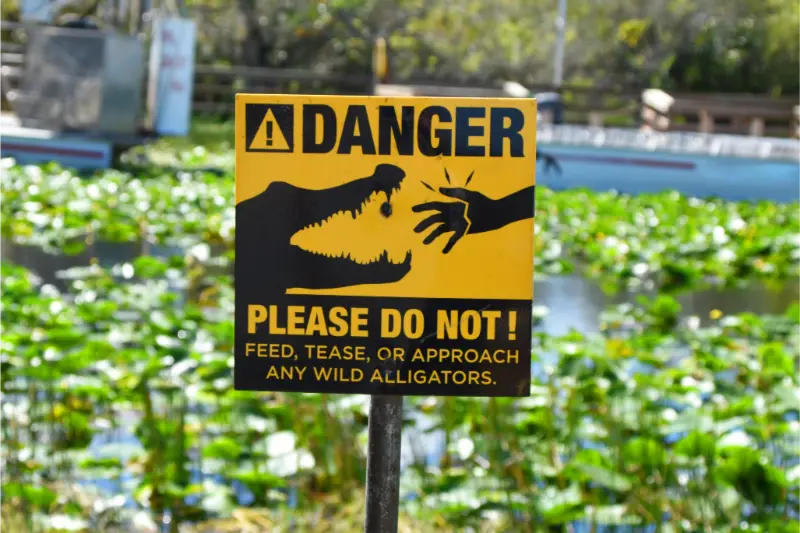
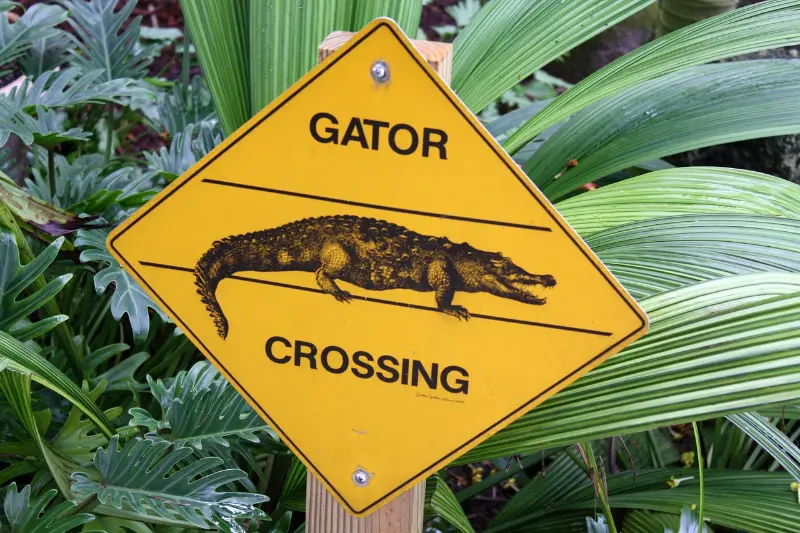
    Treat every water edge as alligator habitat. Stay on the trail, never feed wildlife and keep children close. There is little shade across parts of the wetland, so heat and lightning can become bigger risks than animals.

    Florida Alligator Warning Sign near Water

    Summer planning should assume heat, high humidity and a realistic chance of afternoon thunderstorms. Lightning can close splash pads, exposed trails and outdoor programs even when the rain itself is brief. In winter, cold fronts can make mornings much cooler than visitors expect from Florida. Check both temperature and radar, and pay attention to sunset because many parks close at sunset rather than at a fixed evening hour.

    Parking, driving and getting around

    Gainesville is easier with a car than many college towns because major nature sites and museums are spread across the metro area. Downtown and the UF Cultural Plaza have specific parking systems, while state parks and city nature centers usually have their own lots. Read signs rather than assuming one parking rule applies everywhere. During football weekends, allow more time than a map app suggests and avoid crossing the university core near kickoff or immediately after a game if you do not need to.

    Save the exact entrance in your navigation app. Large parks and university facilities can have multiple gates, service roads or parking lots, and simply searching the attraction name may not send you to the best visitor entrance.

    What to bring

    For outdoor stops, bring refillable water, sunscreen, insect repellent, a hat and closed shoes even if the forecast looks mild. A compact poncho is more useful than an umbrella on exposed trails. For museums, carry a light layer because air-conditioning can feel strong after being outside. Keep a small towel and spare shirt in the car if children may visit a splash pad or if a thunderstorm catches you between attractions.

    Food and breaks

    Do not plan every meal around the attraction itself. Some parks have no food service, while university museums may offer only snacks or vending. Gainesville has enough restaurants that leaving for lunch is usually easy, but doing so can cost valuable time if you intend to return to a paid attraction. For outdoor mornings, a cooler in the car and a planned restaurant afterward usually works better than carrying a full picnic on the trail.

    Florida Alligator Crossing Warning Sign

    How to fit it into a Gainesville itinerary

    A morning at Sweetwater pairs well with downtown Gainesville. If you enjoy wetlands on a broader Florida trip, the site also complements coastal nature areas covered earlier on Wonderful Florida.

    A good rule is to pair one mentally focused attraction with one physically active stop. Museum plus garden, wetland plus downtown, or trail plus relaxed meal usually feels balanced across a full day.

    Budget planning

    A Gainesville trip can be very good value. Several museums and city nature areas are free, and state-park entry is modest compared with major Florida attractions. Spend money where it changes the experience: a special exhibit, the Butterfly Rainforest, a guided program or a comfortable meal after a long outdoor morning. Families can keep costs low by combining one paid attraction with one free park or museum in the same day.

    Where to stay for this part of Gainesville

    For a short city-focused stay, downtown or the University of Florida area keeps museums, restaurants and evening activities close. Travelers focused on I-75 access, Kanapaha or road-trip logistics often prefer the southwest side of Gainesville. Nature-heavy itineraries can work from either area because Paynes Prairie, Sweetwater and Morningside sit in different directions. Choose by the first activity of the morning rather than by a generic ‘central’ label.

    Common mistakes to avoid

    • Common mistakes include scheduling a long outdoor trail for mid-afternoon in summer, assuming wildlife sightings are guaranteed, arriving at a university attraction without checking event traffic, and treating a free attraction as something that needs only 20 minutes
    • Another frequent error is building a schedule with no buffer for thunderstorms
    • Gainesville rewards flexible days: if rain interrupts a wetland walk, shift to a museum and return outdoors later.

    Official information to check before you go

    Before traveling, check the official visitor information for the latest operating hours, admission, closures, programs and weather-related changes. For a 2028 visit, current conditions matter more than any older printed schedule.

    Final thoughts

    The strongest Gainesville itineraries feel varied rather than crowded. Mix a museum with a wetland, a botanical garden with downtown, or a geological stop with an easy family park. That rhythm shows why North Central Florida deserves more than a fuel stop on the way between Orlando and Jacksonville.

    For Sweetwater Wetlands Park Guide, the best approach is simple: arrive with realistic timing, choose the parts that fit your group, and leave room in the day for Gainesville itself rather than turning the trip into a checklist.

  • Santa Fe College Teaching Zoo Guide: Admission, Hours, Animals and Gainesville Family Tips

    Santa Fe College Teaching Zoo Guide: Admission, Hours, Animals and Gainesville Family Tips

    The Santa Fe College Teaching Zoo is one of Gainesville’s best “right-sized” family attractions. It is not designed to compete with Florida’s largest zoos. Instead, visitors follow a compact wooded trail past native and exotic species while students in the Zoo Animal Technology program learn professional animal care. That educational role changes the tone of the visit: it feels more intimate, less commercial and easier to fit into half a day.

    Explore this guide

    For a first visit, allow 1.5–2.5 hours for most families. This guide reflects official visitor information checked in October 2026. Because the post is scheduled for 2028, recheck prices, opening hours, construction, water conditions, trail closures and special programs shortly before travel.

    Quick planning summary

    • Location: 3000 N.W. 83rd St., Gainesville, FL 32606 (follow campus signs/GPS for the Teaching Zoo parking area)
    • Current hours: 9 a.m.–3 p.m.; last entry 2:30 p.m.; open most days of the year with listed holiday closures
    • Current admission: Currently $10 adults 13–59, $6 children 4–12, $6 seniors 60+, free ages 3 and under; additional discounts apply
    • How much time: 1.5–2.5 hours for most families
    • Best for: families with children, animal lovers, grandparents with kids and travelers wanting a manageable Gainesville attraction

    Important current-status note

    October 2026 snapshot: Current published hours are 9 a.m.–3 p.m. with last entry at 2:30 p.m. The zoo is normally open seven days a week except listed holiday dates. The quarter-mile wooded trail is described as stroller and wheelchair accessible.

    That date matters. Conditions involving water quality, construction, wildlife facilities and park access can change long before a 2028 trip. Use the current-status note to understand what to verify, not as a prediction of what will still be true when you arrive.

    Why this place is worth your time

    The strongest reason to visit is manageability. Families with young children can see a meaningful collection without walking several miles, older adults can enjoy a shaded route, and animal-focused teenagers may appreciate learning that this is also a working training environment. It is especially useful on a Gainesville itinerary where a full state-park hike in the morning would make another large attraction unrealistic.

    The most useful way to judge this stop is not by how many attractions fit inside it, but by whether the experience adds something different to the rest of your Florida itinerary. In this part of the state, springs, forests, wildlife education and local history often deliver more memorable contrasts than another busy commercial attraction.

    What to see and do

    • Walk the wooded zoo trail: The main route is roughly a quarter mile, so you can slow down at the animals that interest your group rather than racing through a huge property.
    • Watch animal behavior: A smaller zoo rewards patience. Spend a few minutes at each habitat instead of treating every animal as a quick photo.
    • Look for educational interpretation: The teaching mission is part of the experience; use signs and staff interaction to understand care and conservation.
    • Attend a special event when dates align: Programs such as family events can change the pace and crowd level, so check the calendar before visiting.
    • Pair with another Gainesville stop: The zoo is compact enough to combine with a museum or park without exhausting children.

    You do not need to complete every option. Pick the two or three elements that match your group, weather and energy level. A focused visit almost always works better than trying to force every activity into one afternoon.

    How to plan the visit

    Arrive in the morning when temperatures are lower and animals may be more active. Because the final entry is before closing, do not save the zoo for the last hour of the afternoon. Two hours is usually comfortable. Families with toddlers may finish sooner; animal enthusiasts may want longer. Build in time to locate the correct Santa Fe College access road and parking area.

    Build a small buffer into the schedule for parking, restrooms, ticket or check-in procedures and weather. That buffer is particularly important with children and older travelers because the practical transitions often take longer than the attraction itself suggests.

    Families, teenagers and older travelers

    This is one of the easiest attractions in the cluster for ages 0–100+. Babies can stay in a stroller, preschoolers are not overwhelmed by long distances, school-age children get recognizable animals and a clear trail, and teenagers interested in biology can connect the exhibits with real animal-care careers. Grandparents can join without committing to a giant park. The biggest family challenge is heat, not scale.

    Good to knowA useful rule for mixed-age groups is to plan one demanding activity and one easy activity per day. Babies and toddlers need shade, restrooms and short blocks; school-age children benefit from a clear purpose; teenagers appreciate autonomy and photography; older adults usually enjoy the trip more when seating, heat and walking distance are considered before arrival.

    Accessibility and mobility

    The zoo describes its quarter-mile trail as stroller and wheelchair accessible. Outdoor conditions still matter: rain can make surfaces wet, and Florida heat can be tiring even on a short route. If a traveler needs a specific accommodation, contact the zoo before arrival rather than assuming every behind-the-scenes or special-event space has the same access.

    Florida Zoo Tiger behind Enclosure

    Temporary maintenance can change accessibility even when the attraction remains open. If a wheelchair route, accessible restroom, service-animal arrangement or low-step entry is essential, verify that specific feature rather than relying only on a general “accessible” label.

    Best season and weather strategy

    Fall through spring is most comfortable for a leisurely trail walk. In summer, go close to opening, carry water and avoid turning the visit into a midday heat test. Rain showers may actually cool the air, but lightning changes outdoor safety. School-group schedules and special events can affect how quiet the zoo feels.

    North Central Florida can change quickly from comfortable morning air to hot, humid afternoons. Summer storms often build fast, and winter cold fronts can make mornings surprisingly cool. For outdoor activities, radar and lightning risk matter as much as the daily high temperature.

    Parking, driving and arrival logistics

    The zoo is on the Santa Fe College campus, so use the zoo-specific GPS destination and follow signs rather than parking at the first college building you see. Allow a few extra minutes if you have never visited the campus. The attraction works well for travelers staying near I-75 or the northwest side of Gainesville.

    Save the official address and the specific entrance you need before leaving Wi-Fi. Rural parks, college campuses and preserves can have multiple gates or map pins. Arriving at the wrong entrance is one of the easiest ways to lose the best hour of the day.

    Food, water and breaks

    Do not expect the visit to function like a theme park with extensive dining. Eat before or after, carry water and keep the zoo portion of the day focused on animals. Northwest Gainesville has enough restaurants that a late lunch is easy to build in after the visit.

    Carry more water than a short driving distance might suggest. Heat, cold spring water, walking and cycling can all mask fatigue until the group is already tired. A planned snack and a seated break often extend a family outing more effectively than adding another attraction.

    Safety and practical cautions

    Respect barriers and staff instructions; a teaching zoo is still a professional animal-care facility. Keep children from climbing rails, do not feed animals unless a program explicitly allows it, and treat service-animal rules seriously around sensitive species.

    Close Up of Giraffe in Florida Zoo

    Florida wildlife should always be observed at a respectful distance. Never feed wild animals, never enter water or trails that are posted closed, and never treat lightning as a minor inconvenience. When official staff close an area, build the day around what remains open instead of looking for a workaround.

    Common mistakes to avoid

    • assuming a smaller zoo is only for very young children
    • arriving close to the 2:30 p.m. last-entry time
    • using the main college address without checking the zoo parking directions
    • planning a long outdoor afternoon after already spending the hottest hours at the zoo
    • skipping the educational side of the visit and rushing only for photos

    How to combine it with other Gainesville experiences

    The zoo pairs especially well with Florida Museum of Natural History if your family is animal- and science-focused, or with Depot Park when younger children still need unstructured play after the trail.

    For a two- or three-day Gainesville stay, alternate outdoor and indoor experiences. That protects the itinerary from heat and thunderstorms while also making the trip feel more varied for different ages.

    Budget planning

    Current admission is moderate and notably lower than many major Florida animal attractions. Families with very young children benefit from free admission for ages three and under, while seniors and several other groups have discounts. Check current rates before travel because prices may have changed since the 2026 snapshot.

    Always compare the admission price with the true cost of the day: parking, rental equipment, fuel, meals and reservation fees can matter more than the gate price. Free attractions still deserve the same scheduling care as expensive ones.

    Who should prioritize this stop?

    Choose the Teaching Zoo when you want animals without a full-day commitment. It is particularly strong for multi-generational families and for travelers who value a quieter, educational experience over spectacle.

    If your group has very different interests, use this stop as the part of the day designed for the people who will enjoy it most, then balance it with a second activity chosen for the rest of the group. A complete Florida trip does not require every traveler to love every attraction equally.

    Official information to check before you go

    Before traveling, check the official visitor information for the latest opening hours, fees, construction or water-status notices, reservations, event calendars and weather-related changes. For a 2028 visit, the official update closest to your travel date should override older screenshots, blogs and social-media posts.

    Final thoughts

    Choose the Teaching Zoo when you want animals without a full-day commitment. It is particularly strong for multi-generational families and for travelers who value a quieter, educational experience over spectacle.

    North Central Florida is at its best when you leave room for conditions to shape the day. Springs, trails, wildlife facilities and small museums reward travelers who arrive informed but flexible, and that approach is usually more valuable than trying to force a perfect checklist.

  • Silver Springs State Park Guide: Glass Bottom Boats, Kayaking, Fees and Ocala Tips

    Silver Springs State Park Guide: Glass Bottom Boats, Kayaking, Fees and Ocala Tips

    Silver Springs is one of the easiest places in inland Florida to understand why the state’s spring country deserves space in a vacation itinerary. Instead of needing a long hike or technical paddling skills to reach clear water, visitors can see the spring basin from historic glass-bottom boats, walk shaded paths, rent a kayak or launch their own vessel into the Silver River. The park works for travelers who want nature without a highly demanding day, yet it also rewards people who are comfortable spending several hours on the water.

    Explore this guide

    For a first visit, allow 3–6 hours; allow most of a day for a longer paddle. The practical details below reflect conditions published for October 2026. As operating details can change before 2028, confirm prices, hours, closures, reservations and event schedules shortly before travel.

    Quick planning summary

    • Location: 5656 E. Silver Springs Blvd, Silver Springs, FL 34488
    • Current hours: 8 a.m. to sundown, 365 days a year
    • Current admission: $8 per vehicle for 2–8 people; boat tours, rentals and museum access cost extra
    • How much time: 3–6 hours; allow most of a day for a longer paddle
    • Best for: first-time Florida visitors, families, paddlers, wildlife lovers and travelers who want an easy spring experience

    Important current-status note

    October 2026 snapshot: As of October 2026, the park lists 8 a.m. to sundown hours and $8 vehicle admission. Thirty-minute glass-bottom boat tours are currently $17 for adults and $15 for seniors 55+ and children ages 3–12; 90-minute tours cost more. The Sea Hunt Deck is currently closed, while the trail system is open. These details can change before a 2028 visit, especially concession prices and special-event access.

    For a future trip, use that snapshot only as a planning reference. Florida parks, museums and event venues can change schedules after storms, construction, seasonal demand or operational updates, so the official information closest to your travel date should take priority.

    Why this place is worth your time

    The strongest reason to prioritize Silver Springs is variety. A grandparent who does not want to paddle can take a boat tour, a family can spend a few hours on short walks and wildlife viewing, and more active travelers can paddle several miles downriver. The water is visually impressive, but the river corridor is equally important: turtles, birds, alligators and, occasionally, rhesus macaques can be seen from a safe distance. The park feels like a real ecosystem rather than an attraction built around a single photo stop.

    The best way to judge this stop is not by how many boxes it checks, but by whether it adds a different experience to the rest of your itinerary. Ocala and North Central Florida are most rewarding when springs, horse country, local history, museums and quieter outdoor spaces are mixed rather than repeated back to back.

    What to see and do

    • Glass-bottom boat tour: The classic first-visit activity. The 30-minute tour is enough for many families, while the longer version suits visitors who want more interpretation and river scenery.
    • Paddling the Silver River: Kayaks, canoes and paddleboards offer a quieter view of wildlife. Strong paddlers can consider the longer one-way route with shuttle logistics.
    • Spring basin and gardens: The historic day-use area is easy to explore on foot and gives non-paddlers several viewpoints.
    • Silver River Museum: The museum has a separate schedule and small additional fee, so treat it as a bonus rather than assuming it will be open during every park visit.
    • Wildlife watching: Early mornings are usually calmer. Keep distance from alligators, monkeys and other wildlife and never feed animals.

    You do not need to complete every option. Choose the two or three elements that best match your group, weather and energy level. A focused visit usually feels more satisfying than rushing through every possible activity.

    How to plan the visit

    Planning tipFor a first visit, book or confirm the boat experience first, then build the rest of the day around it. If paddling is your priority, arrive near opening, because wind, heat and afternoon thunderstorms can make the return harder. Travelers doing only the glass-bottom boat and a short walk can comfortably combine Silver Springs with lunch or another Ocala stop. Those attempting a five-mile paddle should avoid stacking several timed attractions afterward.

    Build a buffer for parking, restrooms, ticketing or check-in, and the short delays that come with traveling as a family. In this part of Florida, an extra 20–30 minutes can also protect the day from roadwork, event traffic or a summer shower.

    Families, teenagers and older travelers

    Babies and toddlers can enjoy the boat with minimal walking, making this one of the easier spring-country choices for very young families. School-age children usually respond well to seeing fish through the glass and looking for turtles from the shoreline. Teenagers often prefer kayaking or photography. Older adults benefit from the relatively compact day-use area, but heat, boat boarding and uneven outdoor surfaces still deserve consideration.

    Kayaking on a Shaded Florida Spring

    For mixed-age groups, one demanding activity and one easy activity per day is a useful rule. Babies and toddlers need shade and predictable breaks; school-age children respond well to a clear purpose; teenagers usually appreciate independence and photography; older adults benefit when seating, heat and walking distance are considered before arrival.

    Accessibility and mobility

    The main visitor area has accessible features, and the boat concession provides information about boarding needs. Paddling is much more physically demanding and should not be treated as the accessible equivalent of the boat tour. If step-free access, mobility-device space or assisted boarding is essential, confirm the exact boat and route before arrival.

    Temporary maintenance can change an otherwise accessible route. If a wheelchair path, accessible restroom, assisted boarding option or short-distance parking space is essential, verify that specific feature instead of relying on a general accessibility label.

    Best season and weather strategy

    Winter and spring are excellent for comfortable walking and wildlife viewing. Summer gives lush scenery but brings humidity and frequent afternoon lightning. Spring water remains cool even when air temperatures are high. If the main goal is paddling, a calm morning with low wind is more valuable than simply choosing the hottest day.

    North Central Florida can move quickly from comfortable morning temperatures to hot, humid afternoons. In summer, lightning risk matters as much as the temperature. During cooler months, cold fronts can make mornings surprisingly chilly even when the afternoon forecast looks mild.

    Parking, driving and arrival logistics

    Use the main entrance for classic visitor activities and confirm the correct launch access if bringing a personal vessel. The equestrian and canoe/kayak launch closes earlier than the park itself. Parking is generally straightforward compared with beach destinations, but event days can change normal circulation.

    Save the exact entrance or parking location before leaving Wi-Fi. Parks and equestrian properties may have multiple gates, and arriving at the wrong one can cost far more time than the driving distance suggests.

    Food, water and breaks

    A simple half-day plan is boat tour, short walk and lunch in the Ocala/Silver Springs area. For a full paddling day, bring more water and snacks than you think you need. Keep food secured and never use it to attract wildlife for photos.

    Carry more water than a short drive might suggest. Heat, cold spring water, cycling and long periods of standing at an event can all disguise fatigue until the group is already tired. A planned snack and a seated break often extend the day more effectively than adding another attraction.

    Safety and practical cautions

    Alligators are part of the river environment and should be given wide space. Monkeys are also wild animals; do not approach, touch or feed them. Lightning is the most common weather reason to shorten a summer water day. Follow ranger and concession instructions even if a closure disrupts your original plan.

    Wildlife, water, horses and Florida weather all deserve more respect than a normal urban sightseeing day. Follow closures and staff instructions rather than looking for a workaround when conditions change.

    Common mistakes to avoid

    • arriving without checking boat availability on a busy weekend
    • assuming the museum follows the same hours as the park
    • planning a long paddle late in the afternoon
    • approaching monkeys or other wildlife for photos
    • underestimating summer heat and lightning

    How to combine it with other North Central Florida experiences

    Use Silver Springs as a contrast to the Gainesville-area nature already covered on Wonderful Florida. A longer road trip can pair spring country with Florida Museum of Natural History on a weather-sensitive day, or compare the easier developed spring experience here with the more river-focused day at Ichetucknee Springs State Park. Avoid trying to rush both major spring outings into the same day.

    On a two- or three-day regional stay, alternate indoor and outdoor experiences. That keeps the itinerary flexible when heat, storms, event schedules or water conditions force a change.

    Budget planning

    The base park fee is modest, but boat tickets and rentals can change the real cost quickly. A family that only wants the short boat tour will spend much less than a group renting multiple kayaks. Decide which experience is the priority before reaching the concession desk.

    Always compare the ticket price with the true cost of the day: parking, rentals, fuel, meals, reservations and equipment can matter more than admission. Free attractions still deserve careful scheduling if they require a long drive or a specific event window.

    Who should prioritize this stop?

    Silver Springs should be high on the list for first-time visitors who want clear spring water without committing to a full tubing or wilderness day. It is especially good for mixed-age families because the boat tour gives almost everyone a realistic way to enjoy the spring.

    If your group has very different interests, let this attraction serve the travelers who will enjoy it most, then balance the day with a second activity chosen for everyone else. A complete Florida vacation does not require every person to love every stop equally.

    Official information to check before you go

    Before traveling, check the official visitor information for the latest hours, fees, closures, reservations, event calendars and weather-related changes. For a 2028 visit, current official information should override older screenshots, blogs and social posts.

    Final thoughts

    Silver Springs works best when you resist the urge to treat it as a quick roadside stop. Give the boat, river and wildlife enough time to feel distinct from the rest of your Florida trip. For many travelers, this is the Ocala-area attraction that most clearly explains why inland Florida can be as memorable as the coast.

    Ocala and North Central Florida reward travelers who arrive informed but keep the day flexible. The region is strongest when clear springs, local culture, horse country and outdoor time complement one another instead of competing for every hour.

  • Silver Glen Springs Guide: Swimming, Vehicle Reservations, Kayaking, Wildlife and Ocala Tips

    Silver Glen Springs Guide: Swimming, Vehicle Reservations, Kayaking, Wildlife and Ocala Tips

    Silver Glen Springs is one of the clearest, most photogenic spring basins in the Ocala National Forest, but its popularity creates a planning problem: on peak summer weekends, simply driving there without a reservation can be the fastest way to lose half a vacation day. The solution is to treat access as part of the itinerary, not something to decide after breakfast.

    Allow 3–5 hours for swimming, snorkeling, a picnic and the short trails. It is a day-use site, not a campground, and summer vehicle controls can apply in addition to the per-person admission fee.

    Quick planning summary

    • Location: 5271 N Highway 19, Fort McCoy / Salt Springs area, FL 32134
    • Current admission: $14.50 per person plus tax; children 5 and under free
    • Peak-season vehicle reservation: currently required on summer weekends and holidays, with a separate $20 vehicle reservation fee
    • Current opening: 8 a.m.; closing time varies with daylight
    • How much time: 3–5 hours
    • Best for: swimming, snorkeling, photography, families and travelers who want a beautiful day-use spring

    Important current-status note

    October 2026 snapshot: The practical details in this guide reflect information published in October 2026. Because this article is scheduled for 2028, recheck admission, operating hours, closures, reservation rules, water conditions and event calendars shortly before traveling. In North Central Florida, spring access can also change after storms, high water, construction or capacity-control measures.

    For the 2026 season, vehicle reservations apply on specified weekends and holidays from Memorial Day through Labor Day. The current program is separate from admission: reserving the vehicle space does not replace the per-person entry fee. Reservation dates and prices can change before 2028, so always use the current Recreation.gov or concession information.

    Why Silver Glen Springs stands out

    The water is the obvious answer, but the setting matters just as much. The spring basin opens toward Lake George, one of the major lakes on the St. Johns River system. That creates a different visual experience from the narrower forest pools around Juniper and Alexander Springs. On a bright day, the combination of turquoise water, pale sand and surrounding forest is exceptional.

    Silver Glen also has archaeological sensitivity and protected spring-boil areas. Visitors should understand that the most interesting ecological features are not an invitation to climb, dig or enter restricted zones. The best experience comes from enjoying the designated swimming and paddling areas without treating the spring as a theme-park pool.

    What to do

    • Swim and snorkel: The main basin is the core experience; secure snorkel gear and water shoes are useful.
    • Walk the Lake George Trail: This adds forest and lake views to a visit that might otherwise be entirely water-based.
    • See the spring-boil area from the trail: Stay on designated routes and respect closures around sensitive features.
    • Launch a kayak or canoe: A designated launch area connects paddlers with the spring run and lake environment.
    • Picnic: Tables and grills make a half-day visit easy, but pack out what you bring and protect food from wildlife.

    Understanding the vehicle reservation system

    The most important distinction is between vehicle reservation and admission. During the current peak-season program, a vehicle reservation guarantees parking for the day, while each visitor still pays the normal admission at the gate. On non-reservation days, entry remains first-come, first-served until capacity is reached.

    If you are traveling in a group, one vehicle can make the day significantly easier. Do not buy multiple reservations unnecessarily, but also do not expect to arrive in several cars and merge the group inside once parking is full.

    Families, teenagers and older travelers

    Silver Glen works well for families because the day does not require a long hike or technical paddle. Children who are comfortable in water usually enjoy snorkeling, while teenagers often like underwater photography and the more open feel of the basin. Older travelers can use the picnic area and short trails even if they do not swim for long.

    For mixed-age groups, the most reliable rhythm is one demanding activity and one easy activity per day. Babies and toddlers need predictable shade and breaks; school-age children usually respond well to a clear mission such as spotting fish or horses; teenagers appreciate independence, photography and an activity with some movement; older adults benefit when heat, walking distance, seating and restroom access are considered before arrival.

    Accessibility and facilities

    The recreation area lists accessible features, but facilities are more basic than at a large state park: portable toilets and a changing area are currently part of the setup. If accessible water entry, a specific restroom configuration or medical refrigeration is essential, verify current conditions before driving into the forest.

    Best season and best time of day

    Early summer mornings show the spring at its most appealing before the heat and crowd build. Weekdays are much easier than weekends. Spring and fall offer fewer capacity problems and still-warm air. Winter can be beautiful for walking and photography, but not every traveler enjoys swimming when the air is cool even though the spring itself remains relatively constant.

    Wildlife and safety

    Treat the spring as part of a wild system connected to Lake George. Alligators and other wildlife occur in the region, and staff instructions or temporary closures should always override the assumption that a familiar swimming area is safe under every condition. Keep food secured and never feed wildlife.

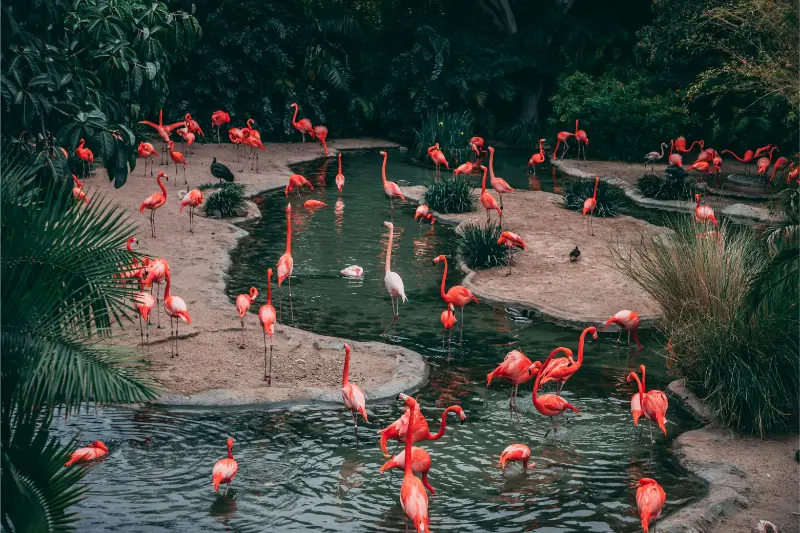
    Flock of Flamingos at Florida Wildlife Park

    Common mistakes to avoid

    • forgetting the separate summer vehicle reservation
    • assuming a parking reservation includes admission
    • arriving at midday on a peak weekend
    • entering protected spring-boil areas
    • bringing pets when current rules prohibit them throughout the recreation area
    • expecting campground-style facilities at a day-use-only site

    How Silver Glen compares with other Ocala springs

    Choose Silver Glen for a beautiful swim-and-snorkel day. Choose Juniper Springs for a wilder forest atmosphere and advanced paddle. Choose Salt Springs if camping and RV facilities matter. Choose Alexander Springs for another broad, family-friendly swimming basin. The best regional itinerary uses those differences instead of treating every spring as interchangeable.

    Official information to check before you go

    Check the official Recreation.gov vehicle-reservation page and the Ocala/Marion County visitor listing for current fees, capacity rules, reservation dates and operational notices.

    Final thoughts

    Silver Glen Springs deserves its popularity, but it rewards travelers who plan around that popularity. Reserve when required, arrive early, stay several hours and let the water be the main event. When approached that way, it feels less like a crowded stop and more like one of the natural highlights of an Ocala National Forest trip.

    A realistic half-day plan at Silver Glen

    Arrive as early as your reservation or access rules allow, settle at a picnic table, and spend the first hour in the water while visibility is usually at its best. After drying off, walk one of the short trails toward Lake George or the spring-boil overlook. Use lunch as a long shaded break, then decide whether a second swim or short paddle is worth staying for.

    Families do not need to stay until closing to get value from the admission. Three focused hours in good conditions can be better than six hours after the basin becomes crowded. If you have a long drive afterward, leaving before late-afternoon storms and fatigue build is often the smarter choice.

    Who may prefer another spring?

    Travelers who want overnight camping should choose Salt Springs, Alexander Springs or another campground-based site. Visitors who dislike reservation systems may prefer a weekday or a different spring outside peak summer weekends. Non-swimmers may get more value from Silver Springs State Park, where the glass-bottom boat provides a strong experience without entering the water.

    Photography and underwater visibility

    The clearest-looking water in marketing photos depends on sun angle, recent rainfall and how many swimmers are stirring the bottom. For photographs, arrive early when the surface is calmer and the basin is less crowded. Polarized sunglasses help above water; a simple waterproof camera can be more useful than an expensive phone case for underwater shots.

    Do not chase wildlife for a photograph or cross protected boundaries for a cleaner composition. The spring’s conservation value is the reason the scenery exists in the first place.

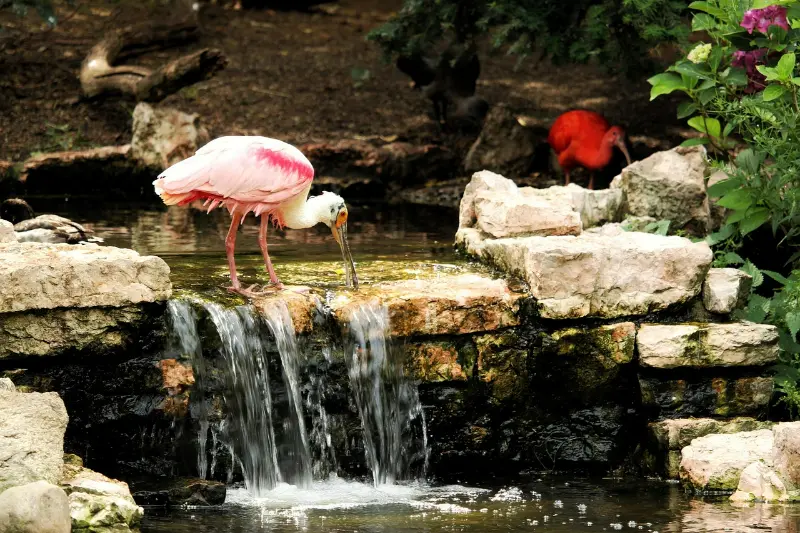
    Pink Flamingos at Florida Wildlife Pond

    Practical planning checklist

    • save the official address and current operating information before leaving your hotel
    • check weather, heat index and lightning risk on the morning of the visit
    • keep water, dry clothing and basic first-aid supplies in the vehicle
    • confirm any reservation or timed-entry requirement separately from admission
    • leave enough time between activities for food, restrooms and traffic

    Ocala and Marion County are easiest to enjoy when the schedule has room to absorb a change. A delayed tour, full parking lot or sudden storm should alter the order of the day, not destroy the entire itinerary.

    Extra planning advice for a smoother Ocala trip

    Ocala looks compact when viewed on a statewide map, but the county spreads across horse country, the I-75 corridor, Silver Springs, Dunnellon and the Ocala National Forest. Before committing to a schedule, plot the exact entrances of the places you intend to visit. A route that appears to involve three nearby attractions can become several hours of driving when one stop is west of the city and another is deep in the forest. Grouping activities by area usually improves the trip more than adding one extra attraction.

    Weather deserves the same attention. From late spring through early fall, start strenuous outdoor activities early, protect the hottest part of the afternoon for lunch or an indoor stop, and keep a rain alternative available. Thunderstorms can arrive quickly and may close swimming areas, outdoor arenas or trails even when the morning was clear. In winter, the opposite problem appears: spring water remains relatively constant while cool air makes getting out of the water uncomfortable, especially for children and older travelers.

    Carry drinking water in the car even when the attraction sells beverages. Rural recreation areas may have limited service, and a short delay can become uncomfortable in heat. Download maps, reservation confirmations and important phone numbers before leaving strong cell coverage. If you have medication, mobility equipment or food that must stay cool, plan for those needs before entering the forest rather than assuming facilities will be equivalent to a city attraction.

    Finally, leave at least one flexible block in every day. Ocala is most enjoyable when a spring, horse event, museum or scenic drive has enough time to breathe. The region is not improved by rushing from one parking lot to another. A slower schedule also makes it easier to respond to capacity limits, delayed shows, a child who needs a rest, or a storm that changes the order of the day.

  • Appleton Museum of Art Ocala Guide: Admission, Hours, Collections and Family Tips

    Appleton Museum of Art Ocala Guide: Admission, Hours, Collections and Family Tips

    The Appleton Museum of Art is one of the easiest Ocala attractions to underestimate. Travelers sometimes see it as a small local museum to fill an hour, but the collection is broad enough to support a real museum visit, with European, American, Asian, African, Islamic, contemporary and decorative arts represented across more than 24,000 objects. It is also an excellent counterweight to Ocala’s outdoor identity: after springs, trails and horse country, the museum adds a quieter cultural day without requiring a drive to Orlando or Tampa.

    Explore this guide

    For a first visit, allow 1.5–3 hours. The practical details below reflect conditions published for October 2026. As operating details can change before 2028, confirm prices, hours, closures, reservations and event schedules shortly before travel.

    Quick planning summary

    • Location: 4333 E. Silver Springs Blvd, Ocala, FL 34470
    • Current hours: Tuesday–Saturday 10 a.m.–5 p.m.; Sunday noon–5 p.m.; closed Monday
    • Current admission: Adults $10; seniors 55+ $8; youth 6–17 $5; children 5 and under free; several free-admission groups
    • How much time: 1.5–3 hours
    • Best for: art lovers, couples, senior travelers, rainy-day visitors and families wanting a calmer indoor stop

    Important current-status note

    October 2026 snapshot: Current visitor information lists Tuesday through Saturday hours of 10 a.m.–5 p.m., Sunday noon–5 p.m. and Monday closure. General admission is $10 for adults, $8 for seniors 55+ and several other discount groups, $5 for ages 6–17 and free for children five and under. Florida educators, U.S. veterans and some other groups currently qualify for free admission. Special exhibitions and programs can affect the best time to visit.

    For a future trip, use that snapshot only as a planning reference. Florida parks, museums and event venues can change schedules after storms, construction, seasonal demand or operational updates, so the official information closest to your travel date should take priority.

    Why this place is worth your time

    The Appleton is most valuable when you want a refined indoor attraction that still feels connected to the region. The building is comfortable, the collection is varied enough for different tastes, and the visit can be as short or as slow as your group needs. For travelers who dislike enormous museums, its manageable scale is an advantage rather than a limitation.

    The best way to judge this stop is not by how many boxes it checks, but by whether it adds a different experience to the rest of your itinerary. Ocala and North Central Florida are most rewarding when springs, horse country, local history, museums and quieter outdoor spaces are mixed rather than repeated back to back.

    What to see and do

    • Permanent collection galleries: Move by interest rather than trying to study every object. The geographic and historical range keeps the visit varied.
    • Special exhibitions: Temporary shows can be the strongest reason for repeat visits, so check the exhibition calendar before arrival.
    • Outdoor spaces and architecture: Allow a little time outside the galleries; the setting helps break up a long indoor visit.
    • Museum store: Useful for art-focused gifts and a short browse even if some members of the group finish the galleries earlier.
    • Programs and talks: Families and adults can get more from the museum when a workshop, tour or gallery program matches their schedule.

    You do not need to complete every option. Choose the two or three elements that best match your group, weather and energy level. A focused visit usually feels more satisfying than rushing through every possible activity.

    How to plan the visit

    A two-hour visit is comfortable for most travelers. Art enthusiasts can spend three hours or more, while families with young children may prefer a focused 60–90 minute loop followed by another activity. Because the museum is closed Monday, check the day before building a rainy-day backup plan around it.

    Henry B Plant Museum Tampa Historic Architecture

    Build a buffer for parking, restrooms, ticketing or check-in, and the short delays that come with traveling as a family. In this part of Florida, an extra 20–30 minutes can also protect the day from roadwork, event traffic or a summer shower.

    Families, teenagers and older travelers

    The museum is calmer than a science center and works best for children who can enjoy short looking games, colors, shapes and stories rather than hands-on play. Teenagers interested in art, design or photography may find it surprisingly strong. Older adults benefit from the indoor climate, seating opportunities and accessible layout.

    For mixed-age groups, one demanding activity and one easy activity per day is a useful rule. Babies and toddlers need shade and predictable breaks; school-age children respond well to a clear purpose; teenagers usually appreciate independence and photography; older adults benefit when seating, heat and walking distance are considered before arrival.

    Accessibility and mobility

    The museum emphasizes accessibility across its building, programs and services. If a specific mobility, sensory or service-animal accommodation is important, review the museum’s current accessibility information or call before visiting. Indoor routes are generally far easier than the region’s spring and trail attractions.

    Temporary maintenance can change an otherwise accessible route. If a wheelchair path, accessible restroom, assisted boarding option or short-distance parking space is essential, verify that specific feature instead of relying on a general accessibility label.

    Best season and weather strategy

    This is a year-round attraction and especially useful in peak summer heat, winter cold fronts or stormy afternoons. Rain can increase visitor demand, so do not assume bad weather guarantees an empty museum. Special exhibitions matter more than season for repeat visitors.

    North Central Florida can move quickly from comfortable morning temperatures to hot, humid afternoons. In summer, lightning risk matters as much as the temperature. During cooler months, cold fronts can make mornings surprisingly chilly even when the afternoon forecast looks mild.

    Parking, driving and arrival logistics

    The museum is east of central Ocala on State Road 40, so it is easier to reach by car than on foot from Downtown. Parking is much less complicated than downtown event parking. If you are combining it with Silver Springs, the two are on the same general side of town, which reduces unnecessary driving.

    Save the exact entrance or parking location before leaving Wi-Fi. Parks and equestrian properties may have multiple gates, and arriving at the wrong one can cost far more time than the driving distance suggests.

    Food, water and breaks

    The museum does not operate a full restaurant, so plan lunch before or after. Food and drink are restricted to designated areas. A museum morning followed by lunch in Ocala usually works better than trying to stretch the visit through a meal window.

    Carry more water than a short drive might suggest. Heat, cold spring water, cycling and long periods of standing at an event can all disguise fatigue until the group is already tired. A planned snack and a seated break often extend the day more effectively than adding another attraction.

    Safety and practical cautions

    The main practical issues are museum etiquette and supervision. Keep children close to artwork, follow photography rules and avoid food or drink in gallery areas. Non-flash photography is generally permitted in permanent-collection spaces, but temporary-exhibition policies can differ.

    Wildlife, water, horses and Florida weather all deserve more respect than a normal urban sightseeing day. Follow closures and staff instructions rather than looking for a workaround when conditions change.

    Common mistakes to avoid

    • planning the visit on Monday
    • assuming every special exhibition allows the same photography rules
    • expecting a full restaurant on site
    • rushing through every gallery just to say you saw it
    • overlooking discount or free-admission eligibility

    How to combine it with other North Central Florida experiences

    The Appleton is a strong climate-controlled complement to North Central Florida’s outdoor days. Travelers coming from Gainesville can compare it with Florida Museum of Natural History for natural history or Cade Museum for hands-on invention. Build each museum around a different interest rather than trying to visit all of them in a single day.

    On a two- or three-day regional stay, alternate indoor and outdoor experiences. That keeps the itinerary flexible when heat, storms, event schedules or water conditions force a change.

    Budget planning

    Admission is moderate and several categories receive discounts or free entry. Because parking and on-site spending are limited, this can be one of the easier Ocala attractions to budget precisely. Check current reciprocal museum programs if you already hold a qualifying membership elsewhere.

    Always compare the ticket price with the true cost of the day: parking, rentals, fuel, meals, reservations and equipment can matter more than admission. Free attractions still deserve careful scheduling if they require a long drive or a specific event window.

    Who should prioritize this stop?

    Prioritize the Appleton if you enjoy art, need a weather-proof attraction or want a quieter day between springs and horse events. Visitors who only want interactive children’s exhibits may prefer a different museum, but mixed-age groups often appreciate its manageable size.

    If your group has very different interests, let this attraction serve the travelers who will enjoy it most, then balance the day with a second activity chosen for everyone else. A complete Florida vacation does not require every person to love every stop equally.

    Official information to check before you go

    Before traveling, check the official visitor information for the latest hours, fees, closures, reservations, event calendars and weather-related changes. For a 2028 visit, current official information should override older screenshots, blogs and social posts.

    Final thoughts

    The Appleton gives an Ocala itinerary cultural depth. It is not trying to compete with a giant metropolitan museum; its strength is that you can spend a thoughtful two hours with art and still have enough energy for dinner, downtown or another light activity afterward.

    Ocala and North Central Florida reward travelers who arrive informed but keep the day flexible. The region is strongest when clear springs, local culture, horse country and outdoor time complement one another instead of competing for every hour.

  • Two Days in Ocala: Best Weekend Itinerary for Springs, Horses, Downtown and Ocala National Forest

    Two Days in Ocala: Best Weekend Itinerary for Springs, Horses, Downtown and Ocala National Forest

    Two days in Ocala is the sweet spot for a first visit. One day gives you the highlights; two days lets you actually slow down at a spring and see horse country without turning every meal into a race against the next reservation. The best weekend also mixes east and west sides of the county so you are not crossing the same roads repeatedly.

    Explore this guide

    This itinerary assumes you have a car and want a balanced trip rather than a specialist paddling, cycling or equestrian weekend. It works for couples, families and active older travelers with small adjustments.

    Two-day Ocala itinerary at a glance

    • Day 1: Silver Springs → Appleton Museum or easy park → Downtown Ocala
    • Day 2: horse-country experience → lunch → one swimming spring or World Equestrian Center event
    • Best base: central/west Ocala or I-75 for mixed itineraries
    • Best pace: one major morning activity and one flexible afternoon/evening activity

    Day 1 morning: Silver Springs

    Begin with Silver Springs State Park. Book or confirm the glass-bottom boat and allow time to walk rather than leaving immediately after the tour. If your group wants to paddle, use a short rental rather than the longest route; Day 2 still has a major outdoor component.

    Day 1 afternoon: choose culture or an easy reset

    On a hot or rainy afternoon, Appleton Museum of Art is a natural follow-up because it stays on the eastern side of town. Families who need movement rather than galleries may prefer Sholom Park, though that involves driving west.

    Day 1 evening: Downtown Ocala

    Spend the evening around Downtown Ocala. Dinner, the square, murals and a seasonal event provide enough structure without requiring another ticket. Keep the evening moderate if Day 2 begins with a scheduled horse tour.

    Day 2 morning: horse country

    Book a legitimate experience using our horse-country guide. A farm tour is ideal because it explains what you saw from the road on Day 1. If tours do not operate on your date, use a public class at World Equestrian Center or Florida Horse Park.

    Florida Shopping Boulevard with Palm Trees

    Day 2 afternoon: choose one spring or one equestrian event

    If the weather is hot and everyone wants water, choose a spring using our Ocala springs comparison. Rainbow Springs makes sense if you are already west of Ocala. Alexander Springs is better if your next overnight is toward Orlando or the Atlantic side. Salt, Juniper and Silver Glen are better for travelers intentionally exploring the national forest rather than squeezing in a quick swim.

    If an important horse show is running, skip the second spring and stay in horse country. Watching a feature class gives the weekend more contrast than repeating another water activity simply because springs are famous.

    Two-day itinerary for families

    1. Day 1: Silver Springs boat, hotel/pool break, Downtown dinner.
    2. Day 2: short horse experience in the morning, one swimming spring after lunch, early dinner.

    Families should not add a museum unless weather makes it necessary. With children, the unplanned hour at the hotel pool can be more valuable than a fourth attraction.

    Two-day itinerary for active travelers

    1. Day 1: early paddle at Silver Springs, late lunch, Santos or easy evening downtown.
    2. Day 2: horse-country tour, then Rainbow Springs or an extended equestrian event.

    Do not pair Juniper Run with technical mountain biking on the same day unless everyone is conditioned for it. Heat and dehydration accumulate faster than a simple mileage calculation suggests.

    Two-day itinerary for older travelers

    1. Day 1: glass-bottom boat, Appleton Museum, Downtown dinner.
    2. Day 2: guided horse-country tour, long lunch, Sholom Park or World Equestrian Center spectator visit.

    This version still feels distinctly Ocala without requiring spring entry or long trails.

    Where to stay for two days

    Central/west Ocala is the most flexible choice for a mixed weekend because restaurants, I-75, World Equestrian Center and horse country remain easy to reach. Downtown lodging is best for evening atmosphere. Forest camping is better only if springs and outdoor recreation are the central purpose of the trip.

    Reservation strategy

    Reserve the activity that can ruin the trip if unavailable: horse tour, spring vehicle reservation or a specific event ticket. Keep the second half of each day flexible. Weather and capacity are too variable to prepay every hour of an Ocala weekend.

    Common mistakes

    • using both days only for springs
    • using both days only for horse venues unless that is your main interest
    • switching hotels after one night
    • underestimating drive time across Marion County
    • scheduling a long outdoor activity during the hottest afternoon in summer
    • forgetting that public horse-show schedules can shift

    Final thoughts

    Two days is enough to build a coherent Ocala story: water, horses, local culture and one quieter green space. The weekend feels complete because each day has a different rhythm. If you leave wanting to return for Juniper Run, Santos, more horse shows or the national forest, that is a better outcome than exhausting every option in forty-eight hours.

    How to choose between a hotel and campground

    A hotel is easier for first-time visitors because it simplifies breakfast, air conditioning, laundry and late meals. A campground makes sense when most of the trip is built around springs, paddling or forest trails. Families who plan only one national-forest day usually gain little by moving the entire trip out of central Ocala.

    How to handle bad weather across two days

    Do not cancel the entire weekend because the first forecast shows thunderstorms. Florida storms are often uneven and short-lived. Keep Don Garlits Museum, Appleton Museum or an indoor equestrian arena as a movable block. If a spring closes, move horse country forward and retry the water activity the next morning.

    A note on driving fatigue

    Two days can still involve substantial mileage because Dunnellon, Silver Springs, WEC and the national forest sit in different directions. Group attractions geographically and finish each evening near your lodging. The best weekend often includes fewer total stops than the map suggests, but far less time in the car.

    How to extend this itinerary to a third day

    A third day should deepen one interest instead of repeating Day 1 and Day 2. Spring lovers can spend it in Ocala National Forest at Juniper, Salt or Silver Glen. Cyclists can devote it to Santos. Motorsport fans can add Don Garlits Museum. Serious equestrian visitors can follow an event schedule rather than forcing a general sightseeing plan.

    Florida Downtown Skyline on Sunny Day

    That extra day also gives you a weather buffer. If thunderstorms disrupt a spring on Day 1, move water activities to Day 3 instead of trying to salvage them late in the afternoon.

    Practical planning checklist

    • save the official address and current operating information before leaving your hotel
    • check weather, heat index and lightning risk on the morning of the visit
    • keep water, dry clothing and basic first-aid supplies in the vehicle
    • confirm any reservation or timed-entry requirement separately from admission
    • leave enough time between activities for food, restrooms and traffic

    Ocala and Marion County are easiest to enjoy when the schedule has room to absorb a change. A delayed tour, full parking lot or sudden storm should alter the order of the day, not destroy the entire itinerary.

    Extra planning advice for a smoother Ocala trip

    Ocala looks compact when viewed on a statewide map, but the county spreads across horse country, the I-75 corridor, Silver Springs, Dunnellon and the Ocala National Forest. Before committing to a schedule, plot the exact entrances of the places you intend to visit. A route that appears to involve three nearby attractions can become several hours of driving when one stop is west of the city and another is deep in the forest. Grouping activities by area usually improves the trip more than adding one extra attraction.

    Weather deserves the same attention. From late spring through early fall, start strenuous outdoor activities early, protect the hottest part of the afternoon for lunch or an indoor stop, and keep a rain alternative available. Thunderstorms can arrive quickly and may close swimming areas, outdoor arenas or trails even when the morning was clear. In winter, the opposite problem appears: spring water remains relatively constant while cool air makes getting out of the water uncomfortable, especially for children and older travelers.

    Carry drinking water in the car even when the attraction sells beverages. Rural recreation areas may have limited service, and a short delay can become uncomfortable in heat. Download maps, reservation confirmations and important phone numbers before leaving strong cell coverage. If you have medication, mobility equipment or food that must stay cool, plan for those needs before entering the forest rather than assuming facilities will be equivalent to a city attraction.

    Finally, leave at least one flexible block in every day. Ocala is most enjoyable when a spring, horse event, museum or scenic drive has enough time to breathe. The region is not improved by rushing from one parking lot to another. A slower schedule also makes it easier to respond to capacity limits, delayed shows, a child who needs a rest, or a storm that changes the order of the day.

  • Boulware Springs Nature Park Guide: Historic Waterworks, Trailhead, Current Renovation Plans and Gainesville Tips

    Boulware Springs Nature Park Guide: Historic Waterworks, Trailhead, Current Renovation Plans and Gainesville Tips

    Boulware Springs is easy to overlook if you search Gainesville only for major attractions, but the park connects three stories that matter to the city: natural springs, Gainesville’s early water system and the modern Gainesville–Hawthorne State Trail. The historic waterworks area once supplied the city, while today many visitors know the park primarily as a trailhead. It is not a full-day destination, but it can add meaningful local context to a bike ride or nature-focused morning.

    Explore this guide

    For a first visit, allow 45 minutes–2 hours on its own; longer if using it as a trailhead for the Gainesville–Hawthorne State Trail. This guide reflects official visitor information checked in October 2026. Because the post is scheduled for 2028, recheck prices, opening hours, construction, water conditions, trail closures and special programs shortly before travel.

    Quick planning summary

    • Location: 3300 S.E. 15th St., Gainesville, FL 32641
    • Current hours: City currently lists 7 a.m.–8 p.m. March 15–Sept. 30 and 7 a.m.–6 p.m. Oct. 1–March 14
    • Current admission: Free park access; verify any future changes connected with renovation work
    • How much time: 45 minutes–2 hours on its own; longer if using it as a trailhead for the Gainesville–Hawthorne State Trail
    • Best for: cyclists, walkers, local-history fans, birders and travelers looking for a quiet free Gainesville stop

    Important current-status note

    October 2026 snapshot: The City of Gainesville currently lists seasonal park hours and says the site is in an improvement/renovation planning process. The city’s 2026 project update says redesign is anticipated in fall 2026, with construction potentially beginning as early as fall 2027. Because this article is scheduled for May 2028, construction status must be checked before visiting.

    That date matters. Conditions involving water quality, construction, wildlife facilities and park access can change long before a 2028 trip. Use the current-status note to understand what to verify, not as a prediction of what will still be true when you arrive.

    Why this place is worth your time

    The park’s value is in connection rather than spectacle. You can see the spring environment, learn that the site was part of Gainesville’s water supply until the early twentieth century, then continue onto a long regional trail. For travelers who like small historic sites and infrastructure stories, that combination is more interesting than another generic picnic park.

    The most useful way to judge this stop is not by how many attractions fit inside it, but by whether the experience adds something different to the rest of your Florida itinerary. In this part of the state, springs, forests, wildlife education and local history often deliver more memorable contrasts than another busy commercial attraction.

    What to see and do

    • Historic waterworks area: Look at the preserved structures and imagine the site as essential city infrastructure rather than only a recreation space.
    • Spring and nature observation: The natural setting gives the historic story a strong sense of place.
    • Gainesville–Hawthorne State Trail access: Many visitors use Boulware as the starting point for a walk or bike ride.
    • Birding and short walks: A good low-pressure activity when you do not have time for a major preserve.
    • Picnic break: Useful before or after a ride, provided renovation work has not changed facility access.

    You do not need to complete every option. Pick the two or three elements that match your group, weather and energy level. A focused visit almost always works better than trying to force every activity into one afternoon.

    How to plan the visit

    Treat Boulware as a 45–90 minute stop unless you are continuing onto the state trail. Before a 2028 visit, check the city project page because renovation work may affect parking, structures, restrooms or trailhead access. If construction is active, use the stop only if the city says public access is practical; do not try to navigate around work zones.

    Build a small buffer into the schedule for parking, restrooms, ticket or check-in procedures and weather. That buffer is particularly important with children and older travelers because the practical transitions often take longer than the attraction itself suggests.

    Families, teenagers and older travelers

    For younger children, the park is better as a short nature/history stop than as a headline attraction. School-age children can connect the old waterworks with a simple lesson about where city water came from. Teenagers may enjoy it more if the stop is attached to cycling. Older adults can appreciate the history without a long visit, though construction could temporarily change accessible routes.

    Florida River Estuary Nature Reserve Aerial

    Good to knowA useful rule for mixed-age groups is to plan one demanding activity and one easy activity per day. Babies and toddlers need shade, restrooms and short blocks; school-age children benefit from a clear purpose; teenagers appreciate autonomy and photography; older adults usually enjoy the trip more when seating, heat and walking distance are considered before arrival.

    Accessibility and mobility

    The city lists accessible features at the park, but renovation is the variable that matters most for a future trip. A path that is accessible in 2026 may be rerouted during construction in 2028. Check current maps and call the city if a traveler needs guaranteed access to specific facilities.

    Temporary maintenance can change accessibility even when the attraction remains open. If a wheelchair route, accessible restroom, service-animal arrangement or low-step entry is essential, verify that specific feature rather than relying only on a general “accessible” label.

    Best season and weather strategy

    Cool months are ideal for walking and cycling, while summer visits are best early or late. The city currently uses seasonal closing hours, so a winter evening visit has less daylight and a much earlier gate time than midsummer. Mosquitoes and humidity can be significant around the spring environment.

    North Central Florida can change quickly from comfortable morning air to hot, humid afternoons. Summer storms often build fast, and winter cold fronts can make mornings surprisingly cool. For outdoor activities, radar and lightning risk matter as much as the daily high temperature.

    Parking, driving and arrival logistics

    Boulware is a trailhead as well as a park, so parking demand can increase on good cycling weekends. Save the exact lot and verify whether construction has shifted the entrance. If you plan a long ride, leave a time buffer to return well before the gate closes.

    Save the official address and the specific entrance you need before leaving Wi-Fi. Rural parks, college campuses and preserves can have multiple gates or map pins. Arriving at the wrong entrance is one of the easiest ways to lose the best hour of the day.

    Food, water and breaks

    Bring water even for a short stop if you are cycling. For a simple visit, food is unnecessary; downtown and South Main are close enough for a meal afterward. Picnicking makes more sense for families using the park as a base than for travelers stopping only to see the waterworks.

    Carry more water than a short driving distance might suggest. Heat, cold spring water, walking and cycling can all mask fatigue until the group is already tired. A planned snack and a seated break often extend a family outing more effectively than adding another attraction.

    Safety and practical cautions

    Do not enter closed construction areas or assume spring water is approved for swimming or drinking. On the state trail, switch from park-visitor mode to cyclist/pedestrian awareness: stay right, control children and plan for weather. Around historic structures, respect barriers and preservation needs.

    Florida wildlife should always be observed at a respectful distance. Never feed wild animals, never enter water or trails that are posted closed, and never treat lightning as a minor inconvenience. When official staff close an area, build the day around what remains open instead of looking for a workaround.

    Common mistakes to avoid

    • expecting a large swimming spring attraction
    • driving there in 2028 without checking renovation status
    • starting a long trail ride close to the seasonal gate-closing time
    • treating the historic structures as climbable playground equipment
    • planning the park as a half-day destination without using the connected trail

    How to combine it with other Gainesville experiences

    Boulware makes the most sense together with the Paynes Prairie area and the regional bike route. For a completely different finish, continue to Downtown Gainesville or Depot Park after the outdoor portion of the day.

    For a two- or three-day Gainesville stay, alternate outdoor and indoor experiences. That protects the itinerary from heat and thunderstorms while also making the trip feel more varied for different ages.

    Budget planning

    The park is currently free, which makes it an easy add-on. The only meaningful cost may be bicycle rental or transport if you are using the state trail. Free access is not a reason to skip status checks during renovation.

    Always compare the admission price with the true cost of the day: parking, rental equipment, fuel, meals and reservation fees can matter more than the gate price. Free attractions still deserve the same scheduling care as expensive ones.

    Who should prioritize this stop?

    Boulware Springs is a small but worthwhile piece of Gainesville for travelers who enjoy local history, cycling and quieter parks. Its future renovation status is the deciding factor for a 2028 visit, so check before you go.

    If your group has very different interests, use this stop as the part of the day designed for the people who will enjoy it most, then balance it with a second activity chosen for the rest of the group. A complete Florida trip does not require every traveler to love every attraction equally.

    Official information to check before you go

    Before traveling, check the official visitor information for the latest opening hours, fees, construction or water-status notices, reservations, event calendars and weather-related changes. For a 2028 visit, the official update closest to your travel date should override older screenshots, blogs and social-media posts.

    Final thoughts

    Boulware Springs is a small but worthwhile piece of Gainesville for travelers who enjoy local history, cycling and quieter parks. Its future renovation status is the deciding factor for a 2028 visit, so check before you go.

    North Central Florida is at its best when you leave room for conditions to shape the day. Springs, trails, wildlife facilities and small museums reward travelers who arrive informed but flexible, and that approach is usually more valuable than trying to force a perfect checklist.