
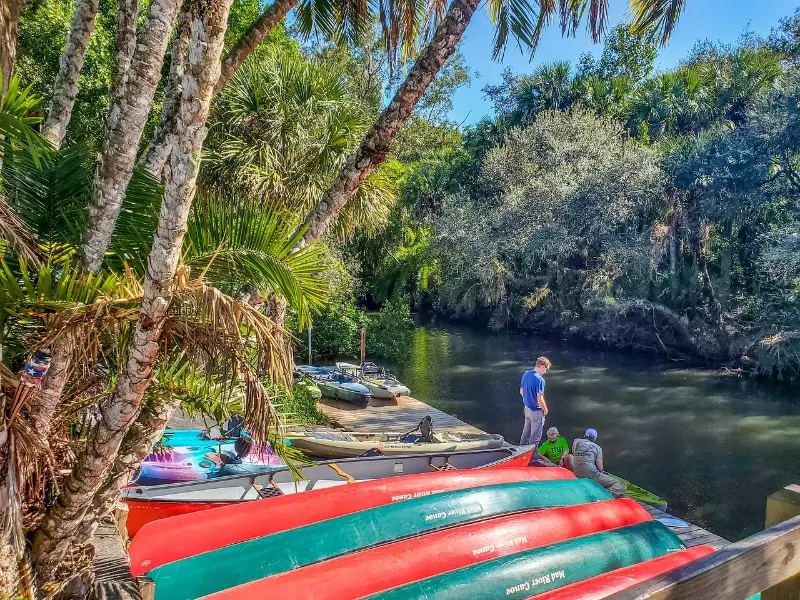
Salt Springs is one of the best choices in the Ocala National Forest for travelers who want a classic spring swim without making the entire day about a long paddle. The spring pool is large enough for snorkeling and floating, the water carries a slight mineral taste and salinity that gives the site its name, and the campground makes it practical for RV travelers who want to stay inside the forest rather than commute from Ocala.
Allow 3–6 hours for swimming, snorkeling, a picnic and a short walk. Campers can easily turn Salt Springs into a two-night base for the northern part of the forest, Lake George and nearby springs.
Quick planning summary
- Location: 13851 N Highway 19, Salt Springs, FL 32134
- Current day-use admission: about $14.50 per person plus tax; children 5 and under free according to the current concession information
- Water temperature: roughly 72°F year-round
- How much time: 3–6 hours for day use; longer if boating or camping
- Best for: swimmers, snorkelers, RV travelers, families and visitors exploring the northern Ocala National Forest
Important current-status note
October 2026 snapshot: The practical details in this guide reflect information published in October 2026. Because this article is scheduled for 2028, recheck admission, operating hours, closures, reservation rules, water conditions and event calendars shortly before traveling. In North Central Florida, spring access can also change after storms, high water, construction or capacity-control measures.
The recreation area changed concession operations in 2026, so it is especially important to verify admission and campground procedures. The current campground information also notes that pets are allowed in the campground but not in the day-use area, and that cell coverage can be poor or nonexistent.
Why Salt Springs is worth a separate visit
Salt Springs has a different feel from Juniper Springs. Juniper is shaded and intimate; Salt Springs is more open and recreation-oriented. The large spring pool is easier for a family to understand immediately: find a shaded base, swim, snorkel, take a break and repeat. It is less about completing a signature activity and more about spending a comfortable half-day outside.
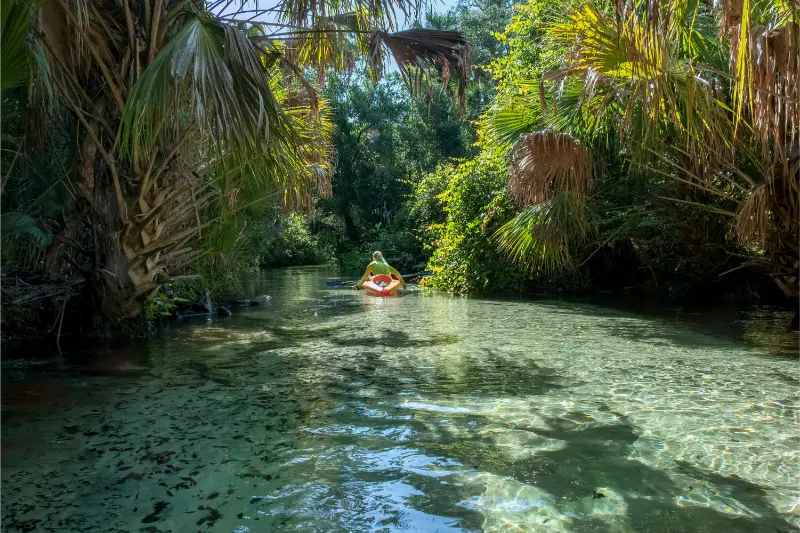
The mineral content also makes it physically distinct. Potassium, magnesium and sodium salts create a slight salinity, and the spring empties into Salt Springs Run toward Lake George. That connection to a much larger water system is one reason the area attracts both swimmers and boaters.
Best things to do at Salt Springs
- Swim in the designated spring area: The clear water is the main reason most day visitors come.
- Snorkel: Bring your own mask if underwater visibility is important to you; conditions can vary after weather events.
- Walk the Bear Swamp Trail: The easy loop adds a dry-land activity when part of the group wants a break from the water.
- Paddle or boat the run: The waterway connects toward Lake George, but boating logistics are separate from the swimming area.
- Camp: Salt Springs has one of the most developed campgrounds in the national forest, including full-hookup RV sites.
Swimming area versus marina: do not confuse them
The recreation area’s spring pool is the place for swimming and snorkeling. The separate Salt Springs Marina is a boat-launch facility, and current rules specifically prohibit swimming and wading there. If you are towing a boat, confirm the correct entrance and the current launch fee rather than assuming your day-use spring admission covers every facility.
Families, teenagers and older travelers
Salt Springs is a strong multi-generation choice because everyone can use the same base. Young children can stay near shallower portions under close supervision, school-age kids can snorkel, teenagers can spend longer in the water and older adults can alternate between shade and short swims. The biggest limitation is not age but comfort with cool water, sun exposure and walking on wet surfaces.
For mixed-age groups, the most reliable rhythm is one demanding activity and one easy activity per day. Babies and toddlers need predictable shade and breaks; school-age children usually respond well to a clear mission such as spotting fish or horses; teenagers appreciate independence, photography and an activity with some movement; older adults benefit when heat, walking distance, seating and restroom access are considered before arrival.
Accessibility and mobility
Current site information lists accessible parking and restrooms, but spring entry itself can still be slippery and physically demanding. Travelers who need handrails, specific transfer points or very short routes should confirm the current condition of the swimming access before arrival. A picnic-focused visit can still work even if not everyone enters the water.
Best time to go
Weekday mornings are the easiest choice in late spring and summer. The spring stays cool even when the air is hot, and midday crowds can make the pool feel much busier. Fall is underrated: warm afternoons, fewer school-break crowds and a forest that is still green. Winter visitors should pack dry layers because the 72°F water feels very different when the air is cool.
Camping at Salt Springs
Campers should reserve early for popular weekends. The campground is unusually useful for RV travelers because it includes full-hookup sites, but tent camping is also available. Current rules limit stays and require food storage because bears and raccoons are active. Treat those rules as part of the destination, not administrative fine print.
Food, water and connectivity
Bring enough food and drinking water for the day. The forest is not a place where I would rely on quick delivery apps or last-minute errands. Cell service can be limited, so save directions, reservation confirmations and emergency contacts offline before leaving Ocala.
Common mistakes to avoid
- driving to the marina when your plan is to swim
- assuming pets can enter the day-use spring area
- relying on mobile service for every payment or reservation
- forgetting that cool spring water can chill young children quickly
- trying to combine Salt Springs with too many distant Ocala attractions on the same day
How to combine Salt Springs with nearby springs
A full Salt Springs day does not need another swimming stop. If you are staying in the forest for several nights, compare it with Silver Glen Springs on another day, or use Alexander Springs for a separate day. Travelers based in Ocala should allow a meaningful drive each way and avoid treating the national forest as a quick downtown detour.
Official information to check before you go
Check Recreation.gov for Salt Springs and the official local visitor listing for the latest day-use, campground and access information.
Final thoughts
Salt Springs is at its best when you give it enough time to slow down. It is not a checklist attraction. Set up in the shade, swim more than once, take a walk and let the day feel like a spring day rather than a race between stops. For families and RV travelers in particular, that simplicity is the appeal.
Who should choose Salt Springs over other springs?
Choose Salt Springs if you want a broad swimming day, a developed campground or an RV-friendly base. It is also a good option when some people want to snorkel while others simply want shade and a picnic. Skip it if your only goal is a guided boat tour, an easy urban-style visitor center or a short stop on a tightly timed road trip.
Compared with the eastern spring sites, Salt Springs feels more like a place to settle in for several hours. That is a strength when you are camping, but a weakness if you are trying to fit it between Downtown Ocala and a horse event on the same afternoon.
A practical day-use timetable
Aim to arrive in the first hour after opening, choose your picnic base and swim before the strongest sun. Take a long midday break for lunch and the Bear Swamp Trail, then return to the water for a shorter second session. Leave before everyone is exhausted; the drive back toward Ocala or your campground will feel longer after a full day in cold water and sun.
A better plan for a full day at Salt Springs
Arrive early, choose a shaded picnic base, swim before the brightest midday sun, then take a long lunch break. Walk Bear Swamp Trail after the first swim while everyone is still comfortable, and return to the water only if the group wants a second session. This rhythm works better than staying in the spring continuously for four hours.
Campers can move boating, fishing or a longer trail to a separate day. The value of staying overnight is that you do not need to compress every forest activity into one visit.
Practical planning checklist
- save the official address and current operating information before leaving your hotel
- check weather, heat index and lightning risk on the morning of the visit
- keep water, dry clothing and basic first-aid supplies in the vehicle
- confirm any reservation or timed-entry requirement separately from admission
- leave enough time between activities for food, restrooms and traffic
Ocala and Marion County are easiest to enjoy when the schedule has room to absorb a change. A delayed tour, full parking lot or sudden storm should alter the order of the day, not destroy the entire itinerary.
Extra planning advice for a smoother Ocala trip
Ocala looks compact when viewed on a statewide map, but the county spreads across horse country, the I-75 corridor, Silver Springs, Dunnellon and the Ocala National Forest. Before committing to a schedule, plot the exact entrances of the places you intend to visit. A route that appears to involve three nearby attractions can become several hours of driving when one stop is west of the city and another is deep in the forest. Grouping activities by area usually improves the trip more than adding one extra attraction.
Weather deserves the same attention. From late spring through early fall, start strenuous outdoor activities early, protect the hottest part of the afternoon for lunch or an indoor stop, and keep a rain alternative available. Thunderstorms can arrive quickly and may close swimming areas, outdoor arenas or trails even when the morning was clear. In winter, the opposite problem appears: spring water remains relatively constant while cool air makes getting out of the water uncomfortable, especially for children and older travelers.
Carry drinking water in the car even when the attraction sells beverages. Rural recreation areas may have limited service, and a short delay can become uncomfortable in heat. Download maps, reservation confirmations and important phone numbers before leaving strong cell coverage. If you have medication, mobility equipment or food that must stay cool, plan for those needs before entering the forest rather than assuming facilities will be equivalent to a city attraction.
Finally, leave at least one flexible block in every day. Ocala is most enjoyable when a spring, horse event, museum or scenic drive has enough time to breathe. The region is not improved by rushing from one parking lot to another. A slower schedule also makes it easier to respond to capacity limits, delayed shows, a child who needs a rest, or a storm that changes the order of the day.