

Clear springs and forested waterways are among Central Florida’s most distinctive landscapes, but you do not have to swim, kayak or take on a long hike to appreciate them. The Ocala area can be a good base for travelers who prefer gentle nature, photography and a few well-chosen cultural stops. Glass-bottom boats reveal freshwater habitats, short walks show how the forest changes between sandhills and hammocks, and a small-town afternoon provides a rest from outdoor activities. Four days are enough to enjoy these contrasts without turning the journey into a contest of endurance.
This itinerary uses Ocala or nearby Silver Springs as a base, with selective visits to Silver Springs State Park, forest recreation areas and local history. It is written for adults, families and older visitors who want to stay mostly dry. Some springs are primarily swimming areas, and not every site has easy land access or comfortable facilities. Check each destination individually and be prepared to replace an outing when storm damage, high water or weather affects access.
Compare the springs outings
| Place or activity | Water entry required? | Important check |
|---|---|---|
| Silver Springs glass-bottom boat | No | Reserve a suitable departure; check accessible boat |
| Silver Springs gardens | No | Confirm open paths and trail surfaces |
| Ocala National Forest recreation area | No for selected overlooks | Site-specific fees and open land access vary |
| Downtown Ocala | No | Opening hours for your preferred cultural stop |
Choose one Ocala-area base for four nights
Ocala offers hotels, grocery stores and restaurants that make daily logistics easier than staying far inside a forest. A base near Silver Springs may reduce the drive to the famous headspring, but accommodation options can be more limited. Compare the exact routes to your priority stops and whether you prefer a hotel with reliable elevators or a quiet rental with a kitchen. Travelers who need accessible bathrooms should request measurements or photographs rather than accepting the generic description “easy access.”
A car is the practical choice for this itinerary. Recreational sites are scattered and public transit does not reliably connect the forest’s entrances. Fuel up before leaving town, and do not assume that a remote recreation area has a café, mobile signal or full restroom facilities. For a multigenerational group, planning one main stop a day makes it easier to return for lunch and a rest. The destination is the landscape itself; there is little benefit in adding a long detour for a second spring simply to collect another name.
Day one: learn how Silver Springs works
Start at the main entrance of Silver Springs State Park, where the clear water and landscaped setting create an accessible introduction to the region. The park is celebrated for its glass-bottom boat tradition, which allows visitors to see underwater features without entering the spring. Follow the appropriate signs for the main visitor entrance, not the separate camping entrance, because facilities and activities differ. The official Silver Springs park information provides current access notices and visitor arrangements.
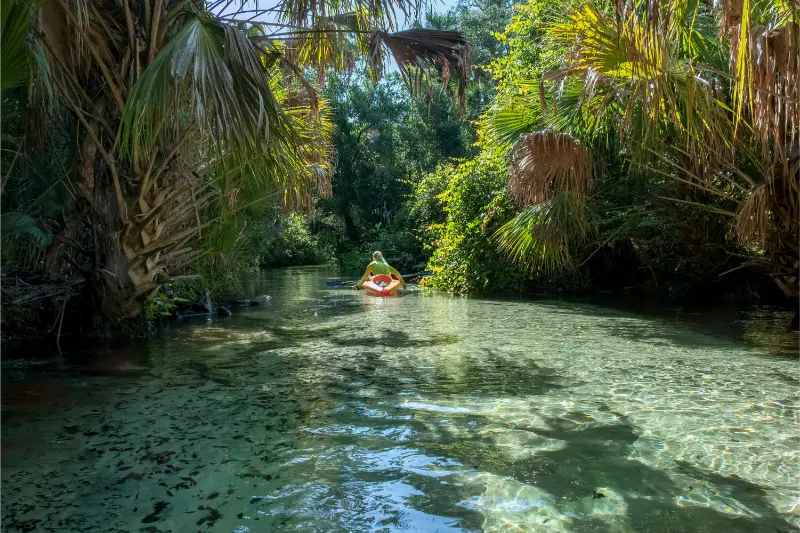
Take time to view the spring from land before boarding a boat. Notice the aquatic vegetation, shadows of large trees and birds feeding along the water. The remarkable clarity is connected to groundwater emerging from limestone formations, not to a swimming-pool filtration system. The spring and river are protected natural environments. No swimming is allowed in the Silver River, making this destination especially suitable for someone who wishes to experience spring scenery entirely from a designated viewing area or boat.
Make glass-bottom boating the main attraction
The glass-bottom boat is a historical experience as well as a nature outing. Visitors can look beneath the surface at spring vents, fish, aquatic plants and changes in the riverbed without needing snorkeling equipment. Shorter tours work well for people with limited stamina, while a longer trip may suit wildlife enthusiasts. Book ahead if the excursion is important, because times and availability can sell out. If someone uses a wheelchair, the park states that an accessible boat operates on selected departures; verify the specific reservation rather than assuming every vessel can accommodate the same equipment.
The Silver Springs boat and amenities page provides useful details about tours, trails and access. Remember that seeing an alligator or manatee is never guaranteed. A cloudy day may change the view through the glass, and rain can affect the schedule. Do not lean dangerously over railings or encourage children to stand during portions when the operator requires passengers to remain seated. After the ride, a quiet garden walk and a long lunch can fill the day beautifully.
Day two: gardens, the historic setting and an easy trail
Return to selected parts of Silver Springs State Park rather than driving straight to another distant recreation site. Its landscaped gardens and short paths let visitors experience the place from above the water, which contrasts with the perspective from the boat. The park’s history stretches from nineteenth-century tourism to modern conservation. Look for interpretive displays that explain how tourism changed the spring and why water quality and habitat protection matter today. Avoid assuming that every old viewpoint is open; for example, the park has posted closure of the Sea Hunt Deck while other trails have remained available.
Choose your walking distance in advance. Families with a stroller may prefer paved areas and frequent stops; keen walkers can ask about longer routes. Some forest sections have sandy surfaces that tire people using walkers or wheelchairs. For a child, observing fish and trees can be more engaging than an extended hike. An older visitor may enjoy the view from one accessible spot for thirty minutes instead of trying to complete several trails. Carry water, and finish before the hottest time of the day.
Day three: sample Ocala National Forest without a swim
Ocala National Forest is large, and a map dotted with spring symbols can tempt visitors to schedule too many sites. Select one recreation area with confirmed day-use access and choose a short terrestrial experience there. Juniper Springs, Alexander Springs, Silver Glen Springs and other sites have different parking arrangements, fee structures and facilities, and some areas are designed primarily for swimmers or paddlers. You can still appreciate the water from approved viewpoints, but do not assume that every spring has a full loop trail or public shoreline access outside designated zones.
Consult the U.S. Forest Service Ocala recreation information and the individual site before leaving. Check whether a concession manages entry, whether a pass covers the area and whether food or potable water is available. On a quiet day, the simple experience of watching ripples and listening to the forest can be sufficient. Do not climb fences to reach the bank, touch fragile submerged plants or feed fish. If access is limited, choose a public forest trail or return to an open state-park facility rather than improvising at a closed gate.
Understand forest roads and wildlife risks
Roads through the forest may be remote and poorly served, with sandy side tracks that are inappropriate for some rental cars. Stay on paved or designated public routes and park only where permitted. Cell reception may disappear. Download a map for offline use and tell someone when you expect to return if venturing away from a populated recreation area. Wildlife includes deer, birds, turtles and other animals, but seeing black bears or other uncommon species is not an attraction you can schedule. Never feed or approach them.
Families should keep children close beside natural water, where shorelines can drop away suddenly and reptiles may be present. Swimming restrictions differ by site, but this itinerary does not require entering any water. Wear shoes with traction for damp surfaces and keep away from deep forest trails when thunderstorms develop. Travelers with a mobility limitation should verify path grade and restrooms before driving an hour to a location. Sometimes the most responsible decision is to enjoy the forest from a roadside observation point and return to town earlier than planned.
Day four: Ocala town life and a flexible finale
Spend the final full day exploring Ocala itself, which provides a change of pace from the forest. Choose a historic downtown stroll, local cultural attraction or leisurely lunch according to current opening hours and the group’s interests. Ocala’s horse-country surroundings are part of its identity, but do not approach private paddocks, enter farms without permission or assume every equestrian center offers public tours. A designated visitor activity is very different from an ordinary private training facility.
The afternoon can be used for an optional return to Silver Springs or for shopping, packing and rest. Families might appreciate a local park with a playground, while a couple may prefer an arts venue or café. If the weather was poor earlier, this day becomes a valuable buffer for the glass-bottom boat. There is no need to cross the state to justify a Florida vacation. Four days focused on freshwater landscapes and local life offer a distinct experience from beaches and theme parks.
Best season for a gentle springs visit
Cooler months often make daytime walking more pleasant and reduce the challenge of heat, but they can also bring chilly mornings. Summers are humid, with afternoon thunderstorms common in the region. Even a forested path can be hot and still, and mosquitoes may be active. For travelers who are not swimming, pleasant walking weather may matter more than the water temperature. Choose morning activities and avoid planning an exposed tour during likely lightning periods.
Holiday weekends bring pressure to some popular recreation areas, and entry may be restricted when parking reaches capacity. Arrive early if a specific spring is important to you, especially when weather looks favorable. Never assume that an annual national-park pass covers all state parks or concession-managed forest sites; admission systems can differ. A short vacation is smoother when major tickets are arranged ahead of time and backup outings are already known.
Costs, comfort and responsible travel
Budget for accommodation, car costs, fuel, park admission and a selected boat tour. Most spending decisions are more meaningful than searching for a universal “cheap springs” ranking. A hotel breakfast may reduce meal costs, but a remote recreation area may require a packed picnic. If the group plans to visit several different systems of parks, compare individual fees with any pass available for those exact sites. Confirm prices from the official operator; old travel articles may quote outdated amounts.
Protect the places you came to see. Springs respond to changes in groundwater, nutrient loading and human pressure. Use restrooms and designated paths, carry out rubbish and avoid trampling vegetation to reach a photo angle. The most rewarding image may be a clear view through a glass-bottom boat rather than a staged pose in sensitive habitat. You can enjoy Ocala’s springs deeply without swimming a single minute, and doing so can be both accessible and conservation-minded.
Frequently asked questions
Can you visit Silver Springs without swimming or kayaking?
Yes. The park’s famous glass-bottom boats, gardens and designated walking routes make it a strong choice for visitors who want to stay dry. Swimming is not permitted in the Silver River.
Do all Ocala National Forest springs have the same facilities?
No. Entry arrangements, trails, fees, water access and restrooms differ. Check the Forest Service listing for the specific recreation area before traveling.
Is the glass-bottom boat suitable for a wheelchair user?
Silver Springs advertises an accessible boat on selected departures, not necessarily every departure. Verify the available date, boarding and individual equipment needs directly when booking.