Category: Ocala National Forest

  • Ocala Springs Without Swimming: Four Days of Glass-Bottom Boats and Forest

    Ocala Springs Without Swimming: Four Days of Glass-Bottom Boats and Forest

    Clear springs and forested waterways are among Central Florida’s most distinctive landscapes, but you do not have to swim, kayak or take on a long hike to appreciate them. The Ocala area can be a good base for travelers who prefer gentle nature, photography and a few well-chosen cultural stops. Glass-bottom boats reveal freshwater habitats, short walks show how the forest changes between sandhills and hammocks, and a small-town afternoon provides a rest from outdoor activities. Four days are enough to enjoy these contrasts without turning the journey into a contest of endurance.

    This itinerary uses Ocala or nearby Silver Springs as a base, with selective visits to Silver Springs State Park, forest recreation areas and local history. It is written for adults, families and older visitors who want to stay mostly dry. Some springs are primarily swimming areas, and not every site has easy land access or comfortable facilities. Check each destination individually and be prepared to replace an outing when storm damage, high water or weather affects access.

    Compare the springs outings

    Place or activity Water entry required? Important check
    Silver Springs glass-bottom boat No Reserve a suitable departure; check accessible boat
    Silver Springs gardens No Confirm open paths and trail surfaces
    Ocala National Forest recreation area No for selected overlooks Site-specific fees and open land access vary
    Downtown Ocala No Opening hours for your preferred cultural stop

    Choose one Ocala-area base for four nights

    Ocala offers hotels, grocery stores and restaurants that make daily logistics easier than staying far inside a forest. A base near Silver Springs may reduce the drive to the famous headspring, but accommodation options can be more limited. Compare the exact routes to your priority stops and whether you prefer a hotel with reliable elevators or a quiet rental with a kitchen. Travelers who need accessible bathrooms should request measurements or photographs rather than accepting the generic description “easy access.”

    A car is the practical choice for this itinerary. Recreational sites are scattered and public transit does not reliably connect the forest’s entrances. Fuel up before leaving town, and do not assume that a remote recreation area has a café, mobile signal or full restroom facilities. For a multigenerational group, planning one main stop a day makes it easier to return for lunch and a rest. The destination is the landscape itself; there is little benefit in adding a long detour for a second spring simply to collect another name.

    Day one: learn how Silver Springs works

    Start at the main entrance of Silver Springs State Park, where the clear water and landscaped setting create an accessible introduction to the region. The park is celebrated for its glass-bottom boat tradition, which allows visitors to see underwater features without entering the spring. Follow the appropriate signs for the main visitor entrance, not the separate camping entrance, because facilities and activities differ. The official Silver Springs park information provides current access notices and visitor arrangements.
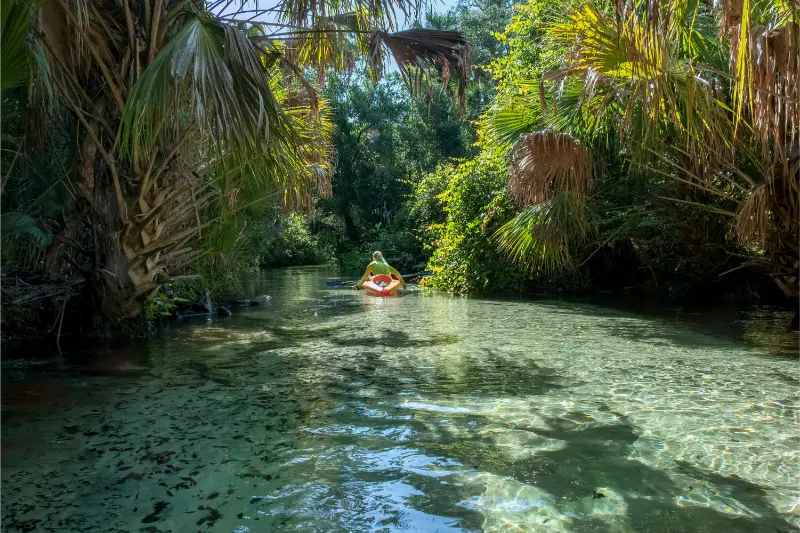
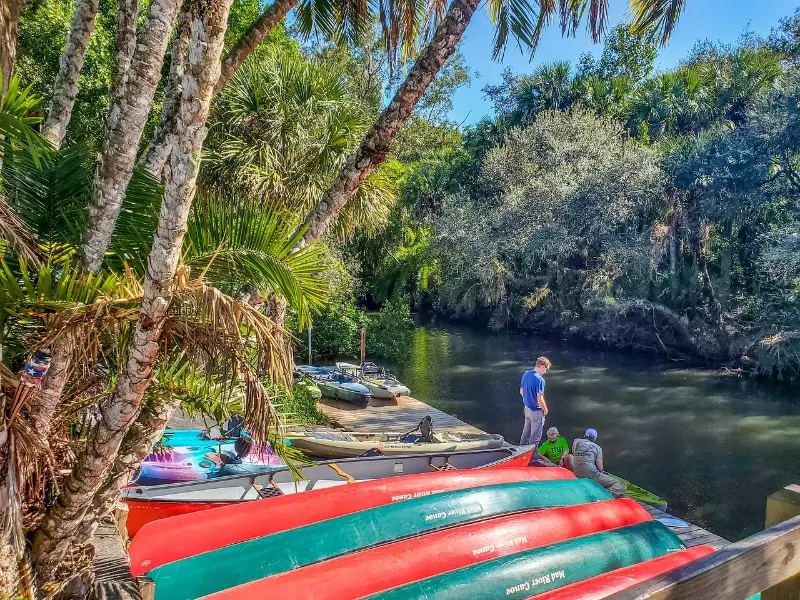
    Kayaking on Juniper Springs Creek Florida

    Take time to view the spring from land before boarding a boat. Notice the aquatic vegetation, shadows of large trees and birds feeding along the water. The remarkable clarity is connected to groundwater emerging from limestone formations, not to a swimming-pool filtration system. The spring and river are protected natural environments. No swimming is allowed in the Silver River, making this destination especially suitable for someone who wishes to experience spring scenery entirely from a designated viewing area or boat.

    Make glass-bottom boating the main attraction

    The glass-bottom boat is a historical experience as well as a nature outing. Visitors can look beneath the surface at spring vents, fish, aquatic plants and changes in the riverbed without needing snorkeling equipment. Shorter tours work well for people with limited stamina, while a longer trip may suit wildlife enthusiasts. Book ahead if the excursion is important, because times and availability can sell out. If someone uses a wheelchair, the park states that an accessible boat operates on selected departures; verify the specific reservation rather than assuming every vessel can accommodate the same equipment.

    The Silver Springs boat and amenities page provides useful details about tours, trails and access. Remember that seeing an alligator or manatee is never guaranteed. A cloudy day may change the view through the glass, and rain can affect the schedule. Do not lean dangerously over railings or encourage children to stand during portions when the operator requires passengers to remain seated. After the ride, a quiet garden walk and a long lunch can fill the day beautifully.

    Day two: gardens, the historic setting and an easy trail

    Return to selected parts of Silver Springs State Park rather than driving straight to another distant recreation site. Its landscaped gardens and short paths let visitors experience the place from above the water, which contrasts with the perspective from the boat. The park’s history stretches from nineteenth-century tourism to modern conservation. Look for interpretive displays that explain how tourism changed the spring and why water quality and habitat protection matter today. Avoid assuming that every old viewpoint is open; for example, the park has posted closure of the Sea Hunt Deck while other trails have remained available.

    Choose your walking distance in advance. Families with a stroller may prefer paved areas and frequent stops; keen walkers can ask about longer routes. Some forest sections have sandy surfaces that tire people using walkers or wheelchairs. For a child, observing fish and trees can be more engaging than an extended hike. An older visitor may enjoy the view from one accessible spot for thirty minutes instead of trying to complete several trails. Carry water, and finish before the hottest time of the day.

    Day three: sample Ocala National Forest without a swim

    Ocala National Forest is large, and a map dotted with spring symbols can tempt visitors to schedule too many sites. Select one recreation area with confirmed day-use access and choose a short terrestrial experience there. Juniper Springs, Alexander Springs, Silver Glen Springs and other sites have different parking arrangements, fee structures and facilities, and some areas are designed primarily for swimmers or paddlers. You can still appreciate the water from approved viewpoints, but do not assume that every spring has a full loop trail or public shoreline access outside designated zones.

    Consult the U.S. Forest Service Ocala recreation information and the individual site before leaving. Check whether a concession manages entry, whether a pass covers the area and whether food or potable water is available. On a quiet day, the simple experience of watching ripples and listening to the forest can be sufficient. Do not climb fences to reach the bank, touch fragile submerged plants or feed fish. If access is limited, choose a public forest trail or return to an open state-park facility rather than improvising at a closed gate.

    Understand forest roads and wildlife risks

    Roads through the forest may be remote and poorly served, with sandy side tracks that are inappropriate for some rental cars. Stay on paved or designated public routes and park only where permitted. Cell reception may disappear. Download a map for offline use and tell someone when you expect to return if venturing away from a populated recreation area. Wildlife includes deer, birds, turtles and other animals, but seeing black bears or other uncommon species is not an attraction you can schedule. Never feed or approach them.

    Families should keep children close beside natural water, where shorelines can drop away suddenly and reptiles may be present. Swimming restrictions differ by site, but this itinerary does not require entering any water. Wear shoes with traction for damp surfaces and keep away from deep forest trails when thunderstorms develop. Travelers with a mobility limitation should verify path grade and restrooms before driving an hour to a location. Sometimes the most responsible decision is to enjoy the forest from a roadside observation point and return to town earlier than planned.

    Day four: Ocala town life and a flexible finale

    Spend the final full day exploring Ocala itself, which provides a change of pace from the forest. Choose a historic downtown stroll, local cultural attraction or leisurely lunch according to current opening hours and the group’s interests. Ocala’s horse-country surroundings are part of its identity, but do not approach private paddocks, enter farms without permission or assume every equestrian center offers public tours. A designated visitor activity is very different from an ordinary private training facility.

    The afternoon can be used for an optional return to Silver Springs or for shopping, packing and rest. Families might appreciate a local park with a playground, while a couple may prefer an arts venue or café. If the weather was poor earlier, this day becomes a valuable buffer for the glass-bottom boat. There is no need to cross the state to justify a Florida vacation. Four days focused on freshwater landscapes and local life offer a distinct experience from beaches and theme parks.

    Best season for a gentle springs visit

    Cooler months often make daytime walking more pleasant and reduce the challenge of heat, but they can also bring chilly mornings. Summers are humid, with afternoon thunderstorms common in the region. Even a forested path can be hot and still, and mosquitoes may be active. For travelers who are not swimming, pleasant walking weather may matter more than the water temperature. Choose morning activities and avoid planning an exposed tour during likely lightning periods.

    Holiday weekends bring pressure to some popular recreation areas, and entry may be restricted when parking reaches capacity. Arrive early if a specific spring is important to you, especially when weather looks favorable. Never assume that an annual national-park pass covers all state parks or concession-managed forest sites; admission systems can differ. A short vacation is smoother when major tickets are arranged ahead of time and backup outings are already known.

    Costs, comfort and responsible travel

    Budget for accommodation, car costs, fuel, park admission and a selected boat tour. Most spending decisions are more meaningful than searching for a universal “cheap springs” ranking. A hotel breakfast may reduce meal costs, but a remote recreation area may require a packed picnic. If the group plans to visit several different systems of parks, compare individual fees with any pass available for those exact sites. Confirm prices from the official operator; old travel articles may quote outdated amounts.

    Protect the places you came to see. Springs respond to changes in groundwater, nutrient loading and human pressure. Use restrooms and designated paths, carry out rubbish and avoid trampling vegetation to reach a photo angle. The most rewarding image may be a clear view through a glass-bottom boat rather than a staged pose in sensitive habitat. You can enjoy Ocala’s springs deeply without swimming a single minute, and doing so can be both accessible and conservation-minded.

    Frequently asked questions

    Can you visit Silver Springs without swimming or kayaking?

    Yes. The park’s famous glass-bottom boats, gardens and designated walking routes make it a strong choice for visitors who want to stay dry. Swimming is not permitted in the Silver River.

    Do all Ocala National Forest springs have the same facilities?

    No. Entry arrangements, trails, fees, water access and restrooms differ. Check the Forest Service listing for the specific recreation area before traveling.

    Is the glass-bottom boat suitable for a wheelchair user?

    Silver Springs advertises an accessible boat on selected departures, not necessarily every departure. Verify the available date, boarding and individual equipment needs directly when booking.
  • Salt Springs Recreation Area Guide: Swimming, Snorkeling, Camping, Fees and Ocala National Forest Tips

    Salt Springs Recreation Area Guide: Swimming, Snorkeling, Camping, Fees and Ocala National Forest Tips

    Salt Springs is one of the best choices in the Ocala National Forest for travelers who want a classic spring swim without making the entire day about a long paddle. The spring pool is large enough for snorkeling and floating, the water carries a slight mineral taste and salinity that gives the site its name, and the campground makes it practical for RV travelers who want to stay inside the forest rather than commute from Ocala.

    Allow 3–6 hours for swimming, snorkeling, a picnic and a short walk. Campers can easily turn Salt Springs into a two-night base for the northern part of the forest, Lake George and nearby springs.

    Quick planning summary

    • Location: 13851 N Highway 19, Salt Springs, FL 32134
    • Current day-use admission: about $14.50 per person plus tax; children 5 and under free according to the current concession information
    • Water temperature: roughly 72°F year-round
    • How much time: 3–6 hours for day use; longer if boating or camping
    • Best for: swimmers, snorkelers, RV travelers, families and visitors exploring the northern Ocala National Forest

    Important current-status note

    October 2026 snapshot: The practical details in this guide reflect information published in October 2026. Because this article is scheduled for 2028, recheck admission, operating hours, closures, reservation rules, water conditions and event calendars shortly before traveling. In North Central Florida, spring access can also change after storms, high water, construction or capacity-control measures.

    The recreation area changed concession operations in 2026, so it is especially important to verify admission and campground procedures. The current campground information also notes that pets are allowed in the campground but not in the day-use area, and that cell coverage can be poor or nonexistent.

    Why Salt Springs is worth a separate visit

    Salt Springs has a different feel from Juniper Springs. Juniper is shaded and intimate; Salt Springs is more open and recreation-oriented. The large spring pool is easier for a family to understand immediately: find a shaded base, swim, snorkel, take a break and repeat. It is less about completing a signature activity and more about spending a comfortable half-day outside.

    Kayaking on Juniper Springs Creek Florida

    The mineral content also makes it physically distinct. Potassium, magnesium and sodium salts create a slight salinity, and the spring empties into Salt Springs Run toward Lake George. That connection to a much larger water system is one reason the area attracts both swimmers and boaters.

    Best things to do at Salt Springs

    • Swim in the designated spring area: The clear water is the main reason most day visitors come.
    • Snorkel: Bring your own mask if underwater visibility is important to you; conditions can vary after weather events.
    • Walk the Bear Swamp Trail: The easy loop adds a dry-land activity when part of the group wants a break from the water.
    • Paddle or boat the run: The waterway connects toward Lake George, but boating logistics are separate from the swimming area.
    • Camp: Salt Springs has one of the most developed campgrounds in the national forest, including full-hookup RV sites.

    Swimming area versus marina: do not confuse them

    The recreation area’s spring pool is the place for swimming and snorkeling. The separate Salt Springs Marina is a boat-launch facility, and current rules specifically prohibit swimming and wading there. If you are towing a boat, confirm the correct entrance and the current launch fee rather than assuming your day-use spring admission covers every facility.

    Families, teenagers and older travelers

    Salt Springs is a strong multi-generation choice because everyone can use the same base. Young children can stay near shallower portions under close supervision, school-age kids can snorkel, teenagers can spend longer in the water and older adults can alternate between shade and short swims. The biggest limitation is not age but comfort with cool water, sun exposure and walking on wet surfaces.

    For mixed-age groups, the most reliable rhythm is one demanding activity and one easy activity per day. Babies and toddlers need predictable shade and breaks; school-age children usually respond well to a clear mission such as spotting fish or horses; teenagers appreciate independence, photography and an activity with some movement; older adults benefit when heat, walking distance, seating and restroom access are considered before arrival.

    Accessibility and mobility

    Current site information lists accessible parking and restrooms, but spring entry itself can still be slippery and physically demanding. Travelers who need handrails, specific transfer points or very short routes should confirm the current condition of the swimming access before arrival. A picnic-focused visit can still work even if not everyone enters the water.

    Best time to go

    Weekday mornings are the easiest choice in late spring and summer. The spring stays cool even when the air is hot, and midday crowds can make the pool feel much busier. Fall is underrated: warm afternoons, fewer school-break crowds and a forest that is still green. Winter visitors should pack dry layers because the 72°F water feels very different when the air is cool.

    Camping at Salt Springs

    Campers should reserve early for popular weekends. The campground is unusually useful for RV travelers because it includes full-hookup sites, but tent camping is also available. Current rules limit stays and require food storage because bears and raccoons are active. Treat those rules as part of the destination, not administrative fine print.

    Food, water and connectivity

    Bring enough food and drinking water for the day. The forest is not a place where I would rely on quick delivery apps or last-minute errands. Cell service can be limited, so save directions, reservation confirmations and emergency contacts offline before leaving Ocala.

    Common mistakes to avoid

    • driving to the marina when your plan is to swim
    • assuming pets can enter the day-use spring area
    • relying on mobile service for every payment or reservation
    • forgetting that cool spring water can chill young children quickly
    • trying to combine Salt Springs with too many distant Ocala attractions on the same day

    How to combine Salt Springs with nearby springs

    A full Salt Springs day does not need another swimming stop. If you are staying in the forest for several nights, compare it with Silver Glen Springs on another day, or use Alexander Springs for a separate day. Travelers based in Ocala should allow a meaningful drive each way and avoid treating the national forest as a quick downtown detour.

    Official information to check before you go

    Check Recreation.gov for Salt Springs and the official local visitor listing for the latest day-use, campground and access information.

    Final thoughts

    Salt Springs is at its best when you give it enough time to slow down. It is not a checklist attraction. Set up in the shade, swim more than once, take a walk and let the day feel like a spring day rather than a race between stops. For families and RV travelers in particular, that simplicity is the appeal.

    Who should choose Salt Springs over other springs?

    Choose Salt Springs if you want a broad swimming day, a developed campground or an RV-friendly base. It is also a good option when some people want to snorkel while others simply want shade and a picnic. Skip it if your only goal is a guided boat tour, an easy urban-style visitor center or a short stop on a tightly timed road trip.

    Compared with the eastern spring sites, Salt Springs feels more like a place to settle in for several hours. That is a strength when you are camping, but a weakness if you are trying to fit it between Downtown Ocala and a horse event on the same afternoon.

    A practical day-use timetable

    Aim to arrive in the first hour after opening, choose your picnic base and swim before the strongest sun. Take a long midday break for lunch and the Bear Swamp Trail, then return to the water for a shorter second session. Leave before everyone is exhausted; the drive back toward Ocala or your campground will feel longer after a full day in cold water and sun.

    A better plan for a full day at Salt Springs

    Arrive early, choose a shaded picnic base, swim before the brightest midday sun, then take a long lunch break. Walk Bear Swamp Trail after the first swim while everyone is still comfortable, and return to the water only if the group wants a second session. This rhythm works better than staying in the spring continuously for four hours.

    Campers can move boating, fishing or a longer trail to a separate day. The value of staying overnight is that you do not need to compress every forest activity into one visit.

    Practical planning checklist

    • save the official address and current operating information before leaving your hotel
    • check weather, heat index and lightning risk on the morning of the visit
    • keep water, dry clothing and basic first-aid supplies in the vehicle
    • confirm any reservation or timed-entry requirement separately from admission
    • leave enough time between activities for food, restrooms and traffic

    Ocala and Marion County are easiest to enjoy when the schedule has room to absorb a change. A delayed tour, full parking lot or sudden storm should alter the order of the day, not destroy the entire itinerary.

    Extra planning advice for a smoother Ocala trip

    Ocala looks compact when viewed on a statewide map, but the county spreads across horse country, the I-75 corridor, Silver Springs, Dunnellon and the Ocala National Forest. Before committing to a schedule, plot the exact entrances of the places you intend to visit. A route that appears to involve three nearby attractions can become several hours of driving when one stop is west of the city and another is deep in the forest. Grouping activities by area usually improves the trip more than adding one extra attraction.

    Weather deserves the same attention. From late spring through early fall, start strenuous outdoor activities early, protect the hottest part of the afternoon for lunch or an indoor stop, and keep a rain alternative available. Thunderstorms can arrive quickly and may close swimming areas, outdoor arenas or trails even when the morning was clear. In winter, the opposite problem appears: spring water remains relatively constant while cool air makes getting out of the water uncomfortable, especially for children and older travelers.

    Carry drinking water in the car even when the attraction sells beverages. Rural recreation areas may have limited service, and a short delay can become uncomfortable in heat. Download maps, reservation confirmations and important phone numbers before leaving strong cell coverage. If you have medication, mobility equipment or food that must stay cool, plan for those needs before entering the forest rather than assuming facilities will be equivalent to a city attraction.

    Finally, leave at least one flexible block in every day. Ocala is most enjoyable when a spring, horse event, museum or scenic drive has enough time to breathe. The region is not improved by rushing from one parking lot to another. A slower schedule also makes it easier to respond to capacity limits, delayed shows, a child who needs a rest, or a storm that changes the order of the day.

  • Four Days in Ocala National Forest: Springs, Pinewoods and Quiet Lakes

    Four Days in Ocala National Forest: Springs, Pinewoods and Quiet Lakes

    Ocala National Forest is one of Central Florida’s most interesting places to spend time away from developed resorts. Northeast of Ocala, the landscape holds longleaf and sand-pine habitats, natural springs, quiet lakes and sandy forest roads. It is also an environment where casual travel assumptions can cause problems. Not every road is paved, there are protected wildlife areas, and recreation sites may have separate concession fees or required vehicle reservations. This four-day itinerary keeps the main activities within manageable driving distances and deliberately leaves room for a long lunch or a short scenic walk. It works best with a car, a well-chosen overnight base and realistic plans for heat, insects and occasional limited mobile coverage.

    What is actually inside the national forest?

    Visitors often confuse Ocala National Forest with the city of Ocala and with Silver Springs State Park. The forest extends over a broad region east of the city, and its famous recreation areas include Juniper Springs, Alexander Springs, Silver Glen Springs and lakeside facilities. Silver Springs State Park near the city is a separate state-managed destination. This matters for admission fees, camping systems, park rules and navigation. The forest is not a single gated park where one ticket opens every spring and boat launch. Before leaving, download maps from the U.S. Forest Service and identify the exact road and entrance for your planned activity. Driving an unsuitable rental car down a remote sandy track to save a few minutes is rarely worth the risk.

    Day 1: Juniper Springs and its distinctive setting

    Juniper Springs Recreation Area offers a classic first introduction, with forested scenery, historic recreational infrastructure and spring water. Choose either a short swimming visit when open and safe, or a calm interpretive outing emphasizing the surroundings. The Juniper Creek canoe run is not an automatic beginner paddle: it has route-specific requirements, possible obstacles and shuttle logistics that must be confirmed with the operator. A visitor whose confidence is limited should not book it simply because spring-run photographs look tranquil. Arrive with water, shade protection and dry clothes, and read the facility rules about food, pets and equipment. If you have children, make a pre-agreed departure time so cold-water swimming doesn’t extend into the thunderstorm-prone afternoon. A forest picnic can finish the day without another hour of driving.

    Kayaking on Juniper Springs Creek Florida

    Day 2: Alexander Springs, where reservations can matter

    Alexander Springs Recreation Area has a large clear spring pool and a different feel from Juniper, often appealing to families and visitors interested in swimming or kayaking. The official Recreation.gov listing states that on Saturdays, Sundays and holidays from Memorial Day through Labor Day, visitors using personal vehicles need an advance vehicle access reservation. The reservation is separate from the per-person entry fee, and the system includes its own booking window. Large vehicles and trailers are subject to additional restrictions. Don’t set out with a rented RV expecting that a standard car reservation will cover it. If the appropriate pass is unavailable, choose a forest trail or authorized lakeside facility rather than attempt to park on the roadside or enter illegally. Follow posted water rules and never dive into an unfamiliar part of the pool.

    Day 3: Silver Glen Springs and the Lake George edge

    Silver Glen Springs lies farther east toward Lake George and introduces the relationship between a spring run and one of Florida’s large lakes. The day works well as a short scenic drive with a single recreation stop, rather than another packed day of swimming. Check whether the recreation area is open, the current fee, and which activities are permitted; rules may differ from Juniper or Alexander. The lake itself is an expansive natural environment with changing wind, boat traffic and wildlife. Do not launch a small craft without knowing the return route, conditions and where open water begins. Travelers interested in birding can stay on official paths or overlooks and enjoy the forest canopy. If someone has mobility limitations, ask concession staff about the path from parking to the viewing location before purchasing an admission or equipment ticket.

    Day 4: a quiet lake, a short trail or the neighboring city

    Use the last full day to avoid repeating the same experience. Clearwater Lake Recreation Area offers a forest lake setting distinct from the large spring pools, while other signed trails may suit walkers who enjoy pinewoods and scrub habitat. Decide by weather and energy rather than by the number of attractions remaining on a list. If you have tired children or need more indoor comfort, head back toward Ocala or Silver Springs for a museum or a permitted guided boat option outside the national forest. An especially effective fourth day is a short morning nature walk followed by lunch and an early return to the hotel pool. Forest roads can become slower than expected, and it is better to leave before dark than find a remote trailhead with little cell service.

    Choosing accommodations: Ocala, forest cabin or campground?

    Ocala provides the broadest range of standard hotels, groceries and medical services, but may mean more driving to the eastern recreation areas. A campground in the forest offers shorter access to nature and quieter evenings, but also requires attention to site dimensions, hookups, gate hours, wildlife-safe food storage and campfire restrictions. Alexander Springs and Juniper Springs have established campground options subject to reservation rules; do not presume that a site will be available on arrival. If traveling with an infant or an older relative, assess nighttime bathroom distance, air-conditioning, sleeping arrangements and the ability to leave if weather becomes severe. A cabin listed outside the forest may be a long drive from the spring despite a similar place name. Confirm the exact address and access road before paying.

    Water safety in an apparently crystal-clear environment

    Clear water can create a false sense of security. Spring pools may contain deeper areas, submerged objects and cold water that affects breathing and endurance. A non-swimmer should remain out of deep areas and use appropriate approved flotation where allowed. Never leave children unattended by water, even for a quick photograph. Swimming rules differ across recreation areas, and diving or snorkeling activities may require separate permits or certifications. In Florida, alligators are part of natural freshwater ecosystems; keep a respectful distance and never feed animals. If a sign says no swimming or an area is closed for habitat protection, the prohibition is not optional. Lightning is another serious hazard—leave water and exposed shoreline for a substantial shelter at the first sound of thunder.

    Paddling and boating: hire judgment, not just equipment

    A kayak rental is not proof that a route is suitable for beginners. Ask specifically about paddling distance, downstream obstacles, wind exposure, return transfers, cancellation policies and age limits. A clear spring-fed run can become a more demanding adventure when it joins a broader waterway. Wear the correct personal flotation device, carry drinking water and know how to contact help. New paddlers should favor a guided short outing on an approved route. Senior travelers who want to paddle should be judged by their experience and ability, not an arbitrary age threshold. Families with small children may be happier observing the water from a designated bank rather than committing to several hours with no easy exit.

    Forest driving, parking and wildlife precautions

    Use signed main roads and designated parking facilities; an apparent shortcut on a navigation app can lead to unmaintained sand tracks. Tell someone where you are going if traveling to a quiet trailhead. Fill the fuel tank in town, especially if your phone navigation relies on continuous data service. Watch for wildlife and do not stop in a traffic lane to photograph a bear or deer. Never approach or feed a bear. Keep food secured in a vehicle or approved container, and pack out all trash. Sunscreen alone is insufficient: add protective clothing and insect repellent appropriate for the conditions. Some recreation sites restrict pets, alcohol, glass or grills; verify the chosen facility’s rules before loading the cooler.

    Who will enjoy this forest trip?

    For adults who want quiet, spring viewing and birdwatching may be the central reward. Children aged six to twelve can learn to distinguish a spring, lake and forest habitat and may find a short nature scavenger hunt more fun than a formal lecture. Teenagers could enjoy an appropriately supervised paddle or wildlife photography, but should understand that remote areas are not a place to wander off alone. A visitor with limited mobility can still participate in scenic drives and certain developed recreation areas, though exact path accessibility must be confirmed. People with sensory sensitivities may appreciate a calm weekday visit, while loud weekend crowds around spring pools may be uncomfortable. The trip should be tailored to the least suitable environment for someone in the group, not just the most adventurous person’s preferences.

    Best season, costs and reservation priorities

    Spring and fall are often pleasant for walking, while summer days bring heat and high demand at the swimming areas. Winter air may be cool even when spring water stays comparatively stable in temperature. Book campsites or limited vehicle access ahead, especially for Alexander Springs on designated summer weekends. Keep a budget for separate recreation fees, groceries, equipment and lodging. If staying in Ocala, fuel and driving time may exceed the apparent savings from an inexpensive hotel. Avoid purchasing multiple advance water-activity tickets when the weather forecast is unsettled. Check U.S. Forest Service alerts, county weather and Recreation.gov reservation rules shortly before leaving. An itinerary that keeps an alternate dry-land day is easier on everyone.

    Four-day itinerary table

    DaySiteExperienceMain caution
    1Juniper SpringsHistoric spring setting and optional swimCanoe run requires separate planning
    2Alexander SpringsClear pool and picnic daySummer weekend vehicle reservation
    3Silver Glen / Lake GeorgeSpring-to-lake landscapeOpen-water conditions and site rules
    4Clearwater Lake or OcalaForest lake or gentler indoor outingTrail and road accessibility

    Frequently asked questions

    Are Ocala and Ocala National Forest the same destination?

    No. Ocala is a city, while the national forest spans a broad region farther east. Confirm the exact recreation-area entrance before driving.

    Does one pass cover every spring?

    Not necessarily. Recreation areas may have different concession fees, reservation requirements and pass eligibility. Read each facility’s current policy.

    Is Alexander Springs suitable for a last-minute summer weekend?

    It may not be. Advance vehicle reservations are required on designated weekends and holidays between Memorial Day and Labor Day, and the admission fee is separate.

    Can people who do not swim still enjoy the forest?

    Yes. Developed overlooks, short walks, lake views, picnics and wildlife interpretation provide alternatives to entering spring water.

    Is it wise to drive a normal rental car on remote forest tracks?

    Stay on maintained public roads and permitted routes suitable for the vehicle. Remote sand roads can strand a car and may breach rental restrictions.

    Official references for this trip

    Ocala National Forest deserves more than one hurried dip in a spring. Four days let you notice how water, pinewoods, wildlife and the small towns around the forest shape a very different side of Florida.

  • Silver Glen Springs Guide: Swimming, Vehicle Reservations, Kayaking, Wildlife and Ocala Tips

    Silver Glen Springs Guide: Swimming, Vehicle Reservations, Kayaking, Wildlife and Ocala Tips

    Silver Glen Springs is one of the clearest, most photogenic spring basins in the Ocala National Forest, but its popularity creates a planning problem: on peak summer weekends, simply driving there without a reservation can be the fastest way to lose half a vacation day. The solution is to treat access as part of the itinerary, not something to decide after breakfast.

    Allow 3–5 hours for swimming, snorkeling, a picnic and the short trails. It is a day-use site, not a campground, and summer vehicle controls can apply in addition to the per-person admission fee.

    Quick planning summary

    • Location: 5271 N Highway 19, Fort McCoy / Salt Springs area, FL 32134
    • Current admission: $14.50 per person plus tax; children 5 and under free
    • Peak-season vehicle reservation: currently required on summer weekends and holidays, with a separate $20 vehicle reservation fee
    • Current opening: 8 a.m.; closing time varies with daylight
    • How much time: 3–5 hours
    • Best for: swimming, snorkeling, photography, families and travelers who want a beautiful day-use spring

    Important current-status note

    October 2026 snapshot: The practical details in this guide reflect information published in October 2026. Because this article is scheduled for 2028, recheck admission, operating hours, closures, reservation rules, water conditions and event calendars shortly before traveling. In North Central Florida, spring access can also change after storms, high water, construction or capacity-control measures.

    For the 2026 season, vehicle reservations apply on specified weekends and holidays from Memorial Day through Labor Day. The current program is separate from admission: reserving the vehicle space does not replace the per-person entry fee. Reservation dates and prices can change before 2028, so always use the current Recreation.gov or concession information.

    Why Silver Glen Springs stands out

    The water is the obvious answer, but the setting matters just as much. The spring basin opens toward Lake George, one of the major lakes on the St. Johns River system. That creates a different visual experience from the narrower forest pools around Juniper and Alexander Springs. On a bright day, the combination of turquoise water, pale sand and surrounding forest is exceptional.

    Silver Glen also has archaeological sensitivity and protected spring-boil areas. Visitors should understand that the most interesting ecological features are not an invitation to climb, dig or enter restricted zones. The best experience comes from enjoying the designated swimming and paddling areas without treating the spring as a theme-park pool.

    What to do

    • Swim and snorkel: The main basin is the core experience; secure snorkel gear and water shoes are useful.
    • Walk the Lake George Trail: This adds forest and lake views to a visit that might otherwise be entirely water-based.
    • See the spring-boil area from the trail: Stay on designated routes and respect closures around sensitive features.
    • Launch a kayak or canoe: A designated launch area connects paddlers with the spring run and lake environment.
    • Picnic: Tables and grills make a half-day visit easy, but pack out what you bring and protect food from wildlife.

    Understanding the vehicle reservation system

    The most important distinction is between vehicle reservation and admission. During the current peak-season program, a vehicle reservation guarantees parking for the day, while each visitor still pays the normal admission at the gate. On non-reservation days, entry remains first-come, first-served until capacity is reached.

    If you are traveling in a group, one vehicle can make the day significantly easier. Do not buy multiple reservations unnecessarily, but also do not expect to arrive in several cars and merge the group inside once parking is full.

    Families, teenagers and older travelers

    Silver Glen works well for families because the day does not require a long hike or technical paddle. Children who are comfortable in water usually enjoy snorkeling, while teenagers often like underwater photography and the more open feel of the basin. Older travelers can use the picnic area and short trails even if they do not swim for long.

    For mixed-age groups, the most reliable rhythm is one demanding activity and one easy activity per day. Babies and toddlers need predictable shade and breaks; school-age children usually respond well to a clear mission such as spotting fish or horses; teenagers appreciate independence, photography and an activity with some movement; older adults benefit when heat, walking distance, seating and restroom access are considered before arrival.

    Accessibility and facilities

    The recreation area lists accessible features, but facilities are more basic than at a large state park: portable toilets and a changing area are currently part of the setup. If accessible water entry, a specific restroom configuration or medical refrigeration is essential, verify current conditions before driving into the forest.

    Best season and best time of day

    Early summer mornings show the spring at its most appealing before the heat and crowd build. Weekdays are much easier than weekends. Spring and fall offer fewer capacity problems and still-warm air. Winter can be beautiful for walking and photography, but not every traveler enjoys swimming when the air is cool even though the spring itself remains relatively constant.

    Wildlife and safety

    Treat the spring as part of a wild system connected to Lake George. Alligators and other wildlife occur in the region, and staff instructions or temporary closures should always override the assumption that a familiar swimming area is safe under every condition. Keep food secured and never feed wildlife.

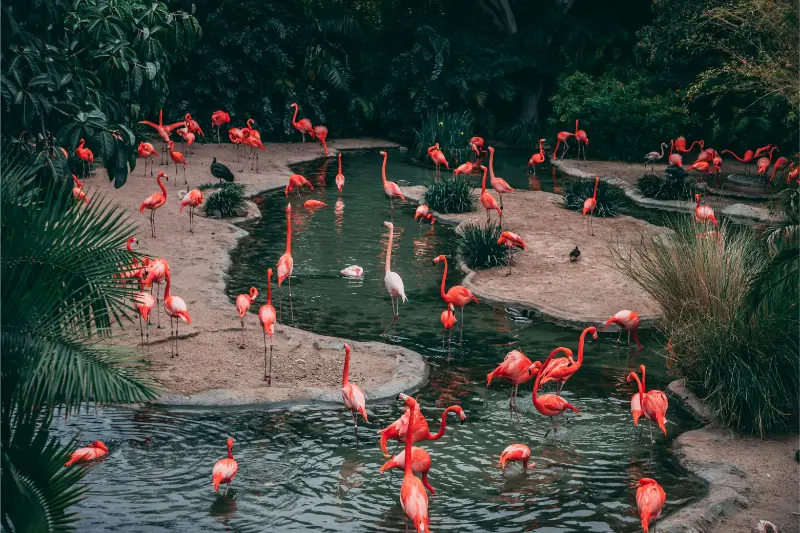
    Flock of Flamingos at Florida Wildlife Park

    Common mistakes to avoid

    • forgetting the separate summer vehicle reservation
    • assuming a parking reservation includes admission
    • arriving at midday on a peak weekend
    • entering protected spring-boil areas
    • bringing pets when current rules prohibit them throughout the recreation area
    • expecting campground-style facilities at a day-use-only site

    How Silver Glen compares with other Ocala springs

    Choose Silver Glen for a beautiful swim-and-snorkel day. Choose Juniper Springs for a wilder forest atmosphere and advanced paddle. Choose Salt Springs if camping and RV facilities matter. Choose Alexander Springs for another broad, family-friendly swimming basin. The best regional itinerary uses those differences instead of treating every spring as interchangeable.

    Official information to check before you go

    Check the official Recreation.gov vehicle-reservation page and the Ocala/Marion County visitor listing for current fees, capacity rules, reservation dates and operational notices.

    Final thoughts

    Silver Glen Springs deserves its popularity, but it rewards travelers who plan around that popularity. Reserve when required, arrive early, stay several hours and let the water be the main event. When approached that way, it feels less like a crowded stop and more like one of the natural highlights of an Ocala National Forest trip.

    A realistic half-day plan at Silver Glen

    Arrive as early as your reservation or access rules allow, settle at a picnic table, and spend the first hour in the water while visibility is usually at its best. After drying off, walk one of the short trails toward Lake George or the spring-boil overlook. Use lunch as a long shaded break, then decide whether a second swim or short paddle is worth staying for.

    Families do not need to stay until closing to get value from the admission. Three focused hours in good conditions can be better than six hours after the basin becomes crowded. If you have a long drive afterward, leaving before late-afternoon storms and fatigue build is often the smarter choice.

    Who may prefer another spring?

    Travelers who want overnight camping should choose Salt Springs, Alexander Springs or another campground-based site. Visitors who dislike reservation systems may prefer a weekday or a different spring outside peak summer weekends. Non-swimmers may get more value from Silver Springs State Park, where the glass-bottom boat provides a strong experience without entering the water.

    Photography and underwater visibility

    The clearest-looking water in marketing photos depends on sun angle, recent rainfall and how many swimmers are stirring the bottom. For photographs, arrive early when the surface is calmer and the basin is less crowded. Polarized sunglasses help above water; a simple waterproof camera can be more useful than an expensive phone case for underwater shots.

    Do not chase wildlife for a photograph or cross protected boundaries for a cleaner composition. The spring’s conservation value is the reason the scenery exists in the first place.

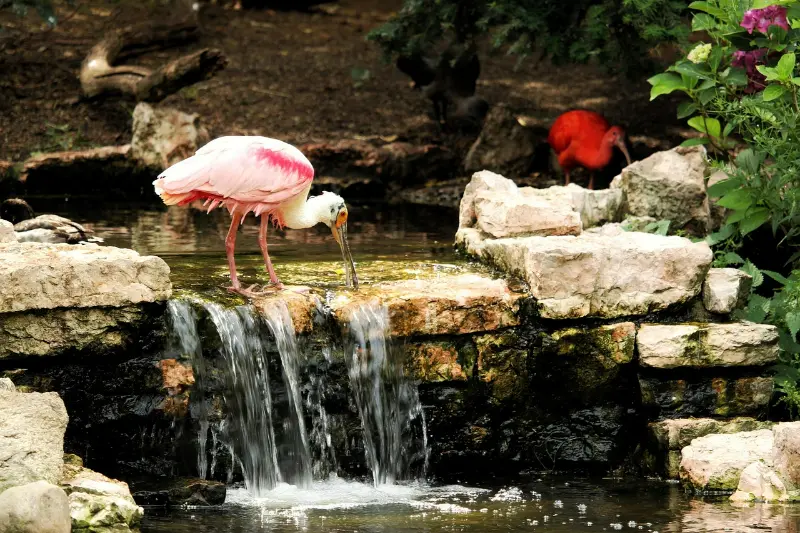
    Pink Flamingos at Florida Wildlife Pond

    Practical planning checklist

    • save the official address and current operating information before leaving your hotel
    • check weather, heat index and lightning risk on the morning of the visit
    • keep water, dry clothing and basic first-aid supplies in the vehicle
    • confirm any reservation or timed-entry requirement separately from admission
    • leave enough time between activities for food, restrooms and traffic

    Ocala and Marion County are easiest to enjoy when the schedule has room to absorb a change. A delayed tour, full parking lot or sudden storm should alter the order of the day, not destroy the entire itinerary.

    Extra planning advice for a smoother Ocala trip

    Ocala looks compact when viewed on a statewide map, but the county spreads across horse country, the I-75 corridor, Silver Springs, Dunnellon and the Ocala National Forest. Before committing to a schedule, plot the exact entrances of the places you intend to visit. A route that appears to involve three nearby attractions can become several hours of driving when one stop is west of the city and another is deep in the forest. Grouping activities by area usually improves the trip more than adding one extra attraction.

    Weather deserves the same attention. From late spring through early fall, start strenuous outdoor activities early, protect the hottest part of the afternoon for lunch or an indoor stop, and keep a rain alternative available. Thunderstorms can arrive quickly and may close swimming areas, outdoor arenas or trails even when the morning was clear. In winter, the opposite problem appears: spring water remains relatively constant while cool air makes getting out of the water uncomfortable, especially for children and older travelers.

    Carry drinking water in the car even when the attraction sells beverages. Rural recreation areas may have limited service, and a short delay can become uncomfortable in heat. Download maps, reservation confirmations and important phone numbers before leaving strong cell coverage. If you have medication, mobility equipment or food that must stay cool, plan for those needs before entering the forest rather than assuming facilities will be equivalent to a city attraction.

    Finally, leave at least one flexible block in every day. Ocala is most enjoyable when a spring, horse event, museum or scenic drive has enough time to breathe. The region is not improved by rushing from one parking lot to another. A slower schedule also makes it easier to respond to capacity limits, delayed shows, a child who needs a rest, or a storm that changes the order of the day.