
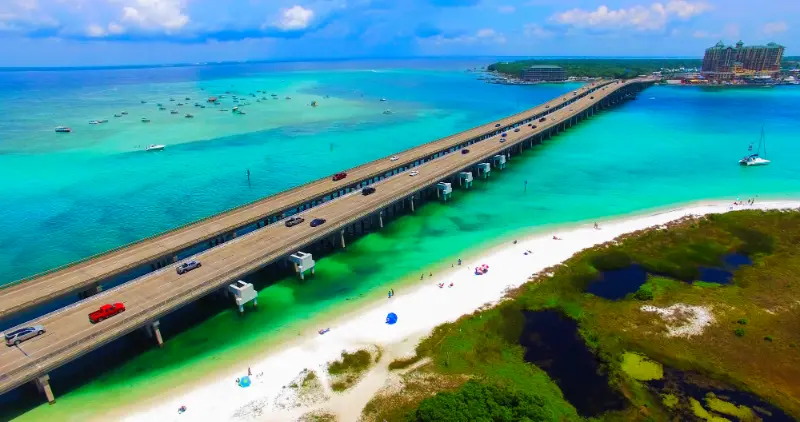
M.B. Miller County Pier is the practical middle-beach alternative to Russell-Fields City Pier. It offers a 1,500-foot fishing pier, six beach accesses along roughly 1,700 feet of beachfront, restrooms, mobility mats, seasonal services and a lifeguarded beach area. For travelers staying around the central portion of Panama City Beach, it can be the simplest place to combine fishing, swimming and a sunset without driving to Pier Park.
The biggest planning difference is parking. Bay County currently uses paid parking at the county pier, and both pier use and parking are cashless. Knowing that before arrival prevents the common situation of reaching the beach with only cash and then losing time solving payment.
Quick planning summary
- Best for: fishing, beach time, sunset and central Panama City Beach stays
- Current hours: 24 hours a day, seven days a week
- Pier length: about 1,500 feet
- Current spectator fee: $3 daily
- Current fishing fee: $6 daily for visitors over age six
- Parking baseline: $2 per hour or $12 per day for non-residents
- Payment: pier and parking systems are cashless
- Address: 12213 Front Beach Road
- Time needed: 30–60 minutes for a walk; 2–5 hours for fishing or beach time
Important 2026 information note
The county fee schedule, parking system and seasonal services can change before this article’s 2028 publication date. The figures here are the official 2026 baseline and should be reconfirmed shortly before travel.
What you find at the county pier
Bay County lists the pier, beach-access mobility mats, restrooms, a bait-and-tackle shop, a seasonal drink stand and six beach accesses. This concentration of facilities makes the location more practical than a small neighborhood access when your group needs restrooms or a clear meeting point.
The pier itself is long enough to create a genuine offshore feeling without boarding a boat. Spectators can watch anglers, scan for dolphins and rays, or simply use the structure for a sunrise or sunset walk.
Current pier fees
The official county page currently lists spectators at $3 per day and fishing at $6 for visitors over age six. Children six and under are free. Reduced $3 fishing rates are listed for disabled visitors, active military personnel and seniors 65+. The county’s 2026 fee schedule also notes a $2 charge for rods in excess of three.
Annual passes are available and are currently honored at both the county and city piers. If you plan to fish repeatedly during a longer stay, compare the current pass price with daily fees before buying multiple day tickets.
Parking
Non-resident parking is currently $2 per hour or $12 for the day, paid through the Passport system. Bay County residents can apply for a free permit tied to a vehicle tag. Visitors should not assume the resident program applies to a rental car or an out-of-county vehicle.
Parking charges can materially change the cost of a short visit. If you are only walking the pier for half an hour, the total remains modest, but a full beach day needs both the spectator or fishing fee and the parking total in the budget.
Cashless payment
Bay County states that pier usage and parking are cashless, with credit or debit cards accepted. On-site kiosks can convert cash into prepaid cards for visitors who need that option. Even so, carrying a payment card or a phone capable of using the parking system is the simplest approach.
Fishing
The pier is a serious fishing location, not just a scenic boardwalk. Seasonal catches can include mackerel, pompano, cobia, redfish and other Gulf species. Conditions, bait and target fish change through the year, so local advice on the day of your visit is more useful than a generic annual list.
If you are new to pier fishing, keep the setup simple and leave room around experienced anglers. A busy bite can make the rail crowded. Children should stay close to an adult because hooks, carts and rods create hazards even before considering the open water.
Beach access and lifeguards
The county pier area has multiple beach accesses and is one of the places where seasonal lifeguards are normally stationed. Current destination information places lifeguard service around late May through Labor Day, but weather can interrupt staffing. Beach flags remain the primary safety signal and should be checked every time you enter the water.
Mobility mats and accessibility
Mobility mats improve access across the soft-sand transition, but they do not eliminate every beach barrier. Wheelchair users should verify the current extent of the mat, restroom access and parking layout before arrival. The pier itself provides a firm surface but is highly exposed to sun and wind.
M.B. Miller versus Russell-Fields
Choose M.B. Miller if your accommodation is closer to the middle of Panama City Beach, if you want a less retail-oriented setting or if the beach itself is the main purpose. Choose Russell-Fields if Pier Park is part of the same outing. Both piers are about 1,500 feet long and offer fishing and sightseeing, but the surrounding experience is different.
Best time to visit
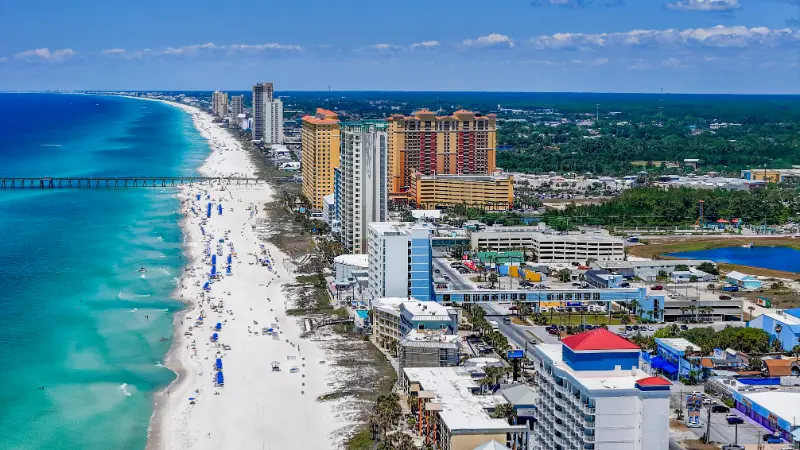
Early morning gives cooler temperatures and a quieter beach, while late afternoon works well for swimming followed by sunset. Midday can be useful for a full beach day but offers the least shade. Anglers should plan around seasonal conditions and the fish they hope to target rather than using a fixed tourist schedule.
Official information
Check the official Bay County M.B. Miller County Pier page for current fees, parking, services and operational notices.
Families, teenagers and senior travelers
Panama City Beach works well for multigenerational groups when the schedule is built around energy level rather than age labels. Families with younger children generally need shade, restroom access and shorter activity blocks. Teenagers often enjoy activities that give them some independence, whether that means fishing, interactive exhibits, water rides or a walk around Pier Park. Senior travelers may prefer the same attractions but benefit from a slower pace, more seated breaks and less time on exposed pavement or soft sand during the hottest hours.
A practical family rule is to choose one anchor activity and one optional add-on. If everyone is still enjoying the day, add the second stop. If heat, crowds or weather have already used up the group’s energy, stop without treating the change as a failed itinerary.
Accessibility and comfort
Accessibility in a Gulf Coast destination is not only about ramps. Heat, glare, long walks from parking, wet surfaces, sand and sudden storms can affect how comfortable a visit feels. Travelers using wheelchairs, walkers or strollers should verify the exact route from parking to the attraction, not just whether the destination describes itself as accessible. When beach access is part of the plan, mobility mats and beach-wheelchair programs can make a major difference, but availability can change.
Weather and seasonal planning
Summer brings warm Gulf water, long daylight and the fullest attraction schedule, but also intense sun, high humidity and frequent afternoon thunderstorms. Spring and fall can be easier for walking and outdoor attractions. Winter is quieter and often pleasant for museums, piers and sightseeing, although water temperatures and wind may make a beach day feel very different from summer.
Lightning is the condition that should change plans immediately. Do not wait on an exposed pier, beach or waterpark deck because a storm still appears distant. Use radar and official attraction updates, and keep one indoor backup available for days when the Gulf weather refuses to cooperate.
Beach safety still matters
Even when the attraction itself is the reason for the visit, many travelers combine it with the beach. Check the current Panama City Beach flag system before entering the Gulf. Rip currents are not always obvious from shore, and a calm-looking surface is not proof that conditions are safe. Lifeguard coverage is seasonal and limited to specific areas, so never assume every public access is guarded.
Budget and value
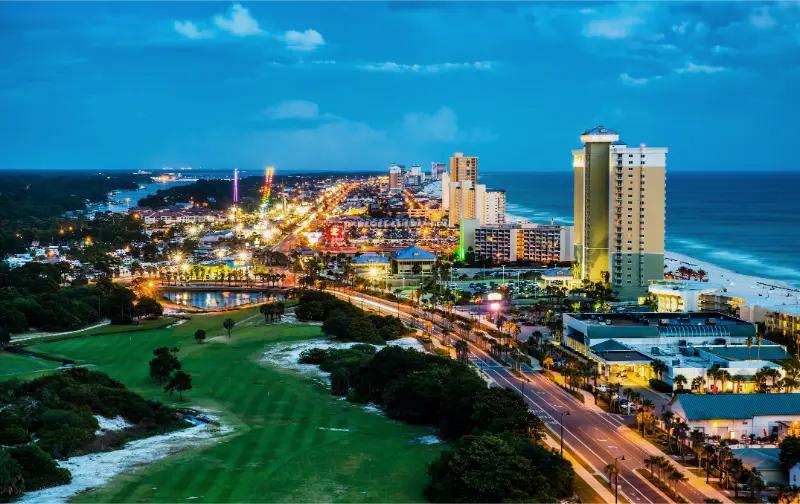
Compare the complete day rather than only the headline ticket price. Parking, food, drinks, equipment, souvenir photos, lockers and optional upgrades can change the total quickly. A lower-cost day can pair a paid attraction with a beach walk, sunset or public park. Families often get better value by choosing one substantial paid activity instead of stacking several expensive stops simply because they are close together.
What to bring
- refillable water bottles
- sunscreen, sunglasses and a hat
- comfortable walking shoes
- a light rain layer during the warm season
- a portable phone charger
- any required identification for discounts
- a small dry bag or waterproof phone pouch when water is involved
Common planning mistakes
- using an old social-media post as the source for current prices or hours
- forgetting that Panama City Beach uses Central Time locally
- planning a long exposed activity at the hottest point of the afternoon
- assuming parking is free because beach access itself is public
- waiting until arrival to check height, health or participation restrictions
- filling every hour of the day and leaving no room for weather delays
A better daily rhythm
For most visitors, the easiest rhythm is an early outdoor activity, a shaded or indoor break around midday, and a flexible late-afternoon or evening plan. This reduces heat stress and gives the schedule room to absorb traffic or a thunderstorm. If sunset matters, choose the final stop geographically before lunch so you are not crossing the entire resort strip at the busiest time of day.
Driving and parking strategy
Front Beach Road can move slowly in peak periods. Enter the exact attraction or parking area in navigation before leaving, and allow more time than the mileage suggests. If your group includes someone with limited mobility, use a legal passenger drop-off when possible before the driver searches for a more distant space. Never improvise parking on dunes, grass or private property.
Continue your Bay County trip
Use the Panama City Beach travel guide as the broader planning hub. Travelers arriving from the east can also compare the resort atmosphere with Mexico Beach.
Final planning advice
The best version of a Panama City Beach day is usually simpler than the longest possible checklist. Decide what experience matters most, verify the current official information shortly before travel and leave enough flexibility for weather, traffic and the possibility that your group simply wants to stay longer at one place.