
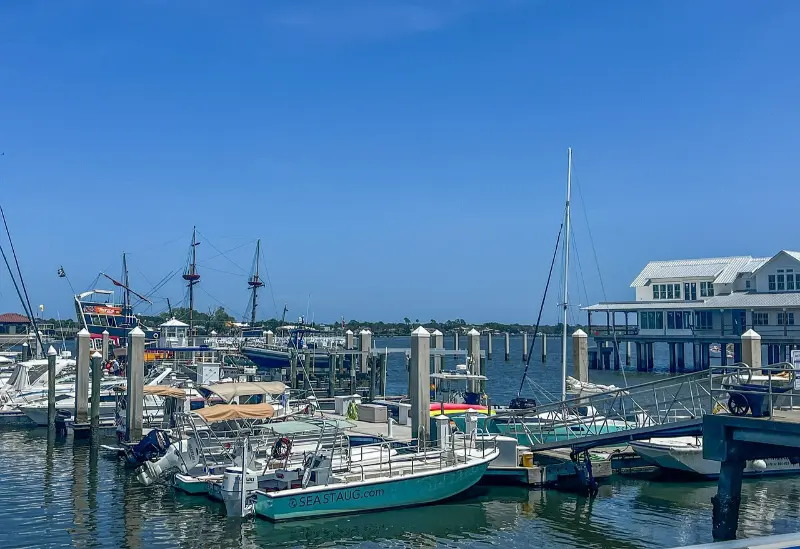
St. Augustine Beach is the practical ocean counterpart to the historic city across the Bridge of Lions. Around the St. Johns County Ocean Pier & Park, visitors have beach access, parking, restrooms, showers, picnic facilities and family amenities in one easy-to-understand area.
The key planning issue in the October 2026 research snapshot is the pier itself. St. Johns County closed the Ocean and Fishing Pier for structural repairs beginning in May 2026, with work initially anticipated through November. The county still lists the pier as closed until further notice, so a future visitor should verify actual reopening rather than assuming the project finished on the first projected date.
The beach remains worth visiting even when the pier is unavailable. The surrounding park, sand, nearby restaurants and easy island location make this a useful half-day break from St. Augustine’s museums and tours.
Quick planning summary
- Best for: families, beach walkers, surfers, couples, budget-conscious travelers and anyone wanting an easy ocean break near historic St. Augustine
- How much time: 2–4 hours for beach and park; half a day if you add lunch, the farmers market or a longer beach session.
- Current cost: Beach and park access are generally free; the current county page lists free parking. Fishing-pier fees cannot be treated as current while the pier is closed for repairs.
- Current hours/status: Ocean Pier Park currently lists 7 a.m.–9 p.m. hours. The fishing pier is currently closed for repairs in the 2026 research snapshot; verify reopening before a future trip.
- Location: 350 A1A Beach Blvd., St. Augustine Beach, FL 32080
Why this stop is worth including
This is one of the simplest places near downtown to combine ocean time with practical facilities. Families do not have to choose between a wild undeveloped beach and a commercial resort strip; the pier park gives them a middle ground.
The free-parking listing is valuable in a region where downtown parking can be a meaningful expense. Even when the pier is closed, the beach and park can deliver several hours of low-cost activity.
The location also works for mixed-interest groups. Some family members can walk the beach while others use the playground, splash area or nearby food options, then everyone can regroup without driving to a second site.
What to see and do
Check the pier status before you promise a pier walk
The county currently lists the fishing pier as closed for repairs. Construction timelines can change, so verify the latest status shortly before travel.
If the pier has reopened by your trip, check current fishing fees, operating rules and any restrictions before building the day around it.
Use the beach as the main attraction
The Atlantic shoreline remains the reason to come. Walk, swim when conditions are safe, look for shells and enjoy the open horizon without making the pier central to the experience.
Check lifeguard coverage, surf flags, rip-current risk and water-quality information for the specific day.
Use the family amenities at Ocean Pier Park
The surrounding park includes restrooms, showers, picnic facilities, volleyball and a splash/play area under current county information.
These facilities make it easier to stay for several hours with children because the day is not limited to sitting on sand.
Visit the Wednesday farmers market when it fits
The county promotes a Wednesday farmers market near the pier area, currently running in the morning.
Treat market schedules as variable and confirm before making a special trip, especially around holidays or severe weather.
Walk the town beyond the park
St. Augustine Beach has restaurants and low-key streets that can turn a beach stop into a relaxed half day.

Instead of driving the moment everyone leaves the sand, shower off, walk for food and let traffic ease.
Stay for late-day light
The beach faces east, so sunrise is the classic photography moment, but late afternoon can still be pleasant as temperatures fall and the sky softens behind you.
Do not confuse attractive evening conditions with safe swimming conditions; surf risk can remain high after the heat has passed.
Current costs, hours and reservations
St. Johns County currently lists the Ocean and Fishing Pier as closed for repairs until further notice after a 2026 project intended to strengthen pier pilings. The surrounding Ocean Pier Park remains active, and the county lists amenities including free parking, beach access, restrooms, outdoor showers, picnic areas, volleyball and a splash/play area. The city facility page currently lists park hours of 7 a.m.–9 p.m. Because this article is scheduled well after the 2026 repair window, readers should verify whether the pier has reopened and what the new fishing or access rules are.
Treat every ticket price, opening time, special program and construction notice in this article as a planning snapshot from October 2026. Travelers should recheck the official source shortly before travel rather than assuming a 2026 operating detail remained unchanged into 2028 or later.
Parking and getting there
The county currently lists free parking at the pier park, which makes it a strong base for a beach visit. Construction can temporarily affect individual spaces or access points. On busy summer weekends and special-event days, free parking still means first-come capacity, so arrive early rather than assuming a free lot guarantees a space.
St. Augustine traffic becomes much easier when you group attractions by area. The historic core rewards walking after you park; Anastasia Island rewards staying on the island for several stops. Avoid crossing the Bridge of Lions repeatedly simply because each attraction looks close on a map.
Best time of day and best season
Sunrise is excellent for walkers and photographers, while early morning is the most comfortable summer beach period. Families often do well from 9 a.m. until lunch, then leave before peak heat and thunderstorms. Winter can be beautiful for walking but too cool or windy for comfortable swimming on some days. Check surf and wind rather than planning by air temperature alone.
Families with babies and young children
The combination of beach, showers, restrooms and play amenities makes this easier than a remote access point with small children. Bring shade, water, sun protection and a clear rule for where children may enter the water. A splash area is not a substitute for ocean supervision, and beach conditions can change quickly even when the park itself feels calm.
For small children, the most successful day alternates structured sightseeing with movement, food and shade. A child who has already spent two hours listening indoors may enjoy a beach, park or open plaza far more than a third museum, even if that museum is objectively excellent.
Teenagers and older children
Teenagers may prefer surfing, volleyball, beach photography or walking to food rather than sitting under an umbrella for four hours. Give them an activity window and a clear meeting point. If they surf, follow local separation rules around the pier and construction area; the county currently restricts swimming and surfing near the pier structure.
Give teenagers some ownership of the itinerary. Let them choose a photo stop, snack, viewpoint or second-half activity. That small decision often produces more engagement than adding another attraction chosen entirely by adults.
Senior travelers and multigenerational groups
Senior travelers can enjoy the park facilities and firm areas even if deep sand is difficult. Use benches, picnic areas and the town walk as alternatives to a long shoreline walk. If beach-wheelchair access or a step-free route is important, verify the current county program and access point before travel because storms and repairs can alter conditions.
Build the day around the least mobile or most heat-sensitive traveler first. More active family members can add a climb, longer beach walk or side street without requiring everyone to cover the same distance.
Accessibility and comfort
The developed park provides more facilities than many beach access points, but the sand itself remains a natural barrier. Construction around the pier may also change normal routes. Travelers with mobility needs should confirm accessible parking, boardwalk status, restroom access and any beach-mobility equipment with St. Johns County before leaving their lodging.
Food, water and practical breaks
Nearby food options make it easy to keep the beach gear simple. Bring enough water and snacks for the sand, then use a restaurant as the transition to the second half of the day. Rinse off before entering businesses and do not leave valuables unattended on the beach while everyone goes to eat.
Carry more water than a short Florida outing seems to require, especially from late spring through early fall. A planned seated break is not wasted sightseeing time; it is often what allows a multigenerational group to enjoy the final two hours of the day.
Photography tips
Sunrise gives the cleanest ocean-facing light. If the pier is closed or fenced, do not enter construction zones for a better composition. Use the structure from a legal distance as context, or focus on surf, reflections and the town’s low-rise beach atmosphere. Protect gear from salt spray and wind-blown sand.
How it compares with nearby alternatives
Choose St. Augustine Beach for convenient facilities and proximity to the historic city. Flagler Beach guide feels smaller and more road-trip oriented, while Gamble Rogers Memorial State Recreation Area provides a more protected state-recreation-area environment. For natural shoreline with fewer town services, River to Sea Preserve is another contrast.
How to combine it with other Wonderful Florida guides
A coastal route can link this beach with Flagler Beach guide, Gamble Rogers Memorial State Recreation Area and River to Sea Preserve on different travel days. In St. Augustine itself, use the beach as the low-structure half of a day that includes only one major historic attraction.
How to fit this stop into a St. Augustine trip
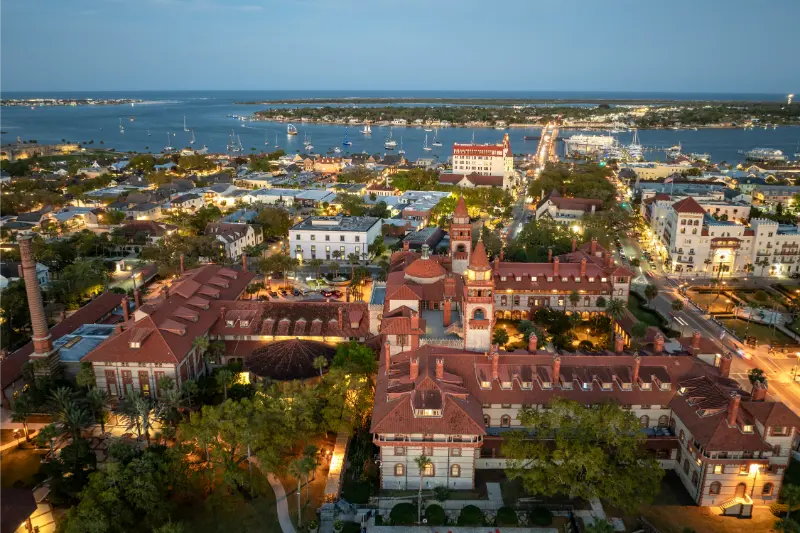
A useful way to plan St. Augustine is to separate the day into one history-heavy anchor, one lighter walk or outdoor stop, and one flexible meal or beach period. The city contains enough museums and ticketed attractions to fill several days, but stacking four indoor history stops back-to-back often produces less learning, not more. Families usually do better when a structured attraction is followed by open space; couples may prefer to reserve late afternoon for the bayfront; senior travelers often benefit from putting the longest walk before lunch and using a museum during the warmest part of the day.
If you have only one day
Keep the schedule disciplined. Choose one major paid attraction in the morning, use the historic district or beach as your flexible middle period, and add a second ticketed stop only if travel time and energy remain realistic. St. Augustine is compact, but parking, lines and heat can make a short distance consume more time than it appears on a map.
If you have two or three days
Divide the city by theme or geography. One day can focus on the historic core, another on Anastasia Island and the beach, and a third can be used for a slower museum, nature or north-coast excursion. This reduces repeated parking and keeps children and older travelers from spending every day in the same type of environment.
Budget and value
St. Augustine can be inexpensive or surprisingly costly depending on how many admissions you buy. Parking, two major attractions and restaurant meals can turn a casual day into a substantial family expense. Pick the one or two paid experiences that best match your interests, then use free elements such as the bayfront, Plaza de la Constitución, portions of St. George Street and beach time to create contrast. If your itinerary includes several federal recreation sites, compare the cost of individual admission with any pass you already hold; if you are traveling with children, always check the attraction’s age thresholds because some sites admit young children free.
Weather and seasonal planning
Northeast Florida weather rewards flexible sequencing. Summer brings heat, high humidity and frequent afternoon thunderstorms, while winter can be mild one day and windy or surprisingly cool the next. Lightning is a reason to leave exposed fort walls, beaches, piers, lighthouse towers and open water promptly. During hurricane season, verify operating status again on the morning of the visit because coastal parks and historic properties may close even when the center of a storm is far away. Carry water year-round, use sun protection, and do not treat an overcast sky as protection from ultraviolet exposure.
A realistic half-day plan
Arrive early
Park, check surf conditions and use the cooler morning for beach time.
Rinse off and use the park facilities
Let children play or take a short rest before everyone becomes overheated.
Eat locally and choose one afternoon activity
Either return to your lodging or add one nearby island attraction; avoid forcing a full downtown museum marathon after hours in the sun.
Where to stay for this part of northeast Florida
For a first St. Augustine visit, staying in or immediately beside the historic district is the most convenient choice if your priority is walking to the fort, St. George Street, Flagler College and evening restaurants. Anastasia Island is usually better for travelers who want easier beach access, a quieter night and short drives to the lighthouse, Alligator Farm and state park. Families who value space, a pool and simple parking may prefer the beach side even if it means crossing the Bridge of Lions for downtown sightseeing. For a one- or two-night stay, avoid changing hotels simply to save a few miles: traffic and parking strategy matter more than moving your luggage between neighborhoods.

Common mistakes to avoid
- Assuming the pier reopened because the original repair completion target has passed.
- Arriving late on a busy beach weekend and expecting unlimited free parking.
- Ignoring rip currents and local swimming restrictions near the pier.
- Leaving phones or wallets unattended while the group goes to eat.
- Trying to do a long beach session and a full historic-district itinerary without a rest break.
Practical questions before you go
Is the fishing pier open?
The current 2026 county information lists it closed for repairs until further notice. Verify status before your future trip.
Is parking free?
The county currently lists free parking at Ocean Pier Park.
What facilities are available?
Current amenities include restrooms, showers, picnic areas, volleyball, beach access and a splash/play area.
What are the park hours?
The city facility page currently lists 7 a.m.–9 p.m.
How long should I plan?
Two to four hours is a comfortable beach-and-park visit for most travelers.
Official resource to check before you go
For current visitor information, use the official visitor page. Recheck hours, fees, reservations, closures, construction notices, weather restrictions and accessibility information shortly before travel.
Final thoughts
St. Augustine Beach is valuable precisely because it does not need to become an attraction marathon. Use the pier park as a practical base, verify the pier’s future reopening status and let the ocean provide the unstructured part of your trip. For families especially, a simple beach morning can make the city’s history-heavy afternoons much more enjoyable.