Category: St. Johns County Florida

  • Alpine Groves Park Guide: St. Johns River Trails, Historic Farmhouse, Playground and Sunset Tips

    Alpine Groves Park Guide: St. Johns River Trails, Historic Farmhouse, Playground and Sunset Tips

    Alpine Groves Park shows a completely different side of St. Johns County from St. Augustine’s fort and Atlantic beaches. The 54.5-acre park sits along the St. Johns River and preserves a mix of natural habitats, historic citrus-era structures, a playground, trails and a fishing pier.

    Explore this guide

    This is not a destination most first-time Florida visitors build an entire day around. Its value is as a calm, low-cost stop when you are exploring the northwest part of the county, driving the Bartram Scenic & Historic Highway or simply want river scenery without a long hike.

    Families, photographers and senior travelers benefit from the relatively gentle pace, while local-history fans can connect the farmhouse and packing-shed story to the citrus economy that once shaped the area.

    Quick planning summary

    • Best for: families, senior travelers, photographers, local-history fans, picnickers and visitors who want a quiet St. Johns River stop away from the coast
    • How much time: 1–2 hours for the main paths, riverfront and historic features; longer for a picnic.
    • Current cost: Free public park; pavilion reservations or special activities can use separate fees or rules.
    • Current hours/status: St. Johns County currently lists Alpine Groves Park open from dawn to dusk.
    • Location: 2060 State Road 13, Switzerland, FL 32259

    Why this stop is worth including

    The park broadens the usual image of northeast Florida. Instead of ocean dunes and colonial streets, you get a broad river, wetlands, mature vegetation and traces of agricultural history.

    A restored farmhouse and historic packing shed give context to the communities that developed along the river and road network.

    The combination of playground, picnic facilities and an accessible trail makes it easier for mixed-age groups to enjoy the same stop without everyone doing the same activity.

    What to see and do

    Walk the riverfront trail

    Follow the park paths toward the St. Johns River and fishing pier.

    Move slowly near wetland edges where wildlife may be easier to spot before a group approaches.

    See the historic farmhouse and packing-shed area

    These structures connect the park to the region’s citrus-growing history.

    Read interpretive material when available rather than treating the buildings only as photo backdrops.

    Use the accessible trail

    The county lists an ADA-accessible trail as one of the park’s amenities.

    Visitors with mobility concerns should still check current surface conditions after heavy rain or maintenance work.

    Let children use the citrus-themed playground

    The playground gives young visitors a reason to enjoy a historical/natural stop that might otherwise feel adult-focused.

    Use it as a reward after a short family walk rather than allowing the entire visit to become playground-only.
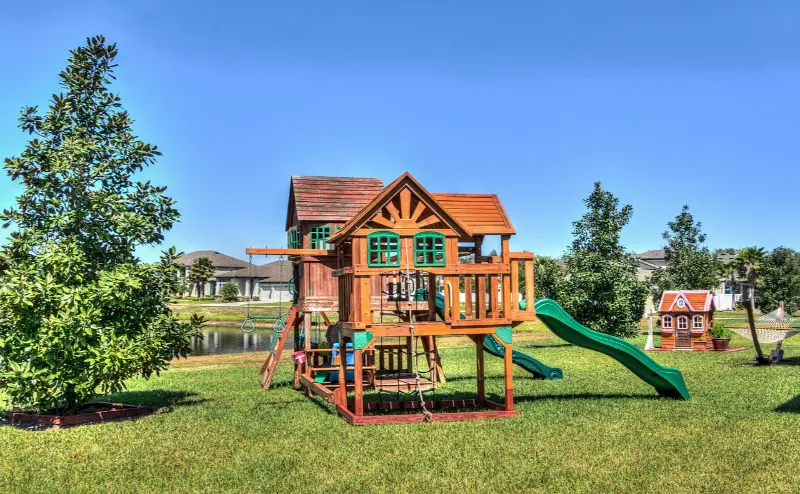
    Florida Playground with Wooden Castle Structure

    Bring a picnic

    Pavilions and picnic tables make this an easy lunch stop on a road-trip day.

    Reserve a pavilion if your group needs guaranteed space rather than assuming one will be free.

    Stay for river light

    The county has highlighted the park as a popular sunset and photography location.

    Leave enough daylight to walk back safely and remember that the park closes at dusk.

    Current costs, hours and reservations

    St. Johns County currently describes Alpine Groves as a 54.5-acre park between the St. Johns River and the William Bartram Scenic & Historic Highway. Listed amenities include historic structures, butterfly garden, parking, pavilion, picnic tables, playground, restrooms, nature trails, an ADA-accessible trail and a fishing pier. The official hours are currently dawn to dusk. The county has also documented shoreline restoration and preservation work at the park.

    Hours, prices, tour schedules, weather policies and temporary closures can change. Because this article is scheduled for future publication, recheck the official source shortly before travel and again on the day of any weather-sensitive visit.

    Parking and getting there

    Use the on-site park parking and do not leave valuables visible in the vehicle. Because this is outside central tourist districts, plan your next stop before leaving; spontaneous food and shopping options are less concentrated than in downtown St. Augustine.

    Best time of day and best season

    Late afternoon is especially attractive for river light, but morning offers cooler walking and quieter wildlife viewing. In summer, avoid making the hottest part of the day your main trail time.

    Spring and fall often provide the easiest balance of temperature and crowds in northeast Florida. Summer brings long daylight but also stronger heat, humidity and thunderstorms. Winter can be excellent for walking, although cold fronts and wind sometimes make outdoor stops feel much cooler than the forecast suggests.

    Families with babies and young children

    This is an easy family park because children can combine a nature walk with the playground and picnic space. Keep them close at the river and pier, where water safety matters even in a calm-looking setting.

    Family tipFor families with babies or young children, plan around attention span rather than the advertised length of a tour. Bathrooms, shade, food and opportunities to move often determine whether a stop feels successful. A one-hour historic attraction followed by a park or beach can work better than stacking two information-heavy visits back to back. Teenagers usually respond better when they have a specific question, photo challenge or story to follow instead of being asked to read every panel.

    Teenagers and older children

    Teenagers who enjoy photography, fishing or nature may appreciate the river setting. Give them a reason to explore rather than expecting enthusiasm for historic structures alone.

    Senior travelers and multigenerational groups

    The accessible trail and gentle park format can work well for senior visitors. Bring insect repellent, water and a portable seat if frequent rest is important.

    For senior travelers and groups with different mobility levels, remove unnecessary walking before removing the attraction itself. Park strategically, ask about step-free entrances, use benches and schedule outdoor sites for cooler hours. Historic buildings may have narrow stairs or uneven floors, while natural areas can include sand, roots or gravel. Let the least mobile traveler set the base pace, then allow more active members to add a longer trail, tower climb or beach walk.

    Accessibility and comfort

    The county lists an ADA-accessible trail plus parking and restrooms. As with any outdoor park, temporary surface issues can occur after storms or maintenance, so check current notices if access is critical.

    Food, water and practical breaks

    This is a good place to bring a picnic. Pack water, keep food secured from wildlife, use bins correctly and leave the tables clean for the next group.

    Photography tips

    The river, mature trees, farmhouse and late-day light give photographers several different subjects. Avoid stepping into restored shoreline vegetation for a better angle.

    How it compares with nearby alternatives

    Choose Alpine Groves for St. Johns River scenery and local citrus history. GTM Research Reserve is much larger and more coastal/ecological, while Washington Oaks Gardens State Park combines formal gardens with Atlantic coquina shoreline farther south.

    How to combine it with other Wonderful Florida guides

    Use Alpine Groves on a northwest St. Johns County drive, then return toward St. Augustine for an evening walk on St. George Street rather than pairing it with a tight downtown reservation.

    How to fit this stop into a St. Augustine trip

    St. Augustine works best when you organize each day by area instead of driving back and forth between isolated attractions. The historic core is compact, while the wider destination reaches north toward Ponte Vedra, west toward the St. Johns River and south along Anastasia Island. Parking once and walking usually saves more time than moving the car between nearby downtown stops. A good itinerary also alternates concentrated history with something lighter: a garden, beach, waterfront walk, animal experience or relaxed meal. That rhythm is especially useful for families, teenagers and multigenerational groups who do not all absorb museums at the same pace.

    If you have only one day

    Choose one major historic anchor, one smaller cultural or natural stop and one flexible outdoor period. Keep downtown activities walkable and avoid stacking several reserved tours so tightly that a parking delay ruins the sequence.

    If you have two or three days

    Separate the historic core from beach, wildlife or river experiences. This reduces driving, keeps indoor attractions from feeling repetitive and gives the group time to recover between information-heavy visits.

    Budget and value

    St. Augustine can become expensive if every hour includes an admission ticket. Decide which paid experiences genuinely match your interests, then use free churches, plazas, scenic streets, parks, beaches and waterfront areas to create contrast. Compare current direct prices with any combination pass you are considering, but only buy a bundle if you realistically have time for all the included stops. Free attractions are not automatically quick: some of the best low-cost places deserve an hour or more when the weather is pleasant.

    Weather and seasonal planning

    Northeast Florida weather can change the value of a visit. Late spring through early fall brings heat, humidity and frequent afternoon thunderstorms, while winter can be sunny but surprisingly cool and windy near open water. Lightning matters at beaches, parks and exposed historic grounds, so treat thunder as a reason to change plans rather than something to wait out under a tree. Carry water, sun protection and a light rain layer, and check same-day conditions. During hurricane season, confirm operating status before driving because coastal sites and outdoor attractions may close even when the storm center is far away.

    A realistic half-day plan

    Arrive in the cooler part of the day

    Walk the river trail and historic area first.

    Add playground or picnic time

    Let the group split naturally between active and relaxed activities.

    Finish at the river

    Enjoy the pier or sunset light, then leave before the dawn-to-dusk closing limit.

    Where to stay for this part of northeast Florida

    Stay in or beside the historic district if evening walking, restaurants and major downtown sights are your priority. Anastasia Island and St. Augustine Beach are better for ocean access and a quieter end to the day. Vilano and Ponte Vedra work well for north-coast itineraries, while northwest St. Johns County is more convenient for river, golf and I-95-area stops. For a short trip, one well-chosen base is usually better than changing hotels to save a few driving miles.

    Common mistakes to avoid

    • Expecting a large attraction with food service and structured programming all day.
    • Visiting at sunset without leaving enough time to walk back before dusk.
    • Letting children approach the river unsupervised.
    • Ignoring mosquitoes and sun exposure.
    • Driving all the way from the coast without combining the park with a broader northwest-county plan.

    Practical questions before you go

    How big is the park?

    St. Johns County lists approximately 54.5 acres.

    What are the hours?

    The current official schedule is dawn to dusk.

    Is there a playground?

    Yes, including an orange-grove-themed play area.

    Is there an accessible trail?

    Yes, the county lists an ADA-accessible trail.

    Is it good for sunset?

    Yes. The riverfront is known locally for late-day views, but leave before park closing at dusk.

    Official resource to check before you go

    Use the official visitor information for current hours, prices, reservations, access rules, closures and event schedules before travel.

    Extra planning notes for a smoother visit

    If the stop has a fixed tour, worship service, guided entry or seasonal program, build the day around that constraint first. Flexible activities such as a plaza walk, beach time or lunch can move around it. This prevents the common mistake of arriving just after the only program your group wanted.

    Keep a fifteen- to thirty-minute buffer between major stops. Historic-district traffic, full parking lots, bridge openings, weather changes and ticket lines can make short map distances take longer than expected.

    Save the official address, confirmation email and parking instructions before leaving the hotel. Mobile reception is usually good in the city, but having the essentials available offline prevents avoidable stress when a group is trying to navigate together.

    For multigenerational travel, agree on a reduced version of the visit. One person can skip a sandy path, stair climb or long gallery while the rest continue, then everyone can meet at a clearly defined bench, lobby, pavilion or café.

    Think about the return trip before you begin. After a hot beach session, long guided tour or museum visit with children, the group is less patient with parking searches and restaurant queues. Keep water in the car and know which meal options are nearby.

    Respect the setting. Churches, shrines, wildlife facilities, museums, dunes and historic homes all have different rules for photography, touching, food and movement. Following those rules usually improves the experience for everyone rather than limiting it.

    More practical details that can change the day

    Crowds can alter the best route through even a small attraction. If a lobby, parking lot or exhibit room is congested, move to the flexible part of the plan and return later rather than waiting in the most uncomfortable place. This works especially well in St. Augustine because many downtown alternatives are only a few minutes apart on foot.

    Check official notices rather than relying only on map-app hours. Historic properties may close for private events, religious sites can change access for services, wildlife facilities may adjust tours, and beaches or parks can react quickly to storms, tides or maintenance. A place being marked “open” online does not guarantee every activity is operating normally.

    Comfortable shoes matter more than they seem. A single day can include brick streets, wooden walkovers, gravel, sand and historic floors. Choose footwear for the most demanding surface in your itinerary, not only for the restaurant or photo stop at the end.

    Final thoughts

    Alpine Groves Park is worth the detour when you want a quieter, more local version of St. Johns County. The riverfront, historic citrus structures and family-friendly amenities create a useful counterpoint to the coast and crowded historic district.


  • Oldest Wooden School House St. Augustine Guide: Hours, History, Tickets and Family Tips

    Oldest Wooden School House St. Augustine Guide: Hours, History, Tickets and Family Tips

    The Oldest Wooden School House is a compact St. George Street attraction that works best when you understand its scale. It is not a large education museum; it is a small historic property that uses the school building, period setting and garden area to evoke everyday life in early St. Augustine.

    Explore this guide

    Its biggest advantage is location. You can visit without changing your route through the pedestrian district, and the short duration makes it easy to fit between a major museum and lunch.

    Families often appreciate that the subject is concrete. Children can compare the old classroom with their own school experience, which gives them an immediate way into the history.

    Quick planning summary

    • Best for: families, first-time visitors, casual history travelers and people looking for a short attraction on St. George Street
    • How much time: 30–60 minutes for most visitors.
    • Current cost: Ticket prices can change and promotions may be sold through several channels; check the official ticket page before buying.
    • Current hours/status: The official site currently lists Sunday–Thursday 10 a.m.–6 p.m. and Friday–Saturday 10 a.m.–8 p.m.; closed Christmas Day.
    • Location: 14 St. George Street, St. Augustine, FL 32084

    Why this stop is worth including

    Large historical narratives can feel abstract, especially to children. A schoolroom turns the past into something recognizable: desks, lessons, discipline, household routines and the practical use of a small building.

    The visit is also useful as a pacing tool. You do not need two hours, advance planning or a car, so it can fill a gap in the day without becoming a logistical project.

    For adults, the value comes from observing construction details and considering how ordinary people lived rather than focusing only on military and elite architecture.

    What to see and do

    Look closely at the building itself

    Before reading labels, notice the scale, timber construction and relationship between the schoolhouse and the surrounding garden.

    The structure tells part of the story before you encounter any interpretation.

    Compare the classroom with modern school

    This is the easiest way to engage children. Ask what looks familiar and what would feel difficult today.

    Keep the comparison playful rather than turning the visit into another lesson.

    Notice daily-life details

    Small historic sites are most useful when you look beyond headline claims and notice furniture, tools and space constraints.

    Imagine how heat, lighting and weather affected daily routines.

    Use the garden as a reset

    The outdoor area provides a short break from the crowded pedestrian street.

    It is especially helpful after a busy indoor attraction.

    Keep the visit proportional

    There is no advantage to stretching a small site into a long museum session.

    Thirty to sixty focused minutes is enough for most travelers.

    Continue directly onto St. George Street

    The location makes this attraction part of a walk rather than a destination requiring separate transport.

    Plan the next stop before you enter so you can continue efficiently afterward.

    Current costs, hours and reservations

    The official contact page currently lists hours of 10 a.m.–6 p.m. Sunday through Thursday and 10 a.m.–8 p.m. Friday and Saturday, with Christmas Day closure. Ticket pricing and packages can change, so use the live official ticket page rather than relying on an old screenshot or third-party brochure.

    Hours, prices, tour schedules, weather policies and temporary closures can change. Because this article is scheduled for future publication, recheck the official source shortly before travel and again on the day of any weather-sensitive visit.

    Parking and getting there

    There is no reason to seek dedicated parking for this small St. George Street stop. Use downtown parking and walk. The Historic Downtown Parking Facility is often the simplest choice for visitors combining several northern historic-district attractions.

    Best time of day and best season

    Go earlier in the day if you want a quieter classroom experience. Later afternoon can work well when you need a short stop before dinner, particularly on the longer Friday–Saturday schedule.

    Spring and fall often provide the easiest balance of temperature and crowds in northeast Florida. Summer brings long daylight but also stronger heat, humidity and thunderstorms. Winter can be excellent for walking, although cold fronts and wind sometimes make outdoor stops feel much cooler than the forecast suggests.

    Families with babies and young children

    This is a natural family stop because children can compare old-school life with their own experience. Toddlers may move through quickly; school-age children usually understand the theme best.

    Family tipFor families with babies or young children, plan around attention span rather than the advertised length of a tour. Bathrooms, shade, food and opportunities to move often determine whether a stop feels successful. A one-hour historic attraction followed by a park or beach can work better than stacking two information-heavy visits back to back. Teenagers usually respond better when they have a specific question, photo challenge or story to follow instead of being asked to read every panel.

    Teenagers and older children

    Teenagers may enjoy the contrast if you keep the visit short and let them focus on social-history details rather than reading every caption.

    Senior travelers and multigenerational groups

    The compact scale is an advantage for travelers who want history without a long walk, though the historic nature of the building can create tighter spaces than a modern museum.

    For senior travelers and groups with different mobility levels, remove unnecessary walking before removing the attraction itself. Park strategically, ask about step-free entrances, use benches and schedule outdoor sites for cooler hours. Historic buildings may have narrow stairs or uneven floors, while natural areas can include sand, roots or gravel. Let the least mobile traveler set the base pace, then allow more active members to add a longer trail, tower climb or beach walk.

    Accessibility and comfort

    Historic structures may have physical limitations even when staff can provide assistance. Contact the attraction for current wheelchair or stroller access details if these are essential to your visit.

    Food, water and practical breaks

    St. George Street has abundant food options. Avoid arriving with messy snacks because the site is small; eat before or after instead.

    Photography tips

    Wide interior images can be difficult in a small room. Focus on details, the exterior and garden, and follow any posted photography restrictions.

    How it compares with nearby alternatives

    Choose the School House for a short everyday-life stop. Colonial Quarter offers a broader living-history experience, while Old Jail is more theatrical and tour-driven.

    How to combine it with other Wonderful Florida guides

    Pair it with St. George Street, the City Gate area and Pirate & Treasure Museum for an easy family-friendly downtown sequence.

    How to fit this stop into a St. Augustine trip

    St. Augustine works best when you organize each day by area instead of driving back and forth between isolated attractions. The historic core is compact, while the wider destination reaches north toward Ponte Vedra, west toward the St. Johns River and south along Anastasia Island. Parking once and walking usually saves more time than moving the car between nearby downtown stops. A good itinerary also alternates concentrated history with something lighter: a garden, beach, waterfront walk, animal experience or relaxed meal. That rhythm is especially useful for families, teenagers and multigenerational groups who do not all absorb museums at the same pace.

    Saint Augustine Florida Historic Street at Dusk

    If you have only one day

    Choose one major historic anchor, one smaller cultural or natural stop and one flexible outdoor period. Keep downtown activities walkable and avoid stacking several reserved tours so tightly that a parking delay ruins the sequence.

    If you have two or three days

    Separate the historic core from beach, wildlife or river experiences. This reduces driving, keeps indoor attractions from feeling repetitive and gives the group time to recover between information-heavy visits.

    Budget and value

    St. Augustine can become expensive if every hour includes an admission ticket. Decide which paid experiences genuinely match your interests, then use free churches, plazas, scenic streets, parks, beaches and waterfront areas to create contrast. Compare current direct prices with any combination pass you are considering, but only buy a bundle if you realistically have time for all the included stops. Free attractions are not automatically quick: some of the best low-cost places deserve an hour or more when the weather is pleasant.

    Weather and seasonal planning

    Northeast Florida weather can change the value of a visit. Late spring through early fall brings heat, humidity and frequent afternoon thunderstorms, while winter can be sunny but surprisingly cool and windy near open water. Lightning matters at beaches, parks and exposed historic grounds, so treat thunder as a reason to change plans rather than something to wait out under a tree. Carry water, sun protection and a light rain layer, and check same-day conditions. During hurricane season, confirm operating status before driving because coastal sites and outdoor attractions may close even when the storm center is far away.

    A realistic half-day plan

    Park once near the northern historic district

    Walk toward the City Gate and St. George Street.

    Spend 30–60 minutes at the schoolhouse

    Use the classroom comparison to keep children engaged.

    Continue on foot

    Move into St. George Street for lunch, shopping or another small museum.

    Where to stay for this part of northeast Florida

    Stay in or beside the historic district if evening walking, restaurants and major downtown sights are your priority. Anastasia Island and St. Augustine Beach are better for ocean access and a quieter end to the day. Vilano and Ponte Vedra work well for north-coast itineraries, while northwest St. Johns County is more convenient for river, golf and I-95-area stops. For a short trip, one well-chosen base is usually better than changing hotels to save a few driving miles.

    Common mistakes to avoid

    • Expecting a large multi-gallery museum.
    • Driving specifically to the attraction instead of including it in a downtown walk.
    • Forcing young children to read every display.
    • Relying on old ticket prices.
    • Spending so long here that you lose time at a larger priority attraction.

    Practical questions before you go

    How long does it take?

    Most visitors need about 30–60 minutes.

    What are the current hours?

    The official site currently lists 10 a.m.–6 p.m. Sunday–Thursday and 10 a.m.–8 p.m. Friday–Saturday.

    Is it good for children?

    Yes, especially school-age children who can compare the historic classroom with school today.

    Is it on St. George Street?

    Yes, near the northern end of the pedestrian historic district.

    Do I need a separate parking plan?

    No. Use the same downtown parking as your other historic-district stops.

    Official resource to check before you go

    Use the official visitor information for current hours, prices, reservations, access rules, closures and event schedules before travel.

    Extra planning notes for a smoother visit

    If the stop has a fixed tour, worship service, guided entry or seasonal program, build the day around that constraint first. Flexible activities such as a plaza walk, beach time or lunch can move around it. This prevents the common mistake of arriving just after the only program your group wanted.

    Keep a fifteen- to thirty-minute buffer between major stops. Historic-district traffic, full parking lots, bridge openings, weather changes and ticket lines can make short map distances take longer than expected.

    Save the official address, confirmation email and parking instructions before leaving the hotel. Mobile reception is usually good in the city, but having the essentials available offline prevents avoidable stress when a group is trying to navigate together.

    For multigenerational travel, agree on a reduced version of the visit. One person can skip a sandy path, stair climb or long gallery while the rest continue, then everyone can meet at a clearly defined bench, lobby, pavilion or café.

    Think about the return trip before you begin. After a hot beach session, long guided tour or museum visit with children, the group is less patient with parking searches and restaurant queues. Keep water in the car and know which meal options are nearby.

    Respect the setting. Churches, shrines, wildlife facilities, museums, dunes and historic homes all have different rules for photography, touching, food and movement. Following those rules usually improves the experience for everyone rather than limiting it.

    More practical details that can change the day

    Crowds can alter the best route through even a small attraction. If a lobby, parking lot or exhibit room is congested, move to the flexible part of the plan and return later rather than waiting in the most uncomfortable place. This works especially well in St. Augustine because many downtown alternatives are only a few minutes apart on foot.

    Check official notices rather than relying only on map-app hours. Historic properties may close for private events, religious sites can change access for services, wildlife facilities may adjust tours, and beaches or parks can react quickly to storms, tides or maintenance. A place being marked “open” online does not guarantee every activity is operating normally.

    Comfortable shoes matter more than they seem. A single day can include brick streets, wooden walkovers, gravel, sand and historic floors. Choose footwear for the most demanding surface in your itinerary, not only for the restaurant or photo stop at the end.

    Final thoughts

    The Oldest Wooden School House is most satisfying as a short, focused piece of a larger St. George Street day. Go for the everyday-life perspective, not for museum scale, and leave while the experience still feels fresh.

  • St. Augustine with Kids: Best Things to Do for Toddlers, Children and Teenagers

    St. Augustine with Kids: Best Things to Do for Toddlers, Children and Teenagers

    St. Augustine can be excellent with children, but the version that works for a history-loving adult is not automatically the version that works for a six-year-old or a teenager. The city’s strength is variety: forts, pirates, animals, beaches, boats, parks and unusual historic buildings can be mixed so that no one spends the entire trip reading plaques.

    Explore this guide

    The most successful family itineraries alternate concentration and movement. After a museum or guided tour, give children a beach, playground, wildlife area or open plaza. After a long outdoor session, use an air-conditioned indoor attraction. That rhythm matters more than completing a famous checklist.

    Age also matters. Toddlers need bathrooms, shade and freedom to move; primary-school children often respond to forts and animals; teenagers want choice, independence and experiences that feel less like school.

    Quick planning summary

    • Best overall family attractions: Castillo de San Marcos, Alligator Farm, Pirate & Treasure Museum, Lighthouse, Aquarium and beach time
    • Best free/low-cost breaks: St. George Street, Plaza de la Constitución, Treaty Park, beaches and selected cultural sites
    • Best for toddlers: playgrounds, short fort visit, beach, aquarium and open-space stops
    • Best for school-age children: Castillo, pirates, Alligator Farm, lighthouse grounds and interactive museums
    • Best for teenagers: lighthouse climb, beach, wildlife, concerts, surfing/golf experiences and giving them one activity choice

    Best things to do with toddlers and preschoolers

    Keep Castillo de San Marcos short

    Castillo de San Marcos gives young children large stone spaces, cannons and open views without requiring them to understand every historical detail. Keep the visit brief and focus on a few visible stories rather than exhibits.

    Use parks and beaches as real attractions

    Parks and playgrounds are valuable family tools. Young children often remember running, sand and water more than a second museum. St. Augustine Beach and Anastasia State Park can provide the movement break the day needs.

    Consider the aquarium

    St. Augustine Aquarium offers a smaller, guided experience that can be easier to manage than a huge theme-park aquarium. Check the day’s tour format and add-on activities before arriving.

    Best things to do with children about 6–12

    Pirate & Treasure Museum

    Pirate & Treasure Museum is one of the easiest history attractions for this age because the subject is naturally dramatic and artifact-focused.

    Alligator Farm

    St. Augustine Alligator Farm combines animals, movement and outdoor viewing. Allow enough time that children can slow down at favorite exhibits rather than being pushed through to the next attraction.

    Lighthouse

    St. Augustine Lighthouse can be a memorable challenge for children old enough and physically able to climb. Review current climb restrictions before promising the tower; the museum and grounds still offer value for family members who do not climb.

    Best things to do with teenagers

    Teenagers are more likely to enjoy St. Augustine when they choose at least one major activity. Options include lighthouse climb, beach or surf time, wildlife, a concert at The Amp, photography around the historic district, golf culture in Ponte Vedra or a focused museum that matches their interests.

    Saint Augustine Florida Historic Buildings Panorama

    Avoid filling every day with guided historical interpretation. Give teenagers unscheduled time on St. George Street, a beach window or responsibility for choosing a meal. A sense of ownership often matters more than adding another paid attraction.

    Best beaches for families

    Crescent Beach is a strong quieter choice, St. Augustine Beach has convenient services, and Anastasia State Park combines beach and nature. Mickler’s Landing is useful if your family is staying farther north in Ponte Vedra.

    Choose the beach by parking, bathrooms, lifeguard presence and your accommodation—not by a generic “best beach” ranking. Families with toddlers especially benefit from a short route back to the car.

    Rainy-day family options

    Use Lightner Museum for older children interested in unusual collections and architecture, Pirate & Treasure Museum for younger school-age kids, or smaller historic houses for teenagers who genuinely like history.

    A rainy morning does not always mean a lost beach day. Florida storms can be brief, so keep one indoor option ready and reassess rather than committing the whole day to museums at breakfast.

    How many attractions per day?

    For most families, two paid attractions per day is enough. Add free streets, parks, beach time and meals around them. Three or four ticketed stops can work with teenagers, but younger children usually experience the later attractions as waiting rooms rather than highlights.

    Strollers and walking

    The historic district includes brick, narrow sidewalks, thresholds and crowded pedestrian areas. A compact stroller handles city walking better than a bulky system, but historic interiors may require parking the stroller or carrying a child.

    At beaches and natural areas, soft sand is the bigger issue. A stroller that is excellent downtown may be useless beyond the dune crossover.

    Food strategy with kids

    Do not wait until everyone is hungry to choose lunch. Eat slightly before peak times, carry small snacks and know where restrooms are before beginning a guided tour. One predictable meal can stabilize an otherwise flexible sightseeing day.

    Budget tips for families

    Family admission totals add up quickly. Choose the experiences with the highest child interest, then balance them with free beaches, parks, plazas, streets and selected free cultural sites. A free hour at a playground can create more value than a third museum ticket.

    A realistic family day

    Morning

    Start with one major attraction while everyone is fresh: Castillo, Alligator Farm or Lighthouse.

    Lunch and reset

    Have an early lunch, then use a playground, hotel pool or shaded break. This is especially important with children under eight.

    Afternoon

    Choose one lighter activity: beach, aquarium, pirate museum or St. George Street.

    Evening

    Keep dinner casual and avoid a second long queue. Families who still have energy can take a short bayfront walk after sunset.

    Common family mistakes to avoid

    • Planning an adult museum itinerary and simply bringing children along.
    • Skipping movement breaks.
    • Waiting until midday to search for beach parking in peak season.
    • Promising a lighthouse climb before checking current child rules.
    • Buying multi-attraction passes without calculating whether your family can realistically use them.

    Weather and seasonal planning

    Northeast Florida is visitable year-round, but the experience changes sharply with the season. Late spring through early fall brings heat, humidity and frequent afternoon thunderstorms. Winter often has comfortable walking weather, yet cold fronts can make beaches and exposed waterfronts surprisingly cool and windy. Spring and fall usually provide the easiest compromise between temperature and daylight.

    Lightning is the main reason to keep a flexible plan. At beaches, golf courses, parks and open historic sites, thunder is a cue to move indoors rather than shelter under a tree or pavilion. During hurricane season, check operating status before driving because coastal parks, bridges, beach ramps and attractions can close or alter hours even when the storm center is far away.

    Official planning resources

    Use Florida’s Historic Coast things-to-do guide plus the official pages for each attraction to confirm current hours, child policies and reservations.

    Extra planning notes for a smoother visit

    Keep a 15–30 minute buffer between major stops around St. Augustine with children. Short map distances can still involve bridge traffic, event congestion, full parking lots, security lines or slow pedestrian streets. A little slack in the day prevents one delay from forcing you to skip the attraction you cared about most.

    Save the official address, parking instructions and any reservation confirmation before leaving your hotel. Mobile coverage is generally good, but a group trying to navigate, find a garage and retrieve tickets at the same time can lose more time than expected.

    Use official same-day notices for outdoor access. Beach driving, dune walkovers, trails and event parking can change because of tide, storms, maintenance or special events. A map app showing a place as open does not guarantee every activity or entrance is operating normally.

    Comfortable shoes are more important here than they may seem. A single day can include brick streets, wooden boardwalks, grass, sand, gravel and historic floors. Choose footwear for the most demanding surface in the itinerary, not only for the restaurant or photo stop at the end.

    Build one flexible element into every half day. A beach walk, café, park or scenic drive can expand when everything is running smoothly and shrink when parking, weather or fatigue slows the group down. That flexibility is especially valuable with children and senior travelers.

    Think about the return trip before you begin the final activity of the day. After a beach session, concert, long museum visit or golf round, the group is less patient with restaurant queues and parking searches. Keep water in the car and know where your next practical stop will be.

    Final thoughts

    St. Augustine is a strong family destination when history is only one part of the trip. Mix forts and pirates with animals, playgrounds, beach time and child-led choices. The best family itinerary is not the one that teaches the most—it is the one that keeps everyone curious enough to enjoy the next stop.

    How to decide whether this belongs in your itinerary

    A useful test is to ask what this stop adds that your other plans do not. If the day already contains two history museums, choose nature, beach or active recreation instead of a third similar attraction. If everyone has been outdoors in the heat, an indoor or seated experience may be the better use of time. Variety usually creates better travel memories than simply maximizing the number of famous names.

    For this destination, the practical goal is not to follow a rigid checklist but to leave enough margin for real conditions on the day. That may mean shortening a walk, moving a meal earlier, changing parking areas or dropping a low-priority stop. A trip feels more complete when the experiences you keep are enjoyed at a reasonable pace.

    Transportation reality

    Northeast Florida distances can look small on a map, but bridges, beach traffic, event congestion and parking searches affect real travel time. Group nearby stops and avoid crossing the same bridge repeatedly. When an attraction has a timed tour or concert gate time, build the schedule backward from that fixed commitment and keep flexible activities around it.

    For this destination, the practical goal is not to follow a rigid checklist but to leave enough margin for real conditions on the day. That may mean shortening a walk, moving a meal earlier, changing parking areas or dropping a low-priority stop. A trip feels more complete when the experiences you keep are enjoyed at a reasonable pace.

    Planning for meals and energy

    Meals are part of the itinerary rather than empty space between attractions. Eating slightly before peak lunch or dinner can reduce waits and protect the rest of the schedule. Families should carry simple snacks, while all travelers benefit from water in the car. After a hot beach or trail session, a long sit-down meal may be more restorative than forcing one more attraction before dinner.

    For this destination, the practical goal is not to follow a rigid checklist but to leave enough margin for real conditions on the day. That may mean shortening a walk, moving a meal earlier, changing parking areas or dropping a low-priority stop. A trip feels more complete when the experiences you keep are enjoyed at a reasonable pace.

    Photography without slowing the whole group

    Choose two or three moments for deliberate photography instead of stopping every few minutes. Early and late light is usually softer on beaches and historic architecture, while overcast conditions can be excellent for gardens and portraits. At wildlife sites, use distance and a longer lens rather than approaching animals. At active churches, concerts and private tours, follow the specific photography rules.

    For this destination, the practical goal is not to follow a rigid checklist but to leave enough margin for real conditions on the day. That may mean shortening a walk, moving a meal earlier, changing parking areas or dropping a low-priority stop. A trip feels more complete when the experiences you keep are enjoyed at a reasonable pace.

    What to do when plans change

    Have one backup in the same geographic area. If a beach closes to driving, use a pedestrian access rather than crossing the county for another ramp. If a thunderstorm delays an outdoor attraction, switch to a nearby museum or meal and return later. The strongest itineraries are modular: one change should not force a complete redesign of the day.

    For this destination, the practical goal is not to follow a rigid checklist but to leave enough margin for real conditions on the day. That may mean shortening a walk, moving a meal earlier, changing parking areas or dropping a low-priority stop. A trip feels more complete when the experiences you keep are enjoyed at a reasonable pace.

    Safety and comfort

    Heat, lightning, surf and traffic are more relevant to most visitors than dramatic hazards. Use sunscreen, hydrate before you feel thirsty, respect beach flags and move indoors when thunder approaches. Never leave children or pets in a parked vehicle, even briefly. On natural trails, tell someone your route if walking alone and turn back before daylight or weather becomes a problem.

    For this destination, the practical goal is not to follow a rigid checklist but to leave enough margin for real conditions on the day. That may mean shortening a walk, moving a meal earlier, changing parking areas or dropping a low-priority stop. A trip feels more complete when the experiences you keep are enjoyed at a reasonable pace.

  • Colonial Quarter St. Augustine Guide: Tickets, Tours, Watchtower and Family Tips

    Colonial Quarter St. Augustine Guide: Tickets, Tours, Watchtower and Family Tips

    The Colonial Quarter sits in the heart of St. Augustine’s busiest historic area and works best as an interpreted experience rather than a collection of old-looking buildings. Guided tours, demonstrations and reconstructed spaces help visitors place several centuries of European history into a compact footprint.

    Explore this guide

    Its location near the City Gate, St. George Street and Castillo de San Marcos makes it extremely easy to add to a downtown day. That convenience is a reason to be selective: if you already spent two hours at the fort, you may not need another full history program immediately afterward.

    For families, the Quarter can be more approachable than a traditional museum because guides use demonstrations, tools and vertical viewpoints. The experience depends heavily on timing, so check the current tour schedule before you walk in.

    Quick planning summary

    • Best for: families, first-time visitors, travelers who prefer guided interpretation, school-age children and anyone wanting an accessible introduction to colonial St. Augustine
    • How much time: 1.5–2.5 hours including a guided experience and independent exploration.
    • Current cost: Current official rates: adults 16+ $14.99, seniors/military $12.99, children 5–15 $8.99, age 4 and under free.
    • Current hours/status: Current official hours: 10 a.m.–5 p.m. daily; guided tour times presently 10:30 a.m., noon, 1:30 p.m. and 3 p.m.; closed Christmas Day.
    • Location: 14 S. Castillo Drive, St. Augustine, FL 32084

    Why this stop is worth including

    The attraction is useful for visitors who want someone to organize St. Augustine’s complex chronology for them. A good guide can connect architecture, trade, military life and daily survival more efficiently than reading dozens of plaques around downtown.

    The reconstructed environment gives children something physical to look at while adults listen. Watchtower views and demonstrations create natural changes in pace that help prevent history fatigue.

    Because the ticket price is lower than many larger attractions, it can be a good second paid stop for families that have already committed their biggest budget item elsewhere.

    What to see and do

    Take the guided tour first

    The tour is the interpretive backbone of the attraction. Starting with it gives structure to the buildings and demonstrations you see afterward.

    Arrive early enough that you are not joining a tour already in progress; a rushed start makes the chronology harder to follow.

    Climb the watchtower if comfortable

    The watchtower gives a different perspective over the historic district and helps visitors understand the relationship between the old town and the fort.

    Saint Augustine Florida Historic District Aerial

    Travelers with mobility limitations can skip the climb without losing the main story; treat it as an optional viewpoint, not a required achievement.

    Watch craft and weapons demonstrations

    Blacksmithing, historic tools and military demonstrations can turn abstract descriptions into concrete processes. Program content and timing can vary.

    Stand where children can see without putting them too close to heat, noise or moving equipment.

    Look for everyday-life details

    The most useful exhibits are often the ordinary ones: food, work, tools, construction and household routines. These details make colonial life easier to imagine than a list of governors or battles.

    Ask younger visitors what job they would least want to perform in the period; that simple question usually starts a better conversation than another date.

    Use the Quarter as a bridge to St. George Street

    After the formal tour, walk directly into the surrounding historic streets and look for architectural echoes, street widths and reconstructed façades.

    This turns the attraction into context for the city rather than a sealed theme environment.

    Avoid overscheduling the afternoon

    The central location tempts visitors to add the fort, a museum, a college tour and dinner in rapid succession. Leave an unstructured hour after the Quarter.

    History is easier to retain when the next activity is a walk, snack or bayfront break rather than another guided lecture.

    Current costs, hours and reservations

    The Colonial Quarter currently lists daily hours from 10 a.m. to 5 p.m. and public tour departures at 10:30 a.m., noon, 1:30 p.m. and 3 p.m. Current admission is $14.99 for adults 16 and older, $12.99 for seniors and military, $8.99 for children 5–15, and free for children four and under. Christmas Day is currently listed as closed. Recheck tour times because staffing and special events can alter the normal schedule.

    Treat every ticket price, opening time, special program and construction notice in this article as a planning snapshot from October 2026. Travelers should recheck the official source shortly before travel rather than assuming a 2026 operating detail remained unchanged into 2028 or later.

    Parking and getting there

    There is no reason to search for parking immediately beside every historic-district attraction. The city garage at 1 Cordova Street is close to the Quarter, St. George Street and the Castillo. Metered spaces can work for shorter stays, but a full downtown day is easier when you park once and accept the walk.

    St. Augustine traffic becomes much easier when you group attractions by area. The historic core rewards walking after you park; Anastasia Island rewards staying on the island for several stops. Avoid crossing the Bridge of Lions repeatedly simply because each attraction looks close on a map.

    Best time of day and best season

    The first or second tour of the day gives families more energy and usually cooler conditions for outdoor portions. Midday is practical in winter. During summer, pair the tour with indoor or shaded stops afterward rather than standing outdoors through the hottest hours. Nights of Lights and festival periods can make the surrounding streets far busier than the attraction itself.

    Families with babies and young children

    School-age children are the sweet spot because they can follow a guide but still enjoy the physical environment. Preschoolers may enjoy demonstrations but lose interest in extended explanation, so stand near an exit point and be willing to shorten the tour. A snack immediately afterward can prevent the next part of the downtown walk from unraveling.

    For small children, the most successful day alternates structured sightseeing with movement, food and shade. A child who has already spent two hours listening indoors may enjoy a beach, park or open plaza far more than a third museum, even if that museum is objectively excellent.

    Teenagers and older children

    Teenagers can engage with the tactical and economic side of colonial life: defense, trade, tools and the problem of surviving in a remote settlement. Ask them to compare reconstructed history with the surviving Castillo nearby. That contrast also opens a useful conversation about what is original, restored or interpreted.

    Give teenagers some ownership of the itinerary. Let them choose a photo stop, snack, viewpoint or second-half activity. That small decision often produces more engagement than adding another attraction chosen entirely by adults.

    Senior travelers and multigenerational groups

    A guided format reduces the need to read every label, but standing can be tiring. Ask about seating and the current accessible route before the tour if needed. Skip the watchtower if stairs or balance are a concern; the main interpretive value remains at ground level.

    Build the day around the least mobile or most heat-sensitive traveler first. More active family members can add a climb, longer beach walk or side street without requiring everyone to cover the same distance.

    Accessibility and comfort

    Because the site includes reconstructed historic-style structures and a watchtower, not every feature will suit every mobility level. Contact the attraction for current step-free routes and seating. The central downtown setting is relatively convenient, but brick and uneven historic sidewalks outside the attraction can also affect wheelchair and walker comfort.

    Food, water and practical breaks

    The Quarter is surrounded by restaurants and also includes dining businesses within the broader property. You do not need to carry a full picnic through the historic district. Plan lunch around the tour schedule so hunger does not become the reason children remember the experience negatively.

    Carry more water than a short Florida outing seems to require, especially from late spring through early fall. A planned seated break is not wasted sightseeing time; it is often what allows a multigenerational group to enjoy the final two hours of the day.

    Photography tips

    Photograph demonstrations when permitted, but also capture small details such as tools, timber, masonry and street views. From elevated viewpoints, include the surrounding modern city to show how the interpreted quarter sits inside a living downtown. Avoid holding up narrow stairways for repeated selfies.

    How it compares with nearby alternatives

    Choose the Colonial Quarter for a guided, reconstructed introduction to daily colonial life. The fort experience is more about an original military structure, while Flagler Beach Historical Museum offers a smaller local-history museum. If your group prefers natural scenery to interpretation, Washington Oaks Gardens State Park is a better contrast day.

    How to combine it with other Wonderful Florida guides

    Visitors arriving from Flagler County can stop at Flagler Beach guide or Washington Oaks Gardens State Park on a different day, then devote a full day to walking St. Augustine. Inside the city, combine the Quarter with free time on St. George Street rather than another long drive.

    How to fit this stop into a St. Augustine trip

    A useful way to plan St. Augustine is to separate the day into one history-heavy anchor, one lighter walk or outdoor stop, and one flexible meal or beach period. The city contains enough museums and ticketed attractions to fill several days, but stacking four indoor history stops back-to-back often produces less learning, not more. Families usually do better when a structured attraction is followed by open space; couples may prefer to reserve late afternoon for the bayfront; senior travelers often benefit from putting the longest walk before lunch and using a museum during the warmest part of the day.

    If you have only one day

    Keep the schedule disciplined. Choose one major paid attraction in the morning, use the historic district or beach as your flexible middle period, and add a second ticketed stop only if travel time and energy remain realistic. St. Augustine is compact, but parking, lines and heat can make a short distance consume more time than it appears on a map.

    If you have two or three days

    Divide the city by theme or geography. One day can focus on the historic core, another on Anastasia Island and the beach, and a third can be used for a slower museum, nature or north-coast excursion. This reduces repeated parking and keeps children and older travelers from spending every day in the same type of environment.

    Budget and value

    St. Augustine can be inexpensive or surprisingly costly depending on how many admissions you buy. Parking, two major attractions and restaurant meals can turn a casual day into a substantial family expense. Pick the one or two paid experiences that best match your interests, then use free elements such as the bayfront, Plaza de la Constitución, portions of St. George Street and beach time to create contrast. If your itinerary includes several federal recreation sites, compare the cost of individual admission with any pass you already hold; if you are traveling with children, always check the attraction’s age thresholds because some sites admit young children free.

    Weather and seasonal planning

    Northeast Florida weather rewards flexible sequencing. Summer brings heat, high humidity and frequent afternoon thunderstorms, while winter can be mild one day and windy or surprisingly cool the next. Lightning is a reason to leave exposed fort walls, beaches, piers, lighthouse towers and open water promptly. During hurricane season, verify operating status again on the morning of the visit because coastal parks and historic properties may close even when the center of a storm is far away. Carry water year-round, use sun protection, and do not treat an overcast sky as protection from ultraviolet exposure.

    A realistic half-day plan

    Park near the historic district

    Walk to the Quarter and check in before your chosen tour departure.

    Take the guided experience

    Use the tour as your history anchor and climb the watchtower only if it suits your group.

    Continue without a schedule

    Walk St. George Street, get food and let the next stop be optional rather than compulsory.

    Where to stay for this part of northeast Florida

    For a first St. Augustine visit, staying in or immediately beside the historic district is the most convenient choice if your priority is walking to the fort, St. George Street, Flagler College and evening restaurants. Anastasia Island is usually better for travelers who want easier beach access, a quieter night and short drives to the lighthouse, Alligator Farm and state park. Families who value space, a pool and simple parking may prefer the beach side even if it means crossing the Bridge of Lions for downtown sightseeing. For a one- or two-night stay, avoid changing hotels simply to save a few miles: traffic and parking strategy matter more than moving your luggage between neighborhoods.

    Common mistakes to avoid

    • Showing up between tour times and assuming the same experience is available continuously.
    • Trying to combine the Quarter and every other history attraction in one day.
    • Forcing visitors with limited mobility to climb the watchtower.
    • Ignoring the difference between reconstruction and original historic fabric.
    • Scheduling lunch so late that children are hungry during the guided tour.

    Practical questions before you go

    How much is admission?

    Current rates are $14.99 adults 16+, $12.99 seniors/military, $8.99 children 5–15, and free for age four and under.

    What are the tour times?

    The present schedule lists 10:30 a.m., noon, 1:30 p.m. and 3 p.m.

    How long should I allow?

    About 1.5–2.5 hours is comfortable for the guided experience and independent exploration.

    Is it in the walkable historic district?

    Yes. It is directly beside the main downtown attractions and St. George Street.

    Is the watchtower required?

    No. It is an optional feature and can be skipped if stairs are not appropriate.

    Official resource to check before you go

    For current visitor information, use the official visitor page. Recheck hours, fees, reservations, closures, construction notices, weather restrictions and accessibility information shortly before travel.

    Final thoughts

    The Colonial Quarter is most useful when you want guided interpretation to organize St. Augustine’s early history. Take one tour, enjoy the demonstrations and then carry that context into the real streets around you. The attraction becomes more valuable when it supports the rest of your walk rather than competing with five other ticketed history stops on the same day.

  • Mission Nombre de Dios and National Shrine Guide: Hours, Parking, History and St. Augustine Tips

    Mission Nombre de Dios and National Shrine Guide: Hours, Parking, History and St. Augustine Tips

    Mission Nombre de Dios is easy to pass when visitors focus only on St. George Street and the fort, yet it offers one of the clearest ways to understand St. Augustine before the city became a tourism destination. The waterfront grounds combine religious history, open space, a small museum, chapels and the landmark Great Cross.

    Explore this guide

    This is not a conventional attraction with a single entrance and a fixed route. Some travelers come as pilgrims, some for history, some for architecture and others simply because the grounds are peaceful. That flexibility is part of its appeal, but it also means you should know what you want from the visit before arriving.

    Because the site is close to the northern edge of the historic district, it works well as a first stop before downtown or as a quiet reset after a busy morning among the central attractions.

    Quick planning summary

    • Best for: history travelers, Catholic pilgrims, architecture lovers, photographers, multigenerational groups and visitors who want a quieter stop close to downtown
    • How much time: 1–1.5 hours for the grounds, chapel, church and museum; longer if attending Mass or spending quiet time on site.
    • Current cost: No general admission fee. The official FAQ currently states that parking is free for the first hour and during scheduled Masses, confessions and Eucharistic exposition; fees can apply afterward.
    • Current hours/status: Grounds are currently open daily from dawn to dusk. The museum, gift shop, Shrine Church and Historic Chapel have posted daytime hours that vary by component, so check the official schedule before travel.
    • Location: 101 San Marco Avenue, St. Augustine, FL 32084

    Why this stop is worth including

    The mission grounds connect the 1565 founding story of St. Augustine with the religious traditions that accompanied Spanish settlement. That context helps explain why churches, missions and military defenses are so intertwined in the city’s history.

    The outdoor setting gives families and senior travelers more room than many small historic interiors. You can adjust the visit to energy level without feeling that you have abandoned a paid tour halfway through.

    Photographers also get a different visual side of St. Augustine: marsh, bay, chapels, mature trees and the Great Cross rather than only narrow streets and colonial facades.

    What to see and do

    Begin with the Great Cross and waterfront

    The Great Cross is the visual landmark most visitors notice first. Use it to orient yourself geographically and to appreciate how exposed this shoreline once was.

    Early morning and late afternoon usually offer softer light, while midday can be hot with limited shade in open areas.

    Visit the Historic Chapel

    The small chapel creates a very different atmosphere from the large modern Shrine Church. Even visitors who are not religious can appreciate the scale, materials and continuity of worship associated with the site.

    Saint Augustine Florida Historic District Aerial

    Enter quietly and avoid treating an active devotional space like a museum gallery.

    See the Shrine Church

    The larger Shrine Church accommodates pilgrim services and modern visitors while continuing the site’s religious role.

    Check the current liturgical schedule if you want to avoid arriving during Mass or if attending Mass is part of your plan.

    Use the museum for context

    The museum helps connect the site to St. Augustine’s founding story and religious history.

    Read enough to understand the sequence, then return outside; the landscape is an important part of the visit.

    Walk the grounds slowly

    Paths, statues and devotional areas are spread across the property, so the experience is better when treated as a walk rather than a checklist.

    Families can let children focus on landmarks and open space rather than expecting them to absorb every historical detail.

    Pair the mission with nearby history

    The mission sits close enough to downtown that it can be paired with the Castillo, Fountain of Youth or the northern end of St. George Street without a long drive.

    The best combination depends on whether you want religious history, archaeology or military history to be the main theme of the day.

    Current costs, hours and reservations

    The official Mission and Shrine website currently lists the grounds as open daily from dawn to dusk. It separately publishes hours for the museum, gift shop, Shrine Church and Historical Chapel, plus a schedule for Mass, confession and devotional services. The site states that there is no admission fee. Parking is free for the first hour and during scheduled religious services; other parking rules and fees can apply after that first hour.

    Hours, prices, tour schedules, weather policies and temporary closures can change. Because this article is scheduled for future publication, recheck the official source shortly before travel and again on the day of any weather-sensitive visit.

    Parking and getting there

    Use the on-site parking according to the current posted rules and pay attention to the one-hour free period if you are visiting only as a tourist. Do not assume a religious service parking exception applies to a general sightseeing visit. The site is also walkable from the northern historic district for travelers who have already parked downtown.

    Best time of day and best season

    Morning gives you cooler temperatures and a quieter feel. Late afternoon can be beautiful on the water, but confirm indoor closing times before arriving because the grounds remain open longer than the museum and chapels.

    Spring and fall often provide the easiest balance of temperature and crowds in northeast Florida. Summer brings long daylight but also stronger heat, humidity and thunderstorms. Winter can be excellent for walking, although cold fronts and wind sometimes make outdoor stops feel much cooler than the forecast suggests.

    Families with babies and young children

    This is a good low-pressure stop with children because the outdoor spaces let them move. The museum and devotional interiors are less suitable for restless toddlers, so keep those portions brief.

    Family tipFor families with babies or young children, plan around attention span rather than the advertised length of a tour. Bathrooms, shade, food and opportunities to move often determine whether a stop feels successful. A one-hour historic attraction followed by a park or beach can work better than stacking two information-heavy visits back to back. Teenagers usually respond better when they have a specific question, photo challenge or story to follow instead of being asked to read every panel.

    Teenagers and older children

    Teenagers interested in early colonial history may engage more if you connect the site to the founding of St. Augustine, Spanish Florida and the nearby fort rather than presenting it only as a religious stop.

    Senior travelers and multigenerational groups

    The official site states that accessible parking, restrooms and walkways are available. The open grounds still involve distance, sun and weather, so shorten the loop if heat or fatigue becomes a factor.

    For senior travelers and groups with different mobility levels, remove unnecessary walking before removing the attraction itself. Park strategically, ask about step-free entrances, use benches and schedule outdoor sites for cooler hours. Historic buildings may have narrow stairs or uneven floors, while natural areas can include sand, roots or gravel. Let the least mobile traveler set the base pace, then allow more active members to add a longer trail, tower climb or beach walk.

    Accessibility and comfort

    Accessible parking, restrooms and walkways are available according to the official visitor information. Contact the site before travel for any specific mobility requirement involving chapel entrances or seating.

    Food, water and practical breaks

    Treat this as a sightseeing stop rather than a meal destination. Bring water for the grounds and plan food in the historic district afterward. Keep food and drinks out of worship spaces unless current rules say otherwise.

    Photography tips

    The Great Cross, chapel and shoreline work well in wide compositions. Be discreet around services and people praying, and avoid photographing worshippers without permission.

    How it compares with nearby alternatives

    Choose Mission Nombre de Dios when you want the city’s founding and religious story in a calm setting. Fountain of Youth Archaeological Park is more archaeology-oriented and family-interactive, while Castillo de San Marcos is the stronger choice for military history.

    How to combine it with other Wonderful Florida guides

    A logical half day is Mission Nombre de Dios, then Fountain of Youth Archaeological Park, followed by a walk toward St. George Street and the bayfront.

    How to fit this stop into a St. Augustine trip

    St. Augustine works best when you organize each day by area instead of driving back and forth between isolated attractions. The historic core is compact, while the wider destination reaches north toward Ponte Vedra, west toward the St. Johns River and south along Anastasia Island. Parking once and walking usually saves more time than moving the car between nearby downtown stops. A good itinerary also alternates concentrated history with something lighter: a garden, beach, waterfront walk, animal experience or relaxed meal. That rhythm is especially useful for families, teenagers and multigenerational groups who do not all absorb museums at the same pace.

    If you have only one day

    Choose one major historic anchor, one smaller cultural or natural stop and one flexible outdoor period. Keep downtown activities walkable and avoid stacking several reserved tours so tightly that a parking delay ruins the sequence.

    If you have two or three days

    Separate the historic core from beach, wildlife or river experiences. This reduces driving, keeps indoor attractions from feeling repetitive and gives the group time to recover between information-heavy visits.

    Budget and value

    St. Augustine can become expensive if every hour includes an admission ticket. Decide which paid experiences genuinely match your interests, then use free churches, plazas, scenic streets, parks, beaches and waterfront areas to create contrast. Compare current direct prices with any combination pass you are considering, but only buy a bundle if you realistically have time for all the included stops. Free attractions are not automatically quick: some of the best low-cost places deserve an hour or more when the weather is pleasant.

    Weather and seasonal planning

    Northeast Florida weather can change the value of a visit. Late spring through early fall brings heat, humidity and frequent afternoon thunderstorms, while winter can be sunny but surprisingly cool and windy near open water. Lightning matters at beaches, parks and exposed historic grounds, so treat thunder as a reason to change plans rather than something to wait out under a tree. Carry water, sun protection and a light rain layer, and check same-day conditions. During hurricane season, confirm operating status before driving because coastal sites and outdoor attractions may close even when the storm center is far away.

    A realistic half-day plan

    Arrive in the morning

    Use the cooler part of the day for the outdoor grounds and Great Cross.

    Add the chapel, church and museum

    Check which interiors are open and whether a service affects access.

    Continue toward downtown

    Walk or drive a short distance to the Fountain of Youth, Castillo or St. George Street depending on your interests.

    Where to stay for this part of northeast Florida

    Stay in or beside the historic district if evening walking, restaurants and major downtown sights are your priority. Anastasia Island and St. Augustine Beach are better for ocean access and a quieter end to the day. Vilano and Ponte Vedra work well for north-coast itineraries, while northwest St. Johns County is more convenient for river, golf and I-95-area stops. For a short trip, one well-chosen base is usually better than changing hotels to save a few driving miles.

    Common mistakes to avoid

    • Assuming the grounds and every indoor component keep identical hours.
    • Treating an active shrine as if it were only a tourist museum.
    • Ignoring the current parking rules after the free period.
    • Scheduling an outdoor visit at the hottest part of a summer day.
    • Trying to combine too many downtown admissions immediately afterward.

    Practical questions before you go

    Is Mission Nombre de Dios free?

    The official site currently states there is no general admission fee.

    How long should I allow?

    About 60–90 minutes works for most sightseeing visits.

    Are the grounds open every day?

    The official schedule currently lists the grounds from dawn to dusk daily.

    Is it accessible?

    The site lists accessible parking, restrooms and walkways.

    Can non-Catholics visit?

    Yes. Visitors should simply respect active worship and devotional areas.

    Official resource to check before you go

    Use the official visitor information for current hours, prices, reservations, access rules, closures and event schedules before travel.

    Extra planning notes for a smoother visit

    If the stop has a fixed tour, worship service, guided entry or seasonal program, build the day around that constraint first. Flexible activities such as a plaza walk, beach time or lunch can move around it. This prevents the common mistake of arriving just after the only program your group wanted.

    Keep a fifteen- to thirty-minute buffer between major stops. Historic-district traffic, full parking lots, bridge openings, weather changes and ticket lines can make short map distances take longer than expected.

    Save the official address, confirmation email and parking instructions before leaving the hotel. Mobile reception is usually good in the city, but having the essentials available offline prevents avoidable stress when a group is trying to navigate together.

    For multigenerational travel, agree on a reduced version of the visit. One person can skip a sandy path, stair climb or long gallery while the rest continue, then everyone can meet at a clearly defined bench, lobby, pavilion or café.

    Think about the return trip before you begin. After a hot beach session, long guided tour or museum visit with children, the group is less patient with parking searches and restaurant queues. Keep water in the car and know which meal options are nearby.

    Respect the setting. Churches, shrines, wildlife facilities, museums, dunes and historic homes all have different rules for photography, touching, food and movement. Following those rules usually improves the experience for everyone rather than limiting it.

    Final thoughts

    Mission Nombre de Dios is valuable precisely because it feels different from St. Augustine’s busiest ticketed attractions. Give it enough time to understand the setting, then let the open grounds provide a quieter transition into the rest of the city.

  • Governor’s House Cultural Center and Museum Guide: Free Exhibits, Hours and St. Augustine Tips

    Governor’s House Cultural Center and Museum Guide: Free Exhibits, Hours and St. Augustine Tips

    Governor’s House Cultural Center and Museum is one of the easiest free historical stops in downtown St. Augustine. It faces the Plaza de la Constitución at the intersection of King and St. George streets, a location that has been associated with government functions for centuries.

    Explore this guide

    The building today mixes exhibit space, visitor information, academic work and cultural programming. That means the public museum experience can change as exhibitions rotate, but the location remains useful even on a short first visit.

    Travelers often walk past while moving between St. George Street, Flagler College and the bayfront. Spending even half an hour inside can make the surrounding plaza feel more understandable.

    Quick planning summary

    • Best for: budget travelers, first-time visitors, history fans, rainy-day planners and anyone who wants a short museum directly on the plaza
    • How much time: 30–60 minutes for the public exhibits; longer if a special exhibit captures your interest.
    • Current cost: Free admission according to University of Florida Historic St. Augustine.
    • Current hours/status: UF Historic St. Augustine currently lists the Governor’s House Cultural Center and Museum open daily from 10 a.m.–5 p.m.
    • Location: 48 King Street, St. Augustine, FL 32084

    Why this stop is worth including

    The Governor’s House connects political history to a physical place in the center of town. It helps you understand why the plaza became the organizing space around which church, government, commerce and defense developed.

    Free admission makes it an excellent balance to a day with expensive attractions. It is also useful in bad weather because you can add historical context without committing to a long tour.

    The University of Florida’s role in preservation and research gives the building a different character from a commercial attraction.

    What to see and do

    Start with the site timeline

    Understanding how the government site changed over time makes the current building easier to interpret.

    Do not assume the present architecture represents one untouched colonial moment.

    See the current featured exhibits

    Rotating exhibitions can cover warfare, art, environment, archaeology or local history.

    Check the official page shortly before your visit because exhibit themes can change.

    Use the visitor-information function

    If you have questions about public historic sites, the building can be a useful orientation point.

    Ask specific questions about openings or exhibits rather than expecting staff to plan your entire vacation.

    Look out toward the plaza

    After the exhibits, step outside and identify the Cathedral, King Street, St. George Street and the waterfront direction.

    The urban layout becomes a practical lesson in civic history.

    Keep the visit flexible

    Because admission is free, you can spend 30 minutes or more than an hour without worrying about “getting your money’s worth.”

    Let the quality of the current exhibition determine your pace.

    Pair it with nearby architecture

    Flagler College, Lightner Museum and the Cathedral are within easy walking distance.

    Use the Governor’s House as context before viewing those larger landmarks.

    Current costs, hours and reservations

    University of Florida Historic St. Augustine currently lists Governor’s House Cultural Center and Museum at 48 King Street, open daily from 10 a.m. to 5 p.m. with free admission. The public building includes exhibits, visitor information, academic spaces, an archaeology lab, event space and a research library. Featured exhibitions can change.

    Historic Saint Augustine Pedestrian Street

    Hours, prices, tour schedules, weather policies and temporary closures can change. Because this article is scheduled for future publication, recheck the official source shortly before travel and again on the day of any weather-sensitive visit.

    Parking and getting there

    The central location makes this a walk-from-your-existing-parking attraction. Do not enter downtown traffic solely to save a few minutes of walking from the garage or another legal space.

    Best time of day and best season

    Morning is good for orientation at the beginning of a downtown day. Midday is useful when heat or rain pushes you indoors. Because it is free, it also works as a flexible gap filler before a reserved tour.

    Spring and fall often provide the easiest balance of temperature and crowds in northeast Florida. Summer brings long daylight but also stronger heat, humidity and thunderstorms. Winter can be excellent for walking, although cold fronts and wind sometimes make outdoor stops feel much cooler than the forecast suggests.

    Families with babies and young children

    Families can keep the visit short and focus on visual or interactive parts of the current exhibit. The plaza outside gives children space to reset immediately afterward.

    Family tipFor families with babies or young children, plan around attention span rather than the advertised length of a tour. Bathrooms, shade, food and opportunities to move often determine whether a stop feels successful. A one-hour historic attraction followed by a park or beach can work better than stacking two information-heavy visits back to back. Teenagers usually respond better when they have a specific question, photo challenge or story to follow instead of being asked to read every panel.

    Teenagers and older children

    Teenagers interested in civics, archaeology or changing historical narratives may find the institutional role of UF as interesting as the display itself.

    Senior travelers and multigenerational groups

    The central location avoids a long detour. Use this as an indoor seated or slower-paced portion of a downtown walk if needed.

    For senior travelers and groups with different mobility levels, remove unnecessary walking before removing the attraction itself. Park strategically, ask about step-free entrances, use benches and schedule outdoor sites for cooler hours. Historic buildings may have narrow stairs or uneven floors, while natural areas can include sand, roots or gravel. Let the least mobile traveler set the base pace, then allow more active members to add a longer trail, tower climb or beach walk.

    Accessibility and comfort

    As a public cultural center, the facility is intended to serve broad audiences, but visitors with specific mobility or sensory requirements should contact UF Historic St. Augustine for current details.

    Food, water and practical breaks

    The plaza area has many restaurants. Keep food outside exhibit areas and use the visit to bridge breakfast and lunch or lunch and an afternoon reservation.

    Photography tips

    Photography rules may vary by exhibition. Exterior photos of the building and plaza are easy; inside, follow posted restrictions especially for loaned artwork.

    How it compares with nearby alternatives

    Governor’s House is best for a free overview and rotating exhibits. Lightner Museum is a larger collection museum, while Flagler College focuses on a specific landmark building and its history.

    How to combine it with other Wonderful Florida guides

    Use it with St. George Street, Flagler College and Lightner Museum in a compact downtown loop.

    How to fit this stop into a St. Augustine trip

    St. Augustine works best when you organize each day by area instead of driving back and forth between isolated attractions. The historic core is compact, while the wider destination reaches north toward Ponte Vedra, west toward the St. Johns River and south along Anastasia Island. Parking once and walking usually saves more time than moving the car between nearby downtown stops. A good itinerary also alternates concentrated history with something lighter: a garden, beach, waterfront walk, animal experience or relaxed meal. That rhythm is especially useful for families, teenagers and multigenerational groups who do not all absorb museums at the same pace.

    Historic Saint Augustine Park and Shops

    If you have only one day

    Choose one major historic anchor, one smaller cultural or natural stop and one flexible outdoor period. Keep downtown activities walkable and avoid stacking several reserved tours so tightly that a parking delay ruins the sequence.

    If you have two or three days

    Separate the historic core from beach, wildlife or river experiences. This reduces driving, keeps indoor attractions from feeling repetitive and gives the group time to recover between information-heavy visits.

    Budget and value

    St. Augustine can become expensive if every hour includes an admission ticket. Decide which paid experiences genuinely match your interests, then use free churches, plazas, scenic streets, parks, beaches and waterfront areas to create contrast. Compare current direct prices with any combination pass you are considering, but only buy a bundle if you realistically have time for all the included stops. Free attractions are not automatically quick: some of the best low-cost places deserve an hour or more when the weather is pleasant.

    Weather and seasonal planning

    Northeast Florida weather can change the value of a visit. Late spring through early fall brings heat, humidity and frequent afternoon thunderstorms, while winter can be sunny but surprisingly cool and windy near open water. Lightning matters at beaches, parks and exposed historic grounds, so treat thunder as a reason to change plans rather than something to wait out under a tree. Carry water, sun protection and a light rain layer, and check same-day conditions. During hurricane season, confirm operating status before driving because coastal sites and outdoor attractions may close even when the storm center is far away.

    A realistic half-day plan

    Enter from the plaza

    Use the site as an orientation point.

    Spend 30–60 minutes

    See the timeline and whatever exhibition is current.

    Continue on foot

    Walk to Flagler College, Lightner Museum, Cathedral or St. George Street.

    Where to stay for this part of northeast Florida

    Stay in or beside the historic district if evening walking, restaurants and major downtown sights are your priority. Anastasia Island and St. Augustine Beach are better for ocean access and a quieter end to the day. Vilano and Ponte Vedra work well for north-coast itineraries, while northwest St. Johns County is more convenient for river, golf and I-95-area stops. For a short trip, one well-chosen base is usually better than changing hotels to save a few driving miles.

    Common mistakes to avoid

    • Assuming free means there is nothing substantial to see.
    • Expecting the same featured exhibition months or years later.
    • Moving the car for a central downtown stop.
    • Spending so long reading every label that you miss a reserved tour elsewhere.
    • Ignoring the plaza outside as part of the historical context.

    Practical questions before you go

    Is admission free?

    Yes, UF Historic St. Augustine currently lists free admission.

    What are the current hours?

    The current schedule lists 10 a.m.–5 p.m. daily.

    Where is it?

    At 48 King Street overlooking the Plaza de la Constitución.

    How long should I allow?

    About 30–60 minutes for most visitors.

    Do exhibits change?

    Yes. Check the current featured-exhibit information before travel.

    Official resource to check before you go

    Use the official visitor information for current hours, prices, reservations, access rules, closures and event schedules before travel.

    Extra planning notes for a smoother visit

    If the stop has a fixed tour, worship service, guided entry or seasonal program, build the day around that constraint first. Flexible activities such as a plaza walk, beach time or lunch can move around it. This prevents the common mistake of arriving just after the only program your group wanted.

    Keep a fifteen- to thirty-minute buffer between major stops. Historic-district traffic, full parking lots, bridge openings, weather changes and ticket lines can make short map distances take longer than expected.

    Save the official address, confirmation email and parking instructions before leaving the hotel. Mobile reception is usually good in the city, but having the essentials available offline prevents avoidable stress when a group is trying to navigate together.

    For multigenerational travel, agree on a reduced version of the visit. One person can skip a sandy path, stair climb or long gallery while the rest continue, then everyone can meet at a clearly defined bench, lobby, pavilion or café.

    Think about the return trip before you begin. After a hot beach session, long guided tour or museum visit with children, the group is less patient with parking searches and restaurant queues. Keep water in the car and know which meal options are nearby.

    Respect the setting. Churches, shrines, wildlife facilities, museums, dunes and historic homes all have different rules for photography, touching, food and movement. Following those rules usually improves the experience for everyone rather than limiting it.

    More practical details that can change the day

    Crowds can alter the best route through even a small attraction. If a lobby, parking lot or exhibit room is congested, move to the flexible part of the plan and return later rather than waiting in the most uncomfortable place. This works especially well in St. Augustine because many downtown alternatives are only a few minutes apart on foot.

    Check official notices rather than relying only on map-app hours. Historic properties may close for private events, religious sites can change access for services, wildlife facilities may adjust tours, and beaches or parks can react quickly to storms, tides or maintenance. A place being marked “open” online does not guarantee every activity is operating normally.

    Comfortable shoes matter more than they seem. A single day can include brick streets, wooden walkovers, gravel, sand and historic floors. Choose footwear for the most demanding surface in your itinerary, not only for the restaurant or photo stop at the end.

    Final thoughts

    Governor’s House is a smart example of how to make a St. Augustine itinerary richer without making it more expensive or complicated. Use it to understand the plaza, then carry that context into the surrounding streets and landmarks.

  • St. Augustine Amphitheatre Guide: Tickets, Parking, Free Shuttle, Weather and Concert Tips

    St. Augustine Amphitheatre Guide: Tickets, Parking, Free Shuttle, Weather and Concert Tips

    The St. Augustine Amphitheatre—usually called The Amp—is one of the most useful evening anchors for a St. Augustine trip because it adds a modern live-music experience to a destination otherwise dominated by history, beaches and daytime attractions. Its Anastasia Island location also makes it easy to pair a concert with the lighthouse, state park or beach earlier in the day.

    Explore this guide

    The biggest planning issue is parking. On-site spaces are limited and can sell out, so the venue’s free satellite parking and shuttle system is often the simplest choice. The second issue is weather: shows are generally rain or shine, umbrellas are not permitted, and lightning or high winds can delay an event.

    A smooth concert night therefore starts before arrival: use the official ticket provider, check the bag/security policy, choose parking in advance and bring weather protection that is actually allowed inside the venue.

    Quick planning summary

    • Best for: couples, music fans, families with older children, multigenerational groups and visitors who want an evening activity
    • How much time: allow the full evening plus 60–90 minutes for arrival, security and post-show transportation
    • Current official ticketing: AXS is the venue’s exclusive ticket provider; mobile entry is standard
    • Current shuttle: free shuttles from Anastasia State Park and R.B. Hunt Elementary School Soccer Field begin about 60 minutes before gate time and run up to 60 minutes after the event
    • Location: 1340C A1A South, St. Augustine, FL 32080

    Buying tickets safely

    The venue states that AXS is its official and only ticketing agent. Buying from the official channel reduces the risk of invalid or counterfeit tickets and gives you the clearest path if an event is canceled or changed.

    The box office also sells tickets in person and can help with accessible seating. Current posted box-office hours are Sunday–Friday 10 a.m.–5 p.m. and Saturday 8 a.m.–3 p.m., but event-day changes are possible.

    Parking: the most important part of the plan

    On-site parking

    The venue’s on-site lot opens two hours before gates and is limited. If you have on-site parking, arrive early enough that security and entry do not become stressful. Tailgating and alcohol are not permitted in the lot.

    Free satellite parking and shuttle

    The Amp currently provides free satellite parking at Anastasia State Park and the R.B. Hunt Elementary School Soccer Field. Complimentary shuttles begin about an hour before gate time and continue for up to an hour after the event ends.

    This option is often better than circling nearby streets. Residential neighborhoods around the venue are not event parking areas, and the venue warns that unauthorized vehicles can be ticketed or towed.

    Walking and bicycling

    The Amphitheatre encourages walking and cycling, with bicycle racks and a pump station near the main lot. This is most practical for visitors staying nearby on Anastasia Island rather than in the historic district across the bridge.

    Security, bags and what to bring

    Guests are screened with wands and bag checks. Security rules can change by event, so read the current permitted/prohibited-items page instead of relying on advice from a past concert. The venue specifically notes that umbrellas are not allowed.

    A light rain jacket or poncho is therefore more useful than an umbrella during unsettled weather. Carry only essentials to move through security faster.

    Weather policy

    Shows are generally held rain or shine unless conditions create a safety risk. Lightning or high winds can cause temporary delays. This matters in Florida because a hot, sunny afternoon can turn into an active thunderstorm close to showtime.

    Check the venue’s official channels on event day rather than assuming rain automatically means cancellation. If a delay occurs, follow staff instructions and avoid standing in exposed areas simply to hold a place in line.

    Best daytime pairings before a concert

    The Amp is close to Anastasia State Park, St. Augustine Lighthouse and St. Augustine Alligator Farm. A beach or park morning followed by hotel rest before the concert is usually better than spending the entire day on your feet downtown.

    Flagler College Saint Augustine Spanish Architecture

    If you want the historic district on the same day, schedule it in the morning, have an early meal, then return to Anastasia Island with plenty of buffer for parking and security.

    Families with babies and young children

    The Amp can work with children when the artist and event are age-appropriate, but late finish times, loud sound and standing crowds can be difficult for younger kids. Bring hearing protection designed for children if volume is a concern.

    With babies and young children, plan around shade, bathrooms, snack breaks and opportunities to move rather than trying to maximize the number of attractions. In northeast Florida, heat and humidity can change a child’s energy level faster than distance on a map suggests. A shorter paid attraction followed by a playground, beach or easy walk often works better than stacking two information-heavy visits back to back.

    Teenagers and older children

    Teenagers often enjoy The Amp as a highlight of the trip, especially when the concert is their choice. Let them manage their mobile ticket with an adult backup and agree on a meeting point in case the group separates.

    Teenagers usually engage more when they have a specific task or choice: follow one historical story, find a favorite viewpoint, photograph a landmark, choose the lunch stop or compare two activities. Giving them some ownership of the schedule can make a history-heavy destination feel much less like a school assignment.

    Senior travelers and multigenerational groups

    Senior travelers should prioritize accessible seating and transportation. The free shuttle is useful, but anyone with significant mobility limits may prefer a drop-off close to the entrance followed by satellite parking for the driver.

    For multigenerational travel, remove unnecessary walking before removing the destination itself. Park strategically, use benches, choose cooler hours and let the least mobile traveler set the base pace. More active family members can add a stair climb, long trail or beach walk while everyone else meets at a clear landmark, lobby, pavilion or café.

    Accessibility and comfort

    Accessible seating can be purchased through the box office or official ticketing channel. Accessible parking is available on site first-come, first-served for vehicles with valid placards or plates, but spaces are limited.

    Accessibility can change by surface and activity even when a facility has accessible parking and restrooms. Historic floors, dune crossovers, sand, roots, gravel and outdoor heat all matter. If a traveler uses a wheelchair, walker or cane, confirm the exact route needed for the part of the experience you care about most rather than relying only on a general accessibility label.

    Food and timing

    Eat before the busiest arrival window unless the event’s food options are part of the experience. A late lunch or early dinner on Anastasia Island can make the evening much calmer than trying to squeeze a sit-down meal between parking and gate time.

    Hydrate during the day, especially after beach time. Concert crowds plus Florida heat can make dehydration noticeable faster than expected.

    Weather and seasonal planning

    Northeast Florida is visitable year-round, but the experience changes sharply with the season. Late spring through early fall brings heat, humidity and frequent afternoon thunderstorms. Winter often has comfortable walking weather, yet cold fronts can make beaches and exposed waterfronts surprisingly cool and windy. Spring and fall usually provide the easiest compromise between temperature and daylight.

    Lightning is the main reason to keep a flexible plan. At beaches, golf courses, parks and open historic sites, thunder is a cue to move indoors rather than shelter under a tree or pavilion. During hurricane season, check operating status before driving because coastal parks, bridges, beach ramps and attractions can close or alter hours even when the storm center is far away.

    A realistic concert-day plan

    Morning

    Choose one outdoor attraction such as Anastasia State Park or the lighthouse. Keep the pace moderate rather than trying to complete a full historic-district itinerary.

    Afternoon

    Return to the hotel, shower, rest and check official venue updates. Confirm tickets, parking choice, bag policy and weather.

    Evening

    Aim to be in your chosen parking area before the main rush. Use the shuttle or walk, pass security and enter with enough time to find seats without missing the opening act.

    Common mistakes to avoid

    • Buying tickets from an unofficial seller without understanding the risk.
    • Assuming street parking will be easier than the venue shuttle.
    • Bringing an umbrella because rain is forecast.
    • Spending an exhausting full day sightseeing before a late concert.
    • Ignoring event-specific bag or security rules.

    Official resources to check before you go

    Use The Amp venue guide and official directions and parking page for current shuttle, parking, weather and security information.

    Extra planning notes for a smoother visit

    Keep a 15–30 minute buffer between major stops around The St. Augustine Amphitheatre. Short map distances can still involve bridge traffic, event congestion, full parking lots, security lines or slow pedestrian streets. A little slack in the day prevents one delay from forcing you to skip the attraction you cared about most.

    Castillo de San Marcos Saint Augustine at Sunset Aerial

    Save the official address, parking instructions and any reservation confirmation before leaving your hotel. Mobile coverage is generally good, but a group trying to navigate, find a garage and retrieve tickets at the same time can lose more time than expected.

    Use official same-day notices for outdoor access. Beach driving, dune walkovers, trails and event parking can change because of tide, storms, maintenance or special events. A map app showing a place as open does not guarantee every activity or entrance is operating normally.

    Comfortable shoes are more important here than they may seem. A single day can include brick streets, wooden boardwalks, grass, sand, gravel and historic floors. Choose footwear for the most demanding surface in the itinerary, not only for the restaurant or photo stop at the end.

    Build one flexible element into every half day. A beach walk, café, park or scenic drive can expand when everything is running smoothly and shrink when parking, weather or fatigue slows the group down. That flexibility is especially valuable with children and senior travelers.

    Think about the return trip before you begin the final activity of the day. After a beach session, concert, long museum visit or golf round, the group is less patient with restaurant queues and parking searches. Keep water in the car and know where your next practical stop will be.

    Final thoughts

    The Amp is easiest when you treat transportation as part of the ticket, not as an afterthought. Use the free shuttle when practical, travel light through security and keep the daytime schedule relaxed enough that the concert feels like the highlight rather than the final endurance test of the day.

    How to decide whether this belongs in your itinerary

    A useful test is to ask what this stop adds that your other plans do not. If the day already contains two history museums, choose nature, beach or active recreation instead of a third similar attraction. If everyone has been outdoors in the heat, an indoor or seated experience may be the better use of time. Variety usually creates better travel memories than simply maximizing the number of famous names.

    For this destination, the practical goal is not to follow a rigid checklist but to leave enough margin for real conditions on the day. That may mean shortening a walk, moving a meal earlier, changing parking areas or dropping a low-priority stop. A trip feels more complete when the experiences you keep are enjoyed at a reasonable pace.

    Transportation reality

    Northeast Florida distances can look small on a map, but bridges, beach traffic, event congestion and parking searches affect real travel time. Group nearby stops and avoid crossing the same bridge repeatedly. When an attraction has a timed tour or concert gate time, build the schedule backward from that fixed commitment and keep flexible activities around it.

    For this destination, the practical goal is not to follow a rigid checklist but to leave enough margin for real conditions on the day. That may mean shortening a walk, moving a meal earlier, changing parking areas or dropping a low-priority stop. A trip feels more complete when the experiences you keep are enjoyed at a reasonable pace.

    Planning for meals and energy

    Meals are part of the itinerary rather than empty space between attractions. Eating slightly before peak lunch or dinner can reduce waits and protect the rest of the schedule. Families should carry simple snacks, while all travelers benefit from water in the car. After a hot beach or trail session, a long sit-down meal may be more restorative than forcing one more attraction before dinner.

    For this destination, the practical goal is not to follow a rigid checklist but to leave enough margin for real conditions on the day. That may mean shortening a walk, moving a meal earlier, changing parking areas or dropping a low-priority stop. A trip feels more complete when the experiences you keep are enjoyed at a reasonable pace.

    Photography without slowing the whole group

    Choose two or three moments for deliberate photography instead of stopping every few minutes. Early and late light is usually softer on beaches and historic architecture, while overcast conditions can be excellent for gardens and portraits. At wildlife sites, use distance and a longer lens rather than approaching animals. At active churches, concerts and private tours, follow the specific photography rules.

    For this destination, the practical goal is not to follow a rigid checklist but to leave enough margin for real conditions on the day. That may mean shortening a walk, moving a meal earlier, changing parking areas or dropping a low-priority stop. A trip feels more complete when the experiences you keep are enjoyed at a reasonable pace.

  • St. Augustine Aquarium Guide: Guided Tours, Tickets, Snorkeling and Family Tips

    St. Augustine Aquarium Guide: Guided Tours, Tickets, Snorkeling and Family Tips

    St. Augustine Aquarium is not a giant indoor aquarium with huge glass galleries. It is a smaller open-air facility built around guided education, touch opportunities, feeding experiences and optional snorkeling with marine life.

    Explore this guide

    That distinction matters when deciding whether it fits your group. Families who want staff interaction and hands-on learning may value it more than travelers expecting a climate-controlled metropolitan aquarium.

    Its location near I-95 also makes it useful on an arrival or departure day when you do not want to enter downtown parking and traffic.

    Quick planning summary

    • Best for: families, marine-life fans, homeschool travelers, children who enjoy animal interaction and visitors looking for an activity near I-95
    • How much time: About 1–1.5 hours for the guided aquarium visit; allow longer for booked snorkeling or add-on encounters.
    • Current cost: The official visitor page currently lists general admission at $14.99 for adults and $9.99 for children, with ages 2 and under free. Snorkel experiences and animal encounters cost extra.
    • Current hours/status: The aquarium uses guided tours and publishes seasonal hours. Current pages show daytime operation with Sunday opening later and last tours in mid-afternoon; reserve a time and verify the schedule before driving over.
    • Location: 2045 State Road 16, St. Augustine, FL 32084

    Why this stop is worth including

    The guided format means visitors are not simply walking past tanks. Staff can explain animals, safety and Florida marine ecosystems while controlling interactive moments.

    Children often remember touching invertebrates or seeing rays at close range more than reading a long wall panel. The smaller scale can also be less overwhelming for young visitors.

    Optional snorkeling creates a distinctly different experience for confident swimmers who want more than a standard aquarium visit.

    What to see and do

    Understand the guided-tour format

    The aquarium currently operates guided visits rather than fully independent wandering.

    Reserve a time so you are not surprised by the need to wait for a tour group.

    Use the touch experiences thoughtfully

    Touching animals can be memorable when staff explain how to do it safely and gently.

    Follow every instruction and never reach into a habitat without permission.

    Watch sharks and rays

    Sharks and rays are major draws, and paid feeding or encounter options may be available in limited numbers.

    Decide before arrival whether add-ons fit your budget so children are not negotiating at the gift shop.

    Consider the snorkel adventure

    The official site currently offers scheduled snorkeling that includes equipment and general admission.

    Participants should be comfortable in water and follow age rules; reserve in advance because capacity is limited.

    Remember it is outdoors

    Shade covers habitats, but this is still an open-air Florida attraction.

    Dress for heat, rain and humidity rather than expecting continuous air conditioning.

    Add the nature elements

    The aquarium also advertises a nature trail and educational activities beyond the marine habitats.

    These can extend the visit if children still have energy after the guided tour.

    Current costs, hours and reservations

    The aquarium’s official visitor information currently lists adult admission at $14.99, child admission at $9.99 and ages 2 and under free. The facility emphasizes guided tours, with staff accompanying guests around open-air habitats. Seasonal schedules are published, and the site currently lists snorkeling by appointment plus optional shark and ray experiences. Tickets are described as non-refundable, so verify the date, weather and reservation details before purchase.

    Hours, prices, tour schedules, weather policies and temporary closures can change. Because this article is scheduled for future publication, recheck the official source shortly before travel and again on the day of any weather-sensitive visit.

    Parking and getting there

    The aquarium is outside the downtown core near the I-95/State Road 16 area, so driving is the practical choice. Use the attraction’s current parking instructions rather than attempting to combine it on foot with downtown St. Augustine.

    Best time of day and best season

    Morning is usually more comfortable in warm months because this is an outdoor facility. Choose a reservation that avoids the most intense afternoon heat and leaves buffer time if thunderstorms develop.

    Spring and fall often provide the easiest balance of temperature and crowds in northeast Florida. Summer brings long daylight but also stronger heat, humidity and thunderstorms. Winter can be excellent for walking, although cold fronts and wind sometimes make outdoor stops feel much cooler than the forecast suggests.

    Families with babies and young children

    This attraction is built for family participation. Young children benefit from short explanations and hands-on moments, while parents should prepare them to follow animal-safety instructions immediately.

    Family tipFor families with babies or young children, plan around attention span rather than the advertised length of a tour. Bathrooms, shade, food and opportunities to move often determine whether a stop feels successful. A one-hour historic attraction followed by a park or beach can work better than stacking two information-heavy visits back to back. Teenagers usually respond better when they have a specific question, photo challenge or story to follow instead of being asked to read every panel.

    Teenagers and older children

    Teenagers may prefer snorkeling or a more advanced encounter over the standard touch-tour format. Let them take responsibility for listening to safety briefings.

    Senior travelers and multigenerational groups

    The tour is relatively compact, but outdoor heat and standing can be tiring. Ask about seating, shade and the easiest path if someone in the group has limited stamina.

    For senior travelers and groups with different mobility levels, remove unnecessary walking before removing the attraction itself. Park strategically, ask about step-free entrances, use benches and schedule outdoor sites for cooler hours. Historic buildings may have narrow stairs or uneven floors, while natural areas can include sand, roots or gravel. Let the least mobile traveler set the base pace, then allow more active members to add a longer trail, tower climb or beach walk.

    Accessibility and comfort

    Contact the aquarium before booking if a wheelchair, walker or other mobility device is involved, particularly because the facility is open-air and tour-based. Ask about path surfaces and access to interactive areas.

    Food, water and practical breaks

    Plan water and a snack before or after the tour. The site notes snack and gift-shop facilities, but do not rely on them as a full meal plan for a hungry family.

    Photography tips

    Animal photos are best when you avoid flash and keep the lens away from barriers or staff work areas. During interactive sessions, prioritize instructions over getting a perfect shot.

    How it compares with nearby alternatives

    Choose the Aquarium for guided marine interaction and optional snorkeling. St. Augustine Alligator Farm is much larger and stronger for reptiles, birds and a full zoological half day, while GTM Research Reserve is better for natural coastal ecosystems and trails.

    How to combine it with other Wonderful Florida guides

    Because the aquarium is near I-95, pair it with an arrival/departure day or continue later to Fort Mose Historic State Park or downtown rather than trying to walk between them.

    How to fit this stop into a St. Augustine trip

    St. Augustine works best when you organize each day by area instead of driving back and forth between isolated attractions. The historic core is compact, while the wider destination reaches north toward Ponte Vedra, west toward the St. Johns River and south along Anastasia Island. Parking once and walking usually saves more time than moving the car between nearby downtown stops. A good itinerary also alternates concentrated history with something lighter: a garden, beach, waterfront walk, animal experience or relaxed meal. That rhythm is especially useful for families, teenagers and multigenerational groups who do not all absorb museums at the same pace.

    Horse Drawn Carriage in Saint Augustine Florida

    If you have only one day

    Choose one major historic anchor, one smaller cultural or natural stop and one flexible outdoor period. Keep downtown activities walkable and avoid stacking several reserved tours so tightly that a parking delay ruins the sequence.

    If you have two or three days

    Separate the historic core from beach, wildlife or river experiences. This reduces driving, keeps indoor attractions from feeling repetitive and gives the group time to recover between information-heavy visits.

    Budget and value

    St. Augustine can become expensive if every hour includes an admission ticket. Decide which paid experiences genuinely match your interests, then use free churches, plazas, scenic streets, parks, beaches and waterfront areas to create contrast. Compare current direct prices with any combination pass you are considering, but only buy a bundle if you realistically have time for all the included stops. Free attractions are not automatically quick: some of the best low-cost places deserve an hour or more when the weather is pleasant.

    Weather and seasonal planning

    Northeast Florida weather can change the value of a visit. Late spring through early fall brings heat, humidity and frequent afternoon thunderstorms, while winter can be sunny but surprisingly cool and windy near open water. Lightning matters at beaches, parks and exposed historic grounds, so treat thunder as a reason to change plans rather than something to wait out under a tree. Carry water, sun protection and a light rain layer, and check same-day conditions. During hurricane season, confirm operating status before driving because coastal sites and outdoor attractions may close even when the storm center is far away.

    A realistic half-day plan

    Reserve a guided time

    Confirm the seasonal hours and your exact arrival instructions.

    Spend about an hour on the standard tour

    Let staff lead the pace and interactive moments.

    Add snorkeling only if booked

    Allow extra changing and transition time rather than scheduling another fixed reservation immediately afterward.

    Where to stay for this part of northeast Florida

    Stay in or beside the historic district if evening walking, restaurants and major downtown sights are your priority. Anastasia Island and St. Augustine Beach are better for ocean access and a quieter end to the day. Vilano and Ponte Vedra work well for north-coast itineraries, while northwest St. Johns County is more convenient for river, golf and I-95-area stops. For a short trip, one well-chosen base is usually better than changing hotels to save a few driving miles.

    Flagler College Saint Augustine Spanish Architecture

    Common mistakes to avoid

    • Expecting a giant indoor aquarium.
    • Arriving without checking the guided-tour schedule.
    • Booking non-refundable tickets without considering weather and timing.
    • Promising children every paid add-on before seeing the current options.
    • Underestimating outdoor heat and humidity.

    Practical questions before you go

    How much is general admission?

    The official site currently lists $14.99 adults and $9.99 children, with ages 2 and under free.

    Can I walk around without a guide?

    The aquarium currently emphasizes guided tours for the main visitor experience.

    Is snorkeling available?

    Yes, the official site currently offers scheduled snorkeling by appointment for an extra fee.

    Is it indoors?

    No. It is an open-air facility with shaded habitat areas.

    How long should I allow?

    About 1–1.5 hours for general admission, longer with add-ons.

    Official resource to check before you go

    Use the official visitor information for current hours, prices, reservations, access rules, closures and event schedules before travel.

    Extra planning notes for a smoother visit

    If the stop has a fixed tour, worship service, guided entry or seasonal program, build the day around that constraint first. Flexible activities such as a plaza walk, beach time or lunch can move around it. This prevents the common mistake of arriving just after the only program your group wanted.

    Keep a fifteen- to thirty-minute buffer between major stops. Historic-district traffic, full parking lots, bridge openings, weather changes and ticket lines can make short map distances take longer than expected.

    Save the official address, confirmation email and parking instructions before leaving the hotel. Mobile reception is usually good in the city, but having the essentials available offline prevents avoidable stress when a group is trying to navigate together.

    For multigenerational travel, agree on a reduced version of the visit. One person can skip a sandy path, stair climb or long gallery while the rest continue, then everyone can meet at a clearly defined bench, lobby, pavilion or café.

    Think about the return trip before you begin. After a hot beach session, long guided tour or museum visit with children, the group is less patient with parking searches and restaurant queues. Keep water in the car and know which meal options are nearby.

    Respect the setting. Churches, shrines, wildlife facilities, museums, dunes and historic homes all have different rules for photography, touching, food and movement. Following those rules usually improves the experience for everyone rather than limiting it.

    More practical details that can change the day

    Crowds can alter the best route through even a small attraction. If a lobby, parking lot or exhibit room is congested, move to the flexible part of the plan and return later rather than waiting in the most uncomfortable place. This works especially well in St. Augustine because many downtown alternatives are only a few minutes apart on foot.

    Check official notices rather than relying only on map-app hours. Historic properties may close for private events, religious sites can change access for services, wildlife facilities may adjust tours, and beaches or parks can react quickly to storms, tides or maintenance. A place being marked “open” online does not guarantee every activity is operating normally.

    Comfortable shoes matter more than they seem. A single day can include brick streets, wooden walkovers, gravel, sand and historic floors. Choose footwear for the most demanding surface in your itinerary, not only for the restaurant or photo stop at the end.

    Final thoughts

    St. Augustine Aquarium is best for travelers who want interaction and education in a small, guided setting. Choose it for the experience style rather than expecting the scale of a major city aquarium, and reserve enough time to enjoy the animals without rushing to the next appointment.

  • Ximenez-Fatio House Museum Guide: Tours, Admission, Women’s History and St. Augustine Tips

    Ximenez-Fatio House Museum Guide: Tours, Admission, Women’s History and St. Augustine Tips

    The Ximenez-Fatio House Museum is one of St. Augustine’s strongest choices for visitors who want to understand daily life, travel and women’s roles rather than another military or grand-hotel narrative. The house stands on Aviles Street, a quieter lane only a short walk from the plaza.

    Explore this guide

    Its history as a boarding house creates an unusually human scale. Rooms can be interpreted through the people who worked, stayed and managed the property, which makes the site especially useful for travelers interested in social history.

    Because the museum is smaller and calmer than many headline attractions, it rewards visitors who slow down and listen rather than rushing through to collect another landmark.

    Quick planning summary

    • Best for: social-history travelers, architecture lovers, adults, older children and visitors who want a quieter museum away from the busiest tourist blocks
    • How much time: 1–1.5 hours for most tours and courtyard time.
    • Current cost: Current official pricing lists guided adult tours at $15, audio tours at $12, several $10 discount categories, children 7–12 at $6 and children under 6 free; verify current pricing before travel.
    • Current hours/status: The museum currently operates Monday–Saturday with self-guided access generally ending at 3:45 p.m.; Wednesday opens later. Guided tours are currently listed at 11 a.m., 1 p.m. and 3 p.m., weather permitting. Closed Sunday.
    • Location: 20 Aviles Street, St. Augustine, FL 32084

    Why this stop is worth including

    The house broadens the city’s story. St. Augustine was not only forts, governors and wealthy resort development; it was also a place where women ran businesses, travelers stayed for long periods and domestic work shaped daily life.

    The preserved rooms make abstract historical themes easier to visualize. You can think about privacy, sanitation, cooking, travel and class in a way that a timeline alone cannot communicate.

    Its Aviles Street location also gives you a reason to explore one of the historic district’s most atmospheric side streets.

    What to see and do

    Choose guided or audio touring deliberately

    A docent-led visit is best if you enjoy questions and narrative, while the audio option gives you more control over pace.

    Reserve around your broader downtown schedule instead of assuming a tour will be available the moment you arrive.

    Focus on the boarding-house story

    The property becomes more interesting when you imagine it as a functioning business rather than only a decorated historic house.

    Think about how travelers arrived, where they ate and what services they expected.

    Notice women’s management and labor

    The site offers a useful lens on women’s economic roles in a period when many formal opportunities were limited.

    Older children and teenagers can connect this with broader questions about work and property.

    Study the rooms as evidence

    Furniture, room arrangement and surviving fabric help explain how the building was used.

    Ask what is original, restored or interpreted when that distinction matters to you.

    Spend time in the courtyard

    The courtyard provides a change of pace and helps you appreciate the relationship between interior and exterior life.

    It is also a useful rest before continuing downtown.

    Walk Aviles Street afterward

    Do not leave immediately for the car. The surrounding street has galleries and historic character that fit the museum’s quieter mood.

    Saint Augustine Florida Historic Street at Dusk

    Continue toward the plaza on foot for a natural transition to your next stop.

    Current costs, hours and reservations

    The museum currently lists Monday–Saturday operation, with Wednesday opening at 11 a.m. rather than 10 a.m. Self-guided audio tours are offered until 3:45 p.m., and guided tours are listed at 11 a.m., 1 p.m. and 3 p.m., weather permitting. Current official admission includes $15 guided adult tours, $12 adult audio tours and reduced categories for seniors, students, military personnel, teachers, first responders and children.

    Hours, prices, tour schedules, weather policies and temporary closures can change. Because this article is scheduled for future publication, recheck the official source shortly before travel and again on the day of any weather-sensitive visit.

    Parking and getting there

    The museum currently notes limited free parking at 28 Cadiz Street for the duration of a visit, first come first served. It also points to paid parking nearby. Because the lot is small, do not build your schedule around finding a free space; downtown parking plus a walk is a safer plan on busy days.

    Best time of day and best season

    A morning guided tour works well before the historic district becomes busiest. The 1 p.m. slot can be useful as a midday indoor break, while the 3 p.m. tour fits travelers who spend the morning at a larger attraction.

    Spring and fall often provide the easiest balance of temperature and crowds in northeast Florida. Summer brings long daylight but also stronger heat, humidity and thunderstorms. Winter can be excellent for walking, although cold fronts and wind sometimes make outdoor stops feel much cooler than the forecast suggests.

    Families with babies and young children

    School-age children interested in old houses can enjoy the rooms, but this is more conversational than interactive. Toddlers may find a long guided tour difficult, so a self-guided format can offer more flexibility.

    Family tipFor families with babies or young children, plan around attention span rather than the advertised length of a tour. Bathrooms, shade, food and opportunities to move often determine whether a stop feels successful. A one-hour historic attraction followed by a park or beach can work better than stacking two information-heavy visits back to back. Teenagers usually respond better when they have a specific question, photo challenge or story to follow instead of being asked to read every panel.

    Teenagers and older children

    Teenagers studying U.S. history may respond to themes of women’s work, travel and class if you connect the rooms to real economic choices rather than treating the house as furniture display.

    Senior travelers and multigenerational groups

    The compact property is manageable, but historic floors and room transitions can matter for balance. Ask about seating and tour route before beginning if someone needs frequent rests.

    For senior travelers and groups with different mobility levels, remove unnecessary walking before removing the attraction itself. Park strategically, ask about step-free entrances, use benches and schedule outdoor sites for cooler hours. Historic buildings may have narrow stairs or uneven floors, while natural areas can include sand, roots or gravel. Let the least mobile traveler set the base pace, then allow more active members to add a longer trail, tower climb or beach walk.

    Accessibility and comfort

    Because this is a historic house, not every space may function like a modern museum. Contact the museum before travel for current wheelchair, walker or stroller access information and alternatives for areas that may be difficult to reach.

    Food, water and practical breaks

    Aviles Street and the plaza area have many nearby cafés. Eat before a scheduled tour if hunger will be distracting, then use the courtyard for a short break afterward rather than carrying food through the rooms.

    Photography tips

    Historic interiors can be dim and visually dense. Avoid flash if prohibited and use the courtyard and Aviles Street for wider compositions.

    How it compares with nearby alternatives

    Choose Ximenez-Fatio for domestic and social history. Lightner Museum is larger and more art-oriented, while Villa Zorayda Museum emphasizes an unusual architectural interior and collection.

    How to combine it with other Wonderful Florida guides

    Pair the museum with Lightner Museum, the plaza and St. George Street without moving your car.

    How to fit this stop into a St. Augustine trip

    St. Augustine works best when you organize each day by area instead of driving back and forth between isolated attractions. The historic core is compact, while the wider destination reaches north toward Ponte Vedra, west toward the St. Johns River and south along Anastasia Island. Parking once and walking usually saves more time than moving the car between nearby downtown stops. A good itinerary also alternates concentrated history with something lighter: a garden, beach, waterfront walk, animal experience or relaxed meal. That rhythm is especially useful for families, teenagers and multigenerational groups who do not all absorb museums at the same pace.

    Saint Augustine Florida Historic Waterfront at Night

    If you have only one day

    Choose one major historic anchor, one smaller cultural or natural stop and one flexible outdoor period. Keep downtown activities walkable and avoid stacking several reserved tours so tightly that a parking delay ruins the sequence.

    If you have two or three days

    Separate the historic core from beach, wildlife or river experiences. This reduces driving, keeps indoor attractions from feeling repetitive and gives the group time to recover between information-heavy visits.

    Budget and value

    St. Augustine can become expensive if every hour includes an admission ticket. Decide which paid experiences genuinely match your interests, then use free churches, plazas, scenic streets, parks, beaches and waterfront areas to create contrast. Compare current direct prices with any combination pass you are considering, but only buy a bundle if you realistically have time for all the included stops. Free attractions are not automatically quick: some of the best low-cost places deserve an hour or more when the weather is pleasant.

    Weather and seasonal planning

    Northeast Florida weather can change the value of a visit. Late spring through early fall brings heat, humidity and frequent afternoon thunderstorms, while winter can be sunny but surprisingly cool and windy near open water. Lightning matters at beaches, parks and exposed historic grounds, so treat thunder as a reason to change plans rather than something to wait out under a tree. Carry water, sun protection and a light rain layer, and check same-day conditions. During hurricane season, confirm operating status before driving because coastal sites and outdoor attractions may close even when the storm center is far away.

    A realistic half-day plan

    Book or choose a tour format

    Decide whether you want a docent or self-guided audio experience.

    Spend about an hour in the house

    Focus on boarding-house life, women’s work and room use.

    Walk Aviles Street and the plaza

    Use the surrounding historic streets as part of the visit before your next museum or meal.

    Where to stay for this part of northeast Florida

    Stay in or beside the historic district if evening walking, restaurants and major downtown sights are your priority. Anastasia Island and St. Augustine Beach are better for ocean access and a quieter end to the day. Vilano and Ponte Vedra work well for north-coast itineraries, while northwest St. Johns County is more convenient for river, golf and I-95-area stops. For a short trip, one well-chosen base is usually better than changing hotels to save a few driving miles.

    Common mistakes to avoid

    • Assuming limited free parking will always be available.
    • Arriving after the last self-guided entry time.
    • Choosing a long guided tour for a toddler who needs constant movement.
    • Looking only at furniture and missing the boarding-house story.
    • Rushing away without walking Aviles Street.

    Practical questions before you go

    Is the museum open Sunday?

    The current official schedule lists Sunday closed.

    How much is admission?

    The current official page lists $15 adult guided tours and $12 adult audio tours, with several reduced categories.

    Are guided tours available every day?

    They are currently listed Monday–Saturday at set times, weather permitting.

    Is there parking?

    The museum lists a very small free lot plus nearby paid alternatives.

    How long should I allow?

    About 60–90 minutes is realistic for most visitors.

    Official resource to check before you go

    Use the official visitor information for current hours, prices, reservations, access rules, closures and event schedules before travel.

    Extra planning notes for a smoother visit

    If the stop has a fixed tour, worship service, guided entry or seasonal program, build the day around that constraint first. Flexible activities such as a plaza walk, beach time or lunch can move around it. This prevents the common mistake of arriving just after the only program your group wanted.

    Keep a fifteen- to thirty-minute buffer between major stops. Historic-district traffic, full parking lots, bridge openings, weather changes and ticket lines can make short map distances take longer than expected.

    Save the official address, confirmation email and parking instructions before leaving the hotel. Mobile reception is usually good in the city, but having the essentials available offline prevents avoidable stress when a group is trying to navigate together.

    For multigenerational travel, agree on a reduced version of the visit. One person can skip a sandy path, stair climb or long gallery while the rest continue, then everyone can meet at a clearly defined bench, lobby, pavilion or café.

    Think about the return trip before you begin. After a hot beach session, long guided tour or museum visit with children, the group is less patient with parking searches and restaurant queues. Keep water in the car and know which meal options are nearby.

    Respect the setting. Churches, shrines, wildlife facilities, museums, dunes and historic homes all have different rules for photography, touching, food and movement. Following those rules usually improves the experience for everyone rather than limiting it.

    Final thoughts

    Ximenez-Fatio House is one of the best places in St. Augustine to replace headline history with human-scale history. Give the house time to tell its boarding-house story, then continue on foot through Aviles Street and the plaza rather than treating it as an isolated stop.

  • St. Augustine Alligator Farm Guide: Tickets, Hours, Rookery, Crocodiles and Family Tips

    St. Augustine Alligator Farm Guide: Tickets, Hours, Rookery, Crocodiles and Family Tips

    The St. Augustine Alligator Farm Zoological Park is much broader than its name suggests. Alligators are central, but the collection includes crocodilians from around the world, birds, mammals, reptiles and a famous wild bird rookery that can be extraordinary in nesting season.

    Explore this guide

    For a family visiting Florida, the attraction works because it combines recognizable animals with a compact walking route and scheduled presentations. You can spend a serious wildlife-focused half day here without the scale and exhaustion of a giant theme park.

    The main planning decision is whether you want a general zoo visit, a bird-photography morning or an adventure add-on such as the zip-line course. Those are different experiences and should not be squeezed into the same timetable automatically.

    Quick planning summary

    • Best for: families, wildlife lovers, photographers, grandparents traveling with children, first-time Florida visitors and anyone interested in crocodilians
    • How much time: 2–3.5 hours for the zoo; longer if you add shows, bird photography or Crocodile Crossing.
    • Current cost: Current official general admission: $36.99 ages 12+, $21.99 ages 3–11, under 3 free; tax extra. Discounts and online offers can change.
    • Current hours/status: Current standard hours: 9 a.m.–5 p.m. daily, with extended hours to 6 p.m. from Memorial Day to Labor Day.
    • Location: 999 Anastasia Blvd., St. Augustine, FL 32080

    Why this stop is worth including

    This is one of the easiest places in northeast Florida to compare alligators and crocodiles side by side rather than seeing one animal from a distant roadside pond. That comparative element gives the zoo educational value beyond the novelty of seeing a large reptile.

    The rookery changes the character of the property in spring, when wild herons, egrets, spoonbills and other birds may nest above predator-rich water where raccoons and other nest raiders are less comfortable.

    Families also benefit from predictable facilities. The site is contained, there are shows and exhibits to break up walking, and the location on Anastasia Island makes it easy to combine with the lighthouse without a long transfer.

    What to see and do

    Compare crocodilian species

    Do not stop at the first alligator pool. The educational value comes from noticing differences in snout shape, body form, behavior and habitat among crocodilians.

    Older children can turn the visit into a classification challenge: identify which animals are alligators, crocodiles, caimans or gharial-like species before reading the labels.

    Watch a scheduled wildlife presentation

    Daily programs may include feedings or interpretive talks. These are useful because they show behavior and give keepers a chance to explain conservation, feeding and safety.

    Times are subject to weather and operational changes, so check the board or app when you arrive rather than relying on an old schedule screenshot.

    Walk through the bird rookery area

    The rookery is at its most dramatic during nesting season, generally within the broader spring period. Wild birds choose the area freely, so exact species and activity are never guaranteed.

    Bring binoculars or a longer camera lens if birds are a priority. Keep voices low around nesting activity and follow all barriers.

    Look beyond the headline reptiles

    Spend time with lemurs, birds, snakes and other exhibits so younger visitors do not burn out on one type of animal. A varied route keeps attention higher.

    For adults, conservation messaging is strongest when you compare how different species depend on wetland, forest and coastal habitats rather than treating the zoo as a collection of dangerous animals.

    Consider Crocodile Crossing separately

    The zip-line and aerial obstacle experience is a distinct activity with its own age, height, footwear and ticket rules. It can be a highlight for active older children and adults.

    Do not promise it before verifying requirements and availability. If one family member wants to do the course, plan what the rest of the group will do during that time.

    Photograph behavior, not just open mouths

    The best wildlife photographs often show posture, nesting, interaction or habitat rather than the standard close-up of teeth. Morning light and cooler temperatures can also improve animal activity.

    Never cross barriers or lean equipment into animal spaces for a better angle.

    Current costs, hours and reservations

    The official ticket page currently lists adult general admission at $36.99 for ages 12 and older and child admission at $21.99 for ages 3–11, before sales tax. Children under three are free. The zoo is open every day, normally 9 a.m.–5 p.m., with summer hours extending to 6 p.m. from Memorial Day through Labor Day. Discount categories and online pricing can change, so recheck when buying.

    Treat every ticket price, opening time, special program and construction notice in this article as a planning snapshot from October 2026. Travelers should recheck the official source shortly before travel rather than assuming a 2026 operating detail remained unchanged into 2028 or later.

    Parking and getting there

    On-site parking makes the visit simpler than a downtown attraction. The property is on Anastasia Boulevard, close to the lighthouse and the route toward St. Augustine Beach. If you are combining attractions, stay on the island side for several hours rather than repeatedly crossing downtown traffic.

    St. Augustine traffic becomes much easier when you group attractions by area. The historic core rewards walking after you park; Anastasia Island rewards staying on the island for several stops. Avoid crossing the Bridge of Lions repeatedly simply because each attraction looks close on a map.

    Best time of day and best season

    Arrive near opening for cooler walking, more comfortable animal viewing and better light. Bird photographers should research the current rookery season because nesting activity is highly seasonal. Summer afternoons can be hot and stormy; use shaded exhibits and indoor or covered spaces during the warmest part of the day.

    Families with babies and young children

    This is a strong attraction for preschool and elementary-age children because animals provide immediate visual interest. Use shows as natural rest periods, bring a stroller if your child still needs one, and avoid trying to read every label. Toddlers may be more interested in movement than taxonomy, so let the day be sensory without forcing a classroom pace.

    For small children, the most successful day alternates structured sightseeing with movement, food and shade. A child who has already spent two hours listening indoors may enjoy a beach, park or open plaza far more than a third museum, even if that museum is objectively excellent.

    Teenagers and older children

    Teenagers may enjoy the more unusual crocodilian species, bird photography and the optional aerial course. Give them responsibility for the map or schedule so they can choose one presentation instead of being passively moved through exhibits. A phone camera challenge focused on behavior or conservation can keep engagement higher.

    Give teenagers some ownership of the itinerary. Let them choose a photo stop, snack, viewpoint or second-half activity. That small decision often produces more engagement than adding another attraction chosen entirely by adults.

    Senior travelers and multigenerational groups

    The compact zoo format can work well for senior travelers, but heat and standing during shows are the main fatigue issues. Use shaded areas, schedule a seated break and avoid stacking the zoo after a long morning walking downtown. If mobility devices are used, review current route and rental information before arrival.

    Build the day around the least mobile or most heat-sensitive traveler first. More active family members can add a climb, longer beach walk or side street without requiring everyone to cover the same distance.

    Accessibility and comfort

    The zoo publishes reduced ticket pricing for guests in wheelchairs and provides accessible visitor information, but individual viewing angles and the separate zip-line experience have their own limitations. Contact the zoo for specific mobility or service-animal questions rather than assuming every exhibit or add-on follows the same rules.

    Food, water and practical breaks

    Food is available on-site, but a family can also time the visit between breakfast and a later island meal. Carry water and use meal breaks strategically. Children often have more patience for one final exhibit after sitting down for food than after three uninterrupted hours on their feet.

    Carry more water than a short Florida outing seems to require, especially from late spring through early fall. A planned seated break is not wasted sightseeing time; it is often what allows a multigenerational group to enjoy the final two hours of the day.

    Photography tips

    A moderate telephoto lens is more useful than an ultra-wide lens for birds and reptiles. The rookery rewards patience and attention to background clutter. Avoid flash where prohibited and do not block narrow boardwalks with tripods. For phone photography, wait for clean eye contact or interesting reflections rather than shooting through every fence immediately.

    How it compares with nearby alternatives

    Choose the Alligator Farm for concentrated wildlife variety and crocodilians. Choose Marine Science Center in Ponce Inlet for a smaller marine-rehabilitation emphasis, or Smyrna Dunes Park when your group wants open-air coastal nature rather than a zoo. They are different experiences rather than substitutes.

    How to combine it with other Wonderful Florida guides

    A wildlife-focused road trip can link the zoo with Marine Science Center in Ponce Inlet and the coastal habitats in River to Sea Preserve. Within St. Augustine, the closest natural pairing is the lighthouse because both are on Anastasia Island and require very little driving between them.

    How to fit this stop into a St. Augustine trip

    A useful way to plan St. Augustine is to separate the day into one history-heavy anchor, one lighter walk or outdoor stop, and one flexible meal or beach period. The city contains enough museums and ticketed attractions to fill several days, but stacking four indoor history stops back-to-back often produces less learning, not more. Families usually do better when a structured attraction is followed by open space; couples may prefer to reserve late afternoon for the bayfront; senior travelers often benefit from putting the longest walk before lunch and using a museum during the warmest part of the day.

    Horse Drawn Carriage in Saint Augustine Florida

    If you have only one day

    Keep the schedule disciplined. Choose one major paid attraction in the morning, use the historic district or beach as your flexible middle period, and add a second ticketed stop only if travel time and energy remain realistic. St. Augustine is compact, but parking, lines and heat can make a short distance consume more time than it appears on a map.

    If you have two or three days

    Divide the city by theme or geography. One day can focus on the historic core, another on Anastasia Island and the beach, and a third can be used for a slower museum, nature or north-coast excursion. This reduces repeated parking and keeps children and older travelers from spending every day in the same type of environment.

    Budget and value

    St. Augustine can be inexpensive or surprisingly costly depending on how many admissions you buy. Parking, two major attractions and restaurant meals can turn a casual day into a substantial family expense. Pick the one or two paid experiences that best match your interests, then use free elements such as the bayfront, Plaza de la Constitución, portions of St. George Street and beach time to create contrast. If your itinerary includes several federal recreation sites, compare the cost of individual admission with any pass you already hold; if you are traveling with children, always check the attraction’s age thresholds because some sites admit young children free.

    Weather and seasonal planning

    Northeast Florida weather rewards flexible sequencing. Summer brings heat, high humidity and frequent afternoon thunderstorms, while winter can be mild one day and windy or surprisingly cool the next. Lightning is a reason to leave exposed fort walls, beaches, piers, lighthouse towers and open water promptly. During hurricane season, verify operating status again on the morning of the visit because coastal parks and historic properties may close even when the center of a storm is far away. Carry water year-round, use sun protection, and do not treat an overcast sky as protection from ultraviolet exposure.

    A realistic half-day plan

    Arrive at opening

    Begin with the reptile exhibits and note the day’s presentation schedule.

    Use one show as a mid-visit break

    Sit, listen and let younger visitors reset before the second half of the zoo.

    Choose one final priority

    Finish with the rookery, a favorite species or the optional adventure course rather than trying to repeat the entire loop.

    Where to stay for this part of northeast Florida

    For a first St. Augustine visit, staying in or immediately beside the historic district is the most convenient choice if your priority is walking to the fort, St. George Street, Flagler College and evening restaurants. Anastasia Island is usually better for travelers who want easier beach access, a quieter night and short drives to the lighthouse, Alligator Farm and state park. Families who value space, a pool and simple parking may prefer the beach side even if it means crossing the Bridge of Lions for downtown sightseeing. For a one- or two-night stay, avoid changing hotels simply to save a few miles: traffic and parking strategy matter more than moving your luggage between neighborhoods.

    Flagler College Saint Augustine Florida

    Common mistakes to avoid

    • Treating the attraction as only an alligator display and skipping the other wildlife.
    • Arriving at midday in summer without a heat plan.
    • Promising the zip-line before checking requirements and availability.
    • Expecting peak nesting activity outside the rookery season.
    • Trying to combine the zoo, lighthouse, state park and downtown in one rushed day.

    Practical questions before you go

    How much are tickets?

    The current official general admission is $36.99 for ages 12+ and $21.99 for ages 3–11, before tax; under 3 is free.

    What are the standard hours?

    The zoo currently opens daily 9 a.m.–5 p.m., with 6 p.m. closing from Memorial Day to Labor Day.

    Do I need advance reservations?

    General admission currently does not require advance reservations, though online purchase may offer convenience or discounts.

    When is the bird rookery best?

    Nesting activity is seasonal and strongest during the broader spring breeding period; verify current conditions.

    Is Crocodile Crossing included?

    Treat the aerial course as a separate add-on with its own ticket and participation requirements.

    Official resource to check before you go

    For current visitor information, use the official visitor page. Recheck hours, fees, reservations, closures, construction notices, weather restrictions and accessibility information shortly before travel.

    Final thoughts

    The Alligator Farm works best when you treat it as a compact zoological park rather than a novelty reptile stop. Compare species, watch one well-chosen program and leave room for the rookery or another personal priority. For families, it offers enough variety to feel substantial without requiring a full theme-park day.