Category: St. Johns County Florida

  • Cathedral Basilica of St. Augustine Guide: History, Visiting Etiquette, Mass and Downtown Tips

    Cathedral Basilica of St. Augustine Guide: History, Visiting Etiquette, Mass and Downtown Tips

    The Cathedral Basilica of St. Augustine occupies one of the most visible corners of the Plaza de la Constitución and gives the historic district a living connection to centuries of Catholic worship. Unlike a museum, it still functions first as a church, which changes how you should plan and behave during a visit.

    Explore this guide

    A quick look at the facade is worthwhile, but the interior gives the building much of its character through stained glass, religious art, woodwork and the spatial relationship between nave, altar and side areas.

    Because the Cathedral sits directly on the main pedestrian route, it is one of the easiest meaningful stops to add without creating another parking problem or consuming half a day.

    Quick planning summary

    • Best for: architecture lovers, history travelers, Catholic visitors, photographers and anyone walking the central historic district
    • How much time: 20–45 minutes for a respectful sightseeing visit; longer if attending Mass or a scheduled tour.
    • Current cost: General church entry is typically free; donations may be welcomed. Paid behind-the-scenes tours, when offered, use separate schedules and pricing.
    • Current hours/status: The Cathedral is an active parish, so access can change around Masses, weddings, funerals and special events. Check the parish calendar and current visitor information before going.
    • Location: 38 Cathedral Place, St. Augustine, FL 32084

    Why this stop is worth including

    The Cathedral helps explain St. Augustine as more than a collection of colonial attractions. Worship, immigration, fire, rebuilding and civic change are all reflected in the building and parish history.

    It is also a useful architectural contrast with the grand hotels associated with Flagler-era St. Augustine and the much smaller devotional spaces around Mission Nombre de Dios.

    For travelers on a budget, the Cathedral adds real historical depth without another standard admission ticket.

    What to see and do

    Study the exterior from the plaza

    Step back across Cathedral Place so you can see the full facade and bell tower rather than only the entrance details.

    Morning light and quieter streets make the exterior easier to appreciate.

    Enter quietly and let your eyes adjust

    Historic church interiors often reveal details gradually as your eyes adapt from bright Florida sunlight.

    Pause before moving down the aisle so you do not immediately miss ceiling, window and balcony details.

    Look for layers of rebuilding

    St. Augustine’s churches have been affected by fire, war, climate and changing architectural tastes.

    Instead of searching for a single “original” moment, notice how different periods remain visible in one building.

    Respect active worship

    If Mass, confession, prayer or a private ceremony is underway, sightseeing becomes secondary.

    Keep voices low, silence phones and follow any restricted-access signs.

    Use the plaza as part of the visit

    The Cathedral makes more sense when you view it in relationship to the Plaza de la Constitución and surrounding civic buildings.

    Spend a few minutes outside before rushing to the next attraction.

    Check for a formal tour if you want deeper access

    Behind-the-scenes tours have been offered at different times and may include areas not open during a normal walk-in visit.

    Because schedules can change, verify directly with the parish rather than relying on an old timetable.

    Current costs, hours and reservations

    The Cathedral Basilica remains an active parish, and the parish website publishes current Masses, events and visitor information. Public access can be affected by services, weddings, funerals, rehearsals and special liturgies. Historical notices on the parish site show that behind-the-scenes tours have been offered in the past, but visitors should verify whether they are currently running and at what price before planning around them.

    Hours, prices, tour schedules, weather policies and temporary closures can change. Because this article is scheduled for future publication, recheck the official source shortly before travel and again on the day of any weather-sensitive visit.

    Parking and getting there

    Do not drive into the center just for the Cathedral if you are already sightseeing downtown. Use the same garage or legal parking you chose for St. George Street, the Lightner Museum or the Castillo and walk to the plaza.

    Best time of day and best season

    Mid-morning outside Mass times is usually easiest for sightseeing. Sunday mornings and major feast days can be busy with parish activity, while evenings may offer beautiful exterior light even when interior access is limited.

    Spring and fall often provide the easiest balance of temperature and crowds in northeast Florida. Summer brings long daylight but also stronger heat, humidity and thunderstorms. Winter can be excellent for walking, although cold fronts and wind sometimes make outdoor stops feel much cooler than the forecast suggests.

    Families with babies and young children

    Children can handle a short visit well if you frame it as an architecture stop rather than a long museum. Explain beforehand that it is an active place of worship and keep the indoor portion brief for toddlers.

    Family tipFor families with babies or young children, plan around attention span rather than the advertised length of a tour. Bathrooms, shade, food and opportunities to move often determine whether a stop feels successful. A one-hour historic attraction followed by a park or beach can work better than stacking two information-heavy visits back to back. Teenagers usually respond better when they have a specific question, photo challenge or story to follow instead of being asked to read every panel.

    Teenagers and older children

    Teenagers interested in design, photography or urban history may get more from the building than from a purely devotional explanation. Compare it with Flagler-era architecture elsewhere downtown.

    Senior travelers and multigenerational groups

    The Cathedral is centrally located, so it can provide a meaningful stop without a long detour. Seating may be available, but do not use pews in a way that disrupts worship or reserved areas.

    For senior travelers and groups with different mobility levels, remove unnecessary walking before removing the attraction itself. Park strategically, ask about step-free entrances, use benches and schedule outdoor sites for cooler hours. Historic buildings may have narrow stairs or uneven floors, while natural areas can include sand, roots or gravel. Let the least mobile traveler set the base pace, then allow more active members to add a longer trail, tower climb or beach walk.

    Accessibility and comfort

    Historic religious buildings can have access constraints in some side areas. The main church serves a large congregation, but visitors with specific mobility needs should confirm current entrances and restroom availability with the parish.

    Food, water and practical breaks

    There are many cafés and restaurants around the plaza, but food and beverages should stay outside the worship space. Plan a meal before or after the visit rather than treating the church as a cooling stop with snacks.

    Photography tips

    Interior photography rules can vary by service and event. Avoid flash, tripods and photographing worshippers without permission. Exterior views from the plaza are easy and often more flexible.

    How it compares with nearby alternatives

    The Cathedral is the best central stop for living religious and architectural history. Lightner Museum offers more decorative arts, while Mission Nombre de Dios adds the city’s early Catholic founding story in a larger outdoor setting.

    How to combine it with other Wonderful Florida guides

    Combine the Cathedral with St. George Street, Lightner Museum and Flagler College in one walkable downtown circuit.

    How to fit this stop into a St. Augustine trip

    St. Augustine works best when you organize each day by area instead of driving back and forth between isolated attractions. The historic core is compact, while the wider destination reaches north toward Ponte Vedra, west toward the St. Johns River and south along Anastasia Island. Parking once and walking usually saves more time than moving the car between nearby downtown stops. A good itinerary also alternates concentrated history with something lighter: a garden, beach, waterfront walk, animal experience or relaxed meal. That rhythm is especially useful for families, teenagers and multigenerational groups who do not all absorb museums at the same pace.

    Saint Augustine Florida Historic Buildings Panorama

    If you have only one day

    Choose one major historic anchor, one smaller cultural or natural stop and one flexible outdoor period. Keep downtown activities walkable and avoid stacking several reserved tours so tightly that a parking delay ruins the sequence.

    If you have two or three days

    Separate the historic core from beach, wildlife or river experiences. This reduces driving, keeps indoor attractions from feeling repetitive and gives the group time to recover between information-heavy visits.

    Budget and value

    St. Augustine can become expensive if every hour includes an admission ticket. Decide which paid experiences genuinely match your interests, then use free churches, plazas, scenic streets, parks, beaches and waterfront areas to create contrast. Compare current direct prices with any combination pass you are considering, but only buy a bundle if you realistically have time for all the included stops. Free attractions are not automatically quick: some of the best low-cost places deserve an hour or more when the weather is pleasant.

    Weather and seasonal planning

    Northeast Florida weather can change the value of a visit. Late spring through early fall brings heat, humidity and frequent afternoon thunderstorms, while winter can be sunny but surprisingly cool and windy near open water. Lightning matters at beaches, parks and exposed historic grounds, so treat thunder as a reason to change plans rather than something to wait out under a tree. Carry water, sun protection and a light rain layer, and check same-day conditions. During hurricane season, confirm operating status before driving because coastal sites and outdoor attractions may close even when the storm center is far away.

    A realistic half-day plan

    Start at the plaza

    See the exterior in context before entering.

    Spend a short, quiet period inside

    Focus on architecture and a few important details rather than touring every corner.

    Continue on foot

    Move next to St. George Street, Lightner Museum or Flagler College without relocating your car.

    Where to stay for this part of northeast Florida

    Stay in or beside the historic district if evening walking, restaurants and major downtown sights are your priority. Anastasia Island and St. Augustine Beach are better for ocean access and a quieter end to the day. Vilano and Ponte Vedra work well for north-coast itineraries, while northwest St. Johns County is more convenient for river, golf and I-95-area stops. For a short trip, one well-chosen base is usually better than changing hotels to save a few driving miles.
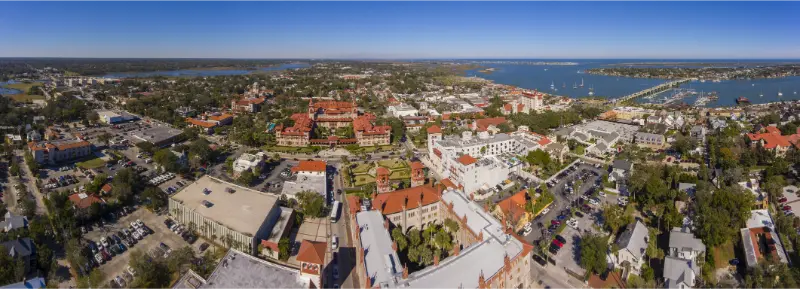
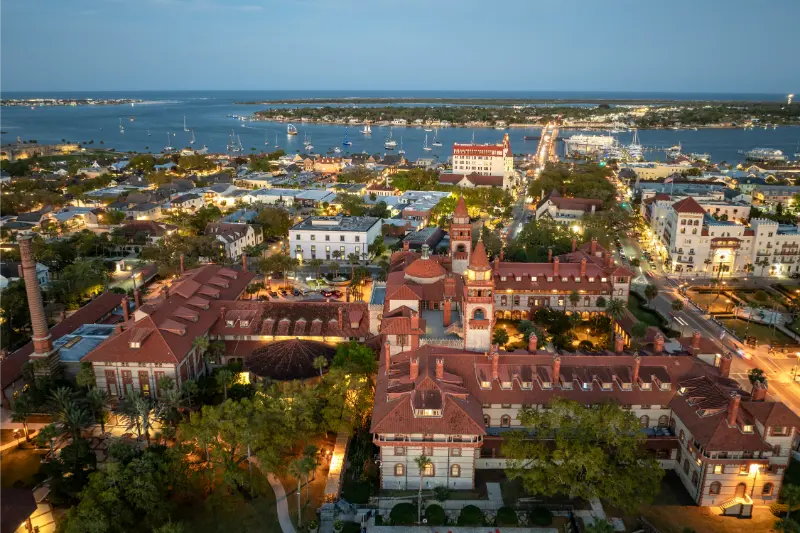
    Saint Augustine Florida Historic District Aerial

    Common mistakes to avoid

    • Entering during worship and continuing to talk like you are in a museum.
    • Assuming historic tour schedules found online are still current.
    • Driving a few blocks between downtown stops.
    • Using flash or photographing worshippers without permission.
    • Expecting the visit to function like a ticketed attraction with a fixed route.

    Practical questions before you go

    Is there an admission fee?

    Normal church entry is generally free; verify any special tour pricing separately.

    How long does a sightseeing visit take?

    About 20–45 minutes is usually enough outside a formal tour or service.

    Can I visit during Mass?

    Visitors should not treat Mass as sightseeing time; attend respectfully or return later.

    Is photography allowed?

    Rules may vary, especially during services. Follow posted guidance and staff instructions.

    Is it near St. George Street?

    Yes. It is directly in the central historic district beside the plaza.

    Official resource to check before you go

    Use the official visitor information for current hours, prices, reservations, access rules, closures and event schedules before travel.

    Extra planning notes for a smoother visit

    If the stop has a fixed tour, worship service, guided entry or seasonal program, build the day around that constraint first. Flexible activities such as a plaza walk, beach time or lunch can move around it. This prevents the common mistake of arriving just after the only program your group wanted.

    Keep a fifteen- to thirty-minute buffer between major stops. Historic-district traffic, full parking lots, bridge openings, weather changes and ticket lines can make short map distances take longer than expected.

    Save the official address, confirmation email and parking instructions before leaving the hotel. Mobile reception is usually good in the city, but having the essentials available offline prevents avoidable stress when a group is trying to navigate together.

    For multigenerational travel, agree on a reduced version of the visit. One person can skip a sandy path, stair climb or long gallery while the rest continue, then everyone can meet at a clearly defined bench, lobby, pavilion or café.

    Think about the return trip before you begin. After a hot beach session, long guided tour or museum visit with children, the group is less patient with parking searches and restaurant queues. Keep water in the car and know which meal options are nearby.

    Respect the setting. Churches, shrines, wildlife facilities, museums, dunes and historic homes all have different rules for photography, touching, food and movement. Following those rules usually improves the experience for everyone rather than limiting it.

    More practical details that can change the day

    Crowds can alter the best route through even a small attraction. If a lobby, parking lot or exhibit room is congested, move to the flexible part of the plan and return later rather than waiting in the most uncomfortable place. This works especially well in St. Augustine because many downtown alternatives are only a few minutes apart on foot.

    Check official notices rather than relying only on map-app hours. Historic properties may close for private events, religious sites can change access for services, wildlife facilities may adjust tours, and beaches or parks can react quickly to storms, tides or maintenance. A place being marked “open” online does not guarantee every activity is operating normally.

    Comfortable shoes matter more than they seem. A single day can include brick streets, wooden walkovers, gravel, sand and historic floors. Choose footwear for the most demanding surface in your itinerary, not only for the restaurant or photo stop at the end.

    Final thoughts

    The Cathedral Basilica is one of the simplest ways to add depth to a downtown St. Augustine walk. Treat it as a living church first and a historic landmark second, and the visit becomes more meaningful rather than merely another photo stop.

  • Treaty Park St. Augustine Guide: Playground, Skatepark, Pickleball, Dog Park and Family Tips

    Treaty Park St. Augustine Guide: Playground, Skatepark, Pickleball, Dog Park and Family Tips

    Treaty Park is not the kind of place most first-time visitors put on a St. Augustine bucket list, and that is exactly why it can be so useful. The 47-acre county recreation complex gives families, teenagers, dog owners and active travelers a free place to move between historic attractions and beach time.

    Explore this guide

    The park currently includes an ADA playground, basketball, bocce, a dog park, horseshoes, paddle/POP tennis, pavilions, pickleball, softball, tennis, a nature trail and a large concrete skatepark. That range makes it one of the best “reset stops” in the area when different generations want different things.

    You do not need to build a day around Treaty Park. Its strength is flexibility: 45 minutes at the playground, a pickleball session, a dog-park break or a skatepark visit can fit around a larger St. Augustine itinerary without another admission fee.

    Quick planning summary

    • Best for: families, teenagers, skateboarders, pickleball players, dog owners and travelers needing a free activity break
    • How much time: 45 minutes to 2 hours depending on activity
    • Current general park hours: dawn to dusk
    • Skatepark hours: currently listed sunrise to 10 p.m.
    • Location: 1595 Wildwood Drive, St. Augustine, FL 32086

    Why Treaty Park is useful for travelers

    Historic St. Augustine asks visitors to walk slowly, read exhibits and spend time indoors. Treaty Park does the opposite: it gives children space to run, teenagers a real skatepark, adults sports courts and dog owners a fenced area.

    That contrast can rescue a multigenerational itinerary. Instead of forcing everyone through another museum because it is “next on the list,” use the park as a deliberate change of pace.

    What to do

    ADA playground

    The playground is the most practical feature for families with younger children. Use it as an energy break before a meal or after a history-heavy morning rather than promising a long museum day with no movement.

    Robert-Laryn Skate Park

    The county describes a 28,000-square-foot concrete skatepark with half pipes, rails, ledges, banks and a deep kidney-shaped pool feature. It is a meaningful destination for skateboarders rather than a token neighborhood ramp.

    Pickleball, tennis and paddle/POP tennis

    Travelers who like to stay active can use the court facilities when available. Bring your own equipment unless you have confirmed a local rental option; the park is a recreation facility, not a full-service resort.

    Paws Dog Park

    Separate fenced areas serve large and small dogs, with watering features and seating. Bring waste bags and follow posted rules even if supplies are present.

    Nature trail and quieter corners

    The trail is useful when one family member wants a walk while others use the playground or courts. It is not a substitute for a major preserve, but it adds variety to a short stop.

    Best time to visit

    Morning and late afternoon are best in warm months. Midday shade is limited in active recreation areas, and hot court or skate surfaces can make a summer visit uncomfortable.

    The general park is listed dawn to dusk, while the skatepark has later posted hours. Use the current county page because special maintenance or league activities can affect availability.

    Parking and practical setup

    Treaty Park is designed as a recreation complex, so arrival is simpler than downtown parking. The main planning issue is bringing the right equipment: sports gear, helmets, water, sunscreen and dog supplies if relevant.

    If your group splits among playground, courts and skatepark, choose a clear meeting point and time rather than relying on phone calls across a large park.

    Families with babies and young children

    This is one of the easiest free St. Augustine-area stops with young children because the playground gives them an activity designed for movement. Keep sun exposure in mind and bring water even for a short visit.

    With babies and young children, plan around shade, bathrooms, snack breaks and opportunities to move rather than trying to maximize the number of attractions. In northeast Florida, heat and humidity can change a child’s energy level faster than distance on a map suggests. A shorter paid attraction followed by a playground, beach or easy walk often works better than stacking two information-heavy visits back to back.

    Teenagers and older children

    The skatepark, basketball and courts make Treaty Park unusually useful for teenagers who are tired of historic sightseeing. A one-hour active break can improve the rest of the day considerably.

    Teenagers usually engage more when they have a specific task or choice: follow one historical story, find a favorite viewpoint, photograph a landmark, choose the lunch stop or compare two activities. Giving them some ownership of the schedule can make a history-heavy destination feel much less like a school assignment.

    Senior travelers and multigenerational groups

    Senior travelers may enjoy bocce, a short trail walk or watching younger family members from seating areas. Choose cooler hours and avoid unnecessary crossings of the full complex.

    For multigenerational travel, remove unnecessary walking before removing the destination itself. Park strategically, use benches, choose cooler hours and let the least mobile traveler set the base pace. More active family members can add a stair climb, long trail or beach walk while everyone else meets at a clear landmark, lobby, pavilion or café.

    Accessibility and comfort

    The county lists an ADA playground and modern recreation amenities. Exact surface, restroom and court access can change, so travelers with specific needs should confirm the current facility details.

    Accessibility can change by surface and activity even when a facility has accessible parking and restrooms. Historic floors, dune crossovers, sand, roots, gravel and outdoor heat all matter. If a traveler uses a wheelchair, walker or cane, confirm the exact route needed for the part of the experience you care about most rather than relying only on a general accessibility label.

    How to combine Treaty Park with a St. Augustine day

    The park works well between the historic district and southern St. Augustine accommodations, or before continuing toward Crescent Beach and Fort Matanzas. It can also be a low-cost afternoon after a paid morning attraction such as the lighthouse or Alligator Farm.

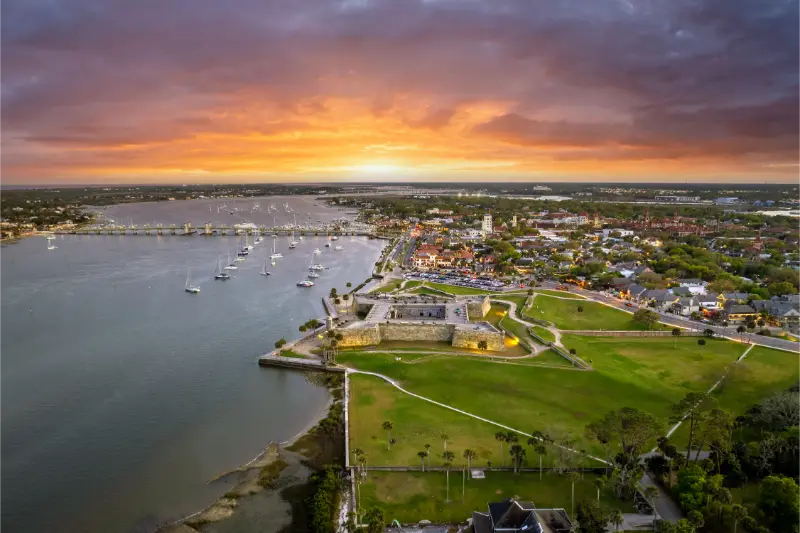
    Saint Augustine Historic Town Aerial

    Family tipFor families, a strong rhythm is one paid attraction, lunch, Treaty Park, then beach or hotel pool time. This avoids the common mistake of trying to make children absorb four consecutive historic stops.

    Weather and seasonal planning

    Northeast Florida is visitable year-round, but the experience changes sharply with the season. Late spring through early fall brings heat, humidity and frequent afternoon thunderstorms. Winter often has comfortable walking weather, yet cold fronts can make beaches and exposed waterfronts surprisingly cool and windy. Spring and fall usually provide the easiest compromise between temperature and daylight.

    Lightning is the main reason to keep a flexible plan. At beaches, golf courses, parks and open historic sites, thunder is a cue to move indoors rather than shelter under a tree or pavilion. During hurricane season, check operating status before driving because coastal parks, bridges, beach ramps and attractions can close or alter hours even when the storm center is far away.

    A realistic 60–90 minute family visit

    First 15 minutes

    Choose the main activity immediately—playground, skatepark, courts or dog park—rather than walking the entire complex first.

    Middle 45 minutes

    Let active family members use the park at their own pace while adults keep water and shade breaks available. If several facilities are busy, switch activities rather than waiting for the perfect court.

    Final 15 minutes

    Use the restroom, cool down and decide whether the next stop should be food, beach or hotel rest. The value of Treaty Park is how easily it can restore energy without consuming the whole day.

    Common mistakes to avoid

    • Assuming the skatepark and general park have identical closing times.
    • Arriving without helmets or sport-specific gear.
    • Scheduling the park at the hottest part of a summer afternoon.
    • Using the dog park without reading current posted rules.
    • Treating a free recreation break as something that must fill half a day.

    Official resource to check before you go

    Use St. Johns County’s Treaty Park page for current hours, amenities, trail information and skatepark details.

    Extra planning notes for a smoother visit

    Keep a 15–30 minute buffer between major stops around Treaty Park. Short map distances can still involve bridge traffic, event congestion, full parking lots, security lines or slow pedestrian streets. A little slack in the day prevents one delay from forcing you to skip the attraction you cared about most.

    Save the official address, parking instructions and any reservation confirmation before leaving your hotel. Mobile coverage is generally good, but a group trying to navigate, find a garage and retrieve tickets at the same time can lose more time than expected.

    Use official same-day notices for outdoor access. Beach driving, dune walkovers, trails and event parking can change because of tide, storms, maintenance or special events. A map app showing a place as open does not guarantee every activity or entrance is operating normally.

    Comfortable shoes are more important here than they may seem. A single day can include brick streets, wooden boardwalks, grass, sand, gravel and historic floors. Choose footwear for the most demanding surface in the itinerary, not only for the restaurant or photo stop at the end.

    Saint Augustine Florida Historic Waterfront at Night

    Build one flexible element into every half day. A beach walk, café, park or scenic drive can expand when everything is running smoothly and shrink when parking, weather or fatigue slows the group down. That flexibility is especially valuable with children and senior travelers.

    Think about the return trip before you begin the final activity of the day. After a beach session, concert, long museum visit or golf round, the group is less patient with restaurant queues and parking searches. Keep water in the car and know where your next practical stop will be.

    Final thoughts

    Treaty Park is a practical rather than iconic recommendation—and that is its strength. Families and active travelers often need one place on the itinerary where nobody has to queue, read a plaque or buy another ticket. This park fills that role very well.

    How to decide whether this belongs in your itinerary

    A useful test is to ask what this stop adds that your other plans do not. If the day already contains two history museums, choose nature, beach or active recreation instead of a third similar attraction. If everyone has been outdoors in the heat, an indoor or seated experience may be the better use of time. Variety usually creates better travel memories than simply maximizing the number of famous names.

    For this destination, the practical goal is not to follow a rigid checklist but to leave enough margin for real conditions on the day. That may mean shortening a walk, moving a meal earlier, changing parking areas or dropping a low-priority stop. A trip feels more complete when the experiences you keep are enjoyed at a reasonable pace.

    Transportation reality

    Northeast Florida distances can look small on a map, but bridges, beach traffic, event congestion and parking searches affect real travel time. Group nearby stops and avoid crossing the same bridge repeatedly. When an attraction has a timed tour or concert gate time, build the schedule backward from that fixed commitment and keep flexible activities around it.

    For this destination, the practical goal is not to follow a rigid checklist but to leave enough margin for real conditions on the day. That may mean shortening a walk, moving a meal earlier, changing parking areas or dropping a low-priority stop. A trip feels more complete when the experiences you keep are enjoyed at a reasonable pace.

    Planning for meals and energy

    Meals are part of the itinerary rather than empty space between attractions. Eating slightly before peak lunch or dinner can reduce waits and protect the rest of the schedule. Families should carry simple snacks, while all travelers benefit from water in the car. After a hot beach or trail session, a long sit-down meal may be more restorative than forcing one more attraction before dinner.

    For this destination, the practical goal is not to follow a rigid checklist but to leave enough margin for real conditions on the day. That may mean shortening a walk, moving a meal earlier, changing parking areas or dropping a low-priority stop. A trip feels more complete when the experiences you keep are enjoyed at a reasonable pace.

    Photography without slowing the whole group

    Choose two or three moments for deliberate photography instead of stopping every few minutes. Early and late light is usually softer on beaches and historic architecture, while overcast conditions can be excellent for gardens and portraits. At wildlife sites, use distance and a longer lens rather than approaching animals. At active churches, concerts and private tours, follow the specific photography rules.

    For this destination, the practical goal is not to follow a rigid checklist but to leave enough margin for real conditions on the day. That may mean shortening a walk, moving a meal earlier, changing parking areas or dropping a low-priority stop. A trip feels more complete when the experiences you keep are enjoyed at a reasonable pace.

    What to do when plans change

    Have one backup in the same geographic area. If a beach closes to driving, use a pedestrian access rather than crossing the county for another ramp. If a thunderstorm delays an outdoor attraction, switch to a nearby museum or meal and return later. The strongest itineraries are modular: one change should not force a complete redesign of the day.

    For this destination, the practical goal is not to follow a rigid checklist but to leave enough margin for real conditions on the day. That may mean shortening a walk, moving a meal earlier, changing parking areas or dropping a low-priority stop. A trip feels more complete when the experiences you keep are enjoyed at a reasonable pace.

  • Lightner Museum Guide: Admission, Hours, Collections, Architecture and St. Augustine Tips

    Lightner Museum Guide: Admission, Hours, Collections, Architecture and St. Augustine Tips

    The Lightner Museum is one of St. Augustine’s best answers to a hot afternoon, a rainy morning or a traveler who wants more than colonial history. The museum occupies the former Alcazar Hotel, so architecture and collections compete for your attention in a way that feels very different from the city’s fort and reconstructed colonial sites.

    Explore this guide

    The holdings range across fine and decorative arts, glass, furniture, sculpture and objects collected during the Gilded Age and early twentieth century. You do not need to be an art specialist to enjoy the museum, but you will get more from it if you slow down and choose themes instead of trying to inventory every gallery.

    Its central location makes it easy to combine with Flagler College, the Plaza and St. George Street. That convenience is also the danger: visitors sometimes rush through the Lightner simply because too many other attractions are nearby.

    Quick planning summary

    • Best for: art and design lovers, Gilded Age fans, couples, senior travelers, architecture enthusiasts and anyone needing a high-quality indoor stop downtown
    • How much time: 1.5–2.5 hours; allow longer if you enjoy decorative arts, special exhibitions or architectural details.
    • Current cost: Current official admission: adults $20, seniors/students/military $17, youth 12–17 $13, children 11 and under free; local and program discounts may apply.
    • Current hours/status: Current schedule: open daily 9 a.m.–5 p.m.; last admission 4 p.m.; upper floors close 4:30 p.m.; closed selected major holidays.
    • Location: 75 King Street, St. Augustine, FL 32084

    Why this stop is worth including

    The museum explains a different era of St. Augustine. The fort tells a military-colonial story; the Lightner shows how the city was reinvented as a Gilded Age resort destination with ambitious architecture and wealthy visitors.

    The building itself is a major part of the experience. Looking at courtyards, arches, old hotel spaces and adaptive reuse helps visitors understand the Flagler-era transformation of the city even before they focus on individual objects.

    For multigenerational trips, it provides climate control, restrooms and a more predictable walking environment than a beach or exposed fort, which makes it strategically useful as well as culturally worthwhile.

    What to see and do

    Start with the building, not the labels

    Before focusing on objects, notice the scale and layout of the former Alcazar Hotel. Understanding that the building was designed as part of St. Augustine’s luxury resort era gives context to the collections inside.

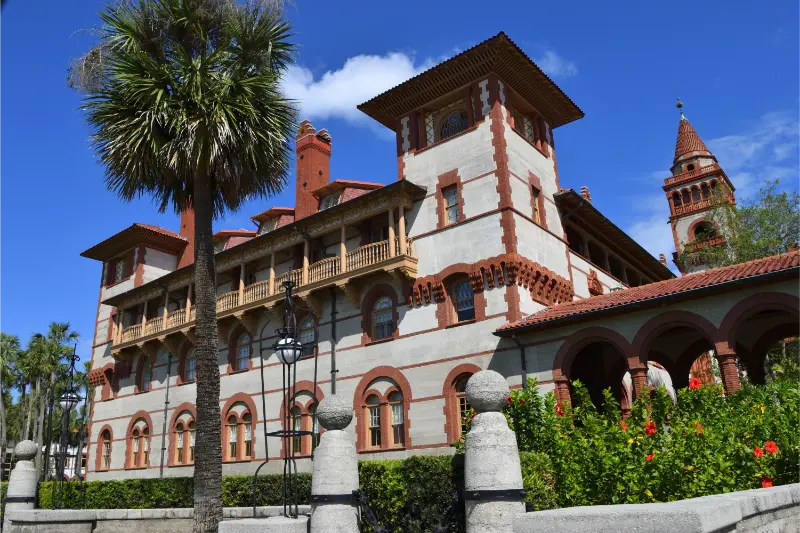
    Flagler College Saint Augustine Historic Building

    Look for sightlines into courtyards and architectural details that reveal how hotel guests once moved through the property.

    Choose a decorative-arts theme

    Glass, furniture, metalwork and other decorative arts can become overwhelming if you treat each case equally. Pick one material or period that interests you and follow it through several galleries.

    This approach works especially well with older children or teenagers because it gives them a search task rather than a passive museum march.

    Spend time with fine art and sculpture

    Paintings and sculpture provide a visual break from dense object displays. Stand back far enough to see how works relate to the gallery rather than only reading captions at close range.

    If a temporary exhibition is running, decide early whether it is a priority so you do not leave it until everyone is tired.

    Look for the hotel story

    The former Alcazar was part of Henry Flagler’s effort to create a sophisticated winter destination. Architectural remnants and interpretation help connect the museum to Flagler College across the street.

    Seeing both properties on the same day makes the Gilded Age transformation of St. Augustine much easier to understand.

    Use the museum as a deliberate climate break

    On a summer day, schedule the Lightner around midday when exposed streets are hottest. This is not merely weather avoidance; you are using the city’s geography intelligently.

    Afterward, the Plaza and pedestrian streets feel more pleasant as temperatures begin to ease.

    Leave time for the exterior and courtyard

    Do not walk out and immediately call a ride. The building and surrounding blocks are part of the experience, and exterior photography helps you appreciate the Spanish Renaissance Revival setting.

    This is also a good point for a seated break before your next attraction.

    Current costs, hours and reservations

    The Lightner currently opens daily from 9 a.m. to 5 p.m., with last admission at 4 p.m. and upper floors closing at 4:30 p.m. Current general admission is $20 for adults, $17 for seniors, students and military, $13 for youth ages 12–17, and free for children 11 and under. St. Johns County residents and qualifying Museums for All visitors have separate rates or opportunities. Holiday closures include Easter Sunday, Thanksgiving, Christmas and New Year’s Day under the present schedule.

    Treat every ticket price, opening time, special program and construction notice in this article as a planning snapshot from October 2026. Travelers should recheck the official source shortly before travel rather than assuming a 2026 operating detail remained unchanged into 2028 or later.

    Parking and getting there

    The museum does not solve downtown parking for you. The Historic Downtown Parking Facility is a reliable all-day option, while metered spaces may be better for a shorter visit if you find one. If your day includes Flagler College and St. George Street, park once and walk. Repeatedly moving the car across the compact historic center wastes time and increases frustration.

    St. Augustine traffic becomes much easier when you group attractions by area. The historic core rewards walking after you park; Anastasia Island rewards staying on the island for several stops. Avoid crossing the Bridge of Lions repeatedly simply because each attraction looks close on a map.

    Best time of day and best season

    Midday is strategically excellent in hot months because the museum is indoors. In winter, morning gives you a quieter cultural start before the streets become busy. Rainy days predictably increase demand for indoor attractions, so arrive early if the forecast looks poor. Last admission is an hour before closing, and the upper floors close earlier than the building itself.

    Families with babies and young children

    Children who enjoy visual oddities, glass, furniture and unusual objects can have a good visit, but the museum is not designed as a nonstop hands-on children’s attraction. Keep the visit shorter with young children and give them a theme to hunt for. Because children 11 and under are currently free, families can visit without feeling pressure to extract three hours of value from every child.

    For small children, the most successful day alternates structured sightseeing with movement, food and shade. A child who has already spent two hours listening indoors may enjoy a beach, park or open plaza far more than a third museum, even if that museum is objectively excellent.

    Teenagers and older children

    Teenagers interested in design, architecture, photography or fashion history may find more to engage with than they expect. Let them choose a favorite room or object and explain why it looks expensive, strange or modern. Connecting the former hotel to today’s tourism industry can also make the history feel less remote.

    Give teenagers some ownership of the itinerary. Let them choose a photo stop, snack, viewpoint or second-half activity. That small decision often produces more engagement than adding another attraction chosen entirely by adults.

    Senior travelers and multigenerational groups

    The indoor setting and central location are strengths for senior travelers. Plan enough time that stairs or elevators do not become a race. Ask staff about current accessible routes and seating, especially if a temporary exhibition changes normal circulation.

    Build the day around the least mobile or most heat-sensitive traveler first. More active family members can add a climb, longer beach walk or side street without requiring everyone to cover the same distance.

    Accessibility and comfort

    As a historic structure adapted into a museum, access is more complex than in a purpose-built modern gallery. The museum provides visitor accessibility information, but anyone who depends on elevator service, step-free routes or specific restroom features should verify the current layout before travel. A mobility-friendly pace can still cover the core collections without seeing every corner.

    Food, water and practical breaks

    The museum sits in one of the easiest parts of St. Augustine for lunch planning. Eat before or after rather than interrupting the galleries with snack logistics. If the group is tired, a proper seated meal after the museum is usually more restorative than another quick attraction.

    Carry more water than a short Florida outing seems to require, especially from late spring through early fall. A planned seated break is not wasted sightseeing time; it is often what allows a multigenerational group to enjoy the final two hours of the day.

    Photography tips

    Architectural photographs often work better than isolated object shots. Look for symmetry, arches, stair details and courtyard light. Follow current gallery photography rules and avoid flash where prohibited. Exterior photographs across King Street can help place the museum in context with Flagler College.

    How it compares with nearby alternatives

    Choose the Lightner when you want decorative arts, architecture and a Gilded Age indoor experience. Flagler Beach Historical Museum is much smaller and focused on local coastal history, while the Lightner rewards a longer museum visit. If your priority is an active climb rather than galleries, Ponce Inlet Lighthouse offers the opposite kind of experience.

    How to combine it with other Wonderful Florida guides

    Travelers driving north from Flagler County can use Washington Oaks Gardens State Park or Flagler Beach guide as an outdoor stop on another day, then reserve the Lightner for the denser historic core. This prevents a single itinerary from becoming an uninterrupted string of indoor attractions.

    How to fit this stop into a St. Augustine trip

    A useful way to plan St. Augustine is to separate the day into one history-heavy anchor, one lighter walk or outdoor stop, and one flexible meal or beach period. The city contains enough museums and ticketed attractions to fill several days, but stacking four indoor history stops back-to-back often produces less learning, not more. Families usually do better when a structured attraction is followed by open space; couples may prefer to reserve late afternoon for the bayfront; senior travelers often benefit from putting the longest walk before lunch and using a museum during the warmest part of the day.

    Flagler College Saint Augustine Florida at Sunset Aerial

    If you have only one day

    Keep the schedule disciplined. Choose one major paid attraction in the morning, use the historic district or beach as your flexible middle period, and add a second ticketed stop only if travel time and energy remain realistic. St. Augustine is compact, but parking, lines and heat can make a short distance consume more time than it appears on a map.

    If you have two or three days

    Divide the city by theme or geography. One day can focus on the historic core, another on Anastasia Island and the beach, and a third can be used for a slower museum, nature or north-coast excursion. This reduces repeated parking and keeps children and older travelers from spending every day in the same type of environment.

    Budget and value

    St. Augustine can be inexpensive or surprisingly costly depending on how many admissions you buy. Parking, two major attractions and restaurant meals can turn a casual day into a substantial family expense. Pick the one or two paid experiences that best match your interests, then use free elements such as the bayfront, Plaza de la Constitución, portions of St. George Street and beach time to create contrast. If your itinerary includes several federal recreation sites, compare the cost of individual admission with any pass you already hold; if you are traveling with children, always check the attraction’s age thresholds because some sites admit young children free.

    Weather and seasonal planning

    Northeast Florida weather rewards flexible sequencing. Summer brings heat, high humidity and frequent afternoon thunderstorms, while winter can be mild one day and windy or surprisingly cool the next. Lightning is a reason to leave exposed fort walls, beaches, piers, lighthouse towers and open water promptly. During hurricane season, verify operating status again on the morning of the visit because coastal parks and historic properties may close even when the center of a storm is far away. Carry water year-round, use sun protection, and do not treat an overcast sky as protection from ultraviolet exposure.

    A realistic half-day plan

    Park once downtown

    Use the garage or a suitable meter and walk to the museum.

    Spend 90 minutes to two hours inside

    Choose architectural details and two or three collection themes rather than trying to inspect everything.

    Continue with a short outdoor walk

    Use the Plaza, Flagler College exterior or St. George Street as a low-pressure transition before another ticketed stop.

    Where to stay for this part of northeast Florida

    For a first St. Augustine visit, staying in or immediately beside the historic district is the most convenient choice if your priority is walking to the fort, St. George Street, Flagler College and evening restaurants. Anastasia Island is usually better for travelers who want easier beach access, a quieter night and short drives to the lighthouse, Alligator Farm and state park. Families who value space, a pool and simple parking may prefer the beach side even if it means crossing the Bridge of Lions for downtown sightseeing. For a one- or two-night stay, avoid changing hotels simply to save a few miles: traffic and parking strategy matter more than moving your luggage between neighborhoods.

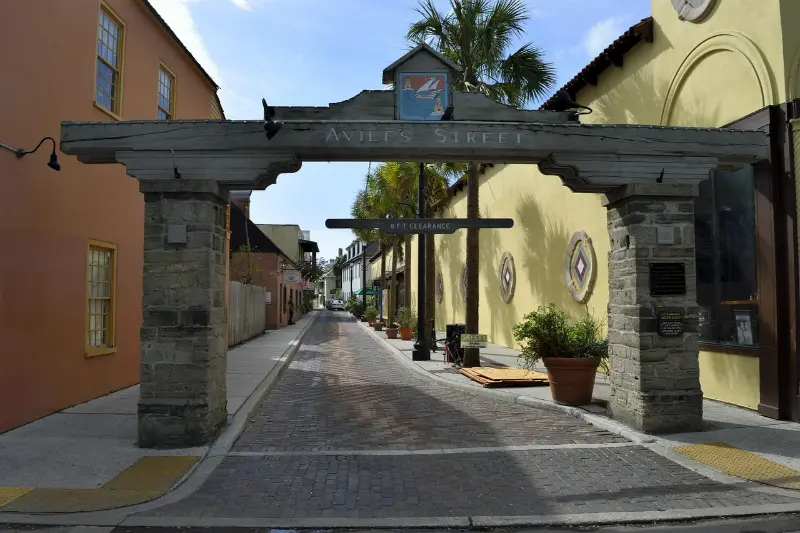
    Saint Augustine Historic Narrow Street

    Common mistakes to avoid

    • Arriving after 4 p.m. and expecting normal admission.
    • Treating the museum as a quick lobby photo rather than exploring the collections.
    • Trying to read every label with young children.
    • Moving the car between the Lightner, Flagler College and nearby downtown sights.
    • Skipping temporary exhibition information when planning a repeat visit.

    Practical questions before you go

    How much is admission?

    Current adult admission is $20, with reduced rates for seniors, students, military and youth; children 11 and under are free.

    What are the hours?

    The museum currently opens 9 a.m.–5 p.m. daily, with last admission at 4 p.m.

    How long should I stay?

    Allow 1.5–2.5 hours for a comfortable first visit.

    Is it good on a rainy day?

    Yes. It is one of the strongest indoor attractions in central St. Augustine.

    Is the building part of the attraction?

    Absolutely. The former Alcazar Hotel is central to understanding the museum and the city’s Gilded Age development.

    Official resource to check before you go

    For current visitor information, use the official visitor page. Recheck hours, fees, reservations, closures, construction notices, weather restrictions and accessibility information shortly before travel.

    Final thoughts

    The Lightner Museum is most rewarding when you treat the former hotel and its collections as one story. It provides depth beyond St. Augustine’s colonial identity and gives a useful indoor counterpoint to fort walls and beach time. Choose a few themes, notice the building and leave enough energy to appreciate the surrounding Gilded Age streets afterward.

  • St. Augustine Lighthouse & Maritime Museum Guide: 219 Steps, Tickets, Families and Sunset Planning

    St. Augustine Lighthouse & Maritime Museum Guide: 219 Steps, Tickets, Families and Sunset Planning

    St. Augustine Lighthouse & Maritime Museum can be one of the most useful stops in a Northeast Florida itinerary when you plan around what makes it distinctive. The lighthouse is more than a stair climb. The site combines an active 1874 tower, historic keepers’ buildings, shipwreck archaeology, maritime exhibits, a conservation lab, children’s activities and nature trails. That mix means one person can climb while another still has a meaningful visit at ground level.

    Explore this guide

    This guide focuses on practical decisions: how long to allow, what is genuinely worth prioritizing, which current operating details can change the day, how the visit works for families and senior travelers, and how to combine it with other already-published Wonderful Florida guides without overloading the itinerary.

    Quick planning summary

    • Best for: lighthouse fans, families with older children, photographers, maritime-history travelers and visitors who want a high viewpoint over St. Augustine.
    • How much time: 2 to 3 hours for the tower, Keepers’ House and maritime exhibits; longer if you add a scheduled tour or spend time on the nature trails.
    • Best strategy: verify the official page the day before, arrive early for outdoor sites and keep at least one hour of flexibility.
    • Research date: current operating details were reviewed on 6 October 2026 for a 2027 publication schedule.

    Why this place is worth adding to your Florida trip

    The lighthouse is more than a stair climb. The site combines an active 1874 tower, historic keepers’ buildings, shipwreck archaeology, maritime exhibits, a conservation lab, children’s activities and nature trails. That mix means one person can climb while another still has a meaningful visit at ground level.

    The deciding question is whether this stop adds a new layer to your trip. Northeast Florida offers Spanish colonial history, Gilded Age architecture, beaches, estuaries, gardens and maritime culture within a relatively compact corridor. Select experiences that contrast with one another instead of repeating the same type of museum or beach every day.

    Best things to do and how to experience them

    Decide before arrival who is actually climbing

    The 219-step spiral staircase is the defining activity, but it is not mandatory for a good visit. Check height, mobility, heat tolerance and fear of heights before buying the day around the climb. Families should know that children under 44 inches cannot climb and children may not be carried.

    Do not rush the Keepers’ House and maritime exhibits

    The tower gets most of the attention, yet the keepers’ stories and shipwreck archaeology often provide the strongest historical context. A new 2026 exhibit on lighthouse keepers and daily life adds another reason to spend time inside rather than treating the museum as a queue for the stairs.

    Use late afternoon carefully

    The light near closing can be beautiful, but tower access may end before the site itself closes and weather closures can happen quickly. If the climb matters, do it earlier and save grounds or exhibits for later. Special sunset and moonrise programs require separate planning and can sell out.

    Current information to know before you go

    As reviewed on 6 October 2026, regular hours are 9:00 a.m. to 6:30 p.m. from March 1 through September 30 and 9:00 a.m. to 6:00 p.m. from October 1 through February 28, with earlier last-ticket times. The 1874 tower has 219 steps. Children must be at least 44 inches tall to climb, must climb under their own power and may not be carried in the tower. The tower can close for weather or special events. The museum currently advertises a 15% online general-admission discount using code LH15 and a printable 10% coupon; confirm the offer before purchasing. Thanksgiving and Christmas are closed, with modified hours on selected dates.

    Operating details can change between the research date and your trip. Recheck the official page shortly before departure, especially when ferry service, tower access, maintenance work, weather, capacity limits, special events, admission prices or wildlife protections can affect the experience.

    Best time of year and best time of day

    Northeast Florida is easier to explore outdoors from late fall through spring, when lower humidity makes forts, trails and gardens more comfortable. Summer is still workable, but the day should be built around an early start, a shaded or indoor midday activity and a flexible late afternoon. Thunderstorms are common enough that outdoor towers, ferries, beaches and paddling should never be left to the only available hour.

    For St. Augustine attractions, crowd timing matters as much as temperature. Opening time is valuable for Castillo de San Marcos, the lighthouse and major outdoor sites, while museums are often better saved for the hotter part of the day. Coastal preserves are affected by tide, wind and nesting wildlife, so check conditions rather than relying only on a weather icon.

    How to plan a St. Augustine day without wasting time

    St. Augustine looks compact on a map, but parking, bridge traffic, one-way streets and queues can turn a short distance into a slow transfer. Group attractions by side of the Matanzas River and avoid moving the car repeatedly through the historic core. If you park once downtown, walk between the Castillo, bayfront and central museums where practical.

    Saint Augustine Historic Town Aerial

    One major paid attraction plus one lighter secondary stop is a good default. Families and senior travelers usually enjoy the city more when the schedule leaves time for a meal, shade and an unscheduled waterfront walk. Three ticketed sites in one day can cost more and feel less memorable than two well-paced visits.

    How to plan for families with children

    The best family itinerary alternates listening with movement. After a fort room, exhibit gallery or guided presentation, give children a beach walk, courtyard, trail or open waterfront space. Long sequences of historic interpretation can make even excellent attractions feel repetitive.

    Carry water, sun protection and a simple snack. In the warm season, do not wait for children to say they are overheated. Move into air conditioning or shade before everyone is tired. For attractions with height, stair or animal-program rules, explain the restriction before arriving so it does not become a surprise at the ticket desk.

    Children who meet the height requirement often enjoy counting steps and reaching the gallery, but adults should not pressure a nervous child to finish the climb. The playground, hands-on maritime elements and shipwreck material give younger visitors alternatives. Build in a snack and water break after the tower because the combination of stairs and Florida heat can drain energy quickly.

    Senior travelers and multigenerational groups

    A multigenerational St. Augustine trip works when the defining experience can be enjoyed at more than one intensity level. At a lighthouse, one person may climb while another uses a ground-level exhibit. At a state park, stronger walkers can add a trail while others use an overlook, boardwalk or shaded picnic area. Historic sites often have uneven surfaces even when major public areas are accessible.

    Plan restrooms, parking and seated breaks as part of the route. The combination of heat, brick streets, soft sand and stairs can be more tiring than mileage suggests. A slower group should not be pressured to match the pace of travelers trying to “see everything.”

    Senior visitors should evaluate the spiral staircase realistically; the tower is optional. The main floor of the Keepers’ House, WWII garage and Maritime Education Center offer accessible interpretation, including a “View from the Top” video. Travelers with mobility limitations can still understand the site without climbing.

    Accessibility and mobility planning

    Accessibility differs sharply among modern museums, seventeenth-century forts, lighthouse towers, beaches and natural preserves. An attraction can be technically accessible while still involving long ramps, heat, uneven coquina, soft sand or distances from parking. When one feature is essential to your trip, call ahead and ask specifically about that feature rather than the site in general.

    Look for alternative interpretation when stairs or natural terrain are not workable. Videos, exhibits, overlooks, ranger talks and accessible loops can communicate the same story without forcing every visitor onto the most strenuous route.

    Parking, transportation and realistic drive times

    Central St. Augustine parking deserves a plan. Public garages and city spaces can fill during festivals, holiday periods and Nights of Lights. Attractions outside the historic core may have their own lots, but crossing bridges at peak times still adds delay. Build 15 to 30 minutes of transport margin into any timed reservation.

    Saint Augustine Historic Narrow Street

    Along A1A, distances may look short but traffic, drawbridges, beach access and scenic stops slow the day. Do not schedule a paid program immediately after a tide-dependent or ferry-dependent activity. A buffer protects the itinerary from normal Florida variability.

    What to bring

    For outdoor sites, carry refillable water, sun protection, insect repellent, comfortable footwear and a light rain layer. Binoculars add value at GTM, Princess Place and coastal parks. A small microfiber towel is useful after beach walks or sudden showers.

    For museums, bring a light layer because air conditioning can feel cold after outdoor heat. Keep valuables out of sight in parked cars. If your day includes a tower or ferry, reduce what you carry so hands remain free on stairs and boarding areas.

    Weather, storms and hurricane-season reality

    Florida’s Atlantic hurricane season runs from June through November, but ordinary thunderstorms are the more common day-to-day disruption. Lightning can close towers, suspend ferries, stop paddling and clear beaches before heavy rain reaches you. If thunder is audible, exposed outdoor activities should be reconsidered immediately.

    Storms and high surf can change beaches, docks and trails for weeks or months. Because these articles are researched in October 2026 for 2027 publication, recheck official alerts shortly before travel rather than assuming a facility status is permanent.

    Budget and value

    St. Augustine can become expensive when parking, multiple admissions, tours and restaurant meals are stacked into one day. Decide which attraction is worth paying for because it offers an experience you cannot get from a free street walk, beach or public viewpoint. National park passes can improve value for eligible travelers, while children’s pricing varies widely among private attractions.

    Do not judge value only by the number of hours. A two-hour lighthouse or museum visit can be more memorable than a full day of rushed stops. Pack water, use free outdoor areas between paid attractions and avoid buying overlapping tours that tell the same story.

    Where to stay and how to group the region

    The historic district is convenient for travelers prioritizing Castillo de San Marcos, museums, restaurants and evening walks, but parking costs and hotel rates can be higher. Anastasia Island is practical for the lighthouse, state park and beach time. Vilano Beach and the A1A corridor work well for GTM and north-coast nature trips, while Palm Coast is a better base for Washington Oaks and Princess Place.

    For a three- or four-day stay, changing hotels is rarely necessary. Choose one base and group each day geographically. The extra time saved from avoiding hotel changes is usually more valuable than being five minutes closer to every attraction.

    Responsible travel and respectful interpretation

    Historic St. Augustine includes stories of Indigenous peoples, European colonization, enslaved Africans, military conflict and changing national control. Treat these places as more than decorative backdrops. Read enough interpretation to understand whose experiences are being described and avoid reducing complex sites to a single legend or photo opportunity.

    At natural areas, stay off protected dunes, respect nesting closures, keep distance from wildlife and avoid removing shells, plants or archaeological material where collection is prohibited. Responsible behavior protects the same features that make the visit worthwhile.

    How to combine it with other Wonderful Florida guides

    Useful already-published Wonderful Florida guides that add a different type of experience include Cape St. George Lighthouse, Crooked River Lighthouse. Use them as a separate half-day or next-day idea rather than forcing every nearby attraction into one schedule.

    A realistic three-day mini-itinerary

    Day 1

    Visit the lighthouse early enough to complete the climb before heat and storms build, then explore the Keepers’ House and maritime center.

    Day 2

    Use day two for central St. Augustine history, balancing one outdoor site with one air-conditioned museum.

    Day 3

    Use day three for beach or state-park time so the trip does not become a sequence of staircases and historic buildings.

    Who may want to skip or shorten the visit

    Visitors with severe vertigo, stair limitations or a strong fear of heights should skip the tower and focus on the museum. If your St. Augustine trip already includes several tall viewpoints, you may prefer a shorter visit centered on maritime history. Weather-sensitive travelers should avoid leaving the climb until the last hour.

    A strong itinerary is selective. If this experience duplicates something you have already done several times, shorten it or save it for another trip. The goal is to build contrast: an indoor museum after a beach morning, a quiet preserve after a crowded historic district, or a lighthouse after a day focused on ground-level history.

    Official resource to check before you go

    A practical decision framework for this stop

    Before leaving your hotel, identify the one feature that would make the visit worthwhile for your group. It may be climbing a tower, taking a ferry, seeing a particular collection, walking a beach, joining a demonstration or simply spending time in a quieter landscape. Once that priority is clear, protect it by checking the condition that could prevent it: weather, tide, capacity, stairs, opening days or a reservation rule.

    Next choose a nearby fallback. Northeast Florida is dense enough that a storm, sold-out ferry or temporary closure does not have to ruin a day. A museum can replace a lighthouse climb, a bayfront walk can replace a cancelled boat trip, and a short nature trail can replace an overheated city afternoon.

    Finally, leave 30 to 60 minutes unscheduled. That margin absorbs parking delays, slower walking, a ranger program or a child who needs a break. It also gives you permission to stay when a place turns out to be better than expected.

    How to make the visit feel more personal

    Ask one useful question when you arrive: “If we have only two hours, what should we not miss today?” Staff, rangers and volunteers often know which exhibit, trail or viewpoint is especially good under current conditions. That advice is more valuable than trying to follow a generic list written months earlier.

    Pay attention to one detail that belongs specifically to this place: coquina texture, a keeper’s daily routine, the direction of a tidal creek, a garden scent, a bird call or an artifact that changes how you understand local history. Those small observations are what make ten Florida attractions feel like ten different experiences rather than ten boxes checked on a trip.

    If the site is quieter than expected, use that quiet. Sit for a few minutes instead of immediately searching for the next stop. Florida’s best travel moments often happen after the planned activity is finished.

    Final thoughts

    St. Augustine Lighthouse & Maritime Museum is most rewarding when you understand its defining experience before arriving and give that experience enough time. Confirm current hours or access rules, respect historic and natural resources, and avoid trying to fit too many paid attractions into the same day.

    Wonderful Florida should help you make better travel decisions rather than simply collect places. Use this guide to shape a visit around your age group, mobility, interests, weather and budget.

  • St. George Street St. Augustine Guide: What to See, Parking, Food and Walking Tips

    St. George Street St. Augustine Guide: What to See, Parking, Food and Walking Tips

    St. George Street is the easiest place to understand the tourist heart of St. Augustine. The north section is pedestrian-focused, lined with historic and reconstructed buildings, restaurants, small museums, shops and passages that make it natural to explore without a fixed itinerary.

    Explore this guide

    The street is free to walk, but it can become one of the most expensive parts of a day if parking, impulse shopping, snacks and several small attractions accumulate without a plan. It is better treated as the connective tissue between major sights than as a checklist of every storefront.

    Your experience changes dramatically with time of day. Early morning emphasizes architecture and quiet photography; midday brings the most shopping energy; evening adds restaurants, entertainment and, in season, holiday lighting.

    Quick planning summary

    • Best for: first-time visitors, couples, families, food-focused travelers, shoppers, photographers and anyone wanting a free, flexible introduction to historic St. Augustine
    • How much time: 1–2 hours for a simple walk; 3–5 hours if you add meals, shops, museums and nearby attractions.
    • Current cost: Walking the street is free. Your real budget is parking, food, shopping and any ticketed attractions you add.
    • Current hours/status: The public street itself does not operate like a ticketed attraction; individual shops, restaurants and museums set their own hours. Crowd patterns change strongly by season and event.
    • Location: St. George Street, Historic District, St. Augustine, FL 32084

    Why this stop is worth including

    The street puts many layers of St. Augustine within a few blocks. You can move from the City Gate toward the Plaza while seeing colonial-style façades, side streets, courtyards and the commercial life of a modern tourist city.

    It is also useful because nobody in the group must enjoy it in the same way. One person can focus on architecture, another on food, another on shopping and children on small diversions without splitting across town.

    As a free activity, it balances expensive admissions elsewhere. A day with one major ticketed attraction plus a long St. George Street walk often feels more relaxed than three consecutive paid stops.

    What to see and do

    Start at the City Gate area

    Beginning near the north end gives the walk a clear orientation and puts you close to the Castillo. Look at the transition from fort grounds to the narrow urban street.

    Early morning is particularly good here because shop deliveries and visitor crowds have not fully taken over the visual scene.

    Explore side streets and courtyards

    Do not walk only in a straight line. Hypolita Street, Cuna Street and short side passages often reveal quieter architecture, shaded courtyards and better photo angles.

    Keep track of your route so younger children do not become disoriented in a dense crowd.

    Use food as a planned stop, not constant grazing

    St. George Street makes it easy to buy something every twenty minutes. Decide whether you want one snack and one meal or a tasting-style afternoon.

    A deliberate plan controls both budget and energy, especially with children who may lose interest in history once they know another sweet shop is nearby.

    Look beyond souvenir shopping

    Some storefronts are tourist-oriented, but the street also provides architectural details, small museums and access to significant historic sites.

    If shopping is not your interest, keep walking and use the street primarily as a pedestrian route between the Castillo, Plaza and Flagler-era area.

    Return after dark if your schedule allows

    Evening changes the street’s atmosphere as restaurant activity grows and building lights become more noticeable. During Nights of Lights season, crowd levels can be dramatically higher.

    A second short evening walk can be more enjoyable than trying to stay downtown continuously from breakfast until late night.

    Use the Plaza as your southern reset point

    The Plaza de la Constitución provides open space near the southern end of the core walking area. Sit, regroup and decide whether the next step is food, Flagler College, the waterfront or ending the day.

    That pause prevents the common mistake of wandering until everyone is tired and then choosing the next attraction poorly.

    Current costs, hours and reservations

    St. George Street is a public historic-district corridor rather than a gated attraction, so there is no single admission fee or unified opening time. The north section has long been restricted to pedestrian traffic, while surrounding blocks mix pedestrian zones and vehicle streets. Individual museums, stores and restaurants set their own schedules. During Nights of Lights, major festivals and fireworks events, the city may alter pedestrian routing, parking and traffic controls, so check current city notices.

    Treat every ticket price, opening time, special program and construction notice in this article as a planning snapshot from October 2026. Travelers should recheck the official source shortly before travel rather than assuming a 2026 operating detail remained unchanged into 2028 or later.

    Parking and getting there

    The Historic Downtown Parking Facility at 1 Cordova Street is the most straightforward all-day option. Current city pricing is $20 per entry during peak hours and $5 during designated off-peak entry hours, with exceptions during special events. Metered parking can be cheaper for a short visit, but searching for a perfect space often wastes more time than the savings justify. Once parked, keep the car parked.

    St. Augustine traffic becomes much easier when you group attractions by area. The historic core rewards walking after you park; Anastasia Island rewards staying on the island for several stops. Avoid crossing the Bridge of Lions repeatedly simply because each attraction looks close on a map.

    Historic Saint Augustine Park and Shops

    Best time of day and best season

    Arrive before 9 a.m. if photography and architecture are your priority. Late morning to mid-afternoon offers the widest shopping and museum availability. Evening is best for dining and atmosphere. Nights of Lights season creates exceptional visuals but also the year’s heaviest pedestrian and traffic pressure, so use shuttles and special-event parking when the city offers them.

    Families with babies and young children

    A pedestrian street is easier with children than a normal downtown traffic corridor, but crowds still require close supervision. Give children a fixed meeting rule and identify a landmark in case the group separates. Strollers work reasonably well on much of the route, though historic surfaces and busy thresholds can be awkward. Plan a snack and a seated break before behavior deteriorates.

    For small children, the most successful day alternates structured sightseeing with movement, food and shade. A child who has already spent two hours listening indoors may enjoy a beach, park or open plaza far more than a third museum, even if that museum is objectively excellent.

    Teenagers and older children

    Teenagers often enjoy St. George Street more when they are allowed some choice. Let them pick one store, one food stop or one side street to explore. Photography, people-watching and the mix of old façades with modern tourism can be more interesting than forcing them into every small museum.

    Give teenagers some ownership of the itinerary. Let them choose a photo stop, snack, viewpoint or second-half activity. That small decision often produces more engagement than adding another attraction chosen entirely by adults.

    Senior travelers and multigenerational groups

    The ability to stop frequently is a major strength. Benches and the Plaza can break the walk into manageable segments, though crowds and uneven historic surfaces can be tiring. Avoid the busiest mid-afternoon period if balance or hearing in crowds is a concern, and consider an early walk followed by a museum break.

    Build the day around the least mobile or most heat-sensitive traveler first. More active family members can add a climb, longer beach walk or side street without requiring everyone to cover the same distance.

    Accessibility and comfort

    The pedestrian environment is generally helpful, but historic sidewalks, thresholds and dense crowds can still create barriers. Wheelchair users should use the city’s current accessibility and parking information, and travelers with visual or mobility limitations may find early morning easier than peak event periods. Accessible parking rules can differ from standard garage pricing.

    Food, water and practical breaks

    Food is part of the experience, but choose rather than react. If you are visiting with a family, decide where lunch will happen before everyone is hungry. Carry water in warm weather even though drinks are easy to buy; waiting in a crowded line for hydration is avoidable.

    Carry more water than a short Florida outing seems to require, especially from late spring through early fall. A planned seated break is not wasted sightseeing time; it is often what allows a multigenerational group to enjoy the final two hours of the day.

    Photography tips

    Early morning gives the cleanest architectural photographs and the least clutter. At night, stabilize your phone or camera against a wall or use a fast lens rather than blocking the street with a large tripod. Photograph people respectfully and avoid standing in doorways while framing a building.

    How it compares with nearby alternatives

    Choose St. George Street for a free, flexible walking experience with food and shopping. Flagler Beach guide provides a much quieter small-town coastal walk, while Flagler Beach Historical Museum is a contained museum experience. St. George Street is not a substitute for the Castillo or a museum; it is the route that helps those attractions fit together.

    How to combine it with other Wonderful Florida guides

    If you are traveling north from Flagler Beach guide or Washington Oaks Gardens State Park, park once in St. Augustine and switch completely to walking. The historic core rewards staying on foot more than trying to preserve a road-trip mentality block by block.

    How to fit this stop into a St. Augustine trip

    A useful way to plan St. Augustine is to separate the day into one history-heavy anchor, one lighter walk or outdoor stop, and one flexible meal or beach period. The city contains enough museums and ticketed attractions to fill several days, but stacking four indoor history stops back-to-back often produces less learning, not more. Families usually do better when a structured attraction is followed by open space; couples may prefer to reserve late afternoon for the bayfront; senior travelers often benefit from putting the longest walk before lunch and using a museum during the warmest part of the day.

    Saint Augustine Florida Historic Waterfront at Night

    If you have only one day

    Keep the schedule disciplined. Choose one major paid attraction in the morning, use the historic district or beach as your flexible middle period, and add a second ticketed stop only if travel time and energy remain realistic. St. Augustine is compact, but parking, lines and heat can make a short distance consume more time than it appears on a map.

    If you have two or three days

    Divide the city by theme or geography. One day can focus on the historic core, another on Anastasia Island and the beach, and a third can be used for a slower museum, nature or north-coast excursion. This reduces repeated parking and keeps children and older travelers from spending every day in the same type of environment.

    Budget and value

    St. Augustine can be inexpensive or surprisingly costly depending on how many admissions you buy. Parking, two major attractions and restaurant meals can turn a casual day into a substantial family expense. Pick the one or two paid experiences that best match your interests, then use free elements such as the bayfront, Plaza de la Constitución, portions of St. George Street and beach time to create contrast. If your itinerary includes several federal recreation sites, compare the cost of individual admission with any pass you already hold; if you are traveling with children, always check the attraction’s age thresholds because some sites admit young children free.

    Weather and seasonal planning

    Northeast Florida weather rewards flexible sequencing. Summer brings heat, high humidity and frequent afternoon thunderstorms, while winter can be mild one day and windy or surprisingly cool the next. Lightning is a reason to leave exposed fort walls, beaches, piers, lighthouse towers and open water promptly. During hurricane season, verify operating status again on the morning of the visit because coastal parks and historic properties may close even when the center of a storm is far away. Carry water year-round, use sun protection, and do not treat an overcast sky as protection from ultraviolet exposure.

    A realistic half-day plan

    Arrive early and park once

    Begin near the City Gate before peak pedestrian traffic.

    Walk slowly toward the Plaza

    Take one side-street detour and one planned food or coffee stop.

    Choose one paid attraction at most

    Use the rest of the time for the bayfront, Flagler-era architecture or an evening return rather than buying tickets impulsively everywhere.

    Where to stay for this part of northeast Florida

    For a first St. Augustine visit, staying in or immediately beside the historic district is the most convenient choice if your priority is walking to the fort, St. George Street, Flagler College and evening restaurants. Anastasia Island is usually better for travelers who want easier beach access, a quieter night and short drives to the lighthouse, Alligator Farm and state park. Families who value space, a pool and simple parking may prefer the beach side even if it means crossing the Bridge of Lions for downtown sightseeing. For a one- or two-night stay, avoid changing hotels simply to save a few miles: traffic and parking strategy matter more than moving your luggage between neighborhoods.

    Common mistakes to avoid

    • Driving between attractions only a few blocks apart.
    • Treating every souvenir store as a must-stop and losing the historical context.
    • Waiting until everyone is hungry before choosing lunch.
    • Underestimating Nights of Lights crowd levels.
    • Assuming the entire length and all side streets are vehicle-free.

    Practical questions before you go

    Is St. George Street free?

    Yes. Walking the public street is free; parking, food, shopping and individual attractions cost extra.

    Is it pedestrian-only?

    The best-known north section is pedestrian-focused, but surrounding parts of St. George and cross streets can carry vehicles.

    Where should I park?

    The Historic Downtown Parking Facility is the simplest all-day option for most first-time visitors.

    How long should I allow?

    One to two hours works for a simple walk; half a day is easy if you add meals and attractions.

    When is it least crowded?

    Early morning is generally the quietest and best for architecture photography.

    Official resource to check before you go

    For current visitor information, use the official visitor page. Recheck hours, fees, reservations, closures, construction notices, weather restrictions and accessibility information shortly before travel.

    Final thoughts

    St. George Street works best when it is allowed to connect the city rather than dominate it. Walk early for architecture, choose food and shopping deliberately, and use the street to move naturally between the fort, Plaza and Flagler-era landmarks. Because the walk itself is free, it is also one of the best tools for keeping a St. Augustine day interesting without turning every hour into another admission fee.

  • Crescent Beach St. Augustine Guide: Parking, ADA Access, 4WD Rules and Family Tips

    Crescent Beach St. Augustine Guide: Parking, ADA Access, 4WD Rules and Family Tips

    Crescent Beach is a practical choice for travelers who want a broad Atlantic shoreline south of St. Augustine without the denser feel around the main St. Augustine Beach pier area. The county access near Cubbedge Road provides parking, restrooms, showers, pavilions and a route to the beach, with seasonal lifeguard coverage.

    Explore this guide

    It also has a designated 4WD vehicle access point when beach conditions permit. As elsewhere in St. Johns County, driving on the sand is controlled by weather, tide, nesting and capacity rules and should never be treated as guaranteed.

    Recent accessibility improvements are especially important for visitors with mobility needs, but no boardwalk can eliminate the challenges of soft beach sand entirely. Verify the current condition of ramps and mats before building the day around wheelchair access.

    Quick planning summary

    • Best for: families, couples, beach walkers, road-trippers, travelers staying south of St. Augustine and visitors who prefer a less urban shoreline
    • How much time: 2–4 hours for a relaxed beach visit; half a day if you add lunch or Fort Matanzas.
    • Current cost: Pedestrian beach access is generally free. Vehicle-on-beach access follows county pass/fee rules during the toll season and is subject to conditions.
    • Current hours/status: Beach use follows county rules and conditions; seasonal lifeguard coverage typically runs Memorial Day weekend through Labor Day weekend. Vehicle access may close for tides, weather, nesting or safety.
    • Location: Crescent Beach access at Cubbedge Road / A1A South, St. Augustine, FL 32080

    Why this stop is worth including

    Crescent Beach works well for travelers based south of the historic city or anyone combining a beach day with Fort Matanzas. It reduces unnecessary backtracking through downtown.

    The developed facilities make a half-day visit easier for families than a road-end access with no restrooms or showers.

    The atmosphere is usually more about the shoreline than a boardwalk entertainment district, which appeals to visitors who mainly want ocean, walking and space.

    What to see and do

    Use the main county access

    The developed access gives you restrooms, showers, pavilions and a predictable return point.

    Take a quick photo of the access or note a landmark so children and teenagers can find the correct exit after a long beach walk.

    Check the surf before entering

    Rip currents can occur even on sunny days.

    Swim near lifeguards when they are present, obey flags and keep weaker swimmers within close reach.

    Understand the accessible route

    County information lists an ADA-accessible northern boardwalk and viewing area.

    The county also notes that visitors still encounter soft sand between the ramp endpoint and hard-packed beach, so confirm current conditions for a wheelchair user.

    Treat 4WD access as optional

    The Cubbedge Road ramp can allow authorized vehicles onto the beach when conditions permit.

    A paved parking space and pedestrian access are simpler for most visitors and eliminate the risk of getting stuck or being cut off by changing conditions.

    Walk the shoreline

    Crescent Beach is well suited to an unstructured walk, especially in cooler morning or late-afternoon temperatures.

    Watch the tide on longer walks so your easy outward route does not become a difficult return through softer upper beach.

    Combine the coast with history

    Fort Matanzas lies farther south on A1A and can turn a beach day into a varied coastal itinerary.

    Secure any ferry plan first because Fort Matanzas capacity and operating days are more restrictive than beach time.

    Current costs, hours and reservations

    St. Johns County currently lists Crescent Beach with approximately 104 parking spaces plus 4 ADA spaces, ADA-accessible restrooms, outdoor showers, picnic tables and pavilions. The northern boardwalk provides an ADA-accessible route and viewing area, while the county notes that the ramp ends in soft sand before hard-packed sand. 4WD vehicular beach access uses the Cubbedge Road ramp when conditions permit. Seasonal lifeguard coverage is listed from Memorial Day weekend through Labor Day weekend.

    Hours, fees, programs, access rules and construction conditions can change. Because this article is scheduled well into the future, recheck the official source shortly before travel and again on the morning of weather-sensitive outdoor visits.

    Parking and getting there

    The developed lot is the simplest option. Peak summer mornings can fill, and county projects may temporarily change individual spaces or circulation. Beach-driving access is separate and may require a current pass during the toll season. Never park on dunes or block emergency routes.

    Best time of day and best season

    Early morning offers cooler temperatures, easier parking and better walking conditions. Late afternoon is pleasant but storms can develop in warm months. If lifeguard coverage matters, verify the exact seasonal schedule because staffing can change with conditions.

    Families with babies and young children

    Restrooms, showers and pavilions make Crescent Beach a strong family option. Bring shade, snacks and more water than you think you need. Keep children clear of beach vehicle lanes and establish a meeting point near the access.

    Teenagers and older children

    Teenagers may prefer a longer shoreline walk, bodyboarding or photography. Set boundaries based on surf flags and currents rather than age alone. If they walk independently, agree on a turnaround time and exact access point.

    Senior travelers and multigenerational groups

    The accessible boardwalk and viewing area improve the experience for travelers who do not want deep sand. A senior traveler can enjoy ocean views without committing to a long beach walk. Verify current ramp and parking conditions before travel if mobility is limited.

    Accessibility and comfort

    County information identifies ADA parking, restrooms and an accessible northern boardwalk/viewing area, but it explicitly notes soft sand remains before hard-packed beach. Visitors who need beach-wheelchair support should contact county beach services for current options.

    Food, water and practical breaks

    Bring drinking water and a simple beach snack. Restaurants are available along the A1A corridor, but a cooler and picnic-table break can be easier for families than packing everyone into the car while wet and sandy.

    Photography tips

    Sunrise gives classic Atlantic light, while late afternoon produces softer beach portraits. Keep equipment away from blowing sand and saltwater. Dune vegetation is protected; stay on designated access paths.

    How it compares with nearby alternatives

    Crescent Beach is quieter and more south-coast oriented than St. Augustine Beach. Anastasia State Park is better for state-park trails and paddling infrastructure, while Gamble Rogers Memorial State Recreation Area farther south offers another protected coastal recreation area.

    How to combine it with other Wonderful Florida guides

    The most logical pairing is Crescent Beach with Fort Matanzas, followed on another day by Anastasia State Park or St. Augustine Beach. If you are driving toward Flagler County, Gamble Rogers Memorial State Recreation Area and Washington Oaks Gardens State Park continue the coastal sequence without returning downtown.

    How to fit this stop into a St. Augustine trip

    St. Augustine rewards travelers who plan by neighborhood rather than by ranking attractions from one to ten. Downtown is compact enough to walk after you park, but the wider area stretches across the bay, Anastasia Island and the A1A corridor. Repeatedly moving a car between nearby downtown stops usually wastes more time than it saves. A balanced day works better than an attraction marathon: pair one information-heavy historic site with a lighter walk, a waterfront break, a beach or a meal with no reservation. Families and multigenerational groups especially benefit from changing pace before attention and energy disappear.

    Saint Augustine Florida Historic Buildings Panorama

    If you have only one day

    Do not combine a long outdoor excursion with three timed downtown attractions. Choose one anchor, then let the natural area or beach provide the flexible half of the day. Coastal drives look short on a map, but parking, bridge traffic, ferry timing, beach conditions and weather can easily add an hour of friction.

    If you have two or three days

    Separate downtown history from the wider coast. Use one day for the walkable historic core, another for Anastasia Island or the A1A corridor, and a third for a reserve, fort or beach farther north or south. This reduces repeated parking and gives you a better chance of seeing wildlife or enjoying good beach conditions when they actually occur.

    Budget and value

    St. Augustine can become expensive when a family buys several admissions in one day. Choose paid attractions because they match your interests, not simply because they appear on every list. Then use free or low-cost experiences such as the bayfront, plazas, beaches and scenic walks to create contrast. Always compare the current direct ticket price with any legitimate combination ticket you were already considering, but do not buy a bundle unless you realistically have time to use its components.

    Weather and seasonal planning

    Northeast Florida weather is part of the itinerary. From late spring through early fall, heat and humidity build quickly and afternoon thunderstorms are common. Winter can be beautifully mild but also windy and unexpectedly cool near the water. Lightning should be taken seriously at beaches, forts, boardwalks and exposed trails. Use sun protection year-round, carry water, and check the same-day forecast rather than relying only on a monthly climate average. Hurricane-season visitors should also confirm operating status on the morning of the visit because coastal sites can close even when the center of a storm remains far away.

    Ages, pacing and group dynamics

    With babies and young children, the main planning question is not whether a place is technically family-friendly but how long the visit remains enjoyable. Build in food, bathrooms, shade and a place to move. A 60-minute museum followed by a park can be more successful than two excellent museums back-to-back. Strollers are useful on smooth urban routes but less practical on sand, narrow historic interiors or natural trails.

    For senior travelers and multigenerational groups, reduce unnecessary walking before cutting the attraction itself. Park strategically, use benches when available, avoid the hottest part of the day for exposed sites and ask staff about elevators or step-free routes in historic buildings. The least mobile traveler should set the base pace; more active members can add a climb or longer walk without requiring everyone to do it.

    Practical details that save time

    Save the official address, parking instructions and any ticket or boarding confirmation before leaving your hotel. Event weekends, Nights of Lights and school breaks can change traffic patterns dramatically. Arrive with one backup plan: a nearby free walk, beach, café or park you can use if weather, capacity or a temporary closure disrupts the first choice.

    Comfortable footwear is more important than dressing for photos. A single St. Augustine day can include brick streets, historic stairs, docks, sand and natural trails. Carry a small refillable water bottle, sun protection and a light rain layer rather than returning to the car for every minor need.

    Flagler College Saint Augustine Florida Campus

    A realistic half-day plan

    Arrive early and park in the developed lot

    Check surf, tide and any county notices before setting up.

    Use the beach for two or three hours

    Alternate swimming or walking with shade and hydration.

    Add Fort Matanzas or a relaxed meal

    Keep the second half of the day flexible instead of rushing back to the historic core.

    Where to stay for this part of northeast Florida

    Stay in or beside the historic district if evening walking, restaurants and major downtown sights are your priority. Anastasia Island and St. Augustine Beach are better for travelers who want easier ocean access and a quieter end to the day. Vilano works well for north-coast and GTM itineraries, while lodging farther south can simplify Crescent Beach and Fort Matanzas days. For a short stay, choose one base and avoid changing hotels merely to save a few miles.

    Common mistakes to avoid

    • Assuming the accessible boardwalk removes all soft-sand barriers.
    • Driving onto the beach without checking 4WD and pass rules.
    • Ignoring tide and rip-current conditions on a long walk.
    • Crossing dunes outside designated access points.
    • Trying to combine a full beach day with too many downtown timed attractions.

    Practical questions before you go

    Is there free pedestrian beach access?

    Yes, pedestrian access is generally free; vehicle-on-beach access uses separate county rules and fees.

    Is parking available?

    The county currently lists roughly 104 standard spaces and 4 ADA spaces.

    Is the beach wheelchair accessible?

    There is an accessible northern boardwalk/viewing route, but the county notes soft sand remains before hard-packed beach.

    Can 4WD vehicles enter the beach?

    Via the designated Cubbedge Road ramp when conditions allow and current rules are met.

    Are there lifeguards?

    Seasonal lifeguard coverage is currently listed from Memorial Day weekend through Labor Day weekend.

    Official resource to check before you go

    Use the official visitor page for current hours, prices, reservations, closures, accessibility information and weather-related notices before travel.

    Extra planning notes for a smoother visit

    If the attraction has a fixed opening time, ferry departure, guided tour or seasonal lifeguard schedule, build the day around that constraint first. Flexible activities such as a bayfront walk, beach time or lunch can move around it. This simple sequence prevents the common mistake of arriving ten minutes after the only program your group really wanted.

    Keep a small buffer between stops. St. Augustine distances can look deceptively short, yet bridge traffic, full parking lots, ticket lines and sudden rain add friction. A fifteen- to thirty-minute margin is usually more valuable than squeezing in one extra minor attraction.

    For multigenerational travel, agree in advance on a reduced version of the visit. One person may skip a tower, sandy trail or crowded gallery while the rest of the group continues. Meeting again at a clearly defined bench, lobby or café is better than pushing everyone through the same physical challenge.

    Think about the return journey as carefully as the arrival. After a hot beach session, a museum with tired children, or a long natural-area walk, the group is less patient with parking searches and bridge traffic. Keep water in the car, know where the nearest restroom or meal option is, and avoid scheduling a non-refundable reservation immediately after an activity whose duration depends on weather, wildlife or ferry capacity.

    For photography, keep the visit secondary to safety and access rules. Historic interiors may restrict flash, natural areas protect fragile habitat, and beaches can have moving vehicles or strong surf. The best image is not worth stepping across a barrier, blocking a narrow route, disturbing wildlife or standing in an active driving lane.

    Before leaving, take one minute to check that you have phones, keys, hats, water bottles and any mobility equipment. Small items are easy to lose when a group changes environments quickly, especially between a beach, museum, ferry dock or parking area. A simple check saves far more time than returning after you have already crossed town.

    Planning for crowds, weather changes and unexpected closures

    Leave enough flexibility to change the order of the day. If parking is full, a ferry is sold out, a thunderstorm arrives or a beach access closes, move to the flexible part of the itinerary and return only if conditions improve. This is especially important on weekends, holiday periods and during major St. Augustine events, when a small delay can cascade through several reservations.

    Check official alerts rather than relying only on map-app opening hours. Government parks, museums and private attractions may post same-day changes on their own websites or social channels first. For beaches and natural areas, also check surf, tide, lightning and water conditions where relevant. A location being technically open does not mean every activity is operating normally.

    If this is your first visit to northeast Florida, underestimate rather than overestimate how much you can comfortably fit into one day. Heat, humidity, brick streets, sand and standing in exhibits all consume energy. A trip with three well-chosen experiences and time to enjoy a meal usually feels richer than a six-stop checklist.

    Final thoughts

    Crescent Beach is a strong choice when you want a straightforward ocean day south of St. Augustine. The facilities are useful, the shoreline feels less urban and Fort Matanzas is close enough to create a varied coastal itinerary. Check conditions, keep vehicle access optional and plan mobility needs around the reality of soft sand.

  • St. Augustine Pirate & Treasure Museum Guide: Tickets, Hours, Artifacts and Family Tips

    St. Augustine Pirate & Treasure Museum Guide: Tickets, Hours, Artifacts and Family Tips

    The St. Augustine Pirate & Treasure Museum is one of the easiest history attractions in the city to enjoy with children because it combines genuine artifacts with theatrical presentation and hands-on elements. It sits directly across from Castillo de San Marcos, so it also fits naturally into a day that already includes the historic waterfront.

    Explore this guide

    The museum’s strength is focus. Instead of trying to explain every period of St. Augustine, it concentrates on piracy during and beyond the Golden Age, using hundreds of objects, recreated environments and interactive exhibits to build a story that visitors can absorb in about an hour.

    Adults should not dismiss it as a children-only attraction. The collection includes authentic material and enough historical context to reward visitors who read the displays, while families can move more quickly through the same spaces without losing the basic narrative.

    Quick planning summary

    • Best for: families with school-age children, pirate-history fans, rainy-day visitors, first-time St. Augustine travelers and anyone who wants a compact interactive museum
    • How much time: 1–1.5 hours for most visitors; allow up to 2 hours with children who want to try every interactive element.
    • Current cost: Current official online snapshot lists adult admission from $18.99; age-based and package prices can change, so check the live ticket page before buying.
    • Current hours/status: Current official schedule: 10 a.m.–7 p.m. daily; closed Christmas Day.
    • Location: 12 South Castillo Drive, St. Augustine, FL 32084

    Why this stop is worth including

    This museum solves a common St. Augustine planning problem: younger visitors may reach their limit after forts, architecture and long historical explanations. Pirates provide a vivid subject with clear characters, objects and visual drama, so children can stay engaged without the experience becoming purely educational theater.

    Its central location is another advantage. You can combine it with the Castillo, St. George Street and the bayfront without moving your car, making it especially useful on a one-day visit.

    The air-conditioned interior also makes it a practical midday option in hot weather or a strong rainy-day backup.

    What to see and do

    Start with the Port Royal atmosphere

    The museum uses recreated spaces to establish the world of piracy before you focus on individual artifacts. Let the environment do some of the storytelling rather than stopping at the first display case for ten minutes.

    Families can give children a simple mission: notice what looks theatrical and what is identified as an authentic historical object. That distinction turns the visit into a useful conversation about museums and evidence.

    Look for the authentic artifacts

    The collection is the reason adults should slow down. Weapons, documents, treasure-related material and objects associated with piracy make the subject more concrete than a generic pirate-themed attraction.

    Read selectively. Pick several objects with strong stories instead of trying to absorb every label in one pass.

    Use the interactive exhibits

    Hands-on elements help children reset their attention and make the museum feel less like a sequence of display cases.

    If the museum is crowded, skip a busy interactive station and circle back later rather than waiting in a congested corridor.

    Connect the pirate story to St. Augustine

    Pirate attacks are not an isolated theme here; they connect directly to the vulnerability of Spanish St. Augustine and the defensive logic of the nearby Castillo.

    Visiting the museum before or after the fort makes both stops easier to understand, especially for children.

    Notice the difference between legend and documented history

    Pirate culture is full of myths. The museum is most useful when you separate the entertaining imagery from what the artifacts and historical records actually support.

    Older children and teenagers can make this a small fact-versus-fiction challenge.

    Save the gift shop for the end

    Pirate souvenirs are naturally distracting for children. Finish the exhibits first, then let shopping become a short reward rather than the first activity.

    Set a spending limit before entering the shop if you are traveling with several children.

    Current costs, hours and reservations

    The museum currently states that it is open every day from 10 a.m. to 7 p.m. and closed on Christmas Day. Its official visitor page lists adult online admission from $18.99 and promotes online purchasing. The museum describes approximately 5,000 square feet of exhibit space plus a courtyard, more than 800 authentic artifacts, wheelchair accessibility and a fully indoor air-conditioned visitor experience.

    Hours, fees, programs, access rules and construction conditions can change. Because this article is scheduled well into the future, recheck the official source shortly before travel and again on the morning of weather-sensitive outdoor visits.

    Parking and getting there

    There is no large dedicated museum lot in the historic core. The museum recommends the nearby metered parking by Castillo de San Marcos or the Historic Downtown Parking Facility. If you are also visiting the fort or St. George Street, park once and walk; moving the car for a few blocks usually adds stress without saving meaningful time.

    Saint Augustine Historic Narrow Street

    Best time of day and best season

    Go near opening for the calmest experience or use the museum around midday when heat makes outdoor sightseeing less comfortable. Rainy afternoons can make indoor attractions busier. Because the museum stays open later than many daytime historic sites, it can also work as a late-afternoon stop after the Castillo.

    Families with babies and young children

    This is one of the stronger museum choices for children who need movement and visual stimulation. Babies can come, but a stroller may feel awkward at crowded moments, so a compact model or carrier can be easier. School-age children are the sweet spot because they can understand the pirate stories while still enjoying the theatrical elements.

    Teenagers and older children

    Teenagers who are skeptical of themed attractions may engage more with the real artifacts, weapons, treasure stories and the question of how pirate mythology differs from history. Give them permission to move at their own pace rather than forcing every label.

    Senior travelers and multigenerational groups

    The compact size is useful for travelers who do not want a two-hour walk. Seating availability can vary, so ask staff if someone in the group needs frequent rests. Pairing this museum with the nearby bayfront gives you an easy outdoor recovery period afterward.

    Accessibility and comfort

    The museum states that its facilities are wheelchair accessible. Because crowds can affect maneuvering space, visitors using larger mobility devices may prefer the first hour after opening or another quieter period. Contact the museum in advance for any specific access need.

    Food, water and practical breaks

    There are many restaurants and cafés within a short walk. Eat after the museum if children are likely to become distracted by hunger, or use a snack before entry to preserve the visit. Avoid carrying open food or drinks through exhibit areas unless current rules explicitly allow it.

    Photography tips

    The recreated interiors can produce fun family photos, but low indoor light can make phone cameras struggle. Hold the phone steady and avoid using flash where prohibited. Outside, the museum’s position opposite the Castillo gives you an easy chance to place both attractions in the same visual story.

    How it compares with nearby alternatives

    Choose this museum when your group wants lively, focused history. Lightner Museum is stronger for decorative arts and architecture, while Colonial Quarter gives a broader living-history experience. Castillo de San Marcos remains the essential choice if you want the actual historic structure rather than an indoor museum.

    How to combine it with other Wonderful Florida guides

    The easiest combination is Castillo de San Marcos plus the Pirate & Treasure Museum, followed by St. George Street. All three fit into one walkable zone and create a good rhythm of outdoor fort, indoor museum and flexible pedestrian time.

    How to fit this stop into a St. Augustine trip

    St. Augustine rewards travelers who plan by neighborhood rather than by ranking attractions from one to ten. Downtown is compact enough to walk after you park, but the wider area stretches across the bay, Anastasia Island and the A1A corridor. Repeatedly moving a car between nearby downtown stops usually wastes more time than it saves. A balanced day works better than an attraction marathon: pair one information-heavy historic site with a lighter walk, a waterfront break, a beach or a meal with no reservation. Families and multigenerational groups especially benefit from changing pace before attention and energy disappear.

    Saint Augustine Florida Historic Waterfront at Night

    If you have only one day

    Keep downtown sightseeing walkable. Choose one major historic anchor, one smaller museum or specialty attraction and one flexible outdoor period. The goal is not to collect admissions; it is to leave enough attention for the places you chose.

    If you have two or three days

    Spread indoor history across multiple days and alternate it with the bayfront, beaches or nature. This makes museums feel distinct rather than repetitive and gives children, teenagers and older travelers time to recover between information-heavy experiences.

    Budget and value

    St. Augustine can become expensive when a family buys several admissions in one day. Choose paid attractions because they match your interests, not simply because they appear on every list. Then use free or low-cost experiences such as the bayfront, plazas, beaches and scenic walks to create contrast. Always compare the current direct ticket price with any legitimate combination ticket you were already considering, but do not buy a bundle unless you realistically have time to use its components.

    Weather and seasonal planning

    Northeast Florida weather is part of the itinerary. From late spring through early fall, heat and humidity build quickly and afternoon thunderstorms are common. Winter can be beautifully mild but also windy and unexpectedly cool near the water. Lightning should be taken seriously at beaches, forts, boardwalks and exposed trails. Use sun protection year-round, carry water, and check the same-day forecast rather than relying only on a monthly climate average. Hurricane-season visitors should also confirm operating status on the morning of the visit because coastal sites can close even when the center of a storm remains far away.

    Ages, pacing and group dynamics

    With babies and young children, the main planning question is not whether a place is technically family-friendly but how long the visit remains enjoyable. Build in food, bathrooms, shade and a place to move. A 60-minute museum followed by a park can be more successful than two excellent museums back-to-back. Strollers are useful on smooth urban routes but less practical on sand, narrow historic interiors or natural trails.

    For senior travelers and multigenerational groups, reduce unnecessary walking before cutting the attraction itself. Park strategically, use benches when available, avoid the hottest part of the day for exposed sites and ask staff about elevators or step-free routes in historic buildings. The least mobile traveler should set the base pace; more active members can add a climb or longer walk without requiring everyone to do it.

    Practical details that save time

    Save the official address, parking instructions and any ticket or boarding confirmation before leaving your hotel. Event weekends, Nights of Lights and school breaks can change traffic patterns dramatically. Arrive with one backup plan: a nearby free walk, beach, café or park you can use if weather, capacity or a temporary closure disrupts the first choice.

    Comfortable footwear is more important than dressing for photos. A single St. Augustine day can include brick streets, historic stairs, docks, sand and natural trails. Carry a small refillable water bottle, sun protection and a light rain layer rather than returning to the car for every minor need.

    A realistic half-day plan

    Park once near the historic core

    Use the garage or an appropriate meter, then walk to the museum.

    Spend about 60–90 minutes inside

    Focus on authentic artifacts and a few interactive elements rather than trying to read everything.

    Cross to the waterfront

    Continue to the Castillo grounds or bayfront for fresh air before your next indoor stop.

    Where to stay for this part of northeast Florida

    Stay in or beside the historic district if evening walking, restaurants and major downtown sights are your priority. Anastasia Island and St. Augustine Beach are better for travelers who want easier ocean access and a quieter end to the day. Vilano works well for north-coast and GTM itineraries, while lodging farther south can simplify Crescent Beach and Fort Matanzas days. For a short stay, choose one base and avoid changing hotels merely to save a few miles.

    Common mistakes to avoid

    • Assuming the museum is only for small children and rushing through the collection.
    • Trying to visit at the exact same time as a large school or tour group when your schedule is flexible.
    • Moving the car between the museum, Castillo and St. George Street.
    • Buying a combination ticket without checking whether you realistically have time for all included attractions.
    • Letting the gift shop consume the first part of the visit.

    Practical questions before you go

    Is the museum indoors?

    Yes. The visitor experience is primarily indoors and air-conditioned.

    How long does it take?

    About 60–90 minutes suits most visitors.

    Is it good for children?

    Yes, especially school-age children who enjoy interactive history and pirate themes.

    Is it close to Castillo de San Marcos?

    Yes. It is directly across from the fort area.

    What are the current hours?

    The museum currently lists daily hours of 10 a.m.–7 p.m., except Christmas Day.

    Official resource to check before you go

    Use the official visitor page for current hours, prices, reservations, closures, accessibility information and weather-related notices before travel.

    Extra planning notes for a smoother visit

    If the attraction has a fixed opening time, ferry departure, guided tour or seasonal lifeguard schedule, build the day around that constraint first. Flexible activities such as a bayfront walk, beach time or lunch can move around it. This simple sequence prevents the common mistake of arriving ten minutes after the only program your group really wanted.

    Keep a small buffer between stops. St. Augustine distances can look deceptively short, yet bridge traffic, full parking lots, ticket lines and sudden rain add friction. A fifteen- to thirty-minute margin is usually more valuable than squeezing in one extra minor attraction.

    For multigenerational travel, agree in advance on a reduced version of the visit. One person may skip a tower, sandy trail or crowded gallery while the rest of the group continues. Meeting again at a clearly defined bench, lobby or café is better than pushing everyone through the same physical challenge.

    Think about the return journey as carefully as the arrival. After a hot beach session, a museum with tired children, or a long natural-area walk, the group is less patient with parking searches and bridge traffic. Keep water in the car, know where the nearest restroom or meal option is, and avoid scheduling a non-refundable reservation immediately after an activity whose duration depends on weather, wildlife or ferry capacity.

    For photography, keep the visit secondary to safety and access rules. Historic interiors may restrict flash, natural areas protect fragile habitat, and beaches can have moving vehicles or strong surf. The best image is not worth stepping across a barrier, blocking a narrow route, disturbing wildlife or standing in an active driving lane.

    Before leaving, take one minute to check that you have phones, keys, hats, water bottles and any mobility equipment. Small items are easy to lose when a group changes environments quickly, especially between a beach, museum, ferry dock or parking area. A simple check saves far more time than returning after you have already crossed town.

    Final thoughts

    The Pirate & Treasure Museum works because it gives St. Augustine history a different energy. Use it as a compact, air-conditioned complement to the fort rather than as a substitute for the city’s broader story. Families get interaction, adults get authentic objects, and almost everyone benefits from the walkable location.

  • Vilano Beach Guide: Parking, Beach Access, 4WD Rules, Families and St. Augustine Tips

    Vilano Beach Guide: Parking, Beach Access, 4WD Rules, Families and St. Augustine Tips

    Vilano Beach sits just north of the St. Augustine Inlet and feels noticeably different from St. Augustine Beach on Anastasia Island. The shoreline is broad and exposed to Atlantic conditions, the Vilano Bridge gives quick access from the city and the small town-center area makes it possible to combine sand with food and basic services.

    Explore this guide

    County information currently lists a developed Vilano Beach access with parking, restrooms, showers, pavilion space, changing areas and seasonal lifeguard coverage. It also has controlled 4WD vehicle access to the beach when conditions permit.

    The important word is controlled. Tides, weather, nesting, erosion and capacity can change vehicle access quickly. Build your plan around walking access first and treat beach driving as an optional privilege rather than a guaranteed part of the day.

    Quick planning summary

    • Best for: families, beach walkers, surfers, sunrise photographers, road-trippers and travelers staying north of downtown St. Augustine
    • How much time: 2–4 hours for a beach session; half a day if you add town-center food, Porpoise Point or a nearby nature stop.
    • Current cost: Pedestrian beach access is generally free. Vehicle-on-beach access uses county rules and seasonal/daily pass requirements when toll collection is active.
    • Current hours/status: Beach access follows county conditions; lifeguards are seasonal. Vehicle access can close for tides, weather, nesting, capacity or safety.
    • Location: Vilano Road / Vilano Beachfront area, St. Augustine, FL 32084

    Why this stop is worth including

    Vilano is convenient for travelers staying north of downtown and for anyone driving the A1A corridor toward GTM Research Reserve. It can provide ocean time without crossing to the more developed St. Augustine Beach area.

    The facilities make it easier for families than an undeveloped access point, while the shoreline still feels open and less like a resort strip.

    Sunrise, rougher surf and the inlet setting also give photographers and surfers a different experience from beaches farther south.

    What to see and do

    Use the developed beach access first

    Start with the main access area so you have restrooms, showers and a clear route to the sand.

    Families should identify the access point visually before spreading out; a wide beach can make regrouping harder than expected.

    Check ocean conditions before swimming

    Atlantic conditions can change quickly and rip currents are a serious risk.

    Use lifeguarded areas when available, read flags and never assume calm-looking water is automatically safe.

    Treat beach driving cautiously

    County rules limit vehicular access to approved ramps and suitable 4WD vehicles, and access depends on conditions.

    Do not lower tire pressure or enter soft sand without understanding local rules and your vehicle’s capabilities; towing can be expensive and disruptive.

    Walk toward inlet views only within safe public areas

    The Vilano/Porpoise Point area can offer interesting views of the inlet and St. Augustine skyline.

    Pay attention to tides, currents and any posted restrictions near private property or protected dunes.

    Use the town-center break

    A meal, cold drink or shaded break can extend the day far more effectively than trying to stay on exposed sand for five straight hours.

    This is especially useful with children and older travelers.

    Photograph sunrise

    The beach faces the Atlantic, making early morning the signature light.

    Arrive early enough to park legally and stay well back from the water when rough surf is running.

    Current costs, hours and reservations

    St. Johns County currently lists the main Vilano Beach access with 37 parking spaces plus 3 ADA spaces, additional area parking, restrooms, showers, changing rooms, pavilion facilities, bike racks and a seasonal lifeguard tower from Memorial Day weekend through Labor Day weekend. The county lists 4WD-only vehicular beach access via the Vilano Road ramp, with capacity and conditions subject to change.

    Hours, fees, programs, access rules and construction conditions can change. Because this article is scheduled well into the future, recheck the official source shortly before travel and again on the morning of weather-sensitive outdoor visits.

    Parking and getting there

    Use designated lots and follow signs for overflow or additional area parking. On peak summer weekends, free spaces can fill early. Vehicle access onto the beach is a separate decision from parking in the paved lot and may require a current beach-driving pass during the toll season.

    Best time of day and best season

    Sunrise and early morning are ideal for photography, cooler temperatures and parking. Families who want lifeguard coverage should verify seasonal staffing. Winter can be beautiful but windy, while summer afternoons bring heat and thunderstorms.

    Families with babies and young children

    Facilities are the main advantage for families: restrooms, showers and a clear developed access simplify logistics. Keep children away from vehicle lanes where beach driving is permitted and choose a fixed meeting point in case the group separates.

    Teenagers and older children

    Teenagers may enjoy surfing, photography, shell hunting and the visual drama of the inlet. Give them boundaries around swimming zones and vehicle areas rather than assuming older children automatically understand local beach hazards.

    Senior travelers and multigenerational groups

    The developed access is easier than a completely natural beach, but sand remains a barrier. The county lists accessible features and a Mobi-Mat at the northern access; verify its current condition and endpoint if mobility access is essential.

    Accessibility and comfort

    The main area includes ADA parking and accessible facilities. County information notes that some boardwalk/viewing features do not create full wheelchair access onto the sand. Beach conditions can also move or bury mobility mats, so recheck before travel.

    Food, water and practical breaks

    The Vilano town-center area gives you more nearby options than an isolated preserve beach. Bring water to the sand even if you plan to eat locally; wind and salt make dehydration easy to underestimate.

    Photography tips

    Sunrise, surf texture and distant St. Augustine views are the strongest subjects. Protect gear from salt spray. If you photograph from near vehicle-access areas, remain alert to traffic and never stand in established driving lanes for a shot.

    How it compares with nearby alternatives

    Vilano is convenient for north-side St. Augustine and GTM trips. St. Augustine Beach has a more developed beach-town feel south of downtown, while Anastasia State Park offers a protected state-park environment with more nature infrastructure.

    How to combine it with other Wonderful Florida guides

    Pair Vilano with the GTM Research Reserve on a north-coast day, or use it as a beach break after downtown Castillo de San Marcos. Avoid crossing the bridge repeatedly; group north-side stops together.

    How to fit this stop into a St. Augustine trip

    St. Augustine rewards travelers who plan by neighborhood rather than by ranking attractions from one to ten. Downtown is compact enough to walk after you park, but the wider area stretches across the bay, Anastasia Island and the A1A corridor. Repeatedly moving a car between nearby downtown stops usually wastes more time than it saves. A balanced day works better than an attraction marathon: pair one information-heavy historic site with a lighter walk, a waterfront break, a beach or a meal with no reservation. Families and multigenerational groups especially benefit from changing pace before attention and energy disappear.

    Horse Drawn Carriage in Saint Augustine Florida

    If you have only one day

    Do not combine a long outdoor excursion with three timed downtown attractions. Choose one anchor, then let the natural area or beach provide the flexible half of the day. Coastal drives look short on a map, but parking, bridge traffic, ferry timing, beach conditions and weather can easily add an hour of friction.

    If you have two or three days

    Separate downtown history from the wider coast. Use one day for the walkable historic core, another for Anastasia Island or the A1A corridor, and a third for a reserve, fort or beach farther north or south. This reduces repeated parking and gives you a better chance of seeing wildlife or enjoying good beach conditions when they actually occur.

    Budget and value

    St. Augustine can become expensive when a family buys several admissions in one day. Choose paid attractions because they match your interests, not simply because they appear on every list. Then use free or low-cost experiences such as the bayfront, plazas, beaches and scenic walks to create contrast. Always compare the current direct ticket price with any legitimate combination ticket you were already considering, but do not buy a bundle unless you realistically have time to use its components.

    Weather and seasonal planning

    Northeast Florida weather is part of the itinerary. From late spring through early fall, heat and humidity build quickly and afternoon thunderstorms are common. Winter can be beautifully mild but also windy and unexpectedly cool near the water. Lightning should be taken seriously at beaches, forts, boardwalks and exposed trails. Use sun protection year-round, carry water, and check the same-day forecast rather than relying only on a monthly climate average. Hurricane-season visitors should also confirm operating status on the morning of the visit because coastal sites can close even when the center of a storm remains far away.

    Ages, pacing and group dynamics

    With babies and young children, the main planning question is not whether a place is technically family-friendly but how long the visit remains enjoyable. Build in food, bathrooms, shade and a place to move. A 60-minute museum followed by a park can be more successful than two excellent museums back-to-back. Strollers are useful on smooth urban routes but less practical on sand, narrow historic interiors or natural trails.

    For senior travelers and multigenerational groups, reduce unnecessary walking before cutting the attraction itself. Park strategically, use benches when available, avoid the hottest part of the day for exposed sites and ask staff about elevators or step-free routes in historic buildings. The least mobile traveler should set the base pace; more active members can add a climb or longer walk without requiring everyone to do it.

    Practical details that save time

    Save the official address, parking instructions and any ticket or boarding confirmation before leaving your hotel. Event weekends, Nights of Lights and school breaks can change traffic patterns dramatically. Arrive with one backup plan: a nearby free walk, beach, café or park you can use if weather, capacity or a temporary closure disrupts the first choice.

    Comfortable footwear is more important than dressing for photos. A single St. Augustine day can include brick streets, historic stairs, docks, sand and natural trails. Carry a small refillable water bottle, sun protection and a light rain layer rather than returning to the car for every minor need.

    Historic Saint Augustine Pedestrian Street

    A realistic half-day plan

    Arrive early

    Park legally, check surf and tide conditions and identify the safest swimming area.

    Spend two or three hours on the beach

    Use showers and shade breaks before heat becomes a problem.

    Add one nearby stop

    Choose food, GTM nature time or a short return to downtown rather than packing the day with distant attractions.

    Where to stay for this part of northeast Florida

    Stay in or beside the historic district if evening walking, restaurants and major downtown sights are your priority. Anastasia Island and St. Augustine Beach are better for travelers who want easier ocean access and a quieter end to the day. Vilano works well for north-coast and GTM itineraries, while lodging farther south can simplify Crescent Beach and Fort Matanzas days. For a short stay, choose one base and avoid changing hotels merely to save a few miles.

    Common mistakes to avoid

    • Assuming vehicle beach access is always open.
    • Driving onto sand in an unsuitable vehicle.
    • Ignoring rip-current warnings because the beach looks calm.
    • Arriving at midday on a peak weekend and expecting effortless parking.
    • Confusing an accessible viewing area with guaranteed wheelchair access all the way to hard-packed sand.

    Practical questions before you go

    Is there parking?

    Yes. The county lists a main lot plus additional area parking, but peak periods can fill.

    Can I drive on the beach?

    At designated access points and when conditions allow, using an eligible 4WD vehicle and complying with current pass rules.

    Are there restrooms and showers?

    Yes, the county lists both at the main Vilano access.

    Are lifeguards present?

    Seasonally, generally from Memorial Day weekend through Labor Day weekend at the designated tower.

    Is Vilano close to downtown St. Augustine?

    Yes. It is just north of the city across the Vilano Bridge, making it a convenient coastal add-on.

    Official resource to check before you go

    Use the official visitor page for current hours, prices, reservations, closures, accessibility information and weather-related notices before travel.

    Extra planning notes for a smoother visit

    If the attraction has a fixed opening time, ferry departure, guided tour or seasonal lifeguard schedule, build the day around that constraint first. Flexible activities such as a bayfront walk, beach time or lunch can move around it. This simple sequence prevents the common mistake of arriving ten minutes after the only program your group really wanted.

    Keep a small buffer between stops. St. Augustine distances can look deceptively short, yet bridge traffic, full parking lots, ticket lines and sudden rain add friction. A fifteen- to thirty-minute margin is usually more valuable than squeezing in one extra minor attraction.

    Flagler College Saint Augustine Florida

    For multigenerational travel, agree in advance on a reduced version of the visit. One person may skip a tower, sandy trail or crowded gallery while the rest of the group continues. Meeting again at a clearly defined bench, lobby or café is better than pushing everyone through the same physical challenge.

    Think about the return journey as carefully as the arrival. After a hot beach session, a museum with tired children, or a long natural-area walk, the group is less patient with parking searches and bridge traffic. Keep water in the car, know where the nearest restroom or meal option is, and avoid scheduling a non-refundable reservation immediately after an activity whose duration depends on weather, wildlife or ferry capacity.

    For photography, keep the visit secondary to safety and access rules. Historic interiors may restrict flash, natural areas protect fragile habitat, and beaches can have moving vehicles or strong surf. The best image is not worth stepping across a barrier, blocking a narrow route, disturbing wildlife or standing in an active driving lane.

    Before leaving, take one minute to check that you have phones, keys, hats, water bottles and any mobility equipment. Small items are easy to lose when a group changes environments quickly, especially between a beach, museum, ferry dock or parking area. A simple check saves far more time than returning after you have already crossed town.

    Planning for crowds, weather changes and unexpected closures

    Leave enough flexibility to change the order of the day. If parking is full, a ferry is sold out, a thunderstorm arrives or a beach access closes, move to the flexible part of the itinerary and return only if conditions improve. This is especially important on weekends, holiday periods and during major St. Augustine events, when a small delay can cascade through several reservations.

    Check official alerts rather than relying only on map-app opening hours. Government parks, museums and private attractions may post same-day changes on their own websites or social channels first. For beaches and natural areas, also check surf, tide, lightning and water conditions where relevant. A location being technically open does not mean every activity is operating normally.

    If this is your first visit to northeast Florida, underestimate rather than overestimate how much you can comfortably fit into one day. Heat, humidity, brick streets, sand and standing in exhibits all consume energy. A trip with three well-chosen experiences and time to enjoy a meal usually feels richer than a six-stop checklist.

    Final thoughts

    Vilano Beach is most useful when you treat convenience and ocean conditions as equally important. The facilities and quick access from St. Augustine make the logistics easy, but the Atlantic remains dynamic. Arrive early, check the surf, keep beach driving optional and use the town-center break to make the outing comfortable for the whole group.

  • Villa Zorayda Museum Guide: Hours, Tickets, Architecture and St. Augustine Tips

    Villa Zorayda Museum Guide: Hours, Tickets, Architecture and St. Augustine Tips

    Villa Zorayda is one of the most distinctive buildings on King Street, and its architecture is the main reason to visit. Built in the 1880s and inspired by the Alhambra in Granada, Spain, the house helped popularize Moorish Revival design in St. Augustine before Henry Flagler’s grand hotels transformed the city skyline.

    Explore this guide

    Today the property operates as a museum filled with decorative objects, furniture and family history. The visit is quieter and more intimate than the city’s largest attractions, making it especially useful for travelers who already understand the broad St. Augustine story and want to focus on design and the Gilded Age.

    An audio tour is included with paid general admission, so the experience rewards visitors who arrive with enough time to listen instead of treating the building as a quick exterior photo stop.

    Quick planning summary

    • Best for: architecture lovers, Gilded Age history fans, couples, photographers, adults seeking a quieter museum and repeat visitors looking beyond the largest attractions
    • How much time: 1–1.5 hours for most visitors; up to 2 hours if you use the full audio interpretation slowly.
    • Current cost: Current official general-admission products span roughly $8.52–$15.98 depending on ticket type; verify the live age/category rate before purchase.
    • Current hours/status: Current regular schedule: Monday–Saturday 10 a.m.–5 p.m.; Sunday 11 a.m.–4 p.m., with last admission before closing. Holiday closures apply.
    • Location: 83 King Street, St. Augustine, FL 32084

    Why this stop is worth including

    The building explains a key transition in St. Augustine: from old colonial town to fashionable winter destination. Seeing Villa Zorayda alongside Flagler-era architecture makes that transformation far easier to understand.

    Its manageable size is an advantage. You can have a meaningful museum experience without committing half a day, and the central King Street location pairs naturally with several other architectural sites.

    For photographers and design-focused travelers, interior details offer a different visual language from coquina forts and Victorian streets.

    What to see and do

    Study the exterior before entering

    Look at the Moorish arches, massing and decorative treatment before you begin the audio tour.

    The façade makes more sense when you remember that this was a bold stylistic statement in 1880s Florida, not an attempt to imitate the city’s colonial buildings.

    Use the audio tour selectively

    The included audio interpretation can add context to rooms and objects, but you do not need to listen to every segment at maximum length.

    Prioritize architecture, the original owners and major collection highlights if your schedule is tight.

    Look for Moorish Revival details

    Arches, patterned surfaces and interior ornament are central to the experience.

    Compare the design language with Flagler College and the Lightner Museum later in the day; the differences reveal how quickly St. Augustine became an architectural showcase.

    Notice the collection as a lived-in house story

    Furniture and decorative objects work best when you imagine the rooms as domestic spaces rather than isolated gallery displays.

    This perspective keeps the museum from feeling like a random antiques collection.

    Connect the house to tourism history

    Villa Zorayda helped demonstrate that exotic architecture could attract attention in St. Augustine before the larger Flagler developments.

    That makes the house part of the city’s tourism history, not just an unusual private residence.

    Leave time for King Street context

    After the museum, step outside and look toward nearby Flagler-era landmarks.

    The short walk between architectural sites is one of the best ways to understand how dramatically this part of the city changed in the late nineteenth century.

    Current costs, hours and reservations

    The museum currently lists regular hours of 10 a.m.–5 p.m. Monday through Saturday and 11 a.m.–4 p.m. Sunday, with last admission before closing. It closes on several major holidays. General-admission products on the official site currently range roughly from $8.52 to $15.98 depending on ticket category, and the audio tour is included with paid admission.

    Hours, fees, programs, access rules and construction conditions can change. Because this article is scheduled well into the future, recheck the official source shortly before travel and again on the morning of weather-sensitive outdoor visits.

    Parking and getting there

    Villa Zorayda sits on busy King Street near the Lightner Museum and Flagler College. Do not count on finding the perfect curbside space beside the building. For a multi-attraction day, the Historic Downtown Parking Facility or another legal all-day option usually makes more sense, followed by walking.

    Flagler College Saint Augustine Historic Building

    Best time of day and best season

    Morning is quiet and good for careful audio-tour listening. Midday works well in summer because the museum provides an indoor climate break. If architecture photography is a priority, examine the exterior in softer morning or late-afternoon light even if your interior visit occurs earlier.

    Families with babies and young children

    This is a better fit for children who already enjoy architecture, treasure-hunt style observation or audio tours than for toddlers who need hands-on play. Keep the visit short with young children and follow it with an open outdoor space.

    Teenagers and older children

    Teenagers interested in photography, design or travel may appreciate the Alhambra-inspired story. Ask them to identify details that feel Spanish, North African or Victorian rather than simply calling the building “old.”

    Senior travelers and multigenerational groups

    The compact footprint can work well for senior travelers, but historic interiors may involve stairs or constrained routes. A slower visit with the audio guide is more comfortable than trying to combine several museums without a seated break.

    Accessibility and comfort

    Because Villa Zorayda is a historic structure, visitors with mobility requirements should confirm current accessible routes and any limitations before arrival. Ask specifically about which rooms can be reached without stairs.

    Food, water and practical breaks

    King Street and the nearby historic core offer many food options. The museum is short enough to fit comfortably before lunch, and a seated meal afterward can be a good reset before another architectural stop.

    Photography tips

    Exterior photography is especially rewarding because the unusual façade distinguishes the building from surrounding architecture. Indoors, follow current photography rules and do not use flash if prohibited. Wide-angle phone lenses can exaggerate rooms, so try normal focal length for a more natural look.

    How it compares with nearby alternatives

    Villa Zorayda is more intimate and architecture-focused than Lightner Museum. Flagler College is the stronger choice for Henry Flagler’s hotel-era story, while Villa Zorayda helps explain the design experiments that preceded and influenced that period.

    How to combine it with other Wonderful Florida guides

    The best combination is Villa Zorayda with Lightner Museum and the exterior or historic tour of Flagler College. All are close enough to experience as one architectural cluster without moving your car.

    How to fit this stop into a St. Augustine trip

    St. Augustine rewards travelers who plan by neighborhood rather than by ranking attractions from one to ten. Downtown is compact enough to walk after you park, but the wider area stretches across the bay, Anastasia Island and the A1A corridor. Repeatedly moving a car between nearby downtown stops usually wastes more time than it saves. A balanced day works better than an attraction marathon: pair one information-heavy historic site with a lighter walk, a waterfront break, a beach or a meal with no reservation. Families and multigenerational groups especially benefit from changing pace before attention and energy disappear.

    Saint Augustine Historic Narrow Street

    If you have only one day

    Keep downtown sightseeing walkable. Choose one major historic anchor, one smaller museum or specialty attraction and one flexible outdoor period. The goal is not to collect admissions; it is to leave enough attention for the places you chose.

    If you have two or three days

    Spread indoor history across multiple days and alternate it with the bayfront, beaches or nature. This makes museums feel distinct rather than repetitive and gives children, teenagers and older travelers time to recover between information-heavy experiences.

    Budget and value

    St. Augustine can become expensive when a family buys several admissions in one day. Choose paid attractions because they match your interests, not simply because they appear on every list. Then use free or low-cost experiences such as the bayfront, plazas, beaches and scenic walks to create contrast. Always compare the current direct ticket price with any legitimate combination ticket you were already considering, but do not buy a bundle unless you realistically have time to use its components.

    Weather and seasonal planning

    Northeast Florida weather is part of the itinerary. From late spring through early fall, heat and humidity build quickly and afternoon thunderstorms are common. Winter can be beautifully mild but also windy and unexpectedly cool near the water. Lightning should be taken seriously at beaches, forts, boardwalks and exposed trails. Use sun protection year-round, carry water, and check the same-day forecast rather than relying only on a monthly climate average. Hurricane-season visitors should also confirm operating status on the morning of the visit because coastal sites can close even when the center of a storm remains far away.

    Ages, pacing and group dynamics

    With babies and young children, the main planning question is not whether a place is technically family-friendly but how long the visit remains enjoyable. Build in food, bathrooms, shade and a place to move. A 60-minute museum followed by a park can be more successful than two excellent museums back-to-back. Strollers are useful on smooth urban routes but less practical on sand, narrow historic interiors or natural trails.

    For senior travelers and multigenerational groups, reduce unnecessary walking before cutting the attraction itself. Park strategically, use benches when available, avoid the hottest part of the day for exposed sites and ask staff about elevators or step-free routes in historic buildings. The least mobile traveler should set the base pace; more active members can add a climb or longer walk without requiring everyone to do it.

    Practical details that save time

    Save the official address, parking instructions and any ticket or boarding confirmation before leaving your hotel. Event weekends, Nights of Lights and school breaks can change traffic patterns dramatically. Arrive with one backup plan: a nearby free walk, beach, café or park you can use if weather, capacity or a temporary closure disrupts the first choice.

    Comfortable footwear is more important than dressing for photos. A single St. Augustine day can include brick streets, historic stairs, docks, sand and natural trails. Carry a small refillable water bottle, sun protection and a light rain layer rather than returning to the car for every minor need.

    A realistic half-day plan

    Start with the façade

    Spend five minutes outside before entering so the audio tour has visual context.

    Use 60–90 minutes inside

    Listen to the most useful audio segments and focus on architectural details and major collection pieces.

    Continue on foot

    Walk to the Lightner/Flagler College area and compare the buildings rather than driving to the next stop.

    Where to stay for this part of northeast Florida

    Stay in or beside the historic district if evening walking, restaurants and major downtown sights are your priority. Anastasia Island and St. Augustine Beach are better for travelers who want easier ocean access and a quieter end to the day. Vilano works well for north-coast and GTM itineraries, while lodging farther south can simplify Crescent Beach and Fort Matanzas days. For a short stay, choose one base and avoid changing hotels merely to save a few miles.

    Common mistakes to avoid

    • Photographing the exterior and assuming there is nothing substantial inside.
    • Scheduling it between too many other indoor museums without a break.
    • Counting on immediate curbside parking on King Street.
    • Ignoring last-admission times.
    • Assuming every room in a historic residence has modern step-free access.

    Practical questions before you go

    Is an audio tour included?

    Yes, the museum states that an audio tour is included with paid general admission.

    How long should I allow?

    About 60–90 minutes works well for most visitors.

    What style is the building?

    It is famous for Moorish Revival architecture inspired by the Alhambra.

    Is it near Flagler College?

    Yes. It is part of the same King Street architectural area.

    Are hours the same every day?

    No. Sunday currently opens later and closes earlier than Monday through Saturday.

    Official resource to check before you go

    Use the official visitor page for current hours, prices, reservations, closures, accessibility information and weather-related notices before travel.

    Extra planning notes for a smoother visit

    If the attraction has a fixed opening time, ferry departure, guided tour or seasonal lifeguard schedule, build the day around that constraint first. Flexible activities such as a bayfront walk, beach time or lunch can move around it. This simple sequence prevents the common mistake of arriving ten minutes after the only program your group really wanted.

    Keep a small buffer between stops. St. Augustine distances can look deceptively short, yet bridge traffic, full parking lots, ticket lines and sudden rain add friction. A fifteen- to thirty-minute margin is usually more valuable than squeezing in one extra minor attraction.

    For multigenerational travel, agree in advance on a reduced version of the visit. One person may skip a tower, sandy trail or crowded gallery while the rest of the group continues. Meeting again at a clearly defined bench, lobby or café is better than pushing everyone through the same physical challenge.

    Think about the return journey as carefully as the arrival. After a hot beach session, a museum with tired children, or a long natural-area walk, the group is less patient with parking searches and bridge traffic. Keep water in the car, know where the nearest restroom or meal option is, and avoid scheduling a non-refundable reservation immediately after an activity whose duration depends on weather, wildlife or ferry capacity.

    For photography, keep the visit secondary to safety and access rules. Historic interiors may restrict flash, natural areas protect fragile habitat, and beaches can have moving vehicles or strong surf. The best image is not worth stepping across a barrier, blocking a narrow route, disturbing wildlife or standing in an active driving lane.

    Before leaving, take one minute to check that you have phones, keys, hats, water bottles and any mobility equipment. Small items are easy to lose when a group changes environments quickly, especially between a beach, museum, ferry dock or parking area. A simple check saves far more time than returning after you have already crossed town.

    Planning for crowds, weather changes and unexpected closures

    Leave enough flexibility to change the order of the day. If parking is full, a ferry is sold out, a thunderstorm arrives or a beach access closes, move to the flexible part of the itinerary and return only if conditions improve. This is especially important on weekends, holiday periods and during major St. Augustine events, when a small delay can cascade through several reservations.

    Check official alerts rather than relying only on map-app opening hours. Government parks, museums and private attractions may post same-day changes on their own websites or social channels first. For beaches and natural areas, also check surf, tide, lightning and water conditions where relevant. A location being technically open does not mean every activity is operating normally.

    If this is your first visit to northeast Florida, underestimate rather than overestimate how much you can comfortably fit into one day. Heat, humidity, brick streets, sand and standing in exhibits all consume energy. A trip with three well-chosen experiences and time to enjoy a meal usually feels richer than a six-stop checklist.

    Final thoughts

    Villa Zorayda is one of the best choices for travelers who want St. Augustine to feel like more than forts and colonial streets. Its architecture captures the city’s reinvention as a fashionable winter destination. Give the interior enough time, then step back outside and compare it with the grand buildings nearby.

  • Castillo de San Marcos Guide: Tickets, Hours, Parking, Cannon Demonstrations and St. Augustine Planning

    Castillo de San Marcos Guide: Tickets, Hours, Parking, Cannon Demonstrations and St. Augustine Planning

    Castillo de San Marcos can be one of the most useful stops in a Northeast Florida itinerary when you plan around what makes it distinctive. Castillo de San Marcos is the rare historic attraction where the building itself explains the story. The coquina walls, open gun deck, moat, harbor position and compact rooms make seventeenth- and eighteenth-century St. Augustine easier to understand than a sequence of plaques ever could. It also sits directly on the bayfront, so you can combine a major historic site with one of the city’s best walks without moving the car.

    Explore this guide

    This guide focuses on practical decisions: how long to allow, what is genuinely worth prioritizing, which current operating details can change the day, how the visit works for families and senior travelers, and how to combine it with other already-published Wonderful Florida guides without overloading the itinerary.

    Quick planning summary

    • Best for: first-time St. Augustine visitors, history fans, families, photographers and travelers who want the clearest introduction to the city’s Spanish colonial story.
    • How much time: 2 to 3 hours for the fort and grounds; allow 4 hours if you combine the visit with the bayfront and a relaxed historic-district walk.
    • Best strategy: verify the official page the day before, arrive early for outdoor sites and keep at least one hour of flexibility.
    • Research date: current operating details were reviewed on 6 October 2026 for a 2027 publication schedule.

    Why this place is worth adding to your Florida trip

    Castillo de San Marcos is the rare historic attraction where the building itself explains the story. The coquina walls, open gun deck, moat, harbor position and compact rooms make seventeenth- and eighteenth-century St. Augustine easier to understand than a sequence of plaques ever could. It also sits directly on the bayfront, so you can combine a major historic site with one of the city’s best walks without moving the car.

    The deciding question is whether this stop adds a new layer to your trip. Northeast Florida offers Spanish colonial history, Gilded Age architecture, beaches, estuaries, gardens and maritime culture within a relatively compact corridor. Select experiences that contrast with one another instead of repeating the same type of museum or beach every day.

    Best things to do and how to experience them

    Walk the gun deck before the midday heat

    Climb to the upper gun deck early if stairs and sun are manageable for your group. From above, the relationship between the fort, Matanzas Bay, the city gate area and the harbor becomes obvious. The exposed upper level can feel much hotter than the casemates, so doing it first gives you the option to move into shade later.

    Use the casemates to understand daily life, not just warfare

    The vaulted rooms are where the fort becomes more than a photo stop. Read the exhibits selectively: focus on construction in coquina, the changing Spanish and British periods, imprisonment and the experiences of Indigenous peoples and Africans. Trying to read every panel can overwhelm children and slow a short visit.

    Treat cannon demonstrations as a bonus, not a guarantee

    Demonstrations are memorable when offered, but schedules can change because of weather, staffing or special events. Check the NPS calendar close to your visit and build the day around the fort itself rather than a single firing time. If a program is running, arrive early enough to find a viewing position without blocking circulation.

    Current information to know before you go

    As reviewed on 6 October 2026, the fort structure is open from 9:00 a.m. to 5:15 p.m. daily, with last entry around 5:00 p.m.; the surrounding grounds are open from 6:00 a.m. to midnight. Admission is currently $15 per person age 16 and older and is valid for seven consecutive days; visitors age 15 and under enter free with an adult. The site is cashless and accepts credit or debit cards. National park passes are honored according to their terms. Parking immediately around the monument is managed separately from NPS admission, so do not assume your fort ticket includes parking. Cannon firing and living-history programs are offered on selected days and can change with staffing, weather and safety conditions.

    Operating details can change between the research date and your trip. Recheck the official page shortly before departure, especially when ferry service, tower access, maintenance work, weather, capacity limits, special events, admission prices or wildlife protections can affect the experience.

    Best time of year and best time of day

    Northeast Florida is easier to explore outdoors from late fall through spring, when lower humidity makes forts, trails and gardens more comfortable. Summer is still workable, but the day should be built around an early start, a shaded or indoor midday activity and a flexible late afternoon. Thunderstorms are common enough that outdoor towers, ferries, beaches and paddling should never be left to the only available hour.

    For St. Augustine attractions, crowd timing matters as much as temperature. Opening time is valuable for Castillo de San Marcos, the lighthouse and major outdoor sites, while museums are often better saved for the hotter part of the day. Coastal preserves are affected by tide, wind and nesting wildlife, so check conditions rather than relying only on a weather icon.

    How to plan a St. Augustine day without wasting time

    St. Augustine looks compact on a map, but parking, bridge traffic, one-way streets and queues can turn a short distance into a slow transfer. Group attractions by side of the Matanzas River and avoid moving the car repeatedly through the historic core. If you park once downtown, walk between the Castillo, bayfront and central museums where practical.

    Saint Augustine Florida Historic District Aerial

    One major paid attraction plus one lighter secondary stop is a good default. Families and senior travelers usually enjoy the city more when the schedule leaves time for a meal, shade and an unscheduled waterfront walk. Three ticketed sites in one day can cost more and feel less memorable than two well-paced visits.

    How to plan for families with children

    The best family itinerary alternates listening with movement. After a fort room, exhibit gallery or guided presentation, give children a beach walk, courtyard, trail or open waterfront space. Long sequences of historic interpretation can make even excellent attractions feel repetitive.

    Carry water, sun protection and a simple snack. In the warm season, do not wait for children to say they are overheated. Move into air conditioning or shade before everyone is tired. For attractions with height, stair or animal-program rules, explain the restriction before arriving so it does not become a surprise at the ticket desk.

    Children usually respond better when the fort becomes a mission: find the drawbridge, identify where soldiers slept, count cannons, look for coquina shells in the walls and imagine how people moved food and water into a defended structure. The open courtyard gives families breathing room between indoor rooms, but the upper level requires close supervision because of historic surfaces and exposed edges.

    Senior travelers and multigenerational groups

    A multigenerational St. Augustine trip works when the defining experience can be enjoyed at more than one intensity level. At a lighthouse, one person may climb while another uses a ground-level exhibit. At a state park, stronger walkers can add a trail while others use an overlook, boardwalk or shaded picnic area. Historic sites often have uneven surfaces even when major public areas are accessible.

    Plan restrooms, parking and seated breaks as part of the route. The combination of heat, brick streets, soft sand and stairs can be more tiring than mileage suggests. A slower group should not be pressured to match the pace of travelers trying to “see everything.”

    Senior travelers can get a meaningful experience from the courtyard, casemates and exterior even if the stairs to the gun deck are not comfortable. Historic surfaces are uneven in places, so stable shoes and a slower pace matter. Benches and the bayfront provide useful rest opportunities, and the compact layout avoids the long walking distances of many outdoor historic sites.

    Accessibility and mobility planning

    Accessibility differs sharply among modern museums, seventeenth-century forts, lighthouse towers, beaches and natural preserves. An attraction can be technically accessible while still involving long ramps, heat, uneven coquina, soft sand or distances from parking. When one feature is essential to your trip, call ahead and ask specifically about that feature rather than the site in general.

    Look for alternative interpretation when stairs or natural terrain are not workable. Videos, exhibits, overlooks, ranger talks and accessible loops can communicate the same story without forcing every visitor onto the most strenuous route.

    Parking, transportation and realistic drive times

    Central St. Augustine parking deserves a plan. Public garages and city spaces can fill during festivals, holiday periods and Nights of Lights. Attractions outside the historic core may have their own lots, but crossing bridges at peak times still adds delay. Build 15 to 30 minutes of transport margin into any timed reservation.

    Saint Augustine Florida Historic Street at Dusk

    Along A1A, distances may look short but traffic, drawbridges, beach access and scenic stops slow the day. Do not schedule a paid program immediately after a tide-dependent or ferry-dependent activity. A buffer protects the itinerary from normal Florida variability.

    What to bring

    For outdoor sites, carry refillable water, sun protection, insect repellent, comfortable footwear and a light rain layer. Binoculars add value at GTM, Princess Place and coastal parks. A small microfiber towel is useful after beach walks or sudden showers.

    For museums, bring a light layer because air conditioning can feel cold after outdoor heat. Keep valuables out of sight in parked cars. If your day includes a tower or ferry, reduce what you carry so hands remain free on stairs and boarding areas.

    Weather, storms and hurricane-season reality

    Florida’s Atlantic hurricane season runs from June through November, but ordinary thunderstorms are the more common day-to-day disruption. Lightning can close towers, suspend ferries, stop paddling and clear beaches before heavy rain reaches you. If thunder is audible, exposed outdoor activities should be reconsidered immediately.

    Storms and high surf can change beaches, docks and trails for weeks or months. Because these articles are researched in October 2026 for 2027 publication, recheck official alerts shortly before travel rather than assuming a facility status is permanent.

    Budget and value

    St. Augustine can become expensive when parking, multiple admissions, tours and restaurant meals are stacked into one day. Decide which attraction is worth paying for because it offers an experience you cannot get from a free street walk, beach or public viewpoint. National park passes can improve value for eligible travelers, while children’s pricing varies widely among private attractions.

    Do not judge value only by the number of hours. A two-hour lighthouse or museum visit can be more memorable than a full day of rushed stops. Pack water, use free outdoor areas between paid attractions and avoid buying overlapping tours that tell the same story.

    Where to stay and how to group the region

    The historic district is convenient for travelers prioritizing Castillo de San Marcos, museums, restaurants and evening walks, but parking costs and hotel rates can be higher. Anastasia Island is practical for the lighthouse, state park and beach time. Vilano Beach and the A1A corridor work well for GTM and north-coast nature trips, while Palm Coast is a better base for Washington Oaks and Princess Place.

    For a three- or four-day stay, changing hotels is rarely necessary. Choose one base and group each day geographically. The extra time saved from avoiding hotel changes is usually more valuable than being five minutes closer to every attraction.

    Responsible travel and respectful interpretation

    Historic St. Augustine includes stories of Indigenous peoples, European colonization, enslaved Africans, military conflict and changing national control. Treat these places as more than decorative backdrops. Read enough interpretation to understand whose experiences are being described and avoid reducing complex sites to a single legend or photo opportunity.

    At natural areas, stay off protected dunes, respect nesting closures, keep distance from wildlife and avoid removing shells, plants or archaeological material where collection is prohibited. Responsible behavior protects the same features that make the visit worthwhile.

    How to combine it with other Wonderful Florida guides

    Useful already-published Wonderful Florida guides that add a different type of experience include Fort Caroline National Memorial, Fort Clinch State Park. Use them as a separate half-day or next-day idea rather than forcing every nearby attraction into one schedule.

    A realistic three-day mini-itinerary

    Day 1

    Arrive near opening, tour the fort and upper gun deck, then walk the bayfront and have lunch before the historic district becomes hottest.

    Day 2

    Use day two for a museum-focused St. Augustine day, with one indoor attraction and a slower late-afternoon walk.

    Day 3

    Use day three for a coastal nature stop so the trip changes pace from architecture and history to dunes, marsh or beach.

    Who may want to skip or shorten the visit

    If you strongly dislike crowds, heat or historic attractions, a brief exterior walk at opening time may be enough. The fort is one of St. Augustine’s busiest sights, and midday lines can make a short visit feel rushed. Travelers who have already toured several colonial forts may get more value from pairing a shorter Castillo visit with a museum or beach experience.

    A strong itinerary is selective. If this experience duplicates something you have already done several times, shorten it or save it for another trip. The goal is to build contrast: an indoor museum after a beach morning, a quiet preserve after a crowded historic district, or a lighthouse after a day focused on ground-level history.

    Official resource to check before you go

    A practical decision framework for this stop

    Before leaving your hotel, identify the one feature that would make the visit worthwhile for your group. It may be climbing a tower, taking a ferry, seeing a particular collection, walking a beach, joining a demonstration or simply spending time in a quieter landscape. Once that priority is clear, protect it by checking the condition that could prevent it: weather, tide, capacity, stairs, opening days or a reservation rule.

    Next choose a nearby fallback. Northeast Florida is dense enough that a storm, sold-out ferry or temporary closure does not have to ruin a day. A museum can replace a lighthouse climb, a bayfront walk can replace a cancelled boat trip, and a short nature trail can replace an overheated city afternoon.

    Finally, leave 30 to 60 minutes unscheduled. That margin absorbs parking delays, slower walking, a ranger program or a child who needs a break. It also gives you permission to stay when a place turns out to be better than expected.

    How to make the visit feel more personal

    Ask one useful question when you arrive: “If we have only two hours, what should we not miss today?” Staff, rangers and volunteers often know which exhibit, trail or viewpoint is especially good under current conditions. That advice is more valuable than trying to follow a generic list written months earlier.

    Pay attention to one detail that belongs specifically to this place: coquina texture, a keeper’s daily routine, the direction of a tidal creek, a garden scent, a bird call or an artifact that changes how you understand local history. Those small observations are what make ten Florida attractions feel like ten different experiences rather than ten boxes checked on a trip.

    If the site is quieter than expected, use that quiet. Sit for a few minutes instead of immediately searching for the next stop. Florida’s best travel moments often happen after the planned activity is finished.

    Final thoughts

    Castillo de San Marcos is most rewarding when you understand its defining experience before arriving and give that experience enough time. Confirm current hours or access rules, respect historic and natural resources, and avoid trying to fit too many paid attractions into the same day.

    Wonderful Florida should help you make better travel decisions rather than simply collect places. Use this guide to shape a visit around your age group, mobility, interests, weather and budget.