

Where you stay can change a St. Augustine trip more than the difference between two similarly rated hotels. A room in the historic district makes evening walking effortless but can add parking cost and noise. A beach hotel gives you sunrise and sand but requires driving to downtown. Ponte Vedra offers resorts and golf, while I-95-area hotels can save money at the cost of atmosphere.
There is no single best area. The right base depends on the part of the trip you want to make easiest: historic sightseeing, beach time, golf, family logistics, nightlife or road-trip access.
For short stays, choose one base and accept a little driving rather than changing hotels. St. Johns County is large enough that moving luggage usually costs more time than it saves.
Quick answer: best area by traveler type
- Best for first-time sightseeing: Historic District / bayfront
- Best for beach families: St. Augustine Beach or Anastasia Island
- Best for a quieter coast close to downtown: Vilano Beach
- Best for golf and upscale resort stays: Ponte Vedra Beach
- Best for road trips and lower prices: I-95 / US 1 outer areas
- Best for couples without much driving: historic district boutique inns or bayfront hotels
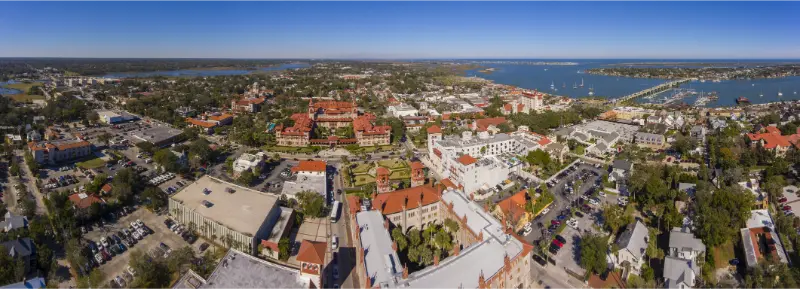
Historic District and bayfront: best for first-time visitors
Stay here when your priority is walking to Castillo de San Marcos, St. George Street, Flagler-era architecture, restaurants and evening atmosphere. You can often leave the car parked for most of the day.
The trade-offs are price, parking and potential noise. Historic inns can have stairs, small rooms and limited parking; larger downtown hotels may charge substantial parking fees. Read the parking policy as carefully as the room rate.
Anastasia Island: best balance of attractions and coast
Anastasia Island is ideal when you want quick access to the lighthouse, Alligator Farm, Anastasia State Park and The Amp while remaining a short drive from the historic core.
This is one of the strongest areas for families because beach, wildlife and outdoor activities are easier to reach without giving up downtown entirely.
St. Augustine Beach: best for a traditional beach vacation
Choose St. Augustine Beach when mornings on the sand, pools, casual restaurants and a beach-town feel matter more than walking to historic attractions.
You will drive or use rideshare for downtown sightseeing, especially at night. The reward is that beach time can happen spontaneously rather than requiring a separate day trip.
Vilano Beach: best for quiet coast plus quick downtown access
Vilano Beach sits just north of the historic district across the water. It offers a quieter coastal feel and convenient access to A1A, with easier northbound trips toward GTM and Ponte Vedra.
Vilano works particularly well for repeat visitors and couples who want to avoid the busiest downtown atmosphere while still reaching it quickly.
Ponte Vedra Beach: best for resorts and golf
Ponte Vedra Beach is the premium choice for TPC Sawgrass, upscale resorts, spas and a quieter northern-coast vacation. It is farther from the historic core, so daily St. Augustine sightseeing requires more driving.
Choose Ponte Vedra when the resort or golf experience is itself the purpose of the trip, not when you plan to spend every morning and evening downtown.
I-95 and outer St. Augustine: best for road trips and budget
Hotels near the interstate often provide easier parking, larger modern rooms and lower rates than the historic core. They are practical for one-night stops, travelers continuing north or south, and families visiting attractions by car.
The disadvantage is atmosphere. You will drive for almost everything and lose the ability to step outside after dinner into the historic streets or onto the beach.
Best area for families with young children
St. Augustine Beach and Anastasia Island are usually easiest because children can alternate attractions with beach, pool or outdoor time. Look for included parking, breakfast, laundry access and enough room to handle naps or early bedtimes.
A beautiful historic inn may be less practical with a stroller if the room is upstairs, parking is remote or there is no space to decompress after a busy day.
Best area for teenagers
Beach areas are often easiest because teens can have some independence around the sand, pool and nearby casual food. Anastasia Island also keeps the lighthouse, Alligator Farm and Amphitheatre close.
Best area for senior travelers
The historic district reduces driving but can involve brick streets, stairs and valet parking. Modern hotels on Anastasia Island or St. Augustine Beach may offer easier elevators, larger accessible rooms and simpler vehicle access. Choose the property by mobility needs rather than by neighborhood name alone.
Best area for couples
Historic-district inns are strongest for atmosphere, dining and evening walks. Vilano works for a quieter coastal escape. Ponte Vedra suits couples who want spa, golf and resort amenities more than sightseeing density.
Parking and hidden costs
Always compare total stay cost. Downtown valet parking, resort fees, destination charges and breakfast can erase an apparent rate advantage. Conversely, a slightly more expensive walkable hotel can save garage fees, rideshares and time.
If bringing a rental car, confirm whether parking is guaranteed, valet-only or first-come. During major festivals and holiday periods, this detail becomes even more important.
How many nights should you stay?
One night is enough for a road-trip sampler but forces difficult choices. Two nights supports one full historic day plus an island/beach day. Three or four nights allows Ponte Vedra, GTM, Fort Matanzas or a slower beach schedule without sacrificing St. Augustine evenings.
When changing hotels makes sense
A split stay can work when the trip has two genuinely different purposes—for example, two nights walking the historic district followed by three nights at a Ponte Vedra resort. It rarely makes sense simply to save 15–20 minutes of driving for one attraction.
Weather and seasonal planning
Northeast Florida is visitable year-round, but the experience changes sharply with the season. Late spring through early fall brings heat, humidity and frequent afternoon thunderstorms. Winter often has comfortable walking weather, yet cold fronts can make beaches and exposed waterfronts surprisingly cool and windy. Spring and fall usually provide the easiest compromise between temperature and daylight.
Lightning is the main reason to keep a flexible plan. At beaches, golf courses, parks and open historic sites, thunder is a cue to move indoors rather than shelter under a tree or pavilion. During hurricane season, check operating status before driving because coastal parks, bridges, beach ramps and attractions can close or alter hours even when the storm center is far away.
Booking strategy
For major event periods, holiday weekends and the winter festival season, book the neighborhood you truly want before chasing the lowest rate. For ordinary weekdays, compare refundable rates across two or three areas and revisit prices as the trip approaches.
Read the most recent guest comments specifically for parking, noise, elevators, air conditioning and room layout. Those practical details often matter more than whether the lobby photographs well.
Common mistakes to avoid
- Choosing a hotel by star rating without considering location.
- Ignoring parking or resort fees.
- Booking a historic inn with stairs when mobility is limited.
- Staying far west of town to save money while planning every day downtown.
- Changing hotels unnecessarily on a short trip.
Official lodging resource
Use Florida’s Historic Coast lodging directory to compare current hotels, inns, resorts, campgrounds and vacation rentals across St. Augustine and Ponte Vedra.

Extra planning notes for a smoother visit
Keep a 15–30 minute buffer between major stops around St. Augustine and Ponte Vedra. Short map distances can still involve bridge traffic, event congestion, full parking lots, security lines or slow pedestrian streets. A little slack in the day prevents one delay from forcing you to skip the attraction you cared about most.
Save the official address, parking instructions and any reservation confirmation before leaving your hotel. Mobile coverage is generally good, but a group trying to navigate, find a garage and retrieve tickets at the same time can lose more time than expected.
Use official same-day notices for outdoor access. Beach driving, dune walkovers, trails and event parking can change because of tide, storms, maintenance or special events. A map app showing a place as open does not guarantee every activity or entrance is operating normally.
Comfortable shoes are more important here than they may seem. A single day can include brick streets, wooden boardwalks, grass, sand, gravel and historic floors. Choose footwear for the most demanding surface in the itinerary, not only for the restaurant or photo stop at the end.
Build one flexible element into every half day. A beach walk, café, park or scenic drive can expand when everything is running smoothly and shrink when parking, weather or fatigue slows the group down. That flexibility is especially valuable with children and senior travelers.
Think about the return trip before you begin the final activity of the day. After a beach session, concert, long museum visit or golf round, the group is less patient with restaurant queues and parking searches. Keep water in the car and know where your next practical stop will be.
Final thoughts
The best place to stay is the area that removes the hardest part of your trip. Put history outside your door if you plan to walk all day, put the beach outside your door if children need daily sand time, and choose Ponte Vedra when golf or resort relaxation is the main event. Location should solve a problem, not simply look good on a map.
How to decide whether this belongs in your itinerary
A useful test is to ask what this stop adds that your other plans do not. If the day already contains two history museums, choose nature, beach or active recreation instead of a third similar attraction. If everyone has been outdoors in the heat, an indoor or seated experience may be the better use of time. Variety usually creates better travel memories than simply maximizing the number of famous names.
For this destination, the practical goal is not to follow a rigid checklist but to leave enough margin for real conditions on the day. That may mean shortening a walk, moving a meal earlier, changing parking areas or dropping a low-priority stop. A trip feels more complete when the experiences you keep are enjoyed at a reasonable pace.
Transportation reality
Northeast Florida distances can look small on a map, but bridges, beach traffic, event congestion and parking searches affect real travel time. Group nearby stops and avoid crossing the same bridge repeatedly. When an attraction has a timed tour or concert gate time, build the schedule backward from that fixed commitment and keep flexible activities around it.
For this destination, the practical goal is not to follow a rigid checklist but to leave enough margin for real conditions on the day. That may mean shortening a walk, moving a meal earlier, changing parking areas or dropping a low-priority stop. A trip feels more complete when the experiences you keep are enjoyed at a reasonable pace.
Planning for meals and energy
Meals are part of the itinerary rather than empty space between attractions. Eating slightly before peak lunch or dinner can reduce waits and protect the rest of the schedule. Families should carry simple snacks, while all travelers benefit from water in the car. After a hot beach or trail session, a long sit-down meal may be more restorative than forcing one more attraction before dinner.
For this destination, the practical goal is not to follow a rigid checklist but to leave enough margin for real conditions on the day. That may mean shortening a walk, moving a meal earlier, changing parking areas or dropping a low-priority stop. A trip feels more complete when the experiences you keep are enjoyed at a reasonable pace.
Photography without slowing the whole group
Choose two or three moments for deliberate photography instead of stopping every few minutes. Early and late light is usually softer on beaches and historic architecture, while overcast conditions can be excellent for gardens and portraits. At wildlife sites, use distance and a longer lens rather than approaching animals. At active churches, concerts and private tours, follow the specific photography rules.
For this destination, the practical goal is not to follow a rigid checklist but to leave enough margin for real conditions on the day. That may mean shortening a walk, moving a meal earlier, changing parking areas or dropping a low-priority stop. A trip feels more complete when the experiences you keep are enjoyed at a reasonable pace.
What to do when plans change
Have one backup in the same geographic area. If a beach closes to driving, use a pedestrian access rather than crossing the county for another ramp. If a thunderstorm delays an outdoor attraction, switch to a nearby museum or meal and return later. The strongest itineraries are modular: one change should not force a complete redesign of the day.
For this destination, the practical goal is not to follow a rigid checklist but to leave enough margin for real conditions on the day. That may mean shortening a walk, moving a meal earlier, changing parking areas or dropping a low-priority stop. A trip feels more complete when the experiences you keep are enjoyed at a reasonable pace.