
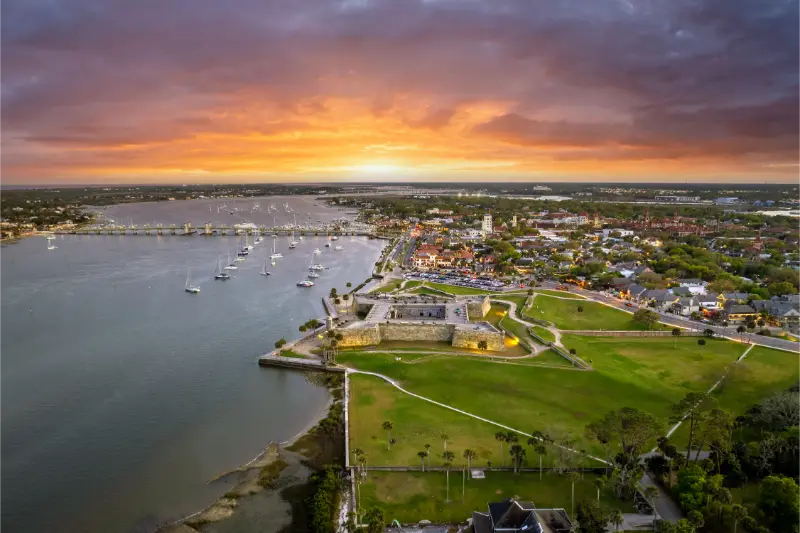
Castillo de San Marcos can be one of the most useful stops in a Northeast Florida itinerary when you plan around what makes it distinctive. Castillo de San Marcos is the rare historic attraction where the building itself explains the story. The coquina walls, open gun deck, moat, harbor position and compact rooms make seventeenth- and eighteenth-century St. Augustine easier to understand than a sequence of plaques ever could. It also sits directly on the bayfront, so you can combine a major historic site with one of the city’s best walks without moving the car.
This guide focuses on practical decisions: how long to allow, what is genuinely worth prioritizing, which current operating details can change the day, how the visit works for families and senior travelers, and how to combine it with other already-published Wonderful Florida guides without overloading the itinerary.
Quick planning summary
- Best for: first-time St. Augustine visitors, history fans, families, photographers and travelers who want the clearest introduction to the city’s Spanish colonial story.
- How much time: 2 to 3 hours for the fort and grounds; allow 4 hours if you combine the visit with the bayfront and a relaxed historic-district walk.
- Best strategy: verify the official page the day before, arrive early for outdoor sites and keep at least one hour of flexibility.
- Research date: current operating details were reviewed on 6 October 2026 for a 2027 publication schedule.
Why this place is worth adding to your Florida trip
Castillo de San Marcos is the rare historic attraction where the building itself explains the story. The coquina walls, open gun deck, moat, harbor position and compact rooms make seventeenth- and eighteenth-century St. Augustine easier to understand than a sequence of plaques ever could. It also sits directly on the bayfront, so you can combine a major historic site with one of the city’s best walks without moving the car.
The deciding question is whether this stop adds a new layer to your trip. Northeast Florida offers Spanish colonial history, Gilded Age architecture, beaches, estuaries, gardens and maritime culture within a relatively compact corridor. Select experiences that contrast with one another instead of repeating the same type of museum or beach every day.
Best things to do and how to experience them
Walk the gun deck before the midday heat
Climb to the upper gun deck early if stairs and sun are manageable for your group. From above, the relationship between the fort, Matanzas Bay, the city gate area and the harbor becomes obvious. The exposed upper level can feel much hotter than the casemates, so doing it first gives you the option to move into shade later.
Use the casemates to understand daily life, not just warfare
The vaulted rooms are where the fort becomes more than a photo stop. Read the exhibits selectively: focus on construction in coquina, the changing Spanish and British periods, imprisonment and the experiences of Indigenous peoples and Africans. Trying to read every panel can overwhelm children and slow a short visit.
Treat cannon demonstrations as a bonus, not a guarantee
Demonstrations are memorable when offered, but schedules can change because of weather, staffing or special events. Check the NPS calendar close to your visit and build the day around the fort itself rather than a single firing time. If a program is running, arrive early enough to find a viewing position without blocking circulation.
Current information to know before you go
As reviewed on 6 October 2026, the fort structure is open from 9:00 a.m. to 5:15 p.m. daily, with last entry around 5:00 p.m.; the surrounding grounds are open from 6:00 a.m. to midnight. Admission is currently $15 per person age 16 and older and is valid for seven consecutive days; visitors age 15 and under enter free with an adult. The site is cashless and accepts credit or debit cards. National park passes are honored according to their terms. Parking immediately around the monument is managed separately from NPS admission, so do not assume your fort ticket includes parking. Cannon firing and living-history programs are offered on selected days and can change with staffing, weather and safety conditions.
Operating details can change between the research date and your trip. Recheck the official page shortly before departure, especially when ferry service, tower access, maintenance work, weather, capacity limits, special events, admission prices or wildlife protections can affect the experience.
Best time of year and best time of day
Northeast Florida is easier to explore outdoors from late fall through spring, when lower humidity makes forts, trails and gardens more comfortable. Summer is still workable, but the day should be built around an early start, a shaded or indoor midday activity and a flexible late afternoon. Thunderstorms are common enough that outdoor towers, ferries, beaches and paddling should never be left to the only available hour.
For St. Augustine attractions, crowd timing matters as much as temperature. Opening time is valuable for Castillo de San Marcos, the lighthouse and major outdoor sites, while museums are often better saved for the hotter part of the day. Coastal preserves are affected by tide, wind and nesting wildlife, so check conditions rather than relying only on a weather icon.
How to plan a St. Augustine day without wasting time
St. Augustine looks compact on a map, but parking, bridge traffic, one-way streets and queues can turn a short distance into a slow transfer. Group attractions by side of the Matanzas River and avoid moving the car repeatedly through the historic core. If you park once downtown, walk between the Castillo, bayfront and central museums where practical.

One major paid attraction plus one lighter secondary stop is a good default. Families and senior travelers usually enjoy the city more when the schedule leaves time for a meal, shade and an unscheduled waterfront walk. Three ticketed sites in one day can cost more and feel less memorable than two well-paced visits.
How to plan for families with children
The best family itinerary alternates listening with movement. After a fort room, exhibit gallery or guided presentation, give children a beach walk, courtyard, trail or open waterfront space. Long sequences of historic interpretation can make even excellent attractions feel repetitive.
Carry water, sun protection and a simple snack. In the warm season, do not wait for children to say they are overheated. Move into air conditioning or shade before everyone is tired. For attractions with height, stair or animal-program rules, explain the restriction before arriving so it does not become a surprise at the ticket desk.
Children usually respond better when the fort becomes a mission: find the drawbridge, identify where soldiers slept, count cannons, look for coquina shells in the walls and imagine how people moved food and water into a defended structure. The open courtyard gives families breathing room between indoor rooms, but the upper level requires close supervision because of historic surfaces and exposed edges.
Senior travelers and multigenerational groups
A multigenerational St. Augustine trip works when the defining experience can be enjoyed at more than one intensity level. At a lighthouse, one person may climb while another uses a ground-level exhibit. At a state park, stronger walkers can add a trail while others use an overlook, boardwalk or shaded picnic area. Historic sites often have uneven surfaces even when major public areas are accessible.
Plan restrooms, parking and seated breaks as part of the route. The combination of heat, brick streets, soft sand and stairs can be more tiring than mileage suggests. A slower group should not be pressured to match the pace of travelers trying to “see everything.”
Senior travelers can get a meaningful experience from the courtyard, casemates and exterior even if the stairs to the gun deck are not comfortable. Historic surfaces are uneven in places, so stable shoes and a slower pace matter. Benches and the bayfront provide useful rest opportunities, and the compact layout avoids the long walking distances of many outdoor historic sites.
Accessibility and mobility planning
Accessibility differs sharply among modern museums, seventeenth-century forts, lighthouse towers, beaches and natural preserves. An attraction can be technically accessible while still involving long ramps, heat, uneven coquina, soft sand or distances from parking. When one feature is essential to your trip, call ahead and ask specifically about that feature rather than the site in general.
Look for alternative interpretation when stairs or natural terrain are not workable. Videos, exhibits, overlooks, ranger talks and accessible loops can communicate the same story without forcing every visitor onto the most strenuous route.
Parking, transportation and realistic drive times
Central St. Augustine parking deserves a plan. Public garages and city spaces can fill during festivals, holiday periods and Nights of Lights. Attractions outside the historic core may have their own lots, but crossing bridges at peak times still adds delay. Build 15 to 30 minutes of transport margin into any timed reservation.

Along A1A, distances may look short but traffic, drawbridges, beach access and scenic stops slow the day. Do not schedule a paid program immediately after a tide-dependent or ferry-dependent activity. A buffer protects the itinerary from normal Florida variability.
What to bring
For outdoor sites, carry refillable water, sun protection, insect repellent, comfortable footwear and a light rain layer. Binoculars add value at GTM, Princess Place and coastal parks. A small microfiber towel is useful after beach walks or sudden showers.
For museums, bring a light layer because air conditioning can feel cold after outdoor heat. Keep valuables out of sight in parked cars. If your day includes a tower or ferry, reduce what you carry so hands remain free on stairs and boarding areas.
Weather, storms and hurricane-season reality
Florida’s Atlantic hurricane season runs from June through November, but ordinary thunderstorms are the more common day-to-day disruption. Lightning can close towers, suspend ferries, stop paddling and clear beaches before heavy rain reaches you. If thunder is audible, exposed outdoor activities should be reconsidered immediately.
Storms and high surf can change beaches, docks and trails for weeks or months. Because these articles are researched in October 2026 for 2027 publication, recheck official alerts shortly before travel rather than assuming a facility status is permanent.
Budget and value
St. Augustine can become expensive when parking, multiple admissions, tours and restaurant meals are stacked into one day. Decide which attraction is worth paying for because it offers an experience you cannot get from a free street walk, beach or public viewpoint. National park passes can improve value for eligible travelers, while children’s pricing varies widely among private attractions.
Do not judge value only by the number of hours. A two-hour lighthouse or museum visit can be more memorable than a full day of rushed stops. Pack water, use free outdoor areas between paid attractions and avoid buying overlapping tours that tell the same story.
Where to stay and how to group the region
The historic district is convenient for travelers prioritizing Castillo de San Marcos, museums, restaurants and evening walks, but parking costs and hotel rates can be higher. Anastasia Island is practical for the lighthouse, state park and beach time. Vilano Beach and the A1A corridor work well for GTM and north-coast nature trips, while Palm Coast is a better base for Washington Oaks and Princess Place.
For a three- or four-day stay, changing hotels is rarely necessary. Choose one base and group each day geographically. The extra time saved from avoiding hotel changes is usually more valuable than being five minutes closer to every attraction.
Responsible travel and respectful interpretation
Historic St. Augustine includes stories of Indigenous peoples, European colonization, enslaved Africans, military conflict and changing national control. Treat these places as more than decorative backdrops. Read enough interpretation to understand whose experiences are being described and avoid reducing complex sites to a single legend or photo opportunity.
At natural areas, stay off protected dunes, respect nesting closures, keep distance from wildlife and avoid removing shells, plants or archaeological material where collection is prohibited. Responsible behavior protects the same features that make the visit worthwhile.
How to combine it with other Wonderful Florida guides
Useful already-published Wonderful Florida guides that add a different type of experience include Fort Caroline National Memorial, Fort Clinch State Park. Use them as a separate half-day or next-day idea rather than forcing every nearby attraction into one schedule.
A realistic three-day mini-itinerary
Day 1
Arrive near opening, tour the fort and upper gun deck, then walk the bayfront and have lunch before the historic district becomes hottest.
Day 2
Use day two for a museum-focused St. Augustine day, with one indoor attraction and a slower late-afternoon walk.
Day 3
Use day three for a coastal nature stop so the trip changes pace from architecture and history to dunes, marsh or beach.
Who may want to skip or shorten the visit
If you strongly dislike crowds, heat or historic attractions, a brief exterior walk at opening time may be enough. The fort is one of St. Augustine’s busiest sights, and midday lines can make a short visit feel rushed. Travelers who have already toured several colonial forts may get more value from pairing a shorter Castillo visit with a museum or beach experience.
A strong itinerary is selective. If this experience duplicates something you have already done several times, shorten it or save it for another trip. The goal is to build contrast: an indoor museum after a beach morning, a quiet preserve after a crowded historic district, or a lighthouse after a day focused on ground-level history.
Official resource to check before you go
A practical decision framework for this stop
Before leaving your hotel, identify the one feature that would make the visit worthwhile for your group. It may be climbing a tower, taking a ferry, seeing a particular collection, walking a beach, joining a demonstration or simply spending time in a quieter landscape. Once that priority is clear, protect it by checking the condition that could prevent it: weather, tide, capacity, stairs, opening days or a reservation rule.
Next choose a nearby fallback. Northeast Florida is dense enough that a storm, sold-out ferry or temporary closure does not have to ruin a day. A museum can replace a lighthouse climb, a bayfront walk can replace a cancelled boat trip, and a short nature trail can replace an overheated city afternoon.
Finally, leave 30 to 60 minutes unscheduled. That margin absorbs parking delays, slower walking, a ranger program or a child who needs a break. It also gives you permission to stay when a place turns out to be better than expected.
How to make the visit feel more personal
Ask one useful question when you arrive: “If we have only two hours, what should we not miss today?” Staff, rangers and volunteers often know which exhibit, trail or viewpoint is especially good under current conditions. That advice is more valuable than trying to follow a generic list written months earlier.
Pay attention to one detail that belongs specifically to this place: coquina texture, a keeper’s daily routine, the direction of a tidal creek, a garden scent, a bird call or an artifact that changes how you understand local history. Those small observations are what make ten Florida attractions feel like ten different experiences rather than ten boxes checked on a trip.
If the site is quieter than expected, use that quiet. Sit for a few minutes instead of immediately searching for the next stop. Florida’s best travel moments often happen after the planned activity is finished.
Final thoughts
Castillo de San Marcos is most rewarding when you understand its defining experience before arriving and give that experience enough time. Confirm current hours or access rules, respect historic and natural resources, and avoid trying to fit too many paid attractions into the same day.
Wonderful Florida should help you make better travel decisions rather than simply collect places. Use this guide to shape a visit around your age group, mobility, interests, weather and budget.