
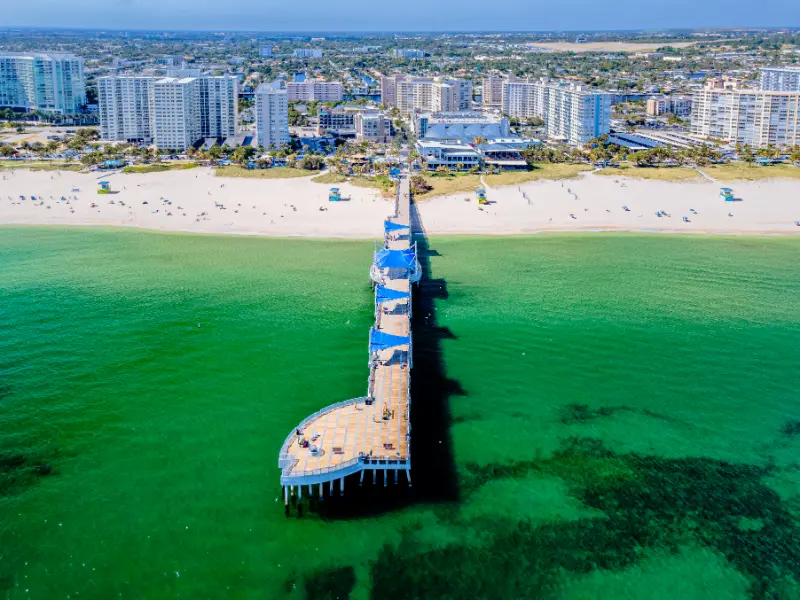
Pompano Beach and Deerfield Beach sit along the same stretch of the South Florida coast, yet the hotel experience can change significantly from one neighborhood to another. A stay close to Pompano's Fisher Family Pier offers a concentrated dining and beachfront district. Deerfield's pier area delivers its own walkable beach routine. Inland properties may provide easier access to Interstate 95, more conventional parking and a different price structure. The right place depends on whether you want to spend most mornings beside the Atlantic or use your room as a base for day trips across Broward and southern Palm Beach counties.
Which area should you choose?
| Area | Best for | Consider before booking |
|---|---|---|
| Pompano pier district | Beach and dining on foot | Paid parking and visitor activity |
| Quiet Pompano coastal blocks | Longer, calmer beach stays | Walk to dining may be longer |
| Deerfield pier district | Compact Atlantic beach break | Event and weekend activity |
| Inland/I-95 hotel areas | Road trips and practical parking | Drive needed for ocean access |
Pompano Beach around the Fisher Family Pier
The recently developed beachfront district around Pompano Beach's fishing pier combines a public promenade, restaurants and accessible pedestrian routes in a relatively compact area. Lodging near this zone is convenient for visitors who want to walk out after breakfast, see the water and return to an air-conditioned room without organizing a car journey. A family with small children may find that simplicity especially valuable. Couples can build an easy evening around dinner and a stroll rather than choosing a designated driver.
Do not assume that every hotel using “Pompano Beach” in its name is on this strip. Some are across bridges or several major road crossings away. Look at both the map and the last portion of the walking route. An ocean-view room may face the water but require a lift, a long corridor or steps to reach public sand. Check the building's access arrangements, hours for pool facilities and what is actually included with beach chairs or umbrellas.
Quieter Pompano streets and the barrier-island trade-off
Moving away from the busiest pier block can bring a calmer residential atmosphere, especially in condominium and smaller lodging areas. This is attractive for longer stays, remote workers and travelers who prefer to prepare breakfast before walking to the ocean. The trade-off is that restaurants and grocery stores may no longer be a five-minute stroll away. A balcony overlooking a canal can be lovely, but a canal-facing property is not automatically an Atlantic beach property. Verify the route to a lawful public beach access point.
In this part of Florida, waterways, bridges and one-way streets can turn a short-looking distance into a surprisingly indirect route. If your group includes a wheelchair user, confirm the complete journey from the building entrance to the beach and whether there is a suitable crossing. Families should ask about elevator availability and pool fencing. Travelers with a rental car should clarify parking assignment, visitor permits and overnight vehicle rules, particularly at residential condo buildings.
Deerfield Beach pier district and walkable evenings
Deerfield Beach's oceanfront around the International Fishing Pier has its own beach town character, with places to eat, a promenade atmosphere and a waterfront focal point. It appeals to travelers who want a smaller-feeling base while keeping access to the broader Fort Lauderdale–Boca Raton corridor. If the plan is mostly beach, a lodging address close to the pier district can spare you the routine of finding a parking space each morning. For an early riser, even a short walk to see the morning light can become one of the best parts of the trip.
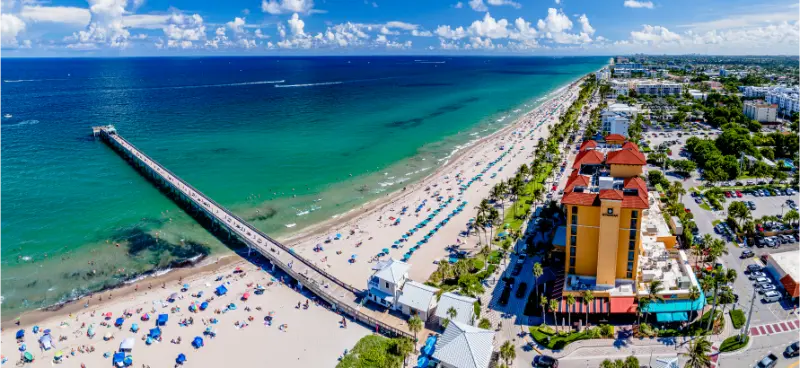
Beach safety and conditions change daily, so use posted signs and lifeguard advice rather than assuming calm water. The pier itself can have rules or temporary work affecting access; check its current status if fishing or walking onto it is essential. On busy weekends, the compact visitor area can feel lively, which may be exactly what some people want and too noisy for others. Look at the hotel's position relative to restaurants and traffic, not just its distance from the ocean.
Inland Pompano, Deerfield and the I-95 corridor
There are good reasons to stay inland. Travelers attending family events, meetings or activities spread across Broward County may benefit more from road access and practical parking than from sand outside the door. Hotels near large arterial roads often have predictable layouts, breakfast options and more straightforward vehicle access. Their apparent lower nightly price can also make sense for a longer itinerary that includes Fort Lauderdale, Boca Raton or western nature parks. The crucial question is whether you genuinely intend to drive most days.
An inland room can become frustrating when your real goal is sunrise at the beach and a late-afternoon swim. Add daily bridge or highway travel, beach parking and the time spent getting everyone into the car. Conversely, paying a coastal premium to leave for inland attractions every morning may be wasteful. A realistic schedule is a better guide than a ranking of neighborhood prestige. Use live mapping with typical departure times, and remember that weekday commuting and weekend beach traffic have different patterns.
Choosing between these beaches for different trips
For a two-night escape centered on ocean walks and meals out, choose the best located pier district you can afford. For a week with two beach days and four outings across South Florida, a well-equipped inland suite or apartment could be the more flexible base. Pompano often suits travelers seeking a promenade with a developed dining area, while Deerfield can feel more compact and community oriented. These are broad impressions, not promises of crowd levels; events, weather and season can change the experience considerably.
If you are splitting a trip between South Florida and another region, consider how the hotel fits the arrival and departure routes. The coastal addresses are usually more rewarding once settled, while an inland property may simplify an early departure north or south. Avoid booking solely because an online search calls a place “near Fort Lauderdale.” That label covers a large area. Check the exact town, street and route to the activities you care about.
Families, strollers and group accommodation
Families with small children benefit from a predictable beach routine: breakfast, an early visit to the sand, return for lunch and a quiet afternoon. Being genuinely close to a safe beach entrance matters more than having a hotel advertisement filled with family photos. Ask for a refrigerator, useful kitchenette, laundry access and the availability of a crib if needed. Check whether the room has enough floor space for sleeping arrangements; two double beds and a travel crib can quickly make a nominally spacious room impractical.
With older children, a pool and proximity to casual restaurants may make a bigger difference. Teens can enjoy the pier districts, though families should set meeting points and boundaries in busy public areas. Multigenerational groups should inspect lift access, shower setup and distances to the sand. A two-bedroom condominium may offer privacy and a shared living space, but only if its stairs, parking rules and check-in process work for the whole group. Never treat a listed sleeping capacity as proof of accessible or comfortable sleeping conditions.
A comfortable South Florida trip for senior visitors
Senior travelers often value a hotel that makes ordinary moments easy: a shaded place to sit, a short route to breakfast, a dependable elevator and a bathroom that feels safe to use. Both Pompano and Deerfield can support a pleasant low-pressure holiday, especially when the day's main outing is a morning walk rather than a long excursion. Choose a location with benches and easy dining access, and check whether the property has a sheltered pickup point for taxis or rideshares.
Beach access is worth assessing separately from the hotel. A paved promenade may be accessible while the sand remains difficult, and beach wheelchair services differ by location and operation. For those who use mobility aids, confirm arrangements directly with the appropriate beach authority. Humidity, sun exposure and afternoon storms affect pacing throughout the year. Building a rest period into the day is usually more enjoyable than trying to meet an aggressive sightseeing target.

Cars, parking and public transportation
The Pompano Beach pier area has structured parking and paid parking rules; charges and enforcement arrangements should be checked on the city's official visitor website before arrival. An accommodation that provides a designated space may save money and hassle, but determine whether it allows reentry without an additional charge. At vacation rentals, ask if a second vehicle can be accommodated. For electric cars, never assume that a listing's nearby charger belongs to the building or is available overnight.
A car-free plan can work in a compact beachfront district, with occasional arranged transfers. It is more complicated if you expect to visit inland parks, museums or neighboring towns every day. Map the route from your actual hotel, not from the center of Pompano Beach, and compare transfer expenses with rental, fuel, parking and insurance costs. Travelers requiring step-free public transport should confirm the accessibility and service frequency of the precise route and stop. Staying near a bus route is not the same as having a convenient vacation route.
Weather, swimming and beach access responsibilities
Atlantic-facing beaches have surf, currents and changing conditions even on sunny days. Check beach flags, swim near lifeguards where available and keep close supervision of children. Rain and thunderstorms can interrupt an afternoon plan quickly. Morning time outdoors followed by lunch or an indoor attraction often gives families and older visitors a more pleasant rhythm than attempting an uninterrupted midday beach session. Carry water and sun protection, and seek shade before anyone becomes overtired.
Respect posted dune-protection rules and use official beach crossings. If you want to visit nearby natural spaces, check entrance fees, parking hours and activity restrictions before setting out. Public access does not mean that every condominium walkway can be used by visitors. For travelers who do not swim, the pier, coastal paths and ocean-view dining can still make an appealing holiday. There is no requirement to spend hours in deep water to enjoy this stretch of Florida.
Comparing the complete price of hotel, condo and rental
A coastal hotel may have a higher headline rate but save money on beach parking or local transport. A spacious inland rental may win on kitchen facilities but add driving time, fuel and a car rental. Prepare a small comparison using the final payable price for the same dates and party size. Include taxes, resort or destination charges, parking, cleaning fees, deposits and any charge for extra guests. If breakfast is included, check whether it is useful for everyone rather than assuming it eliminates all food costs.
For condominiums, investigate registration procedures, amenity access and quiet-hour rules. For hotels, inquire about construction work, room configuration and refunds if a promised service is unavailable. Do not pay outside a booking platform without solid verification of the accommodation and legitimate payment instructions. During Florida's hurricane season, review cancellation terms and the property's emergency communication process. The most economical choice is the one that remains practical when ordinary vacation expenses are added.
A relaxed four-day base for two coastal towns
Use the first day for arrival and your chosen neighborhood, with an easy dinner near the hotel. Dedicate the next morning to the beach closest to your accommodation; after an afternoon rest, enjoy the pier district. On the third day, visit the other town's waterfront, allowing for parking and time to explore rather than expecting both places to feel interchangeable. Reserve the fourth morning for one small local activity or a last ocean walk before checkout. This provides variety without spending every day in a car.
If weather makes a beach day unattractive, substitute an indoor meal, local cultural stop or a planned drive elsewhere in Broward or Palm Beach counties. The ability to switch plans is part of successful coastal travel. Whatever base you choose, judge a booking by the quality of the day it allows: waking near the water, accessing necessities, resting comfortably and returning safely in the evening. That is more useful than an abstract claim that one town is the “best” for every traveler.
Frequently asked questions
Are Pompano and Deerfield Beach adjacent?
They are neighboring coastal destinations, but the most useful hotel location depends on which pier and beach you want to visit.
Does a Pompano Beach hotel guarantee beach access on foot?
No. Confirm the actual street address, bridge crossings and approved public beach entrance.
Are inland hotels better value?
Sometimes, especially for road-trip travelers. Include driving time and daily beach parking before comparing final costs.