Category: Where to Stay in Florida

  • Where to Stay in Sebring and Lake Placid, Florida: Lakeside Cabins, Historic Towns and Race Week

    Where to Stay in Sebring and Lake Placid, Florida: Lakeside Cabins, Historic Towns and Race Week

    Sebring, Lake Placid and the surrounding Highlands County countryside offer a version of Florida far removed from the dense coastal hotel strips. This is a place for freshwater lakes, small-town centers, parks, motorsports and a slower rhythm. But the accommodation choices differ: a hotel near Sebring's main roads may suit a short stay or a race weekend, a lakeside cottage can be a peaceful base for fishing, and a property near Lake Placid may appeal to visitors exploring murals and the countryside. The best booking depends on which experience is actually important to you and how much driving you are comfortable doing.

    Which area should you choose?

    AreaBest forConsider before booking
    Downtown SebringRestaurants and local cultureEvent dates affect availability
    Raceway-area lodgingMotorsport-oriented visitsRace traffic and event noise
    Lakeside cabinsQuiet freshwater nature staysWaterfront may not be swimmable
    Lake Placid / southern countyMurals and countryside drivesMore limited walkable services

    Downtown Sebring: historic atmosphere and a practical town base

    Sebring's historic downtown around the Circle provides a recognizable center with shops, local businesses and places to eat. For a relaxed weekend, being able to visit this part of town without a long trip can make accommodation more enjoyable. A central hotel or inn suits travelers who want a mix of small-town atmosphere and easy meals rather than a private retreat beside a distant lake. The older street layout may also appeal to people who enjoy architecture and photographing everyday local details.

    Do not expect downtown to function like a large city entertainment district with every service open late. Restaurant and shop hours can vary, particularly outside events. Check whether your dates coincide with festivals or motorsports activities, which may change traffic and availability. Some older accommodation has steps or limited elevators, so ask about the exact room if mobility matters. If the room is described as “near downtown,” verify whether the walk is comfortable in the midday heat and whether there are safe crossings from the entrance.

    Race-oriented lodging and Sebring International Raceway

    Sebring International Raceway attracts major motorsport interest, and accommodation planning around race events is a different task from planning a quiet lake holiday. During popular race weekends, rooms in and around Sebring may be booked well ahead, and traffic patterns near the track can change. If the race is the purpose of your visit, look at the event's official schedules, parking rules and gate information before choosing a base. A hotel that is technically close to the circuit may still require a specific entry route.

    NASCAR Race Grandstand in Florida

    Families attending with children should think about heat, hearing protection, rest breaks and how far the walk will be from parking to seating. Visitors with limited mobility need information about accessible parking and viewing arrangements directly from the venue. A restful room is particularly valuable after a long day at the track; investigate noise and the possibility of late-night activity at properties frequented by race fans. For visitors who are not attending an event, checking the race calendar can prevent an unexpected rise in accommodation prices.

    Lakefront cottages and what waterfront really means

    Highlands County has numerous freshwater lakes, and lodging beside one can create a pleasant, quiet stay. A sunrise view across still water or an evening on a screened porch might be the main attraction rather than a packed itinerary. However, waterfront homes vary widely. One may have a maintained dock, another a steep bank, and a third no safe or authorized water entry. Never assume that lakefront means a sandy swimming beach, rental boat or fishing permission. Ask the property manager about the specific shoreline and any community rules.

    For a family with small children, consider how close the house opens onto deep water and whether there is a secure barrier. Boats and docks require supervision. Visitors with mobility limitations should inspect steps to the waterfront and the location of bedrooms and bathrooms. A beautiful lake cabin can also be distant from pharmacies or supermarkets, so plan the first grocery stop. If mosquitoes make outdoor evenings uncomfortable, screens and a reliable air-conditioned indoor space may be more important than an elaborate deck.

    Lake Placid and the mural-town experience

    Lake Placid is known for its murals and local character, attracting visitors who enjoy a gentler small-town experience. A base nearby can support short explorations, stops at local businesses and drives around the surrounding lake country. It is appealing for couples interested in art and photography or multigenerational groups looking for low-pressure activities. A property near the town center might make an evening walk easier, while a country rental may favor peace and privacy. Check where the property actually sits in relation to the town's murals rather than assuming all addresses share a walkable center.

    Lake Placid is not the same setting as a Gulf beach resort, and neither the town name nor a water view implies easy access to swimming facilities. Arrange your plans around an enjoyable day of driving between a few chosen sights, with time for meals and rests. For those who enjoy photography, observe murals from public areas and respect private buildings. If visiting during a community event, check parking and crowd arrangements beforehand. Booking nearer the town can be worthwhile for visitors who want to participate without driving on unfamiliar rural roads late at night.

    Avon Park and other alternatives within Highlands County

    Avon Park, north of Sebring, can be worth considering for travelers visiting northern Highlands County or seeking a base with a different local feel. It offers small-town amenities and access to the wider lake region. The important distinction is not which town sounds most attractive but whether your planned stops cluster near Sebring, Lake Placid or the northern county. Choosing an accommodation far from every activity may be inexpensive on paper but costly in time, especially if you expect to return to the room between morning and afternoon outings.

    Highlands County roads can feel more rural than interstate corridors. Check the realistic drive to the venue or park that matters most, and confirm fuel and food options along your route. If you will arrive after dark, obtain detailed directions and check-in arrangements in advance. A vacation house set back from the road may be difficult to find without clear signage. A conventional motel close to a main road can provide a smoother arrival for visitors unfamiliar with the area, even if it lacks lakeside character.

    Highlands Hammock State Park and nature-focused stays

    Highlands Hammock State Park is a reason many travelers choose this region. Its natural scenery and opportunities for wildlife observation make it a worthwhile contrast to Florida's amusement parks and coastal crowds. A morning park visit works well before the strongest heat, followed by an easy lunch or rest. Check current Florida State Parks information for admission fees, trail conditions and the accessibility of specific areas. Heavy rain and maintenance can change what's available, and a trail's suitability for a wheelchair or stroller should never be guessed from a scenic photograph.

    Travelers who value nature may enjoy a quiet hotel or cottage that makes early departures easy. Birdwatchers and photographers should stay on marked routes and avoid disturbing wildlife. Do not feed animals or enter areas closed for conservation. For families with school-age children, a short nature walk and a stop in Sebring can fill a rewarding day without too much driving. When the group includes toddlers or older relatives, leaving time for a shaded break is usually more successful than trying to explore every trail.

    Fishing, boating and outdoor activity planning

    Lakes are central to a Highlands County visit, but water-based activities require local knowledge. Fishing regulations, boating access, launch fees and equipment requirements may differ by location and activity. Contact the appropriate authority or operator before bringing a boat or expecting a rental to provide one. If a lakeside property includes dock access, request details about the dock's condition, permitted vessels and emergency arrangements. A listing saying “great for fishing” is not a guarantee of a legal or convenient fishing spot.

    For visitors who prefer to stay on land, a lakeside picnic, a short walk or a scenic drive may be enough. Strong sun, lightning and changing weather are important considerations around freshwater too. Use life jackets when required, supervise children and do not swim in unfamiliar water without checking conditions and local advice. A comfortable lodge can make these days easier when it offers storage for outdoor equipment and somewhere to wash and dry clothing afterward.

    Families, couples and senior visitors: matching the type of stay

    Couples seeking quiet evenings may favor a smaller lakeside property with a screened porch and a good restaurant within a manageable drive. Families with children might choose a hotel with a pool, breakfast and convenient routes to activities. Senior visitors may prefer a ground-floor room with dependable climate control and minimal steps. Everyone should look beyond attractive pictures to the actual bathroom, seating, room access and distance to essential services. An isolated cabin may not suit someone who needs easy access to a pharmacy or frequent medical appointments.

    Multigenerational groups should agree on whether the trip is about racing, nature, art or resting by a lake. These interests can coexist, but selecting a midpoint property may force everyone into a car several times a day. A better compromise may be a spacious town-edge rental with occasional separate outings. If anyone uses a mobility aid, verify surfaces and thresholds around the accommodation and attractions. Rural settings can be peaceful yet less accessible than conventional hotels, making careful questions before booking especially important.

    Seasonality, event dates and changes in accommodation demand

    Sebring's calendar includes periods when motorsport events bring substantial visitor demand. Before choosing the cheapest weekend in a booking calendar, check whether a major event will influence traffic, room rates or restaurant availability. Other times of the year may feel much quieter, but Florida's summer heat and thunderstorms can limit long afternoons outdoors. A restful daily pattern—an early park or town visit, lunch, indoor time and an evening outing—is adaptable for travelers across a wide age range.

    If your visit falls within the Atlantic hurricane season, examine the property's cancellation rules and monitor official weather alerts. Inland Florida can experience heavy rain and storm impacts; distance from the coast does not remove all risk. An accommodation beside a lake deserves particular attention to flood-prone access roads and storm preparation. Flexible plans are worthwhile for outdoor activities. Avoid scheduling a race, long trail walk and distant mural tour in a single day simply because they all appear on the same regional map.

    The full cost of a hotel, lake cabin or long-stay rental

    A town hotel may be economical for a brief visit because it includes reception, predictable parking and fewer fixed charges. A cabin or vacation home can be better for a family staying a week and preparing meals. Compare the full payable amount for identical dates, including cleaning, taxes, deposits, equipment fees, pet policies and any additional guest charges. If the property requires a long drive to dinner every night, include fuel and your time in the calculation. A serene lake setting is worth paying for when you will actually spend evenings there.

    Read recent reviews for air-conditioning performance, cleanliness and reliability of check-in instructions. If internet access is essential for work, request current speed information. Ask whether a property uses well water or has any relevant local water restrictions if that matters to your stay. For cabin rentals, understand disposal of rubbish and the manager's response procedure for maintenance problems. A transparent, reachable host is more important than a listing filled with superlatives about the view.

    A four-day itinerary without overloading the schedule

    Use day one to settle into Sebring or Lake Placid, have a local meal and explore the immediate neighborhood. On day two, visit Highlands Hammock State Park or another nature site early. Day three could focus on Lake Placid's murals and countryside, or be reserved for the racetrack if your dates coincide with an event. On the final day, enjoy a lake view, a short stroll or an easy breakfast before leaving. This gives each activity enough room to be enjoyable and leaves space for heat, rain or simply resting.

    Choose Sebring when dining, the raceway and a practical town base matter most. Choose a lake cabin when quiet waterside time is the main event. Choose Lake Placid or a nearby rental when murals and southern Highlands County are the focus. There is no single luxury resort location that makes every activity equally close. The memorable quality of a Highlands County vacation comes from matching a comfortable place to stay with the slower kind of Florida experience you came to find.

    Frequently asked questions

    Should I book early for a Sebring race weekend?

    Yes. Major race dates can increase demand and alter traffic; consult the event calendar first.

    Is every lakefront cabin suitable for swimming?

    No. Shoreline access, water conditions and property rules vary. Ask directly about the specific lake and entry point.

    Is Lake Placid a Gulf beach town?

    No. It is an inland Highlands County destination known for murals and freshwater lake country.
    Official visitor resources

  • Where to Stay in Stuart and Jensen Beach: Downtown, Hutchinson Island or the Lagoon?

    Where to Stay in Stuart and Jensen Beach: Downtown, Hutchinson Island or the Lagoon?

    Stuart and Jensen Beach sit where rivers, the Indian River Lagoon and the Atlantic help shape everyday life. You can spend the morning on an ocean beach, have lunch in a small downtown district and watch boats on another waterway before evening. That variety is appealing, but it also makes hotel searches confusing. A listing described as waterfront may face a river rather than the ocean; a rental advertised as Jensen Beach may be on the mainland rather than Hutchinson Island. The best base depends on your appetite for driving, your beach routine and whether you prefer restaurants, natural settings or a quiet place to return to after an excursion. This guide separates the options so the booking decision becomes much easier.

    Which base fits your trip?

    Where to stayBest forWatch for
    Downtown StuartWalkable dining and riverfront eveningsNot directly on the Atlantic
    Jensen Beach mainlandRestaurants and everyday conveniencesDrive to barrier-island sand
    Hutchinson IslandOceanfront mornings and beach staysKnow the exact public access point
    Lagoon / riverfront lodgingBoat views and paddling baseNot a typical swimming beach

    Downtown Stuart: restaurants, galleries and a walkable evening

    Downtown Stuart offers an appealing alternative to isolated coastal accommodation. Around its historic core, you can enjoy restaurants, small shops and the riverfront without organizing another excursion after dinner. A central room is valuable for couples who enjoy walking in the evening and for solo travelers who prefer some activity outside the hotel. The trade-off is simple: this is a riverfront town setting, not an Atlantic beachfront district. Swimming beaches lie elsewhere, and trips to them require transportation. Look at the precise hotel entrance and parking situation, especially during events. A room close to nightlife may feel less restful than one a few blocks away. If your plans emphasize the Elliott Museum, waterfront dining, cultural stops and a couple of beach days, central Stuart can be an efficient choice. If you want to hear the ocean every morning, it is better to start your search on the barrier island.

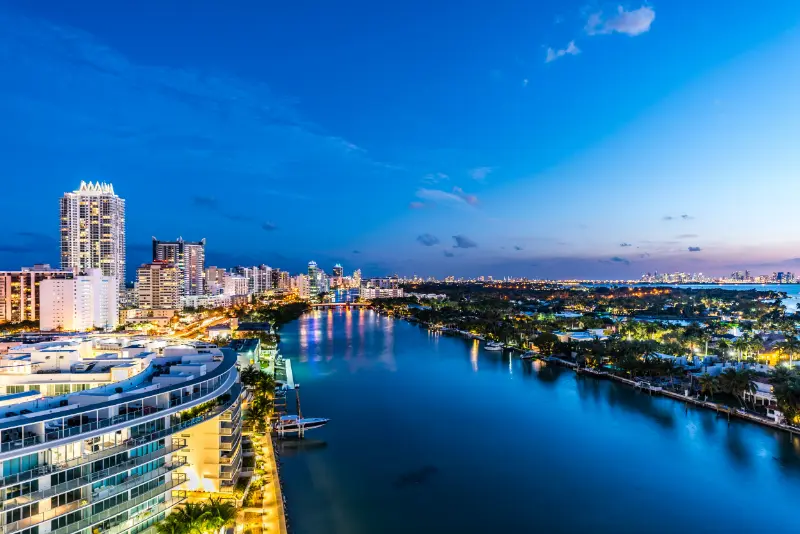
    Florida Downtown Waterfront Skyline at Dusk

    Jensen Beach on the mainland: local life without resort prices

    Mainland Jensen Beach has a recognizable town-center area and access to the wider Martin County region. It can be attractive for travelers who like independent restaurants and small-town outings but do not need direct beach access every day. Some hotel addresses place you near main roads rather than a pedestrian village, so checking the map is essential. A mainland rental may provide a kitchen and space for a family at a better overall cost than a resort-style island property. Yet trips to Atlantic beaches typically involve crossing toward Hutchinson Island. Estimate those journeys at the actual hours you will travel, and include beach parking. For a stay that includes visits to friends or several regional attractions, this location can work well. For visitors traveling without a car, select a compact area with food and services nearby rather than assuming the Jensen Beach name guarantees walkability.

    Hutchinson Island: choose the coast with your exact beach access in mind

    Hutchinson Island extends through more than one local area, so an accommodation search result can conceal meaningful distances. First identify whether the property is in Martin County and which access or park lies nearby. Some rooms have direct Atlantic views; others overlook a road, lagoon or interior courtyard. Ask about the authorized route to the sand, the number of steps and whether the beach has restrooms or lifeguards. Families with small children may appreciate a short return path for meals and naps. Couples might prefer a quieter beachfront apartment with a kitchen. The ocean is not a controlled swimming pool: surf, currents and weather can change quickly, so a beachfront reservation never guarantees a safe swimming day. If anyone has mobility limitations, do not settle for the claim that a beach is 'steps away' without learning what those steps physically involve. A comfortable island stay makes time by the water effortless, but often demands a deliberate plan for groceries and other errands.

    The Indian River Lagoon and St. Lucie River: beautiful, but different from the ocean

    Water appears almost everywhere on local maps, but it serves different purposes. The St. Lucie River and Indian River Lagoon provide scenic waterside views, boating environments and wildlife habitat. An accommodation facing these waters may be wonderful for watching boats or enjoying a sheltered balcony. It should not be sold to yourself as equivalent to an Atlantic swimming beach. Some shorelines have mangroves, docks, seawalls or no public access at all. For paddling, use recognized operators and suitable launch sites, assess weather and current, and wear the required safety equipment. Families should treat private docks as areas needing close adult supervision. If you are enthusiastic about wildlife photography or fishing, a lagoon-oriented base may suit you better than oceanfront luxury. Clarify dock privileges, boat parking and any limitations before booking; water views and water access are very different promises.

    Choose your attractions before you choose the hotel

    The Elliott Museum and nearby coastal sights are reasons to spend time beyond the beach. The Florida Oceanographic Coastal Center offers a marine-science focus that can be particularly engaging for families when current programs and admissions allow. In Stuart, the downtown Riverwalk makes an appealing low-pressure outing, while Jensen Beach provides restaurants and local atmosphere. Bathtub Reef Beach is a familiar name but may be affected by changing sand, access and swimming conditions, so consult official updates before treating it as a fixed itinerary stop. A hotel positioned to minimize driving to two or three priorities can be more useful than a fashionable address far from all of them. When organizing a week, divide attractions into mainland and island days. That simple grouping avoids crossing bridges over and over and leaves more time for unplanned stops or a slower meal together.

    The best setup for families with young children

    Small children shape a beach holiday through nap schedules, feeding needs and how much equipment adults must carry. A Hutchinson Island property with a safe, nearby beach route may make short coastal sessions easy. On the other hand, a mainland suite with kitchen facilities, laundry and a shaded pool can keep everyday life predictable. Ask for the exact sleeping arrangement: a pullout sofa in a noisy living room is not the same as a second bedroom. Check pool barriers, balcony locks and whether the unit has steep stairs. For older children, a combination of marine-science learning, calm waterfront walking and an appropriately supervised beach day can be more interesting than nonstop sand time. Bring sun protection and plenty of water, and never treat tidal pools or lagoon shallows as automatically safe. One activity in the morning and one optional outing later will often produce a more relaxed family stay than an ambitious hourly schedule.

    A comfortable trip for seniors and visitors who need rest breaks

    The area can suit a gentle vacation, but comfort depends on the specifics of a property and its surroundings. A downtown Stuart room with a convenient elevator and restaurants nearby may work better for some older travelers than a beach rental with several flights of stairs. Others may prefer an ocean-view balcony and minimal travel once settled. Request photographs of bathroom grab bars, shower entrances and routes to dining areas if accessibility matters. Confirm whether the guest parking space is close to the room, and whether a waterfront boardwalk has seating and shade. Beach wheelchairs or accessible paths should be checked at the individual public access point, not assumed. Plan outdoor walks early during warm months, then enjoy a quieter midday period. There is no need to swim to appreciate this coast: a sunrise view, museum visit, shaded lunch and gentle boat-watching can fill a rewarding day without exhausting the group.

    Driving, bridges, arrival and transport without a car

    A car is useful for combining mainland Stuart, Jensen Beach and the various island entrances. When comparing properties, inspect the bridge route and the position of the actual parking lot, not a straight-line distance across water. Visitors flying into a larger airport should consider arrival fatigue and any late-night check-in rules. If you do not intend to drive, choose an area with reachable restaurants and plan airport transfers and beach transport rather than relying on spontaneous rides in less busy neighborhoods. Ask tour operators where trips depart; 'Stuart area' can refer to different marinas or launch points. Drivers should check whether a rental has room for their vehicle and whether beach parking restrictions change by location or season. A more expensive room within walking distance of the activities you genuinely want may save both transport expenses and energy.

    Weather, wildlife and responsible beach use

    Florida's Atlantic coast offers generous opportunities for outdoor recreation, but weather deserves respect. Summer heat, lightning and thunderstorms may interrupt beach days. Rip currents are a serious risk during rough conditions, and inlet areas can have strong water movement. Follow lifeguard flags and warnings at each beach. During sea turtle nesting season, keep lights and furniture from disturbing the shore, stay away from marked nests and follow local rules. The lagoon supports birds and other wildlife, so avoid approaching or feeding animals and never disturb sensitive shore vegetation. Tropical-season travel benefits from flexible accommodation terms and an awareness of official emergency notices. A convenient rainy-day museum or restaurant near your lodging can make a week feel easier when outdoor activities are canceled. Nature is one of the area's main pleasures; respecting it makes the visit safer and more rewarding.

    Compare costs across downtown, mainland and beach rentals

    A Stuart hotel may offer a standard room with easy access to restaurants, while an island condo may provide a kitchen but impose a cleaning fee and minimum number of nights. Jensen Beach mainland rentals can give families extra bedrooms and parking for a longer stay. Compare identical dates and the full payable total, including taxes, parking, any resort charges, beach equipment and laundry arrangements. When a listing says 'waterfront,' investigate whether you will need to drive to a swimmable beach; fuel and time matter over a week. Review cancellation terms, especially in hurricane season. If you are booking a holiday with several generations, do not assume a large house saves money after vehicles, groceries and potentially difficult stairs are considered. Sometimes two accessible hotel rooms near the same restaurant are a more comfortable arrangement. The best-value stay is the one that matches how you will actually spend your days.

    A three-day itinerary with less backtracking

    A Stuart-based short stay can begin with a gentle exploration of downtown and the Riverwalk, leaving the first evening free for dinner. On day two, cross to the island for a planned beach morning, then combine the coast with an appropriate museum or marine-science attraction rather than returning inland several times. Save day three for Jensen Beach, a favorite café, a scenic waterfront viewpoint or an easy nature stop before departure. If you stay on Hutchinson Island, reverse the emphasis and protect time to enjoy the beach close to your room. Families might choose one main activity daily; couples can add a longer lunch and a sunset view. For a person with mobility needs, replacing a busy attraction with a comfortable shaded waterfront stop can make the itinerary better, not smaller. The region's charm often reveals itself during unhurried moments between the headline sights.

    Questions worth answering before making a reservation

    Confirm the exact community, shoreline and room address. If you want the ocean, ask whether the property is genuinely on the Atlantic side of Hutchinson Island and how guests access the beach. If you want restaurants on foot, check the route from the room to downtown Stuart or Jensen Beach rather than relying on the neighborhood name. Clarify parking, elevators, stairs, kitchen equipment, resort and cleaning fees, and cancellation conditions. Ask about building work or storm-related disruptions when relevant. Travelers booking fishing or boat trips should verify the marina and boarding arrangements. Families should request bed dimensions and child-safety details; anyone with mobility limitations should obtain specific room information in writing. With those answers, it becomes possible to choose confidently among three different vacation styles: downtown energy, mainland convenience or peaceful time beside the Atlantic.

    Frequently asked questions

    Are Jensen Beach and Hutchinson Island the same place?

    Not exactly. Jensen Beach includes mainland areas, while Hutchinson Island contains stretches of Atlantic-facing coastline.

    Can I swim from any waterfront condo?

    No. River and lagoon access does not imply a designated swimming beach; review the location and posted rules.

    Which base is best without a car?

    A carefully chosen central Stuart property can make meals and walks easier, but beach trips still need planned transport.

    Official visitor resources

  • Where to Stay Near Weeki Wachee: Spring Hill, Hernando Beach or Brooksville?

    Where to Stay Near Weeki Wachee: Spring Hill, Hernando Beach or Brooksville?

    A visit to Weeki Wachee can be a short stop on a Florida road trip or the centerpiece of several quiet days exploring the Adventure Coast. Choosing an overnight base is less obvious than it first appears. Spring Hill provides familiar hotel and shopping options, Hernando Beach offers canals and a fishing-oriented coastal setting, and Brooksville has a historic center farther inland. Weeki Wachee Springs State Park itself is an attraction with special admission and capacity arrangements, not a promise that any nearby accommodation will let you walk into the spring. The best place to sleep depends on how many times you will visit the water, what else you want to do and how comfortable you are with driving.

    Which area should you choose?

    AreaBest forConsider before booking
    Spring Hill hotelsPark access and everyday servicesCar-based setting
    Hernando Beach canalsBoating and quieter rentalsNot a broad Gulf swimming beach
    Brooksville town areaHistory, dining and inland sceneryLonger drive to Weeki Wachee
    Rural cabin rentalsSelf-contained nature breakFewer shops and detailed access rules

    Spring Hill for straightforward hotels and everyday services

    Spring Hill is a practical base for families who want access to supermarkets, chain restaurants and conventional hotels. It has a spread-out suburban layout rather than a compact resort neighborhood, so a property a few miles from the spring may still require driving along busy roads. Search using the state park's actual address rather than assuming that any Spring Hill hotel is equally convenient. For a one-night stop, ease of parking and a reliable breakfast may be more valuable than an elaborate pool area.

    Families staying several nights can use Spring Hill's grocery options to plan simple meals and pack an early picnic before heading toward the spring. Check whether the room has a refrigerator, microwave and enough space to dry towels. A good hotel for this trip should also support a late-afternoon rest after outdoor activities, when heat and humidity can make everyone tired.

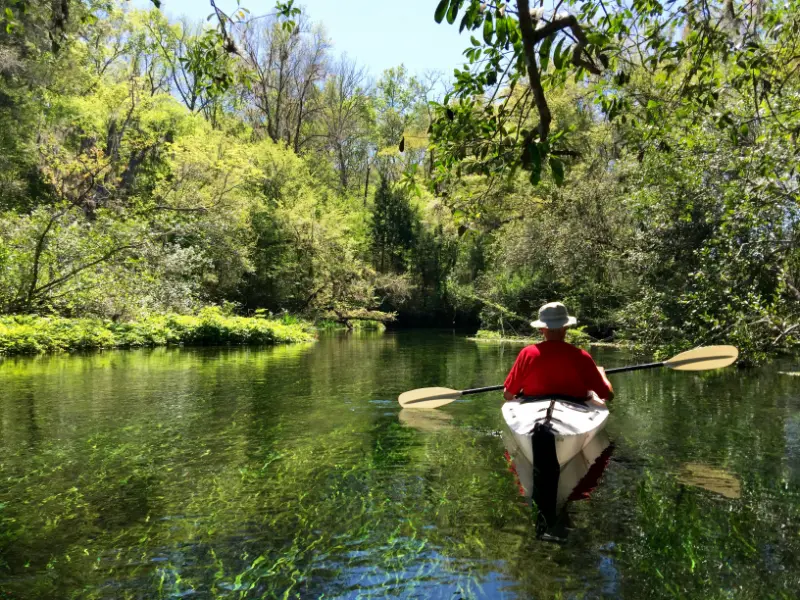
    Kayaking on a Shaded Florida Spring

    The surroundings vary between properties. Some are located along busy commercial corridors with limited walking appeal. Travelers hoping to stroll to dinner should look at actual pedestrian access, road crossings and evening conditions rather than accept an advertisement that says “convenient location.”

    Hernando Beach for canals, fishing and a slower coastal atmosphere

    Despite its name, Hernando Beach is not a conventional broad-sand Gulf resort. Much of the community is arranged around canals, boat access and waterfront homes. That can be attractive for people who want a calm view, a fishing trip or a rental with outdoor seating by the water. It can be disappointing for someone expecting to walk straight onto a swimming beach. Ask exactly what “waterfront” means and never assume a dock is suitable for casual swimming.

    Boat-oriented rentals come with particular questions. Is the dock available to guests? Are there restrictions on children near the water? Is a boat lift included, and if so under what conditions? Families with young children should look for secure doors, barriers and clear supervision arrangements. Anyone who expects to launch a kayak should check local access and water conditions rather than treat every canal as a public launch point.

    Hernando Beach works best for visitors comfortable with self-catering and short drives for groceries and attractions. The coastal setting is part of the appeal, but it is not a substitute for staying close to the Weeki Wachee park entrance.

    Brooksville for historic streets and an inland base

    Brooksville offers a different character, with an older downtown, local museums and the rolling landscape of Hernando County. It can be rewarding for travelers who enjoy smaller towns and want more than a single day at the springs. Accommodation here may suit a road trip with stops elsewhere in the Nature Coast, but the travel time to Weeki Wachee matters if everyone intends to arrive before peak crowds.

    For a couple or older visitors, a quiet Brooksville hotel or inn may be pleasant after a day outdoors. Check whether the property is in or near the historic district or on a major highway; those are different experiences. Not every historic lodging building has an elevator, and older architecture can mean narrow stairs or bathrooms that do not work for all mobility needs. Ask detailed questions rather than making accessibility assumptions from photographs.

    Brooksville is not the right base if the only vacation goal is stepping directly into water from the accommodation. Its value comes from combining spring outings with local history, restaurants and a more inland view of Florida.

    Planning the state park visit before booking a room

    Weeki Wachee Springs State Park is famous for its underwater mermaid shows and spring setting. Official park information also describes paddling opportunities and Buccaneer Bay, with operating arrangements that may differ by season. The park can reach capacity, and specific attractions may be suspended because of weather or environmental conditions. Lodging nearby does not reserve your admission or guarantee a seat at a performance.

    Check the park's current admission procedure, opening hours and attraction notices shortly before the trip. A river cruise may be paused even while other areas remain open; treating all advertised experiences as guaranteed could create an unhappy morning. For families with young children, have a plan for lunch, shade and bathroom breaks, and avoid promising a particular showtime before consulting the official schedule.

    If an activity is essential, build the accommodation plan around the admission or reservation requirement first. Then choose a room that makes the early start manageable. This order is more reliable than reserving a distant bargain room and discovering the next day that the schedule is difficult.

    Staying for paddling rather than the mermaid show

    Travelers drawn mainly to the Weeki Wachee River need a different planning approach from visitors attending the theater. Paddling tours and rentals operate with rules about launch times, return arrangements, water conditions and wildlife protection. Confirm the exact operator, approved route, where the trip ends and how everyone returns to the vehicle. Never launch from an unapproved private dock or assume you can paddle a full river segment without a shuttle.

    For first-time kayakers or families, guided options can simplify logistics, but ask about age limits, swimming ability, life jackets and the length of the outing. An eight-year-old who enjoys a short sheltered paddle may struggle with several hours on the water in strong sun. A waterproof phone bag and drinking water are more useful than an ambitious list of wildlife sightings you hope to achieve.

    Staying near a convenient road route to the launch can help, but no lodging address is universally “best for kayaking.” Choose based on the operator actually booked and check whether the trip runs after heavy rain or changing conditions.

    Comparing the full price of hotels and waterfront rentals

    A Spring Hill hotel usually offers a clearer short-stay package, while a Hernando Beach house may provide more space for a longer trip. The right comparison is the total price for the exact dates and number of guests. Include taxes, cleaning, refundable deposits, parking, pet fees, pool heating if relevant and any charges for boat facilities. For a two-night visit, a house with high cleaning fees may not be economical even if the advertised nightly rate looks attractive.

    For a group sharing a rental, inspect the number of real bedrooms and bathrooms. A property that sleeps eight may rely on sofa beds and bunk areas, which could be uncomfortable for adults or grandparents. If there is a canal or swimming pool, ask about locks, alarms and fences. Verify whether outdoor furniture, laundry equipment and air-conditioning are functioning and included.

    For a hotel, look at cancellation conditions, late check-in, breakfast hours and whether a ground-floor room is available. Weekend and seasonal demand can change the cost and availability of suitable rooms.

    Families, older travelers and comfortable accessibility choices

    The best family lodging has a usable resting space, easy parking and minimal uncertainty on the day of a park visit. A refrigerator for snacks, space for a stroller and a reliable bath or shower can be more valuable than decorative resort features. If young children will swim, supervise them closely and follow posted water-safety rules. Spring water can feel colder than expected even on a hot day, and the surrounding air may still be humid.

    Visitors with limited walking ability should contact accommodation providers about the entrance, parking-to-room route, shower design, grab bars and any stairs. The state park has accessibility information, but individual activities and boarding conditions vary. Ask the park directly about accessible routes, seating and assistance before booking a time-sensitive experience. It is also wise to schedule a shorter park day and leave recovery time afterward.

    A multigenerational trip is often more enjoyable when some travelers can return to the hotel for a break while others remain out. That favors a well-placed conventional room over a remote house reached by several narrow roads.

    Weather, wildlife and respectful river visits

    Florida springs look beautiful year-round, but thunderstorms, heavy rain and changing water conditions affect outdoor activity. Do not plan a water trip without checking local forecasts and the operator's day-of policy. Lightning is a serious reason to leave open water. Clothing, sun protection and dry footwear matter even when the activity itself occurs in cool spring-fed water. Summer afternoons may call for a quiet indoor break instead of another exposed outing.

    Wildlife should be observed at a distance. Do not feed animals, block a manatee's route or crowd a resting animal for a photograph. Laws and local guidance regulate interactions with protected species, and tour operators should explain the rules. For children, watching quietly from a designated area can be as educational as a boat ride, especially when wildlife is not where a brochure suggests.

    If a particular swimming area or river trip closes, use the change to explore Brooksville or another suitable attraction rather than ignoring safety notices.

    A two-night itinerary with time to enjoy the springs

    Arrive in the afternoon, check in and organize the next morning's admission or paddling plan. A simple dinner and an early bedtime are more useful than a long drive for entertainment when the park is the main attraction. On day two, enjoy Weeki Wachee during the most practical hours for the activities you have confirmed, with a leisurely lunch and no obligation to fill every afternoon minute.

    If energy and weather allow, spend the later part of the day exploring a quieter nearby area or having dinner in Brooksville. On day three, choose a short nature or local-history stop on the drive out. Travelers who mainly want kayaking may swap the park theater for a guided river outing, but should not attempt both extensive activities if time is tight or the group is likely to tire.

    This schedule works for children, couples and older travelers because it leaves a margin for weather, full parking lots and unexpected delays. The key is to protect one enjoyable water experience rather than promise every possible one.

    Five things to verify before paying for accommodation

    Confirm the actual driving route to your planned park or launch location. Ask about final fees and cancellation conditions, including storm or weather disruptions. If renting beside a canal, establish the nature of the waterfront, child-safety features and whether the dock can be used. Check parking, accessibility and practical meal options. Finally, ask how late check-in works and whether the room will remain available after a delayed flight.

    Spring Hill is the straightforward choice for services and family logistics. Hernando Beach suits travelers specifically wanting canals, boating and a slower coastal rental. Brooksville is a better fit when history and a small-town atmosphere are part of the trip. None guarantees state-park entry or river conditions. Build the stay around what you genuinely want to do, confirm official operating notices, and leave enough free time to appreciate the place.

    Frequently asked questions

    Does a nearby hotel guarantee Weeki Wachee entry?

    No. State-park capacity, admissions and individual experience schedules are separate from accommodation.

    Is Hernando Beach a traditional sand beach resort?

    No. Much of its waterfront is canal- and boat-oriented. Verify the exact shoreline and swimming permissions.

    Should we stay in Spring Hill for a short visit?

    It is often practical for a one- or two-night trip focused on the state park and nearby services.

    Official visitor resources

  • Where to Stay in Panama City, Florida: Historic St. Andrews, Downtown or a Bayfront Hotel?

    Where to Stay in Panama City, Florida: Historic St. Andrews, Downtown or a Bayfront Hotel?

    Panama City and Panama City Beach have similar names but are different places to stay. Panama City sits on St. Andrews Bay and offers historic neighborhoods, marinas, restaurants and cultural stops. Panama City Beach is the better-known Gulf resort destination with long sandy beaches and a different concentration of accommodations. This distinction is crucial when choosing a hotel: “bayfront” in Panama City is not the same as “Gulf-front” on Panama City Beach. If you want a quieter town base with occasional beach excursions, Panama City can work very well. If you expect to step out of the room onto the Gulf every morning, choose your address much more carefully.

    Which area should you choose?

    AreaBest forConsider before booking
    Historic St. AndrewsMarina atmosphere, restaurants and walksBayfront rather than Gulf beach
    Downtown Panama CityCulture and harbor public spacesVerify precise walkable blocks
    Bayfront and marina hotelsWater views and boating outingsNot automatic swimming access
    Inland Panama City hotelsRoad-trip convenience and parkingDaily beach transfer required

    Historic St. Andrews for an atmospheric waterfront stay

    Historic St. Andrews is one of the most distinctive parts of Panama City, with a former fishing-village setting, marina activity, restaurants and a bayfront atmosphere. Staying nearby can be enjoyable for couples and visitors who want short evening walks and meals close to the room. The neighborhood's appeal is not the size of a resort complex but its sense of place. It gives travelers a reason to linger instead of treating the hotel as somewhere to sleep between highway drives.

    Check the specific location of the accommodation. A listing advertised as “St. Andrews area” may not put you within a pleasant walking distance of the historic waterfront. Look for the actual route to the marina or dining streets, including road crossings. Restaurants and bars can make some blocks lively; if quiet sleep matters, inspect the room's position and ask whether nearby events are scheduled during your stay.

    The waterfront here faces the bay, not an open Gulf swimming beach. Enjoy the scenery and harbor activity for what it is, and plan a separate beach visit if sand and surf are important to your vacation.

    Downtown Panama City for culture and convenient local outings

    Downtown Panama City has its own restaurants, streets and bayfront public spaces. The city has been developing and revitalizing parts of its center, so the experience can differ from that shown in older guidebooks. A central hotel may suit travelers who enjoy local arts, historic context and one or two relaxed evenings out. It can also be a useful stop on a longer trip across northwest Florida.

    Before reserving, investigate whether the accommodation is genuinely near the places you want to visit, not merely inside the city's broad boundary. A property near a major road or commercial strip can be convenient for driving yet less satisfying for evening walks. If a listing advertises a view of St. Andrews Bay, verify whether it is available from the reserved room, the restaurant or only a rooftop communal space.

    Downtown is especially appealing when you are not planning a full week of daily Gulf swimming. For travelers combining dining, small museums and occasional boat activities, its local character may matter more than a standard resort lobby.

    Panama City Beach is a separate lodging decision

    If the first wish on your list is a balcony overlooking white sand and Gulf surf, look at the beachfront communities across the bay rather than assume a Panama City address offers the same experience. Panama City Beach has its own accommodation districts, attractions and public beach-access systems. Driving between the two cities takes planning, and traffic can be heavy at popular times. A small saving on a Panama City hotel may disappear if the family pays for transport and beach parking every day.

    On the other hand, a Panama City Beach resort might not be the best base if your trip is focused on historical St. Andrews, visiting relatives in the city or regional boating. Choose according to your daily plan. The right city name on the booking is more important than the marketing phrase “near the Gulf.”

    For a mixed vacation, count beach days and city days. If beaches dominate, stay closer to the sand. If you want one beach outing and several local-town experiences, Panama City can be the more relaxed choice.

    Bayfront hotels, marinas and vacation rentals

    Panama City lodging may look toward the water, sit beside marinas or occupy inland commercial areas. A bayfront room can be attractive for watching boats or sunrise light, but it should not be described as a beach room unless the property has a genuine, lawful beach. A canal or marina does not imply swimming access, and docks may be restricted to registered boat owners. Ask exactly where you may walk and which waterfront amenities guests can use.

    Florida Bayfront Skyscrapers at Night

    Vacation rentals can offer kitchens and additional space for families, but the arrangements vary. Look for clear parking permissions, reliable check-in, a local emergency contact and written rules for visitors or boats. If children will stay beside open water, inspect doors, balcony railings and dock access carefully. A hotel with a staffed reception may be simpler for a short stay, especially after a late arrival.

    For anyone requiring accessible facilities, obtain specific details about the bathroom, elevator, route to parking and any marina or boat-boarding arrangements. “Waterfront accessible” is not a complete description of what will work for a particular traveler.

    What to do from a St. Andrews or downtown base

    Historic St. Andrews lends itself to a local walking outing, a meal beside the bay and learning about the city's working-waterfront history. Official Destination Panama City information includes a self-guided walking-tour resource for the neighborhood. That is a useful option for visitors who enjoy exploring at their own pace rather than committing to a fixed group departure. Confirm current access and the locations of any stops before setting out in very hot weather.

    Boat trips and fishing excursions can be worthwhile, but all depend on weather, operator rules and departure points. Ask about boarding, life jackets, shade and restrooms. A family with children should be realistic about attention spans and the length of an outing on open water. There is no need to book a boat trip simply to enjoy the harbor; watching boats return while having lunch is also a pleasant experience.

    For a rainy afternoon, look for local galleries or indoor activities, checking current opening times directly. The best schedule leaves room for unexpected changes rather than assuming every storefront is open every day.

    Planning an actual Gulf beach day from the city

    A visit to Panama City Beach requires a deliberate plan for the destination, legal beach access, parking and the return. Do not drive toward the coastline without choosing a named access point. Popular areas can be busy, and conditions change after storms or construction. Consult city or county guidance for public parking and any temporary restrictions before departing.

    Families should pack water, shade, snacks and dry clothes, especially if the lodging is far enough away that returning for a forgotten item would be inconvenient. Follow posted surf warnings and watch for lightning. The Gulf can be rough on some days despite looking calm in marketing material. If the weather makes swimming unsuitable, an organized city outing or indoor break is better than forcing a beach session.

    A visitor planning daily beach trips should reconsider whether a Panama City hotel is truly the best value. Several short drives and paid parking sessions may cost more—in both time and money—than a hotel closer to a suitable beach entrance.

    Families, teenagers and visitors of different ages

    Panama City can be comfortable for families that enjoy combining local culture with selected outdoor activities. A room with a refrigerator, simple breakfast options and convenient parking helps when the group includes younger children. Teenagers may enjoy waterfront dining or a scheduled boating experience, but not every activity needs to be prebooked. Allow time for the family to rest, especially after a hot afternoon outside.

    For grandparents, an easy walking route with benches can be more enjoyable than a long beach crossing. Choose accommodation near the kinds of places they want to see, and inspect elevator and bathroom arrangements before paying. A larger room does not necessarily mean a more accessible one. If several generations travel together, consider whether a suite with a living area will allow some guests to rest while others continue exploring.

    For solo travelers, the ease of arriving late and returning from dinner matters. Review the immediate neighborhood and confirm transport availability rather than assume every waterfront street is equally active in the evening.

    Arriving, driving and parking without unpleasant surprises

    Northwest Florida Beaches International Airport is one gateway for the area, though the best arrival route depends on flights and onward travel. Verify the route to your particular hotel instead of relying on an estimated distance to the city center. A late arrival makes a reliable check-in method essential, especially when renting privately. Ask whether there will be staffed reception, a code or a key pickup at another property.

    Panama City is largely car-oriented outside selected walking districts. Regional transit options can be useful for specific journeys but require current route and timetable checking. If the vacation involves beaches, marinas and attractions across the bay, renting a car may simplify the itinerary. Include bridge traffic and time spent parking in the day's plan.

    If towing a boat or carrying large equipment, verify parking dimensions and rules with the property. A regular hotel space does not necessarily accommodate a trailer. Save the hotel's full address and arrival instructions before leaving the airport.

    Seasonal conditions and after-storm practical checks

    The Florida Panhandle experiences hot, humid summers, thunderstorms and periods of tropical-weather risk. Conditions can change boat schedules, outdoor dining and beach access. Read local authority notices close to travel dates rather than relying on a saved guide from a previous season. A waterfront location deserves particular attention to weather-related cancellation rules and the availability of alternate indoor activities.

    A pleasant spring or fall visit may bring different crowds and temperatures from peak summer. Check whether the amenities you are paying for—pool, dining, boat service or breakfast—operate during the chosen period. Even in mild weather, some businesses have seasonal schedules. It is sensible to reserve only essential activities far in advance and leave the rest of the time adaptable.

    For any severe-weather warning, follow official guidance. Never drive through flooded streets to reach the hotel or a sightseeing destination. Coastal travel is more enjoyable when flexibility is built into the booking and daily plan.

    A two- or three-day city-and-coast itinerary

    On arrival day, explore the closest waterfront district and eat nearby rather than crossing the bay for a late-night attraction. Dedicate the first full day to historic St. Andrews and a relaxed local outing, with time for lunch and an indoor rest. On the second full day, choose a Gulf beach visit if conditions are suitable, or stay in the city for another cultural activity. This gives the family a mixture without spending the entire holiday moving between parking lots.

    For a short one-night stop, select a single walkable area and a comfortable hotel rather than planning multiple excursions. Older visitors and families with small children may find an early dinner and bayfront stroll more memorable than a hurried list of attractions. If staying longer, add an unscheduled day for weather and for whatever part of the region appeals most once you arrive.

    Keep checkout and flight logistics separate from ambitious morning activities. A final coffee with a waterfront view is often a better ending than rushing to a distant beach before the airport.

    Choosing the room and avoiding the wrong kind of waterfront

    Book Historic St. Andrews when dining and a local harbor setting are central to your plans. Choose downtown Panama City for city-oriented activities, waterfront public spaces and regional sightseeing. Consider inland hotels for straightforward overnight stops and driving-based vacations. Choose Panama City Beach instead if your principal goal is a classic Gulf resort with sand at the door.

    Check the exact address, type of water view, elevator, parking, total fees, local construction and cancellation policy before reserving. Ask whether the room rate includes the amenities shown in photographs. None of these details is glamorous, but they determine whether the stay feels relaxed. Understanding the difference between the bay and the Gulf is the first—and most useful—step in choosing the right Panama City base.

    Frequently asked questions

    Is Panama City the same as Panama City Beach?

    No. Panama City is a city on St. Andrews Bay; Panama City Beach is a separate Gulf resort city.

    Does a Panama City bayfront room have a Gulf beach?

    Usually not. Confirm the property’s shoreline and plan separate Gulf beach access.

    Is historic St. Andrews good for a short stay?

    It can be appealing for waterfront dining and a walkable local neighborhood when the exact lodging address is suitable.

    Official visitor resources

  • Where to Stay Near Wekiwa Springs and Apopka: Nature Trips Without Sleeping at a Theme Park Resort

    Where to Stay Near Wekiwa Springs and Apopka: Nature Trips Without Sleeping at a Theme Park Resort

    Apopka and the Wekiva area offer a completely different base from Orlando's busiest vacation corridors. Here the attraction is cool spring water, forest trails, paddling and the possibility of quieter evenings while still remaining within the greater Orlando region. Accommodation is not concentrated beside one large theme park entrance, and that makes exact location especially important. A hotel in Apopka, a rental near the Wekiva area and an apartment toward Altamonte Springs can each serve a different itinerary. This guide focuses on choosing a practical base for the places you will actually visit, including Wekiwa Springs State Park, Kelly Park and nearby communities.

    Which area should you choose?

    AreaBest forConsider before booking
    Apopka hotelsPractical park drives and groceriesCar dependence and broad city area
    Wekiva-area rentalsNature focus and larger groupsExact entrance distances vary
    Altamonte Springs hotelsRegional dining and mixed itineraryLonger drive for early park visits
    Camping or cabinsOutdoor-focused staySeparate reservations and facilities

    Apopka hotels for simple spring-day logistics

    Apopka offers everyday services and practical driving routes north and northwest of central Orlando. Conventional hotels may be useful for short trips, road travelers and families who need dependable parking and breakfast. But a property described as being in Apopka is not necessarily close to a specific park entrance. Use the addresses of Wekiwa Springs State Park and Kelly Park in a route planner, and look at the real drive from the hotel rather than trusting a listing's vague “near the springs” label.

    On days when an early start matters, a hotel offering breakfast before your departure can be more valuable than a pool you will barely use. Check whether the room has a refrigerator for snacks, whether wet towels can dry properly and whether the parking lot feels straightforward after dark. Visitors arriving after a flight should confirm late check-in and where to obtain food if nearby restaurants have already closed.

    Apopka is generally better thought of as a car-based base than a pedestrian resort. For a traveler who wants to walk to restaurants each evening, inspecting the specific block is essential.

    Wekiwa Springs State Park: reserve the visit before planning the day

    Wekiwa Springs State Park protects spring water, forest and access to the Wekiva River system. Official state-park information states that day-use reservations have been required since September 2025. This is important for visitors who might otherwise book an accommodation simply to be close to the gate and assume they can arrive whenever they like. Confirm the current reservation process, available entry windows, fees and park notices before planning the trip.

    Florida Theme Park Entrance Boulevard

    The park also offers trails and paddling opportunities, but not every experience follows the same operating arrangements. Weather, staffing, maintenance and capacity may change what is available. Do not count on renting a canoe or completing a particular trail without checking current conditions. For families, a morning visit with a lunch break can be more comfortable than stretching the outing across the hottest part of the day.

    A nearby hotel reduces the drive but cannot guarantee park admission. That is the central planning distinction. Arrange the high-priority activity first, then select accommodation that supports it without requiring an exhausting pre-dawn commute.

    Kelly Park and Rock Springs: a different outdoor day

    Kelly Park and its Rock Springs area are popular for clear water and a scenic spring-run setting. The visit involves county-park rules that differ from those at Wekiwa Springs State Park. Capacity and entry procedures can be especially important on busy days. Check Orange County's official park information for current ticketing, opening times, permitted equipment and closures. Do not assume that a reservation at one park can be used at the other.

    A family hoping to tube should plan how equipment will be obtained, where it may be used and how to return it. A child who swims confidently in a pool may still find moving spring water unfamiliar. Follow all posted age, supervision and flotation-device rules, and avoid long exposure in strong sun while waiting for entry. Carry drinking water, footwear suitable for wet surfaces and a dry change of clothes.

    If the park is full or weather deteriorates, a visit to a nearby community or an indoor activity is preferable to improvising access along an unknown bank. The springs are protected environments, not unrestricted swimming facilities.

    Altamonte Springs and nearby areas for more hotel choice

    Some visitors prefer to sleep closer to Altamonte Springs or other established suburban commercial districts, where a wider mix of lodging and restaurants may fit their budget. That can work for an itinerary combining northern Orlando attractions with one or two spring days. The trade-off is extra driving when you want to be at a park at a particular time. Compare those trips with the convenience of a simpler Apopka hotel.

    A property near a major road may be comfortable for a traveler with a rental car, but awkward for walking with children or reaching a restaurant without crossing large intersections. Examine the surroundings on the map. A listing's proximity to a shopping complex does not guarantee an inviting pedestrian route, especially during heavy rain or midday heat.

    For visitors planning several evenings in downtown Orlando, Winter Park or Maitland, a somewhat more central suburban base may make sense. Select the hotel according to the overall trip, not just one morning at a spring.

    What about vacation homes, cabins and campsite stays?

    A rental home can appeal to larger families who want a kitchen, laundry and separate rooms. Near natural areas, however, “secluded” sometimes means longer drives for groceries and fewer easy alternatives when the weather changes. Look at the exact road access and check whether the property is properly equipped for children. Swimming pools need suitable barriers, while canal or lake access requires special attention to supervision and local rules.

    Camping can offer a deeper outdoor experience where officially permitted, but facilities, reservations and camping restrictions are park-specific. Do not assume that a state-park day-use reservation includes a campsite or overnight permission. Research the actual campground, available hookups, restroom facilities and weather policies before promising a comfortable night outdoors.

    Theme Park at Night with Illuminated Buildings

    When choosing a cabin, ask about air-conditioning, mosquito screens, bedding and the location of the nearest medical or grocery services. The most photogenic rural rental can be inconvenient if it lacks ordinary necessities for a multigenerational group.

    Planning for kids, teens and older travelers

    For toddlers, a short outing beside the springs may be sufficient. Choose accommodation with space for naps and an easy place to prepare snacks. School-age children often enjoy a combination of water time and a simple nature walk; teenagers may be more interested in guided paddling or photography. Do not try to force all age groups into the same strenuous activity. Building a choice into the day gives everyone a better experience.

    For older guests and people with mobility limitations, contact the park about the precise accessible route from parking to the activity they want. Spring banks, trails and rental launch points can present very different challenges. An accessible hotel room does not solve every outdoor barrier. Check whether restrooms are reachable, whether shaded seating is available and what the transfer into a boat involves.

    Schedule time away from the sun. Even with cool spring water, walking through parking areas during a humid afternoon can be tiring, especially for visitors unused to the climate.

    The Wekiva River and paddling without logistical surprises

    The Wekiva River system offers opportunities to experience a side of Central Florida that looks nothing like the attractions around International Drive. A trip on the water requires attention to approved launches, permitted routes, equipment and pickup arrangements. Commercial tours may include return transport, while independent rentals can have different end points and deadlines. Ask what happens if the weather changes or a participant becomes tired.

    Wildlife encounters are possible but never guaranteed. Keep a respectful distance from animals, leave habitats undisturbed and never feed alligators or other wildlife. Children should remain close to adults at docks and banks. Before departing, review the operator's age, swimming ability and life-jacket requirements; a comfortable family outing may be shorter than the full route advertised to experienced paddlers.

    If your group is inexperienced, choose a guided option with transparent safety arrangements rather than assuming an attractive photograph represents calm conditions every day.

    Is Apopka a good base for Disney or Universal?

    Apopka can work for an Orlando-area vacation in which theme parks are a small component. It is not usually the most convenient choice for daily early entry at Walt Disney World or Universal Orlando, because those attractions are in different parts of the metropolitan area. Traffic and parking make the drive much more important than the straight-line distance. If you plan four theme-park days and one spring outing, choose a base near the parks instead and visit Apopka as a day trip.

    If the balance is reversed—three days of nature, a day in Winter Park and one occasional theme-park outing—Apopka or a nearby suburban hotel can be appealing. The goal is to minimize repeated cross-city transfers. Build an actual route table for your dates and account for morning congestion, tolls and the fatigue of driving after a long park day.

    Families with young children should be especially cautious about combining a full theme-park day with a long return trip to a rural rental.

    A comfortable three-day nature-focused stay

    Arrive and settle into an Apopka or nearby hotel, with a relaxed evening meal rather than another long activity. Dedicate the first full morning to Wekiwa Springs if its reservation is secured. After lunch, rest or explore a short accessible trail according to energy levels. Use the next morning for Kelly Park only after confirming its entry arrangements, or book a suitable guided paddle with a reputable operator instead.

    Leave an afternoon open for rain, changing water conditions or a simple change of pace. A stop in Winter Park or at a local café may be more enjoyable than forcing three water activities into one day. The third morning can be devoted to a short walk or leisurely breakfast before departure. The schedule is deliberately flexible so a child, a senior traveler or someone unused to heat does not have to complete every activity to enjoy the trip.

    For a week, add rest days rather than increasing the daily number of destinations. A slower nature holiday is often the best use of this region.

    Budget, booking details and the final choice

    Add up all hotel taxes, mandatory fees, parking and spring-park admission costs. For rentals, include cleaning charges and any additional guest fees. Compare room quality against the commute to your highest-priority park. A lower rate far from the entry gate may be a false saving if it adds stressful driving each morning. Read cancellation policies carefully and consider the impact of storms on outdoor bookings.

    Apopka is the sensible choice when spring visits and simple car-based services dominate the trip. A property closer to Altamonte Springs may be useful for a mixed itinerary with evening restaurants and other Orlando-area outings. A secluded rental can suit a self-sufficient group, provided the access, safety and facilities are carefully verified. No booking should be made on the assumption that nearby parks guarantee same-day entry. Check official rules first, then reserve a base that leaves time for the nature you came to see.

    Frequently asked questions

    Is day-use entry to Wekiwa Springs reservation-based?

    The Florida State Parks site currently requires day-use reservations. Check the official process for your travel dates.

    Are Kelly Park and Wekiwa Springs the same park?

    No. They are separate parks managed under different systems, with different entry rules.

    Is Apopka a convenient Disney-area resort base?

    It can work for occasional visits but is usually less convenient for repeated early Disney or Universal park days.

    Official visitor resources

  • Where to Stay in Punta Gorda and Port Charlotte: Historic Harbor Walks or Convenient Gulf Coast Driving?

    Where to Stay in Punta Gorda and Port Charlotte: Historic Harbor Walks or Convenient Gulf Coast Driving?

    Punta Gorda and Port Charlotte share the Charlotte Harbor region, but they offer noticeably different visitor experiences. Punta Gorda has a compact historic center and waterfront places that suit strolling, dining and a relaxed weekend. Port Charlotte covers a broad suburban area with shopping, practical services and useful road connections. Neither should be confused with a conventional Gulf beachfront resort. The harbor offers scenery and boating, while the open Gulf beaches require a separate journey. Selecting accommodation here is about deciding whether you want local-town atmosphere, easy road access or a base for exploring the wider southwest Florida coast.

    Which area should you choose?

    AreaBest forConsider before booking
    Historic Punta GordaWalkable restaurants and harbor viewsEvents, parking and room location
    Punta Gorda harborfrontWater views and marina-oriented tripsNot an open Gulf beach
    Port Charlotte hotelsGrocery access and regional drivesCar-oriented surroundings
    Port Charlotte rental neighborhoodsGroup space and longer staysWaterfront type and driving distance

    Punta Gorda's historic downtown for a walkable weekend

    Downtown Punta Gorda is an appealing choice when the plan is to leave the room, have coffee, explore nearby streets and enjoy waterfront views without continually getting into the car. Its older buildings and dining areas create a different setting from the main shopping corridors to the north. Lodging close to downtown may come in a range of forms, from conventional hotels to smaller accommodations. The key is the exact walk from the entrance to the restaurants and harbor areas you expect to use.

    Historic Tall Sailing Ships Docked in Florida Harbor

    Before booking, inspect sidewalks and crossings rather than relying on a listing's “close to downtown” promise. A distance that looks insignificant on a map may involve a major road or a long exposed stretch in summer heat. Ask about parking arrangements and whether nearby events can affect road access or nighttime noise. A hotel that feels quiet on a weekday may experience a different rhythm during a weekend festival.

    For couples or senior travelers wanting a gentle short break, being close to restaurants and waterfront paths can matter more than having a large pool complex. The convenience is not luxurious, but it lets the town become part of the holiday.

    Harborfront stays and the difference between water views and beach access

    A harbor-facing room can provide a memorable view of boats, changing clouds and broad water. That does not create an open-ocean swimming beach outside the door. Charlotte Harbor is an estuary, and conditions differ from the sandy Gulf shore of barrier islands. Booking websites sometimes emphasize “waterfront” without explaining this distinction. Check exactly what the accommodation faces and whether any advertised swimming beach is on the property or several towns away.

    Fishermen, birdwatchers and travelers who enjoy watching the light change may find a harbor outlook more attractive than a busy Gulf resort. Families expecting children to spend hours digging in coastal sand should instead plan a proper beach excursion, potentially toward Englewood or another suitable coastal access. Port Charlotte Beach Park has a sheltered harborfront recreation setting, not the same experience as an open Gulf beach.

    A balcony above the marina may have beautiful views but also early morning boat activity. Ask about noise, privacy, wind exposure and whether the room view is guaranteed in the reserved category.

    Port Charlotte for supermarkets, hotels and road trips

    Port Charlotte can be the practical option for families visiting several locations over a week. Its hotels, shopping and service areas are spread across a broad road network rather than a single historic walking district. You may find a conventional room with straightforward parking and more predictable meal options. That can be valuable when traveling with children, carrying sports equipment or planning to explore Charlotte County by car.

    The trade-off is daily driving. Even a property a short distance from the harbor on a map can be separated from attractions by large intersections and roads built primarily for vehicles. Do not assume that a supermarket or restaurant across the road is easy to walk to with a stroller. Check whether the route has sidewalks and safe crossings, particularly for evening meals.

    Driving Along Palm Lined Florida Road

    For one night on a road trip, an accessible hotel near the planned onward route may be ideal. For a romantic weekend of sunset walks, Punta Gorda's downtown is often a better starting point. Choose the experience before choosing the nightly rate.

    Fishermen's Village and nearby attractions

    Punta Gorda's waterfront is associated with Fishermen's Village, a shopping, dining and marina destination that often appears in visitor itineraries. A hotel nearby may be convenient for an evening meal or arranged cruise, but the exact distance and pedestrian route still matter. Attraction businesses can change hours or operating status, so verify current information before reserving a room mainly for one specific boat departure.

    Other regional experiences include historic streets, parks and harbor-oriented nature outings. Travelers interested in wildlife should bring binoculars and use designated observation areas rather than approaching animals along the shore. A guided boat trip can be rewarding, but weather and sea conditions determine whether it operates. Ask about shade, restrooms, boarding assistance and child minimum ages before buying tickets.

    Trying to visit every waterfront place in a single afternoon rarely improves the experience. An unhurried meal, one walk and a scheduled activity are often enough, especially for grandparents traveling with younger children.

    How to plan real Gulf beach days from an inland base

    One of the most common mistakes is treating a Punta Gorda or Port Charlotte hotel as if it were steps from a Gulf swimming beach. The closest suitable outing depends on the exact accommodation and the current status of public beaches. Routes toward Englewood and the barrier islands can involve traffic, parking and seasonal access changes. Check the specific park or beach entrance, not just the coastline on a map.

    Bring everything needed for a few hours outdoors, including water, sun protection and dry clothing, so you do not have to repeat the drive after forgetting a towel. If a family plans five daily beach mornings, reconsider whether an inland hotel is the right base. It might be more efficient to stay on or closer to the barrier island and visit Punta Gorda for an evening instead.

    For a trip focused on boating, historic streets or visiting relatives, the inland choice makes much more sense. A destination's value depends on what you came to do.

    Traveling with children or older relatives

    Families can enjoy the harbor region when they structure the trip around shorter outdoor sessions and dependable meals. A room with a refrigerator, enough beds and an easy bathroom setup reduces stress. Children need supervision near docks and seawalls, where deep water may be close to an apparently safe public walkway. Do not assume that every waterfront area is intended for swimming or play.

    Older visitors may appreciate the ability to sit with a harbor view and take a short paved walk rather than crossing long beaches in strong sun. However, accessibility varies between older buildings and modern hotels. Ask about elevator access, bathroom layout, parking-to-room distance and whether local waterfront routes have curb ramps. The presence of a restaurant at the property is useful for someone who does not want a long outing every evening.

    Multigenerational groups should select accommodation allowing some people to rest while others explore. Two connecting rooms or a rental with a shared living area may be more practical than a large number of beds in one open room.

    Arrival routes, local transport and parking

    Southwest Florida airports can serve this region, but the most convenient arrival airport depends on where you are flying from and the next stop in your itinerary. Plot the route between the selected airport and the actual hotel address. For drivers, investigate tolls, rental-car insurance arrangements and the location of the parking entrance rather than stopping at an approximate map pin.

    Port Charlotte is generally car-oriented, while portions of Punta Gorda's historic center can support a car-light short stay. Regional transit and rideshares should be checked for their exact hours and coverage, particularly if you need an evening return or accessible vehicle. A hotel described as “downtown area” may still be outside your comfortable walking distance. Verify that a planned walk is practical in heat and heavy rain.

    If traveling with a boat trailer or large vehicle, request permission for overnight parking in writing. Standard guest spaces are not necessarily designed for oversized vehicles.

    Seasonal weather, storms and waterfront conditions

    Southwest Florida weather can disrupt boat excursions, outdoor meals and beach plans. Thunderstorms are a serious concern on open water, and tropical weather can affect roads and coastal infrastructure. Read current county notices before travel, especially after a major storm. Do not rely on older images of parks, piers or marinas as evidence they are fully open. A waterfront hotel's proximity to water should also prompt a careful reading of cancellation and evacuation policies.

    During hot months, visit exposed waterfronts earlier in the day and take longer breaks indoors. Sunscreen and drinking water matter even if you are not entering the sea. In cooler months, a harbor walk may be more comfortable for much of the day, while swimming conditions can differ from the marketing images visitors associate with Florida.

    Travel insurance is worth evaluating for the particular risks of your itinerary, including nonrefundable boat trips. Make plans that can be rearranged when weather changes.

    Two simple itineraries for different travelers

    For a two-night Punta Gorda getaway, arrive in the afternoon, explore the central waterfront and have dinner nearby. Spend the following morning on a comfortable walk or historical outing, take an indoor break and consider one prebooked harbor activity when weather allows. Keep the last morning easy enough for an unrushed checkout. This is a good rhythm for couples, grandparents and travelers who prefer fewer transitions.

    For a four-night road-based stay in Port Charlotte, plan separate days around the harbor, one Gulf beach and one inland or nature activity. Avoid putting the longest drives on consecutive days, particularly with younger children. A supermarket stop on arrival can make breakfasts easy and reduce the need to leave the hotel early every day.

    Do not schedule an essential boat trip on the final morning before a flight. Weather delays or late returns can create unnecessary pressure. The region rewards flexible time more than a densely packed checklist.

    Full cost comparison and a final recommendation

    Compare a downtown Punta Gorda room, a harbor-view property and a Port Charlotte hotel using the same dates and number of guests. Add taxes, parking, resort or cleaning fees, breakfast and the realistic cost of driving to beaches. A less expensive Port Charlotte hotel may be ideal for a road trip but less attractive for a traveler who intends to walk to waterfront restaurants every evening. A harbor-view hotel can be worth the premium when the room itself is part of the holiday.

    Choose Punta Gorda for a more walkable, historic harbor experience. Choose Port Charlotte for practical services and a car-based regional itinerary. Neither is a substitute for staying directly on a Gulf beach. Before paying, confirm the view, room accessibility, parking, mandatory fees, dining hours and cancellation terms. The best base lets you enjoy the region's calm character without constantly commuting toward the vacation you imagined.

    Frequently asked questions

    Does Punta Gorda have Gulf beachfront hotels?

    Its central waterfront is on Charlotte Harbor rather than an open-Gulf barrier beach.

    Is Port Charlotte a good walking-based base?

    Usually less so than central Punta Gorda. Examine the actual address and roads around your hotel.

    Can visitors reach a Gulf beach on a day trip?

    Yes, with a planned drive to a suitable public beach access, subject to current parking and facility rules.

    Official visitor resources

  • Where to Stay in Hollywood and Dania Beach: Broadwalk, Downtown or a Quiet Airport Base?

    Where to Stay in Hollywood and Dania Beach: Broadwalk, Downtown or a Quiet Airport Base?

    A hotel marked “Hollywood, Florida” can put you on an oceanfront promenade, beside a suburban highway, near a downtown arts district, or close to Fort Lauderdale–Hollywood International Airport. Those settings have very different daily rhythms. Hollywood Beach is well suited to travelers who want to leave the room and walk straight toward the Atlantic; downtown offers restaurants and local nightlife; Dania Beach can be useful for airport arrivals and a quieter coastal day. This guide compares the places that matter when choosing a base, rather than treating every Hollywood address as a beach holiday.

    Which area should you choose?

    AreaBest forConsider before booking
    Hollywood Beach BroadwalkWalkable beach holidaysRestaurant noise and parking
    North Hollywood BeachQuieter coastal walksLonger walk to central dining
    Downtown HollywoodDining and local artsBeach transfer required
    Dania Beach / airportShort stays and onward travelMany hotels not by the ocean

    Hollywood Beach Broadwalk for a car-light beach vacation

    Hollywood's signature attraction is the Broadwalk, a long paved promenade beside the beach rather than a boardwalk made of wood. Staying near its central section allows visitors to combine a morning walk, ocean time, lunch and an early evening meal without repeatedly driving or looking for parking. This works especially well for couples, first-time coastal visitors and families whose children tire after a few hours outside. Some establishments front the promenade; others are set back on the west side of the barrier island, so the accommodation address and pedestrian route still deserve a careful look.

    The liveliest stretch is not necessarily the quietest place to sleep. Ground-floor rooms near restaurants, outdoor music or active walking areas can have more sound than an inland-facing room. Ask for a floor plan or room location if an early bedtime matters. A beach-side booking should also specify whether chairs, umbrellas, parking and resort services are included. The word “oceanfront” describes position; it does not guarantee a balcony with unobstructed water views.

    North Hollywood Beach for more space between busy stops

    North of the busiest restaurant corridor, the beach atmosphere can feel less concentrated. Hollywood North Beach Park adds nature trails and a more spacious outdoor setting, useful for a low-key morning when the family wants shade and a change from sand. Properties in this part of the barrier island appeal to travelers who prefer long beach walks and occasional meals out rather than a full schedule of nightlife. However, distances along the coastline add up faster than a booking map might suggest.

    Check whether a rental north of the Broadwalk is genuinely close to a pedestrian entrance or merely close to the coastline in straight-line distance. A pleasant location for cyclists might be inconvenient for grandparents who do not want a lengthy walk before reaching breakfast. Visitors with limited mobility should ask about elevators, accessible beach routes, the height of steps at the property and the location of restrooms. Even attractive boutique lodging may occupy older buildings with very different layouts.

    Downtown Hollywood and Young Circle for evenings out

    Downtown Hollywood is not Hollywood Beach. Its center around Hollywood Boulevard and ArtsPark at Young Circle has restaurants, galleries, community events and a different, neighborhood-oriented feel. It suits travelers who expect to explore South Florida by car, use their accommodation mainly in the evening or prefer being near a variety of places to eat. Staying downtown can also make a poor-weather day more flexible: you can choose a café, an exhibition or a relaxed meal instead of spending a full afternoon indoors at a resort.

    A trip to the ocean still requires a deliberate transfer. Do not book downtown after reading a description that says the property is “minutes from the beach” without examining the actual route. Check current municipal shuttle information, its service area and operating hours if you plan to rely on it; schedules and fares can change. For nights out, look at the distance from the restaurant district to your hotel entrance, the lighting along the route and whether parking is included.

    Seminole Hard Rock Guitar Hotel Hollywood Florida Aerial

    Dania Beach near the ocean versus Dania near the airport

    Dania Beach has two faces in travel listings. Its coastal side offers access toward the Atlantic and Dr. Von D. Mizell–Eula Johnson State Park, while many hotels west of the beach serve airport, cruise-port and short-stay guests. Both can work well, but for different trips. A roadside hotel may offer practical parking, an early breakfast and a simpler departure day; it is not an alternative to a room steps from the ocean if the beach is your daily focus.

    The state park has a natural beach setting, but admission arrangements, facilities and access restrictions should be checked before visiting. Some Dania lodging is separated from the beach by waterways or large roads; a location pin near blue water can be misleading. On a short stay after a late flight, convenience may outweigh the scenery. For five or six nights of swimming and walks, the extra transfers from an inland base might quickly become the main nuisance.

    Airport and cruise-port transfers without location surprises

    Fort Lauderdale–Hollywood International Airport is a major reason visitors choose this part of Broward County. A hotel described as “airport area” may be excellent for an overnight connection or a pre-cruise evening, yet poorly positioned for repeated outings to the Broadwalk. Before booking, ask whether any shuttle covers your exact terminal and schedule, whether the service is complimentary and whether a cruise-port transfer is included separately. Hotel shuttle routes should not be assumed to connect the airport, Port Everglades and the beach in one circuit.

    A late arrival with children calls for a different plan than a leisurely midday landing. Decide where dinner will come from, whether the accommodation offers staffed check-in after midnight, and what you will do if checked luggage arrives late. For the return journey, leave room for highway congestion and airport procedures. It is easier to enjoy a final beachfront breakfast when the checkout and baggage arrangements are confirmed beforehand.

    Hollywood or Dania without renting a car

    A car-light holiday is plausible if you pick one compact area and shape activities around it. On Hollywood Beach, walking and cycling can cover a large share of ordinary vacation needs. A central downtown hotel may work for restaurant-centered evenings and occasional arranged transfers. Airport-area hotels, by contrast, are often surrounded by roads designed primarily for cars; a short distance on a map does not always mean a safe or pleasant pedestrian journey.

    Airplane Wing Above Airport Runways

    Public transportation and local shuttle options should be assessed for the exact dates of travel rather than assumed from an old blog post. Open a live route planner using the hotel address and a realistic travel time, including the return after dinner. Anyone using a wheelchair or stroller should look closely at crossings, curb ramps and boarding information. If you expect several beach days and a museum outing, compare the total price of transfers with the actual cost of parking a rental car.

    Families with toddlers, schoolchildren and teenagers

    The central Broadwalk simplifies short beach sessions because a family can retreat for naps, dry clothes or snacks without packing the car each time. Choose a room with a refrigerator, shaded place to sit and enough space for wet towels; those details may matter more than a decorative pool. At the beach, supervise children near the ocean regardless of apparent calm, follow lifeguard flags and allow for intense sun reflected from the sand. A playground nearby is helpful, but not a substitute for sensible midday breaks.

    For teenagers, the freedom to walk for ice cream or a casual meal can make a seaside base attractive. Still, set realistic boundaries and meeting points on a busy promenade. Multigenerational groups may be better in a two-bedroom unit with an elevator than in two compact rooms down different corridors. Confirm whether a sofa bed is suitable for an adult and whether extra-person charges apply. Families arriving with a car should verify the number of permitted parking spaces before paying a deposit.

    Couples, solo travelers and visitors seeking quiet

    For couples who want sunrise walks and ocean views, the beach area is the obvious contender, but location within the neighborhood matters. A property beside an entertainment venue may be wonderful for an energetic weekend and less satisfying for travelers hoping to read quietly after sunset. Check photos of the street, not just the room, and read recent reviews for noise, elevator reliability and how easy it is to find dinner on foot. Solo travelers should consider late-evening routes as well as the attractions available during daylight.

    Visitors looking for a more local, less resort-focused stay may enjoy downtown Hollywood or a calmer Dania property. Neither choice is inherently better; the point is to align where you sleep with what you will actually do. If your holiday consists of three beach mornings, two dinners by the water and a visit to Fort Lauderdale, a central coastal base reduces friction. If you are mostly visiting relatives or driving throughout Broward County, paying an oceanfront premium may bring little benefit.

    Accessibility, heat and easy-rest travel planning

    Accessible accommodation needs to be assessed room by room. Ask for measured doorway widths if relevant, bathroom photographs, the type of shower, grab-bar placement, pool access and whether the accessible parking route has steps. A hotel's generic accessibility symbol does not resolve every practical question. For a coastal stay, also identify the nearest accessible public beach entrance and whether a beach wheelchair or mat is available; equipment provision can vary by beach and date.

    South Florida humidity makes even modest walks tiring during the warmest months. Plan outdoor time early, build in an air-conditioned lunch stop and carry water between attractions. A beautiful five-block route that feels easy in the evening can be draining at noon. A room near the elevator may help some travelers, while others prefer being away from machine noise. The right request depends on your needs, and confirming it directly with the property is more reliable than selecting an ambiguous checkbox.

    Budgeting for parking, fees and longer stays

    Compare the full cost of three actual properties, not only their nightly prices. Calculate taxes, destination or resort fees, cleaning fees on rentals, paid parking, beach equipment, breakfast and transport to the places you intend to visit. A slightly higher room rate near the Broadwalk can be competitive if it replaces daily parking and rideshare trips. Conversely, an airport-area hotel with breakfast and parking may be the sensible choice for visitors taking day trips by car. Pay close attention to the cancellation schedule when choosing a prepaid rate during storm season.

    For a longer stay, confirm laundry access, a useful kitchen setup, quiet hours and whether housekeeping happens automatically. Ask whether a vacation rental allows the intended group size and has a legitimate registration or contact process where applicable. Be cautious about offers that request payment outside a recognized booking channel without proper documentation. A usable workspace, strong air-conditioning and good grocery access can make a mid-priced apartment far more comfortable than a photogenic but cramped oceanfront room.

    A three-day stay that does not feel rushed

    On the first day, arrive, explore the immediate neighborhood and enjoy the Broadwalk or downtown depending on your base. Resist the urge to combine airport check-in, a museum visit and an ambitious evening across county lines. The second day can center on the ocean: a morning beach session, an air-conditioned break and an evening meal in walking distance. On the third, choose a single change of scenery, such as Dania's coastal park, downtown Hollywood's art district or a planned outing farther north toward Fort Lauderdale.

    This rhythm works for children who nap, older visitors who prefer fewer transitions and couples who want actual vacation time rather than repeated transfers. Adjust the beach session for weather and posted conditions; a windy day may suit a promenade walk better than swimming. If you have only one night, focus on the neighborhood adjacent to your hotel and an easy departure the following morning. The success of a short Florida stop is often determined by how little unnecessary driving it requires.

    What to verify before paying for a room

    Open the listing map and check the walking or driving route to the specific activity that defines your vacation. Verify whether the address is on the barrier island, downtown or near the airport; then examine parking, elevator access, bathroom layout and any compulsory charges. On the beach, verify the actual ocean approach and the position of your room. Inland, check the surrounding roads and evening dining options. A listing might be technically near Hollywood Beach but still require a car and substantial parking expense every day.

    Check recent guest comments for construction noise, beach-access disruptions and maintenance issues, and consult official city sources for changing parking or transportation rules. Keep a screenshot of the cancellation terms and ask the host directly about uncertainties before sending money. There is no single best Hollywood hotel for everyone. The best choice is the one whose location, facilities and total price match the way you plan to spend your days in South Florida.

    Frequently asked questions

    Is Hollywood Beach the same as downtown Hollywood?

    No. The oceanfront Broadwalk and the inland downtown arts district are different areas and usually require a transfer.

    Is a Dania Beach airport hotel suitable for a beach week?

    It can be practical for an overnight stop, but check the exact road route to the coast before planning daily beach visits.

    Can visitors stay without renting a car?

    A carefully selected Broadwalk property can support a mostly walking-based stay. Wider South Florida excursions need separate transport planning.

    Official visitor resources

  • Where to Stay in Marathon and Big Pine Key: Middle Keys Convenience or Lower Keys Nature?

    Where to Stay in Marathon and Big Pine Key: Middle Keys Convenience or Lower Keys Nature?

    The Florida Keys are a chain of islands connected by the Overseas Highway, not a single resort destination where every address feels alike. Marathon in the Middle Keys is a practical base for dining, boat trips and access to different shorelines. Big Pine Key and neighboring Lower Keys appeal to travelers who want nature, quieter evenings and a more residential island setting. Neither guarantees a broad sandy beach in front of the hotel. Before booking, examine whether the property faces the Atlantic, Florida Bay, a canal or a marina—and what that means for swimming, driving and the pace of your trip.

    Which area should you choose?

    AreaBest forConsider before booking
    Marathon hotels and resortsServices, family activities, marine tripsSpread-out island roads
    Sombrero Beach vicinityPlanned public beach visitsAccommodation may require a drive
    Marathon canals or bayfrontBoating and private rentalsNot necessarily swimming shoreline
    Big Pine / Lower KeysNature and quieter island staysFewer nearby daily services

    Marathon as a balanced island base

    Marathon combines motels, resorts, vacation rentals and everyday services along a long stretch of islands. It offers visitors a sense of being deep in the Keys while retaining practical options for grocery shopping, casual dining and excursion departures. Travelers who want a mix of snorkeling trips, boating and family activities may find it easier to organize from Marathon than from a very isolated rental farther south. The Turtle Hospital and Crane Point add non-beach options, though tours and visiting conditions should be checked in advance.

    Marathon is not one small walkable village. Lodging addresses can be separated by miles of highway, and crossing the road on foot is not always comfortable or appropriate. Ask exactly how far the hotel is from the boat operator, restaurant or public beach you intend to use. If you are not renting a car, build the itinerary around a limited number of prearranged pickups and nearby activities. A resort may provide a self-contained experience; a simple canal-side cottage usually expects guests to drive for most needs.

    Sombrero Beach, beach expectations and nearby lodging

    Sombrero Beach is an important public sandy beach option in Marathon, making it attractive for families who want time by the water without booking a private boat. Yet a property marketed as being in the Sombrero area might still require a drive or bicycle ride to reach it. Check the exact road route, available parking and official beach regulations. Conditions, facilities and any storm-related repairs can change; do not book a whole week on the assumption that every advertised beach amenity will always be available.

    Many Florida Keys properties have beautiful shorelines that are better suited to looking at water than entering it. Coral, rocks, seawalls, marine vegetation and boating channels mean “waterfront” does not automatically equal “swimmable.” Ask a resort whether it has a designated swimming area, a pool or an arrangement for beach access elsewhere. For families with beginners, comfortable supervised swimming arrangements should be settled before paying for the room, not discovered after everyone arrives with inflatable toys.

    Gulf or bay side versus Atlantic side in Marathon

    A bay-facing balcony may be especially appealing at sunset, while an Atlantic-facing room offers morning light and a different coastal view. Those directional descriptions do not indicate a beach's quality or whether a guest may swim. Properties along canals are often oriented toward docking and boat storage rather than sunbathing. Boaters need to ask about draft limits, power, dock dimensions, trailer parking and storm policies; a photograph of a boat behind a house is not proof that the dock suits every vessel.

    For non-boaters, a canal-side rental may still be lovely, with private space and quiet evenings, but it is important to understand the practical trade-off. A driveway and pool can be more useful than a romantic view when traveling with grandparents and young children. Verify pool safety provisions and do not allow children near docks without adult supervision. For those seeking the feel of a small tropical resort, clarify the quality of on-site dining and how late staff are available. Remote waterfront locations can be peaceful precisely because services are not around the corner.

    Big Pine Key for wildlife and a quieter Lower Keys stay

    Big Pine Key appeals to visitors interested in natural habitats and the Lower Keys rather than busy nightlife. The National Key Deer Refuge protects habitat used by the small, distinctive Key deer. Driving slowly and following posted speed limits are part of responsible island travel, particularly near areas frequented by wildlife. Do not feed deer, approach them for photographs or treat a lodging yard as a place for wildlife encounters. A quiet visit should be compatible with the animals living there.

    Accommodation on Big Pine and nearby islands may be smaller scale or more residential than a major resort. That can be perfect for travelers who enjoy preparing meals, sitting outdoors and making one carefully chosen outing each day. It may be inconvenient for guests expecting a row of restaurants within five minutes of the room. Check grocery, medical, fuel and dining options around the exact property. If your party depends on reliable mobile data or high-speed internet, request a recent test rather than assuming an island rental has the same service as a business hotel.

    Bahia Honda and Lower Keys beach trips

    Bahia Honda State Park is a principal attraction in the Lower Keys, with beaches and coastal scenery. Its facilities and individual beach areas can be affected by conservation work, restoration or weather, so confirm current access and reservation requirements before making the park the center of your itinerary. The park is not a private amenity of nearby vacation rentals. A room described as “close to Bahia Honda” still may require driving, an entrance fee and advance planning.

    Travelers who do not swim can enjoy coastal views, photography and time outdoors, while families often appreciate a gentle morning visit followed by lunch away from the strongest sun. Do not assume a boat launch, kayak rental or tour will always be available on the day you arrive. Wind and marine conditions can cancel water activities, sometimes with little notice. Keep a backup plan such as visiting a local historical site, spending time at the accommodation's pool or taking a short drive through another island neighborhood.

    Key West as a day trip from the Middle or Lower Keys

    Marathon and Big Pine are sometimes marketed as budget alternatives to Key West. They can be less focused on nightlife, but the drive to Key West still takes time and is vulnerable to highway delays. For visitors who want to stay out for late music or sunset crowds, returning far north afterward may be tiring. A dedicated night in Key West can be a better choice if evening life is an important goal. Do not assume that a Lower Keys address gives the same freedom to walk home from Duval Street.

    Key West Historic Wooden House among Trees

    Big Pine is closer to Key West than Marathon, but that does not mean every Lower Keys rental is convenient for repeated trips. Look at the road and parking options for the specific attractions, not just the distance between town names. Travelers who dislike driving in the dark should make lunch or afternoon their main Key West visit and return before fatigue sets in. If the holiday is mostly about boating, reef excursions and quiet island mornings, it is sensible to spend fewer hours commuting to Key West and more time enjoying the islands where you sleep.

    Families, seniors and visitors with mobility needs

    Family tipFor families, a resort with a pool, easy breakfast and well-organized activities can greatly simplify a Keys vacation. A larger vacation home can offer separate bedrooms and laundry, but verify its stairs, pool access and proximity to food before booking. Parents should also consider the exposure of docks, seawalls and deep water around waterfront houses. A property that sleeps eight people may still be awkward for an infant in a crib or a grandparent who needs a ground-floor bathroom.

    Visitors with mobility needs should ask about accessible room dimensions and whether on-site paths are level. A waterfront deck can be beautiful yet connected to the lobby by steps. For beach visits, inspect official accessibility information for each individual park or facility. The phrase “wheelchair-friendly area” does not establish that a particular shower, boat or stretch of sand is suitable. Travelers over 80 may especially appreciate a location where meals, short scenic walks and a comfortable room can form a complete day without extensive driving.

    Arriving from Miami and planning the Overseas Highway

    The Keys reward a relaxed pace. From mainland South Florida, the Overseas Highway carries most road traffic toward Marathon and the Lower Keys. It can become congested on holiday weekends, near special events or after incidents. Avoid basing a flight departure on the most optimistic navigation estimate. A midafternoon arrival is often easier for grocery shopping and settling into the property than reaching a remote vacation rental late at night after a tiring flight.

    Ask hosts for accurate check-in instructions before entering parts of the route with limited opportunity to stop. Keep fuel sufficient, carry drinking water and know how to contact the lodging manager if access codes fail. If you plan excursions on two consecutive days, choose operators near your base where possible. Repeated driving between islands wastes the very time you came to enjoy. A well-located room in Marathon may offer better value than a cheaper rental that forces long trips for each meal and activity.

    Snorkeling and fishing: choosing lodging around your operator

    For snorkeling or diving, the departure marina and the trip's sea conditions are usually more important than whether the hotel's advertising mentions a nearby reef. Check the exact meeting location, cancellation policy, equipment requirements and whether the operator can accommodate beginners or people with limited mobility. Weather changes can cause a different departure time or a cancellation. Staying close to your chosen operator reduces stress on an early morning and makes it easier to handle equipment without a rushed drive.

    Fishing enthusiasts should check charter locations, license rules and the difference between fishing from a public facility and taking a guided boat. A rental with a dock is helpful only if it is legally and practically usable for your vessel. For families who want to observe marine life without diving, consider an appropriate education program or nature experience. Never touch coral, chase wildlife or assume all shallow water is safe for unsupervised children. Responsible enjoyment helps protect the ecosystems visitors have come to see.

    Florida River Estuary Nature Reserve Aerial

    Total costs, groceries and longer island stays

    Keys lodging can involve substantial seasonal price variation, especially on popular travel dates. Compare the final price including resort fees, taxes, cleaning, parking, equipment and pet charges. A private home with a full kitchen can reduce meal costs, but check whether its refrigerator, cookware and dining area really work for your group. A remote property may require a larger grocery shop on arrival. Plan for trash rules and recycling guidance, especially in residential areas with sensitive wildlife.

    If a listing offers kayaks, bicycles or a boat slip, ask whether use is included, whether there are liability requirements and if the equipment is maintained. For longer stays, reliability of air-conditioning, laundry and internet matters more than a few decorative touches. During hurricane season, read the cancellation and evacuation provisions carefully and monitor official alerts. Do not rely on promises that storms never affect a particular island. Travel insurance coverage varies, so examine the wording if weather disruption is an important risk for your trip.

    Choosing a base for a genuinely relaxed Keys vacation

    Pick Marathon when you want a broad range of conventional lodging and easier access to several Middle Keys activities. Choose Big Pine or another Lower Keys island when nature, quiet and a self-directed daily rhythm matter more than restaurant choice. Neither is inherently best for everyone, and both can suit travelers of different ages when the property matches the group's needs. Before paying, verify the exact shoreline, the presence of safe swimming options, sleeping arrangements and how much driving your planned activities will require.

    For a five-night holiday, avoid booking more major activities than weather and energy allow. A reef outing, a nature-oriented day, a beach morning and one visit to another island can be plenty. Leave a day unplanned so a canceled boat trip does not ruin the schedule. The memorable part of the Florida Keys is often the slower island rhythm: a morning view across the water, an easy meal and a gentle change of scenery, not the number of attractions crossed off a list.

    Frequently asked questions

    Is every waterfront Keys property a swimming beach?

    No. Many shorelines are canals, seawalls, rocky coasts or mangroves. Verify where swimming is allowed.

    Is Big Pine Key close to Key West?

    It is part of the Lower Keys and closer than Marathon, but travel time still depends on traffic and the specific address.

    What base is easier without a car?

    A property with on-site dining and arranged excursions in Marathon may be simpler, but transport details need confirmation.

    Official visitor resources

  • Where to Stay in DeLand and Orange City: Historic Downtown, Blue Spring and West Volusia Nature

    Where to Stay in DeLand and Orange City: Historic Downtown, Blue Spring and West Volusia Nature

    DeLand and Orange City are useful bases for travelers who want historic streets, St. Johns River scenery, freshwater springs and a less hurried Central Florida break. DeLand offers a walkable downtown with local culture, while Orange City is closely associated with visits to Blue Spring State Park. Road-accessible hotels between the towns can work for regional trips, but they may offer little sense of place once you return in the evening. Choosing wisely means deciding whether your priority is time downtown, nature, an event at Stetson University or an early park visit, then finding a property that supports it.

    Which area should you choose?

    AreaBest forConsider before booking
    Downtown DeLandWalkable dining and historic atmosphereLimited access in some older buildings
    Orange CityBlue Spring visits and easy road routesMostly car-based accommodation
    River / DeBary corridorNature and river-oriented lodgingCheck dock and daily services
    Major-road hotelsRegional driving and short staysLess local character

    Downtown DeLand for restaurants, culture and easy evenings

    DeLand's historic downtown along Woodland Boulevard and surrounding streets makes a compelling short-break base. It has restaurants, independent businesses and cultural venues, and offers travelers something to do close to their accommodation after a day exploring West Volusia. A room near the center can make a weekend feel relaxed: start with coffee, explore on foot, return to the room for a rest and choose dinner without a long drive. For visitors who enjoy history, town architecture and local arts, this is often more satisfying than a generic highway hotel.

    Not every hotel advertised as being in DeLand stands within walking distance of downtown. Check the address against the places you intend to visit, including whether the route has safe crossings and reasonable shade. Historic buildings may have stairs or limited accessibility; ask for photographs of entrances and bathrooms if you have specific needs. Parking can also be affected by downtown events and university activity. A central stay works best when the property's access arrangements are as appealing as the streets around it.

    Stetson University and trips built around campus activities

    Travelers attending an event at Stetson University may value staying near the campus more than any other feature. The campus and central DeLand are close enough to make a well-located stay convenient for many visitors, but an individual venue's entrance and parking arrangements still matter. If the purpose of the trip is graduation, an academic program or a performance, check event times before booking. High-demand dates can reduce room choice, and leaving accommodation until the last minute may force a longer drive from another town.

    For family groups, a comfortable breakfast area and flexible checkout may be more useful than resort amenities. Visitors with limited mobility should consider the walk from the hotel to the actual event building and the availability of accessible parking. If the trip includes university business and sightseeing, reserve at least one afternoon for local culture or nearby parks, rather than treating DeLand as a bedroom suburb of Orlando. An accommodation in the right part of town can turn an obligation into an enjoyable small-city visit.

    Orange City for Blue Spring State Park and early nature outings

    Orange City is a logical area to investigate when Blue Spring State Park is the main attraction. The park is known for seasonal manatee viewing and its spring environment, but access procedures have changed over time and official park information should be checked before any visit. Some dates or periods may require advance arrangements, and activities such as swimming can be restricted during manatee season. Choosing a nearby hotel does not guarantee park entry, so the booking and the park plan should be handled separately.

    A property around Orange City can simplify an early park arrival and provide practical road access. The trade-off is that the surroundings of many conventional hotels are more suburban than DeLand's historic core. If a holiday is mainly about a day or two at the park, that may be perfectly reasonable. If you also want an evening restaurant stroll, DeLand may be more attractive. Calculate actual routes between hotel, park entrance and dining areas rather than assuming these destinations are joined by a pedestrian-friendly street network.

    Blue Spring's manatees, seasons and responsible viewing

    Blue Spring is a winter refuge for manatees, making the cooler months especially interesting for wildlife observers. Seeing wild animals is never guaranteed, and the experience should be about observing respectfully rather than seeking close interaction. Follow posted restrictions, keep appropriate distances and do not attempt to enter closed water. During periods when swimming or other activities are permitted, conditions and rules still need to be checked. The park's official announcements are more reliable than a property listing that promotes year-round “manatee swimming.”

    Family tipFor families with children, a boardwalk visit may be an engaging nature activity when planned at the right pace. Bring water, allow time for rests and consult the park's accessibility information if someone uses a wheelchair or stroller. Wildlife viewing should not involve crowding animals or obstructing paths for other visitors. If the park is very busy, a quiet alternative in the wider West Volusia area can save the day from becoming a frustrating wait. Reserving a room nearby helps with travel time but does not replace flexible expectations.

    DeBary and the St. Johns River corridor as alternatives

    DeBary and other communities near the St. Johns River offer additional accommodation possibilities for travelers combining West Volusia with regional exploration. Some visitors may prefer a hotel close to major roads, while others are attracted to fishing camps, cabins or river-oriented stays. Water views can be lovely but should not be confused with access to swimming or boating facilities. Ask whether docks are usable by guests, if there are separate equipment fees and whether a property has any waterfront safety arrangements for young children.

    Florida River Estuary Nature Reserve Aerial

    A riverfront cabin may suit people who enjoy peaceful mornings and simple outdoor activities, but it can be less convenient for late dinners or medical and shopping needs. Check the drive to DeLand and Blue Spring at times that resemble your intended trips. If the group includes grandparents or children who tire quickly, too much daily backtracking makes even a scenic property feel inconvenient. Choosing a base near one or two main activities is usually more rewarding than trying to be equally close to every place on the regional map.

    Hotels by the highway: when convenience beats atmosphere

    Hotels near major West Volusia roads can be useful for travelers arriving by car, attending meetings or making a stop between Orlando and the Atlantic coast. They tend to emphasize parking, reception and straightforward access rather than historic character. For one night after a late arrival, this may be exactly what you need. For a three-night cultural break, however, driving to every meal can erode the appeal of a cheaper rate. The right choice depends on how much time you will spend at the property and how frequently you plan to visit downtown.

    Read the room description carefully. A “family suite” may have limited real sleeping space, and a breakfast area may have different service hours on weekends. Ask about lifts, bathroom accessibility, laundry and quiet rooms if those are important. For travelers who must work remotely, check internet reliability and a proper desk. Parking should be confirmed for the number and size of vehicles in your party. A sensible, uncomplicated hotel is often preferable to a picturesque rental with difficult entry and no nearby food when the visit is brief.

    SunRail, car travel and regional connections

    West Volusia has rail connections through SunRail stations serving DeLand and DeBary, but station location matters. The station labeled DeLand is not the same as stepping directly onto Woodland Boulevard in the downtown shopping district. Check the connecting transport from the station to your accommodation, and confirm whether its hours suit your arrival. SunRail primarily operates on weekdays, which makes it less suitable as a default solution for a weekend itinerary. Trains do not provide a direct connection to every spring, state park or river attraction.

    A car usually adds flexibility for visiting several regional sites, but consider parking, fatigue and the amount of driving involved. Travelers who prefer not to drive can enjoy a well-chosen downtown DeLand stay and arrange individual transfers to one major attraction. Confirm rideshare availability for the return, especially from quieter sites where pickups may be unreliable. Anyone using mobility aids should check not only the train station's accessibility but also the route at the other end. A connection that looks easy on a transport map may involve an awkward final mile.

    Families, senior visitors and group accommodation

    For families with young children, a hotel near the park or a spacious DeLand suite can simplify early mornings, meal breaks and naps. A kitchenette and laundry facilities are especially useful when outdoor activities leave everyone with wet or muddy clothes. Older children may enjoy combining wildlife observations with historic downtown exploration, provided the itinerary leaves time to ask questions and rest. A multi-bedroom rental can work for a larger group, but verify whether all bedrooms have practical bathroom access and whether the property has enough dining and seating space.

    Florida White Stucco Historic House and Palm Trees

    Senior visitors may appreciate DeLand's opportunities for shorter cultural outings, while a park-centered trip should be planned around accessible paths and comfortable outdoor conditions. Ask hotels for details of roll-in showers, elevators and step-free entrances rather than relying on an accessibility icon. For those with limited walking tolerance, the distance from parking to the actual attraction is as important as the distance from the hotel to the attraction's street address. A slower schedule can give everyone a fuller experience than attempting to visit several parks in one day.

    Nature activities beyond the spring

    West Volusia offers more than one nature stop, with river scenery, trails and parks across the region. If your plans include kayaking, fishing or a guided wildlife outing, confirm local regulations and the operator's current activity options. Seasonal water levels, weather and maintenance can affect access. Do not assume that an attractive waterfront park has a swimming beach or that every launch accepts rented equipment. A half-day outdoors often makes more sense than multiple long activities, particularly with children or during the hottest months.

    Responsible travel here means keeping wildlife wild, using designated routes and respecting areas closed for protection. During warmer months, an early start and an air-conditioned midday break can make the difference between an enjoyable visit and an exhausting one. Plan a rainy-day alternative, perhaps a museum, local shop or leisurely meal in downtown DeLand. If your main purpose is to see manatees, understand the seasonal pattern and have another nature experience in mind in case conditions do not match expectations.

    Rates, availability and a sensible booking checklist

    Compare DeLand downtown accommodation, Orange City hotels and regional rental properties on total price and practical usefulness. Include taxes, cleaning fees, parking, breakfast and cancellation conditions. A room near downtown can reduce evening transport needs, while Orange City may save morning travel time for Blue Spring. A river-oriented rental may offer a peaceful setting but require more grocery planning and driving. The cheapest room is not always the least expensive holiday when transfers and lost time are counted.

    Check whether your dates overlap college events, festivals or seasonal wildlife tourism that can affect lodging demand. During storm season, review cancellation rules and official weather information. Read recent guest feedback about maintenance, entry arrangements and noise, and avoid unverified direct-payment requests. If an accessible bathroom, ground-floor room or specific pet accommodation is essential, get clear confirmation from the property. Finally, look at its exact map position rather than assuming the city name reflects a particular walking distance.

    A relaxed three-day West Volusia itinerary

    Use the first afternoon to settle into DeLand and enjoy the downtown area, with a meal close to your room. Choose a morning at Blue Spring State Park for the second day, checking entry requirements and appropriate seasonal activities before leaving. Keep the afternoon unhurried; a nature outing is more rewarding when there is time to rest afterward. On day three, select one additional river, cultural or park stop according to the weather and the group's interests, then leave a comfortable margin for the trip home.

    If the holiday revolves around an early Blue Spring visit, Orange City may be the practical base. If restaurants, local history and evening strolls matter most, choose central DeLand. If several regional activities are planned by car, a straightforward road-accessible hotel can work well. These destinations reward a thoughtful itinerary rather than constant movement. A well-chosen place to sleep should make the quiet moments—morning coffee, a short walk and a relaxed meal—as enjoyable as the headline attraction.

    Frequently asked questions

    Is staying near Blue Spring a guarantee of park entry?

    No. Check official reservation or entrance requirements separately from your accommodation.

    Is DeLand SunRail station directly downtown?

    No. Plan onward transportation to the historic center and verify train hours.

    Can you swim with manatees at Blue Spring in winter?

    No. Seasonal manatee protection can restrict swimming; observe posted rules and use official park information.

    Official visitor resources

  • Where to Stay in Mount Dora, Tavares and Eustis: Historic Inns, Lake Views and Easy Day Trips

    Where to Stay in Mount Dora, Tavares and Eustis: Historic Inns, Lake Views and Easy Day Trips

    Not every Florida vacation needs an ocean beach. Mount Dora, Tavares and Eustis form a lake-country escape northwest of Orlando, with walkable historic streets, waterfront parks, local festivals and opportunities to enjoy a slower rhythm. The towns are close enough to explore together, but choosing one as your overnight base changes the feel of evenings and how often you need to drive. Mount Dora is especially appealing for its downtown inns and shops; Tavares is associated with its seaplane waterfront; Eustis offers another town-center and lake setting. A lake-view hotel is not automatically a swimming resort, and an Orlando-area address may be much farther from these towns than expected. The following guide compares lodging styles and practical travel details for couples, families and visitors who value comfort over nonstop attractions.

    Which base fits your trip?

    Where to stayBest forWatch for
    Historic Mount DoraShops, inns and walkable dinnersFestivals, old buildings and stairs
    Tavares waterfrontSeaplane atmosphere and lake viewsVerify actual lakefront location
    EustisRegional exploring and town amenitiesProperty may be away from lake
    Outlying highway hotelsParking and road-trip accessLess atmosphere on foot

    Historic downtown Mount Dora: the strongest base for evenings on foot

    Mount Dora's historic center is a favorite for visitors who enjoy browsing local stores, stopping for a leisurely meal and returning to a small inn without a long drive. The atmosphere is quite different from a large theme-park hotel corridor. A guesthouse near downtown may let you explore cafés, galleries and public lake viewpoints on foot, making it appealing for a weekend or romantic break. Yet older buildings can have narrow stairs, small bathrooms or limited parking. Verify the exact entrance and room assignment, especially if carrying luggage is difficult. Festival weekends may bring lively crowds and different traffic patterns, so travelers seeking quiet should check local event dates before booking. A charming address several blocks from the central streets may provide a peaceful night at the cost of a longer walk. Decide whether evening walkability or absolute quiet is more important for your group and choose accordingly.

    Orlando Downtown Skyline across Lake at Night

    Tavares: a waterfront alternative for seaplane and lake activity fans

    Tavares is known for its seaplane-related identity and lakeside setting, which can make a stay there especially interesting for travelers who enjoy boats, aviation or waterfront dining. A lakeside location is appealing for scenery, but it does not mean guests can safely swim from the hotel. The lakes have different shorelines, boating activity and access rules; choose designated recreation facilities when appropriate. Families may enjoy observing seaplane activity from a safe public area, subject to current operations and events. Check whether your chosen accommodation is actually by the waterfront or simply within the wider Tavares area. A car remains helpful for visiting Mount Dora, nearby nature sites and larger stores. Some visitors will find Tavares quieter and more convenient for lake-oriented outings than a busy festival-weekend Mount Dora stay. Those who want a larger selection of downtown shops may prefer to visit Tavares during the day and sleep in Mount Dora instead.

    Eustis: a different downtown and an easy approach to regional exploring

    Eustis provides another way to experience Lake County without basing every night around Mount Dora's historic center. Its downtown, waterfront areas and everyday local services can be useful for visitors interested in the whole region or attending an event nearby. The character is more small-town than resort-focused, so inspect actual hotel locations rather than expecting every accommodation to sit beside the lake. A room near a main road may simplify regional travel but offer fewer pleasant strolls from the front door. For a road trip connecting several Central Florida destinations, that convenience can matter. Ask about parking, breakfast and nearby restaurants if you expect to leave early. Families may appreciate extra space and a predictable routine, while visitors interested in lakeside atmosphere should look more carefully for places with easy access to public parks. Eustis is an alternative to consider on its own terms, not merely a cheaper version of Mount Dora.

    Lake views versus lake access: ask the right questions

    A photograph of sunlight across Lake Dora or Lake Eustis can make any property look inviting. But lakefront does not necessarily mean a swimming beach, an unrestricted boat dock or direct access to public recreation. Some hotels face a road and have views from upper floors; others provide waterfront terraces but no water-entry facilities. If boating interests you, ask where a legitimate tour or rental departs and whether it suits your group's ability. Lakes can host boating traffic and wildlife, so never enter water simply because the shoreline appears calm. Parents should carefully supervise children near docks, retaining walls and pools. Birdwatchers may prefer a quiet waterside path, while couples might be satisfied with a balcony view and dinner nearby. For guests with mobility limitations, inspect the route from room to terrace or park. A thoughtful distinction between scenery and water recreation prevents unrealistic expectations and keeps the holiday safer.

    Festivals, busy weekends and the case for staying nearby

    Mount Dora's calendar of art, craft and community events contributes to its identity, and a festival can be a wonderful reason to travel. It can also alter hotel prices, restaurant reservations, traffic and parking. If your main goal is a specific event, staying within a reasonable walk may be worth the premium; if you prefer a quiet weekend, choose dates outside major gatherings or a nearby town. Check the organizer's current schedule and any road restrictions rather than relying on annual assumptions. A last-minute room in a distant suburb may appear affordable yet create an inconvenient drive during peak arrival hours. Families with strollers and older visitors often benefit from shorter walking routes and planned rest breaks. When you reserve around an event, ask the property about guest parking and late return arrangements. If festivals do not appeal, Lake County offers enough gardens, waterfront views and local dining to fill an equally pleasant off-peak stay.

    Parks, nature and easy day trips beyond the town center

    Lake County has more to offer than its downtown streets. Nearby parks, lakes and gardens support a nature-oriented itinerary, while regional museums and attractions can provide alternatives to outdoor heat. Wekiwa Springs State Park and other Central Florida natural areas may be appealing day trips depending on your base and available access, but verify the drive and park capacity before treating them as quick local stops. For an outing closer to Mount Dora, look at current park information for public waterfront routes and shaded walking options. Travelers interested in antiques and galleries can alternate outdoor mornings with indoor browsing. Families with children may do best with a short nature stop, a leisurely lunch and time in a playground rather than a full schedule of distant attractions. If you are driving from Orlando, do not assume every major park is next door. Group outings by geography so a relaxed lake-country weekend does not become another congested Central Florida road trip.

    Orlando Downtown Skyscrapers and Lake

    Families and grandparents: rooms, stairs and everyday convenience

    A small historic inn can be charming for two adults yet awkward for a family with a stroller or for a guest who cannot climb stairs. Before reserving, ask about the actual beds, connecting rooms, elevators, showers, parking distance and breakfast arrangements. A short-term rental with a kitchen may suit a longer family gathering, but confirm child safety near balconies, pools and water. Children can enjoy park walks, wildlife observation and watching lake activity, provided adults supervise closely. Teenagers may appreciate a few independent shops or café stops, though the region does not have the constant entertainment of a theme-park district. Older travelers might prefer a central hotel with a comfortable lobby and restaurants nearby. Choose the location so some members can rest while others explore a compact area, without repeated car transfers. A truly comfortable multigenerational trip often depends less on how many attractions you schedule and more on how easily different people can enjoy the same base.

    Accessible travel and managing the Florida heat

    Lake-country scenery can be enjoyed at many activity levels, but accessibility is property-specific. Request information about curb-free entrances, ramps, elevator access, bathroom layout and step-free routes to restaurants. Historic sidewalks and older inns may present uneven surfaces or stairs, while newer hotels outside downtown may be simpler physically but require driving for each outing. In warm months, schedule walking early, drink water and save indoor activities for the strongest sun. Thunderstorms can develop quickly, so have a café, museum or hotel break in mind when exploring open waterfront areas. For anyone who tires easily, a short shaded park visit followed by lunch may be more enjoyable than a lengthy lake tour. A boat trip should be arranged only after asking about boarding steps, seating and any motion concerns. The best time in Mount Dora is not measured in miles walked; an afternoon spent watching the lake can be an excellent part of a vacation.

    Car travel from Orlando and the limits of a car-free visit

    Mount Dora and its neighbors can be reached by road from the Orlando area, but travel time depends on your airport, hotel and traffic. Do not book based on a generic 'minutes from Orlando' slogan; check the specific route to the town where you plan to sleep. A car is useful for visiting multiple Lake County towns and natural areas. Without one, staying close to Mount Dora's historic core may allow a pleasant short break, provided you arrange the airport transfer and any regional excursions in advance. Tavares and Eustis also have walkable pockets, but not every accommodation lies within them. Check parking included with the room, especially during events, and be aware that an inexpensive outlying hotel may generate more transport costs than a central inn. If the trip includes theme parks, consider whether dividing accommodation between destinations would reduce repetitive driving. A few quiet nights in lake country can be a refreshing contrast to a busy Orlando itinerary.

    Costs and accommodation types: value depends on the trip

    Downtown Mount Dora inns can be worth paying for if strolling, restaurants and atmosphere are your priorities. A standard hotel near the main road may be better value for families making frequent day trips, while a rental house suits guests staying a week and cooking some meals. Compare final prices after taxes, parking, cleaning fees and any event-related minimum stay. Some smaller inns may include breakfast, and others may not provide late-evening reception. A beautiful lakeside room may cost more without offering direct water recreation, so decide how much you value the view. Review cancellation policies and ask about construction or parking changes near busy festival periods. For a multigenerational booking, the cost of two suitable ground-floor rooms might be preferable to one larger but stair-heavy cottage. Price comparisons only make sense when the space, access and services match the travelers' needs.

    A relaxed three-day Lake County itinerary

    Arrive in Mount Dora on the first afternoon and spend a little time exploring the historic streets, reserving the evening for an unhurried meal. On day two, choose a morning by the lake or a nearby park, then visit Tavares for a waterfront stop when weather and local activity allow. Save the afternoon for a café, a gallery or rest. Day three can feature Eustis or another small regional destination before the drive home. If a festival is your reason for visiting, structure the first full day around it and avoid unnecessary extra excursions. Families might replace a town-to-town circuit with a short park outing and a longer lunch. Visitors who walk less can enjoy scenic viewpoints and seated waterside time instead of trying to cover several miles. Lake County rewards a slower schedule: historic streets, open water and enough free time to notice the details.

    The questions that should decide your hotel

    First decide whether you prefer Mount Dora's walkable center, Tavares's seaplane-oriented waterfront or Eustis as a practical regional base. Check the distance from the exact room to restaurants and public lake viewpoints, including any uphill sections or difficult crossings. Ask about stairs, elevator access, showers, parking and breakfast. If you are booking around a festival, verify the event calendar and the property's parking instructions. For a family, check bed configurations, refrigerator availability and safety near water; for boat outings, confirm boarding details and current operations. Do not interpret lakefront as permission to swim or use a private dock. Finally, compare actual road journeys from Orlando and any other destinations on your route. Choose a base that makes the days you want easiest, and this charming corner of Central Florida can provide a welcome change of pace from beaches and theme parks.

    Frequently asked questions

    Is Mount Dora an Orlando theme-park neighborhood?

    No. It is a distinct Lake County town northwest of Orlando; driving distances depend on the route and exact destination.

    Can guests swim from every lakefront hotel?

    No. Lake views are not permission to swim or use private docks; follow posted facilities and rules.

    Which place is easiest for a car-free weekend?

    A Mount Dora historic-center inn may allow walks to shops and restaurants; arrange regional transfers separately.

    Official visitor resources