
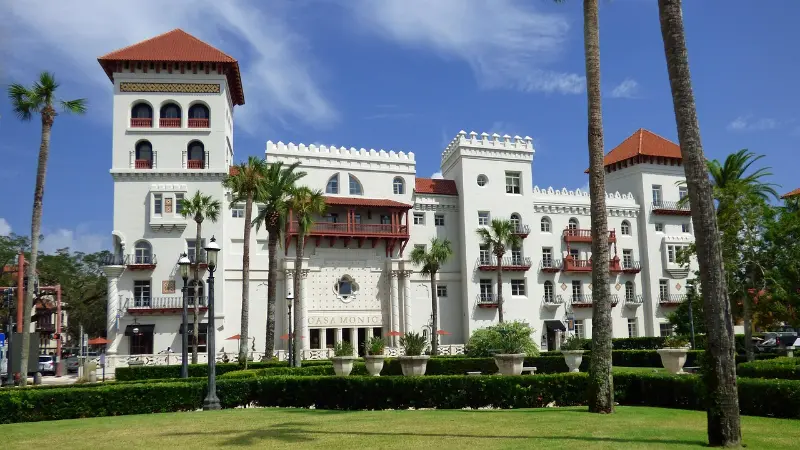
The Lightner Museum is one of St. Augustine’s best answers to a hot afternoon, a rainy morning or a traveler who wants more than colonial history. The museum occupies the former Alcazar Hotel, so architecture and collections compete for your attention in a way that feels very different from the city’s fort and reconstructed colonial sites.
The holdings range across fine and decorative arts, glass, furniture, sculpture and objects collected during the Gilded Age and early twentieth century. You do not need to be an art specialist to enjoy the museum, but you will get more from it if you slow down and choose themes instead of trying to inventory every gallery.
Its central location makes it easy to combine with Flagler College, the Plaza and St. George Street. That convenience is also the danger: visitors sometimes rush through the Lightner simply because too many other attractions are nearby.
Quick planning summary
- Best for: art and design lovers, Gilded Age fans, couples, senior travelers, architecture enthusiasts and anyone needing a high-quality indoor stop downtown
- How much time: 1.5–2.5 hours; allow longer if you enjoy decorative arts, special exhibitions or architectural details.
- Current cost: Current official admission: adults $20, seniors/students/military $17, youth 12–17 $13, children 11 and under free; local and program discounts may apply.
- Current hours/status: Current schedule: open daily 9 a.m.–5 p.m.; last admission 4 p.m.; upper floors close 4:30 p.m.; closed selected major holidays.
- Location: 75 King Street, St. Augustine, FL 32084
Why this stop is worth including
The museum explains a different era of St. Augustine. The fort tells a military-colonial story; the Lightner shows how the city was reinvented as a Gilded Age resort destination with ambitious architecture and wealthy visitors.
The building itself is a major part of the experience. Looking at courtyards, arches, old hotel spaces and adaptive reuse helps visitors understand the Flagler-era transformation of the city even before they focus on individual objects.
For multigenerational trips, it provides climate control, restrooms and a more predictable walking environment than a beach or exposed fort, which makes it strategically useful as well as culturally worthwhile.
What to see and do
Start with the building, not the labels
Before focusing on objects, notice the scale and layout of the former Alcazar Hotel. Understanding that the building was designed as part of St. Augustine’s luxury resort era gives context to the collections inside.
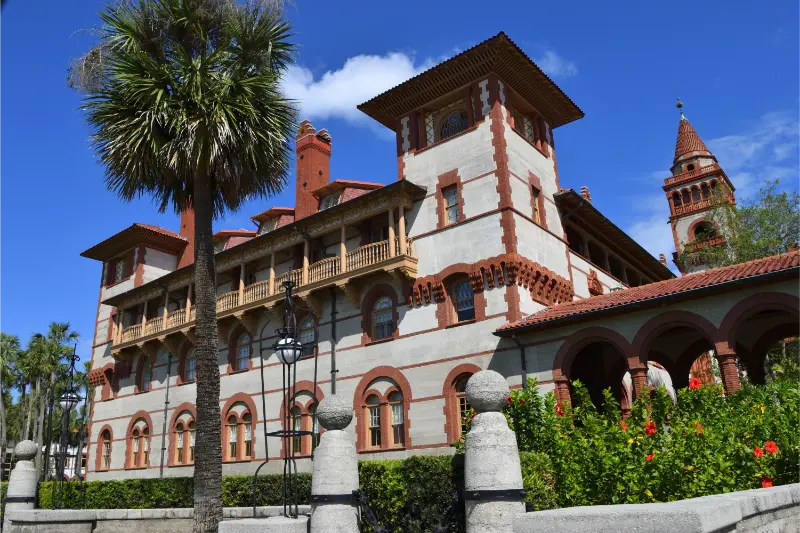
Look for sightlines into courtyards and architectural details that reveal how hotel guests once moved through the property.
Choose a decorative-arts theme
Glass, furniture, metalwork and other decorative arts can become overwhelming if you treat each case equally. Pick one material or period that interests you and follow it through several galleries.
This approach works especially well with older children or teenagers because it gives them a search task rather than a passive museum march.
Spend time with fine art and sculpture
Paintings and sculpture provide a visual break from dense object displays. Stand back far enough to see how works relate to the gallery rather than only reading captions at close range.
If a temporary exhibition is running, decide early whether it is a priority so you do not leave it until everyone is tired.
Look for the hotel story
The former Alcazar was part of Henry Flagler’s effort to create a sophisticated winter destination. Architectural remnants and interpretation help connect the museum to Flagler College across the street.
Seeing both properties on the same day makes the Gilded Age transformation of St. Augustine much easier to understand.
Use the museum as a deliberate climate break
On a summer day, schedule the Lightner around midday when exposed streets are hottest. This is not merely weather avoidance; you are using the city’s geography intelligently.
Afterward, the Plaza and pedestrian streets feel more pleasant as temperatures begin to ease.
Leave time for the exterior and courtyard
Do not walk out and immediately call a ride. The building and surrounding blocks are part of the experience, and exterior photography helps you appreciate the Spanish Renaissance Revival setting.
This is also a good point for a seated break before your next attraction.
Current costs, hours and reservations
The Lightner currently opens daily from 9 a.m. to 5 p.m., with last admission at 4 p.m. and upper floors closing at 4:30 p.m. Current general admission is $20 for adults, $17 for seniors, students and military, $13 for youth ages 12–17, and free for children 11 and under. St. Johns County residents and qualifying Museums for All visitors have separate rates or opportunities. Holiday closures include Easter Sunday, Thanksgiving, Christmas and New Year’s Day under the present schedule.
Treat every ticket price, opening time, special program and construction notice in this article as a planning snapshot from October 2026. Travelers should recheck the official source shortly before travel rather than assuming a 2026 operating detail remained unchanged into 2028 or later.
Parking and getting there
The museum does not solve downtown parking for you. The Historic Downtown Parking Facility is a reliable all-day option, while metered spaces may be better for a shorter visit if you find one. If your day includes Flagler College and St. George Street, park once and walk. Repeatedly moving the car across the compact historic center wastes time and increases frustration.
St. Augustine traffic becomes much easier when you group attractions by area. The historic core rewards walking after you park; Anastasia Island rewards staying on the island for several stops. Avoid crossing the Bridge of Lions repeatedly simply because each attraction looks close on a map.
Best time of day and best season
Midday is strategically excellent in hot months because the museum is indoors. In winter, morning gives you a quieter cultural start before the streets become busy. Rainy days predictably increase demand for indoor attractions, so arrive early if the forecast looks poor. Last admission is an hour before closing, and the upper floors close earlier than the building itself.
Families with babies and young children
Children who enjoy visual oddities, glass, furniture and unusual objects can have a good visit, but the museum is not designed as a nonstop hands-on children’s attraction. Keep the visit shorter with young children and give them a theme to hunt for. Because children 11 and under are currently free, families can visit without feeling pressure to extract three hours of value from every child.
For small children, the most successful day alternates structured sightseeing with movement, food and shade. A child who has already spent two hours listening indoors may enjoy a beach, park or open plaza far more than a third museum, even if that museum is objectively excellent.
Teenagers and older children
Teenagers interested in design, architecture, photography or fashion history may find more to engage with than they expect. Let them choose a favorite room or object and explain why it looks expensive, strange or modern. Connecting the former hotel to today’s tourism industry can also make the history feel less remote.
Give teenagers some ownership of the itinerary. Let them choose a photo stop, snack, viewpoint or second-half activity. That small decision often produces more engagement than adding another attraction chosen entirely by adults.
Senior travelers and multigenerational groups
The indoor setting and central location are strengths for senior travelers. Plan enough time that stairs or elevators do not become a race. Ask staff about current accessible routes and seating, especially if a temporary exhibition changes normal circulation.
Build the day around the least mobile or most heat-sensitive traveler first. More active family members can add a climb, longer beach walk or side street without requiring everyone to cover the same distance.
Accessibility and comfort
As a historic structure adapted into a museum, access is more complex than in a purpose-built modern gallery. The museum provides visitor accessibility information, but anyone who depends on elevator service, step-free routes or specific restroom features should verify the current layout before travel. A mobility-friendly pace can still cover the core collections without seeing every corner.
Food, water and practical breaks
The museum sits in one of the easiest parts of St. Augustine for lunch planning. Eat before or after rather than interrupting the galleries with snack logistics. If the group is tired, a proper seated meal after the museum is usually more restorative than another quick attraction.
Carry more water than a short Florida outing seems to require, especially from late spring through early fall. A planned seated break is not wasted sightseeing time; it is often what allows a multigenerational group to enjoy the final two hours of the day.
Photography tips
Architectural photographs often work better than isolated object shots. Look for symmetry, arches, stair details and courtyard light. Follow current gallery photography rules and avoid flash where prohibited. Exterior photographs across King Street can help place the museum in context with Flagler College.
How it compares with nearby alternatives
Choose the Lightner when you want decorative arts, architecture and a Gilded Age indoor experience. Flagler Beach Historical Museum is much smaller and focused on local coastal history, while the Lightner rewards a longer museum visit. If your priority is an active climb rather than galleries, Ponce Inlet Lighthouse offers the opposite kind of experience.
How to combine it with other Wonderful Florida guides
Travelers driving north from Flagler County can use Washington Oaks Gardens State Park or Flagler Beach guide as an outdoor stop on another day, then reserve the Lightner for the denser historic core. This prevents a single itinerary from becoming an uninterrupted string of indoor attractions.
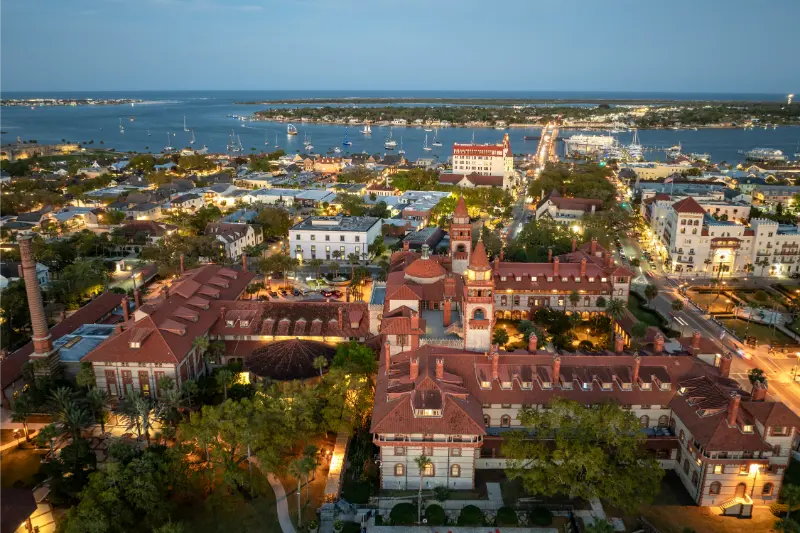
How to fit this stop into a St. Augustine trip
A useful way to plan St. Augustine is to separate the day into one history-heavy anchor, one lighter walk or outdoor stop, and one flexible meal or beach period. The city contains enough museums and ticketed attractions to fill several days, but stacking four indoor history stops back-to-back often produces less learning, not more. Families usually do better when a structured attraction is followed by open space; couples may prefer to reserve late afternoon for the bayfront; senior travelers often benefit from putting the longest walk before lunch and using a museum during the warmest part of the day.
If you have only one day
Keep the schedule disciplined. Choose one major paid attraction in the morning, use the historic district or beach as your flexible middle period, and add a second ticketed stop only if travel time and energy remain realistic. St. Augustine is compact, but parking, lines and heat can make a short distance consume more time than it appears on a map.
If you have two or three days
Divide the city by theme or geography. One day can focus on the historic core, another on Anastasia Island and the beach, and a third can be used for a slower museum, nature or north-coast excursion. This reduces repeated parking and keeps children and older travelers from spending every day in the same type of environment.
Budget and value
St. Augustine can be inexpensive or surprisingly costly depending on how many admissions you buy. Parking, two major attractions and restaurant meals can turn a casual day into a substantial family expense. Pick the one or two paid experiences that best match your interests, then use free elements such as the bayfront, Plaza de la Constitución, portions of St. George Street and beach time to create contrast. If your itinerary includes several federal recreation sites, compare the cost of individual admission with any pass you already hold; if you are traveling with children, always check the attraction’s age thresholds because some sites admit young children free.
Weather and seasonal planning
Northeast Florida weather rewards flexible sequencing. Summer brings heat, high humidity and frequent afternoon thunderstorms, while winter can be mild one day and windy or surprisingly cool the next. Lightning is a reason to leave exposed fort walls, beaches, piers, lighthouse towers and open water promptly. During hurricane season, verify operating status again on the morning of the visit because coastal parks and historic properties may close even when the center of a storm is far away. Carry water year-round, use sun protection, and do not treat an overcast sky as protection from ultraviolet exposure.
A realistic half-day plan
Park once downtown
Use the garage or a suitable meter and walk to the museum.
Spend 90 minutes to two hours inside
Choose architectural details and two or three collection themes rather than trying to inspect everything.
Continue with a short outdoor walk
Use the Plaza, Flagler College exterior or St. George Street as a low-pressure transition before another ticketed stop.
Where to stay for this part of northeast Florida
For a first St. Augustine visit, staying in or immediately beside the historic district is the most convenient choice if your priority is walking to the fort, St. George Street, Flagler College and evening restaurants. Anastasia Island is usually better for travelers who want easier beach access, a quieter night and short drives to the lighthouse, Alligator Farm and state park. Families who value space, a pool and simple parking may prefer the beach side even if it means crossing the Bridge of Lions for downtown sightseeing. For a one- or two-night stay, avoid changing hotels simply to save a few miles: traffic and parking strategy matter more than moving your luggage between neighborhoods.

Common mistakes to avoid
- Arriving after 4 p.m. and expecting normal admission.
- Treating the museum as a quick lobby photo rather than exploring the collections.
- Trying to read every label with young children.
- Moving the car between the Lightner, Flagler College and nearby downtown sights.
- Skipping temporary exhibition information when planning a repeat visit.
Practical questions before you go
How much is admission?
Current adult admission is $20, with reduced rates for seniors, students, military and youth; children 11 and under are free.
What are the hours?
The museum currently opens 9 a.m.–5 p.m. daily, with last admission at 4 p.m.
How long should I stay?
Allow 1.5–2.5 hours for a comfortable first visit.
Is it good on a rainy day?
Yes. It is one of the strongest indoor attractions in central St. Augustine.
Is the building part of the attraction?
Absolutely. The former Alcazar Hotel is central to understanding the museum and the city’s Gilded Age development.
Official resource to check before you go
For current visitor information, use the official visitor page. Recheck hours, fees, reservations, closures, construction notices, weather restrictions and accessibility information shortly before travel.
Final thoughts
The Lightner Museum is most rewarding when you treat the former hotel and its collections as one story. It provides depth beyond St. Augustine’s colonial identity and gives a useful indoor counterpoint to fort walls and beach time. Choose a few themes, notice the building and leave enough energy to appreciate the surrounding Gilded Age streets afterward.