
The St. Augustine Amphitheatre—usually called The Amp—is one of the most useful evening anchors for a St. Augustine trip because it adds a modern live-music experience to a destination otherwise dominated by history, beaches and daytime attractions. Its Anastasia Island location also makes it easy to pair a concert with the lighthouse, state park or beach earlier in the day.
The biggest planning issue is parking. On-site spaces are limited and can sell out, so the venue’s free satellite parking and shuttle system is often the simplest choice. The second issue is weather: shows are generally rain or shine, umbrellas are not permitted, and lightning or high winds can delay an event.
A smooth concert night therefore starts before arrival: use the official ticket provider, check the bag/security policy, choose parking in advance and bring weather protection that is actually allowed inside the venue.
Quick planning summary
- Best for: couples, music fans, families with older children, multigenerational groups and visitors who want an evening activity
- How much time: allow the full evening plus 60–90 minutes for arrival, security and post-show transportation
- Current official ticketing: AXS is the venue’s exclusive ticket provider; mobile entry is standard
- Current shuttle: free shuttles from Anastasia State Park and R.B. Hunt Elementary School Soccer Field begin about 60 minutes before gate time and run up to 60 minutes after the event
- Location: 1340C A1A South, St. Augustine, FL 32080
Buying tickets safely
The venue states that AXS is its official and only ticketing agent. Buying from the official channel reduces the risk of invalid or counterfeit tickets and gives you the clearest path if an event is canceled or changed.
The box office also sells tickets in person and can help with accessible seating. Current posted box-office hours are Sunday–Friday 10 a.m.–5 p.m. and Saturday 8 a.m.–3 p.m., but event-day changes are possible.
Parking: the most important part of the plan
On-site parking
The venue’s on-site lot opens two hours before gates and is limited. If you have on-site parking, arrive early enough that security and entry do not become stressful. Tailgating and alcohol are not permitted in the lot.
Free satellite parking and shuttle
The Amp currently provides free satellite parking at Anastasia State Park and the R.B. Hunt Elementary School Soccer Field. Complimentary shuttles begin about an hour before gate time and continue for up to an hour after the event ends.
This option is often better than circling nearby streets. Residential neighborhoods around the venue are not event parking areas, and the venue warns that unauthorized vehicles can be ticketed or towed.
Walking and bicycling
The Amphitheatre encourages walking and cycling, with bicycle racks and a pump station near the main lot. This is most practical for visitors staying nearby on Anastasia Island rather than in the historic district across the bridge.
Security, bags and what to bring
Guests are screened with wands and bag checks. Security rules can change by event, so read the current permitted/prohibited-items page instead of relying on advice from a past concert. The venue specifically notes that umbrellas are not allowed.
A light rain jacket or poncho is therefore more useful than an umbrella during unsettled weather. Carry only essentials to move through security faster.
Weather policy
Shows are generally held rain or shine unless conditions create a safety risk. Lightning or high winds can cause temporary delays. This matters in Florida because a hot, sunny afternoon can turn into an active thunderstorm close to showtime.
Check the venue’s official channels on event day rather than assuming rain automatically means cancellation. If a delay occurs, follow staff instructions and avoid standing in exposed areas simply to hold a place in line.
Best daytime pairings before a concert
The Amp is close to Anastasia State Park, St. Augustine Lighthouse and St. Augustine Alligator Farm. A beach or park morning followed by hotel rest before the concert is usually better than spending the entire day on your feet downtown.
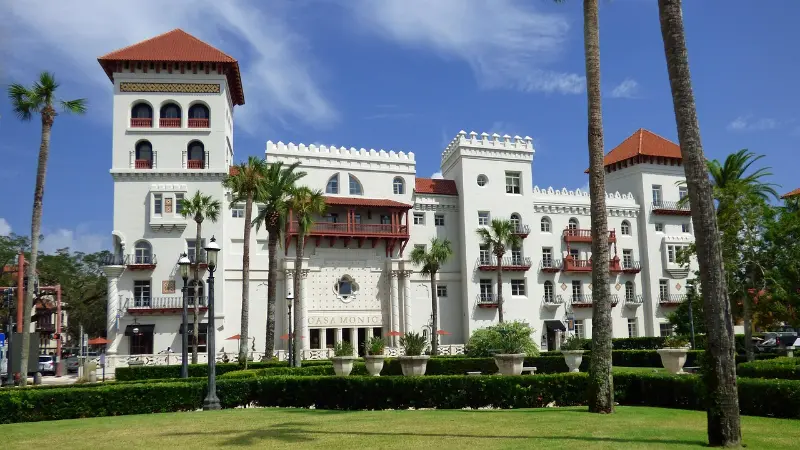
If you want the historic district on the same day, schedule it in the morning, have an early meal, then return to Anastasia Island with plenty of buffer for parking and security.
Families with babies and young children
The Amp can work with children when the artist and event are age-appropriate, but late finish times, loud sound and standing crowds can be difficult for younger kids. Bring hearing protection designed for children if volume is a concern.
With babies and young children, plan around shade, bathrooms, snack breaks and opportunities to move rather than trying to maximize the number of attractions. In northeast Florida, heat and humidity can change a child’s energy level faster than distance on a map suggests. A shorter paid attraction followed by a playground, beach or easy walk often works better than stacking two information-heavy visits back to back.
Teenagers and older children
Teenagers often enjoy The Amp as a highlight of the trip, especially when the concert is their choice. Let them manage their mobile ticket with an adult backup and agree on a meeting point in case the group separates.
Teenagers usually engage more when they have a specific task or choice: follow one historical story, find a favorite viewpoint, photograph a landmark, choose the lunch stop or compare two activities. Giving them some ownership of the schedule can make a history-heavy destination feel much less like a school assignment.
Senior travelers and multigenerational groups
Senior travelers should prioritize accessible seating and transportation. The free shuttle is useful, but anyone with significant mobility limits may prefer a drop-off close to the entrance followed by satellite parking for the driver.
For multigenerational travel, remove unnecessary walking before removing the destination itself. Park strategically, use benches, choose cooler hours and let the least mobile traveler set the base pace. More active family members can add a stair climb, long trail or beach walk while everyone else meets at a clear landmark, lobby, pavilion or café.
Accessibility and comfort
Accessible seating can be purchased through the box office or official ticketing channel. Accessible parking is available on site first-come, first-served for vehicles with valid placards or plates, but spaces are limited.
Accessibility can change by surface and activity even when a facility has accessible parking and restrooms. Historic floors, dune crossovers, sand, roots, gravel and outdoor heat all matter. If a traveler uses a wheelchair, walker or cane, confirm the exact route needed for the part of the experience you care about most rather than relying only on a general accessibility label.
Food and timing
Eat before the busiest arrival window unless the event’s food options are part of the experience. A late lunch or early dinner on Anastasia Island can make the evening much calmer than trying to squeeze a sit-down meal between parking and gate time.
Hydrate during the day, especially after beach time. Concert crowds plus Florida heat can make dehydration noticeable faster than expected.
Weather and seasonal planning
Northeast Florida is visitable year-round, but the experience changes sharply with the season. Late spring through early fall brings heat, humidity and frequent afternoon thunderstorms. Winter often has comfortable walking weather, yet cold fronts can make beaches and exposed waterfronts surprisingly cool and windy. Spring and fall usually provide the easiest compromise between temperature and daylight.
Lightning is the main reason to keep a flexible plan. At beaches, golf courses, parks and open historic sites, thunder is a cue to move indoors rather than shelter under a tree or pavilion. During hurricane season, check operating status before driving because coastal parks, bridges, beach ramps and attractions can close or alter hours even when the storm center is far away.
A realistic concert-day plan
Morning
Choose one outdoor attraction such as Anastasia State Park or the lighthouse. Keep the pace moderate rather than trying to complete a full historic-district itinerary.
Afternoon
Return to the hotel, shower, rest and check official venue updates. Confirm tickets, parking choice, bag policy and weather.
Evening
Aim to be in your chosen parking area before the main rush. Use the shuttle or walk, pass security and enter with enough time to find seats without missing the opening act.
Common mistakes to avoid
- Buying tickets from an unofficial seller without understanding the risk.
- Assuming street parking will be easier than the venue shuttle.
- Bringing an umbrella because rain is forecast.
- Spending an exhausting full day sightseeing before a late concert.
- Ignoring event-specific bag or security rules.
Official resources to check before you go
Use The Amp venue guide and official directions and parking page for current shuttle, parking, weather and security information.
Extra planning notes for a smoother visit
Keep a 15–30 minute buffer between major stops around The St. Augustine Amphitheatre. Short map distances can still involve bridge traffic, event congestion, full parking lots, security lines or slow pedestrian streets. A little slack in the day prevents one delay from forcing you to skip the attraction you cared about most.
Save the official address, parking instructions and any reservation confirmation before leaving your hotel. Mobile coverage is generally good, but a group trying to navigate, find a garage and retrieve tickets at the same time can lose more time than expected.
Use official same-day notices for outdoor access. Beach driving, dune walkovers, trails and event parking can change because of tide, storms, maintenance or special events. A map app showing a place as open does not guarantee every activity or entrance is operating normally.
Comfortable shoes are more important here than they may seem. A single day can include brick streets, wooden boardwalks, grass, sand, gravel and historic floors. Choose footwear for the most demanding surface in the itinerary, not only for the restaurant or photo stop at the end.
Build one flexible element into every half day. A beach walk, café, park or scenic drive can expand when everything is running smoothly and shrink when parking, weather or fatigue slows the group down. That flexibility is especially valuable with children and senior travelers.
Think about the return trip before you begin the final activity of the day. After a beach session, concert, long museum visit or golf round, the group is less patient with restaurant queues and parking searches. Keep water in the car and know where your next practical stop will be.
Final thoughts
The Amp is easiest when you treat transportation as part of the ticket, not as an afterthought. Use the free shuttle when practical, travel light through security and keep the daytime schedule relaxed enough that the concert feels like the highlight rather than the final endurance test of the day.
How to decide whether this belongs in your itinerary
A useful test is to ask what this stop adds that your other plans do not. If the day already contains two history museums, choose nature, beach or active recreation instead of a third similar attraction. If everyone has been outdoors in the heat, an indoor or seated experience may be the better use of time. Variety usually creates better travel memories than simply maximizing the number of famous names.
For this destination, the practical goal is not to follow a rigid checklist but to leave enough margin for real conditions on the day. That may mean shortening a walk, moving a meal earlier, changing parking areas or dropping a low-priority stop. A trip feels more complete when the experiences you keep are enjoyed at a reasonable pace.
Transportation reality
Northeast Florida distances can look small on a map, but bridges, beach traffic, event congestion and parking searches affect real travel time. Group nearby stops and avoid crossing the same bridge repeatedly. When an attraction has a timed tour or concert gate time, build the schedule backward from that fixed commitment and keep flexible activities around it.
For this destination, the practical goal is not to follow a rigid checklist but to leave enough margin for real conditions on the day. That may mean shortening a walk, moving a meal earlier, changing parking areas or dropping a low-priority stop. A trip feels more complete when the experiences you keep are enjoyed at a reasonable pace.
Planning for meals and energy
Meals are part of the itinerary rather than empty space between attractions. Eating slightly before peak lunch or dinner can reduce waits and protect the rest of the schedule. Families should carry simple snacks, while all travelers benefit from water in the car. After a hot beach or trail session, a long sit-down meal may be more restorative than forcing one more attraction before dinner.
For this destination, the practical goal is not to follow a rigid checklist but to leave enough margin for real conditions on the day. That may mean shortening a walk, moving a meal earlier, changing parking areas or dropping a low-priority stop. A trip feels more complete when the experiences you keep are enjoyed at a reasonable pace.
Photography without slowing the whole group
Choose two or three moments for deliberate photography instead of stopping every few minutes. Early and late light is usually softer on beaches and historic architecture, while overcast conditions can be excellent for gardens and portraits. At wildlife sites, use distance and a longer lens rather than approaching animals. At active churches, concerts and private tours, follow the specific photography rules.
For this destination, the practical goal is not to follow a rigid checklist but to leave enough margin for real conditions on the day. That may mean shortening a walk, moving a meal earlier, changing parking areas or dropping a low-priority stop. A trip feels more complete when the experiences you keep are enjoyed at a reasonable pace.