
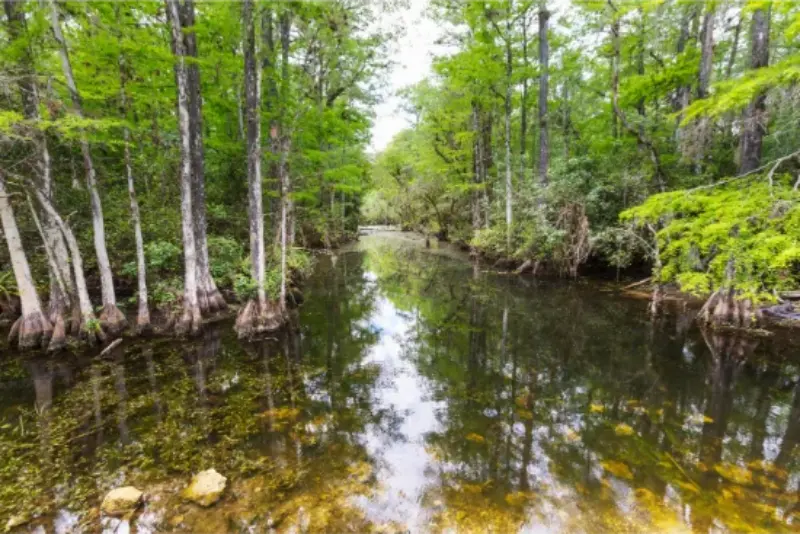
Everglades National Park and Big Cypress National Preserve are neighbors in South Florida, and many visitors encounter both along the Tamiami Trail. They protect connected wetland landscapes, yet they have different park purposes, visitor entrances, rules and types of outings. Everglades National Park provides several major entrances to the ecosystem and is famous for places such as Shark Valley and the route south from Homestead. Big Cypress protects swamp habitat that can be appreciated from visitor centers, drives and approved trails. The best choice for a single day depends on where you start, the time of year, your mobility, the wildlife viewing you hope for and whether you prefer ranger interpretation, a tram or a slower roadside journey.
In this guide
- First, understand the geography on your map
- What Everglades National Park protects and offers
- What Big Cypress National Preserve feels like
- Entry fees are different
- Wildlife: observe what is there, not what you were promised
- Choose Shark Valley if a structured experience appeals
- Choose the Homestead route for broader park variety
- Choose Big Cypress for a slower Tamiami Trail drive
- Traveling with babies, children and teens
- For seniors and travelers with limited mobility
- What changes between dry and wet seasons?
- A one-day plan from Miami
- A one-day plan from Naples or Marco Island
- Airboats, boat tours and commercial operators
- Which should you choose?
- Sources and current alerts
Quick decision table
| Compare | Option A | Option B / planning note |
|---|---|---|
| Admission | Everglades: entrance fee or applicable pass | Big Cypress: standard entrance is free |
| Day-trip focus | Specific entrance such as Shark Valley | Tamiami Trail visitor centers |
| Crucial warning | Park entrances do not connect by car | Backcountry routes require extra caution |
First, understand the geography on your map
The Everglades is not a gate you can enter in Miami and drive straight through to every other entrance. The National Park Service explains that the main park entrances do not connect by road within the park. Shark Valley, the Homestead/Ernest F. Coe entrance and the Gulf Coast area require different approach routes. Big Cypress National Preserve lies along U.S. 41 west of the Miami area and near Everglades City, with two principal visitor centers along the highway. This matters for scheduling: selecting two pins only a short straight-line distance apart can produce a long road journey. Choose a single corridor for the day before deciding which attraction is ‘closest.’
What Everglades National Park protects and offers
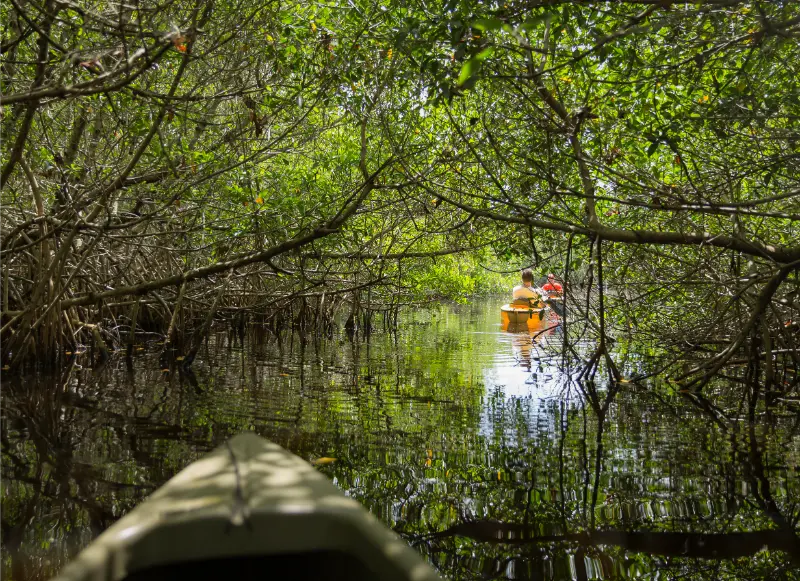
Everglades National Park includes an extraordinary variety of habitats: sawgrass prairies, freshwater marshes, mangroves and Florida Bay environments. Different park entrances introduce visitors to different landscapes. The Homestead route can lead to trails and Flamingo, while Shark Valley offers a paved loop area and ranger interpretation in the northern part of the park. The Gulf Coast entrance serves a coastal ecosystem with different boating possibilities. The experience is not interchangeable with an airboat ride somewhere in South Florida. Some private operators advertise ‘the Everglades’ even when the excursion does not enter the national park. Verify the actual location and operator permit before assuming an attraction is a National Park Service activity.
What Big Cypress National Preserve feels like
Big Cypress is not merely a less-famous side gate to Everglades National Park. Its cypress swamp, prairie and woodland mosaics have their own ecological character. The Oasis Visitor Center and Nathaniel P. Reed Visitor Center offer useful introductions, and authorized roadside or boardwalk stops allow visitors to observe wildlife without entering deep water. Visitors who prefer a car-based exploration may appreciate these possibilities. However, entering the backcountry or using off-road vehicles involves different rules from stopping at a visitor center, and some routes require permits or suitable equipment. Families should not interpret a marked wetland road as permission to drive an ordinary rental car into the swamp. Stay on designated public routes and honor closures.
Entry fees are different
The National Park Service currently identifies Big Cypress National Preserve as not requiring an entrance pass for ordinary entry. Certain campgrounds, activities and off-road vehicle permits have their own fees and requirements. Everglades National Park charges an entrance fee unless an applicable pass or exception covers the visit. Pricing, pass policies and eligibility can change, so check the official fee page before travel, especially if you are an international visitor. A paid guided experience is separate from a park admission fee. If you plan a day involving a tram, rental bicycles, boat tours or a commercial wildlife tour, price those separately. A free preserve entrance does not make every activity free, and a national-park pass does not buy an operator’s excursion.
Wildlife: observe what is there, not what you were promised
Both sites can offer opportunities to see alligators, wading birds and other wildlife, but there are no guaranteed sightings. Seasonal water levels, temperature, time of day and human disturbance affect visibility. Alligators should be viewed from a safe distance, never fed and never approached for a photograph. Avoid flash photography into animals’ faces and never step off a walkway to obtain a ‘better’ viewpoint. Children must remain closely supervised; seemingly still water can conceal animals. A visitor who sees no alligator can still appreciate birds, plants and the changing wetland landscape. Natural habitat is not a staged animal show. Bring binoculars and let observation happen rather than crowding an animal that is trying to rest.
Choose Shark Valley if a structured experience appeals
Shark Valley is a recognizable Everglades National Park option for travelers who like a visitor center and a defined route. The area has a paved fifteen-mile loop used for cycling and tram operations, with the observation tower toward the far end. You should not assume a traveler with limited stamina can walk the entire route; a tram trip may be more suitable, subject to operator schedules and reservation availability. If you want to bike, evaluate heat, distance and riding ability carefully. The loop is not a casual short neighborhood cycle. Check current entry, parking, tram and accessibility information before leaving Miami. A limited visit near the visitor center can still be worthwhile even without completing the full loop.
Choose the Homestead route for broader park variety
If you are staying near Homestead or Florida City, the Ernest F. Coe area and park road south toward Flamingo may provide an attractive Everglades day. Plan specific stops rather than treating Flamingo as a nearby extension of Shark Valley. The drive can take time, cell reception is inconsistent and services vary. Check the condition of selected trails, ranger programs and visitor facilities. Anhinga Trail and other named walks may be suitable options when open, but accessibility and wildlife conditions should be checked with park staff. Be especially mindful of mosquitoes and heat during warm or wet periods. The strength of this route is variety within one park corridor, not the chance to tick off every famous Everglades entrance in an afternoon.
Choose Big Cypress for a slower Tamiami Trail drive
A Big Cypress day can revolve around U.S. 41, a visitor center or two and carefully selected official wildlife-viewing stops. Begin by checking whether both facilities are open and their current hours. Drive within posted limits; wildlife and roadside visitors create hazards. Do not pull onto soft shoulders or stop on bridges simply because someone spots a bird. Some backcountry routes, including the well-known Loop Road area, can be unpaved, affected by water or unsuitable for particular vehicles. Rental agreements may prohibit such driving. You do not need those roads to appreciate the preserve. A picnic at an authorized public area and time with exhibits can be more satisfying than an unsafe shortcut through waterlogged terrain.
Traveling with babies, children and teens
Young children often do best with an interpretive center, one short observation area and a planned return to air conditioning. The marsh environment is captivating, but heat, insects and limited snack facilities can cause rapid fatigue. School-age children can use a Junior Ranger activity where available and practice identifying birds. Teenagers may be interested in photography or ecology, provided the family allows enough time to observe rather than rushing between pins. Bring water, insect repellent appropriate to each person’s age, sun protection and spare clothes. Never let children approach or feed wildlife, and avoid bringing a pet onto trails without verifying the site’s rules. A short, positive outing encourages interest in nature more effectively than a forced all-day hike.
For seniors and travelers with limited mobility
Accessibility varies by location and activity. A paved visitor center area, short boardwalk or scheduled tram may be possible for some travelers who cannot manage uneven trails, but not every route or vehicle is accessible in the same way. Check official details for the specific site and contact operators about boarding and mobility devices. Many natural surfaces remain rough or wet, particularly after heavy rain. Seating, toilets and shade may be limited away from developed areas. Choose a day with one accessible focal point and a short backup, not a chain of remote stops. Visitors can enjoy much of the ecosystem through interpretation and quiet observation without proving they can walk miles or enter backcountry water.
What changes between dry and wet seasons?
South Florida’s drier months are often more comfortable for wildlife observation and walking, while wet-season heat, thunderstorms and standing water can change trail conditions and insect activity. However, specific water levels and wildlife concentrations cannot be promised weeks in advance. Review weather, NPS alerts, road restrictions and closures shortly before departure. Lightning is dangerous on open roads, viewing platforms and trails; seek proper shelter immediately when storms approach. A late-afternoon summer drive is not automatically a safe way to fit in more stops. If weather makes the visit unsuitable, a museum or another indoor activity nearer your accommodation may be the better decision. Flexibility is a sign of good planning, not a failure.
A one-day plan from Miami
Choose one focus: Shark Valley in the national park or the eastern Big Cypress corridor. For Shark Valley, reserve an appropriate experience if needed, arrive early and give the visitor center and loop ample time. For Big Cypress, drive west on Tamiami Trail to verified visitor facilities and return before dark, stopping only at legal public places. Trying to do both comprehensively while adding a city evening can become tiring. If you combine brief stops, make it clear what you are sacrificing: a few minutes at a visitor center is not equivalent to an immersive park visit. Check fuel and food options before leaving the urban area, and carry a downloaded map because signal may vary.
A one-day plan from Naples or Marco Island
From the western side of the region, Big Cypress and the Gulf Coast part of Everglades National Park may be more logical than driving across to Shark Valley solely because it appears in photographs. First decide whether your interests are swamp interpretation, coastal scenery or a guided boat experience. The Gulf Coast area can have changing facilities and tour arrangements. If you want a particular concession-operated trip, book only after verifying its departure point and cancellation policies. For a land-focused day, Big Cypress visitor centers and an appropriate drive may be simpler. Allow time for return traffic and don’t stop for wildlife photographs in an unsafe place along U.S. 41.
Airboats, boat tours and commercial operators
Airboats are strongly associated with the Everglades in travel advertising, but operators use different waters, routes and permits. An airboat ride is not required to visit either national park or preserve. If you choose one, verify the operator’s exact location, safety standards, environmental practices and whether it is appropriate for children, noise-sensitive travelers and pregnant guests. Ordinary boat tours have different conditions, and some are canceled for weather or low water. Always wear the safety equipment specified by the operator. Never assume wildlife sightings or calm conditions are guaranteed. You can enjoy the wetlands without using any commercial craft, a useful point for travelers uncomfortable on the water or concerned about disturbance to wildlife.
Which should you choose?
Choose Everglades National Park when you want a specific National Park Service experience such as the Shark Valley corridor, Homestead trails or the coastal area and you can allocate enough time to that entrance. Choose Big Cypress National Preserve for a quieter focus on cypress swamps, visitor-center interpretation and a Tamiami Trail day, with no ordinary entrance fee. Consider both across two different days if you have more time. The two landscapes are ecologically connected but not administratively interchangeable. The best choice is the route you can explore safely and attentively rather than a hurried promise to ‘see the Everglades’ from every entrance before lunch.
Sources and current alerts
Start with the Everglades entrances and visitor centers, Everglades fees, Big Cypress visitor information and Big Cypress fee rules. Check NPS alerts, weather and current concession schedules for your specific date.
Frequently asked questions
Are Everglades National Park and Big Cypress the same place?
No. They are distinct National Park Service units with separate rules and visitor facilities, although the ecosystems are connected.
Can I visit both without renting a car?
Some tours may offer transport, but ordinary public transit is limited. Verify a licensed operator’s pickup and the actual entrance or preserve area served.
Is Big Cypress free to enter?
The preserve does not charge a standard entrance fee, but camping and some special activities or permits have charges and requirements.