Florida has both state-managed parks and federally managed national park sites, but one entrance pass does not unlock them all. This distinction has become particularly important in 2026, when federal America the Beautiful passes have different resident and nonresident prices and Everglades National Park is among the national parks charging an additional nonresident fee to eligible visitors without qualifying coverage. A family arriving from another country should not buy an expensive pass merely because it looks official. First list which places you will actually enter, identify which agency manages each place, check the current entrance rules and work out the cost for your group. The right decision may be a Florida State Parks pass, a federal pass, individual tickets or no pass at all.
In this guide
- Two park systems, two separate rules
- Florida State Parks individual annual pass
- Florida State Parks family annual pass
- The federal 2026 resident and nonresident prices
- Why Everglades matters for international visitors
- What about Biscayne and Dry Tortugas?
- A worked example for one adult
- A worked example for a family of four
- State parks that require separate reservations
- Camping, equipment and tours are separate costs
- Where to purchase and how to use the pass
- How to combine state and federal parks in one itinerary
- Accessibility, children and senior travelers
- The decision checklist for 2026
Two park systems, two separate rules
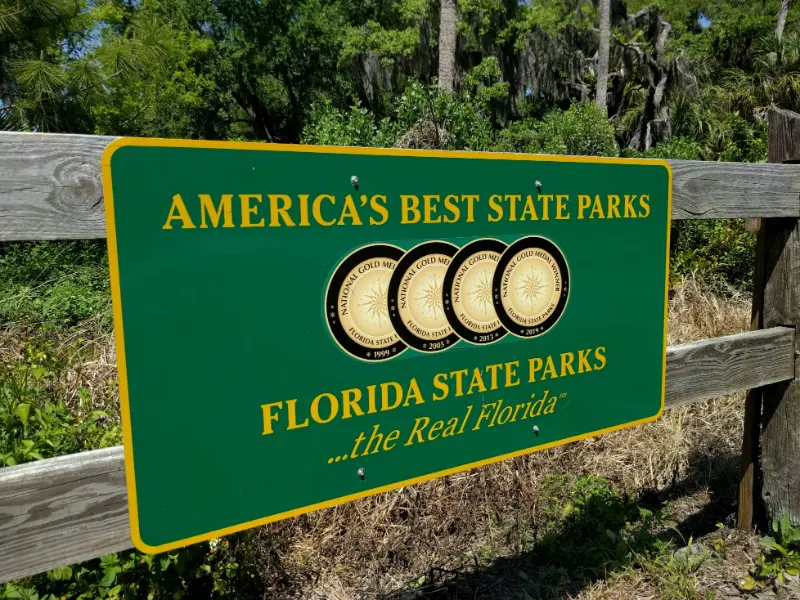
Florida State Parks are managed by the state and include destinations such as Honeymoon Island, Bahia Honda, Blue Spring and many historic and natural areas. Their day-use entrance fees and state annual passes are administered through Florida’s park system. Everglades National Park, Biscayne National Park and Dry Tortugas National Park belong to the National Park Service, a federal agency. Big Cypress National Preserve is another federally managed destination. The federal America the Beautiful pass applies at participating federal recreation sites; it does not cover entrance to Florida State Parks or local county beaches. Conversely, a Florida State Parks pass does not waive the federal Everglades entrance fee or its nonresident charge. Write the park operator next to each proposed stop before calculating pass savings.
Florida State Parks individual annual pass
The Florida State Parks individual annual entrance pass is listed at $60 in the current official program. It covers the named passholder’s day-use entrance in lieu of the standard fee at participating state parks. Additional people accompanying the passholder usually pay $2 each, with important exceptions. The passholder must be present, and the pass is not transferable. The state notes special rules for Ellie Schiller Homosassa Springs Wildlife State Park and Weeki Wachee Springs State Park; these attractions should not be budgeted as ordinary free admission for everyone. An individual pass may work well for a solo traveler who intends to visit many state parks over several months. A couple should compare actual admissions rather than automatically purchasing two individual passes.
Florida State Parks family annual pass
The Florida State Parks family annual pass is officially listed at $120. At many participating parks it provides day-use entrance for a group of up to eight people, with conditions for vehicles and people entering on foot or by bicycle. The named passholder must be present. Importantly, special limits apply at Homosassa Springs and Weeki Wachee Springs, where the family pass admits up to two people including the holder. Additional local charges and activity fees may still apply. A family of four visiting six separate participating parks might find the pass useful, but a group making just two inexpensive state-park stops may be better off buying daily admissions. Verify each park’s current day-use charge and remember that camping and many guided activities are not included.
The federal 2026 resident and nonresident prices
Starting January 1, 2026, the federal annual pass has separate pricing tiers. The resident America the Beautiful annual pass costs $80 and requires qualifying U.S. citizenship or residency, supported by appropriate identification. The nonresident annual pass costs $250 and is intended for visitors who do not qualify for the resident version. It is not enough to be over 62, to own a vacation home or to have visited the United States frequently. The federal agency establishes eligibility, and international travelers should assume they need the nonresident product unless they genuinely have qualifying status. The pass covers applicable entrance or standard amenity fees at participating federal sites according to the posted terms. It does not pay for every tour, campground or concession.
Why Everglades matters for international visitors
Everglades National Park is one of eleven national parks listed by the National Park Service for an additional $100 nonresident fee per visitor aged sixteen or older, on top of normal entrance charges, where the visitor lacks applicable pass coverage. This is highly relevant to a European family planning a day near Miami or Homestead. A valid 2026 nonresident annual pass covers the entrance fee and the additional nonresident charge for its applicable group according to park rules. For a private vehicle site, the federal program generally covers the passholder and vehicle occupants under the pass terms. Children under sixteen do not pay the additional nonresident fee. Check the National Park Service’s current policy immediately before purchase, especially if group composition or transport arrangements differ.

What about Biscayne and Dry Tortugas?
Biscayne National Park’s experiences are heavily water-based, and many of its paid activities involve third-party boat operators or guided excursions rather than a simple gate payment. A federal annual pass does not automatically cover the price of a boat tour, snorkel outing or special program. Dry Tortugas National Park requires a boat or seaplane journey from Key West, and transportation costs can dominate the entire day’s budget. Whether a federal pass reduces a specific park admission is not the same question as whether it covers travel to the island. Ask the authorized operator about fare components, park fees and any pass discount before paying. A $250 pass is poor value if the supposed savings relate to transport that the pass does not cover.
A worked example for one adult
Imagine a non-U.S. resident traveling alone and considering one day at Everglades, two state-park visits and one county beach. The state parks charge their own daily entrance fees. The county beach may involve parking rather than a state-park entrance fee. Everglades may involve a standard entrance charge plus the additional 2026 nonresident fee. Buying the $250 federal pass purely for one Everglades day may not make financial sense, depending on actual entrance charges and future park plans. A $60 state individual pass may also be unnecessary for just two state-park stops. Use the official fee pages to build the calculation with the dates and mode of entry. The example shows why mixing different types of parks into one ‘park budget’ is misleading.
At a glance: practical comparison
| Decision | Option or feature | What to check |
|---|---|---|
| State individual annual | Florida State Parks / $60 | Named passholder, subject to exceptions |
| State family annual | Florida State Parks / $120 | Usually up to eight, exceptions apply |
| Federal resident annual | Participating federal lands / $80 | Qualifying U.S. residents only |
| Federal nonresident annual | Participating federal lands / $250 | Non-U.S. residents; 2026 rules |
A worked example for a family of four
For a family of two adults and two children younger than sixteen traveling from abroad, the Everglades nonresident surcharge is not the same as for four adults, since the extra charge applies to those aged sixteen and older. A federal nonresident pass at $250 may still be worth considering if the itinerary includes additional eligible federal sites or more park visits; compare with the pay-as-you-go total. On state park days, calculate the daily fee for the family vehicle at each destination and compare that total with the $120 family pass. If the family intends to visit Homosassa Springs or Weeki Wachee, apply those parks’ special admission rules instead of assuming all four people are covered. A careful spreadsheet or handwritten list is more reliable than multiplying one advertised daily ticket by every person.
State parks that require separate reservations
An annual pass does not guarantee that a visitor can arrive at any state park whenever they wish. Some Florida State Parks introduced reservation-based day-use entry during 2026. Blue Spring, for example, uses a reservation system for designated entry arrangements, and other high-demand parks may have similar requirements. Always visit the individual park’s official page before setting out; rules can differ by season, activity and whether the visitor has a separate admission or pass. The state annual pass replaces eligible entrance charges, not capacity restrictions, time slots, campsite reservations or special-use fees. This matters most for families who would otherwise drive a long distance and discover that they cannot enter. Book any required day-use reservation separately and keep a copy accessible when mobile signal is weak.
Camping, equipment and tours are separate costs
Neither the state annual entrance pass nor the federal annual entrance pass should be treated as an all-inclusive outdoor vacation membership. Camping fees, RV connections, cave tours, boat excursions, kayak rental, special events and concession services often remain payable. Federal senior passes can confer selected benefits, but eligibility is restricted and should not be confused with a universal age-based discount for international tourists. Florida State Parks offers certain reduced-fee programs with their own residency requirements. Before booking a multi-park trip, separate costs into entrance, reservations, lodging, guided activities and transport. A pass may save money on one category while leaving the larger expenses unchanged. Comparing the full total prevents disappointment at the ticket desk.
Where to purchase and how to use the pass
Florida State Parks annual passes can be purchased through official channels or at participating park stations, subject to availability. The park system has instructions on temporary passes and physical validation; a screenshot of a sales confirmation is not automatically accepted as entry. For federal passes, the USGS store and Recreation.gov provide official options, including digital passes under the program’s rules. A mailed physical pass needs enough shipping time, and a receipt alone may not substitute for the pass. Carry identification because a named holder must be able to demonstrate eligibility and presence. Avoid third-party sites promising an unofficial ‘Florida all-parks pass.’ Always compare the official domain, pass name, terms and current price before entering payment information.
How to combine state and federal parks in one itinerary
A South Florida itinerary might pair Everglades National Park with a day at a coastal state park and a separate county beach. Another week could include state parks near Orlando and one trip to a federal site. Write down the actual places and classify them: federal, state, county, city or private attraction. Check entrances, parking, reservations and whether any fee is per vehicle or per person. If the federal visit is a commercial guided tour, ask how the operator handles pass eligibility and nonresident charges. Keep enough margin for weather; a boat-dependent excursion might be canceled while a state-park historical stop remains accessible. A pass only saves money when you really visit the locations it covers.
Accessibility, children and senior travelers
The best park-pass plan for a family is not necessarily the one that creates the most visits. A group with a wheelchair user may prefer two parks with confirmed accessible routes over six quick stops. Ask about accessible parking, restrooms, beach mats and tour options before calculating savings. For young children, consider drive time, shade and the distance between entrances and attractions. Adults over 62 should not assume U.S. federal Senior Pass eligibility when they are visiting from another country. Likewise, a family pass does not guarantee reduced tour fees for every child. Prioritize meaningful, comfortable visits rather than buying a pass and feeling pressure to rush between sites to justify the purchase.
The decision checklist for 2026
Start by listing destinations and management agencies. Next, write down the standard admission for your specific group and vehicle, any nonresident surcharge and every required reservation. Mark which visits are likely to happen and which are optional. Add the cost of the applicable pass, including shipping or processing charges when relevant. Count savings only where official terms confirm coverage. Make a different decision for federal and state passes; buying both can be useful for a long trip, but it is rarely automatic for a short vacation. Finally, recheck the official details shortly before travel because prices and systems can change. A pass is a tool for a planned itinerary, not a substitute for choosing what you actually want to see.
Frequently asked questions
Does a Florida State Parks pass cover Everglades National Park?
No. Everglades is federally managed. Florida State Parks annual passes and America the Beautiful federal passes are separate products.
Can a tourist from Europe buy the $80 federal resident pass?
Not without qualifying U.S. citizenship or residency documentation. The federal nonresident annual product is priced separately at $250 in 2026.
Will the pass cover my boat trip to Dry Tortugas?
Do not assume so. Ask the authorized boat or seaplane provider which components of the fare, if any, qualify for a pass benefit.