
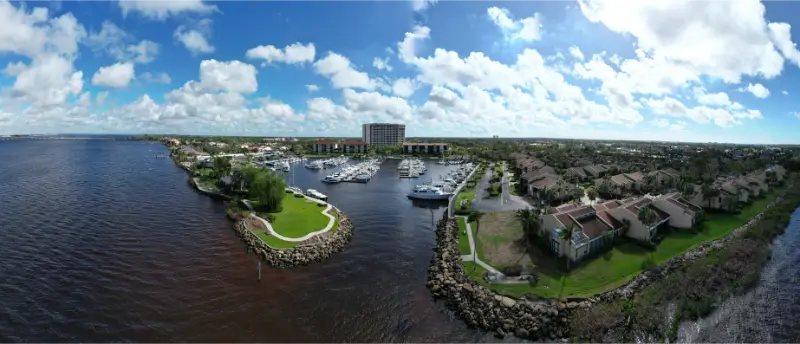
The Edison and Ford Winter Estates are worth visiting for more than the celebrity names on the entrance sign. Along McGregor Boulevard in Fort Myers, the property connects a stretch of Florida’s winter-resort history with industrial experimentation, domestic life, botanical collecting and the challenge of presenting historic houses to a modern audience. Thomas Edison’s winter retreat, the neighboring property associated with Henry Ford, tropical gardens, a laboratory and a museum create several distinct layers of interpretation. Visitors who only expect a brief walk around two old houses may be surprised by the size of the grounds; people arriving for the invention exhibits should also reserve time outdoors. The best visit balances both sides, with an itinerary suited to heat, walking ability and the interests of each traveler.
Contents
- Understanding what is on the estate
- The Edison home and the Fort Myers winter setting
- Henry Ford's winter presence
- Research laboratory and museum: why they matter
- The botanical gardens and the landscape design
- Self-guided versus guided visits
- When to go and how long to allow
- Tickets, directions and practical facilities
- Accessibility, children and a thoughtful pace
- Pairing the estates with a Fort Myers day
- Which part should you prioritize?
- Do I need a guided tour to enjoy the estates?
- Can visitors enter the historic houses?
- How much time is enough for a visit?
- Is this attraction suitable in summer?
- What if someone uses a wheelchair or cannot stand long?
- Official planning resources
Understanding what is on the estate
The campus is not a single house with a gift shop attached. Visitors can explore historic buildings, landscaped grounds, the Edison Botanical Research Laboratory and museum exhibits. The garden component covers a substantial area, and the historic buildings and exhibits tell different stories. Begin by deciding whether inventions, architecture, horticulture or family history matter most to your group. Someone fascinated by electrical engineering may spend longer with museum displays than at the waterfront, while a garden lover may do the reverse. It is reasonable to dedicate two to three hours, especially if you read interpretive information instead of merely moving from one photo opportunity to the next. The grounds make this an appealing intergenerational outing, but their scale means short rests help maintain everyone’s enthusiasm.
The Edison home and the Fort Myers winter setting
Edison came to Southwest Florida during an era when seasonal residences and access by water helped shape the region’s development. The winter estate was a place to work, rest and receive visitors, rather than an isolated inventor’s workshop. Notice the relationship between covered outdoor spaces, the garden landscape and the waterfront climate. Historic homes were designed to manage sun, breeze and social activity differently from today’s sealed, air-conditioned buildings. Interpretation offers opportunities to discuss who maintained the property and how life here depended on staff and resources beyond those of a famous family. Because some building interiors may be viewed from designated positions rather than entered freely, follow signs and do not presume each room is part of a walk-through route. This is a preserved historic site, not an open-house real estate tour.

Henry Ford’s winter presence
The Ford connection makes the estate especially interesting for travelers who know the names Edison and Ford from inventions but have never considered their personal relationship. Their association reflects overlapping interests in technology, mobility and American industry. Look for how the neighboring homes are presented in the interpretive materials: the architectural details and domestic spaces can be as revealing as the better-known biographies. A teenager studying the early automobile age may respond more to Ford-related questions about manufacturing and transportation than to a formal house tour. For older travelers, the story of twentieth-century travel to Florida provides another perspective on how the state became a seasonal destination. Avoid turning the visit into a trivia contest about famous dates; focus instead on what the objects and spaces reveal about work, leisure and the people who supported them.
Research laboratory and museum: why they matter
The botanical research laboratory is one of the estate’s strongest distinguishing features. It reminds visitors that industrial research did not occur only in urban factories and northern offices. Experiments with plants and materials connected the Florida landscape to questions about technology and supply. In the museum, give yourself enough time to understand each exhibit’s central idea instead of trying to memorize every object. Families can select two or three inventions or experiments and ask how each changed daily life—or why an attempt did not have the expected outcome. A museum visit also offers a welcome indoor break from summer humidity. Exhibits and gallery arrangements can change, so check the current program if a specific historical item is the main reason for your visit.
The botanical gardens and the landscape design
The gardens are more than a pleasant path between buildings. Tropical and subtropical plants reveal how a winter residence in Southwest Florida could become a place of collecting, display and research. Pause to observe the size and form of established trees, contrasting palm canopies and flowering plants. A visitor with little botanical background can still notice adaptations: broad leaves, aerial roots, dense shade and the ways plants manage intense light. Be careful not to handle plants or collect material; historic collections need protection. Summer visitors should start with the outdoor spaces before midday, saving museum galleries for the hottest hours. After rainfall, paths may remain wet. Comfortable shoes with grip are better than dress footwear for a site combining indoor displays and garden routes. If a plant is especially important to your group, ask staff whether it can currently be viewed.
Self-guided versus guided visits
The estate offers self-guided ways to explore, including audio interpretation accessible through its official platform, and guided options when available. Choosing between them changes the pace. Self-guided touring works well for people who need frequent sitting breaks, families whose children have different attention spans or travelers using multilingual material. A guided tour may help guests who prefer a coherent historical narrative and opportunities to ask questions. Verify the tour type before purchasing: an admission ticket, guided experience and special event are not necessarily interchangeable. If using an audio tour, bring a charged phone and headphones so that you do not disturb other visitors. Guests who would rather not use a smartphone can ask whether an alternative method is available. Check which buildings and exhibits are included rather than assuming a particular option permits extra access.

When to go and how long to allow
Official visitor information lists operation from 9 a.m. to 5:30 p.m. daily, except Thanksgiving and Christmas, with last admission typically at 4:30 p.m. Hours and special closures can change. Morning visits make the garden portion more comfortable; afternoon works when the air-conditioned museum is your main focus. Two hours is a realistic minimum for a selective visit, while three hours lets you absorb more displays without rushing. Plan around the least heat-tolerant person in your party. Fort Myers weather can switch between strong sun and heavy rain; if a storm approaches, move indoors and follow site directions rather than sheltering beneath large trees. Photography should be respectful of displayed objects and any restricted interiors. Do not build a day around the estate’s final hour and assume you can see every component.
Tickets, directions and practical facilities
The official address is 2350 McGregor Boulevard, Fort Myers, Florida 33901. Parking information on the estate’s visitor page indicates on-site parking, but accessible spaces and visitor drop-off routes should be confirmed if needed. Tickets can be purchased through the official system; adult, teen and child rates and special programs are separate, and the site offers different tour formats. Bring a form of payment and retain the confirmation. If you use a rideshare, arrange a clear pickup point rather than standing in the historic driveway waiting for an unfamiliar vehicle. Do not assume meals are available at every hour; the museum and garden experience is more reliable than any particular food outlet. Nearby Fort Myers dining is a flexible option after touring, especially with small children.
Accessibility, children and a thoughtful pace
Listings indicate accessible parking and some wheelchair-friendly facilities, but historic houses and garden paths can present differing surfaces, widths and restrictions. Contact visitor services with your specific needs, including whether you require a step-free route, seating, captions, accessible bathrooms or assistance with an audio tour. Families with toddlers can make the estate more enjoyable by alternating a short museum section with outdoor observation; very young children may tire quickly of detailed historic descriptions. Older children can compare an invention in the museum with a research question in the laboratory. Seniors who love history might enjoy a guided tour but appreciate a bench break halfway through. The goal is not to prove you’ve visited every room but to leave with an understanding of why this particular site matters to Fort Myers.
Pairing the estates with a Fort Myers day
The estate sits near other Fort Myers attractions, so it is tempting to schedule an entire list of museums and waterfront stops. Consider the weather and the driving distance first. A well-paced itinerary might begin at the historic estate, continue to lunch on or near a walkable downtown street, and finish with a short riverfront stroll if conditions are comfortable. Conversely, visitors staying on Sanibel or Fort Myers Beach should allow additional road travel and not assume a quick hop across the metropolitan area. Rainy afternoons favor the indoor museum displays, but severe weather can affect access to outdoor spaces. If your trip lasts several days, combining the estate with a separate relaxed day exploring natural Southwest Florida is more rewarding than treating the region as one big checklist.
Which part should you prioritize?
| Interest | Recommended focus | Planning note |
|---|---|---|
| Inventions and science | Museum and botanical laboratory | Allow reading time and an indoor break |
| Historic houses | Edison and Ford residences | Check current permitted viewing routes |
| Gardening | Trees and botanical landscape | Visit before peak midday heat |
| Family education | Two or three exhibit themes | Keep questions simple and interactive |
| Easy-paced history | Self-guided route and seating breaks | Ask about accessible paths and audio options |
Five frequently asked questions
Do I need a guided tour to enjoy the estates?
Not necessarily. Self-guided admission with interpretive resources is suitable for many travelers. Guided tours can add context, but check current availability, price and what is included before deciding.
Can visitors enter the historic houses?
Access varies by building and preservation requirements. Do not assume every room is open for unrestricted walking. Staff instructions and published routes are the best guide; viewing historic interiors from a designated area is still meaningful.
How much time is enough for a visit?
Two to three hours suits most first-time visitors. One hour allows only a selective overview, while visitors interested in the laboratory and museum exhibits may prefer more time.
Is this attraction suitable in summer?
Yes with sensible pacing. Start in the gardens early, drink water, use sun protection and schedule air-conditioned museum time during the hottest portion. Afternoon lightning and heavy rain are reasons to change the outdoor plan.
What if someone uses a wheelchair or cannot stand long?
Contact the estates before buying tickets to discuss current accessible routes, bathrooms, seating and tour format. Some areas are more easily navigated than others because the site combines historic structures with outdoor paths.
Official planning resources
Check the Edison and Ford Winter Estates visitor information and its official ticket listings for opening times, admissions and any building restrictions. The most memorable visit treats the estate as a connected story of homes, gardens and research—not merely two famous names attached to a Fort Myers attraction.