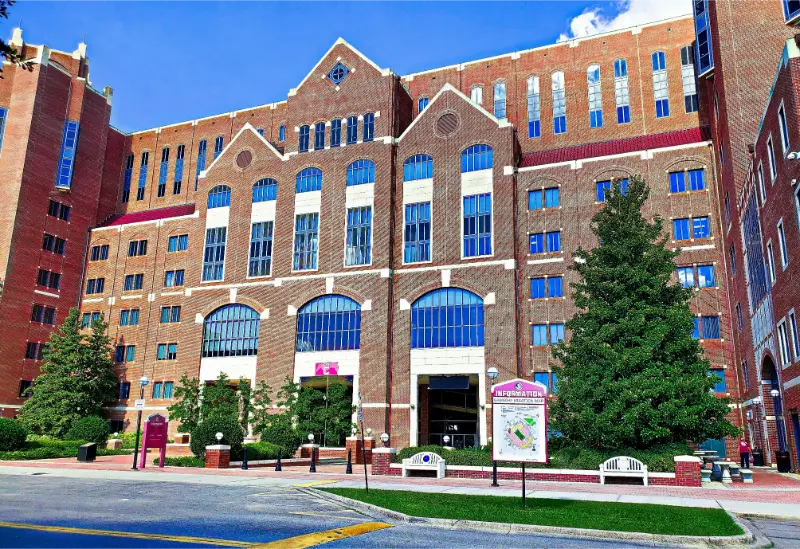
Tallahassee and its surroundings reveal a Florida that beach-focused itineraries often miss. The state capital has museums, government buildings, historic neighborhoods, and a landscape of rolling roads and oak trees. Just south, Wakulla Springs opens a window onto the region’s freshwater wildlife; east, Monticello offers a quieter small-town perspective. With four nights in one base, it is possible to explore all three without racing across the Panhandle.
This five-day plan suits history-minded adults, families with school-age children, and older visitors who like seated tours and short walks. It deliberately avoids a common error: treating the Museum of Florida History as currently open. The main museum remains closed for construction, according to Florida’s Department of State, so the itinerary relies on cultural sites that can be checked and visited independently.
The route in five days
| Day | Main focus | Indoor fallback |
|---|---|---|
| Arrival | Downtown orientation | Quiet dinner and hotel check-in |
| 1 | Historic Capitol and government district | Historic Capitol exhibits |
| 2 | Wakulla Springs and boat tour | Lodge dining and a shorter park visit |
| 3 | The Grove and local history | A museum or library program |
| 4 | Monticello small-town excursion | Relaxed local café and shorter visit |
| Departure | Breakfast and travel | No extra reservation |
Choose a Tallahassee base that matches your plans
Downtown is practical for the Capitol district and evening meals, while some accommodation farther from the core can offer straightforward parking and easier car access. Compare the true cost of a room, daily parking, breakfasts, and short journeys. If you plan to explore Wakulla Springs and Monticello, a car is generally useful. If you are not driving, look at local guided tour availability and realistic transfers rather than assuming public transportation reaches rural attractions conveniently.
Consider the group’s walking needs. Some historic districts have sloping streets, old steps, and uneven sidewalks. A hotel described as central may still be more demanding for someone with a walker than a property with a direct entrance and available drop-off. Ask about elevators, room layouts, and a place to rest near the dining area. A comfortable base can make five days of modest sightseeing feel surprisingly varied.
Day one: the Florida Historic Capitol Museum
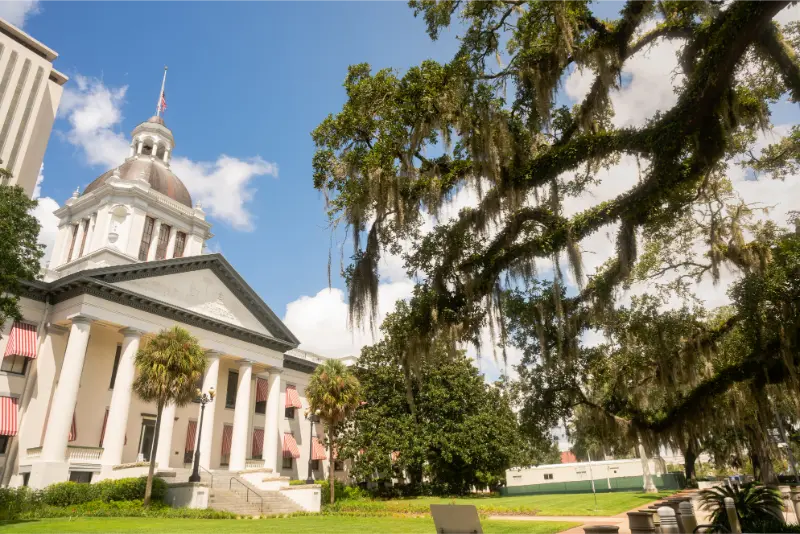
Start at the Florida Historic Capitol Museum, whose restored building introduces the state’s political history and the evolution of the Capitol complex. Review its official visitor information for opening hours and current access routes. In autumn 2026, the museum notes construction affecting its Monroe Street entrance and directs visitors to Capitol Courtyard entrances. This is exactly the kind of detail that matters when navigating with luggage, a stroller, or a mobility aid.
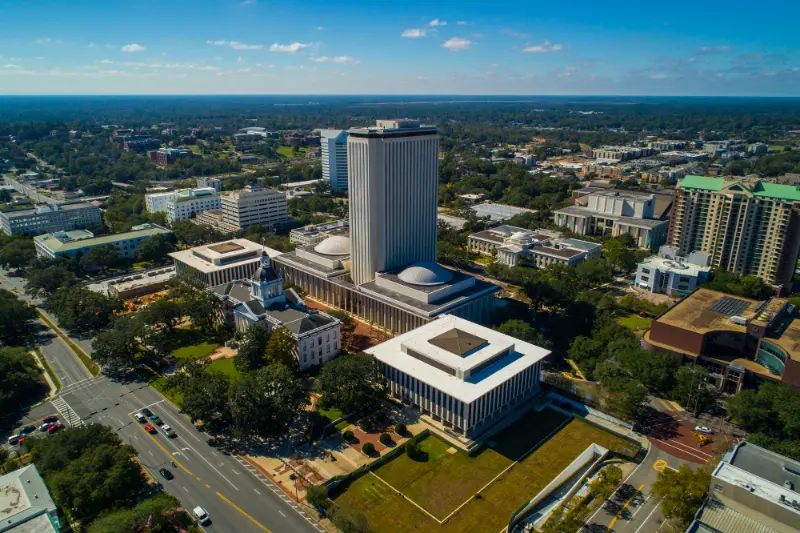
Take the museum at a comfortable pace, focusing on a few exhibitions that interest you rather than every panel. School-age children can compare photographs of the building with the modern Capitol nearby and ask why a state preserves its old government rooms. Adults may be interested in the workings of legislation and the symbols used in the architecture. Leave time for a simple lunch and avoid scheduling another long museum on the same afternoon.
Understand the Museum of Florida History closure
Florida’s official Museum of Florida History, located at the R. A. Gray Building, is temporarily closed during construction. Some webpages still show older descriptions, opening hours, or collections as though routine entry were available. Do not book an entire afternoon around a visit without confirming reopening directly. Its collections and educational mission remain important, but they are not the same thing as an open exhibition hall.
The Knott House Museum is also described by the state as closed for renovations. Travelers interested in the area’s history can instead consider the Historic Capitol, The Grove Museum, or other currently operating sites. If a museum changes its status near your travel date, update the itinerary rather than treating an outdated recommendation as a promise. Museum closures can become an opportunity to spend more time understanding a site that is actually open.
Day two: Wakulla Springs and a wildlife cruise
Edward Ball Wakulla Springs State Park makes an excellent day trip from Tallahassee. The main attraction for many visitors is the ranger-led river boat tour, which travels among cypress trees and provides chances to see birds, turtles, alligators, and sometimes manatees. The park’s official tour information explains that wildlife is unpredictable and that tours are subject to weather. Do not promise children a specific animal sighting.
Boat tour tickets are offered by reservation, and conditions can alter departures. Confirm times and boarding arrangements before leaving town. If a traveler uses a wheelchair, ask about the accessible boat and its availability on the intended departure rather than assuming every boat can accommodate a device. Leave additional time to enjoy the historic lodge setting or a meal. A river cruise can be a comfortable way to see natural Florida without taking on a long trail.
How to make the springs enjoyable for all ages
Children often focus on spotting birds and alligators, while adults may appreciate the cypress landscape and the guide’s interpretation. Bring binoculars only if you already have them; the trip does not require specialized equipment. Keep hands inside the vessel as directed, follow all safety guidance, and do not feed wildlife. A light jacket can be useful on cool or windy days even if Tallahassee feels warm when you leave.
The park’s springs and trails may invite further exploration, but the boat excursion can be enough for one outing. Visitors with limited stamina should prioritize a seated cruise and accessible facilities. Families with toddlers should ask how long the tour lasts, where restrooms are located, and whether children can remain comfortable for the full trip. If storms cancel boats, the historic lodge and a shorter park visit may still provide a pleasant day, depending on conditions.
Day three: The Grove and the city’s layered history
The Grove Museum tells stories connected to the Call-Collins House, local families, and the wider history of Florida, including enslavement and civil rights. Florida’s Department of State lists The Grove Museum among its heritage sites and currently indicates free admission on operating days. Check the museum’s own schedule for tours, events, and any temporary limitations. A guided visit can be more revealing than a quick stroll through attractive grounds.
Approach historic-house museums with curiosity about whose lives are represented. Questions about labor, land ownership, domestic work, and political change are as important as architectural details. Older children can connect historical stories to what they know from school, while adults may enjoy the wider context. Afterward, choose a light afternoon in town rather than driving immediately to another heritage location. A slow lunch leaves time for conversation.
Optional nearby culture: mission history and public art
Mission San Luis offers another perspective on early Florida through its interpretation of a seventeenth-century Apalachee-Spanish settlement. Verify current admission, programming, and operating days with the official site before visiting. A mission interpretation involves complex colonial history, so discuss Indigenous lives and agency as well as Spanish institutions. Avoid presenting early Florida as a single uncomplicated cultural story.
If weather or limited mobility makes an outdoor interpretation challenging, choose an accessible indoor exhibit or shorten the visit. Tallahassee also offers galleries, university-related cultural programming, and public art, but exhibition availability changes. Pick one additional experience only when it fits your interests and the group’s energy. The itinerary works without trying to include every regional museum in a single afternoon.
Day four: a quiet excursion to Monticello
Monticello is a small North Florida town east of Tallahassee, with a historic downtown and a different pace from the capital. The day works well for travelers who enjoy storefront architecture, cafés, antique shops, and the pleasure of walking just a few blocks. Check business days before heading out. Small independent shops may close early or on particular weekdays, and an event can change parking or traffic arrangements.
Plan a short central loop and a relaxed meal. If you are interested in nearby rural roads and landscapes, make that a deliberate scenic drive rather than improvising down poorly maintained routes. Respect private property and active farmland. A child can compare the buildings with those in St. Augustine or Fernandina Beach, while an older traveler may appreciate a quiet atmosphere and places to sit. Rain or heat can make the excursion shorter without diminishing its value.
What to know about North Florida weather
Tallahassee does not have exactly the same climate as Miami or the Keys. Winter mornings can be distinctly cool, and occasional cold spells make a lightweight coat useful. Summers bring humidity, high temperatures, and thunderstorms. Natural areas may have mosquitoes or other insects, particularly near water. Bring water, hats, suitable footwear, and insect protection according to conditions.
For a family, avoid leaving an attraction just as a storm starts and rushing into a long drive. Build a forecast check into breakfast. If lightning is approaching, postpone outdoor and water-based activities. Heavy rain can affect rural driving visibility. The spring boat tour is weather dependent, so reserve Wakulla for an early point in the trip if you want another chance to try after a cancellation.
Money and timing: what changes the budget
| Expense | Expectation | Useful precaution |
|---|---|---|
| Historic Capitol | Verify current admission and event access | Check entrance construction notices |
| Wakulla boat tour | Separate ticket from state-park entry | Reserve before driving |
| The Grove | Free entry listed by the state | Confirm operating date and tour rules |
| Mission San Luis | Separate attraction schedule | Check seasonal hours |
| Lodging and parking | Vary by event and neighborhood | Compare full totals |
A five-day stay need not be expensive, especially with several cultural stops that do not require high admission fees. The greater cost may be accommodation during legislative sessions, university events, or popular weekends. Keep meals flexible and avoid prepaying every attraction. Use one base, pack for mixed indoor and outdoor activities, and include a small contingency fund for schedule changes.
A flexible version for children, seniors, and solo visitors
Families with primary-school children may want Wakulla Springs first, then a museum day, so the most exciting wildlife outing does not wait too long. Children interested in history can enjoy the Capitol and Mission San Luis with short, focused explanations. For grandparents or visitors with limited mobility, prioritize the accessible boat at Wakulla, a museum with convenient drop-off, and a car-based scenic excursion to Monticello with only a small amount of walking.
Solo travelers can spend more time in exhibitions and perhaps join guided interpretation where available, but should keep a realistic return plan for rural trips. Visitors who prefer art over politics may substitute a gallery or university cultural venue for part of day one. The best feature of this region is variety within a fairly compact area, not a requirement to see every attraction.
Common planning mistakes
The most consequential mistake is following an old article that says the Museum of Florida History is open for ordinary visits. Another is arriving at Wakulla Springs expecting an immediate boat seat without checking reservations. Also avoid scheduling Monticello for a day when many businesses are closed, booking a hotel far from the sights without considering parking, or treating rural drives like short cross-town errands.
Five well-paced days can offer a meaningful introduction to North Florida history and landscape. When you return home, the strongest memories may be a conversation with a museum guide, an alligator seen safely from a boat, or the contrast between a modern state capital and the quiet streets of Monticello. None requires a crowded schedule.
Frequently asked questions
Is the Museum of Florida History open in 2026?
The Florida Department of State lists its main museum as temporarily closed for construction. Check the official site before planning a visit and use other active museums in the meantime.
Do Wakulla Springs boat tours need reservations?
Yes, the park directs visitors to arrange tour tickets in advance. Weather and available departures can affect service, so confirm the details for your intended day.
Can I explore Tallahassee, Wakulla Springs, and Monticello without switching hotels?
Yes. Tallahassee is a practical single base for this itinerary, particularly when you have a car or arrange separate transfers for the surrounding areas.