
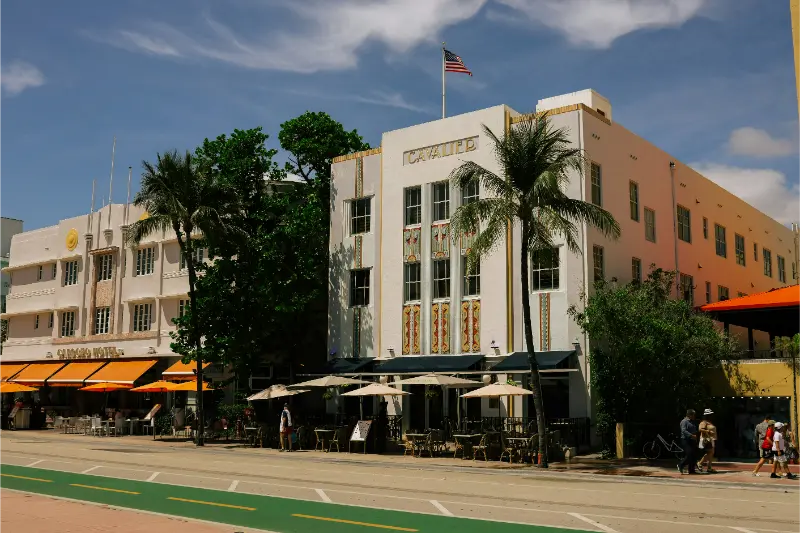
Florida’s buildings tell several different stories. Miami Beach’s pastel hotels describe an era of resort expansion; Palm Beach’s mansions reveal how winter tourism reshaped the coast; Sarasota’s cultural buildings show a more modern regional imagination. A good architecture trip should make room for the people and histories behind those façades, including the labor required to build and maintain them. This eight-day southbound itinerary begins in St. Augustine, spends time in Sarasota and Palm Beach, and finishes in Miami. The route is designed for visitors who enjoy walking, museums and photography but also need realistic drive times and indoor breaks. It is not an academic survey and does not require entering private properties to be rewarding.
What to look for before you start
Learn to distinguish a building’s appearance from its date and function. An ornate Mediterranean Revival hotel might evoke a much earlier European design language while actually having been built in twentieth-century Florida. Art Deco is often associated with geometric motifs and streamlined forms, but Ocean Drive is not a single uniform period. Preservation can involve substantial repairs and adaptations. Reading plaques and museum interpretation helps prevent the familiar travel-guide mistake of describing every old-looking building as authentically colonial. Take photographs of informational signs and compare details such as arches, decorative tile, horizontal bands, setbacks and windows.
Avoid turning a city walk into a lesson delivered at a child who would rather go to the beach. Set one observation challenge for the day: look for buildings with repeated geometric patterns, compare shaded courtyards or find how an architect handled intense sun and storms. For someone using a wheelchair, select accessible sidewalks and museum entrances before choosing an exterior-photo route. Older districts can have uneven pavement and lengthy crossings. Architectural beauty is easier to appreciate at a humane pace, particularly in South Florida heat.
Day one: St. Augustine, a city with several layers
Begin in St. Augustine, where the built environment mixes Spanish colonial references, nineteenth-century development, religious structures and major Gilded Age investments. Walk a compact part of the historic district and notice the contrast between Castillo de San Marcos’s defensive masonry and the decorative architecture of former luxury hotels. The city’s narrow streets can be busy and occasionally uneven; choose a morning walk before the heat and allow plenty of time for crossings. Focus on three or four sites rather than trying to photograph every façade in the old city.
Make the Lightner Museum or a nearby historical property the central indoor stop, after verifying admissions and accessible entry. Explain that a building can change use over time: a structure conceived as lodging may become a cultural venue, while a public square can acquire different meanings for successive residents. Arrange an overnight in or near the historic district so you do not finish the day with a long drive. A night here allows an evening exterior walk when streets have thinned, provided lighting and walking conditions are suitable.
Day two: architecture, preservation and the road south
Reserve the second morning for buildings you passed too quickly. Compare the materials and restoration approaches of a historic residence, church or hotel exterior. When a building is privately occupied, remain on the public sidewalk; a beautiful doorway is not an invitation to step into someone’s garden. Historic-center photography can be surprisingly tiring, so plan a seated lunch and a route that minimizes repeated parking. Families with children might balance one architectural visit with a waterfront break.
In the afternoon, travel toward the Orlando area or position yourself along the route to Sarasota, depending on your comfort with driving. The distance from St. Augustine to Sarasota is significant for an architecture-focused day; splitting the journey is reasonable. Winter Park near Orlando offers attractive streets and an opportunity to compare a planned, leafy community with St. Augustine’s tourist core. Travelers who prefer fewer hotel changes could drive to Sarasota, but should not schedule a prepaid evening tour after unpredictable highway traffic.
Day three: Sarasota and the cultural landscape
Sarasota is a rewarding contrast to the Atlantic coast’s oldest cities. The Ringling complex brings art, circus history, landscaped grounds and Ca’ d’Zan into one cultural campus. The waterfront mansion’s architecture evokes the Venetian Gothic tradition, but its setting and modern history are specifically Floridian. Check the Ringling's official visit information for current access to individual venues, since museum admission and mansion access may be organized differently. Plan several hours and choose which sections matter most to your group instead of assuming everything fits into a brief stop.
Afterward, walk an appropriate part of downtown Sarasota and observe how modern commercial blocks respond to Florida’s climate. Rooflines, covered walkways and shaded entrances are useful features to notice. If interested in the Sarasota School of Architecture, research a curated architectural tour with an established local organization rather than seeking private houses from old online lists. Residential properties deserve privacy. A traveler who enjoys design but cannot manage extensive walking can emphasize museum interiors, a shorter streetscape walk and a peaceful dinner by the bay.
Day four: modern Sarasota and a move toward Palm Beach
Use the fourth morning for a deliberate comparison between mid-century design and the older mansion aesthetic. Architecture is not merely a sequence of famous houses: schools, libraries, civic spaces and modest commercial buildings reveal ordinary design decisions. If you visit a contemporary arts organization, check exhibits and visitor policies in advance. A coastal drive can be tempting, but it is rarely the fastest route across the state; allow sensible time for the move toward the Palm Beach area.
Plan a straightforward hotel arrival without an ambitious night program. The next two days will involve more walking and museum time. Travelers of different ages can spend this evening sorting photographs into themes—arches, ornament, pastel walls, glass, shade—or simply resting. If a hurricane or strong storm threatens, follow official local guidance rather than trying to complete a sightseeing schedule. Many spectacular waterfront buildings are close to exposed coastlines, and scenic appeal does not diminish weather risk.
Day five: Palm Beach and the Gilded Age
Visit Palm Beach for its grand residential and hospitality architecture, especially the Flagler Museum at Whitehall. This landmark gives context to the expansion of leisure travel, rail infrastructure and wealthy seasonal communities in the region. The Flagler Museum's visitor information should be checked for days, admission and any exhibition restrictions. Move through the house with an eye on room design, labor and the social world that these interiors represent, rather than seeing only opulence.
Beyond the museum, enjoy a public streetscape walk where it is permitted and practical. Palm Beach has expensive private properties and strong boundaries between public space and residential grounds. Do not approach gates or garden areas to obtain a close-up photograph. An architectural visit can also raise questions about who built Florida’s resort infrastructure and who could access it. Discuss those questions with teenagers or interested adult companions. Spending one whole day in the area allows time for a quiet lunch and avoids treating the region as merely a quick photo stop before Miami.
Day six: West Palm Beach, civic streets and practical transit
Cross to West Palm Beach and examine a different relationship between buildings and urban public space. Downtown blocks, cultural institutions and waterfront routes have a more varied everyday function than an isolated mansion. A museum visit or guided city walk can help distinguish authentic historical preservation from newer construction designed to resemble an earlier style. Check for street events and temporary closures if planning around a major festival. A garage close to the first stop is often preferable to repeated short car trips.
Those continuing to Miami can choose an afternoon transfer or another Palm Beach night. Brightline provides an intercity rail alternative along portions of this corridor, but it does not turn every architecture stop into a car-free day: compare station access and luggage handling before leaving the rental vehicle behind. During summer, schedule outdoor examination in the morning and indoor museums in the afternoon. This matters as much for healthy young adults as for older travelers, because a long exposed streetscape walk can be exhausting.
Day seven: Miami Beach Art Deco in context
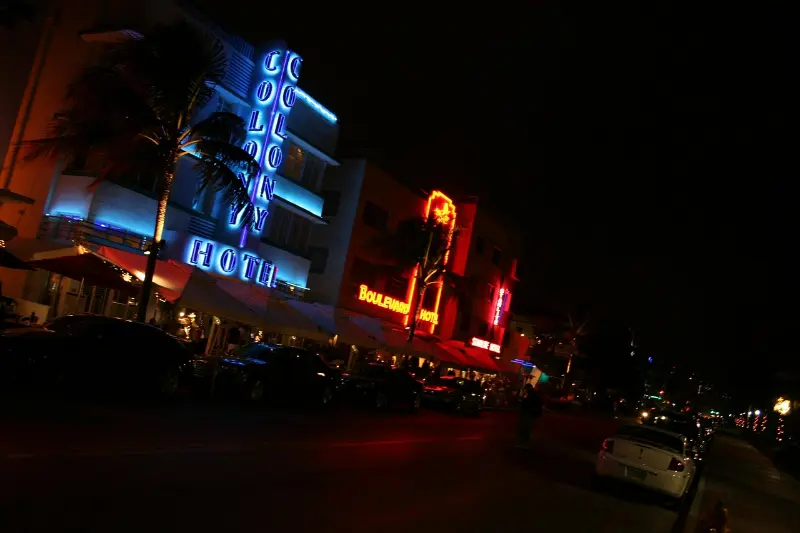
The Miami Beach Art Deco Historic District is one of Florida’s most recognizable architectural destinations. The city describes hundreds of notable buildings associated with its Art Deco legacy; its official Art Deco overview explains common characteristics. Walk portions of Ocean Drive and nearby streets, comparing geometric reliefs, horizontal lines, rounded corners and entrance compositions. Do not assume every vibrant pastel paint scheme is original to the building’s first year. Restoration, commercial branding and periodic repainting contribute to today’s colorful streetscape.
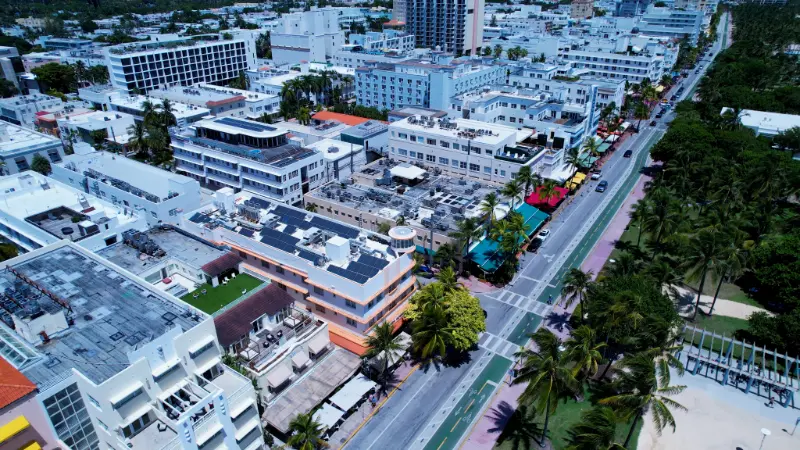
For more context, seek an established historical or preservation-oriented walking tour. Photograph exteriors from legal public viewpoints and respect hotel guests and staff. Ocean Drive’s restaurant promoters can distract from architectural details; plan a route in advance so your time is not consumed by marketing. Street crossings, bike lanes and heavy pedestrian traffic require attention. A person who finds crowds difficult may enjoy an earlier morning walk, followed by an indoor break. Overnight in Miami Beach if you want an unrushed evening, but verify parking fees before committing to a hotel.
Day eight: Vizcaya and the architecture of Miami
Finish with Vizcaya Museum and Gardens, a major contrast with streamlined Miami Beach. Its historic villa, formal gardens and waterfront setting demonstrate another version of elite early-twentieth-century life in South Florida. Consult the official Vizcaya visitor site for entry times, accessibility and garden conditions. Walk through spaces thoughtfully: architecture here is about the relationship between interior rooms, ornamental landscapes and Biscayne Bay. Because part of the experience is outdoors, rain and heat should inform your visit length.
If your flight allows, compare Vizcaya’s intimate grounds with the larger civic streetscapes of downtown Miami. The contrast reveals how a city can contain private estates, resorts and public architecture with very different purposes. Avoid planning the museum as a last-minute stop if you have checked baggage or an international departure. Miami traffic can be unpredictable, and a relaxed morning at a single property is more rewarding than leaving before you have absorbed the details.
Photography without trespassing or artificial staging
A simple zoom lens and a camera or phone with good dynamic range are sufficient for most visitors. Early light can reveal details in stone and stucco, but in some urban canyons strong midday contrast also illustrates depth and ornament. Watch where you stand: do not block narrow sidewalks, lean over walls or set tripods where prohibited. A polarizing filter may help reflections, but interiors often restrict flash and other equipment. Ask before photographing staff or visitors and check each museum’s rules for commercial photography.
Use wide images sparingly; detail shots of a doorway, tile pattern or shaded arcade can tell a richer story than a street emptied of people. Record the actual building name and location, not merely “art deco hotel” or “Spanish villa.” If you share photographs publicly, avoid making inaccurate historical claims from an appearance alone. An informative caption might explain why you stopped, what detail caught your eye and where readers can verify the building’s significance. No first-person claim is necessary unless you genuinely visited.
Where to sleep and how to keep the route realistic
This is an ambitious cross-state route. A sensible division is two nights near St. Augustine, two near Sarasota, two in Palm Beach County and one or two in Miami. That creates hotel changes, but also limits very long sightseeing drives. If you have only five days, choose Sarasota-to-Miami or St. Augustine-to-Sarasota rather than trying to visit everything. Families needing predictable naps can make a museum the main activity each day and use parks or waterfronts as optional additions.
Costs depend primarily on hotel district, parking and museum admissions. Resort destinations can add substantial valet or garage charges, particularly in Palm Beach and Miami Beach. Compare the total cost of your accommodations with the convenience of walking to the first attraction. Check accessibility beyond the building entrance: historic houses may have stairs, uneven garden surfaces or restricted upper rooms. A shorter accessible itinerary is a legitimate architecture trip, not a lesser version of one.
Eight-day itinerary summary
| Day | Overnight area | Main architecture interest | Plan B |
|---|---|---|---|
| 1 | St. Augustine | Historic center and Gilded Age landmarks | Lightner Museum |
| 2 | Orlando corridor or Sarasota | Preservation and travel south | Short Winter Park stroll |
| 3 | Sarasota | The Ringling and Ca’ d’Zan | Selected indoor collections |
| 4 | Palm Beach County | Mid-century perspectives and transfer | Rest and photography review |
| 5 | Palm Beach County | Flagler Museum and public streetscapes | Extended museum visit |
| 6 | Palm Beach County or Miami | West Palm Beach civic architecture | Rail transfer |
| 7 | Miami Beach | Art Deco Historic District | Guided short walk |
| 8 | Miami | Vizcaya Museum and Gardens | Departure-focused schedule |
Frequently asked questions
Is Miami Beach the only Florida city worth visiting for architecture?
No. Sarasota, Palm Beach and St. Augustine show different design traditions and social histories. The contrast between them is the central value of this trip.
Can the entire route be completed by train?
Not conveniently as written. Rail may help between some Atlantic cities, but Sarasota and multiple dispersed sites favor a car or a carefully arranged combination of transfers.
Are the famous historic homes always open?
No. Individual sites have admission rules, conservation work and occasional event restrictions. Review venue calendars before purchasing tickets or driving long distances.
Is the architecture trip suitable for older travelers?
Yes if the route is shortened and walking is tailored to individual mobility. Prioritize accessible museums, central hotels, shade and an indoor rest between outdoor streetscape visits.
Can I photograph private homes from the street?
Follow local laws and respect privacy. Remain on public property, never block entrances or approach residents, and check museum policies before using professional equipment.
Official resources
Use the City of Miami Beach Art Deco guide, The Ringling, Flagler Museum and Vizcaya Museum and Gardens for official context. Prepared October 2026; opening times and restoration access can change.