

Not everyone who visits Orlando wants to ride a roller coaster. Some visitors dislike drops or motion simulators, some are recovering from a tiring journey, and others simply prefer performances, gardens, interesting food and time with family. A visitor who chooses not to ride can still have a satisfying park day, but the day must be planned differently from an itinerary built around headline thrills. This guide explains how to choose attractions by comfort, manage mixed groups and avoid spending hundreds of dollars only to sit outside rides. It is intended for adults, teens, grandparents and families with small children who want shared experiences without pressure.
On this page
- Decide whether a major theme-park ticket is worth it
- Magic Kingdom: atmosphere, performances and gentle attractions
- EPCOT: exhibitions, gardens and cultural spaces
- Disney's Hollywood Studios: make the shows the main event
- Animal Kingdom: observation can be the main attraction
- Universal Orlando: check intensity instead of franchise names
- Practical rider switch and mixed-age groups
- Motion sensitivity, sensory load and accessibility
- Heat, storms and fatigue can matter more than rides
- Food and budget for a non-rider
- Sample relaxed park day
- Quick comparison
- Frequently asked questions
- Official sources
Decide whether a major theme-park ticket is worth it
Start by listing what each person hopes to do. If the group wants character encounters, theatrical shows, carefully themed environments and a few gentle rides, a theme-park ticket may be worthwhile. If everyone prefers gardens, restaurants, museums and peaceful walks, consider a park-free Orlando day instead. Major park admission is costly even if you never board a high-speed ride. Compare the experiences you can comfortably enjoy with the total cost of admission, parking, transport and food before buying. Do not treat the question as a matter of being ‘brave enough.’ A vacation should meet the traveler’s interests.
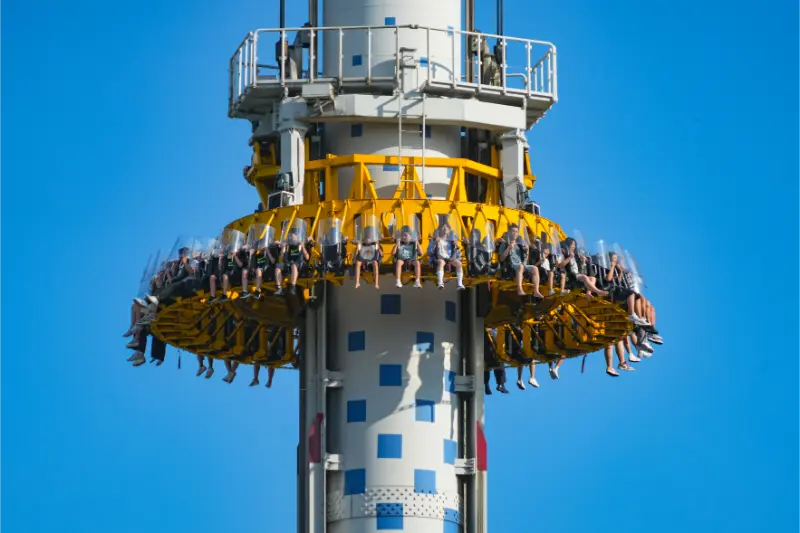
Some groups have an enthusiastic rider and a companion who prefers not to ride. They can still share the same park day by choosing meeting points and common activities. A non-rider does not need to queue for every attraction. Agree on how long anyone is willing to wait alone, and reserve several experiences that the entire group can do together. If the outing is centered entirely on thrill attractions, it might be better for the rider to visit with another enthusiast while the non-rider enjoys a different destination.
Magic Kingdom: atmosphere, performances and gentle attractions
Magic Kingdom is often the most familiar choice for visitors interested in classic themed environments and family experiences. It offers rides that are generally less intense than major coasters, as well as character encounters and entertainment. However, even a ride labeled ‘slow’ can have darkness, loud sound effects, spinning or unexpected movement. Check each attraction’s current description and accessibility advisories instead of relying on the word ‘family.’ A visitor who is sensitive to motion may enjoy a live show and still find a gentle-looking boat ride uncomfortable.
The park rewards a slower strategy: arrive with a small list of priorities, explore one area at a time and take seated breaks. If a parade or nighttime show matters, check the day-specific entertainment calendar; not every performance occurs on every date. A midday hotel break can make the evening easier for children and older guests. Factor in travel from the parking area or resort transport because a seemingly short park visit can involve a surprising amount of walking before reaching the first attraction.
EPCOT: exhibitions, gardens and cultural spaces
EPCOT can appeal to travelers who like gardens, architecture, exhibits and food. Its World Showcase encourages exploration of differently themed settings, and parts of the park include galleries or film experiences. This does not mean that every attraction is motion-free or suitable for every guest. Certain simulators and rides may have restrictions related to motion sensitivity or health. Use the official operator’s attraction filters for categories, heights and accessibility information before deciding which experiences belong on your personal plan.
EPCOT is expansive, so someone who prefers short walks may need mobility support or a reduced route. A reasonable itinerary might focus on a few pavilions with a long lunch rather than trying to circle the entire park several times. Temporary festivals can add food kiosks and entertainment, but also crowds and queues. When planning for guests who need predictable meals or seating, reserve adequate time and avoid assuming that every event booth will accept the same dietary requests.
Disney's Hollywood Studios: make the shows the main event
Hollywood Studios offers live performances and highly themed areas alongside thrill rides. A show-focused visit is possible when you select current showtimes in advance and leave enough travel time between venues. Performances have opening and closing dates, and schedules change; a list from last year’s travel blog is not proof that the same show will be available during your visit. Some attractions marketed for families still include sudden movement, sensory effects or darkness, so reading the official advisories is essential for visitors with vertigo or anxiety about rides.
Rather than waiting outside a roller coaster, a non-riding guest can spend time with exhibits, themed streets and entertainment, then rejoin the rest of the party for a meal. Agree on a recognizable meeting place that does not block entrances. Families with children should never leave a young child unsupervised while adults take turns riding. Ask staff about the current rider-switch procedure instead of assuming the process will be identical at every attraction.
Animal Kingdom: observation can be the main attraction
Animal Kingdom is an attractive option for travelers interested in habitat interpretation and animal observation. The park contains walking environments, conservation messaging and entertainment as well as attractions with significant thrills. Animal activity depends on weather, time of day and individual animal behavior, so do not promise particular sightings. Some pathways are extensive, and areas of shade can be unevenly distributed. Choosing a few highlights and taking regular rests makes the experience more manageable for mixed ages.
A safari-style attraction may seem gentle compared with a coaster, yet vehicles can jostle and the experience may not suit everyone with back or motion concerns. Ask about boarding procedures and review the official accessibility guide. For people who would rather remain seated, consider shorter activities and performances. Visitors who are uncomfortable around crowds or loud music should map a quieter rest area early. The most rewarding part of the day may be simply watching an animal for a few minutes instead of rushing to another queue.
Universal Orlando: check intensity instead of franchise names
Universal’s themed lands attract visitors who love particular films and stories, but popularity does not mean an attraction is suitable for a person who dislikes motion. Some rides use large screens, rapid acceleration, tilting seats, water or elaborate effects. These can be intense even without a dramatic outdoor roller coaster. Read the actual motion and health advisory for every attraction. You may enjoy walking through a carefully designed land, visiting shops and watching an entertainment offering without boarding its signature ride.
For a couple in which one person rides and another does not, determine whether the shared theming justifies both admissions. Park-to-park transport experiences may also have ticket requirements, which should be checked on the operator’s site. If you want mainly a meal, entertainment and an evening walk, a publicly accessible dining district might meet your needs with less expense than park admission. Check parking and event charges because not every part of an entertainment complex is free.
Practical rider switch and mixed-age groups
Rider switch can help a family when one adult stays with a guest who cannot or does not wish to board a ride. At Walt Disney World, the service is available at listed attractions, with rules about how parties divide and who can ride afterward. Discuss it with a Cast Member at the ride entrance; do not assume it works like a generic fast pass. A person who simply wants to skip the ride may instead be more comfortable visiting a nearby show or café. For large groups, an agreed meeting time and location reduces phone calls and confusion.
Avoid making the non-rider responsible for all bags, children and logistical tasks without discussing that expectation. A relaxed theme-park visit should have shared decisions: who chooses lunch, when the group rests and which activity everyone attends together. Older relatives may be happy to watch grandchildren enjoy a ride, but they should have access to seats, water and restrooms. Companions with mobility limitations may need an accessible meeting point that is not up stairs or across a long plaza.
Motion sensitivity, sensory load and accessibility
People who experience dizziness, motion sickness, pain or anxiety with rides need not disclose private medical information to every companion. Review published warnings and ask the operator about the specific movements before boarding. A dark indoor ride can feel more intense than a visible outdoor attraction because the rider cannot anticipate turns. Some experiences combine sound, vibration, flashing lights and 3D video. Carry any usual personal supplies and consult a qualified clinician when a medical issue creates uncertainty. Do not rely on an informal internet list of ‘safe’ rides as medical advice.
Walt Disney World publishes accessibility information and offers multiple queue-related accommodations, but eligibility and procedures vary. The Disability Access Service is not a general skip-the-line ticket for anyone who dislikes waiting. Wheelchairs, ECVs and devices such as walkers may be more useful for visitors whose difficulty is standing or walking. Guests should review the current official guidance and speak to accessibility staff when necessary. An attraction may require transfer from a mobility device to the ride seat, and boarding assistance is not uniform.
Heat, storms and fatigue can matter more than rides
A theme-park day involves sun exposure, paved surfaces, waiting and a lot of walking. Bring water, sun protection and clothes suited to the season. In hotter months, arrange indoor breaks and avoid assuming an outdoor queue will always be shaded. A visitor over eighty may be comfortable with a short guided tour but exhausted by hours of waiting; a teenager with sensory sensitivity may need the same rest even if physically fit. The right pace is defined by the person’s needs, not their age.
Lightning changes the plan immediately. Outdoor queues, pools and rides may close when storms approach. Follow park instructions and seek substantial indoor shelter rather than gathering under a tree or open canopy. The National Weather Service advises staying sheltered until at least thirty minutes after the last thunder. Keep a quiet indoor alternative for periods when outdoor entertainment is delayed. If the forecast looks unpleasant for several days, an extra museum afternoon might be more satisfying than forcing another full park day.
Food and budget for a non-rider
A non-rider still pays for park admission, so do not assume a shorter attraction list creates a cheap outing. Decide whether the park’s atmosphere and entertainment are worth the price. Check what outside food or drinks are allowed and how mobile ordering works at the operator you select. If dining is the main attraction, you may prefer a reservation at a nearby resort or entertainment district without purchasing park admission, subject to access rules. Some resort restaurants require advance booking or parking arrangements even when the dining venue itself does not charge an admission ticket.
For larger groups, budget separately for tickets, any express or paid line access, parking, transport, meals and souvenirs. A few well-chosen experiences will usually be more enjoyable than trying to recover admission costs by staying until everyone is irritable. If the visit includes a person with limited stamina, factor a rest day into the trip rather than scheduling back-to-back open-to-close park visits.
Sample relaxed park day
Begin with a comfortable breakfast and arrive after the most exhausting early-morning rush if early entry is not essential to your goals. Spend the first two hours on one or two gentle experiences and an indoor exhibit, pause for a sit-down meal, and choose one afternoon performance. Let thrill seekers use a planned window to explore separately while everyone else rests nearby. Rejoin for dinner or a shared nighttime experience only if the group still has energy. The order changes with showtimes, weather and accessibility conditions; it is a framework, not a promise about specific attraction availability.
It is also entirely reasonable to finish in midafternoon and spend the evening by the hotel pool or at a relaxed restaurant. For many visitors the most memorable park day is the one where people could talk, notice details and enjoy being together instead of measuring success by a ride count.
Quick comparison
| Option | Good for | Check before you go |
|---|---|---|
| Magic Kingdom | Classic environments and family entertainment | Check individual ride warnings |
| EPCOT | Cultural spaces and exhibits | Long walking distances |
| Hollywood Studios | Shows and themed areas | Confirm performance schedules |
| Animal Kingdom | Animal observation and interpretation | Heat and possible jostling |
| Universal parks | Film worlds and selected shows | Screen-based motion can be intense |
Frequently asked questions
Is Disney World worth visiting if I do not ride coasters?
It can be, especially for performances, themed spaces and gentle experiences. Compare the activities you would actually enjoy against admission and transport costs.
Are slow rides always suitable for motion sickness?
No. Spinning, darkness, projections and sudden movement can affect people differently. Read the current official advisories.
Can one adult wait while another rides with the children?
Some attractions offer rider switch, subject to the operator’s current requirements. Ask staff at the attraction entrance.
Which Orlando park is least tiring?
No major theme park is guaranteed to be low-effort. The specific route, use of mobility support, weather and number of breaks matter more than the park name.
Official sources
Official sources and planning details reviewed in October 2026. Confirm current admission rules, accessibility, opening hours and conditions before visiting.