

Most travelers crossing southern Florida choose the quickest major route and barely notice the transition from the Atlantic side of the state to the Gulf. US 41, better known as the Tamiami Trail, offers another approach. It crosses a landscape of sawgrass, cypress, roadside canals, Indigenous cultural history and places where wildlife watching can be as simple as standing quietly on a short boardwalk. The drive between Miami and Naples need not be an endurance event. This two-day plan deliberately slows down the crossing so you can learn about Big Cypress National Preserve while avoiding a rushed series of roadside photo stops.
This is an itinerary for a private vehicle. There is no practical assumption that a tourist bus will stop at every visitor center or trailhead. If you are traveling with a stroller, wheelchair or older relative, identify accessible stops before departure and confirm that restrooms are open. A two-day schedule allows one night near the Everglades City area or on the Naples side, but staying in either Miami or Naples and making a long day trip is possible for those who prefer one hotel.
The route and what makes it different from the interstate
| Segment | What to do | Time-saving choice |
|---|---|---|
| Miami to western suburbs | Buy water, fuel and snacks | Start after morning commuter peak |
| Eastern Tamiami Trail | Watch the wetlands change | Stop only where parking is designated |
| Oasis Visitor Center | Accessible canal boardwalk and wildlife | Brief visit without a long hike |
| Nathaniel P. Reed Visitor Center | Exhibits and ranger advice | Prioritize visitor information |
| Everglades City area | Overnight and local history | Stay in Naples if lodging is limited |
| Naples | End with Gulf Coast park or beach | Finish early for a relaxed dinner |
The two Big Cypress visitor centers are separate facilities. The National Park Service lists Oasis at 52105 Tamiami Trail East and Nathaniel P. Reed at 33000 Tamiami Trail East, both in Ochopee. Save each address independently; entering only “Big Cypress” into your navigation app can route you to a different destination than intended. Open hours and road advisories deserve a check shortly before travel.
Day 1 morning: leave Miami with provisions already packed
Start on the Miami side with fuel, a full water bottle for every passenger, sun protection and an offline map. You will pass through areas with fewer shops and restrooms than in the city, so do not assume a convenient stop is minutes away whenever a child needs a bathroom. Visitors from abroad should familiarize themselves with local traffic signs and the fact that wildlife crossing a road is not a reason to stop suddenly in a travel lane. Tamiami Trail is a real public highway, not a drive-through animal exhibit.
Plan your first official pause for a visitor center rather than a random shoulder. A safe stop with a marked parking area offers a better experience than stopping beside an unfamiliar drainage canal. The landscape may appear flat and repetitive at first, yet water levels, plant communities and birdlife shift dramatically with the seasons. In the drier months, concentrated water can bring wildlife into view; during wetter periods, reflections and clouds are beautiful but mosquitoes and storms may be more intrusive.
Oasis Visitor Center: a short wildlife stop with genuine value
Oasis is especially useful for visitors who cannot manage a long trail. The National Park Service describes its boardwalk as roughly 200 yards, with ramps, handrails and no meaningful elevation gain, and notes that wildlife may include alligators, fish, turtles and birds. Sightings are not guaranteed. Never lean over rails, toss food or attempt to coax an alligator toward a camera. The goal is to watch wild animals in their own habitat without changing their behavior.
Families should give children a simple challenge: watch for one bird using the canal edge, one turtle resting near water, and differences between cypress and the open marsh. These observations turn a ten-minute pause into a memorable introduction to the ecosystem. Older visitors may appreciate that the route is comparatively short, but warm pavement and direct sun can still cause fatigue. A wheelchair user should check present boardwalk conditions before arrival, especially after heavy rain or maintenance work.
Understand Big Cypress beyond the wildlife photos
Big Cypress National Preserve is not simply the northern edge of Everglades National Park. It is a federally protected landscape with its own habitats, water systems, history and visitor facilities. A good visit considers fire, seasonal flooding, Indigenous presence and the role of water moving through South Florida, not just how many alligators appear on a boardwalk. The visitor center exhibits and films help put those relationships into context without requiring an off-road tour.
Some guided operators use airboats or off-road vehicles in permitted areas, but do not assume all excursions are suitable for a mixed-age group. Ask what kind of seating is provided, how loud the equipment is, whether hearing protection is included, whether there is a restroom, and how the operator handles lightning or rough conditions. For many groups, the visitor centers plus one supervised short activity will be more rewarding than booking multiple motorized experiences on a single afternoon.
Day 1 afternoon: Nathaniel P. Reed and the western side of the preserve
Continue west to Nathaniel P. Reed Visitor Center. The National Park Service describes indoor and outdoor natural-history exhibits, an introductory film and visitor assistance. It is a useful stop when the heat or rain makes a long walk unattractive, and the staff can suggest current options based on trail conditions, accessibility needs and the season. This is also a good opportunity to ask about temporary closures; what worked in an online itinerary last year may not be suitable during this visit.
Avoid treating the surrounding roads as unrestricted wildlife trails. Side roads, the Loop Road area and backcountry destinations can involve changing surfaces, water, limited cell service or vehicle restrictions. A paved highway road trip and a backcountry expedition are different activities with different preparation. If you intend to leave the main road, research the specific route with the park rather than relying on a general rental-car navigation instruction. Keep a firm latest arrival time for your overnight accommodation.
Where to spend the night: Everglades City or Naples
Everglades City makes sense if you want a small-town base near waterside activities and do not mind a narrower selection of lodging and dining. It allows a slower second morning and is convenient for some ranger information and boat operators. Naples is better for travelers who prioritize a wider range of accommodation, accessible rooms, grocery stores, medical services and restaurants. The difference matters with children, older visitors or anyone who may be uncomfortable in a more remote hotel setting.

Book lodging based on cancellation terms, not a romantic description of wilderness. Ask whether reception is staffed for late arrival, whether restaurants nearby are open on your dates, and whether your room is reached by steps. A hotel with a kitchenette or refrigerator can solve simple dietary needs. If an evening storm delays the drive, having an accommodation contact number and a guaranteed check-in arrangement prevents an uncomfortable finish to the day.
Day 2 morning: choose one nearby activity, not three
For an early start around Everglades City, consider a properly permitted boat-based nature tour or an interpretation-focused visitor center stop. Verify weather and conditions before paying; inland wetlands, coastal mangroves and the Ten Thousand Islands environment are distinct, and operators may offer different routes. A traveler who prefers stable ground can skip the boat and enjoy breakfast, photography from public access points and a gentle drive toward Naples instead.
If traveling with grandchildren, explain why no wildlife should be fed and why a photograph is not worth getting too close. Birds, reptiles and mammals may appear calm while still being wild. Those using binoculars or a telephoto lens gain a better view without disturbing them. Encourage children to keep voices low during observations; quiet attention tends to produce better wildlife moments than rushing between attractions or calling animals toward the road.
Day 2 afternoon: arrive in Naples without an overloaded agenda
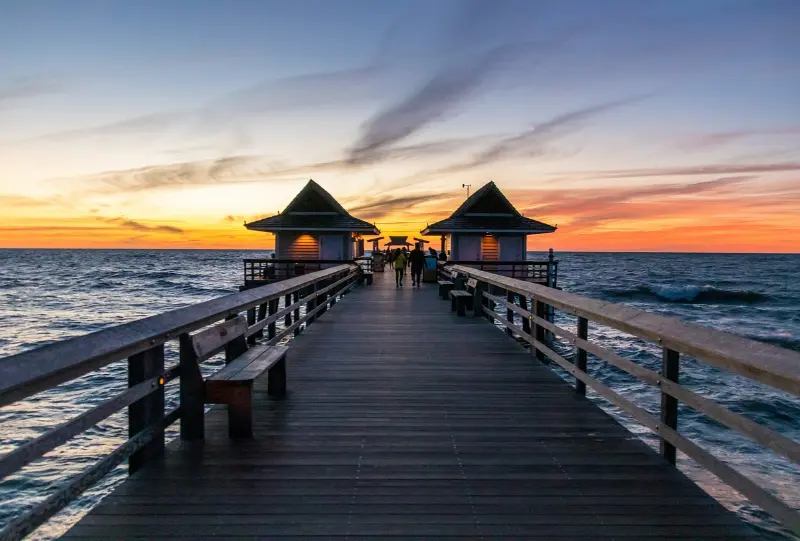
The Gulf Coast side provides a pleasant contrast to the inland wetland crossing. Depending on weather, energy and local access, finish with a short visit to a public waterfront area, a garden, a coastal park or an early dinner. Do not assume beaches are available for swimming every day: red tide reports, water quality advisories, thunderstorms and wave conditions can require a different plan. After two days in the sun, a shaded cafe may be the better ending for a tired family.
If your next destination is Fort Myers or Sarasota, keep Naples as a stopping point rather than adding the full onward drive after a long morning excursion. Conversely, if returning to Miami, decide whether you genuinely want to retrace the scenic trail or use a more direct major highway where appropriate. Drivers should avoid fatigue at dusk, particularly after a day involving wildlife viewing and exposed walking areas. Leave the road before darkness becomes a stressor.
Accessibility, restrooms and heat management
The route works best when each day includes at least one established facility. Oasis offers a short boardwalk; Nathaniel P. Reed provides exhibits and visitor services. Neither should be assumed to have every amenity functioning at all times. Anyone who needs a restroom urgently or regularly should build stops around confirmed facilities, not isolated turnouts. Ask about mobility equipment, service animals and the terrain of any extra excursion before leaving your hotel.
Children and adults alike can become dehydrated in humid conditions. Carry more water than you think necessary, wear hats, and avoid unnecessary long walks around noon. Never leave a child or a pet in a parked vehicle, even for what seems like a quick stop. Lightning is a reason to return to an enclosed building or car, not to wait beneath an isolated tree. If severe weather is forecast, treat the highway transfer as the day’s only essential activity.
Cost planning and useful booking questions
This is a relatively economical sightseeing route if you prioritize free interpretive facilities and self-guided viewpoints. The main costs are the rental vehicle, fuel, food, lodging and any optional paid activity. Tours often charge by passenger and may have minimum ages, weather cancellation rules or restrictions related to mobility and pregnancy. Read the conditions in advance rather than at a roadside ticket desk. A family can save money by selecting one shared tour rather than buying several activities that offer similar wildlife experiences.
Before booking a boat or airboat, ask exactly where to check in, whether parking is included, how long you are actually on the water, what type of life jacket is available for each child, and whether guests can remain seated throughout. Before reserving a room, check travel time from the last visitor center and whether breakfast is available. These concrete questions matter more than marketing labels such as “ultimate adventure” or “best wildlife safari.”
For current conditions, use the National Park Service directions, Oasis boardwalk description, and Big Cypress visitor centers guide. Official information is especially valuable if rain, a wildfire, maintenance or tropical weather changes the normal visitor experience.
Frequently asked questions
Is Tamiami Trail safe for a family road trip?
It can be a rewarding paved highway journey with proper driving care. Use designated parking, keep children within supervision near canals, watch for wildlife and do not attempt backcountry roads without separate planning.
Can I see alligators without taking an airboat?
Yes, wildlife sometimes appears near the Oasis boardwalk and other permitted observation areas. Nothing is guaranteed, but a short respectful stop may be enough for an interesting view.
Should I do the drive in one day or two?
One day suits travelers simply crossing the state. Two days are better if you want to understand the preserve, avoid rushing, and combine short walks, exhibits and a comfortable overnight stay.
Leave a Reply