
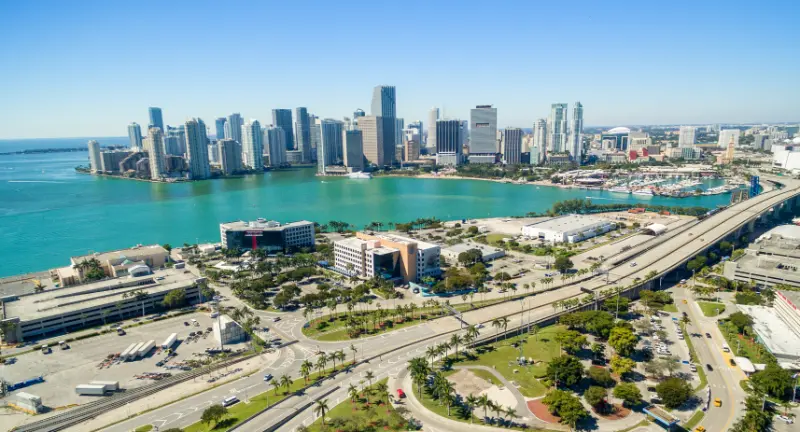
There is another side to Miami that becomes easier to appreciate when you travel south of the skyline. Around Palmetto Bay, Cutler Bay and the southern reaches of Biscayne Bay, a vacation can revolve around subtropical gardens, waterfront scenery, historic houses and the practical pleasure of not fighting for a crowded beach parking space every morning. This four-day plan is for visitors who have already seen the better-known postcard images—or simply prefer a quieter part of the county for their first stay.
This is not a car-free itinerary. Destinations are spread along suburban roads, and public transport may not connect the precise entrance and timing you need. Renting a vehicle or carefully budgeting rideshares makes the plan much easier. The trade-off is worthwhile for people who enjoy a historical property in the morning, a shaded picnic at lunch and a drive home before the evening rush. Families, couples and older travelers can follow the same geographical outline while choosing different walking distances.
Trip at a glance
| Suggested length | Four days |
|---|---|
| Key experiences | Deering Estate and Biscayne Bay |
| Useful base | Southern Miami-Dade |
| Transport | Car or planned rideshares |
Understand the geography before booking
Palmetto Bay and Cutler Bay lie south of central Miami, with Biscayne Bay to the east. Homestead and the Redland agricultural area are farther south and should not be casually added to every day. The popular downtown, airport and beach areas are not next door. A map can make the coastline look like one continuous series of attractions, but the practical route depends on bridges, neighborhood streets, park entrances and traffic that varies by day.
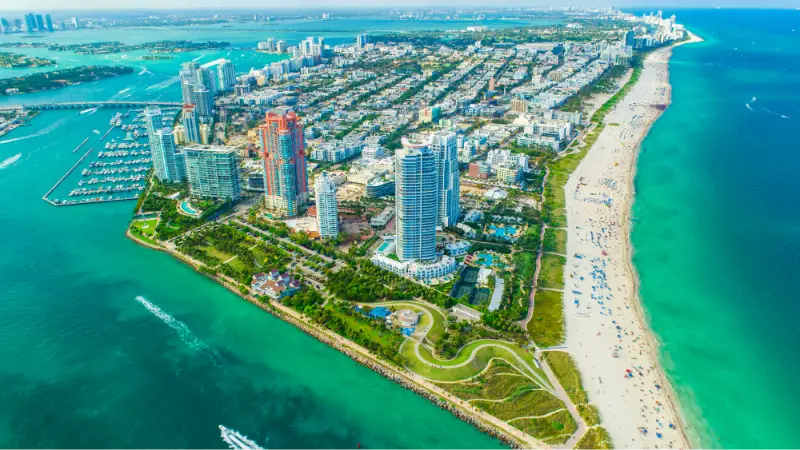
If your purpose is to visit Deering Estate, Matheson Hammock Park and a few local green spaces, a hotel or vacation rental toward southern Miami-Dade can reduce driving. If the trip includes three nights of restaurants and shows in downtown Miami, however, staying farther south may cost more in transport than it saves in room price. Decide which experience comes first and choose your base accordingly. Ask about parking restrictions, quiet hours and the actual ground-floor access at any rental property.
Day 1: arrive, shop locally and leave the bay for tomorrow
After a flight into Miami International Airport or Fort Lauderdale, resist the urge to add a long sightseeing detour. Collect the car, buy groceries or snacks and check into the accommodation. An early evening stroll around a suitable neighborhood park may be enough. South Florida’s humidity can surprise visitors even outside the peak summer months, and international travelers may be tired long before local dinner time.
Use the first afternoon to verify the times and parking instructions for the next day’s stops. Some county parks charge for parking through mobile systems; the pay method may be different from a meter downtown. Charge your phone, keep a backup card and save the park’s official page. If you have a stroller or walking aid, ask for the closest suitable parking area rather than simply selecting the first pin that appears on a mapping app. A smooth first evening makes the rest of the itinerary easier.
Day 2: Deering Estate, history and a slow bayfront afternoon
Deering Estate is the cultural centerpiece of this trip. The county heritage property combines historic buildings, landscaped grounds and views across Biscayne Bay, with opportunities to learn about the people and environments associated with the site. You can choose a general visit or investigate scheduled tours that go more deeply into architecture, history and ecology. Not every tour follows the same surfaces or requires the same amount of walking, so ask staff which options suit your party before buying extra activities.
The estate’s official visitor information lists general admission hours and ticket arrangements; it also makes clear that ticket sales have conditions, including limits on refunds. Review those conditions if rain is forecast or you are traveling with someone who may need to cancel at short notice. Families can bring a picnic where permitted and alternate a historical stop with time looking toward the water. The historic home and the natural shoreline are distinct experiences, and neither needs to be rushed simply to ‘get value’ from the entrance charge.
How to make Deering Estate enjoyable with children
For a child aged five or six, an extended architectural explanation may be less engaging than the visible details of a historic house or the question of how people once lived along this coast. Before entering, choose three things to notice: a material used to build the property, a view of the bay and a plant that grows in the grounds. This makes the visit interactive without turning it into a noisy scavenger hunt. Follow staff instructions about restricted rooms and protected landscapes.
With older children and teenagers, link the property to wider South Florida themes: settlement, local labor, the environmental history of the bay and the contrast between a preserved estate and expanding metropolitan neighborhoods. Allow time for thoughtful questions and avoid reducing complex local history to a single romantic story about a wealthy owner. For toddlers, bring shade and water and consider a shorter visit. The best museum day is one that leaves the family curious rather than exhausted.
Day 3: Matheson Hammock Park and the coastal setting
Matheson Hammock Park offers a different kind of bayfront day, with a marina and the well-known atoll-style pool area. The county park site publishes parking fees and restrictions, so check the current charge rather than assuming every public beach and park in Miami-Dade is free. The marina is a working boating area; remain in the designated visitor sections and keep children away from ramps and maneuvering trailers. Water access also requires attention to local conditions and posted advisories.
It is easy to assume that sheltered water is automatically safe for small children, but appearance alone is not enough. Check current water-quality information, swimming rules, weather and the availability of any supervision. Do not infer lifeguard coverage from the word ‘beach.’ The safest approach for groups with mixed swimming abilities may simply be a scenic picnic, observation and a walk on appropriate paved surfaces. Nearby trees provide a different feeling from South Beach, but insect protection can be useful around coastal vegetation.
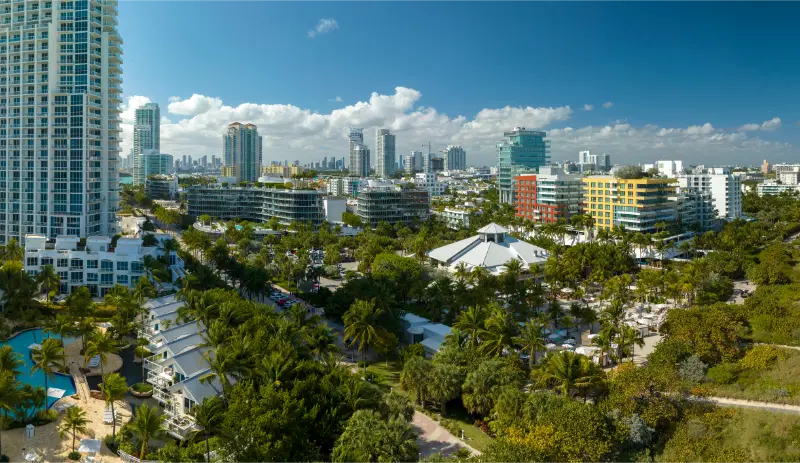
A useful comparison: Deering Estate versus Matheson Hammock
Choose Deering Estate when history, museum-style interpretation and a quieter cultural outing are your main priorities. Choose Matheson Hammock when your group wants an outdoor park, bay views or a marina-oriented visit. They are geographically compatible but not interchangeable. Deering admission is separate from county park parking, and neither should be used as a guarantee about what the other has open that day. On a short break, there is no requirement to visit both if one already fits your family perfectly.
For travelers who walk with a cane, the question is which portion of a destination delivers the experience without the most effort. The Deering grounds may involve different surfaces from parts of the park, and waterfront sections can be exposed to wind and sun. Call ahead about accessible restrooms, entrance routes and places to sit. A shorter visit with a comfortable lunch can be much more satisfying than struggling to complete a full circuit because an itinerary says you should.
Day 4: choose between neighborhoods and a southern extension
The final sightseeing day should respond to what you enjoyed most. If you liked the waterside setting, choose a public park in Cutler Bay or Palmetto Bay with practical parking and restroom facilities and plan a light lunch nearby. If the history at Deering Estate sparked interest in South Florida’s rural side, you could drive farther south toward the Redland, where small farms and seasonal produce offer another perspective on the region. That is a separate outing, however, not something to squeeze between checkout and the airport.
Redland visits are especially sensitive to season and opening days. A farm stand advertised online may not be operating when you arrive, fruit harvests vary and private agricultural land is not a public attraction. Use a specific, currently operating farm or garden as the anchor and call first. For a family with young children, avoid driving between multiple farm addresses on the off chance that something will be open. One confirmed visit is better than a long afternoon of disappointment.
Weather, tides and water quality
South Florida is warm for much of the year, but the comfort of this itinerary still changes with the season. In summer, plan any exposed waterfront walk early and use museums or indoor rest periods during the hottest hours. Afternoon thunderstorms can develop quickly and lightning requires leaving open shorelines. In winter, a clear and breezy morning can feel cooler than a traveler from a northern climate expects, particularly at the edge of Biscayne Bay.
Weather is not the only variable. Coastal parks and beaches may have water-quality advisories, temporarily closed facilities or maintenance projects. Check the Miami-Dade County park page and the relevant public-health water testing information on the day of an intended swim. Never treat online photographs as proof of current conditions. If the water isn’t suitable, this trip still works as a combination of history, gardens, photography, restaurants and neighborhood parks.
A realistic budget for four days
Build the expense estimate around four categories: the accommodation, transport, entry/parking and meals. A rental car adds airport fees, taxes, possible toll charges and fuel, while rideshares may become costly when parks are spread apart and return pickups are uncertain. If you plan only one paid cultural attraction and several parks, the overall experience can cost considerably less than four major ticketed activities—but Miami-area room rates still depend heavily on dates and events.
Use the official Deering Estate admission page and Miami-Dade’s Matheson Hammock listing for the current fees rather than copying figures from an old guide. Add a parking contingency and a meal or grocery budget that suits your group. A vacation rental with a kitchen may make family breakfasts easy; a hotel can be simpler for a couple on a short trip. Compare the full total including cleaning charges or mandatory hotel fees instead of the nightly headline price.
Safety and accessibility planning
Waterfront destinations deserve extra attention when traveling with children, elderly relatives or mobility aids. Sun exposure, slippery edges and uneven surfaces can make even a short excursion tiring. Pack hats, water, insect protection, comfortable shoes and a charged phone. Supervise children continuously near water, and do not feed birds or approach wildlife. Although these parks look peaceful, they are part of an active natural environment, not controlled playgrounds.
For access needs, request specific details: step-free routes to exhibits, available accessible parking, surfaces between the parking area and the attraction, and whether a scheduled tour includes stairs. Do not assume that an accessible entrance provides identical access to every historic room. If a wheelchair user cannot take part in one tour segment, ask whether a different interpretive option is offered. An honest discussion before arrival is far better than discovering a barrier after paying.
Departure and a useful way to extend the trip
On departure day, give yourself time for heavy traffic, fuel or rental-car return and airport security. Southern Miami-Dade can feel surprisingly far from an airport when major roads are congested. If you have another three or four days, extend the vacation around a different base rather than keeping the same hotel and making exhausting day trips. Homestead and the national parks to the south are one possibility; Miami’s urban museums and neighborhoods are another.
The value of this small coastal itinerary is the change of perspective. You can learn South Florida history, sit beside Biscayne Bay and see how suburban neighborhoods meet preserved green spaces, all without treating Miami solely as nightlife and ocean beaches. With sensible distances and a flexible schedule, four days reveal a rewarding part of the region that is easy to overlook.
Frequently asked questions
Is Deering Estate close to Miami Beach?
It is in southern Miami-Dade, not beside Miami Beach. Allow travel time and avoid planning both as one short walk.
Is Matheson Hammock the same as an ocean beach?
No. It is a county bayfront park with a marina and a different coastal setting. Check current swimming and water-quality guidance.
Can this itinerary work with children?
Yes. Keep the estate visit shorter for small children and choose parks with restrooms, shade and direct supervision near water.