
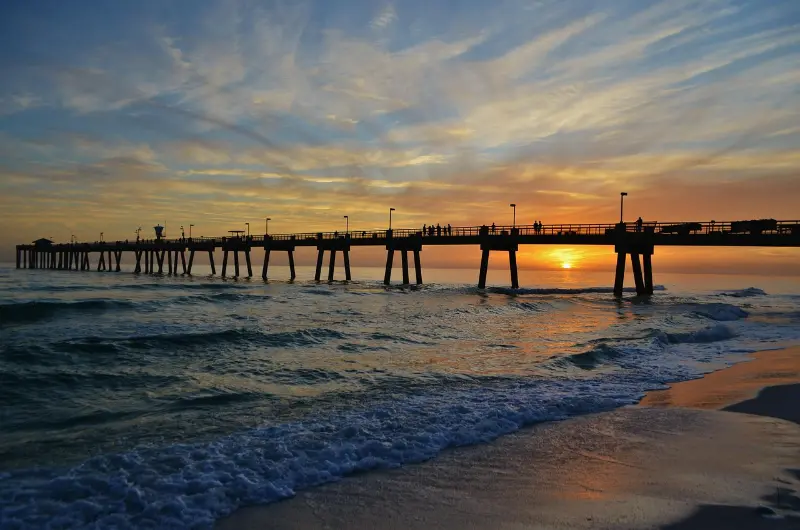
Amelia Island State Park can be a highlight of a Northeast Florida trip when you approach it for what it actually does best. This state park protects the less-developed southern tip of Amelia Island, where the landscape opens toward Nassau Sound and the Talbot Islands. It is a useful contrast to resort areas farther north because the emphasis is wildlife, shorelines and simple outdoor time rather than restaurants or built attractions.
This guide focuses on decisions that matter on the ground: how long to allow, what to prioritize, which current operating details could affect the day, how the experience works for families and senior travelers, and what nearby stops make sense without turning the itinerary into a checklist.
Quick planning summary
- Best for: beach walkers, birders, anglers, cyclists, photographers, shell collectors and equestrians bringing their own horses.
- How much time: 2 to 4 hours for a beach-and-nature visit; longer if you fish, cycle the Timucuan Trail or plan an equestrian outing.
- Best strategy: check the official operating page the day before, arrive early for outdoor sites and leave one flexible hour in the schedule.
- Research date: current operating details were reviewed on 6 October 2026 for a 2027 publication schedule.
Why this place is worth adding to your Florida trip
This state park protects the less-developed southern tip of Amelia Island, where the landscape opens toward Nassau Sound and the Talbot Islands. It is a useful contrast to resort areas farther north because the emphasis is wildlife, shorelines and simple outdoor time rather than restaurants or built attractions.
The strongest reason to add a stop is not that it appears on a list of attractions. It is that it contributes something different to the trip. Northeast Florida is especially good at combining beaches, marshes, long human history and cultural institutions within a relatively compact region. Choose the experience that adds the layer your itinerary is currently missing.
Best things to do and how to experience them
Treat the beach as wildlife habitat, not only recreation space
The southern tip is important for shorebirds, sea turtles and seasonal migrants. That means parts of the beach may look empty by design. Respect ropes, signs and temporary closures, especially from spring through early fall. A pair of binoculars often adds more to the visit than another beach toy.
Use Nassau Sound for a different kind of coastal view
The park’s setting at Nassau Sound creates a more dynamic landscape than a straight Atlantic beachfront. Anglers and photographers can watch tidal movement around the George Crady Bridge, while walkers can see the relationship between ocean, inlet, marsh and neighboring islands.
Plan horseback riding as a specific activity
Riding your own horse along the shoreline can be memorable, but it is not a casual walk-up experience. Contact the ranger station, carry required documentation, follow manure-management rules and understand that wildlife or capacity restrictions can affect access. If you do not travel with a horse, do not assume a concession ride will always be available.
Current information to know before you go
As reviewed on 6 October 2026, Amelia Island State Park is open from 8 a.m. to sunset every day and charges $2 per person through an honor-box system. Beach parking is limited to 300 people at one time, with a stated maximum of 600 visitors per day; the park can close temporarily when capacity is reached. The park is one of the few Florida beaches where visitors may bring their own horses, but riders must contact the ranger station in advance and daily capacity rules can apply. The southern end is a critical wildlife area with seasonal nesting protections.
Operating details can change between the research date and your trip. Recheck the official page shortly before departure, especially when capacity limits, tide-dependent access, renovation work, ranger staffing, seasonal wildlife closures or special events could affect the experience.
Best time of year and best time of day
Northeast Florida has a longer cool season than South Florida, so late fall, winter and spring can be excellent for walking, historic sites and long outdoor days. Summer is still very usable, but heat, humidity and afternoon thunderstorms change how you should schedule the day. Start outdoor activities early, move indoors or into deep shade around the hottest hours, and keep a flexible late-afternoon option.
For coastal parks, tide, wind and surf can matter as much as temperature. For museums and historic sites, opening days matter more than weather because several National Park Service locations in this region are closed Monday and Tuesday. Before committing to a route, check the official page again the evening before your visit.
How to plan for families with children
The easiest family days alternate structured learning with physical freedom. A fort, museum or visitor center may hold attention for an hour, but children usually enjoy the destination more when the next part of the day includes a trail, picnic, beach walk or wildlife stop. Avoid building a schedule that requires children to listen quietly at three historic sites in a row.
Carry more water than you think you need, especially from May through September. In coastal areas, bring sun protection even on breezy days because the wind can hide how strong the sun feels.
Families with young children should focus on beachcombing, bird spotting and a short walk rather than trying to cover the full shoreline. There are no lifeguards, so adults should treat the water as an active ocean environment and keep swimming expectations conservative, especially when tides and currents look strong.
Senior travelers and multigenerational groups
A multigenerational itinerary works best when everyone can participate in the defining experience without being forced into the most strenuous version of it. Historic sites often have accessible visitor centers even when old stairways or uneven ground limit part of the property. Nature parks usually have one easier loop, overlook or picnic zone that can serve as a comfortable base.
Plan restrooms and shade stops before they become urgent. Northeast Florida distances can look short on a map, but bridge traffic and long park roads add time. One major morning stop plus one optional afternoon stop is often more enjoyable than three fixed reservations.
The experience can be gentle if you stay near the main parking and shoreline access. Soft sand is the main mobility challenge. Travelers who prefer firm surfaces can combine a short beach look with the paved Timucuan Trail and views around the fishing bridge.
Accessibility and mobility planning
Accessibility varies sharply among these attractions because the region combines modern museums, historic buildings, forest trails and natural beaches. Official accessibility notes are useful, but they do not always capture soft sand, roots, slopes or the fatigue caused by heat. Travelers using wheelchairs, walkers or canes should call ahead when a particular trail, tower, historic floor or shoreline is the main reason for visiting.
If part of an attraction is inaccessible, look for an alternative that still communicates the main story: an exhibit, audio tour, river overlook, accessible loop or ground-level interpretation. A successful visit does not require completing every stairway or trail.
What to bring
For outdoor sites, carry water, sun protection, insect repellent, closed-toe shoes or secure sandals, and a small towel. A lightweight rain shell is useful in the warm season. Binoculars add real value along the Talbot Islands and Huguenot, while a portable phone battery can help at sites where audio tours or maps are online.
For museums and historic sites, a light layer is useful because indoor air conditioning can feel cold after outdoor heat. Keep valuables out of view in parked cars and do not leave beach equipment scattered around trailheads.
Weather, storms and hurricane-season reality
Atlantic hurricane season officially runs from June through November, but ordinary thunderstorms are a more frequent day-to-day planning issue. Lightning is the main reason to leave beaches, piers and exposed trails quickly. Do not wait for heavy rain before acting if thunder is nearby.
Storms can also change shorelines, roads, docks and trail conditions for months. A guide researched in 2026 cannot guarantee every facility will be identical in 2027, so always recheck official alerts before driving to a remote access point.
Budget and value
Many Northeast Florida nature and history sites remain inexpensive compared with major theme-park attractions. State parks often charge by vehicle, National Park Service sites in the Timucuan Preserve are fee-free, and local nature centers use modest admissions. That makes it easy to combine one paid attraction with a free riverfront, neighborhood or beach walk.
The biggest hidden costs are often parking, food, rentals and extra driving. Pack water and a picnic when appropriate, group nearby stops geographically and do not pay for an activity simply because it is available. The best value comes from choosing the one experience that makes each place distinctive.
Photography without slowing everyone else down
Early morning and late afternoon usually create softer light and more comfortable temperatures. At beaches, protect your camera or phone from blowing sand and salt spray. At historic sites, avoid blocking doorways, ramps or interpretive panels while composing photos.
If you are traveling with non-photographers, set a simple rule: take the detailed photo session at one or two locations, then keep the rest of the day moving. This prevents every scenic stop from becoming a 30-minute delay.
Responsible travel in fragile coastal habitat
Northeast Florida’s dunes, marshes and nesting beaches are living habitat, not empty scenery. Stay off protected dunes, respect seasonal closures, keep distance from birds and never feed wildlife. On beaches with driving access, wildlife restrictions should override convenience.
Historic places deserve the same care. Do not climb on ruins or artifacts, remove shells or objects from protected sites, or treat places associated with slavery and conflict as backdrops without context. Responsible travel is part of getting more from the visit, not an extra rule added afterward.
Where to stay and how to group the region
Fernandina Beach is the easiest base for Fort Clinch and Amelia Island, while Jacksonville provides the widest range of lodging and is more practical for the Cummer Museum, Tree Hill, Fort Caroline and the southern Timucuan sites. Travelers focused on the Talbot Islands can also choose beach-area lodging but should compare drive times carefully because bridges and park roads shape the day.
For a three- or four-day trip, changing hotels is usually unnecessary. Pick one base, group attractions by geography and avoid crossing the metro area multiple times in the same day.
How to combine it with other Wonderful Florida guides
Useful already-published Wonderful Florida guides that add a different type of experience include Fort Clinch State Park, Cape St. George Lighthouse. Treat these as separate half-day or next-day ideas rather than trying to force every nearby attraction into the same schedule.
A realistic three-day mini-itinerary
Day 1
Arrive early, walk the beach at lower tide if possible and spend time watching Nassau Sound before the hottest part of the day.

Day 2
Use the second day for Fort Clinch and historic Fernandina Beach, adding indoor or shaded time around midday.
Day 3
Use day three to continue south toward the Talbot Islands for a more rugged barrier-island experience.
Who may want to skip or shorten the visit
This is not a full-service beach resort. Visitors who want food service, chair rentals and a highly managed swimming beach may prefer a more developed Amelia Island access. Capacity closures also make late arrivals risky on popular days.
A good Florida itinerary is selective. If this stop duplicates something you have already done several times, shorten it or save it for a future trip. The objective is to build contrast—history after beach time, a quiet trail after a city museum, or a wildlife morning after a restaurant-heavy evening.
Official resource to check before you go
A practical decision framework for this stop
Before you goBefore you leave your hotel, decide what would make this visit successful for your group. For some travelers that means seeing one major historic feature; for others it means walking a quiet shoreline, giving children space to move, photographing wildlife or spending two calm hours in air conditioning. Naming that goal in advance makes it easier to skip secondary features when heat, crowds or fatigue change the day.
Use a simple three-question test: What is the one feature we would regret missing? What condition could prevent us from enjoying it—tide, heat, capacity, stairs, weather or opening hours? What nearby alternative can replace it without turning the day into a long drive? This approach is especially effective in Northeast Florida because many attractions are close enough to substitute for one another but different enough to provide a fresh experience.
Finally, leave the last 30 to 60 minutes unscheduled. That margin absorbs a late lunch, slower walking pace, unexpected ranger program or traffic delay. It also gives you permission to stay longer when a place turns out to be better than expected.
How to make the visit feel more personal
The difference between an average visit and a memorable one is often one small choice made on site. Ask a ranger, volunteer or staff member what they would prioritize if they had only an hour. At a nature park, ask which trail or viewpoint best matches current conditions. At a museum, ask which gallery or object tells the most local story. At a historic site, ask which surviving feature visitors most often overlook. Those questions usually produce better decisions than following a generic top-ten list.
Keep notes on the details that are specific to this place: a bird call you heard, a material used in a historic wall, the direction of the tide, a painting that changed how you saw the river, or the way a child reacted to an exhibit. These details are what make travel experiences different from one another and help you remember the trip months later.
If the site is quieter than expected, use that as an advantage rather than searching immediately for the next attraction. Sit for ten minutes, look at the landscape and notice how the place works. Florida rewards travelers who occasionally stop moving.
Final thoughts
Amelia Island State Park is most rewarding when you know its defining experience before you arrive and leave enough time for that part of the day. Confirm current hours or access rules, respect wildlife and historic resources, and avoid overloading the schedule.
Wonderful Florida should help you decide what is genuinely worth your time. Use this guide to build a visit that fits your age group, mobility, interests and weather rather than trying to copy a fixed checklist.