Category: Fort Lauderdale Florida

  • Port Everglades Cruise Guide: Terminals, Parking and Embarkation

    Port Everglades Cruise Guide: Terminals, Parking and Embarkation

    Port Everglades in Fort Lauderdale is one of Florida’s busiest cruise gateways, but first-time passengers often underestimate the difference between arriving in the city and arriving at the correct ship terminal. This is a practical guide to reaching your vessel without an exhausting morning: where to stay, how to identify your terminal, when to arrive, what happens to bags, and how to plan the journey home. Cruise operations and parking prices can change, so consider your sailing documents and the port’s current instructions more authoritative than an old travel forum.

    At a glance

    Planning pointBest action
    Before bookingVerify Port Everglades rather than PortMiami
    One day beforeConfirm ship, terminal, check-in window
    DrivingCheck on-site garage and daily rate
    FlyingPrefer a buffer before embarkation

    Where Port Everglades is and how it differs from PortMiami

    Port Everglades is in Broward County, close to Fort Lauderdale-Hollywood International Airport. It is not the cruise port in downtown Miami. That distinction matters if a flight or hotel booking simply says “South Florida.” Driving from Miami can be straightforward outside peak traffic, but a delayed aircraft, congestion on Interstate 95 or a cruise-day surge around the terminal area can make a tight itinerary miserable. Fort Lauderdale hotels near SE 17th Street, the convention center and the airport are often convenient starting points. Beach hotels are attractive for an extra holiday night but may add a longer transfer. Confirm the exact port name in the cruise booking before choosing flights, transfers or accommodation.

    Kayaking in Everglades National Park Florida

    Identify your cruise terminal before you leave the hotel

    A cruise line may use different terminals for different ships or sailing dates. Search the vessel name and embarkation date on the port’s official ship schedule, then compare the result with your boarding instructions. Terminal numbers matter because Port Everglades has multiple vehicle entrances, parking facilities and internal roads. Do not assume your ship leaves from the same terminal used by the same cruise brand last year. Keep a screenshot of the terminal assignment, ship name and port address. If a transport driver requests an address, use the exact terminal information rather than only “the cruise port.” Port staff and signage can redirect you if operations change, but arriving prepared reduces the risk of a stressful last-minute detour.

    Flying to FLL, MIA or PBI before a cruise

    Fort Lauderdale-Hollywood International Airport (FLL) is the closest major airport and is especially attractive for a short pre-cruise stay. Miami International Airport (MIA) offers a broad international network but means a longer drive to Fort Lauderdale. Palm Beach International Airport (PBI) can occasionally offer a useful flight, yet it is farther north. The cheapest ticket is not always the lowest-cost journey after adding transport, baggage, an overnight hotel and the risk of missing an embarkation deadline. International arrivals may spend longer at passport control than domestic passengers. When flight schedules allow, arriving a day before the cruise creates space for delays, a meal, recovery from time zones and buying anything left behind.

    Taxi, rideshare, shuttle or rented car?

    A direct taxi or app-based car can be convenient for two people with moderate bags. Large families should verify passenger seats, luggage volume and required child restraints before choosing the vehicle. Cruise-line coaches may be easy to arrange when packages are offered, but follow their pickup windows carefully. Private transfers can suit a larger group or a traveler who needs a vehicle with a wheelchair lift, provided the accessible configuration is confirmed in writing. Renting a car for one short overnight stay often adds return logistics and possibly a one-way fee. If the trip includes several days exploring Florida first, a rental may still make sense. Compare the total door-to-door cost rather than treating advertised shuttle fares as fully comparable.

    Parking at the port: garages, lots and daily charges

    Port Everglades operates on-site cruise parking with garages and surface lots assigned to different terminals. The official parking information currently states that spaces cannot be reserved or prepaid through the port. Parking is generally charged for each period of the stay, so a seven-night cruise may involve parking on parts of eight calendar days depending on the rules in force. The port posts an updated daily maximum and separate arrangements for oversized vehicles; verify current figures before driving. Garages have clearance restrictions, and not every large van or roof-box-equipped vehicle will fit. Some guests prefer dropping passengers and heavy bags at the terminal before one adult parks, then meeting again. Record the garage name, level, space and the exact place where the driver will return.

    Check-in timing, security and boarding documents

    Use the embarkation arrival time issued by the cruise line. Showing up several hours earlier is not a shortcut, and terminals can restrict early entry. Keep passports or other accepted travel documents, confirmation, boarding passes, essential medicine and valuables in a small carry-on bag rather than handing everything to a porter. Document requirements vary by nationality, itinerary and stops, even for cruises that start and end at the same US port. If a child is traveling with only one parent or with other relatives, ask the cruise operator what additional consent paperwork is expected. Your ship’s rules also determine prohibited items, luggage labels and boarding cutoff times. Immigration formalities and accessible assistance should be addressed before the travel day, not at the curb.

    Handling luggage without losing essentials

    At the terminal, properly labeled checked bags are normally transferred to the ship through a baggage handling process; they may not reach your cabin immediately. Pack a change of clothes, medication, sunscreen, necessary baby products, documents and anything required before dinner in a carry-on you can manage yourself. Families with strollers should ask whether a child can remain seated during the terminal process and when the stroller must be folded. Never pack passports, inhalers, important mobility equipment parts or refrigerated medicine casually inside luggage that may be out of your hands for hours. Tipping porters is customary, but the amount is a personal choice. If you need help lifting bags or transferring into the building, contact your cruise line ahead of time and explain the assistance requested.

    Picking a pre-cruise hotel

    Look for practical features, not just a “cruise hotel” label. Compare cancellation terms, breakfast hours, elevators, step-free entry, accessible bathrooms and whether an advertised port shuttle is free, paid, shared or actually running on your sailing date. A hotel near restaurants and a grocery store can save transport costs when traveling with children. Travelers who want the beach should budget a separate transfer to the terminal and resist scheduling a long excursion on embarkation morning. A hotel beside the airport may suit a late flight, while a place in downtown Fort Lauderdale can be better for a relaxed evening walk. Confirm check-out arrangements, especially if you need to wait in the lobby for a later boarding window.

    Accessibility, older travelers and young children

    A terminal can involve significant walking and standing even though most facilities provide accessible routes. Request a wheelchair, porter support, or embarkation assistance through the cruise operator as early as its policy requires; do not assume port parking staff can organize shipboard medical support. Ask whether an accessible transfer accommodates your particular wheelchair without requiring an unsafe transfer. For small children, bring a stroller that is easy to fold and snacks that comply with cruise security rules. Older guests may appreciate a hotel night and a transfer with generous luggage space. If someone becomes tired easily, build in seated breaks rather than insisting everyone moves together. Keep a paper backup of critical instructions in case phones lose reception.

    The return journey: do not overbook your flight

    Disembarkation is not the same as stepping off a bus. The ship must clear the appropriate formalities, passengers leave by assigned arrangements, baggage must be retrieved, and taxis or ride-app cars may queue. Some passengers also face passport checks. A flight home that looks convenient on paper can be too close if the ship arrives late or queues build. Follow your cruise line’s guidance on earliest recommended flights, then allow an additional buffer for young children, mobility needs and international airline check-in. If flying from Miami rather than FLL, remember the longer ground transfer. Keeping the final Florida night ashore is sometimes worth more than squeezing out a few extra hours at home.

    Two sample arrival plans

    Couple flying into FLL: arrive the afternoon before sailing, spend the evening nearby, check the ship schedule and check-in slot after dinner, then take a direct car to the correct terminal the next morning. With one carry-on each, a hotel shuttle may not produce meaningful savings if it makes several stops. Family driving from Orlando: budget for traffic and rest breaks, keep cruise bags accessible, verify the relevant garage clearance and parking daily rate, drop passengers and luggage according to port instructions and park only after the terminal number is confirmed. Neither plan needs a dawn arrival; both need a realistic buffer and current instructions.

    Embarkation checklist for the final 48 hours

    Confirm the ship and terminal, permitted boarding window, travel documents for every passenger, online check-in, baggage tags and any prebooked transfer. Check weather forecasts but avoid treating a tropical forecast five days ahead as certain. Photograph your parking location, keep your return car key separate from cruise luggage, and charge at least one phone. Ensure a child has any needed medicine, food and quiet activity in the carry-on. Save both the port and cruise-line contact details. Before leaving the hotel, make one final check for passports in the correct bag; it is a small habit that prevents a particularly expensive mistake.

    Frequently asked questions

    Can I park at Port Everglades without reserving?

    The port’s published policy says its on-site parking does not take advance reservations or prepayment. Check the current parking page and sailing notices shortly before travel.

    Is Port Everglades the same as PortMiami?

    No. Port Everglades is in Fort Lauderdale, while PortMiami is in Miami. Transfers, hotels and airport choices should match your actual embarkation port.

    Should I fly in on cruise departure day?

    A flight a day earlier reduces exposure to delays and gives international travelers time to rest. If same-day travel is unavoidable, follow the cruise company’s minimum arrival guidance and consider travel disruption risks.

    Is a wheelchair-accessible transfer automatically available?

    No. Ask the vehicle company about a lift or ramp, securement, seating configuration and luggage space, and confirm the booking in writing.

    When should I schedule a return flight?

    Use the cruise line’s published recommendations and allow extra time for disembarkation, traffic, airport security and accessibility assistance.

    Official sources and current regulations

  • Fort Lauderdale Airport Transfers: FLL to Miami, Port Everglades and the Beaches

    Fort Lauderdale Airport Transfers: FLL to Miami, Port Everglades and the Beaches

    Fort Lauderdale-Hollywood International Airport, usually called FLL, is a useful gateway to South Florida, but it does not drop passengers directly at Miami Beach or a cruise ship. The best arrival route depends on whether you are sleeping in Fort Lauderdale, heading to Port Everglades, traveling to Downtown Miami or continuing to Miami Beach. Distances on a map can hide traffic, luggage restrictions and the time needed to change services. This guide compares the main ground-transport choices without promising fixed journey times or fares, and includes practical advice for families, older visitors and people who require accessible vehicles.

    Quick comparison

    DestinationPotential approachMain consideration
    Fort Lauderdale BeachDirect car or hotel transferLuggage and hotel pickup
    Port EvergladesTaxi, cruise shuttle or prebooked transferCruise terminal assignment
    Downtown MiamiRail connection or direct road transferLast-mile journey
    Miami BeachDirect vehicle or rail plus onward transferCauseway traffic and bags

    Know your arrival airport and exact destination

    FLL is in Broward County, near Fort Lauderdale and close to Port Everglades. It is not Miami International Airport, and it is not beside PortMiami. The names of ports and airports can sound interchangeable when a holiday booking says "Miami and Fort Lauderdale." Before choosing any transfer, copy the full hotel address, cruise port and ship terminal into your itinerary. A Fort Lauderdale Beach hotel is not necessarily walkable from the airport, while a property advertised as "near FLL" may be inland. If you are renting a vacation home, inspect its actual location: residential addresses can be far from train stations and late-night restaurants. Write down the terminal where your flight arrives as well, since pickup instructions vary within the airport.

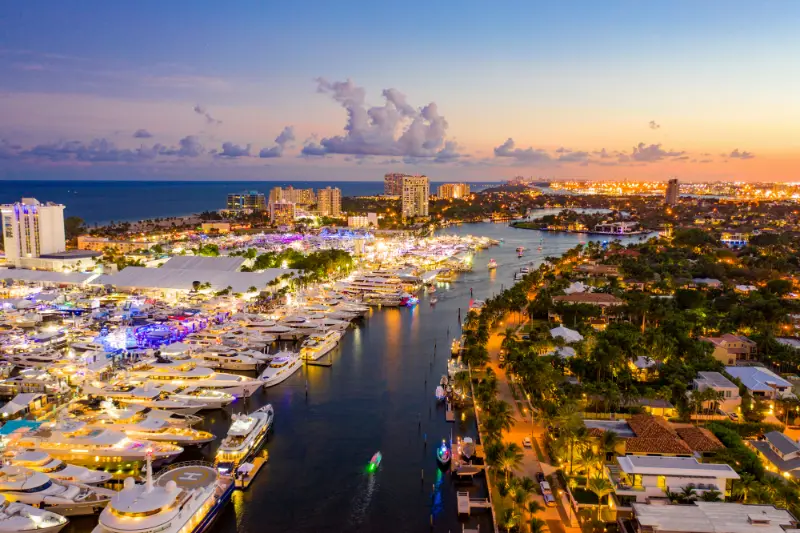
    Fort Lauderdale Florida Downtown Oceanfront Skyline at Sunset

    Taxi and authorized app-based rides

    Taxis and ride-hailing services are straightforward when you have several bags and want to reach a single address without changing vehicles. Use official airport wayfinding to reach the designated pickup area; do not accept unsolicited offers from strangers inside the terminal. Compare total estimated cost after airport surcharges, tolls, peak demand and tips where applicable. For a larger group, consider whether the vehicle comfortably fits all passengers and suitcases. Confirm child-restraint arrangements before requesting a ride; rideshare availability does not mean that appropriate car seats will be supplied. Wheelchair users who need to remain in their chairs during transportation should request a suitably equipped vehicle, not simply a large SUV. Send the driver the complete destination and confirm the destination city before departing.

    Tri-Rail from FLL toward Miami and Palm Beach

    Tri-Rail is a regional commuter-rail service connecting parts of Broward, Miami-Dade and Palm Beach counties. FLL is linked by airport shuttle to the Fort Lauderdale-Hollywood International Airport Tri-Rail station at Dania Beach rather than by a train platform in the passenger terminal. According to Broward County’s airport guidance, free shuttle buses serve that station from designated ground-transport areas. Check the current Tri-Rail timetable, service alerts, airport-shuttle frequency and the station closest to your final destination. Rail can be cost-effective for a solo traveler or family comfortable with luggage and connections, but it may not be suitable for somebody who cannot comfortably transfer between shuttle, platform and local transport. Add a contingency for delayed flights or disrupted service. A train ride is only one part of your complete door-to-door trip.

    Brightline: useful, but check the extra transfer

    Brightline is an intercity rail service connecting stations including Fort Lauderdale and Miami, with service extending to Orlando. Its station in Fort Lauderdale is not inside the FLL terminal. The airport has described connector shuttle services linking it with Brightline’s South Florida stations, but schedules, eligibility, cost and reservation procedures must be confirmed for your date. If your real destination is near MiamiCentral, that connection may be appealing; if it is on a distant section of Miami Beach, the journey still requires a last-mile transfer. Compare the combined price of airport connector, train and final taxi with a direct ride. Avoid scheduling a closely timed train after an international flight without allowing for baggage delays. An elegant train ticket is not necessarily the simplest family transfer.

    To Fort Lauderdale Beach and Las Olas

    Visitors staying around Fort Lauderdale Beach, Las Olas Boulevard or Downtown Fort Lauderdale often find a direct taxi or prearranged transfer easiest, especially after an evening flight. Public buses may reduce cost, but routes and frequencies can make the journey inconvenient with children or large suitcases. A hotel shuttle is useful only if it serves your actual property, runs at your arrival time and handles your luggage or mobility requirements. Ask your hotel for precise pickup directions and avoid mistaking a shuttle to the rental-car center for a downtown hotel service. If your room will not be ready until afternoon, plan a luggage-storage solution before traveling to the beach. In the heat, walking even a short unfamiliar route with all your bags may be exhausting.

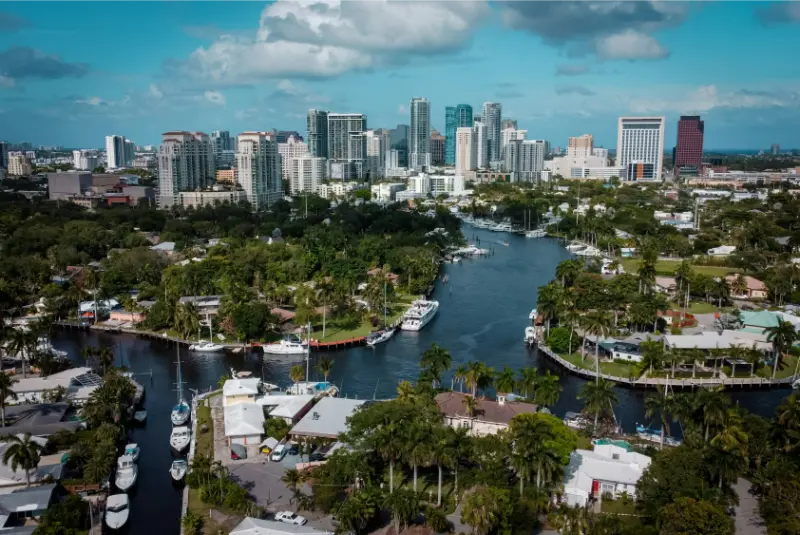
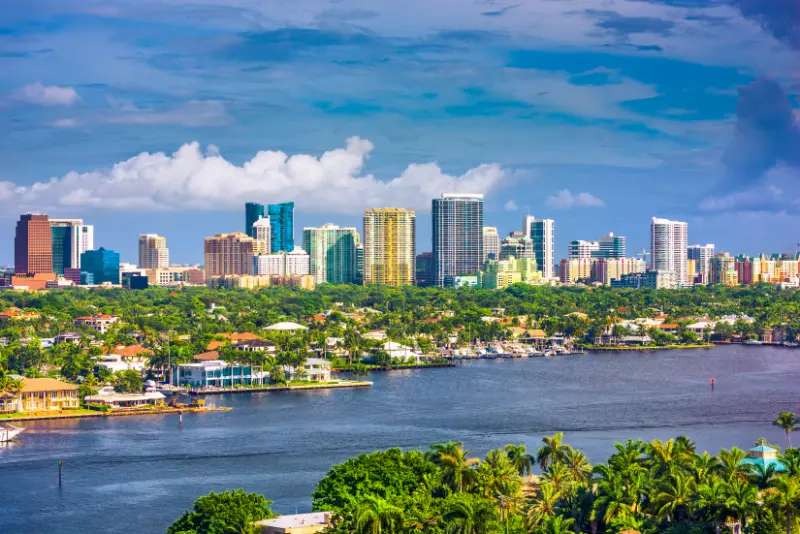
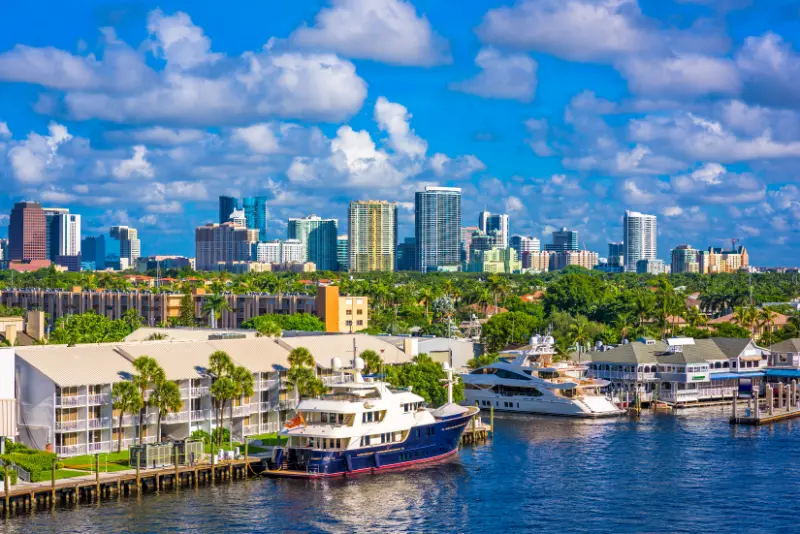
    Fort Lauderdale Downtown Skyline across Canal

    Getting from FLL to Port Everglades

    Port Everglades is close to FLL compared with most airport-to-cruise-port journeys, but it is a secure port with multiple terminals and specific drop-off points. Your exact ship terminal matters. A taxi, authorized app ride or cruise-line transfer can be practical; a hotel near the airport can also work for the night before sailing. Never assume proximity makes it safe to fly in just before the ship leaves. Luggage claim, bad weather, airport traffic and embarkation formalities can still interrupt the schedule. Confirm whether your chosen hotel provides a cruise shuttle, whether a reservation is required and whether it can carry a wheelchair or car seat. If you are driving yourself, look up official Port Everglades parking rather than navigating to a general port name.

    FLL to Miami Beach or Downtown Miami

    Miami and Miami Beach are different urban areas. Downtown and Brickell lie on the mainland, while South Beach and other Miami Beach districts are reached over causeways. A rail service toward central Miami may be useful for a visitor staying near a station, while a direct transfer often makes more sense for Miami Beach with luggage. Traffic can be unpredictable on major interstate routes, particularly during events, rush periods and bad weather. For an international family, calculate the final time to check into accommodation instead of comparing only the train and road legs. A transfer that appears cheap at the airport may become expensive once you add a second vehicle for four people. Keep a destination phone number in case your driver or shuttle needs the exact entrance.

    The rental-car alternative

    FLL has an established rental-car center, and airport guidance explains how to reach it. Renting is worthwhile when your holiday involves remote beaches, several towns or multiple days outside walkable urban areas. It may be unnecessary for a beach-only stay where hotel parking is expensive. Price the total trip: base rate, insurance, additional drivers, tolls, parking, fuel and potential one-way return fees. Review your contract for Florida toll handling rather than assuming a vehicle’s electronic device is free. If traveling with a baby, reserve an appropriate child seat from a reliable provider and confirm availability, or bring an approved one you know how to install. Factor in the stress of driving an unfamiliar vehicle after a long flight.

    Accessible and low-stress airport arrivals

    A transfer is truly accessible only when every stage works: airport exit, pickup curb, boarding method, securement, luggage space and hotel arrival. Broward County publishes FLL ground-transport and accessibility information, which should be your first reference. If you use a powered wheelchair, provide its dimensions and approximate weight when requesting a vehicle, and specify whether you will remain seated in it. Do not assume a vehicle described as "accessible" has the correct lift or tie-down system. Travelers with visual or hearing disabilities can ask carriers and the airport about communication arrangements. A pre-booked transfer can reduce uncertainty, but obtain written confirmation of what has actually been reserved. Allow extra time when a cruise check-in window is involved.

    Arrival checklist: what to do after landing

    Once you arrive, check real-time flight and ground transport information before leaving the terminal. Retrieve luggage, identify whether you need a terminal shuttle or designated ride-hailing zone, and use the official airport map. Keep the hotel address and phone number available offline. Families should feed children and use restrooms before a potentially long road transfer, and check the condition of infant restraints before departure. For rail journeys, confirm the shuttle connection still operates, purchase any required fare through the official provider and avoid joining a train route you cannot complete with your luggage. If weather disrupts the first choice, have one alternative transport method and a realistic spending limit.

    Frequently asked questions

    Can I walk from FLL to Port Everglades?

    Do not plan on walking through airport roads or secure port approaches simply because they appear close on a map. Use authorized transportation and the cruise terminal designated by your operator.

    Does Tri-Rail stop inside FLL airport?

    No. FLL is served by shuttle connections to the nearby airport-designated Tri-Rail station. Check the airport and rail operator for current pickup points and service times.

    Is FLL a good airport for Miami Beach?

    It can be, particularly when flights are cheaper or more convenient, but compare the total transfer time and cost with flying to Miami International Airport. Miami Beach still needs a further road or transit journey.

    What is best for a family with several large suitcases?

    A direct vehicle may minimize transfers, but check its actual luggage capacity, car seats, accessibility and final price. A booked van can be preferable to squeezing everyone into two separate taxis.

    Choose the whole journey, not its cheapest first leg

    A good transfer gets your party from the arrival terminal to the accommodation or cruise check-in with a sensible number of changes. Some travelers will value the rail journey; others will value sitting down in one vehicle after a tiring flight. For mixed-age families, the winning choice often saves waiting, lifting bags and explaining directions to several drivers. Verify current schedules and prices shortly before travel because ground-transport operations can change.

    Official sources for checking current details

  • Four Days in Fort Lauderdale Without a Rental Car: Beach, Riverwalk and Transit That Works

    Four Days in Fort Lauderdale Without a Rental Car: Beach, Riverwalk and Transit That Works

    Fort Lauderdale is often sold as a city of boats, canals and oceanfront hotels, so a car-free visit may seem unrealistic. In fact, a thoughtfully located hotel and a modest plan can eliminate much of the cost and frustration of renting a vehicle. The secret is to distinguish transport systems rather than treating every trolley, water taxi and train as interchangeable. Broward County Transit operates buses, Tri-Rail connects the wider region, and the city’s LauderGO! network includes free community shuttles, a water trolley and other local mobility options. A commercial sightseeing water taxi is another product with its own tickets and routes.

    At a glance

    Stop or themeWhat to doCheck before traveling
    AirportBCT Route 1 or shuttle to Tri-RailCheck actual boarding stop
    DowntownRiverwalk, Las OlasCheck LauderGO route days
    BeachBeach Link or nearby lodgingCheck last departure
    New RiverFree Water TrolleySome docks under construction
    Regional railTri-RailAirport station needs shuttle

    This four-day itinerary is for visitors who want one destination rather than a sprawling South Florida road trip. It is particularly useful for solo travelers, families who dislike city driving and older visitors who would rather avoid parking garages. It also has limits: a car-free vacation is easiest if you book near Las Olas, downtown or the main beach and verify how far the nearest usable stop is from the hotel door. ‘A bus runs somewhere nearby’ is not the same as reliable step-free access in August heat.

    Before you book: choose your base by its connections

    A downtown or Las Olas base favors restaurants, the Riverwalk, museums and connections to local mobility services. An oceanfront hotel favors early morning beach visits and reduces the need to carry beach gear through town. A third option near a frequent bus corridor can save money, but only if the route runs at the times you need it. Check the exact address, sidewalk conditions and the actual stop—not the vague neighborhood description—before committing to a nonrefundable reservation.

    If you are traveling with a baby, weigh the convenience of a kitchenette and shaded walking routes against a cheaper room farther inland. For a wheelchair user, request confirmation of step-free entry, usable room configuration and lifts on any transport service you intend to use. For someone over 80 who walks well but tires easily, a hotel in a compact area is often more comfortable than a hotel requiring several transfers. Ask whether resort fees and parking charges are compulsory even when no car is used.

    Arriving from Fort Lauderdale-Hollywood International Airport

    FLL is close to the city but that does not mean every hotel is a pleasant walk from the airport. Broward County Transit Route 1 serves the airport via the Rental Car Center, and the airport explains how to reach the stop. Tri-Rail’s airport station is at Dania Beach, with a free connecting shuttle between terminals and the station. These two options serve different travel patterns: Route 1 may work for a local bus connection; Tri-Rail is helpful for movement along the South Florida rail corridor.

    Fort Lauderdale Beach Florida Marina at Sunset

    Do not confuse the Tri-Rail airport station with a train platform inside your terminal. With luggage, children or limited mobility, the transfer time and boarding arrangements matter. Compare the complete door-to-door journey with a licensed taxi or prebooked transfer. A taxi can be economical when split among several people even if public transit costs less on paper. For the return, leave room for road delays, the shuttle connection and airport security. A late-evening landing does not guarantee the same transit frequencies as a weekday afternoon.

    Day 1: Riverwalk and Las Olas at a relaxed pace

    Check into your hotel and start with the Riverwalk area, where the New River introduces Fort Lauderdale’s relationship with water. Walk only the portion that suits your group; the goal is to understand the city, not to record the maximum step count. A museum or a shaded café makes a useful companion stop when the midday sun grows intense. Look for public seating, water and the location of the closest restroom before setting off with younger children or older relatives.

    The city’s free LauderGO! Water Trolley operates on the New River, using designated boarding stops. It is a practical short experience and transport link, not a substitute for the larger commercial Water Taxi network. The official city page identifies some stops as unavailable during construction and notes that bridge operations can create delays. Check today’s usable stop map rather than walking to a permanently memorable location. In the evening, enjoy Las Olas Boulevard on foot and return early enough to avoid a long, unfamiliar transfer after shuttle service ends.

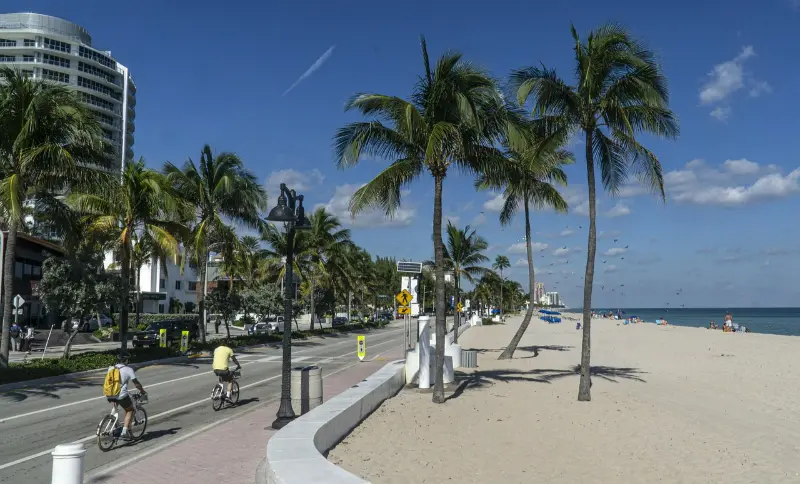
    Choose an early start for the beachfront before peak heat. Bring water, sunscreen, a sun hat and only the beach equipment you can carry back comfortably. Ocean currents change with conditions, so follow posted beach flags and lifeguard guidance rather than treating a calm-looking morning as an invitation to swim anywhere. Families with small children may prefer building sandcastles and walking the promenade to spending hours in the water. For travelers who do not swim, the oceanfront still offers sea air, people-watching and photography.

    Fort Lauderdale’s LauderGO! Beach Link is a free local shuttle with its own timetable, service pattern and stops. It may connect your hotel and beach area, but it is not a continuous, round-the-clock beach circuit. The Las Olas Link has a different operating schedule and is particularly worth checking for weekend planning. If you want to explore another beach far to the south, assess the actual bus ride and waiting time before adding it. A day spent comfortably in one beach zone is usually better than a day consumed by transfers.

    Fort Lauderdale Beach during Spring Break Aerial

    Day 3: Museums, neighborhoods and rainy-day flexibility

    Make day three an indoor-and-outdoor combination. Depending on your interests, choose a cultural institution in or near downtown, an exhibition, a history-focused stop or a guided neighborhood experience. Confirm current opening days directly because museums may close on particular weekdays. A family with children can prioritize interactive exhibits, while art-minded adults may spend an entire morning in a single museum. Build one meal break into the schedule rather than assuming everybody has the stamina for nonstop sightseeing.

    The free Downtown Link and other LauderGO! community shuttle routes serve distinct areas, and some are weekday-focused. That is why it is a mistake to reuse Friday’s itinerary on Sunday without checking. Broward County Transit buses fill gaps, but transfers need planning, especially during rain. If thunderstorms appear, do not wait at an exposed waterfront stop merely to follow the original plan. Move to a safe indoor location, then reevaluate. A low-cost rideshare trip used strategically can preserve the freedom of a car-free visit without turning the vacation into an endurance test.

    Day 4: One easy excursion or a slower final morning

    The most useful optional excursion is one that matches the transit system, rather than an attraction that looks close on a regional map. With sufficient time, Tri-Rail can provide a regional outing to a suitable station area, but investigate the last mile first. A station may be far from the beach or historic district you hope to visit. If your real priority is an easy departure day, stay in Fort Lauderdale, return to a favorite section of Riverwalk and enjoy a leisurely lunch instead.

    Travelers with a late flight should confirm hotel luggage storage, then work backward from the latest safe departure time. Do not leave the afternoon to chance if your chosen bus runs infrequently. If you took a commercial water taxi sightseeing tour earlier, remember that its ticket does not automatically cover public buses or another operator’s water service. The same principle applies to day passes, apps and promotional fares: identify the provider before purchasing anything. A final morning with fewer decisions often feels more like a holiday than a rushed expedition.

    How the different transport systems fit together

    The practical division is simple. Broward County Transit provides the backbone of county buses. LauderGO! is a collection of city mobility services, including free shuttles and river transport, with local coverage rather than region-wide reach. Tri-Rail links communities along the South Florida corridor, and the airport provides information about its terminal shuttle to the rail station. Commercial water-taxi sightseeing operates separately. Check the official map for every connection, because a single missed stop can add walking and long waits.

    For accessibility, ask service operators about lift equipment, the space available for mobility devices and whether a particular river dock requires steps or unusual boarding conditions. A bus being wheelchair accessible does not make every sidewalk to the stop navigable. In hot or wet weather, plan exits from the itinerary: the nearest shaded café, taxi pickup or hotel return option. Keep a power bank and a paper copy of the hotel address. Mobile apps can help, but an empty phone battery should not become a transportation emergency.

    Eating, costs and practical choices

    A car-free stay changes where money goes. You may spend less on parking, car rental and fuel, but more on a central hotel or the occasional taxi. Compare total costs rather than the headline room price. The best budget plan may involve free waterfront time, one paid museum and inexpensive local meals, but South Florida dining prices can vary widely. Look for breakfast options within an easy walk of the hotel and check whether a ‘free’ shuttle requires using a specific stop or booking method.

    Bring comfortable footwear and light rain protection. Florida’s storms make it useful to split each day into an outdoor morning and a flexible afternoon. Older visitors and small children may appreciate a midday rest even on relatively cool days. This is not a destination where you should rely on crossing a six-lane road whenever a mapping app draws a straight line. Use marked crossings and the actual pedestrian network. The reward for good planning is a city that feels pleasantly manageable without searching for a parking space every time you stop.

    Frequently asked questions

    Can I see Fort Lauderdale Beach without a rental car?

    Yes. Choose lodging near the waterfront or a useful bus or shuttle route, then check service times and the walking distance from the stop to the beach.

    Is the free Water Trolley the same as Water Taxi?

    No. The city Water Trolley is a free service on the New River; the commercial Water Taxi operates separate sightseeing services and fares.

    Can Tri-Rail take me directly to my airport terminal?

    No. The FLL airport station is at Dania Beach, with a connecting shuttle to the terminals. Build time for the transfer.

    Are the community shuttles available at night?

    Not all of them. Routes operate on different days and timetables, and service notices can change. Check the city schedule before an evening outing.

    Is this itinerary suitable for visitors with limited mobility?

    Potentially, but verify individual hotel entrances, river docks, sidewalk routes and vehicle boarding. A short taxi transfer can be the better choice for a particular leg.

    Official planning resources

  • Fort Lauderdale Without a Car: Four Days by Water Trolley, Shuttle and on Foot

    Fort Lauderdale Without a Car: Four Days by Water Trolley, Shuttle and on Foot

    Fort Lauderdale is famous for canals and boats, which makes it tempting to plan a vacation without renting a car. That is possible, but it is much easier when you distinguish three different services: the paid sightseeing Water Taxi, the city’s free LauderGO! Water Trolley on the New River, and its street-level community shuttles and micro-movers. They do not follow identical routes, operate under the same ticketing system, or serve every hotel and beach. A four-day stay can work beautifully when you choose your base first and build small neighborhoods into each day.

    This guide is written for visitors who prefer not to drive, including international travelers, couples, families with older children, and older adults who want a lighter program. It does not promise that every boat is wheelchair accessible. In fact, Fort Lauderdale’s official Water Trolley page says that the free vessel is not wheelchair accessible and points visitors toward other community mobility services. Anyone with specific boarding requirements should contact the operator before buying tickets or planning a transfer.

    Choose one walkable base, not the cheapest remote room

    Downtown and Las Olas-area lodging can put restaurants, galleries, and some riverfront stops within a manageable radius. Beachfront accommodation provides easy ocean access but may require more frequent trips inland for museums and evening activities. Hotels near airport highways can look inexpensive while generating repeated taxi expenses. Study the exact hotel address in relation to a shuttle stop, a lawful pedestrian crossing, and the attractions you want most.

    Consider noise, parking fees even if you will not have a car, elevators, swimming-pool access, and whether the hotel offers a realistic route to your first activity. Some downtown streets are pleasant to walk; others may require crossing larger roads or construction zones. A person with a rolling suitcase, a stroller, or a mobility aid may experience the same route very differently from a traveler carrying a small backpack.

    Understand the free LauderGO! Water Trolley

    The city’s free water trolley operates on the New River, offering a short scenic journey between designated riverfront stops. This is a different proposition from a paid all-day sightseeing route. The official service currently lists several stops, including Laura Ward Park, Esplanade Park, and others; some stops may be closed because of construction. It also provides approximate wait-time information and explains that bridge openings can cause delays. Read the current map on the day rather than treating a printed map as permanent.

    The trolley is part of the city’s mobility network, not a magical bridge to every beach and attraction. Passenger space is limited. On busy days, you may wait for another departure or decide to walk a short alternative route. The service is especially enjoyable for visitors who can board comfortably and want to experience the river itself. If boarding conditions are unsuitable, choose a ground transport option rather than attempting a risky transfer.

    What the paid Water Taxi does differently

    Fort Lauderdale’s paid Water Taxi is generally organized around broader tourist routes and stops, with fares and schedules that depend on the service chosen. It can function as both transportation and a scenic outing, but buying a pass only makes financial sense if the operating route matches your plans. Compare the price of a day pass with the cost of your actual planned trips. A family that uses the boat once may prefer a single trip or ground transport instead.

    Fort Lauderdale Florida Harborfront and Shops

    Check the official Water Taxi operator for current boarding points, accessibility details, child fares, evening operations, and weather cancellations. Do not assume its boats are interchangeable with the free municipal trolley. If you have an appointment or flight connection, allow much more time than the nominal travel duration because boarding queues and schedules can change.

    Day 1: arrive and enjoy Las Olas

    After arriving at your hotel, spend the first afternoon exploring a comfortable portion of Las Olas Boulevard or the nearby riverfront. Choose one section rather than attempting the whole district on arrival day. You may find shops, cafés, restaurants, and galleries, but availability varies by day and season. If someone is tired after a flight, lunch and a twenty-minute walk can be more enjoyable than squeezing in a museum before check-in.

    For families, identify a bathroom and shaded rest stop before children become restless. Older travelers may appreciate early dinner reservations and a short ride back to the hotel. Stay aware of traffic crossings and cyclists. A pleasant pedestrian district still contains intersections and vehicle entrances. On rainy afternoons, choose a nearby indoor venue instead of trying to keep to an outdoor schedule at all costs.

    Day 2: the New River and downtown heritage

    Begin with a riverfront walk and, if suitable, a ride on the free trolley. The New River is a revealing way to see Fort Lauderdale: bridges, boats, waterside homes, and commercial activity occupy the same corridor. Look for public walkways and remain outside private dock areas. Construction may temporarily block familiar paths or boarding points, so have a ground route in mind before you leave the hotel.

    Add one cultural attraction such as the Historic Stranahan House Museum or a downtown gallery if it is open and interests your group. History tours may have reserved entry and building-access limitations, while galleries may close for private events. Check current opening directly. Families who are not interested in long museum visits can focus on a short history stop and an extended lunch. One meaningful venue is often enough for a day that also includes public transport and walking.

    Day 3: a beach day without a rental car

    Use the LauderGO! Beach Link where its route and schedule suit your accommodation, or choose another verified public bus or rideshare transfer. The city lists the community shuttle routes and current timetable resources. Never assume that a free shuttle will operate late enough to return from dinner. Save a second option and check the last service in advance.

    At the beach, plan for a short visit rather than an entire unshaded day. Choose an access point with restrooms and, when swimming, follow lifeguard warnings about surf and rip currents. A scenic beach walk is often more suitable for a multigenerational group than several hours of swimming. If walking on loose sand is difficult, enjoy an oceanfront promenade or café and confirm any beach accessibility equipment locally before making the trip.

    Day 4: gardens, museums, or a final river ride

    Reserve the fourth day for a quieter attraction within a practical transport radius. Options depend on your interests: a museum, a garden, an arts venue, or another riverfront neighborhood. Confirm opening hours first, then calculate the full door-to-door journey. With public transport, a destination may appear near on a map but involve an inconvenient connection or a stop on the opposite side of a busy road.

    If your departure flight is that evening, avoid crossing town for a small attraction you can easily miss. Check baggage storage rules at the hotel and arrange an airport transfer that does not rely on a last-minute shuttle. Keep a change of clothes accessible in case you want to freshen up after the beach. A relaxed morning, lunch, and early return for bags can make the last day feel like a holiday instead of a transport puzzle.

    Compare your transport choices

    ServiceMain useLimitation to check
    Free New River Water TrolleyShort scenic river journeysNot wheelchair accessible; stops may change
    Paid Water TaxiBroader sightseeing on the waterwaysTicket price, route and boarding conditions
    LauderGO! community shuttlesNeighborhood and beach connectionsSpecific operating days and last departure
    Micro MoverLimited on-demand service zonesApp booking, area coverage and availability
    Rideshare or taxiAirport and difficult connectionsCost, luggage capacity and pickup location

    Micro Mover and free neighborhood shuttles

    The city also describes a free Micro Mover service through LauderGO!, with operating areas including downtown and beach districts. Service boundaries and dispatch procedures differ from a scheduled bus. Read the official mobility overview and any app instructions before relying on it. On-demand does not mean a vehicle will be immediately available at every street corner.

    Travelers without mobile data should identify alternatives before leaving the hotel. A map screenshot, written hotel address, and phone number can be helpful, but some app-based transport cannot be booked fully offline. If you need wheelchair transportation, ask the service directly about accessible vehicles and reservations. Do not treat a small electric neighborhood vehicle as universally suitable for all passengers or luggage.

    Four days with children or older travelers

    With children, build each day around one central activity and one backup. The boat ride itself may be the highlight, so there is little reason to add three museums. Carry water and sun protection, allow toilet breaks, and do not let children lean over waterside railings. For grandparents, choose a hotel with a practical return route and avoid planning multiple transfers after dark. A short taxi ride at the end of the day can be worth the expense.

    People with limited mobility should independently verify step-free hotel entrances, sidewalk conditions, museum facilities, and boat boarding procedures. The free water trolley’s published limitation is particularly important. A land-based itinerary may be more suitable, and it can still offer river views, art, cafés, and beach scenery. Accessibility is not one universal yes-or-no property of an entire destination.

    Costs and when passes pay off

    Not renting a car can eliminate rental fees, fuel, and parking, but it does not make ground transport free. Airport transfers, paid water taxi fares, taxis during rain, and optional tours can add up. Compare a realistic four-day transport total with the full price of a rental car, including insurance choices and hotel parking. Many travelers will prefer the flexibility of a compact car-free itinerary even if it is not the absolute cheapest option.

    Look at the final booking amount for accommodation, not the headline nightly rate. Downtown and beachfront hotels may charge destination or other mandatory fees. For ticketed attractions, buy only after checking the intended date and cancellation terms. If a public transit route changes, being based near several activities gives you a stronger backup than a nonrefundable timetable-dependent excursion.

    Weather, boats, and the importance of flexibility

    Thunderstorms and high winds can interrupt boat services, outdoor walking, and beach plans. Florida’s summer humidity also makes long walks uncomfortable at midday. Do your river and beach activity in the cooler portion of the day when practical, leaving museums or a relaxed meal for hot afternoons. Do not continue a waterfront outing when lightning threatens. The day’s success should not depend on completing every leg of a boat route.

    A four-day Fort Lauderdale visit without a car works best when you accept that the city is both a waterfront destination and a functioning urban area. Choose an appropriate base, verify transport before each day, and keep travel ambitions realistic. The reward is being able to watch boats pass, step into a gallery, and enjoy the Atlantic without worrying about where to park after every stop.

    Fort Lauderdale Waterfront Tropical Sunset

    Frequently asked questions

    Is the free Fort Lauderdale Water Trolley the same as the Water Taxi?

    No. The municipal free Water Trolley serves designated New River stops. The paid Water Taxi operates separate tourist routes and ticket options. Check both operators before planning journeys.

    Can someone using a wheelchair ride the free Water Trolley?

    The City of Fort Lauderdale states that the free Water Trolley vessel is not wheelchair accessible. Contact the city about suitable community shuttle alternatives and confirm other transport services separately.

    Do I need a car to visit Fort Lauderdale Beach from downtown?

    Not necessarily. Some city shuttle routes, public transit, and rideshares connect the two areas. Verify the exact stop, service days, closing time, and the distance you will walk from the stop to your destination.

  • Fort Lauderdale Before a Cruise: Three Nights Near Port Everglades

    Fort Lauderdale Before a Cruise: Three Nights Near Port Everglades

    A cruise departing from Port Everglades can be the beginning of a Florida vacation rather than the only part of it. Fort Lauderdale is close enough to the port for a comfortable pre-cruise stay, with beach walks, canals, museums and relaxed waterfront meals. Arriving two or three nights early can also provide a buffer against delayed flights without demanding an ambitious sightseeing schedule before embarkation.

    The trick is knowing which airport and port you are using, where to stay, and how much sightseeing fits between travel days. Port Everglades is near Fort Lauderdale-Hollywood International Airport, but it is not PortMiami or Port Canaveral. Your cruise documents, rather than a generic map search for ‘Florida port,’ determine the correct terminal and embarkation details.

    A realistic three-night plan before sailing

    Day Where Main goal Avoid
    Arrival Fort Lauderdale Reach hotel, easy meal, sleep Long evening sightseeing
    Full day 1 Fort Lauderdale Beach or canal-focused outing Multiple distant attractions
    Full day 2 Fort Lauderdale Museum, park or quiet shopping Overcommitting the afternoon
    Embarkation Port Everglades Safe transfer and timely check-in Uncertain transport and last-minute errands

    First confirm the departure port and terminal

    Port Everglades serves cruises from Fort Lauderdale and has multiple entrances and terminals. The port’s official ground-transport guide identifies security checkpoints and the importance of travel documents and photo identification. Port operations change with ship schedules, so always use your cruise line’s current terminal assignment and check-in instructions.

    A cruise may depart from PortMiami even when flights are advertised to Fort Lauderdale, or vice versa. Do not use a hotel shuttle that says ‘cruise port’ without confirming which port it serves. A terminal might also change closer to sailing; consult the operator’s communications. Print or download boarding documents and make sure every adult can access identification at the checkpoint.

    Check the permitted arrival time, luggage procedures and any restrictions on prohibited items. The convenience of the nearby airport does not remove the possibility of late flights, baggage delays or traffic. Flying in on embarkation morning is more vulnerable than arriving a day or two earlier.

    Choose the right hotel location

    Three typical choices suit different travelers. A hotel near the airport is convenient after a late arrival and may offer simpler parking or transfers. A hotel near SE 17th Street can be practical for both port access and shops or dining. A beach-area hotel creates a more recognizably coastal vacation but generally requires additional road transport to the ship terminal.

    Compare full stay costs, including taxes, resort fees, parking, breakfast, baggage storage and cruise shuttles. A ‘free airport shuttle’ may not include a port transfer; a port shuttle may operate only at limited times or require a reservation. Ask the hotel what happens if you arrive late or if your ship’s boarding time changes. Do not pay for a transport package without verifying its departure point and luggage capacity.

    Travelers using wheelchairs or scooters should ask about specific room features and prearrange an accessible transfer. A generic promise of ‘shuttle service’ is not evidence that a vehicle can load a powered mobility device. A family with small children should organize age-appropriate restraints for any road journey and confirm sleeping arrangements in the hotel.

    Arrival day: keep the first evening light

    If flying into Fort Lauderdale-Hollywood International Airport, the port and many hotels are relatively close by road, but transfers still require correct pickup zones and travel time. If landing at Miami International Airport instead, allow a longer journey and consider congestion. The official Port Everglades location page clarifies its geographical position near Fort Lauderdale and the surrounding cities.

    After checking in, explore only the hotel’s immediate neighborhood. Have a simple dinner and organize essential paperwork. If arriving from overseas, allow for immigration and jet lag. It is better to begin the next morning rested than to chase an evening attraction you will barely remember.

    Check that your luggage fits the cruise line’s allowances and that medications, passports, chargers and valuable items can be kept in carry-on bags. Do not discover embarkation-day restrictions while a taxi is already waiting outside the hotel.

    Full day one: enjoy Fort Lauderdale’s coastline

    Choose either a beach-focused day or a canals-and-riverfront day, depending on your interests and the weather. A public beachfront stroll offers ocean views, cafés and relaxed people-watching without requiring swimming. If you want to enter the ocean, pay attention to lifeguard instructions, flags, currents and water-quality notices. Children and weaker swimmers should not be taken into unsafe surf merely because a cruise vacation is about to begin.

    Fort Lauderdale Downtown Skyline across Canal

    For a less beach-oriented outing, spend time around Las Olas Boulevard and the Riverwalk. Choose a section that suits your walking tolerance; a map showing adjacent districts can conceal hot, unshaded blocks. A boat tour may provide a view of the canals, but check boarding steps, seating, duration and weather policies before buying. Someone prone to motion sickness might prefer a dry-land afternoon rather than another vessel before the cruise.

    Do not use the afternoon to travel to distant Miami Beach and return in rush-hour traffic. You can have a satisfying Florida day without proving that you visited another city.

    Full day two: culture and something for every generation

    A museum or cultural attraction is a helpful choice before embarkation because it offers a predictable schedule and weather protection. Depending on interests, consider the Museum of Discovery and Science for a family with children, or a suitable art or historic venue in the Fort Lauderdale area. Check current exhibition hours, admission and access features directly. The youngest visitor may enjoy an interactive museum for an hour, while grandparents may appreciate a relaxed seated exhibit.

    Choose lunch near the day’s main attraction and leave the afternoon open. A short shop visit for sunscreen, snacks or small travel supplies is sensible; buying an entirely new luggage set the evening before departure is not. If the hotel has a pool, check its hours and supervision requirements. A little downtime before a cruise is not wasted vacation time.

    For teenagers, consider giving a choice between one active attraction and one cultural stop rather than selecting everything for them. For older travelers, the most valuable feature may be proximity between transport drop-off, seating and restrooms.

    The embarkation morning step by step

    Have breakfast, check out with enough buffer, and verify the current terminal in the cruise line’s app or official documents. Arrange a taxi, appropriate rideshare or confirmed shuttle with a clear pickup window. Keep passports and boarding documents on your person, not in luggage sent to the ship. Follow the port’s signs and security instructions, and do not attempt to wander between terminals on foot without authorized access.

    The official port transportation information notes that entrances and checkpoints have security requirements. Each adult should have the documentation requested by the port and cruise company. Vehicle inspections or congestion can add time. Do not aim to arrive significantly earlier than an assigned terminal slot simply because you are anxious, but leave a reasonable road and check-in buffer.

    If the ship is delayed or moved, follow the cruise operator’s latest instructions. Ask your hotel about storing luggage only if you genuinely have time to return; otherwise remain near the planned pickup point. Cruising is a fixed-departure activity, and sightseeing is secondary on this day.

    What if your flight arrives after midnight?

    Late-night arrivals are manageable when the hotel is prepared. Reserve the correct night, notify the front desk of your flight, and confirm whether a shuttle still operates. If you land at 12:30 a.m. on Saturday and want immediate access to a room, you normally need a Friday-night booking. Keep written instructions for the pickup zone, plus a backup licensed taxi or suitable rideshare.

    International passengers may take longer through border procedures. A hotel that is geographically close to the airport may not have a pickup service after your flight. If a child needs a car seat or an adult needs adapted transport, prearrangement is especially important. Avoid collecting a rental car solely for a short transfer when taxis are a practical alternative for your group.

    A calm first night is the real benefit of adding time before the cruise. It turns an unpredictable travel day into a buffer instead of a race.

    Do you need a rental car?

    For a Fort Lauderdale-centered three-night pre-cruise trip, many visitors can avoid renting a car by choosing a well-located hotel and using short taxi or rideshare journeys. This can save parking charges, rental fees and the complication of returning the vehicle before boarding. However, families traveling far from the beach district or visitors with substantial mobility equipment may find a carefully arranged vehicle more convenient.

    Fort Lauderdale Florida Oceanfront Skyline and Bay

    If you rent a car, confirm the return branch location and its transfer to the port; a rental counter at the airport is not necessarily in the same complex as the cruise terminal. Add fuel, tolls and possible return delays. Do not assume a one-way booking is included in a promotional quote until the final confirmation shows it.

    Public transportation may be useful for some local outings, but avoid an uncertain connection as the only way to catch the ship. Plan the port transfer with a service appropriate to your boarding time and luggage.

    Budget the extension separately from the cruise

    Set a pre-cruise budget for hotel nights, airport-to-hotel transfers, meals, one or two attractions, hotel-to-port transportation, and incidental shopping. Compare what the extra nights add in costs with what they remove in risk: a missed flight connection is much more difficult when the ship departs on a fixed schedule. Travel insurance may have relevant protections, but only according to its actual terms.

    Families can save by choosing a hotel with breakfast and one major paid attraction rather than booking tours every day. Couples may prefer one special waterfront dinner. Seniors may value a higher-priced hotel near convenient services. The best budget is aligned with the group’s needs rather than the greatest number of activities per dollar.

    Do not assume a pre-cruise hotel stay includes a free cruise transfer or that an included shuttle is accessible to every traveler. Make a complete price comparison before choosing packages.

    Returning from the cruise and planning flights home

    If extending the vacation after the cruise instead, remember that ship disembarkation time is not the same as the time you are free to leave the terminal with luggage. Immigration and clearance may create delays. Book homebound flights with a sensible margin recommended by the cruise company and airline, considering the airport and ground transfer. Do not rely on the ship reaching port precisely at its scheduled time.

    A post-cruise night in Fort Lauderdale can provide another beach or museum day and reduce travel-day pressure. Families with children may appreciate a quiet hotel afternoon. If your onward flight is from Miami, add the longer ground transfer rather than treating it as equivalent to Fort Lauderdale airport.

    Frequently asked questions

    Is Port Everglades the same as PortMiami?

    No. Port Everglades is in the Fort Lauderdale area, while PortMiami is farther south. Confirm your specific cruise terminal before booking transfers.

    Is one pre-cruise hotel night enough?

    One night provides a useful buffer, but two or three nights let you enjoy Fort Lauderdale without rushing. Choose based on the flight itinerary and your tolerance for delays.

    Can I stay in Fort Lauderdale without a car before a cruise?

    Often yes, if your hotel and attractions are well located and you arrange suitable airport and port transfers. Check accessibility and child-seat needs in advance.

  • South Florida Without a Car: Six Days by Train from Miami to West Palm Beach

    South Florida Without a Car: Six Days by Train from Miami to West Palm Beach

    A South Florida vacation without a rental car is entirely possible, but the secret is choosing the right stations and being honest about the last mile. Brightline makes it straightforward to move between Miami, Fort Lauderdale, Boca Raton, and West Palm Beach. It does not, however, deliver you directly to every beach, hotel, museum, or waterfront restaurant. The best rail-based trip combines a handful of well-located hotels with short local journeys instead of pretending the whole region is one continuous walkable neighborhood.

    This six-day plan starts in Miami, spends two nights in Fort Lauderdale, and finishes in West Palm Beach. It suits visitors who prefer not to drive, couples who want a flexible urban-and-coastal break, solo travelers, and families with older children. Travelers using mobility aids can adapt the route, although they should confirm station assistance and the exact route from station to hotel before reserving.

    Six-day rail itinerary at a glance

    Day Base Main focus Local transfer to plan
    1 Miami Arrival and downtown Airport-to-hotel transfer
    2 Miami Bayfront, art, neighborhood choice Transit or rideshare
    3 Fort Lauderdale Train north and Las Olas Station-to-hotel connection
    4 Fort Lauderdale Beach or riverfront Local shuttle or taxi
    5 West Palm Beach Train north and downtown Short transfer if needed
    6 West Palm Beach Museum, waterfront, departure Airport or onward-rail connection

    Understand what the train does and does not cover

    Brightline serves MiamiCentral, Aventura, Fort Lauderdale, Boca Raton, West Palm Beach, and Orlando. This itinerary uses its South Florida stations rather than trying to force a long excursion to Orlando into a short trip. Consult the official Brightline website for current schedules, fares, baggage rules, mobility assistance, and station locations. A train ticket is priced by journey and date; it is not an unlimited local transit pass.

    MiamiCentral is not Miami International Airport, and Fort Lauderdale’s train station is not beside its airport either. That difference matters after an overnight flight or with a sleepy child. An airport connection may involve a separate train, shuttle, taxi, or rideshare. Before purchasing a nonrefundable hotel, put each actual address into a route planner and check the entire journey at the time you expect to travel. If the final transfer is expensive and awkward, a slightly more expensive downtown hotel may become the better deal.

    Where to sleep to make the trip easy

    Book two nights in central Miami if this is your first visit and you want urban attractions rather than nightlife. Look around downtown or Brickell for access to places that interest you, but remember that even neighboring blocks can differ in traffic, pedestrian comfort, and hotel fees. Check whether your accommodation is an easy walk from the station with luggage, not merely close as the crow flies. Hotels near Miami Beach may offer the beach vacation you imagine, yet require a separate road transfer each time you use Brightline.

    Fort Lauderdale works best with an accommodation around downtown and Las Olas for food and waterfront activities, or near the beach if you plan one full beach day and accept the extra transfer. In West Palm Beach, staying within a manageable distance of downtown can reduce taxi trips for meals. Ask for the final checkout total, including resort fees, parking even if you do not need it, local taxes, and any required deposit.

    Day one: arrive in Miami without overcommitting

    Use the arrival day to make your travel system work. Save hotel contact details offline, identify where you will have breakfast, and check the next day’s weather. If you have arrived from Europe or another distant time zone, plan only a short daylight outing near the hotel. A waterfront glimpse and an early dinner are more valuable than an ambitious itinerary ruined by fatigue.

    A family might want a room with a refrigerator, laundry access, and separate sleeping space. A solo visitor may value a staffed front desk and a well-lit route from station to hotel. Check-in times and luggage-storage policies deserve attention because the railway may bring you to town several hours before your room is ready. Use that gap for a nearby café, not an attraction requiring a long cross-city ride.

    Day two: choose one version of Miami

    Do not attempt downtown, Little Havana, Miami Beach, and Wynwood all in one day. For an art-focused day, combine a manageable downtown visit with Pérez Art Museum Miami or nearby bayfront views, checking museum schedules. For a neighborhood day, visit Little Havana for food and cultural context while respecting that it is a living community, not a set built for visitors. For a beach day, arrange the transfer to Miami Beach and build in time for changing rooms, sun protection, and a return trip before exhaustion.

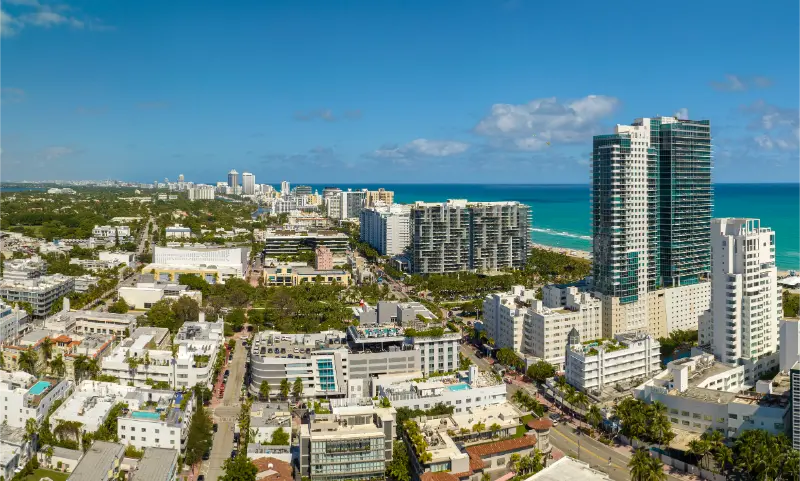
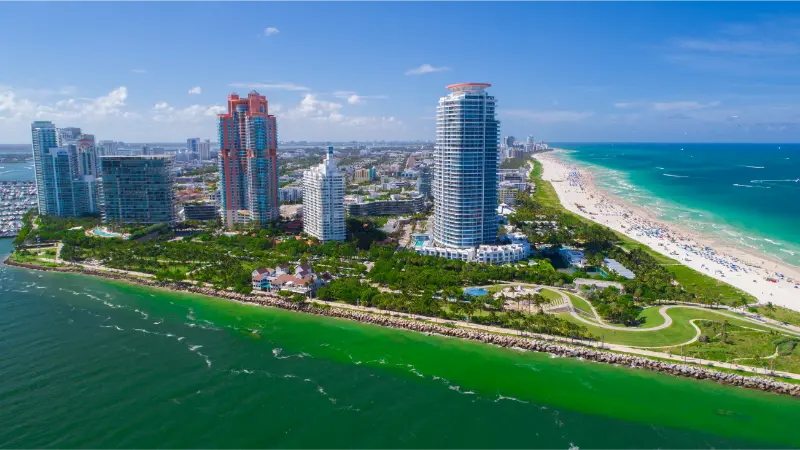
    South Beach Miami Oceanfront Hotels and Turquoise Water

    Miami’s Metromover may help with certain downtown journeys, while other trips need Metrorail, bus, or car. Check Miami-Dade’s transit information for the specific route and service notices rather than assuming one system serves everywhere. Carry water even on apparently short walks; tropical humidity can make distances more tiring than a map suggests.

    Day three: use Brightline to reach Fort Lauderdale

    Travel north after breakfast, leaving a sensible buffer for checkout, station entry, and luggage handling. Recheck departure times on the day. One advantage of the train is avoiding a stressful drive on Interstate 95, but a last-minute change can still affect your plans. Keep essential medication, children’s supplies, a charging cable, and identification in a bag you can access easily.

    After checking in, enjoy part of Las Olas Boulevard or a section of the Riverwalk. Restaurants, galleries, and waterside scenery are close enough to create a pleasant afternoon without stacking attractions. If the heat is intense, start with a shaded indoor stop and wait until later for the waterfront. Boat tours are tempting, but decide whether an additional paid excursion offers something you cannot enjoy from public promenades first.

    Day four: beach, canals, or an indoor fallback

    The beach is the obvious choice, but it is not compulsory. Ask your hotel which route reaches the section with the facilities you need: restrooms, lifeguards, food, shade rentals, or accessible beach equipment. Conditions change, so check local beach flags and weather rather than assuming that calm-looking water is safe. Families should pick a meeting point before anyone goes near the shoreline.

    If you prefer not to swim, explore the canals from a public waterside setting or choose a cultural venue. A water taxi can be scenic transportation, yet its ticket price, boarding arrangements, and routes should be verified independently. This is also a convenient laundry and rest day for a longer holiday. A successful car-free trip needs breathing room; replacing every drive with three connections defeats its purpose.

    Day five: West Palm Beach and a different rhythm

    Ride Brightline to West Palm Beach and settle into your last base. The city offers a different atmosphere from Miami: downtown cafés, public waterfront spaces, and the option of art or shopping without a major highway journey. Visit a small area first and decide how much farther you feel like going. For cultural interest, check the Norton Museum of Art’s current program and admission conditions rather than counting on a particular free-entry period.

    West Palm Beach Florida Waterfront Downtown Skyline

    Palm Beach island is nearby in geographic terms but requires a separate transfer and is not simply part of the rail station neighborhood. If you want to see its architecture or beaches, make that an intentional half-day excursion. Avoid squeezing in both the island and several museums unless you enjoy an intensive pace. Families may be happier with a relaxed evening, ice cream, and an early bedtime.

    Day six: leave enough room for departure logistics

    If you have an afternoon departure, choose one nearby museum, the waterfront, or a café. Do not schedule a prepaid timed attraction immediately before a flight. West Palm Beach station and Palm Beach International Airport are distinct locations; factor in the transfer, security, and the airline’s recommended arrival time. Travelers heading back to Miami for their flight should allow for possible service disruption and avoid betting an international departure on the latest conceivable train.

    A rail itinerary can be reversed if flights are cheaper into West Palm Beach than Miami. What matters is avoiding needless backtracking. Put the longest airport transfer at the end only if the connection is reliable and you have a generous buffer. Check whether the train itinerary saves money after including local fares, rideshares, luggage, and hotel location.

    Realistic transportation budget and booking choices

    Cost category How to estimate it Common surprise
    Intercity rail Price each individual segment Peak-date fares change
    Airport transfers Quote both arrival and departure Station is not inside every airport
    Local journeys Count each day with a non-walkable destination Multiple short rides add up
    Lodging Compare total checkout price Resort and destination fees
    Activities Reserve only the must-do stops Timed tickets and service charges

    Do not promise yourself a fixed per-person dollar total without dates; the spread in hotel and ticket prices is substantial. Compare a two-base version if moving hotels twice feels tiresome. Miami and Fort Lauderdale alone may be better for a four-day trip, while Fort Lauderdale and West Palm Beach may feel calmer for someone uninterested in Miami’s intensity.

    Accessibility, children, and comfortable transfers

    For a wheelchair user, review the train operator’s assistance rules, platform boarding arrangements, and station elevators before booking. Ask hotels about the actual door width, bathroom layout, and usable bed height if these are essential. A station can be accessible while the sidewalk route to your hotel is complicated by roadworks. A prearranged vehicle may be more reliable than arriving and discovering that suitable vehicles are scarce.

    With a stroller, pack light enough to lift what the operator requires and confirm baggage limits. Older children can help track the next stop and plan one interesting activity each day. For travelers who tire easily, pay for a direct transfer rather than insist on saving every dollar. The purpose of going car-free is to make the vacation pleasant, not to turn local bus timetables into a competitive sport.

    Mistakes that can spoil a no-car South Florida holiday

    The biggest mistake is choosing a beachfront property far from a station and then being surprised by repeated road fares. Others include assuming every attraction is close to a Metromover stop, overlooking a train fare’s change rules, booking too many single-night hotels, and forgetting that heavy rain can make a short walk miserable. Many restaurants close on particular days or require reservations on busy weekends; maintain at least one easy food option near your hotel.

    A second mistake is treating the cheapest fare as the only cost worth considering. Consider the value of a well-located room, comfortable shoes, a flexible booking, and a realistic transfer. Before departure, screenshot each hotel address and train confirmation, save a backup payment method, and discuss what everyone in the group would do if a connection is missed.

    A sensible version for different travelers

    Couples who love museums can devote an extra afternoon to Miami’s art scene and skip the beach. Families with younger children might stay three nights in one location and make just one rail move. Visitors over 80 may prefer a central hotel with step-free access, planned door-to-door transfers, and one main outing daily. Travelers keen on swimming should verify lifeguard availability, weather, and local water advisories, not assume that the train corridor guarantees safe beach conditions.

    Above all, remember what the rail itinerary buys you: an opportunity to see contrasting cities without taking responsibility for highway driving. Focus each day on a neighborhood, leave the afternoons adjustable, and treat local transfers as real components of the plan. That combination turns South Florida into an enjoyable multi-city holiday rather than a week of rushing between stations.

    Frequently asked questions

    Can I visit Miami, Fort Lauderdale, and West Palm Beach without renting a car?

    Yes. Brightline connects their rail stations, but you will often need walking, local public transportation, taxis, or rideshares between stations and individual attractions.

    Is Brightline the same as Miami’s local transit?

    No. Brightline is intercity rail. Miami-Dade Transit operates separate local systems, with different routes, fares, and service rules.

    Should I book all my rail tickets before arriving?

    Book important journeys once your hotel plan is firm, especially on busy dates, but read the fare’s change and cancellation conditions before paying.

  • Three Days in Fort Lauderdale: Waterways, Beaches and Art Beyond Miami

    Three Days in Fort Lauderdale: Waterways, Beaches and Art Beyond Miami

    Fort Lauderdale is often reduced to a cruise departure port or a less crowded version of Miami. That misses what makes the city rewarding in its own right: canals and the New River, a walkable Las Olas dining district, preserved homes, Atlantic beaches and an urban state park unexpectedly close to the towers. Three days give you enough time to use the waterways as part of your sightseeing instead of driving from parking garage to parking garage. They also give the trip variety for families, couples, solo visitors and travelers who favor slower outings.

    For this itinerary, make downtown or the beach your overnight base and plan just one significant paid attraction per day. The Water Taxi can be enjoyable transportation, but its route and timetable must match your actual stops; it is not a substitute for every local journey. A car is helpful for some extensions, though not essential if you stay centrally and use organized transfers. Most importantly, leave room for a shaded midday break and remember that Fort Lauderdale’s coastal geography turns short-looking trips into bridge crossings and traffic delays.

    Three-day route and sensible starting points

    DayAreaMain planEasy substitute
    1Las Olas and New RiverRiverwalk, museums, canal cruiseWaterfront cafés and short water ride
    2Beach and Birch State ParkAtlantic shoreline, native coastal habitatPark scenic loop and museum
    3Bonnet House and nearby districtsHistoric estate, local art and flexible afternoonOne attraction followed by a relaxed lunch

    Select the Water Taxi ride around its latest official schedule rather than treating the departure times here as a promise. If you are staying after a cruise or before one, make the embarkation day a transfer-only day and shift your attractions to the remaining full days.

    Day 1: Las Olas Boulevard, the Riverwalk and a ride on the water

    Begin along Las Olas Boulevard, where shops, galleries and cafés give the city a neighborhood feel distinct from the beachfront strip. A morning stroll toward the New River leads naturally to Riverwalk Fort Lauderdale, an appealing place to orient yourself with views of bridges, passing vessels and downtown buildings. Choose an indoor stop according to interests: history-focused travelers might favor the Historic Stranahan House Museum, while a family with children may find the Museum of Discovery and Science more engaging. Check opening schedules and tour requirements before arriving, since historic-house experiences may not work as spontaneous walk-ins.

    Make the afternoon the water portion of your day. Greater Fort Lauderdale’s Water Taxi operates a sightseeing-oriented hop-on, hop-off service, and the visitor bureau explains the current routing and ticket options. A boat can make the area’s canals and Intracoastal Waterway understandable in a way a street map does not. However, do not assume every restaurant or attraction is beside a stop, or that the last service will match your dinner reservation. Verify boarding access, ticket rules and the latest sailing time before using it as a return journey.

    For dinner, choose downtown or Las Olas rather than driving unnecessarily to another beach town. If your group includes a child who becomes tired early, use a short scenic ride rather than the entire network. An older traveler may enjoy seated water views more than hours of shopping; someone uncomfortable on moving vessels can visit riverside parks instead. This flexibility lets everyone appreciate the water-centered identity of Fort Lauderdale without forcing one activity onto the whole group.

    Day 2: Fort Lauderdale Beach and Hugh Taylor Birch State Park

    Visit the beachfront in the morning, when the light is softer and parking may be less competitive. Choose an access point based on restrooms, transit, lifeguard availability where provided and the route between sidewalk and sand. The promenade is excellent for views, but the Atlantic is not a supervised swimming pool: check weather, posted beach warnings and rip-current guidance. In warm weather, a shorter beach visit followed by lunch in air conditioning may be far more enjoyable than staying through a thunderstorm-prone afternoon.

    Spend the afternoon in Hugh Taylor Birch State Park. Florida State Parks describes it as a barrier-island green space between the ocean and Intracoastal Waterway, with walking, picnicking, wildlife viewing and paddling opportunities. It is a practical change of pace after the exposed beach. Not every amenity will necessarily be operating: the official park page has carried construction notices about restrooms, pavilions and a floating dock, so check current alerts instead of building a plan around a particular facility. Trails and a scenic loop can be adapted to how much walking feels comfortable.

    For families, watch for native wildlife from respectful distances, take a shaded snack break and decide beforehand whether children are going to the beach or doing a nature walk, not an exhausting combination of both. For photographers, the mix of urban skyline and coastal forest creates a different backdrop from Las Olas. For visitors who prefer minimal walking, ask park staff about current accessible amenities and use a shorter route. An evening by the ocean is optional; a restful hotel dinner can be the wiser choice after a day in coastal heat.

    Fort Lauderdale Florida Oceanfront Skyline and Bay

    Day 3: Bonnet House and a neighborhood you actually enjoy

    The Bonnet House Museum & Gardens is one of the city’s strongest cultural experiences. Its estate history, art collections and gardens help explain the development of this coastline before modern hotels arrived. Verify tour hours, ticket formats and which grounds are included. Historic properties can have uneven approaches or restrictions in certain rooms, so check access with the operator. Put the visit in the morning or at another comfortably timed hour rather than squeezing it between a checkout deadline and the airport.

    Afterward, deliberately choose one neighborhood. Downtown art and cafés are an easy continuation if you stayed near Las Olas. A beachside lunch is convenient if your accommodation is by the ocean. Travelers interested in a larger regional excursion could consider nearby Hollywood’s Broadwalk, but doing so changes the journey and may be better on a fourth day. Do not promise yourself Pompano, Hollywood and Lauderdale-by-the-Sea on a single ‘free afternoon’: bridges, parking and beach gear make that far less relaxing than it sounds.

    If you want a sunset water experience, consult the Water Taxi’s route and schedule or book a clearly defined cruise; the two are not interchangeable. Families may prefer an early restaurant reservation, while nightlife visitors can investigate Las Olas after dark. Have a clear ride home arranged if consuming alcohol. A successful final day means ending with enough energy to enjoy dinner and depart the next morning, not collecting the maximum possible number of attraction photos.

    Where to stay: Las Olas, beach or near the airport

    Downtown and Las Olas are strong bases for restaurants, the Riverwalk and transit-oriented sightseeing. They work particularly well for a visitor without a car, provided the hotel is truly within comfortable walking distance of planned stops. Hotels on or near Fort Lauderdale Beach prioritize sea views and quick shoreline access, although parking, resort charges and beach service fees can add significantly to advertised room rates. Check which side of A1A the property sits on and whether reaching the beach involves an ordinary crossing or additional infrastructure.

    Airport and Port Everglades-area hotels can be economical for cruise transfers or early departures, but may leave you relying on rideshares for every sightseeing trip. For a family, a suite with a kitchenette may matter more than an ocean-facing balcony. For a wheelchair user, confirm room turning space, shower layout, accessible arrival route and actual transportation pickup point directly rather than interpreting a generic ‘accessible’ symbol as sufficient. If arriving late at night, choose convenience and comfort over an elaborate first-evening plan.

    Transportation: airport, bridges, Water Taxi and parking

    Fort Lauderdale-Hollywood International Airport is close to the city but traffic varies with cruise schedules and road conditions. Port Everglades is a working cruise harbor, not a neighborhood to explore without planning. If embarking, follow the cruise line’s terminal instructions and leave abundant transfer time. If using Brightline or another rail service as part of a wider South Florida vacation, check the current station location and transfer route to your hotel; do not assume the train delivers you directly to the beach.

    A rental car becomes more attractive for excursions beyond the center, but compare total parking charges against rideshares or arranged shuttles. Bridges over waterways can create delays, especially in high season. On your phone, save your hotel’s exact entrance and the parking garage address, not just the street name. If using a boat ride, ask the operator about step-free boarding, wheelchair space, service animals and whether high winds can change operations. Flexible transportation is the most effective way to avoid turning a water-focused vacation into a string of costly transfers.

    Budget planning and worthwhile tradeoffs

    Do not buy every museum and tour in advance. Pick one headline paid experience—the Water Taxi, Bonnet House or a museum—and keep one free or inexpensive waterfront walk each day. If traveling with teenagers, let them help select an activity and a food stop so that time in a museum has a purpose. Watch for hotel parking, local taxes, mandatory resort fees, cancellation policies and beach-equipment rentals. These costs can exceed the admission to a small museum, especially for three nights.

    Fort Lauderdale is often busy around holidays, boat-related events and cruise departures. Budget-conscious visitors can compare downtown and nearby areas rather than assuming a more distant highway hotel is automatically cheaper after daily transport. A centrally located stay may reduce the need for a car. Food planning is another lever: a substantial late breakfast or lunch with a simple evening meal can be easier with children, while adults may prefer a special dinner and a modest breakfast. Match spending to what you genuinely value rather than following every recommendation simultaneously.

    Different ages, accessibility and sensory comfort

    With babies, a beach stroller is rarely a substitute for appropriate sand access; choose a hotel with a comfortable indoor rest area and bring sun protection suited to the child. Elementary-age children often enjoy the science museum and short boat rides. Teenagers can choose between photography at the shoreline, waterways and art-focused stops. Travelers over sixty or eighty can focus on seated tours, museums and short promenades if they wish; age alone should not determine activities, but actual mobility and heat tolerance should.

    Humidity and direct sunlight make some routes more demanding than mileage suggests. Ask venues about accessible restrooms and lifts, and confirm that a boat operator can accommodate the person’s equipment rather than making assumptions. For a traveler who finds crowds or loud sound difficult, the park can provide a calmer middle day; choose quieter morning hours and carry hearing protection as needed. Anyone with breathing or heat-related concerns should keep a reliable indoor alternative and prioritize medical advice for personal limitations.

    When to go and how to handle bad weather

    Cooler, drier months often make walking more comfortable, but they can also bring higher demand and hotel prices. Summer weather is hotter and humid, with thunderstorms frequently changing outdoor plans. Tropical systems are a separate risk during hurricane season, and travel insurance terms must be read before booking. Do not assume that a storm will pass quickly or that every boat service operates through lightning. Check National Weather Service alerts and official attraction notices each day.

    A useful order swap is simple: put the museum or Bonnet House in the wettest period, move beach time to the next suitable morning and use indoor meals as natural breaks. Because the three main areas are fairly close, the itinerary tolerates changes without abandoning the whole vacation. If traveling immediately before a cruise, avoid a weather-sensitive offshore excursion on the last free day; flight, port and boarding commitments matter more than chasing another photograph.

    Frequently asked questions

    Is Fort Lauderdale worth visiting if I already know Miami?

    Yes. Its New River and Intracoastal setting, historic houses and beach-adjacent state park create a different experience. The cities are close enough to combine, but Fort Lauderdale merits several days of its own.

    Fort Lauderdale Florida Harborfront and Shops

    Can we do this itinerary without renting a car?

    Yes if you stay centrally, select sites carefully and use Water Taxi, taxis or rideshares. Verify the exact last-mile routes, and do not assume a beach hotel is walkable to downtown.

    Is the Water Taxi practical transportation or just sightseeing?

    It can serve both purposes when its operating stops and timetable match the trip. Treat it as a scenic transit experience first, with a backup plan for late departures or service changes.

    Which stop is best on a rainy day?

    A museum, historic-house tour when operating, or an indoor lunch is generally more weather-resilient than the beach or park. Check for storm-related closures rather than assuming indoor sites always remain open.

    How many days should I allow before a cruise?

    Two or three nights are useful if you want real sightseeing; one night before departure is mainly a buffer for travel disruption. Always prioritize arrival at your assigned cruise terminal on time.

    Official resources

  • Miami Airport vs Fort Lauderdale Airport: Which Is Better for South Florida?

    Miami Airport vs Fort Lauderdale Airport: Which Is Better for South Florida?

    Miami International Airport (MIA) and Fort Lauderdale-Hollywood International Airport (FLL) both serve South Florida, but choosing between them can change your first and last vacation days. Miami may be the obvious choice for travelers staying in Brickell, Coral Gables, or central Miami; Fort Lauderdale often works well for the northern beaches, Port Everglades, and Broward County. Yet a lower airfare into the farther airport can be consumed by transfers, rental-car charges, or a night near the terminal. This guide helps international visitors, families, cruise passengers, and older travelers compare the whole arrival experience rather than booking the cheapest flight in isolation.

    Start with your actual hotel address

    The phrase ‘staying in Miami’ can describe very different trips. Downtown Miami, Brickell, Coral Gables, Miami Beach, and northern beach communities are not the same transfer destination. Miami International is generally convenient for mainland Miami districts, especially if you plan to use the city’s rapid transit. However, a Miami Beach hotel adds a road or transit leg, and evening traffic can be significant. A family staying near South Beach should compare the exact journey from both airports, including baggage handling and any connections, rather than assuming the city-named terminal automatically has the shortest door-to-door time.

    Fort Lauderdale-Hollywood International is close to many Broward destinations, including Fort Lauderdale, Dania Beach, Hollywood, and Port Everglades. That can make arrival straightforward for a cruise or beach vacation centered there. But if you plan to stay farther south near Coconut Grove or Coral Gables, the savings on a flight may disappear in a lengthy road transfer. Conversely, a visitor to northern Miami-Dade may find FLL quite workable. Enter the full hotel address into a route planner, check a realistic daytime traffic range, and consider whether changing terminals or collecting baggage adds another delay.

    International flights and connections

    Miami International has an extensive international route network and can be especially useful for direct flights from major overseas gateways. A direct arrival may reduce missed-connection risk, shorten total travel, and make baggage handling simpler. However, travelers should compare the specific airline schedule, fare class, passport and entry requirements, and the full time from home to hotel. A nominally cheap indirect itinerary can be tiring when a family has to complete immigration, collect and recheck bags, or move between terminals during a domestic connection.

    Fort Lauderdale also handles international services, but the breadth of routes differs by airline and season. If your preferred carrier flies into FLL at a convenient hour, there may be no advantage in landing at MIA simply because it is larger. For a traveler with mobility needs, the number of transfers and walking distances matter more than airport reputation. Check how assistance is arranged with the airline and whether the entire itinerary is on one ticket. Build time for entry formalities, especially when connecting from overseas; published minimum connection times are not a guarantee that a stressful journey will feel comfortable.

    How to compare the airfare fairly

    Compare the same baggage allowance, dates, payment conditions, and seat requirements. A low headline fare can exclude checked luggage, seat selection, or other services that a family will purchase anyway. For a group of four, a fare difference per person can look substantial, but add a vehicle transfer in each direction. A private transfer that needs an infant seat may cost more or require advance booking. A late-night arrival can also create an additional hotel night if onward transport is limited or your final destination is several hours away.

    Calculate two totals. For each airport, include airfare, checked baggage, airport-to-hotel and hotel-to-airport costs, possible tolls, rental-car pickup or return charges, parking, and extra accommodation if flight times force it. Then add the value of time and exhaustion: an early arrival that lets the family settle into a beach hotel comfortably can be worth more than a small cash saving. Do not use a transfer quote from an old blog as an exact price. Request a current estimate for your party, baggage, and arrival time.

    Public transportation from Miami International

    MIA has connections to Miami’s wider transit network through its intermodal transport facilities. The airport’s MIA Mover links the terminal area with the Miami Intermodal Center, where travelers can find services including Metrorail, certain buses, and the rental-car center. For some mainland Miami destinations, that can be a useful alternative to a private car. But reaching Miami Beach or a particular resort hotel may still require an additional bus, a transfer, or a taxi. Study the entire journey, including the walk from the final stop to the hotel door.

    Miami Airport Terminal Exterior and Road

    Public transport works best with manageable luggage, flexible arrival times, and travelers who are comfortable navigating signs and connections. A family with several suitcases, a stroller, and a tired toddler may decide that a direct vehicle is worth the price. Guests who use wheelchairs should review the accessibility arrangements of every segment rather than assuming one accessible train solves the whole journey. Check the official Miami-Dade Transit and MIA pages for operating routes, fares, and service changes, especially after midnight or during holidays.

    At a glance: practical differences

    What mattersFirst optionSecond option
    AirportMiami International — MIAFort Lauderdale-Hollywood — FLL
    Often convenient forMainland Miami and BrickellFort Lauderdale and Hollywood
    Cruise pairingOften suits PortMiamiOften suits Port Everglades
    Public transportMIA Mover and transit connectionsBus/rail may need a shuttle
    BudgetAdd transfer to exact hotelAdd transfer to exact hotel

    Public transportation from Fort Lauderdale Airport

    FLL also offers ways to connect with regional transport, including bus and rail arrangements, but the journey may require a shuttle or onward transfer depending on the service. Do not confuse the airport terminals with the main Tri-Rail station or assume that every train calls directly beneath your baggage claim. Review Broward County Transit, Tri-Rail, and the airport’s current ground-transportation instructions. If the route involves a shuttle between the terminal and station, add realistic time for waiting, luggage loading, and transfer between services.

    For a short Fort Lauderdale beach stay, a direct ride may be more convenient than coordinating several public-transport legs. Travelers going to West Palm Beach or Miami should compare regional rail connections and road transfers for their actual destination, including any need to change trains or take a final taxi. Service patterns change, and the cheapest ticket may not deliver you near your hotel. The right question is not ‘Does a train exist?’ but ‘Can everyone reach the hotel safely and comfortably with these bags at this hour?’

    Rental cars, drop-off fees, and return logistics

    A rental car may make sense for a South Florida road trip, but picking it up immediately after a long flight is not always ideal. Consider whether the first several days involve beach and city experiences where parking is expensive or inconvenient. Some visitors can use local transport for a short Miami stay, then collect a car when leaving for the Keys or the Gulf Coast. Other groups will benefit from a vehicle from the start because they are visiting scattered attractions or traveling with specialized equipment.

    If the trip begins at MIA and ends at FLL, ask about one-way rental terms and any drop-off surcharge. Compare the exact rental pickup location, operating hours, toll policy, child seats, additional-driver fees, fuel terms, and airport concessions. A quote labeled ‘unlimited mileage’ does not mean every charge is included. Airport rental centers may require a people mover or shuttle trip, so allow extra time when returning the car. For early departures, plan refueling and vehicle return before the airport’s recommended arrival window, not after it.

    Miami Beach versus Fort Lauderdale Beach

    For a Miami Beach vacation, compare both airports but pay close attention to the final road journey across the causeways and any hotel-zone congestion. Miami International may be the natural choice when flight prices are similar, particularly for a direct arrival from abroad. Yet an FLL flight arriving earlier and at a much better total price may still win. A visitor who plans museums and neighborhoods in the Miami urban core should also consider which airport makes the first transit connection easiest.

    Miami Airport Terminal and Runways Aerial View

    For Fort Lauderdale Beach, FLL generally has the geographic advantage, especially when a group prefers a short, direct transfer after a long flight. However, a direct long-haul flight into MIA can beat an indirect itinerary into FLL once connection time and risk are considered. Do not equate a city’s beach name with its airport terminal; check route conditions on the actual day. If a traveler is arriving during a festival, holiday, or cruise departure weekend, leave extra margin for road congestion and rideshare pickup delays.

    Cruise departures: why the port matters more

    PortMiami is in Miami, while Port Everglades is in the Fort Lauderdale area. Passengers sometimes mistakenly book a flight near one and a hotel near the other without checking the cruise terminal. The ship confirmation is the authoritative document for the departure port and terminal information. For a Port Everglades departure, FLL is often very convenient, but an attractive flight into MIA can still work with a planned transfer and sensible overnight buffer. For PortMiami, MIA may simplify the route for many travelers, especially when they are staying downtown the night before.

    Plan to arrive in South Florida the day before an important cruise departure whenever practical, especially after an international flight. Immigration delays, flight disruption, and road incidents can quickly turn a same-day connection into unnecessary risk. Book a hotel within a manageable distance of the actual port and check whether shuttle arrangements are genuinely included in the rate. A ‘cruise hotel’ description does not guarantee free transportation or service to both ports. Return flights after the cruise also require realistic disembarkation and transfer buffers.

    Families, seniors, and accessibility

    For families with babies, a direct flight and simple hotel transfer often outperform a slightly lower fare with complicated connections. Check seat and baggage rules, bring essentials in hand luggage, and confirm car-seat arrangements before arrival. Never assume a rideshare vehicle has the correct seat for a small child. When grandparents are part of the trip, ask about walking distances, accessible airport assistance, and whether the selected transfer has steps or difficult luggage handling. A wheelchair request should be made with the airline, not left until the family reaches the terminal.

    For senior travelers, departure time may matter as much as flight price. An inconvenient overnight connection or a 5 a.m. airport arrival can make a holiday unnecessarily exhausting. Compare hotels with elevators, airport drop-off positions, and transfer vehicles that allow easy boarding. If someone travels with prescription medication or medical equipment, keep necessities in cabin baggage according to airline and security rules and allow extra time for screening. Avoid booking a tightly timed onward activity the same day you land; let everyone eat, rest, and adjust after the flight.

    Weather, delays, and airport choice

    South Florida thunderstorms, tropical systems, and busy travel periods can affect both airports. Neither is inherently immune to flight disruption. Check airline notifications, airport advisories, and local weather when storms are forecast. Hurricane season runs from June through November, but operational disruption can occur at other times as well. A flexible hotel booking, appropriate travel insurance, and realistic connection times can matter more than choosing one terminal over another. Do not drive through flooding or ignore local warnings simply because a hotel is prepaid.

    If your trip changes, contact the airline or ticket issuer through official channels. Avoid random links or phone numbers circulating on social media during a major cancellation. Keep copies of booking confirmations and a small backup plan for getting to the hotel if your preferred transport is unavailable. Airport operations and road conditions can change quickly. A family that knows its second-best transfer option is better prepared than one that relies entirely on a single ride booked at a fragile connection time.

    A simple way to make the final decision

    Write down your hotel or cruise terminal address, then list the best realistic flights to each airport. Compare arrival time, number of flight segments, bags included, total fare, transfer requirements, and the risk of a very late hotel check-in. If one airport offers a direct international service while the other requires a difficult connection, that often determines the answer. If both routes are straightforward, use the hotel location and ground-transport total to break the tie.

    For Miami urban destinations, MIA will frequently be practical; for Fort Lauderdale-area hotels and Port Everglades, FLL often has a strong location advantage. There are plenty of exceptions. The best airport is the one that gets your particular group to its actual destination smoothly at a sensible total cost. Check current official transport information again just before traveling, especially if your arrival is late or your group has accessibility needs.

    Frequently asked questions

    Is FLL always cheaper than MIA?

    No. Fares vary by carrier, route, date, baggage needs, and promotions. Compare the full flight and ground-transport total.

    Can I travel between South Florida and the airports without a car?

    Yes, on many routes, but public transport may involve transfers and a final hotel connection. Check current MIA, FLL, transit, and rail instructions for your exact route.

    Which airport is better for a Port Everglades cruise?

    FLL is usually geographically convenient, but flight schedules and the cost of arriving a day early can change the calculation.

    Official information to check before your trip

  • Fort Lauderdale vs West Palm Beach: The Better South Florida Vacation Base

    Fort Lauderdale vs West Palm Beach: The Better South Florida Vacation Base

    Fort Lauderdale and West Palm Beach lie on the same South Florida rail corridor, but choosing between them changes the character of an entire holiday. Fort Lauderdale combines the beach, Intracoastal waterways, Las Olas shopping and dining, cruise connections, and a busy tourism infrastructure. West Palm Beach has an urban waterfront, a strong arts and dining scene and convenient access to the island of Palm Beach, yet much of its visitor experience is not centered on sleeping beside the sand. A traveler who wants one beach outside the hotel each morning may have a different answer from someone who wants museums, attractive streets and calmer afternoons. This guide focuses on where to sleep, how to travel and what each destination genuinely offers.

    Quick decision table

    CompareOption AOption B or planning note
    Best trip styleAtlantic beach and waterwaysArts, dining and urban waterfront
    Downtown beachesFort Lauderdale beach is separate from downtownWest Palm downtown faces Intracoastal
    Airport choiceFort Lauderdale-Hollywood generally convenientPalm Beach International generally convenient
    Train accessBrightline downtown stationBrightline downtown station

    Understand the boundaries before choosing a hotel

    Fort Lauderdale beach and downtown Fort Lauderdale are separate districts, linked by local roads, waterway crossings and transportation options. A hotel on Las Olas Boulevard is not automatically on the beachfront. Similarly, West Palm Beach is on the mainland; Palm Beach is a distinct town across the Intracoastal Waterway, and its oceanfront hotel market, beaches and parking conditions differ from downtown West Palm Beach. Listings may blur these distinctions by using broad regional labels. Open the actual address in a map, plot the route to the waterfront you intend to use and check whether a pedestrian crossing is comfortable. A hotel with a view of the Intracoastal is not necessarily on a swimming beach. That single distinction can prevent a costly mistake when parents expect a few steps to the water or older travelers need to limit transfers.

    Who will enjoy Fort Lauderdale most?

    Fort Lauderdale is compelling for a traveler who wants traditional South Florida beach access paired with city restaurants and waterfront activity. Its canal network creates an unusual sightseeing setting, and the Water Taxi can be a pleasant excursion rather than simply a commuting method. Beachfront hotels and nearby shops make it possible to organize a straightforward three-day beach-and-dining stay, although exact walking distances vary. The city is also useful for some cruise travelers using Port Everglades, provided their hotel offers a transfer arrangement that actually serves their terminal. Families with older children may combine a morning swim, waterway excursion and an evening downtown meal. The tradeoff is traffic and the higher price sometimes attached to prominent beach locations. For guests who mainly want museums, gardens and unhurried urban life, other nearby cities may provide a better fit.

    Fort Lauderdale Marina and Downtown Skyline Aerial

    Who will enjoy West Palm Beach most?

    West Palm Beach is attractive for people who like to explore on foot between restaurants, art and waterfront parks. The Norton Museum of Art, theater and cultural programming, and the downtown district offer more than a backdrop to beach trips. Across the bridge, Palm Beach has striking architecture, shopping streets and oceanfront stretches with their own rules. Older travelers who want regular indoor pauses may find it easy to combine a museum visit, lunch and a short walk on the same day. The central railway station also makes West Palm Beach convenient for certain train-based itineraries. Yet a downtown hotel is not a substitute for staying on Palm Beach’s ocean shore. Families imagining a hotel pool and beach day every day should calculate transfer costs and parking carefully before booking a room in the mainland business district.

    Beach time: the detail that settles many decisions

    Fort Lauderdale has a recognizable long coastal promenade and numerous hotel options oriented toward beachgoers. That makes it easier to design a holiday where a swim, midday room break and evening meal flow naturally together, as long as the hotel is genuinely near the shoreline. West Palm Beach’s central shoreline faces the Intracoastal, not the open Atlantic. To swim in the ocean, visitors generally choose a suitable ocean beach on Palm Beach island or elsewhere in the county and arrange transport. Access points and parking are managed locally and may differ for residents and visitors. Neither destination guarantees safe swimming on every day: rip currents, weather and lifeguard conditions matter more than a calm-looking photograph. For small children, select a lifeguarded beach where appropriate, review warning flags and set a clear boundary away from inlets and strong currents.

    The attraction mix: boats or museums?

    On a short Fort Lauderdale visit, Las Olas Boulevard, the beach and the Intracoastal experience create a natural trio. A family might add Museum of Discovery and Science, particularly as a rain fallback, or spend time at a nearby nature reserve. West Palm Beach brings the Norton Museum of Art, waterfront events, gardens in the wider Palm Beaches area and possible visits to Palm Beach island. The distinction is not absolute: both regions have culture and nature, and both make day trips possible. But the easiest attractions influence how much time you spend commuting. Instead of counting online lists of twenty things to do, select the three places your group genuinely values and compare the transport involved. One museum plus an enjoyable lunch is a better day for many visitors than several scattered stops squeezed between congested roads.

    Airports: which arrival makes the trip simpler?

    Fort Lauderdale–Hollywood International Airport is a natural starting point for many Fort Lauderdale hotels, while Palm Beach International Airport generally makes more sense for stays in and around West Palm Beach. A tempting airfare to a farther airport must be balanced against the cost, duration and inconvenience of the onward transfer. South Florida also has Miami International Airport farther south, with substantial transport possibilities but potentially complicated timing for a short vacation. Ask your hotel about shuttle service rather than assuming a courtesy bus exists. If driving, confirm the exact car pickup, expressway tolls and the hotel parking bill. If you do not plan to rent a car, compare public transport and rideshare options for your arrival hour, including late-night limitations. A slightly higher airfare to the convenient airport may save enough in transfer costs to be the better purchase.

    Brightline, Tri-Rail and the car-free question

    Brightline serves downtown Fort Lauderdale and West Palm Beach, connecting these cities to other major points in its network. Tri-Rail offers a separate commuter-oriented rail option with different stations, patterns and connections. The services are not interchangeable simply because they run through South Florida. Their station locations, fare rules and airport links should be checked before building a trip. In Fort Lauderdale, a car-free traveler can combine walking with selected local transport and Water Taxi experiences, but beachfront and downtown neighborhoods still require route planning. In West Palm Beach, a central hotel close to the train and restaurants can make a museum-focused stay comfortable without driving. However, neither train takes you to the entrance of every beach resort. If an itinerary relies on taxis for every ocean visit, add their likely cost before concluding that being car-free is automatically economical.

    A practical four-day stay in Fort Lauderdale

    Day one can be for arrival, the beach promenade and a quiet dinner, without a major attraction booked during the uncertain arrival window. On day two, spend the morning at the beach, have a hotel break during the strongest sun and explore Las Olas in the evening. Day three can revolve around a Water Taxi sightseeing experience or a museum, with a weather alternative kept ready. Day four may be reserved for a nearby nature attraction, a relaxed brunch or departure, depending on the flight. Do not treat a Water Taxi ticket as guaranteed door-to-door transportation to every itinerary stop; review the day’s actual route and boarding points. Parents should check stroller storage and children’s safety near open water. Guests with mobility requirements should verify vessel boarding arrangements and the walking distance from dock to the desired attraction.

    Fort Lauderdale Beach Pedestrian Promenade

    A practical four-day stay in West Palm Beach

    Use the first afternoon to settle in downtown and enjoy the waterfront without crossing the region after a flight. The second day might combine the Norton Museum with a leisurely restaurant meal and a limited amount of strolling. Reserve day three for a visit across to Palm Beach, choosing a single primary purpose such as architecture, shopping or ocean scenery. Day four can be a flexible cultural outing or a departure day. The island visit is easier with an exact destination: “Palm Beach” is too broad to function as one single accessible beach or parking lot. Before departure, check museum opening days, any temporary galleries, restaurant hours and the availability of suitable transport. Families with young children might replace a long formal museum morning with outdoor space or another hands-on attraction nearby rather than forcing adult interests into every hour.

    Hotel types and real costs

    In Fort Lauderdale, properties beside the beach may command a premium but can save repeated driving if swimming is your main activity. Downtown and airport-area hotels can be more economical yet need more transfers. In West Palm Beach, downtown accommodation supports dining and cultural visits; Palm Beach island hotels serve a different, often more resort-oriented market. Never compare only the advertised nightly room cost. Calculate parking, taxes, any mandatory resort or destination fee, breakfast, refundable deposit policies and transportation to your planned excursions. If traveling for a medical appointment or with an older family member, ask whether the room offers a walk-in shower, elevator access and a quiet location. For a cruise add-on, ensure the final morning transfer fits the actual terminal opening and boarding time. An attractive hotel price is only attractive when its practical conditions match the trip.

    Children, couples and senior travelers

    Families with children who love a beach-centered routine may lean toward an appropriately located Fort Lauderdale hotel. Couples interested in a mix of galleries, restaurants and urban walks may enjoy West Palm Beach, while couples wanting busy beachfront restaurants may prefer Fort Lauderdale. Senior travelers can enjoy either city; convenience depends more on the hotel’s block, step-free access and realistic daily walking than on age alone. Some travelers need frequent shade or seated breaks, while others are active well into their nineties. Check whether an attraction’s “accessible” description includes parking, restrooms and the whole route rather than only the lobby. For anyone with sensory sensitivities, a quieter side street may be preferable to an oceanfront room facing late-night activity. There is no universal senior destination. Build the trip around what the actual travelers can comfortably enjoy.

    Weather and timing in South Florida

    Winter is popular because many visitors seek a break from colder climates; accommodation rates often reflect demand. Summers are hot and humid with frequent afternoon thunderstorms. Hurricane season is relevant to both cities, as are individual beach advisories and high-wind days. An ocean day should always be reassessed using local forecasts and lifeguard or beach management notices, not merely a weekly forecast from home. Choose a hotel cancellation policy appropriate to your risk tolerance, especially if arriving during tropical weather season. If planning multiple days without a vehicle, remember that wet-weather rideshare demand can rise precisely when everyone wants to abandon the beach. Make a rainy-day museum choice before departure, but do not assume a museum is open seven days a week or that admission is always walk-in.

    When splitting a stay makes sense

    A two-base holiday is worthwhile when you have enough nights to appreciate both places and a real change in interests. For example, several nights by Fort Lauderdale beach followed by several nights in central West Palm Beach would allow a shift from sand to culture. For a four-night trip, switching hotels usually costs time and energy and rarely provides much benefit. The train makes a day visit possible for selected urban attractions, which may be a better compromise than repacking. Travelers with wheelchairs, strollers or bulky luggage should also account for moving between hotel and station, not just the advertised train ride. The strongest reason to split a trip is to reduce daily travel to attractions at opposite ends of a region, not to claim that you have slept in as many South Florida cities as possible.

    Final decision checklist

    Choose Fort Lauderdale when direct access to a long Atlantic beach, boating scenery or Port Everglades logistics matter most. Choose West Palm Beach for a downtown art-and-dining break with optional Palm Beach island exploration. If you want a luxury oceanfront resort on Palm Beach island, search that specific area rather than booking an unrelated West Palm Beach downtown hotel. Before making a reservation, check the actual map, hotel fees, airport transfer, beach access rules and the three excursions you care about most. Keep one alternative indoor day and leave room for rest. This part of Florida rewards repeat visits; you do not need to turn a calm coastal vacation into a race along the rail corridor to make it worthwhile.

    Frequently asked questions

    Is West Palm Beach the same as Palm Beach island?

    No. West Palm Beach is mainland; the town of Palm Beach lies across the Intracoastal Waterway.

    Can you take Brightline between the cities?

    Yes, Brightline serves Fort Lauderdale and West Palm Beach; verify schedules, fares and last-mile transport.

    Which is better for a beach-only vacation?

    A correctly located Fort Lauderdale beachfront property is often simpler; in West Palm Beach, confirm transport to an ocean beach.

    Official sources and trip planning

  • Historic Stranahan House Museum Guide: Tours, Tickets, Parking and Fort Lauderdale History

    Historic Stranahan House Museum Guide: Tours, Tickets, Parking and Fort Lauderdale History

    Historic Stranahan House Museum is the kind of South Florida stop that becomes much more rewarding when you know what the experience actually involves before you arrive. In Broward County, short map distances can hide very different travel days: a historic estate may need a timed tour, a state park may depend on weather, and a wildlife attraction may have activity cutoffs well before closing time.

    Explore this guide

    Decide whether Historic Stranahan House Museum fits your trip, how much time to protect, what to prioritize and how to avoid turning a good attraction into a rushed checklist. The goal is a realistic visit for first-time travelers, families, teenagers, senior travelers and mixed-age groups.

    Quick planning summary

    • Best for: history lovers, architecture fans, couples, senior travelers, curious teenagers and visitors who want context for how Fort Lauderdale developed.
    • How much time: Allow 1 to 1.5 hours for the house itself, plus extra time if you are walking Las Olas Boulevard before or after.
    • Current cost: Current self-guided audio-tour pricing starts at $13 for adults, $11 for seniors, $8 for children ages 5–17 and $10 for college students. Guided-tour pricing and availability can differ.
    • Current hours: Public availability changes by day because of field trips, private events and volunteer schedules. Typical public hours are around 11 a.m.–4 p.m., but use the live ticket calendar for the exact date.
    • Important planning note: This is not a museum where you should simply show up assuming a fixed daily schedule. Tour capacity and operating days vary, and parking is off-site for most visitors.

    Why this place is worth including

    Stranahan House is Fort Lauderdale’s oldest surviving home and one of the best places to understand the city before canals, towers and beach resorts defined its image.

    Fort Lauderdale City Skyline at Sunset

    The house works especially well after you have already seen modern Las Olas. The contrast between a compact riverside trading-post-era structure and the surrounding city gives the visit more meaning than the furnishings alone.

    For travelers building a larger Florida itinerary, the strongest reason to include this stop is not simply that it is “nearby.” It should add a different story, landscape or activity level from what you did before. South Florida is more enjoyable when beach, wildlife, history, art and indoor attractions alternate rather than blur together.

    What to do first

    Start with the element that is least flexible: a timed tour, theater show, shuttle, tram, wildlife program or access point that can fill. Open-ended walking, photography and gardens can usually expand or contract around that fixed piece. This one decision prevents the common mistake of spending the first hour casually and discovering that the day’s most important experience is no longer available.

    When you arrive, check posted notices before following an old plan. Construction, weather, animal care, water conditions and special events can alter routes even when the attraction itself remains open.

    Best things to do and how to experience them

    Follow Frank and Ivy Stranahan’s story

    The personal story gives structure to early Fort Lauderdale history. Pay attention to how trade, education, community growth and Seminole relationships intersect with the building.

    Notice the riverfront setting

    The New River is not just scenery. It explains why this location mattered and why Fort Lauderdale developed where it did. Step outside with that geography in mind.

    Choose self-guided or docent-led based on your style

    Audio tours let you control pace and repeat sections; docent tours are better if you enjoy questions and detailed storytelling. Check the schedule rather than assuming both are offered at all times.

    Walk Las Olas after the tour

    A short neighborhood walk turns the house into a before-and-after comparison. You do not need another formal attraction immediately afterward.

    How much time do you really need?

    Allow 1 to 1.5 hours for the house itself, plus extra time if you are walking Las Olas Boulevard before or after.

    Do not use the minimum visit time as a target unless the rest of the day truly requires it. Add 20 to 30 minutes of buffer before the next reservation. Traffic around Fort Lauderdale, beach corridors, drawbridges, thunderstorms and event congestion can turn a short transfer into the most stressful part of the itinerary.

    If your group includes young children, senior travelers or anyone sensitive to heat, plan by energy rather than by clock. A comfortable two-hour visit can be more memorable than four hours spent pushing through fatigue.

    Best time of year

    November through April generally brings lower humidity and more comfortable outdoor conditions in South Florida, but it is also peak visitor season. Hotels can cost more, traffic can be heavier and popular attractions may feel busier.

    Summer has advantages—long daylight, lush vegetation and fewer winter visitors—but heat and thunderstorms should reshape the schedule. Put outdoor walking first, keep water available and use indoor attractions during the hottest or stormiest part of the afternoon.

    Best time of day

    For gardens, parks, wildlife and beaches, earlier is usually better. Temperatures are lower, light can be softer and parking is easier. For indoor museums, late morning through mid-afternoon is useful because it protects you from the strongest heat and leaves early or late daylight for waterfront time.

    If the attraction has a last tour, last tram, last shuttle or separate closing time for one area, work backward from that cutoff. The published building closing time is not always the last moment when every experience is available.

    Current practical information

    Hours: Public availability changes by day because of field trips, private events and volunteer schedules. Typical public hours are around 11 a.m.–4 p.m., but use the live ticket calendar for the exact date.

    Admission: Current self-guided audio-tour pricing starts at $13 for adults, $11 for seniors, $8 for children ages 5–17 and $10 for college students. Guided-tour pricing and availability can differ.

    Important: This is not a museum where you should simply show up assuming a fixed daily schedule. Tour capacity and operating days vary, and parking is off-site for most visitors.

    Operating hours, prices, construction, programs and weather-related restrictions can change. If one specific feature is the reason for your visit, check the official page on the day you travel rather than relying on an old screenshot, map listing or social-media post.

    Getting there and parking

    Most visitors should plan on nearby public parking rather than a museum lot. The museum recommends using the area near Riverside Hotel as a GPS reference and then walking to the entrance.

    Save the exact official destination in your phone before leaving the hotel. Broward County has many facilities with similar beach, park, museum and nature-center names, and a generic map search can put you at the wrong entrance. Keep enough fuel or charge for detours and avoid assuming a coastal bridge crossing will always be quick.

    Families with children

    The content is historical and room-based, so young children need a shorter attention-span plan. School-age children can engage if adults give them a simple mission such as spotting how people lived before modern air conditioning, cars and high-rise development.

    A useful family rhythm is one main activity, one food or movement break and one optional second activity. Children usually remember one strong animal encounter, room, view or hands-on moment better than six rushed stops.

    Teenagers

    Teenagers often respond better to the city-development story than to furniture. Connect the visit to how transportation, tourism and land use changed Fort Lauderdale.

    Fort Lauderdale Skyline and Waterfront Aerial

    Teenagers also respond well when they own one decision: the photo goal, lunch choice, route, exhibit or next stop. That small amount of independence often improves the day more than adding another attraction.

    Senior travelers and multigenerational groups

    The short duration and guided structure make the museum a good senior stop. Most of the first floor is accessible by ramp, while historic-building limitations can affect access elsewhere.

    For multigenerational trips, agree on a meeting point if the group splits. One person may want the longer route while another prefers shade, a bench or an indoor exhibit. The best attraction is one that allows different intensity levels without forcing everyone to move at the same speed.

    Accessibility and comfort

    The museum provides ramp access to the first floor. If full access to every room is important, ask about the exact tour route before purchasing. Guests are on their feet for much of the visit.

    Accessibility in Florida is not only about steps. Heat, sun exposure, sand, humidity, long distances between restrooms and boat or tram boarding can matter just as much. Ask about the exact experience you plan to use rather than assuming the entire property has one accessibility level.

    Heat, rain and hurricane-season planning

    South Florida weather can change quickly. A bright morning does not guarantee a dry afternoon, and thunder matters more than rainfall alone. Leave exposed beaches, towers, open water and long boardwalks when lightning approaches. Do not wait under a lone tree or assume a small shelter is safe from a storm.

    During the Atlantic hurricane season, an attraction can reopen while individual trails, docks, pavilions or exhibits remain closed for repair. Read current notices if your trip follows a major storm, even when ordinary hours appear normal.

    Budget and value

    This is one of the more affordable paid historic attractions in central Fort Lauderdale. Add a free river or Las Olas walk instead of another ticket immediately afterward.

    Think in terms of value per memorable experience rather than hours per dollar. A free beach or boardwalk can be the highlight of a trip, while a higher admission can be worthwhile when it delivers a distinct experience your group cannot get elsewhere.

    Food, water and restroom strategy

    Do not assume every park, historic site or nature center has a full café. Eat before a long outdoor segment if services are uncertain and carry water even when the map shows restaurants nearby. In heat, begin drinking before anyone feels thirsty.

    Use restrooms when you see them, particularly before boat shuttles, long trails or beach time. Temporary restroom closures are common after construction or storms, so a posted closure can matter more than the map.

    Photography tips

    For outdoor sites, early light and patience are more useful than chasing a perfect angle. Around wildlife, never move closer if the animal changes behavior. In museums and historic houses, confirm flash and tripod rules before setting up. Keep pathways clear and avoid blocking other visitors for a photograph.

    Where to stay

    Fort Lauderdale is the most natural base for this visit, but Fort Lauderdale, Hollywood, Dania Beach and the wider Broward County hotel zone are close enough that you usually do not need to change hotels for a single attraction.

    Choose accommodation based on the majority of your itinerary. Beachfront hotels are convenient for ocean time but can add cost and parking complexity. Inland hotels may be better for attractions spread across Broward County, especially when you have a rental car.

    How to combine it with other Wonderful Florida guides

    Useful already-published guides include Bonnet House Museum & Gardens, NSU Art Museum Fort Lauderdale, Florida Historic Capitol Museum. Use one as a next-day idea or as a second stop only when geography, weather and energy make the combination sensible.

    A realistic three-day mini-itinerary

    Day 1

    Take a house tour, then spend the remaining time on Las Olas and the New River area.

    Day 2

    Use Bonnet House for a larger historic-estate perspective and more gardens.

    Day 3

    Choose a park or wildlife attraction so your Fort Lauderdale stay is not entirely museum-based.

    Who may want to skip or shorten the visit

    Historic Stranahan House Museum will not be ideal for every traveler. If its main experience duplicates something you have already done several times on the trip, shorten the visit or choose a different category. South Florida has enough variety that there is little reason to repeat the same style of attraction simply because it is close.

    Travelers with very limited time should protect the experiences that are most specific to their interests. A wildlife-focused family may skip an art museum; an architecture-focused couple may skip another wetland. Selective travel is usually better travel.

    Common mistakes to avoid

    • Assuming the museum has identical hours every day
    • Arriving exactly at a tour time without parking buffer
    • Expecting a large multi-gallery museum
    • Bringing very young children without a short-visit plan
    • Skipping the riverfront context after the tour
    • Scheduling the next reservation so tightly that one traffic delay ruins the day.
    • Ignoring heat or lightning because the destination is already close.

    Practical questions before you go

    Do I need to reserve in advance?

    Reserve whenever the experience depends on a guided tour, shuttle, tram, theater time, limited-capacity program or special event. Open trails and general museum admission may not require it, but the part you care about most might.

    Is this a good rainy-day choice?

    If most of the experience is indoors, it can be an excellent storm-day option. If the visit depends on gardens, wildlife, beach, boats or trails, light rain may be manageable but lightning is a reason to change plans. Keep one indoor backup in your itinerary.

    Can I combine it with the beach?

    Usually yes in Broward County, but use geography rather than ambition. A short beach walk can complement a museum; a full beach day plus a large attraction often leaves one half of the plan feeling rushed.

    What should I bring?

    For outdoor-heavy visits: water, sun protection, insect repellent where appropriate, a light rain layer and shoes suited to the actual surface. For museums and historic houses: a small bag that meets current policies, a light layer for air conditioning and headphones when mobile guides are offered.

    How do I keep the day comfortable in summer?

    Start earlier, reduce outdoor distance, add shade before anyone feels overheated and move an indoor attraction into the afternoon. Do not plan the same walking volume in August that you would choose on a cool January morning.

    Official resource to check before you go

    Final thoughts

    Historic Stranahan House Museum is most rewarding when you plan around what is distinctive about it rather than trying to use it as another box on a South Florida checklist. Confirm the current access details, protect enough time for the main experience and let your group’s energy decide whether you add anything afterward.

    A strong Florida itinerary is built on contrast: one day may be a historic house and city walk, the next a mangrove trail or beach, and the next an indoor museum. That variety makes each stop easier to remember and gives you alternatives when weather changes.

    How to decide whether this stop fits your itinerary

    Choose Historic Stranahan House Museum when its core experience matches something your group genuinely wants to do. Do not choose it only because a map app says it is fifteen or twenty minutes away. South Florida traffic and parking make “nearby” a poor reason by itself.

    Use three questions. First, is the main experience different from yesterday? Second, does the least mobile or youngest traveler in the group have a comfortable way to participate? Third, is there a weather or access condition that could remove the feature you came for? If the answers work, the stop belongs in the itinerary.

    When two attractions seem equally appealing, choose the one with the tighter operating window first. Museums and parks with long open hours are easier to move to another day than a limited tour, shuttle, animal program or seasonal event.

    Driving distances and South Florida traffic

    Broward County looks compact on a map, but local travel time changes dramatically with beach traffic, school dismissal, commuter peaks, bridge openings and major events. Avoid planning by mileage alone. A short route across a bridge or through downtown can take longer than a longer highway segment.

    For a morning reservation, aim to arrive early enough that a parking search does not consume your check-in window. For flexible attractions, consider staying in the same geographic cluster for lunch and the next stop instead of crossing the county again.

    What is actually worth prioritizing?

    At Historic Stranahan House Museum, prioritize the experience that cannot be replicated by a generic beach, mall or city walk. That may be a particular historic story, wildlife habitat, collection, tower, tour or landscape. Secondary amenities are useful, but they should not crowd out the reason the place exists.

    If you have only one hour, choose one clear objective and leave when you have achieved it. If you have half a day, slow down and add interpretation, photography and a break. Extra time improves a visit only when it creates attention rather than more rushing.