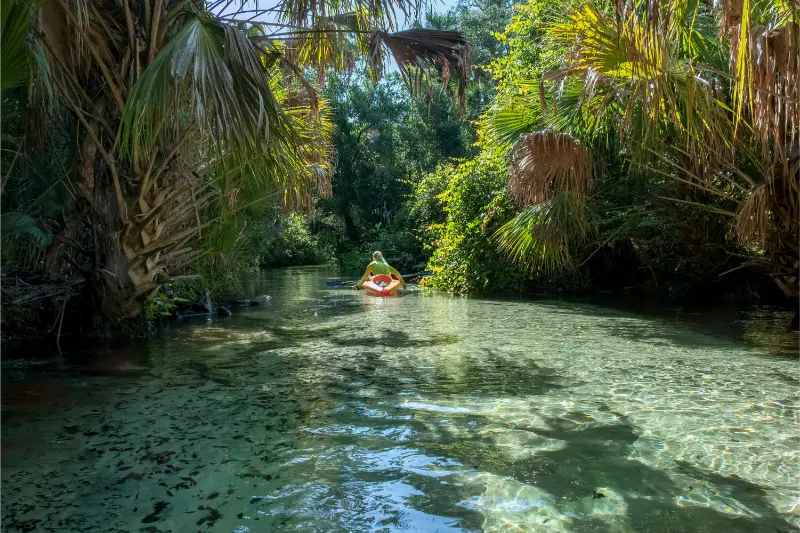
One day in Ocala is enough to understand the destination if you choose experiences that show three different sides of the region: spring water, horse country and the historic center. It is not enough time to visit every famous attraction, and trying to do so usually creates more driving than sightseeing.
The itinerary below is designed for a first-time visitor with a car, normal mobility and a full day from roughly 8:00 a.m. to 8:30 p.m. Adjust it for reservations, weather and children rather than following the clock rigidly.
One-day Ocala itinerary at a glance
- Morning: Silver Springs State Park and a glass-bottom boat
- Lunch: east or central Ocala
- Afternoon: horse-country drive plus a scheduled farm tour or public equestrian venue
- Late afternoon: rest or Sholom Park if time allows
- Evening: Downtown Ocala for dinner and a short walk
8:00–11:30 a.m.: Silver Springs State Park
Start at Silver Springs because the morning is cooler, wildlife is often more active and a timed boat tour gives the day structure. The glass-bottom boat is the best first-time choice because it communicates what makes Florida springs special without requiring everyone to swim or paddle.
After the boat, walk part of the riverfront or add a short trail. Do not start a long one-way paddle on a one-day itinerary unless paddling is the main reason you came; it consumes too much of the day and creates shuttle logistics.

11:45 a.m.–1:00 p.m.: lunch and reset
Eat before heading into horse country. A long lunch may feel inefficient, but it protects the afternoon from heat and gives children or older travelers a chance to recover. If you are visiting in summer, this is also when storms often begin building.
1:30–4:30 p.m.: horse country
Use our horse-country guide to choose one legitimate experience. A scheduled farm tour is best for first-time visitors who want explanation. If no tour fits the date, check World Equestrian Center or Florida Horse Park for public competition.
Do not spend the afternoon randomly driving farm roads hoping to find public access. Scenic roads are attractive, but the destination becomes much more meaningful with a guide or live event.
5:00–6:00 p.m.: optional easy stop
If the group still has energy, Sholom Park provides a calm hour without another large admission cost. If everyone is tired, skip it and return to the hotel. A good one-day itinerary should have at least one optional element that can disappear without ruining the trip.
6:30–8:30 p.m.: Downtown Ocala
Finish around the square with dinner and a short walk. Downtown works better in the evening than as the main daytime attraction because restaurants, lights, murals and seasonal events give the area more energy after outdoor attractions close.
Alternative one-day itinerary for spring lovers
If horses are not your priority, replace the afternoon with one swimming spring. Compare the Ocala springs before choosing. Rainbow Springs is logical if you do not mind driving west; Alexander Springs is better if you want to stay east. I would not attempt both Silver Springs and a distant national-forest spring if anyone in the group dislikes long drives.
Alternative one-day itinerary with children
Keep Silver Springs, shorten horse country to a public show or easy farm tour, and eliminate the optional late-afternoon stop. Children usually enjoy Downtown more when dinner arrives before they are overtired. See Ocala with kids for age-specific alternatives.
Rainy-day version
If persistent storms make springs unrealistic, start with Don Garlits Museum or Appleton Museum of Art, then check whether an indoor horse arena has public competition. Finish downtown between showers. This version is less “natural Ocala,” but far better than spending the day waiting in a hotel for perfect weather.
What not to do in one day
- Silver Springs + Rainbow Springs + World Equestrian Center + Downtown
- a full Juniper Run paddle plus a timed farm tour
- driving into the national forest without confirming capacity or reservation rules
- booking two nonrefundable activities less than an hour apart
- crossing Marion County repeatedly because each stop looked close on a statewide map
Where to stay for this itinerary
A hotel near central Ocala or the I-75 corridor is the easiest base because it balances restaurant access with travel to horse country and Silver Springs. If this one day is part of a longer forest trip, an eastern campground can still work, but your evening downtown drive will be longer.
Budget planning
The biggest fixed cost is usually the spring experience and any farm tour. Horse-show spectating may be free depending on the event, and Downtown walking costs nothing beyond food and parking if applicable. Families can reduce costs by choosing the glass-bottom boat as the major paid attraction and using a free public equestrian event.
Final thoughts
A successful one-day Ocala visit should leave you understanding why the destination is different from Orlando, Tampa or the beach towns. One spring shows the water, one horse-country experience shows the local identity, and Downtown gives the trip a human scale. Anything beyond those three layers is a bonus, not a requirement.

How to adapt the itinerary by season
In summer, move Silver Springs as early as possible and protect the hottest hours with lunch, hotel rest or an indoor stop. In winter, the spring boat is still excellent but horse events may become the highlight of the afternoon. Spring and fall are the easiest seasons for the full itinerary because temperatures are comfortable enough to walk Downtown after an outdoor morning.
What to prebook and what to leave flexible
Prebook the activity that has a fixed capacity: a specific farm tour, timed event or required spring reservation. Leave dinner, Sholom Park and most Downtown walking flexible. A one-day plan becomes fragile when every hour has a confirmation number. One reservation plus two adaptable blocks is usually the right balance.
Who should not use this exact itinerary?
Travelers who came mainly to paddle should devote the morning and afternoon to one water route. Serious equestrian visitors should spend more time in horse country. Families with very young children may need a hotel nap instead of a second attraction. Use the itinerary as a framework, not a test of whether you “did Ocala correctly.”
Driving time and why the route matters
Ocala attractions sit on different sides of a large county. Silver Springs is east of the center, while much of horse country and WEC is west. The itinerary intentionally crosses the city only once. Adding Rainbow Springs or a deep national-forest stop would turn a sightseeing day into a driving day.
Navigation apps also underestimate the mental cost of rural driving after dark or after a full day outdoors. Finish near your lodging when possible.
Practical planning checklist
- save the official address and current operating information before leaving your hotel
- check weather, heat index and lightning risk on the morning of the visit
- keep water, dry clothing and basic first-aid supplies in the vehicle
- confirm any reservation or timed-entry requirement separately from admission
- leave enough time between activities for food, restrooms and traffic
Ocala and Marion County are easiest to enjoy when the schedule has room to absorb a change. A delayed tour, full parking lot or sudden storm should alter the order of the day, not destroy the entire itinerary.
Extra planning advice for a smoother Ocala trip
Ocala looks compact when viewed on a statewide map, but the county spreads across horse country, the I-75 corridor, Silver Springs, Dunnellon and the Ocala National Forest. Before committing to a schedule, plot the exact entrances of the places you intend to visit. A route that appears to involve three nearby attractions can become several hours of driving when one stop is west of the city and another is deep in the forest. Grouping activities by area usually improves the trip more than adding one extra attraction.
Weather deserves the same attention. From late spring through early fall, start strenuous outdoor activities early, protect the hottest part of the afternoon for lunch or an indoor stop, and keep a rain alternative available. Thunderstorms can arrive quickly and may close swimming areas, outdoor arenas or trails even when the morning was clear. In winter, the opposite problem appears: spring water remains relatively constant while cool air makes getting out of the water uncomfortable, especially for children and older travelers.
Carry drinking water in the car even when the attraction sells beverages. Rural recreation areas may have limited service, and a short delay can become uncomfortable in heat. Download maps, reservation confirmations and important phone numbers before leaving strong cell coverage. If you have medication, mobility equipment or food that must stay cool, plan for those needs before entering the forest rather than assuming facilities will be equivalent to a city attraction.
Finally, leave at least one flexible block in every day. Ocala is most enjoyable when a spring, horse event, museum or scenic drive has enough time to breathe. The region is not improved by rushing from one parking lot to another. A slower schedule also makes it easier to respond to capacity limits, delayed shows, a child who needs a rest, or a storm that changes the order of the day.