
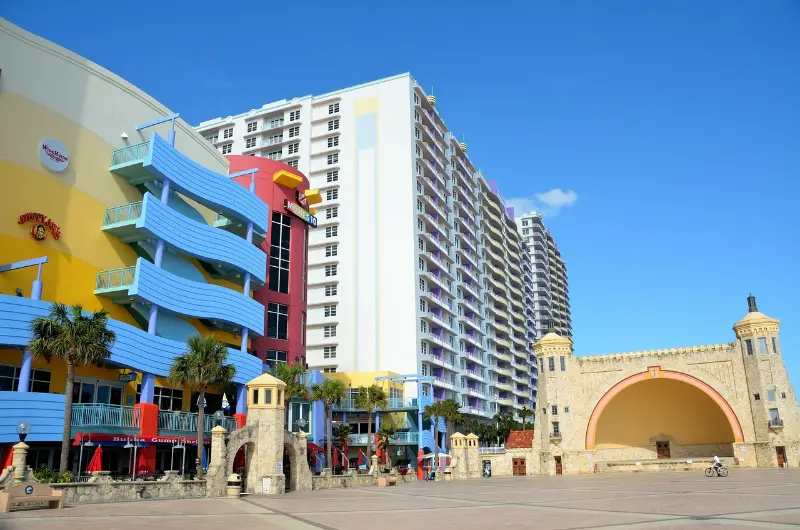
The Daytona Beach Boardwalk and Pier is the simplest place to experience the classic oceanfront side of Daytona without committing to a full day at a single attraction. The district combines the Main Street Pier, arcade-style entertainment, casual food, beach access, the Bandshell area and nearby Ocean Walk Shoppes within a compact walkable zone.
It works particularly well on a first visit because everyone can use the area differently. One person can fish from the pier, children can spend a short session in an arcade, another traveler can walk the beach, and the group can regroup for food without moving the car several times.
The area is also easy to over-schedule. The best plan is usually to choose two or three priorities and let the oceanfront atmosphere fill the remaining time. Parking, heat and event crowds matter more than the physical distance between attractions.
Quick planning summary
- Best for: first-time Daytona visitors, families, couples, beachgoers and travelers who want an easy mix of oceanfront walking, food and entertainment
- How much time: 2–4 hours for the Boardwalk, pier and a beach walk; half a day works if you add swimming, arcades, shopping or a meal
- Current cost: Walking the Boardwalk and pier is free; parking, arcades, rides, food and nearby attractions are separate. Metered parking at Breakers Oceanfront Park is currently listed at $1.25 per hour
- Current hours/status: The district is active throughout the day and evening. The pier is open daily; the fishing section is currently listed 7:00 a.m.–5:00 p.m. from Nov. 1–Mar. 15 and 7:00 a.m.–7:00 p.m. from Mar. 16–Oct. 31, weather permitting
- Location: Daytona Beach Pier, 1200 Main St., Daytona Beach, FL 32114; Boardwalk district along North Ocean Avenue
Why this stop is worth including
Daytona Beach Boardwalk and Pier earns a place in a Volusia County itinerary when it adds something different from another beach or another long drive. The Daytona Beach and New Smyrna Beach region is easy to oversimplify as only sand and motorsports, but the county also contains springs, estuaries, history, wildlife and small coastal districts that reward slower travel.
The most useful question is what role this stop plays in your day. It may be the fixed-ticket attraction, the cool-morning nature walk, the family reset between longer drives or the place where you deliberately spend less money after a more expensive day. Matching the stop to the itinerary is more important than trying to visit every famous name.
Keep one part of the visit optional. Florida weather, crowds, water conditions, race operations and seasonal wildlife can all change quickly. A plan with a clear priority and a flexible second half usually feels more relaxed and produces better decisions on the day itself.
What to see and do
Walk the Main Street Pier
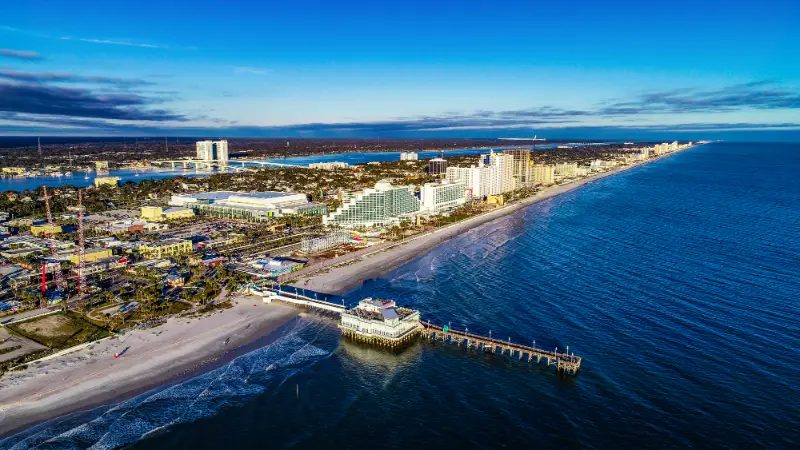
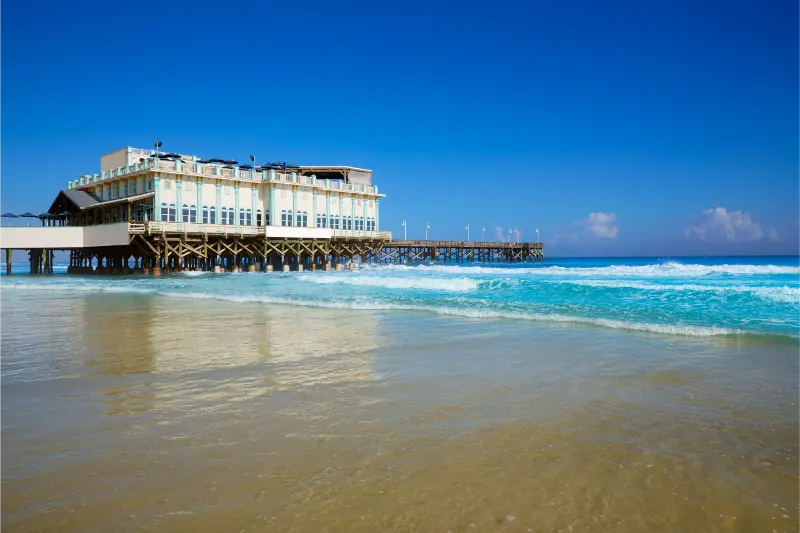
The pier has been a Daytona landmark since the 1920s and gives you a straightforward ocean view without paying an admission fee. Walk far enough to look back toward the skyline and beach, which helps put the Boardwalk district into perspective.
Treat this as one component of the visit rather than a box that must be checked. If the group is comfortable and interested, stay longer; if heat, crowds or fatigue are building, move on while the experience still feels positive.
Fish from the east end of the pier
Fishing is currently allowed on the east end of the pier at no charge, and a fishing license is not required for fishing from the municipal pier. Weather can close or limit the area, so anglers should check conditions rather than assume access is guaranteed.
Treat this as one component of the visit rather than a box that must be checked. If the group is comfortable and interested, stay longer; if heat, crowds or fatigue are building, move on while the experience still feels positive.
Explore the classic Boardwalk atmosphere
The Boardwalk is compact but deliberately old-school: arcades, snack counters, sweets and souvenir shops are part of the appeal. It is more about atmosphere than architectural sightseeing, so give children or nostalgic adults time to enjoy one activity instead of rushing through.
Treat this as one component of the visit rather than a box that must be checked. If the group is comfortable and interested, stay longer; if heat, crowds or fatigue are building, move on while the experience still feels positive.
Use Breakers Oceanfront Park as a practical base
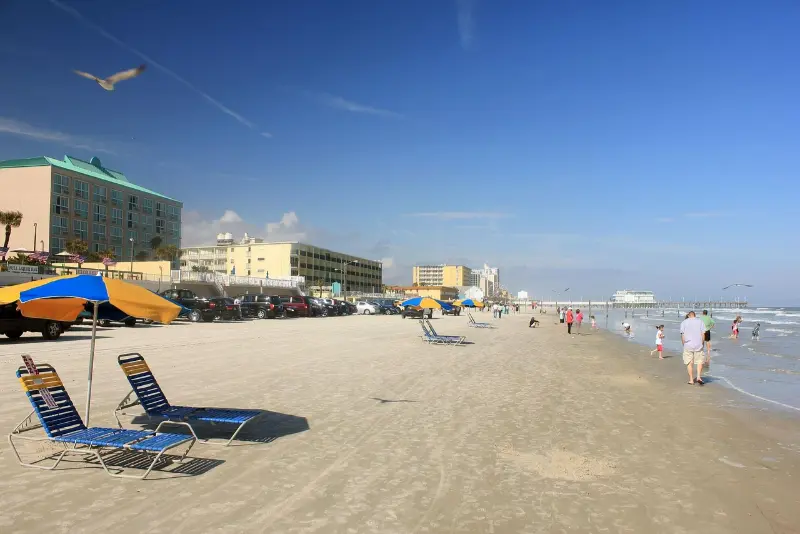
Breakers Oceanfront Park sits beside the pier and provides beach access, restrooms, walking paths and a splash fountain with limited operating hours. It can be a useful reset point for families between the Boardwalk and the sand.
Treat this as one component of the visit rather than a box that must be checked. If the group is comfortable and interested, stay longer; if heat, crowds or fatigue are building, move on while the experience still feels positive.
Walk north toward the Bandshell and Ocean Walk
The Daytona Beach Bandshell and Ocean Walk Shoppes extend the outing beyond the older Boardwalk. Seasonal concerts and fireworks can make evenings much busier, while restaurants and indoor spaces are useful during heat or a passing shower.
Treat this as one component of the visit rather than a box that must be checked. If the group is comfortable and interested, stay longer; if heat, crowds or fatigue are building, move on while the experience still feels positive.
Add a short beach session
The sand is only steps away, so a Boardwalk visit does not need to be separated from beach time. Bring a light beach setup if the forecast is good, but avoid carrying a full day of gear if your priority is walking, dining and entertainment.
Treat this as one component of the visit rather than a box that must be checked. If the group is comfortable and interested, stay longer; if heat, crowds or fatigue are building, move on while the experience still feels positive.
Plan differently during special events
Bike Week, Biketoberfest, race periods, concerts and holiday weekends can transform parking and pedestrian traffic. A plan that feels easy on a normal weekday can become slow and crowded during a major event, so check the Daytona calendar before arrival.
Treat this as one component of the visit rather than a box that must be checked. If the group is comfortable and interested, stay longer; if heat, crowds or fatigue are building, move on while the experience still feels positive.
Stay for evening only when it fits your group
The district becomes more energetic after dark, but families with young children or travelers who dislike crowds may enjoy late afternoon more. Sunset, dinner and one arcade session can deliver the atmosphere without requiring a late night.
Treat this as one component of the visit rather than a box that must be checked. If the group is comfortable and interested, stay longer; if heat, crowds or fatigue are building, move on while the experience still feels positive.
How much time do you really need?
2–4 hours for the Boardwalk, pier and a beach walk; half a day works if you add swimming, arcades, shopping or a meal is a realistic planning range. The shorter end works when you arrive with one clear priority, while the longer end makes more sense for families taking breaks, photographers, anglers, swimmers or anyone combining several activities at the same site.
Build a decision point halfway through the visit. Ask whether the main reason for coming is already complete and whether everyone still has energy. This simple check prevents a good morning from turning into an exhausting afternoon simply because the original itinerary included one more optional activity.
Best time of day and best season
Early morning is the safest default for outdoor Volusia County stops. Heat is lower, parking is often easier and wildlife activity can be better. Structured indoor attractions can usually be scheduled later, while beaches and springs require more attention to weather, water conditions and seasonal demand.
Winter and spring generally offer comfortable walking weather, while summer brings stronger heat, humidity and frequent afternoon thunderstorms. Major Daytona events can also transform traffic and hotel demand. Check both the weather forecast and the local event calendar instead of treating every weekday or weekend as equivalent.
Getting there and parking
The city lists metered parking at Breakers Oceanfront Park near the base of the pier and additional nearby public and private options. Rates and valet availability can change. On busy weekends and event periods, arriving earlier or parking once and walking is usually easier than circling the beachfront blocks repeatedly.
Volusia County stretches from Atlantic beach towns to inland springs, so route planning matters. Group Daytona and Ponce Inlet stops together, keep New Smyrna Beach activities together, and treat Orange City or De Leon Springs as an inland day when possible. Repeatedly crossing the county can waste more time than the attraction itself.
Costs, reservations and value
The current planning snapshot is: Walking the Boardwalk and pier is free; parking, arcades, rides, food and nearby attractions are separate. Metered parking at Breakers Oceanfront Park is currently listed at $1.25 per hour. Use it as a 2026 reference rather than a guaranteed 2028 price. Parking systems, state-park fees, tour tickets and reservation rules can all change before publication or travel.
Spend money on the element that changes the experience. A track tour, lighthouse admission, spring reservation or parking pass can be essential; optional shopping and add-ons are not. Families can often control the day’s budget by deciding on one paid highlight and using beaches, scenic drives or walks around it.
Food, water and comfort
Carry water even when the planned visit looks short. Coastal wind can hide how much sun you are getting, while inland springs and hammocks can feel humid even in cooler months. Add sunscreen, insect repellent and a light layer when the day includes both exposed shoreline and shaded natural areas.
Do not assume every park or historic attraction has food service. If a restaurant is part of the destination, confirm its hours independently. For families, senior travelers or anyone with medication schedules, a backup snack in the car can prevent an otherwise unnecessary change of plans.
Families with children
Families can make this a very easy stop by setting a simple budget for arcade games or treats before arriving. The beach, pier and splash features add free activity between paid entertainment, which helps keep the outing flexible for different ages.
For younger children, one memorable task is enough: climb part of a lighthouse, spot a manatee, touch a stingray, walk to one overlook or choose one arcade game. Older children can help navigate, compare habitats or photograph details. A small role usually creates more engagement than a long explanation.
Teenagers
Teenagers often enjoy Volusia County more when they have some control. Offer two realistic options—beach versus shopping, a longer walk versus a short photo stop, an exhibit versus outdoor time—and let them choose one part of the day. This works particularly well in mixed beach-and-attraction itineraries.
Connect the stop to a real interest whenever possible: racing technology, marine biology, surfing, photography, wildlife, local food or history. Avoid extending an attraction simply because the ticket was paid for; leaving while interest is still high is usually better than forcing every display or trail.
Senior travelers and multigenerational groups
Plan around the slowest comfortable pace. Identify restrooms, shade, seating and the easiest route early, then let more active travelers add a climb, beach walk or optional loop while others rest. Everyone can share the same destination without completing the same physical activity.
Morning timing is especially useful for heat-sensitive travelers. If stairs, sand or uneven trails are a concern, start with the most predictable paved or indoor part of the attraction before deciding whether a more demanding section still makes sense.
Accessibility and comfort
Breakers Oceanfront Park provides handicapped beach and pier access, and the Boardwalk district has paved pedestrian surfaces. Sand access is naturally more difficult, so travelers who need specific beach-mobility equipment should confirm current local options before the visit.
Accessibility can change after storms, repairs or construction. If a step-free entrance, beach wheelchair, accessible restroom, close parking space or paved route is essential, confirm it directly with the managing organization 24–48 hours before arrival rather than relying on an old review.
Wildlife, water and environmental responsibility
Volusia County combines Atlantic beaches, dunes, estuaries, rivers and freshwater springs. Give wildlife enough space to continue normal behavior, stay on marked boardwalks and crossovers, and never enter closed water or habitat areas simply for a photograph.
Sea turtles, shorebirds, manatees and other protected species can trigger seasonal restrictions. Those restrictions are part of the experience rather than an inconvenience to work around. A good wildlife encounter is one where the animal does not have to change direction, leave a resting site or move away from people.
Weather and backup planning
Florida weather rewards flexible scheduling. For a mostly outdoor stop, identify an indoor museum, restaurant or shopping district that can absorb one or two hours if lightning develops. For a structured indoor attraction, keep a nearby park or beach available in case the forecast improves.
After tropical weather, a site can remain partly closed even when roads and hotels have reopened. Boardwalks, piers, dunes and river facilities may need separate inspections. Use the current official status page if the area has experienced a recent storm or flooding event.
Photography tips
Morning and late-afternoon light generally works best outdoors, but safety matters more than the angle. Use designated overlooks, sidewalks and stopping areas, protect equipment from salt spray and sudden rain, and never stop a vehicle on a blind scenic road simply for a photograph.
If one traveler wants to photograph seriously, agree on a meeting point and a time limit. That gives the photographer patience while allowing the rest of the group to continue walking, sit in shade or enjoy another nearby feature.
How it compares with nearby alternatives
Choose the Boardwalk and Pier when you want a lively, flexible beachfront experience. Choose Smyrna Dunes Park for quieter nature and long boardwalk walking, or Daytona International Speedway when your group prefers a structured attraction with a clear start and finish.
The best pairings contrast with one another. A museum after a beach, a spring after several Atlantic days, or a scenic drive after a structured attraction usually produces a more interesting itinerary than stacking three similar experiences back-to-back.
How to combine it with other Wonderful Florida guides
To connect this Volusia County stop with the already-published section of your Florida road trip, continue south with Lori Wilson Park, Florida Surf Museum and Jetty Park. These internal links all point to Wonderful Florida guides scheduled before this 1081–1090 block.
A realistic half-day plan
Step 1: protect the main reason you came
Start with the feature most dependent on a fixed time, cool weather, low crowds, active wildlife or good water conditions. Do not spend the first hour on shopping or a secondary detour if the primary experience could become less comfortable later.
Step 2: take a real break
After the main activity, stop for water, shade, food or seating before adding another stop. This is when families often discover that children need a reset, older travelers need rest, or the weather is changing faster than expected.
Step 3: keep the final activity optional
Make the last hour flexible. A nearby beach, downtown district, short boardwalk or café is useful only if the group still has energy. Leaving part of the day uncommitted is one of the easiest ways to make a Florida road trip feel less rushed.
Where to stay in Volusia County
Daytona Beach is the most practical base for the Speedway, Boardwalk and central coastal attractions. Ponce Inlet or Daytona Beach Shores works well for a quieter south-beach stay, New Smyrna Beach suits travelers who prefer a smaller beach-town atmosphere, and inland DeLand/Orange City can be more convenient for spring-focused days.
For a short visit, avoid changing hotels just to save 20 or 30 minutes of driving. One well-chosen base often creates a calmer trip than repeated packing and check-in, especially when your itinerary already mixes beach, inland parks and scheduled attractions.
Who may want to skip or shorten the visit
Shorten the visit if it duplicates something your group already enjoyed, if weather removes the main reason for coming, or if one traveler is clearly finished. A complete Florida trip does not require every attraction. Variety and energy management matter more than collecting checkmarks.
Common mistakes to avoid
- Arriving without checking current hours, reservation rules, closure notices or event schedules.
- Trying to combine Daytona, New Smyrna Beach and the inland springs in one rushed day.
- Underestimating sun, heat, insects, wind or water conditions because the planned walking distance looks short.
- Assuming wildlife sightings, tower access, tours or seasonal events are guaranteed.
- Using the group’s best energy on secondary shopping or parking logistics before the main experience.
Practical questions before you go
Is this worth adding to a first Volusia County trip?
Yes when it fills a gap in the itinerary. Use the quick summary to decide whether it gives you history, wildlife, beach-town atmosphere, freshwater scenery or a structured attraction that your other days do not.
Do I need to arrive early?
Early arrival is the safest choice for springs, limited parking, nature areas and high-demand attractions. Ticketed indoor sites can be more flexible, but major Daytona events can change traffic throughout the county.
Can I combine it with the beach?
Usually yes for Daytona, Ponce Inlet and New Smyrna Beach stops. Put the fixed-time activity first and keep beach time flexible because swimming, wind and thunderstorms are easier to adjust than a tour or reservation.
Is it suitable for all ages?
Most groups can adapt the visit, but ideal duration changes by age and mobility. Young children need movement, teenagers benefit from choice, and senior travelers often appreciate predictable surfaces and earlier timing.
When should I recheck conditions?
Check once while building the itinerary and again 24–48 hours before arrival. For springs, wildlife, race operations, storms, beach access or temporary repairs, check again on the same day.
Official resource to check before you go
For current visitor information, use the official visitor page. Recheck prices, hours, reservations, closures, event schedules and access rules shortly before travel because this article is scheduled well in advance.
Final thoughts
The strongest Volusia County itineraries mix the famous names with places that reveal a different side of the region. A racetrack, lighthouse, dune boardwalk, spring or quiet river park can each be memorable for a different reason, especially when you give the experience enough time instead of trying to collect them all in one day.
Protect the main reason for the visit, keep one part of the day flexible and let weather, crowds and everyone’s energy decide whether you add more. That approach usually creates a better Florida trip than a schedule where every hour has already been filled.