
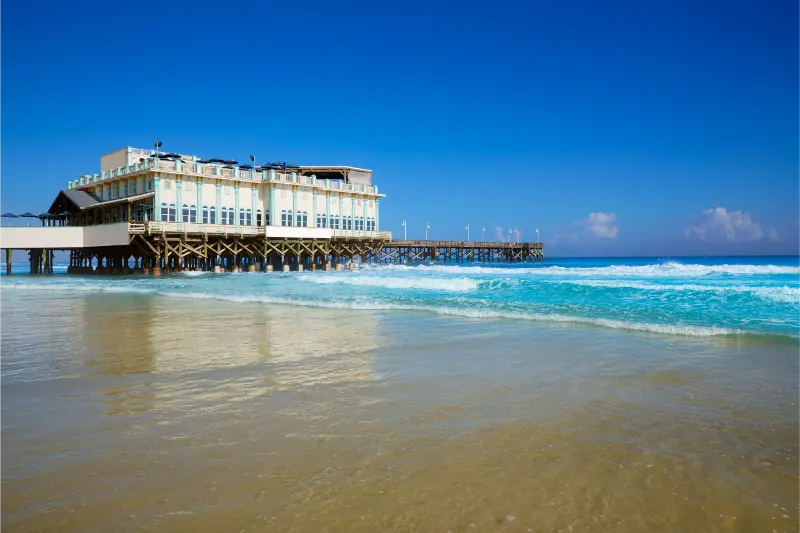
Choose the Shores for the right reason
Daytona Beach Shores is a separate coastal municipality south of central Daytona Beach, with hotels, residential buildings and long Atlantic sands. The name often gets mixed into general Daytona listings, so first confirm the hotel’s exact address and the beach approach nearest its entrance. Travelers choose this area for a quieter base and practical beach access, not because major speedway or amusement venues sit on every block. A family can spend several days alternating water views with rest, while making one intentional trip to the Daytona attractions that interest them. A traveler seeking live music and nightlife may prefer a different part of the region. The Shores works particularly well when the accommodation itself provides convenient beach access and the group values an unhurried routine. Not every property offers the same chairs, pools, elevators or sea-facing rooms.
Plan beach access independently of the hotel brochure
The beach is a public coastal environment subject to conditions and local rules, even where hotels face the ocean. Locate the nearest lawful pedestrian approach and check whether the route uses stairs, a ramp or soft sand. A hotel may offer a private access route for its guests, but that does not establish the accessibility of every nearby beach entrance. Know where lifeguards are stationed and look at the posted flags before entering the water. Swimming and surfing zones can change under local safety rules. If rough surf, strong currents or lightning make the ocean unsuitable, take a shoreline walk from a safe position or enjoy a covered outdoor view. Children need active supervision, not simply a spot within sight of a lifeguard tower. For a guest with mobility limitations, ask specifically about beach wheelchairs or mats and their current availability.
Understand vehicle access to the Volusia sand
The Daytona area is famous for driving on certain parts of the beach, but the permission is limited by specific access points, time windows, tides and weather. The City of Daytona Beach’s official page explains that driving is restricted to designated areas and gives seasonal hour adjustments during sea turtle nesting months. Drivers should verify which specific ramp is operating near Daytona Beach Shores and whether their vehicle is permitted. Follow the posted 10 mph beach limit, keep headlights on if required and obey beach safety staff. Never treat beach driving as an optional scenic shortcut when the tide is high or conditions are unsafe. Families with young children should not allow unsupervised play in vehicle travel lanes. A traveler who does not wish to drive onto sand can usually organize a conventional parking-and-walking visit instead.
Build a gentle two-day coastal plan
On day one, settle into the accommodation and find the nearest suitable beach access before planning a full swim. Enjoy the morning shoreline when conditions permit, take a long indoor break during intense heat, and arrange an early dinner near the hotel. On day two, choose between another relaxed beach morning and a short excursion to a nearby Volusia County park or museum. Avoid spending the entire day driving from one ocean access to another without a clear goal. A couple could substitute sunrise photography and a cafe visit for hours of water activities. Grandparents may prefer watching the surf from a sheltered seat while children play under supervision. Even a simple holiday benefits from flexible timing: thunderstorms and surf warnings can force a sudden change. Reserve more distant Daytona experiences for days when energy is high and the travel time is justified.
What different generations can do on the same day
The most useful group itinerary is not one in which a three-year-old and a ninety-year-old are expected to take the same long walk. In Daytona Beach Shores, preschoolers need supervised sand play away from beach traffic lanes; meanwhile, non-swimmers can enjoy a shoreline stay without entering the water. A second group might be interested in the opposite pace: older adults may choose morning beach views and shorter accessible walks, while teenagers can include one planned Daytona outing if transport is arranged. Decide at the start who wants to remain at the most comfortable stop and how everyone will regroup. Young children should always be supervised around roads and water even when a park looks quiet. Teenagers benefit from one genuine choice of activity instead of being asked to follow a checklist. Visitors managing fatigue can shorten an out-and-back path at any moment, unlike a complicated loop with no immediate exit. Before traveling, identify an indoor place for medication, diaper changes or cooling down, and carry drinking water for everyone.
Match the outing to seasonal weather and daylight
Season changes the value of Daytona Beach Shores’s outdoor spaces. In hot months, the period shortly after opening is often preferable to early afternoon; in cooler months, a leisurely midmorning arrival can be pleasant, but darkness comes sooner. The relevant local checks are designated beach vehicle zones, surf warnings, sea turtle restrictions and hurricane-season forecasts. When a thunderstorm approaches, leave water edges, open lawns and exposed pathways for a substantial building or enclosed vehicle. Do not postpone that decision until the rain actually begins: lightning may precede the heaviest shower. A windy or cloudy day is not automatically unsafe, but conditions can alter walking comfort and facility operations. Bring sun protection, suitable footwear and a spare dry layer for children. On a long trip, schedule this outing on a day that can be swapped with another activity rather than lock it to a tightly timed airport transfer. This preserves room for the unexpected without reducing the trip to waiting indoors.
Treat the coast and nearby Daytona as separate choices
Visitors sometimes attach the Daytona International Speedway, Main Street, and every beachside restaurant to a single Daytona Beach Shores itinerary. Those places may be worthwhile, but they are excursions, not sites within a short stroll from every Shores hotel. Choose one inland or downtown activity based on your interests, then return rather than crisscross the region. Families seeking indoor relief can research local museums or family entertainment beforehand; opening hours and ticket rules change. For a traveler with no car, calculate the cost of rides in both directions and consider staying closer to the activities that matter most. A beach-focused stay can be less expensive in transportation but depends more heavily on the hotel’s quality and location. Verify that your property has accessible entrances, necessary elevators and the bed arrangements promised at booking.

Keep turtles, pets, and older visitors safe
Atlantic Florida beaches are nesting habitat for sea turtles for part of the year. Follow posted light restrictions and never approach nests or hatchlings, move markers or leave holes and beach equipment behind. Dogs are subject to specific beach access rules; a pet-friendly hotel does not mean the sand outside is a dog beach. Persons with respiratory or heat sensitivity may enjoy a morning balcony session rather than a long exposed walk. Wheelchair users should evaluate the exact route from room to elevator to entrance rather than rely on a generic accessibility filter. A family with a stroller may find boardwalk approaches manageable but struggle once the wheels enter deep sand. Pack water, sunscreen and footwear for heated pavement. Review hurricane-season and storm alerts before a coastal drive, and move inside immediately when lightning develops.
How to get there without wasting the day in transfers
The journey that best fits this destination is one morning on the beach followed by indoor rest, then a second day with an optional single Daytona-area excursion. Start by entering the precise attraction address, not simply the name Daytona Beach Shores, into the navigation app. Distances within Florida communities can be deceptive when a river, interstate, causeway or large residential tract separates sites. Drivers should read signs at the actual car park and allow time to return to the vehicle before closing. People using ride-hail need a confirmed pickup point and a return plan, particularly after dark or in a rural area. Where public transit exists, check the schedule for the exact travel day as well as the location of the return stop. Do not promise that a bus will reach a remote nature entrance merely because a line crosses the same municipality. Anyone carrying a stroller or mobility aid should compare transfers, walking distance and the cost of a direct booked ride.
A realistic spending plan, not a misleading headline price
The trip’s meaningful expenses are total hotel charges, parking, any beach rental, meals and transport to attractions outside the Shores. A park or shoreline may be open to pedestrians without charge, while parking, aquatic activities, evening events, special exhibitions, fishing or equipment hire have completely different arrangements. Separate necessary spending from choices that can be removed, and confirm costs from the operator immediately before visiting. A family with several children may spend more on transport and meals than admission. Travelers on a tight budget can bring water, arrange a single restaurant meal and avoid driving between distant attractions simply to fill a printed itinerary. Do not make a nonrefundable booking based only on a third-party calendar that may be stale. For a multiday stay, compare the total accommodation bill including taxes and resort or cleaning fees against the transport savings it creates. This makes an apparently inexpensive outlying property easier to evaluate fairly.
Choose accommodation to match the whole vacation
For overnight planning, compare a property with an exact pedestrian beach entrance and clearly documented elevators, parking and resort fees. The correct choice depends on where you will wake up for the following three days, not only on the afternoon you intend to spend in Daytona Beach Shores. Open the route to the airport and the principal attractions, then look at traffic patterns around typical departure hours. Families should verify cribs, refrigerator access, laundry and suitable bed layouts before paying. A hotel described as accessible may still require clarification about the specific room’s entrance, bathroom and elevator route. Those traveling with older adults should request a realistic account of how far the restaurant, vehicle pickup and usable beach or park entrance are from the room. Do not assume that the least expensive listing is the least tiring. If Daytona Beach Shores is only a day trip, a hotel change may produce more work than any potential benefit.
Practical stop-by-stop table
| Stage | Recommended focus | Check |
|---|---|---|
| Before the visit | Verify opening conditions | designated beach vehicle zones, surf warnings, sea turtle restrictions and hurricane-season forecasts |
| Start of the day | Plan beach access independently of the hotel brochure | Follow the official entrance and signs |
| Next optional stop | Understand vehicle access to the Volusia sand | Shorten the route if conditions change |
| Midday | Food and rest | Carry water; avoid exposed heat |
| Overnight decision | Compare actual door-to-door journeys | a property with an exact pedestrian beach entrance and clearly documented elevators, parking and resort fees |
Frequently asked questions
Is Daytona Beach Shores worth a day trip?
Yes, if you are interested in plan beach access independently of the hotel brochure and keep the number of stops realistic. Travelers whose priority is elsewhere should evaluate the return journey before making this a mandatory detour.

What is the best first stop in Daytona Beach Shores?
The first site to check is the location described in the official source: Daytona Beach Shores is a separate municipal area from central Daytona Beach. Verify its operating status before visiting.
Can someone with limited mobility enjoy Daytona Beach Shores?
Often yes, if the outing is built around a suitable entrance and short route. Older adults may choose morning beach views and shorter accessible walks. Ask the venue about the exact conditions rather than relying only on a general label.
Is Daytona Beach Shores suitable for families with young children?
The plan should emphasize rest, shade and direct supervision. Preschoolers need supervised sand play away from beach traffic lanes, while older children may want different activities.
What should be checked just before departure?
Confirm designated beach vehicle zones, surf warnings, sea turtle restrictions and hurricane-season forecasts; then check the route, costs and local weather from current official information.