

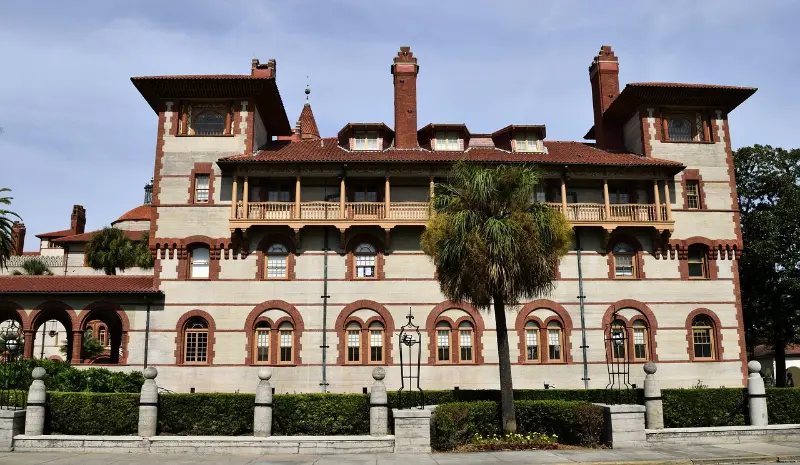
DeBary Hall Historic Site is a Florida stop that becomes much more rewarding when you know what kind of experience you are coming for. DeBary Hall tells a different Central Florida story from beaches and theme parks. The 1871 hunting lodge was connected to Frederick deBary, steamboat transportation and the development of the St. Johns River region. The site combines a historic house, modern visitor exhibits, landscaped grounds and trail access, so it works for travelers who want culture without spending an entire day indoors.
The practical goal is simple: understand what deserves your time, what can change operationally, how the visit works for different ages and mobility levels, and which nearby experiences add real contrast instead of turning the day into a checklist.
Quick planning summary
- Best for: history lovers, senior travelers, families, architecture fans and visitors exploring the St. Johns River corridor rather than the theme-park side of Central Florida.
- How much time: 90 minutes to 2.5 hours for the visitor center, guided house tour and grounds; longer if you add the Spring-to-Spring Trail.
- Best strategy: decide on one defining experience before arrival, then add a second only if the group still has time and energy.
- Before leaving: check the official page for same-day hours, closures, tours, weather-sensitive access or event changes.
Why this place is worth including
DeBary Hall tells a different Central Florida story from beaches and theme parks. The 1871 hunting lodge was connected to Frederick deBary, steamboat transportation and the development of the St. Johns River region. The site combines a historic house, modern visitor exhibits, landscaped grounds and trail access, so it works for travelers who want culture without spending an entire day indoors.
This part of east-central Florida is especially rewarding when you alternate landscapes. A boardwalk feels different after a museum, archaeology becomes easier to understand after seeing the lagoon, and aviation or space history has more impact when the previous day was spent in a quiet coastal preserve.
Best things to do and how to experience them
Take the guided house tour first
A historic home makes more sense when a guide explains who used each space, how the estate functioned and why a wealthy New York family built a winter hunting lodge here. Ask about the relationship between the property and St. Johns River transportation rather than focusing only on furnishings.
Use the visitor center to understand the river economy
The St. Johns River shaped settlement, commerce and tourism long before interstate highways. The exhibits help connect DeBary Hall with steamboats and regional development, making the property part of a wider transportation story.
Walk the grounds after the house
Once you know the historical context, the trees, outbuildings and open spaces become easier to interpret. A short grounds walk also prevents museum fatigue and gives children a movement break.
Add the Spring-to-Spring Trail only if the group wants more activity
The trail connection can turn the visit into a half-day cycling or walking outing, but it is optional. Senior visitors and families with young children can have a complete experience without adding miles simply because the trail is there.
Current practical information
DeBary Hall currently offers tours from 10 a.m. to 4 p.m. Tuesday through Saturday and from noon to 4 p.m. Sunday. Current admission is $5 for adults, $4 for seniors, $2 for children age 3 to 12 and free for children two and younger. The visitor center includes exhibits and a presentation about the St. Johns River, and the site connects with the Spring-to-Spring Trail. Special lectures, walks and family programs are frequently added to the county calendar.
Hours, admission, access and program availability can change after storms, construction, wildlife activity or special events. Use the official resource linked near the end of this article before departure, especially if one feature is the main reason for your visit.
Best time of year and best time of day
Any season works for the house. Fall through spring is better if you also plan to walk or cycle the trail. Summer visits are easiest when the indoor tour anchors the hottest part of the day.
East-central Florida can be hot, humid and stormy from late spring through early fall. Outdoor sites are usually easiest early, while museums and visitor centers fit well into the hottest or wettest part of the afternoon. Cooler months make it easier to combine two outdoor stops without exhausting the group.
How to plan the visit without wasting time
Identify the one feature that would make the visit worthwhile before you arrive: a boardwalk loop, guided house tour, archaeological mound, aircraft collection, lagoon tour or specific exhibit. Protect time for that feature first. Optional additions should stay optional, because parking, weather, slower walking and conversations with staff often make real visits take longer than map estimates suggest.
Keep at least 30 minutes of buffer between this stop and any timed reservation. On the coast, bridges, beach traffic and storms can slow a short drive; on launch days around Titusville, parking and road conditions can change quickly. A small buffer prevents one good visit from damaging the next one.
Families with children
Families can keep the house tour engaging by giving children a few things to look for: river transportation, how rooms stayed cool, and how daily life differed from today. Use the outdoor grounds afterward as a reward and reset.
A useful family rhythm is one focused activity, a movement or snack break, and then one optional second activity. Younger visitors usually remember one animal, aircraft, old house or unusual landscape better than a long sequence of rushed facts.
Senior travelers and multigenerational groups
DeBary Hall is especially suitable for senior travelers because the site is compact, tours are structured and the visitor center provides a comfortable indoor component. Confirm any specific stair or seating concerns before a guided tour.
Multigenerational travel works best when everyone can experience the same place at a different intensity. Stronger walkers can add a longer trail or outdoor loop while others use benches, exhibits or shorter viewpoints. Meeting back at one agreed time is often better than forcing the entire group to move together.
Accessibility and mobility planning
The visitor center and main public areas are designed for general access, but historic architecture can create limitations in parts of the house. Contact the site for the best route if step-free access is essential.
Accessible on paper does not always mean effortless in practice. Heat, soft sand, natural surfaces, historic thresholds and distance from parking can matter as much as stairs. If mobility will determine whether the visit works, call ahead and ask about the exact route or feature you plan to use.
Parking and transportation
On-site parking is available at 198 Sunrise Boulevard. The location is close to I-4, making it a practical stop between Orlando and the St. Johns River region without requiring a long detour.
Group nearby activities geographically. New Smyrna Beach, Oak Hill, Deltona, DeBary and Titusville form a logical progression, but they are not one walkable tourism zone. Moving hotels or crossing the same roads repeatedly usually costs more time than choosing one base for two or three nights.
What to bring
- Refillable water, even for short museum days.
- Sun protection and a hat for boardwalks, beaches and archaeological sites.
- Insect repellent for lagoon, scrub and hammock areas.
- Comfortable shoes with enough grip for mixed indoor and outdoor surfaces.
- Binoculars for birding and lagoon wildlife when relevant.
- A screenshot of reservations, passes or closure notices in case mobile service is inconsistent.
Weather, storms and seasonal reality
Summer thunderstorms can form quickly. Leave exposed beaches, piers, boardwalks and open water when thunder is nearby rather than waiting under a small shelter. Hurricane-season damage can also affect trails and buildings long after the storm itself has passed, so an apparently normal forecast does not guarantee every facility is open.
In winter, cooler temperatures make walking easier, but wind can change beach comfort dramatically. Carry a light layer if you are combining an indoor museum with an exposed waterfront or lighthouse-style environment.
Budget and value
Admission is very reasonable for a guided historic-house experience. Free public programs on selected dates can add value, but do not schedule the trip around an event without checking registration requirements.
Do not measure value only by hours. A focused 90-minute museum can be more memorable than a tired four-hour visit, and a free nature center may add more to the trip than another expensive attraction. Spend on the experience your group actually cares about and use free or low-cost waterfront time to balance the day.
Where to stay and how to group the area
New Smyrna Beach is the easiest base for Smyrna Dunes, the Marine Discovery Center, local history and the Apollo entrance of Canaveral National Seashore. Deltona or DeBary works better when Lyonia, DeBary Hall and the St. Johns River corridor are priorities. Titusville is the logical base for aviation museums, space history and the southern Space Coast.
A two- or three-night base is usually more efficient than changing hotels to save a short drive. Use day trips to create contrast: coast one day, inland history the next, then aviation or space.
Responsible travel and local context
Stay on boardwalks and marked trails, respect dune and archaeological closures, keep distance from wildlife and never feed scrub jays or other animals. At shell mounds and historic sites, leave artifacts and natural material where they are and treat the landscape itself as part of the cultural resource.
When a place interprets Indigenous history, settlement, military history or technological achievement, look for the people behind the headline story. The most useful visit usually includes workers, families, communities and environmental change rather than only dates and famous names.
How to combine it with other Wonderful Florida guides
Useful already-published guides for building a contrasting nearby experience include Lyonia Environmental Center and Preserve, New Smyrna Museum of History. Use one as a next-day idea or secondary half-day stop rather than forcing every nearby attraction into the same schedule.
A realistic three-day mini-itinerary
Day 1
Take a morning guided tour, explore the visitor center and walk the grounds before lunch.
Day 2
Use the second day for Lyonia Environmental Center to compare a historic estate with scrub habitat.
Day 3
Continue toward Titusville on day three for aviation or space history.
Who may want to skip or shorten the visit
If your trip is built entirely around beaches or high-energy attractions, DeBary Hall may feel too quiet. It is best for travelers who enjoy local history and a slower guided experience.
Selective travel is usually better travel. If this stop duplicates something you already did several times on the same trip, shorten it and use the saved time for a different landscape or story.
Official resource to check before you go
Small details that improve the experience
Photograph the parking location before you walk away, use restrooms when you first see them, and keep a dry layer in the car even on a bright morning. If staff or volunteers are available, ask what has changed recently; they may know about wildlife activity, a temporary route change or a quieter time of day that is not obvious online.
For photography, think about direction of light instead of arriving automatically at noon. Coastal landscapes often look strongest early or late, while museums reward slower observation. Take fewer photographs but understand what you are photographing; the result is a more useful travel memory and less time spent looking through a screen.
If several generations are traveling together, agree on a meeting point whenever the group splits. One person may want a longer trail, another may prefer a bench and a child may need a snack. A clear regrouping plan lets everyone use the same place at the right intensity without frustration.
A practical decision framework for this stop
First identify the non-negotiable feature, then identify the condition that could prevent it. For a beach that may be weather or parking; for a house it may be tour availability; for an archaeological site it may be heat or trail access; for a museum it may be event-day hours. Check that single condition before spending time driving across the region.
Second, keep one nearby fallback that uses a different environment. A museum can rescue a stormy beach day, a shaded cultural site can replace an exposed trail, and a free waterfront walk can replace a sold-out tour. A flexible plan is more useful than a minute-by-minute schedule.
Finally, leave unscheduled time. The memorable part may be a volunteer’s story, a scrub jay call, evening light on Mosquito Lagoon or an aircraft restoration detail you did not know existed before you walked in.
Final thoughts
DeBary Hall Historic Site works best when you arrive with one clear priority and enough flexibility to adapt to the day. Confirm access, protect outdoor time from heat and storms, and let the pace of your group determine how much you add afterward.
The goal is not to collect attractions. It is to understand each place well enough that it feels different from the stop before it—and useful enough that you would recommend it to the right traveler.