
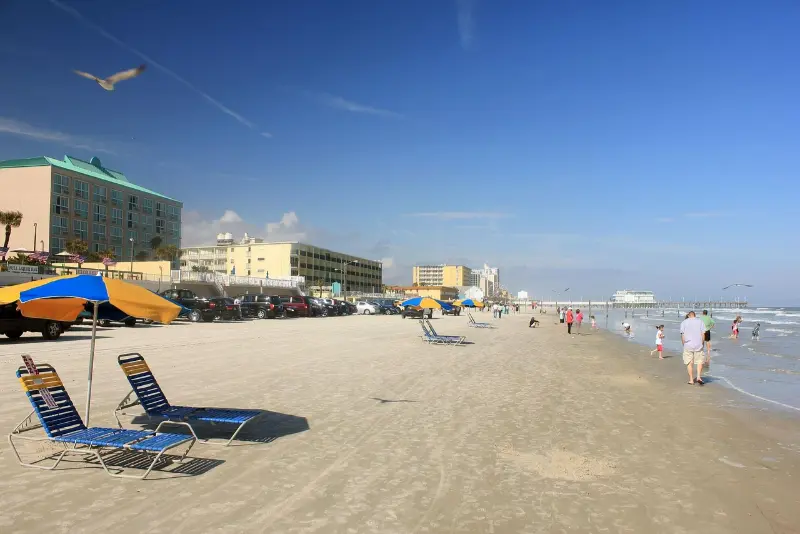
Halifax Historical Museum is one of those Florida stops that becomes much more rewarding when you know exactly what kind of experience you are coming for. Halifax Historical Museum gives context to a city that is often reduced to three images: beach driving, Bike Week and NASCAR. Inside the 1910 Merchants Bank building, the story expands to settlement, tourism, local businesses, storms, sports, civil rights and the changing Halifax River community. The museum’s compact scale makes it especially useful when you want meaningful history without committing half a day.
Practical travel decisions include: how much time to allow, what to prioritize, which access or operating details can change the day, how the stop works for families and older travelers, and what to combine nearby without turning the itinerary into a race.
Quick planning summary
- Best for: travelers interested in Daytona history beyond racing, architecture fans, rainy-day planners and families who prefer small local museums.
- How much time: 60 to 90 minutes for most visitors; up to two hours if you read exhibits closely or join a guided program.
- Best strategy: protect the main experience first, then add one nearby stop only if the group still has time and energy.
- Before leaving: check the official page for the day’s hours, closures, weather-sensitive activities or event-related changes.
Why this stop deserves a place in a Florida itinerary
Halifax Historical Museum gives context to a city that is often reduced to three images: beach driving, Bike Week and NASCAR. Inside the 1910 Merchants Bank building, the story expands to settlement, tourism, local businesses, storms, sports, civil rights and the changing Halifax River community. The museum’s compact scale makes it especially useful when you want meaningful history without committing half a day.
The strongest Florida itineraries are built on contrast. A beach morning feels more memorable when the next stop is a forest, museum, historic house or river. Use this place because it adds a new layer to the trip, not simply because it appears close on the map.
Best things to do and how to experience them
Begin with the building itself
The former Merchants Bank is part of the story. Notice the proportions, materials and early twentieth-century civic confidence before diving into display cases. Understanding the setting helps explain how Beach Street functioned before the modern beachside skyline dominated visitors’ image of Daytona.
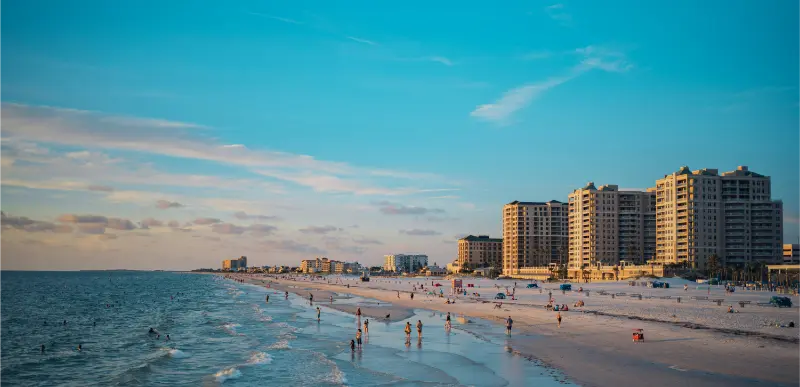
Look for the stories that complicate the race-town stereotype
Beach racing is important, but the museum is most valuable when you use it to discover unfamiliar chapters: local disasters, businesses, music, neighborhoods, river life and social change. Choose two themes that interest your group instead of trying to memorize every date.
Use rotating exhibits as a bonus
Temporary exhibitions can be excellent, but they are seasonal. Build the visit around the permanent local-history value and treat a special exhibit as an extra. That approach prevents disappointment if a previous show has just closed.
Walk Beach Street afterward
The museum makes more sense if you step outside and compare the historical photos with the present-day downtown. A short riverfront or Beach Street walk turns static exhibits into a city-reading exercise.
Current information to know before you go
The museum currently operates Tuesday through Saturday from 10 a.m. to 4 p.m. and is closed Sunday and Monday. Standard admission for small groups is currently $10 per person, with lower per-person rates for larger groups. Rotating exhibits change through the year, so check the museum site shortly before your visit rather than traveling for a temporary display that may have ended.
Florida operating conditions can change quickly after storms, construction, wildlife activity, special events or staffing changes. Treat posted hours and prices as a planning baseline rather than a promise several months in advance, and use the official resource linked below before departure.
Best time of year and best time of day
The museum is useful year-round and particularly valuable during summer heat or rain. Midday works well because you can use cooler morning and evening hours for outdoor Daytona activities.
In coastal Volusia and Flagler counties, summer heat and thunderstorms are as important as crowd levels. Early mornings protect outdoor time, while museums and cultural sites are useful during the hottest part of the day. In cooler months, you can reverse the pattern and spend longer outdoors at midday.
How to plan the visit without wasting time
Decide before arrival what would make the stop successful. For a park, that may be a paddle, beach walk or one specific trail. For a museum, it may be one gallery, guided tour or historical story. For a tower or motorsport venue, it may be the climb or a particular behind-the-scenes access point. Build the schedule around that priority instead of trying to complete every optional feature.
Leave at least 30 minutes of slack between this stop and the next timed activity. A drawbridge, full parking lot, summer shower, slow child, photo stop or longer-than-expected conversation with a ranger can easily consume that margin.
Families with children
Families can use the museum as a one-hour indoor reset. Ask children to compare old transportation, clothing, storefronts or beach scenes with what they saw outside. The compact building is less exhausting than a huge museum campus.
A simple rhythm works well: one focused activity, one movement break, water or snack, then a second activity only if attention is still good. Children remember one turtle, giant tree, race car or lighthouse view more clearly than six rushed exhibits.
Senior travelers and multigenerational groups
Senior travelers often appreciate the slower pace, seating opportunities and central location. Allow enough time so no one feels hurried through text-heavy exhibits.
Multigenerational trips are easier when the defining experience has more than one intensity level. Let stronger walkers or climbers add the strenuous portion while others use exhibits, overlooks, gardens or shaded seating. The group does not need to move as a single unit every minute.
Accessibility and mobility planning
Contact the museum for current accessibility details if a mobility device, elevator or restroom configuration is important. Historic buildings can have constraints that are not obvious from photographs.
Historic buildings, natural trails and beaches can be technically open yet still difficult because of stairs, roots, soft sand, heat or distance from parking. If accessibility will determine whether the visit works, call ahead and ask about the exact feature you want to use rather than relying on a general accessibility label.
Parking and transportation
Beach Street has public parking options, but downtown events can alter availability. Give yourself a buffer rather than booking another timed attraction immediately after the museum.
The Daytona–Ormond–Ponce Inlet corridor is not geographically huge, but beach traffic, bridges, race events and weekend crowds can make short drives take longer than expected. Group nearby stops and avoid moving the car repeatedly when you can walk between attractions.
What to bring
- Refillable water and sun protection, even for a mostly indoor day.
- Comfortable closed shoes for historic surfaces, trails or tower stairs.
- A light rain layer during the warm season.
- Binoculars for parks, rivers and bird areas when relevant.
- A screenshot of tickets, reservations or official closure notices in case mobile service is weak.
Weather, storms and seasonal reality
Summer storms in east-central Florida can develop quickly. Lightning is a reason to leave exposed beaches, towers, boardwalks and open water, not something to wait out under a small shelter. Hurricane-season travel also requires flexibility because storm damage can affect boardwalks, campgrounds and forest trails long after the weather itself has passed.
In winter, the main challenge is less heat but still variable wind along the coast and river. Dress in layers if you are combining an indoor museum with an exposed lighthouse, beach or boat launch.
Budget and value
At $10 for a typical individual visitor, this is a mid-range small-museum stop. Pair it with a free riverfront walk instead of stacking several paid attractions in the same afternoon.
Do not judge value only by the number of hours inside a paid attraction. A focused 90-minute museum visit can be better value than an exhausted four-hour visit, just as a low-cost state park can become expensive if you add unnecessary rentals. Spend on the experience that matters most to your group and use free walks, gardens or riverfront time to balance the day.
Where to stay and how to group the area
Ormond Beach is convenient for Bulow Creek, Tomoka and The Casements. Daytona Beach is best for the Speedway, downtown history and a wider hotel base. Ponce Inlet is quieter and makes sense when the lighthouse, Marine Science Center and inlet parks are priorities. Flagler Beach works well for Gamble Rogers and the transition north toward Palm Coast and St. Augustine.
Do not change hotels for every short drive. One base for two or three nights is usually more efficient than moving luggage simply to save 15 or 20 minutes on the map.
Responsible travel and local context
At natural areas, stay off protected dunes, respect nesting and restoration closures, keep distance from wildlife and leave shells, plants and archaeological material where collection is prohibited. On rivers and estuaries, keep noise low and avoid approaching animals simply for a photograph.
At historical sites, take time to understand Indigenous history, slavery, segregation, labor and changing coastal development when those stories are part of the place. A ruin, mansion or museum is more meaningful when the people connected to it are not reduced to scenery.
How to combine it with other Wonderful Florida guides
Useful already-published guides for building a different kind of nearby experience include Daytona International Speedway Tour, The Casements. Use one as a next-day idea or secondary half-day stop rather than forcing every nearby attraction into the same schedule.
A realistic three-day mini-itinerary
Day 1
Visit the museum late morning, then walk Beach Street and the Halifax River area after lunch.
Day 2
Use day two for Daytona International Speedway if motorsport interests your group.
Day 3
Spend day three at Ponce Inlet Lighthouse and the Marine Science Center for a maritime change of pace.
Who may want to skip or shorten the visit
If your group dislikes reading, photographs and local-history interpretation, keep the visit short. This is not an interactive science center or large immersive attraction; its value comes from stories and objects.
Selective travel is usually better travel. If this stop duplicates something you have already done several times on the same trip, shorten it and use the saved time for a contrasting landscape or cultural experience.
Official resource to check before you go
A practical decision framework for this stop
First identify the non-negotiable feature: the tower climb, river paddle, old-growth oak, historic rooms, guided tour, beach walk or wildlife exhibit. Then identify the condition that could prevent it, such as weather, trail closure, tide, capacity, stairs or an event-day schedule. Check that condition before you spend time driving across the county.
Second, choose a nearby fallback that uses a different kind of environment. A museum can rescue a stormy beach day; a shaded forest can replace a crowded boardwalk; a riverfront walk can replace a sold-out tour. Keeping one alternative in mind makes the itinerary resilient without needing a minute-by-minute backup plan.
Finally, leave unscheduled time. The best part of a Florida stop is often the thing you did not know would matter: a volunteer’s story, a bird feeding along the creek, evening light on a lighthouse or a historical photograph that changes how you see the street outside.
Small details that improve the experience
A good visit is often shaped by details that never appear in a headline. Photograph the parking location before you walk away, use restrooms when you first see them rather than waiting until the next stop, and keep a dry layer in the car even on a bright morning. If the site has volunteers or rangers, ask what has changed recently; they may know about wildlife activity, a quieter trail, a temporarily closed room or the best time to avoid a crowd.
For photography, think about direction of light rather than simply arriving at noon. Coastal towers and beaches are often strongest early or late, while forests and gardens can handle softer midday light. Museums reward slower observation: take one photograph of an object or room only after you understand why it matters. That habit produces fewer but more meaningful travel memories.
If you are traveling with several generations, agree in advance on a meeting point and time whenever the group splits. One person may want to climb, another may prefer a bench, and a child may need a snack. A clear regrouping plan lets everyone use the attraction at the right intensity without creating unnecessary frustration.
Final thoughts
Halifax Historical Museum works best when you arrive with one clear priority and enough flexibility to adapt to current conditions. Confirm access, protect outdoor time from heat and storms, and let the pace of your group determine how much you add afterward.
The goal is not to collect attractions. It is to understand a place well enough that the stop feels different from the one before it—and useful enough that you would recommend it for the right traveler.