
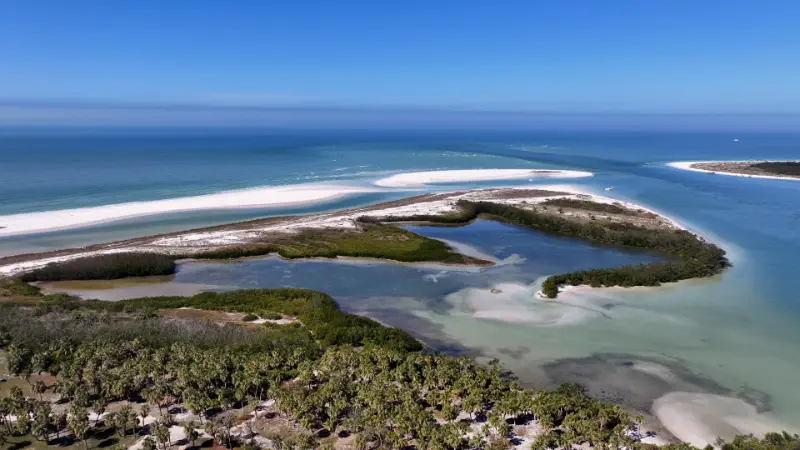
Fort De Soto Park proves that a beach day on Florida’s Gulf Coast can include far more than sunbathing. On interconnected barrier islands near Tierra Verde, visitors can choose between wide sand, paved recreation paths, a historic military fort, kayaking and quiet birdwatching. There is also a designated dog beach, but that does not mean dogs may roam every section of shoreline. The park is large enough that choosing your first stop matters, especially with children, older travelers or a car full of equipment. This guide helps you organize a realistic visit rather than trying to do everything in one afternoon.
At a glance: Tierra Verde. Gulf beaches. historic fort. dog beach only in designated area. paid parking. county-run park. Confirm seasonal services, admission and any temporary closures with the operator before traveling.
On this page
- Understand the park layout before you drive in
- North Beach versus East Beach: which suits your day?
- Inside the historic fort and Quartermaster Museum
- Paved cycling routes, walking and the barrier-free trail
- Dog beach rules and pets elsewhere in the park
- Kayaking, fishing piers and boat excursions
- Camping and staying close to the water
- Parking, fees and arrival timing
- One enjoyable itinerary for mixed ages
- Planning costs and choosing where to spend your energy
- Practical planning table
- Frequently asked questions
- Official information
Understand the park layout before you drive in
Fort De Soto is a Pinellas County park covering five interconnected keys near the southern end of the St. Petersburg peninsula. The official park information lists more than seven miles of waterfront and several miles of sandy beach, along with distinct recreational areas. It is easy to picture it as one continuous beach, but distances between parking areas, fishing piers and the historic fort matter in hot weather.

Choose one main purpose before leaving your accommodation: a relaxed beach morning, a historic-site visit, a bicycle outing or a mixed family day. Enter the correct lot in your navigation app rather than simply searching for “Fort De Soto.” Driving between sectors may be more comfortable than moving all your bags and family members on foot.
North Beach versus East Beach: which suits your day?
North Beach is a popular choice for families who want open sand, water views and access to visitor facilities. Its character can vary with wind, tide and water conditions, so the best swimming area changes from day to day. East Beach offers a different shoreline orientation and can feel preferable when wind affects the Gulf-facing side. The practical choice is not about a permanent “best beach” but about conditions when you arrive.
Check any swim advisories and posted signs, and avoid assuming lifeguard coverage. Bring shade, water and footwear for hot parking surfaces. Families with infants may find one secure patch of shade and an easy restroom route more valuable than chasing a postcard image. If an area is crowded, another sector may offer a calmer experience without leaving the park.
Inside the historic fort and Quartermaster Museum
The historic fort recalls coastal defense rather than a medieval fortress. Military batteries and interpretive features invite visitors to understand why this shoreline mattered strategically. The county maintains historical information about the original fort site and equipment, including mortar batteries and later displayed guns. It is a change of pace from the beach, but some surfaces, steps and exposed concrete areas are less comfortable for anyone with limited mobility.
Read the signs instead of rushing through for a single photo, and supervise children closely around heights or edges. The Quartermaster Museum adds context, subject to its current operating arrangements. A good sequence is to visit the fort before the hottest hours and then enjoy the beach, rather than climbing through exposed historic structures at midday.
Paved cycling routes, walking and the barrier-free trail
The county describes several miles of paved multiuse paths connecting recreational areas, making Fort De Soto attractive for an easy bike ride. There is also a barrier-free interpretive nature trail intended to broaden access to the coastal habitat. These facilities are not interchangeable: the main paved path is useful for a longer ride, while the interpretive route is better for a short, slower nature visit.
If you rent bicycles, ask about sizes, child options and hours at the actual concessionaire. Ride defensively where paths cross parking access or busy pedestrian areas. Keep a reasonable speed around children, mobility devices and wildlife. A short ride with a picnic stop is often more enjoyable than trying to cover every mile while the afternoon heat builds.
Dog beach rules and pets elsewhere in the park
One feature visitors appreciate is the designated beach access for dogs, connected with fenced dog areas. However, Pinellas County rules generally restrict pets on ordinary beaches, swimming areas, piers, restrooms and a range of other facilities. A sign advertising a dog beach is not permission to take a pet to North Beach or the historic fort.
Bring fresh water, shade and a leash for the transitions between permitted areas. Observe separate spaces for large and small dogs as signposted, and skip a crowded beach session if your animal is stressed or conditions are excessively hot. Travelers with service animals should check the relevant access requirements separately rather than relying on ordinary pet restrictions.
Kayaking, fishing piers and boat excursions
Calmer water around the keys can make paddling appealing, but wind and tidal current may turn a seemingly easy launch into hard work. The county lists a canoe trail, boating facilities and concession-operated rentals; availability should be checked with the vendor, particularly after storms. Beginners should choose a sheltered route matching their skill level, wear a properly fitted life jacket and avoid crossing busy channels.
Fishing piers provide another way to experience the water without a boat. Florida fishing-license requirements apply, and the county explicitly advises that a license may be needed on the park piers. If you are considering a ferry excursion to Egmont Key or Shell Key, confirm the current operator, schedule, dock and weather policy: boat trips are separate from a casual walk around the park.
Camping and staying close to the water
Fort De Soto has an established family campground with designated sites, modern restrooms, showers and electrical facilities. It is not the same as unrestricted overnight beach camping. A campsite booking should account for the type and length of your vehicle, whether pets are permitted on a particular site, cancellation terms and the arrival procedure.
For a family first-time camping here, schedule an afternoon arrival while there is plenty of light to set up and find amenities. Do not leave food accessible to wildlife. If you prefer hotels, nearby St. Pete Beach or the broader St. Petersburg area may work, but build in the drive across the causeways during busier periods. Beach parking, campground charges and rentals are separate budget lines.

Parking, fees and arrival timing
Fort De Soto uses paid parking; payment methods and rates can change. The county also announces future increases, so an older article with a fixed dollar figure may be misleading by the time you travel. Review the county park page immediately before departure and use the official method indicated at the lot. Keep payment confirmation if the system is digital.
The park is generally open from early morning to sunset, but individual facilities, piers, concessions or storm-affected sectors may differ. Arrive early on popular weekends. Do not build a timetable that assumes you will find a spot beside the exact sand you want; a flexible backup lot or alternative sector can save a family day.
One enjoyable itinerary for mixed ages
Begin with a short visit to the historic fort while the air is relatively cool. Move to the preferred beach section, set up shade and give everyone time to swim or walk at their own speed. After lunch, choose one optional activity: a short trail, fishing-pier visit or a gentle rented-bike outing. That is already a full day for many groups.
Travelers who need step-free routes may favor the barrier-free nature trail and level beach access over fort stairs. Families with small children may skip a longer bicycle loop. If dark clouds build over the water, finish early; thunderstorms and exposed shorelines are a poor combination. A successful Fort De Soto day is comfortable, not exhausting.
Planning costs and choosing where to spend your energy
Budget separately for parking, food, bike or kayak rentals, ferries and any campsite. A low-cost beach day becomes expensive only when you add every optional activity without noticing. Pick one paid extra that genuinely appeals to your group, then enjoy the free or included park features for the rest of the visit. Check the latest county fee page rather than saving an old image of a parking sign. If a vendor is cashless, bring a reliable electronic payment method and enough phone battery to access confirmations.
For a family with young children, a shaded base camp near the chosen beach, easy restroom access and a modest walk will often matter more than fitting in a boat trip. For older adults or wheelchair users, locate the barrier-free nature path before moving equipment from the car. Everyone can choose an enjoyable version of Fort De Soto; the park’s size makes that flexibility possible.
Remember the difference between weather and water conditions. A sunny sky does not mean there is no current, wind or coastal advisory. If the beach is uncomfortable, switching to a historical stop or paved path may rescue the day. Never feel obliged to enter the water simply because you drove to a beach park.
Practical planning table
| Planning question | What to know |
|---|---|
| Region and setting | Tierra Verde |
| Main interest | Gulf beaches |
| Good to know | historic fort |
| Most suitable visit | dog beach only in designated area |
| Before leaving home | paid parking |
| Flexible alternative | county-run park |
Frequently asked questions
Does Fort De Soto have a dog beach?
Yes, Pinellas County designates a specific dog-beach area. Pets are restricted on most other beaches and facilities; check the posted rules before leaving the dog zone.
Can I visit the park without camping?
Yes. Day-use visitors can enjoy beaches, trails, the fort and other facilities. Campgrounds require their own reservation and fees.
Are fishing licenses required on the piers?
The county advises that fishing licenses are required throughout the park, including the piers. Check Florida Fish and Wildlife Conservation Commission requirements and any applicable exemptions.
Is the park appropriate for wheelchair users?
There is a barrier-free interpretive trail and accessible facilities, but individual historic-fort features and sand conditions vary. Confirm current access details for your intended stops.
What is the best part of the park for a short visit?
For many first-time visitors, combining the historic fort and one beach sector provides a satisfying experience without excessive driving or walking. Choose the beach according to that day’s weather and water conditions.
Official information
Rules, prices, opening hours, access and guided-program schedules can change. The following are primary sources for checking your exact travel dates:
Editorial information checked: October 10, 2026. Recheck official visitor notices before departure; this guide does not claim first-hand visits or guaranteed sightings.