
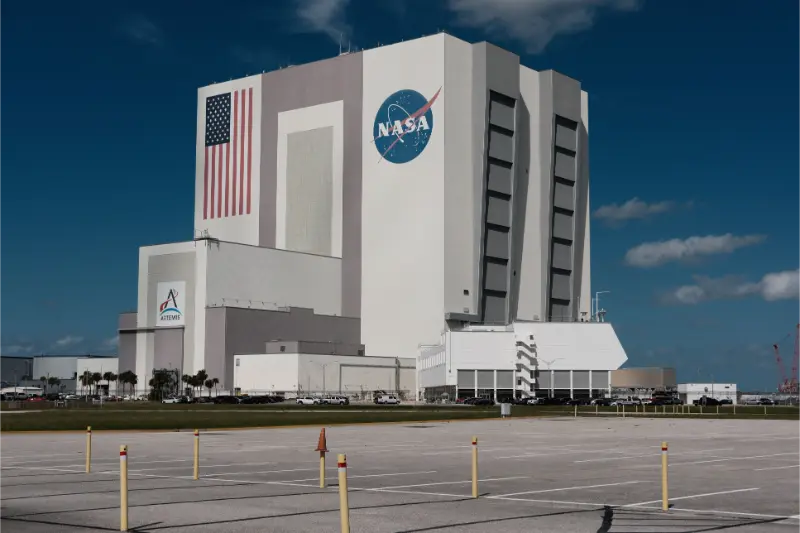
Kennedy Space Center Visitor Complex is one of the rare Florida attractions that can satisfy a child fascinated by rockets, an adult who remembers the Space Shuttle era and a senior traveler who followed the Apollo missions in real time. It is not a theme park in the conventional sense. The value comes from seeing real spacecraft, understanding the scale of the launch facilities and connecting decades of spaceflight history with the missions taking place on Florida’s Space Coast today.
The biggest planning mistake is underestimating how much time the complex deserves. A casual visitor can spend most of a day between Space Shuttle Atlantis, the Kennedy Space Center Bus Tour, the Apollo/Saturn V Center, Gateway, Heroes & Legends, films and astronaut programs. Launch days can add excitement but also change traffic, access and schedules. Treat the visit as the main event of the day rather than something to squeeze between Orlando and the beach.
Quick planning summary
- Best for: Families, science and history fans, multigenerational groups, international visitors and anyone interested in human spaceflight.
- Ideal visit: A full day for most first-time visitors; two days for enthusiasts who want a slower pace or extra programs.
- Do not miss: Space Shuttle Atlantis, the bus tour and Apollo/Saturn V Center, Gateway and Heroes & Legends.
- Location: Merritt Island on Florida’s Space Coast; a car is the simplest option for most visitors.
- Key planning rule: Check official opening hours, launch schedules and bus-tour timing shortly before travel.
How to plan this trip without overloading the itinerary
The most useful way to plan Kennedy Space Center is to decide what the trip is really about before booking every hour. Choose two or three experiences that would make the visit feel successful even if weather, traffic or fatigue changes the rest of the schedule. Then place those anchors on different days and leave breathing room around them. Florida trips often look easy on a map, but parking, bridge traffic, security lines, heat, thunderstorms and long walks can turn a neat spreadsheet into a tiring holiday.
For mixed-age groups, plan by energy rather than by attraction count. Put the most important outdoor or high-demand experience in the cooler morning, use lunch as a real rest period, and keep at least one afternoon flexible. A toddler, a teenager and a grandparent do not need to enjoy the same activity at the same intensity. The strongest itineraries make it normal to split up for a few hours and meet again for a meal, sunset or evening activity.
The experiences worth building the trip around
Space Shuttle Atlantis
The Atlantis exhibit is one of the strongest museum experiences in Florida because the orbiter is displayed as a flown spacecraft rather than a distant artifact. Allow enough time to look beyond the dramatic reveal. The surrounding exhibits explain shuttle missions, astronaut life and the engineering of the program, while Shuttle Launch Experience adds a simulation component for visitors who meet the participation requirements.
Kennedy Space Center Bus Tour
The bus tour takes visitors beyond the main complex and is essential for understanding the scale of Kennedy Space Center. It connects the visitor complex with launch-area viewpoints and the Apollo/Saturn V Center. The last departure can be well before the complex closes, so do not leave it until the end of the day. Operational routes may change around launches or NASA activities.
Apollo/Saturn V Center
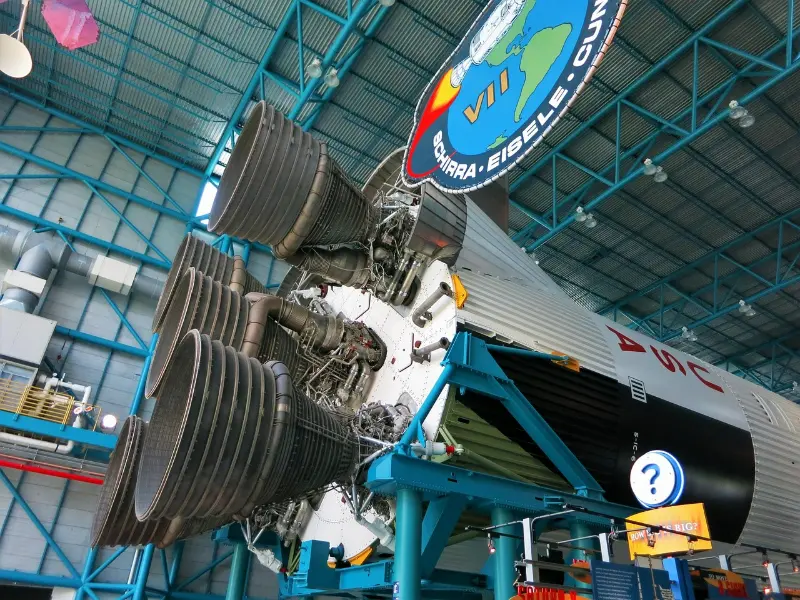
A full Saturn V rocket, Apollo-era exhibits and mission history make this a highlight even for visitors who arrived mainly for modern spaceflight. Older travelers may find this section particularly powerful because it connects familiar historic events with the physical hardware. Children often respond to the sheer scale even when they do not know the history in advance.
Gateway and modern exploration
Gateway focuses on current and future space exploration. It helps prevent the complex from feeling like a museum only about the past and provides context for newer spacecraft, commercial spaceflight and deep-space missions. For teenagers, this section can be a useful bridge between textbook science and the active launch industry operating nearby.
Heroes & Legends
Heroes & Legends and the U.S. Astronaut Hall of Fame place human stories at the center of the visit. It is a good early stop because it gives names, missions and personal context before you encounter the larger vehicles. Visitors who are less interested in engineering may find that astronaut stories make the rest of the complex easier to connect with.
Rocket launches and astronaut programs
A scheduled launch can transform the day, but launch times frequently change because of weather, technical issues or mission requirements. Never build a nonrefundable Florida trip around the assumption that a specific launch will occur exactly as first announced. Astronaut appearances and special programs also vary. Check the official calendar close to your visit and treat a launch as a bonus unless you are prepared for schedule changes.
Where to stay: choose the base before the hotel
Cocoa Beach and Cape Canaveral are convenient bases if you want to combine the space center with Atlantic beach time. Titusville can also work well for visitors focused on launches and the northern side of the Space Coast. Orlando offers far more hotels and attractions but creates a longer morning drive, so leave early and avoid scheduling a late return immediately before another demanding park day.
For a short Florida road trip, staying one night on the Space Coast is often more comfortable than commuting from Orlando twice. Families benefit from a hotel with breakfast and a pool, while launch-focused travelers should prioritize a location that keeps alternate viewing areas within reasonable reach.
Before paying, check the full price rather than the headline room rate. Resort fees, parking, destination fees and breakfast can change the comparison between two hotels. Families should also look for a refrigerator, laundry access and a pool that is genuinely useful rather than decorative. Travelers with mobility limitations should verify elevator access, step-free routes, bathroom layout and the real distance from the room to parking, transit or the beach.
Getting there and getting around
A private car is the simplest way to reach Kennedy Space Center Visitor Complex. Public transportation from Orlando is not designed for easy tourist commuting, so organized tours can be an alternative for travelers who do not want to drive. If you book a tour, compare how many hours it actually leaves at the complex; transport convenience is less valuable if the schedule forces you to rush the bus tour and major exhibits.
On launch days, road traffic can be very different from an ordinary weekday. Allow extra time, keep fuel in the car and follow official traffic instructions. Inside the visitor complex, buses used for the tour include accessibility provisions, but visitors who depend on specific equipment or boarding assistance should review the current accessibility information in advance.
Getting aroundIf you are driving, save the hotel, airport, parking garage and first major attraction in your phone before departure. Florida weather can create sudden detours or poor visibility, and a simple offline plan reduces stress. Do not build a schedule that depends on crossing a large metro area or barrier-island bridge at exactly the time you expect; add a buffer whenever a tour, meal or ticket has a fixed start.
Families, teenagers, seniors and accessibility
Children do not need to understand orbital mechanics to enjoy Kennedy Space Center. Focus younger visitors on giant rockets, astronaut stories, interactive exhibits and one or two signature experiences rather than reading every panel. Teenagers often appreciate the modern exploration and launch content. Seniors can pace the day around indoor exhibits and seated presentations. The complex lists wheelchair and scooter rentals, accessible parking, accessible tour buses and communication services; however, specific simulations can have transfer or participation requirements, so check the official accessibility page when a particular attraction is essential.
For multigenerational travel, one of the best strategies is to separate the group for one high-energy block rather than forcing everyone through the same day. People who want rides, paddling or long beach time can do that while others choose a museum, garden, café or hotel break. Reunite for the activity with the broadest appeal. When accessibility is essential, confirm details directly with the attraction, hotel, park or transport provider shortly before travel because equipment, procedures and construction can change.
Best time to visit
The Space Coast can be visited year-round. Winter and spring make outdoor walking easier, while summer brings heat, humidity and frequent thunderstorms. Launch operations are weather-sensitive in every season. If you are combining the visit with a beach day, remember that a full Kennedy Space Center itinerary already involves substantial walking and attention; trying to add several hours at the beach afterward often turns a strong day into an exhausting one.
Florida’s Atlantic hurricane season runs from June through November, but that does not mean a trip during those months is automatically a bad idea. The practical response is flexible booking: understand cancellation rules, monitor official forecasts close to departure and avoid making expensive nonrefundable plans that leave no room to adapt. Ordinary afternoon thunderstorms are far more common than a direct tropical-system impact and can often be handled with a long lunch or indoor backup.
A realistic first-time itinerary
Morning
Arrive near opening, start with Heroes & Legends and move toward the bus tour before late-day departure cutoffs become an issue.
Late morning
Take the bus tour and allow proper time at the Apollo/Saturn V Center rather than treating it as a quick stop.
Early afternoon
Return to the main complex for lunch, then explore Space Shuttle Atlantis in depth.
Mid-afternoon
Visit Gateway and modern-space exhibits, adjusting for any scheduled presentations or astronaut programs.
Late afternoon
Use remaining time for IMAX, shops or exhibits you skipped. If a launch is scheduled, follow the day’s official viewing and access instructions instead of assuming the normal sequence.
This itinerary is intentionally not packed from breakfast to bedtime. If a beach, museum, park or neighborhood is working for your group, stay longer. A successful Florida trip is not measured by the number of pins cleared from a map. The open space is what allows you to react to weather, tired children, a restaurant recommendation, a wildlife sighting or simply the desire to spend another hour by the water.
Food, breaks and evening strategy
Do not let restaurant logistics control the entire vacation. For breakfast, convenience often matters more than novelty, especially before a park, tour or beach morning. At lunch, prioritize shade, air-conditioning and enough time to recover. Save the meal you are genuinely excited about for an evening when the group is not arriving exhausted from a distant attraction. Reservations are useful for one or two special meals, but keeping other evenings flexible prevents a delayed boat trip, storm or traffic jam from becoming a crisis.
Families can save money and time with simple groceries for breakfast, fruit, water and snacks. Couples may prefer a slower dinner and one less daytime stop. Senior travelers often benefit from eating slightly earlier, before the busiest restaurant period, while teenagers may appreciate one evening with a more casual walkable district rather than another formal plan. Wherever you eat, avoid leaving food or trash around wildlife and follow local beach and park rules.
Budget: where the money actually goes
General admission covers the core visitor complex, but special tours, astronaut experiences and packages can increase the cost. Decide whether the standard exhibits already fill your interests before adding extras. Families can save stress by eating a real breakfast and budgeting for a full day on site rather than leaving for meals. If you are driving from Orlando, include parking, fuel and the value of an earlier start in the day’s budget.
When comparing two versions of the trip, calculate the whole day rather than one price. A cheaper hotel far away may add parking, fuel and rideshare costs. A discounted ticket can be poor value if it forces an itinerary that is too intense. Conversely, one strategically located hotel, one well-chosen tour and several free beaches or neighborhoods can produce a better trip than buying a long list of attractions. Keep a small weather buffer in the budget so changing one activity does not feel like losing money twice.
Practical packing and comfort
Bring sun protection every season: broad-spectrum sunscreen, a hat, sunglasses and refillable water bottles. Add a compact rain layer in the warmer months and a light sweater in winter, when air-conditioned interiors or cold fronts can surprise visitors. Comfortable shoes matter even on beach trips because boardwalks, museums, parking lots and downtown walks add up. If you are spending time on the water, keep a dry bag or waterproof phone pouch and a change of clothes in the car.
For young children, pack more snacks and spare clothing than you expect to need. For older adults, keep medication, water and a simple rest plan accessible rather than buried in luggage. If the day depends on a phone for tickets, maps and rideshare, carry a small power bank. Download confirmation emails and key addresses before leaving reliable Wi-Fi.
Common mistakes to avoid
- Arriving late and discovering that the final bus tour departs well before closing.
- Treating a scheduled rocket launch as guaranteed.
- Trying to combine Kennedy Space Center with a full Orlando theme-park day.
- Moving through Atlantis or Apollo/Saturn V too quickly because the itinerary is overloaded.
- Failing to check accessibility or simulation requirements for a traveler who depends on them.
Another common mistake is treating travel time as empty space. The journey between a hotel and an attraction may include parking, security, a shuttle, a long walk and a queue before the experience even begins. Build the day from door to door, not from map pin to map pin. This single change usually creates a calmer itinerary and makes it easier to travel with children, older adults or anyone who needs regular breaks.
Useful Wonderful Florida guides to read next
Continue planning with Orlando Travel Guide, Florida with Kids, Florida Road Trip Itinerary.
Official resources to check before you go
Opening hours, admission systems, road access, parking, seasonal services and accessibility procedures can change. Use official sources for the final check shortly before travel, especially when a particular attraction, beach access, tour, transport service or event is essential to your itinerary.
Final thoughts
Kennedy Space Center is worth a full day because its best moments come from scale and context: standing beside real spacecraft, seeing launch infrastructure and understanding how historic missions connect with the active Space Coast. Arrive early, prioritize the bus tour and the major spacecraft exhibits, and let launch schedules remain flexible. That approach works for children, space enthusiasts and visitors who simply want one of Florida’s most distinctive experiences.