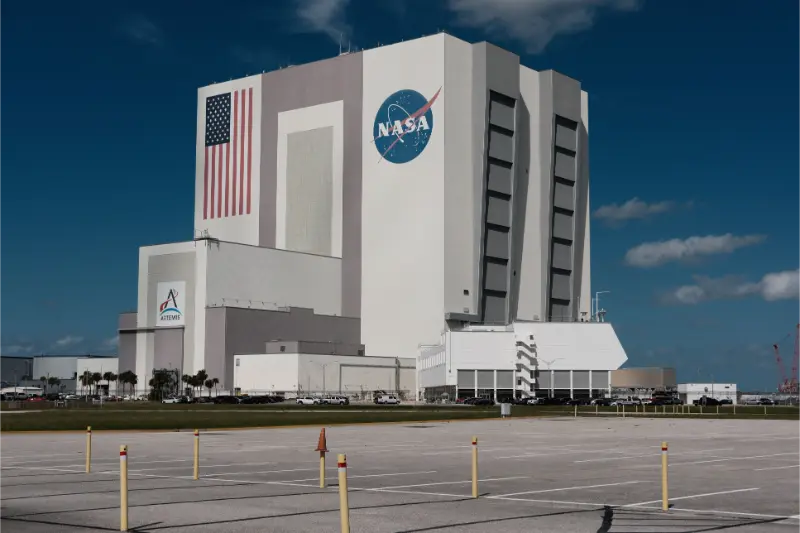
Watching a rocket rise from Florida’s Space Coast is extraordinary, but arranging a vacation around a launch can be frustrating if you assume the published hour is an appointment that cannot move. Rockets can be delayed by technical issues, range safety, weather, or conditions at the launch site. A three-day stay gives you more flexibility than a day trip from Orlando, and it also reveals why the Space Coast is worth visiting even when the countdown never reaches zero.
This itinerary is for first-time spectators, families with children, and travelers who would rather have a clear backup plan than spend an entire holiday refreshing launch websites. It covers where to stay, the difference between paid and public viewing, what to bring, and how to turn an unexpected delay into a worthwhile coastal break. There is no guarantee of seeing a liftoff, even with a special ticket.
Three days with a launch as a possibility, not a promise
| Day | Main plan | If the schedule changes |
|---|---|---|
| Arrival | Cocoa Beach or Titusville check-in | Beach view and early dinner |
| One | Kennedy Space Center Visitor Complex | Enjoy exhibits whether or not there is a launch |
| Two | Permitted public viewpoint or nature outing | Merritt Island wildlife or a coastal museum |
| Departure | Flexible morning | No risky last-minute detour before flight |
Understand how launch dates really work
Florida launches take place from Kennedy Space Center and Cape Canaveral Space Force Station facilities. The publicized launch window can change and is subject to approval, range safety, and the requirements of the mission. Review Kennedy Space Center Visitor Complex’s launch-viewing guidance and official mission announcements rather than treating a third-party countdown as confirmation. A launch advertised for the evening may move into the next day, or a mission can be postponed beyond your entire vacation.
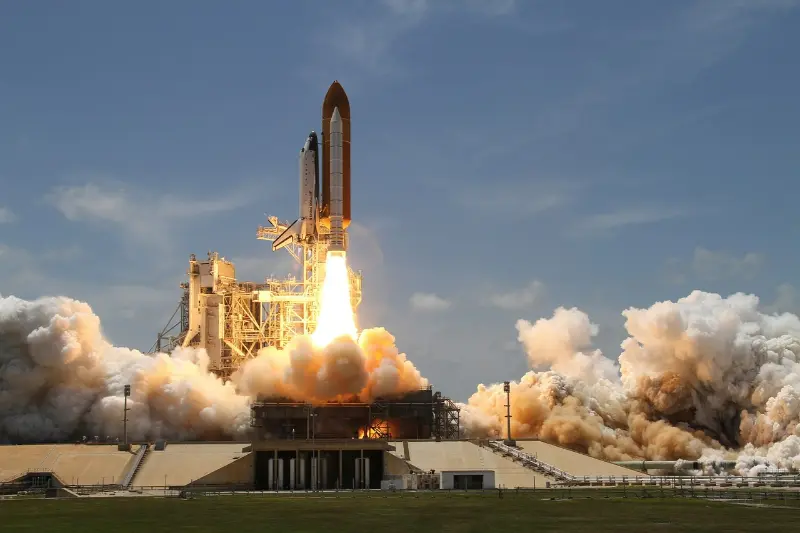
Do not make a nonrefundable flight or accommodation choice solely because a launch is rumored. If liftoff is essential to your decision, purchase flexible travel and accept that even flexibility cannot create certainty. NASA’s launch-viewing information explains why crowds can be heavy and why tickets may be limited to selected missions. A little skepticism during planning protects the enjoyment of the trip.
Choose Titusville or Cocoa Beach based on the rest of your interests
Titusville is attractive for travelers focused on the mainland side of the lagoon, Kennedy Space Center access, and nature. Cocoa Beach better suits visitors who want a conventional oceanfront stay, cafés, and time beside the Atlantic. Neither location makes launch viewing guaranteed. A balcony advertised as a ‘launch-view room’ may face the wrong direction for a specific pad, and buildings or trees can block the low part of the flight path. Ask the property which direction the room faces and what can actually be seen.
Look beyond the nightly rate. If you are arriving from Orlando International Airport, budget for rental car or transfer, parking, and likely traffic around major launches. Hotels can raise rates when high-profile missions are announced. Decide whether to pay more for an interesting neighborhood or save with an inland base. If traveling with children, laundry, breakfast and a pool may make the stay more useful than a distant rocket view from the window.
Day one: enjoy the visitor complex regardless of the countdown
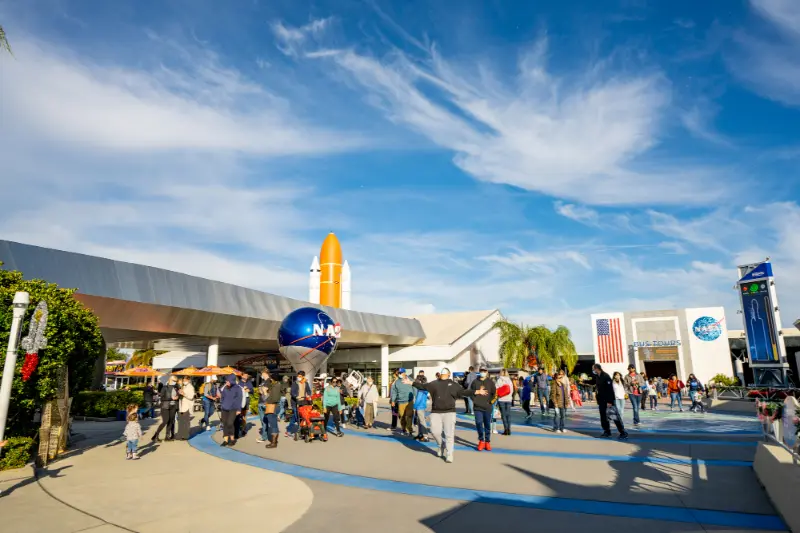
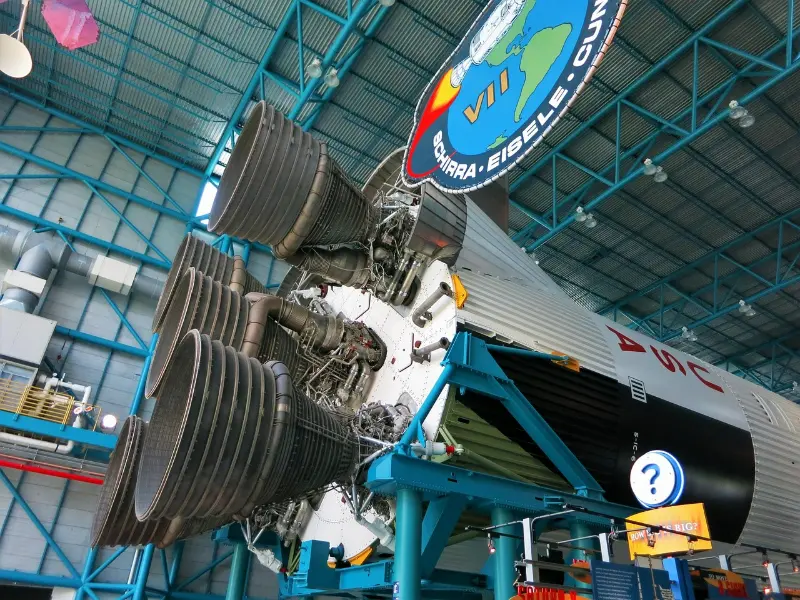
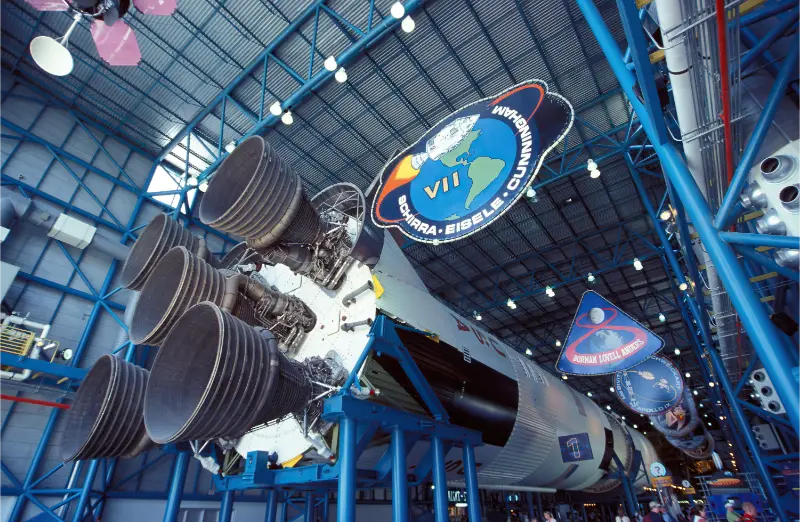
Kennedy Space Center Visitor Complex is a strong attraction in its own right. Plan time for spaceflight history, major exhibits, and the bus-tour elements that are available on your particular date. Examine ticket conditions, package details, and opening hours before paying. A standard admission ticket is not identical to a special launch transportation ticket, and the available viewing area depends on the mission. The official launch-viewing locations guide distinguishes the main visitor complex from locations reached by controlled bus transportation.
With a child, choose a few compelling exhibits and leave space for lunch and rest. Preschoolers may be excited by rockets but overwhelmed by queues and loud presentations. Older children can compare spacecraft designs or discuss why an astronaut needs life-support systems. Grandparents may prefer a seated program to a long standing line. Review available accessibility and sensory information before departure. If the day includes a launch attempt, follow the instructions supplied with your exact ticket.
Public viewing is not the same as access to the launch pad
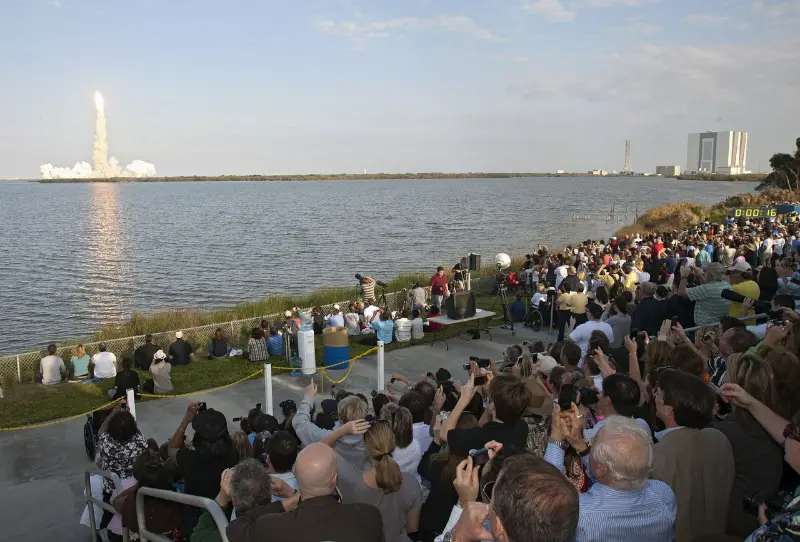
The Space Coast has public places where some launches can be seen, but not every viewpoint suits every mission. Visibility varies by launch pad, direction, light, weather and safety closures. Roads, beaches, bridges and refuge areas can be restricted for a major event. Never enter a closed area or follow someone through a gate because a social-media post claims it is the ‘best’ spot. Do not park on shoulders, block private driveways, or stand in traffic lanes.
If you want a public viewing location, research an officially permitted site and its local parking rules shortly before the scheduled window. Consider toilets, lighting, exit traffic, and whether a child or a person with limited mobility can comfortably wait there. A slightly less dramatic view from somewhere with safe facilities can be a far better choice than an isolated viewpoint that becomes inaccessible at the last minute.
Choose one strategy rather than chasing the launch around
Some visitors buy an official launch package; others choose a lawful public viewing point; still others stay in a beach hotel and watch from the surrounding area. Each has trade-offs. A visitor complex package may provide commentary and access to selected facilities, but packages can be expensive and their terms differ. A public viewpoint may cost little but offer fewer bathrooms and limited sight lines. A hotel-view strategy reduces travel, although the rocket may be visible only after it rises above nearby buildings.
Once you choose a suitable plan, do not continually switch locations as countdown time approaches. Road congestion can make a last-minute change counterproductive. Check official updates, arrive early enough for the chosen venue, and keep an alternate schedule for the rest of the day. The goal is to enjoy the experience safely, not to win a competition for the closest camera angle.
What to bring for a long outdoor wait
Take drinking water, sunscreen, a hat, a charged phone, a small power bank, and appropriate clothing. Sunrise launches can be surprisingly cool, while summer waits can be hot and humid. If the public location permits chairs, a lightweight seat may make the difference for an older adult or a child. Verify restrictions on bags, coolers, chairs and tripods; what is acceptable at a city park may not be allowed inside a ticketed facility.
Use the restroom before settling into a viewpoint, and make sure younger children know that the group must stay together. Loud rocket sounds can frighten toddlers, so consider suitable child hearing protection and explain what to expect. Do not use a parking lot as a playground. If lightning threatens, abandon exposed viewing areas and move to a substantial building or enclosed vehicle according to official instructions.
Day two backup: Merritt Island National Wildlife Refuge
If a launch moves out of reach, the nearby refuge landscape offers another reason to visit the region. Merritt Island National Wildlife Refuge has birding, lagoon scenery, and potential wildlife viewing from designated routes. Consult the US Fish and Wildlife Service refuge page for open roads, restrictions, and seasonal access. A route mentioned in an old guide may close temporarily, and wildlife sightings are never guaranteed.
Bring binoculars and drive slowly on approved roads. Keep a safe distance from alligators and other wildlife, and do not feed animals. For visitors who find long hikes difficult, a permitted scenic drive or short viewpoint can be a satisfying choice. Photography should be done from safe, legal stopping points rather than from a traffic lane. The quieter atmosphere contrasts sharply with launch-day excitement.
Alternative afternoon: Cocoa Beach without an ambitious surf lesson
Cocoa Beach is also an easy place to spend a relaxed coastal afternoon. You could enjoy a restaurant, browse a shop, or take a short beach walk when weather permits. Swimming is optional. Check lifeguard flags and avoid entering the water during dangerous surf conditions. If one family member wants to try a surf activity, arrange an appropriate lesson and supervision rather than improvising with a rented board.
A heavy rain shower may make a museum or a quiet meal a better choice. On a stormy day, do not wait under a pier or beach shelter during lightning. The Atlantic coastline is beautiful, but it is not an appropriate place to insist that an outdoor plan proceed regardless of conditions. Flexibility lets the family enjoy a beach vacation even when the main space event is postponed.
Photography and the experience of actually being there
Phones can capture a bright trail or a distant glow, but images may not resemble professional launch photographs. Do not sacrifice safe positioning or awareness of your surroundings for a camera setting. If using a tripod at a public site, verify local rules and keep walkways clear. A compact pair of binoculars is useful for observing some parts of the landscape, but do not stare at the sun or use optical equipment improperly around a daytime launch.
Take one or two photographs and then give yourself permission to watch. The sequence of light, movement, and sound is part of the event, and the sound can arrive after the initial visual impression. Children often remember the anticipation and the people around them as much as the rocket itself. If the launch is scrubbed, do not present the vacation as ruined; discuss how real engineering includes checks and decisions not to fly.
Budget for a scrub before you buy tickets
Price the entire visit: transportation, hotel, meals, parking, Kennedy Space Center admission, and any launch-specific add-ons. Look carefully at the refund, rescheduling, and return-visit policy associated with the exact launch package. Kennedy Space Center notes that purchasing viewing access does not guarantee liftoff. A package may offer defined options following a scrub, but do not assume every product includes the same entitlement or that your hotel and flight will be refunded.
If you are saving money, keep one paid visitor-complex day and enjoy lawful public viewpoints and nature stops on other days. Consider whether the cost of another night is justified by an uncertain launch date. Families with young children may prefer an enjoyable short vacation with the possibility of a launch to a costly trip that feels unsuccessful whenever a schedule slips.
Departure day: avoid the last-minute launch trap
If a launch moves to your departure day, compare the new window with airport travel, rental-car return, baggage check, and security times. A rocket launch is not a reliable reason to arrive late for a flight. Road closures and heavy viewing traffic can make the risk worse. It is usually better to complete the journey calmly than to wait at a viewpoint until the final moment and miss a plane.
Leave with a flexible mindset and a deeper understanding of the Space Coast. The Kennedy Space Center exhibits, lagoon wildlife, coastal communities, and launch infrastructure make a compelling destination regardless of whether the rocket leaves Earth during your stay. The most realistic three-day itinerary treats a launch as a remarkable bonus supported by solid alternative experiences.
Frequently asked questions
Can I guarantee seeing a rocket launch if I buy a viewing ticket?
No. Dates and launch windows can change, and a countdown can end in a scrub. Check the terms of the exact ticket and current official updates.
Is Titusville or Cocoa Beach better for a launch trip?
Titusville often suits visitors focused on mainland nature and launch activities; Cocoa Beach suits a classic oceanfront vacation. The best viewing location depends on the mission and current access.
What if a launch moves to the day we fly home?
Do not risk missing your flight. Allow realistic time for traffic, luggage, airport procedures and rental-car return, and accept that the launch may need to be enjoyed from another trip.