

Accessible travel in Florida is not one single category. A wheelchair user planning a beach day, a family traveling with an autistic child, a visitor who needs hearing assistance and a senior with limited walking endurance can all need very different things from the same destination. The good news is that Florida has a large tourism infrastructure and extensive accessibility resources; the challenge is verifying the exact feature that matters before you arrive.
I would plan an accessible Florida vacation from the hardest part of the day outward. If beach access is essential, choose the exact accessible entrance before the hotel. If a mobility-device transfer is the limiting issue at a theme park, research that before buying tickets. If fatigue is the problem, prioritize a central hotel and short days. The trip becomes much easier when the most important accommodation is treated as a primary booking criterion rather than a note added at the end.
Quick planning summary
- Best starting point: identify the one accommodation that is non-negotiable, then build the trip around it.
- Beaches: many destinations offer beach mats, ramps or beach wheelchairs, but availability and reservation procedures vary.
- State parks: Florida State Parks has an Access for All program and park-specific accessibility details.
- Theme parks: each resort has its own ride-access and disability-services policies; read the current official guide.
- Hotels: confirm room layout and bathroom features directly when a specific configuration matters.
Choosing an accessible destination
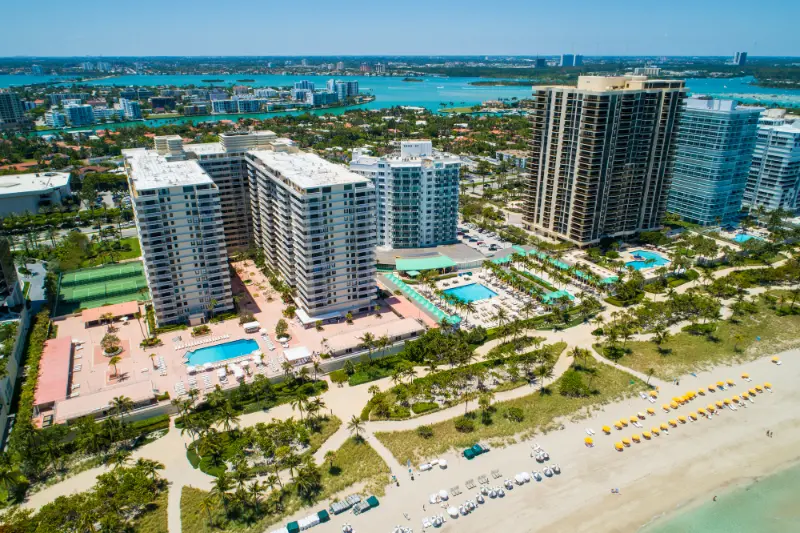
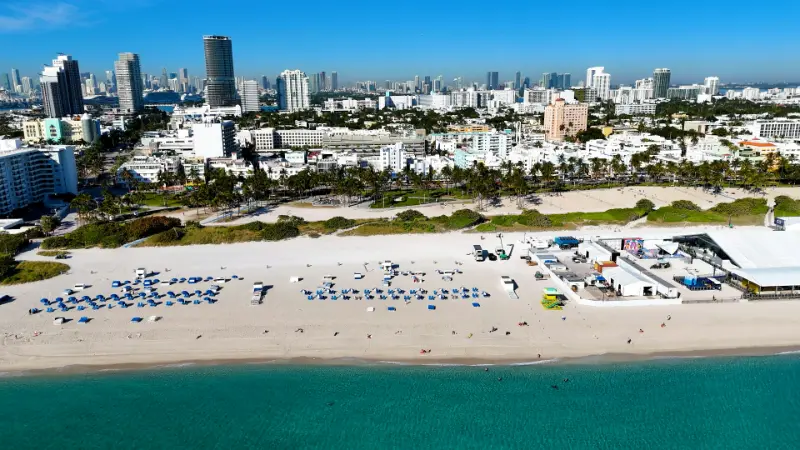
Start with the daily environment, not the attraction list. Miami Beach and Hollywood can work well for travelers who value paved promenades and dense services. Orlando has extensive accessible tourism infrastructure but also enormous walking distances. St. Augustine has rich history but historic surfaces. The Gulf Coast offers beautiful beaches, but accessible entry varies by access point.
Visit Florida maintains accessible-travel resources that cover beaches, attractions, outdoor adventures and destinations around the state. Use those resources to build a shortlist, then confirm the exact facility with the local provider.
Accessible beaches
A beach can be ‘accessible’ in several different ways: ADA parking, a ramp to the sand, a Mobi-Mat or similar surface, an available beach wheelchair, accessible restrooms or a combination of these. Do not assume one feature means all are present.
Visit Florida highlights accessible beach options around the state, including communities with mats and beach-wheelchair programs. Before travel, call the local beach authority or lifeguard service to ask where the mat starts, how far it extends, whether wheelchairs are first-come or reservable, and whether the equipment may enter wet sand or water.
Florida State Parks and outdoor access
Florida State Parks states that wheelchairs and manually powered mobility aids are permitted anywhere foot traffic is allowed, and its Access for All program promotes inclusive recreation. Some parks also have all-terrain wheelchairs, accessible campsites, fishing piers or boat experiences.
Every park is different. A boardwalk at Blue Spring may be practical for one visitor while a natural riverbank or kayak launch at another park is not. Read the individual park page and contact staff when the trip depends on a particular route, transfer or restroom.
Theme parks and major attractions
Walt Disney World, Universal Orlando, SeaWorld, Busch Gardens, LEGOLAND and Kennedy Space Center all publish accessibility information. The details include mobility devices, ride transfers, service animals, hearing or visual assistance and guest-support procedures, but the systems are not identical.
For a mixed-mobility group, plan fewer attractions with longer rest periods. A wheelchair or scooter reduces walking but does not remove heat, queue time or sensory fatigue. Build indoor meals, shows or hotel breaks into the day before anyone is exhausted.
Hotels: verify the room, not only the checkbox
Online filters are useful for finding accessible rooms, but they do not always answer the question you actually have. If you need a roll-in shower, specific bed clearance, grab-bar layout, visual alarm, connecting room or space for a mobility device, contact the property and ask them to confirm the reserved room type.
Location can be an accessibility feature too. A hotel that is physically perfect but requires long rides for every meal may be harder than a slightly more expensive central property. For beach trips, ask about the route from room to sand, not simply whether the hotel itself is ADA compliant.
Transportation and rental vehicles
Major airports and rail systems provide accessibility services, but assistance often needs to be arranged through the airline, rail operator or rental agency. If you travel with a power wheelchair, mobility scooter or other large device, provide dimensions and battery information where requested rather than assuming every vehicle can accommodate it.
Rideshare accessible-vehicle availability varies by market. For a trip where accessible transportation must be guaranteed, research providers before arrival and consider a prearranged service. In a rental car, confirm hand controls or adaptive equipment early because inventory can be limited.
Travel with autism, sensory needs, hearing or visual disabilities
Accessibility is broader than mobility. Some Florida attractions provide sensory guides, quiet areas, captioning, assistive-listening devices, Braille or tactile resources. Families should review the exact attraction’s current program and rehearse the day using maps, virtual tours or visual schedules when that helps.
For sensory-sensitive travelers, the most powerful tool is often schedule control: arrive early, avoid the loudest event windows, choose a nearby hotel and allow an easy exit. For hearing or visual access, request interpretation or specialized materials with the advance notice the provider requires.
Accessible travel with seniors
Many senior travelers do not identify as disabled but still benefit from accessible planning. Shorter walking loops, elevator access, shaded seating, a ground-floor room and a hotel close to dinner can transform the trip. Florida’s heat increases fatigue, so morning activity and midday rest are especially useful.
Do not fill every day because the group ‘can’ walk the distance on paper. Theme parks, airports and large museums involve hidden walking between parking, security, terminals and entrances. A comfortable buffer is more valuable than one extra attraction.
Medication, medical care and heat
Carry essential medication in hand luggage and keep enough supply for travel delays. If medication needs refrigeration, confirm hotel and airline arrangements rather than improvising. Travel insurance and a list of current prescriptions can be useful for longer or international trips.
Heat is an accessibility issue. Dehydration and overheating can worsen many health conditions, and Florida humidity reduces the body’s ability to cool. Plan water, shade and air-conditioned breaks as part of the itinerary, not as emergency measures after symptoms appear.
Questions to ask before booking
- Is the exact room type guaranteed and what are the bathroom features?
- How far is accessible parking from the entrance?
- Is the beach wheelchair reservable, free, and allowed near the water?
- Does the attraction require transfers from a wheelchair to a ride vehicle?
- Are service animals permitted in every area, and are relief areas available?
- What quiet, sensory, captioning, hearing or visual-support resources exist?
- Can the tour boat, tram or shuttle accommodate the device you use?
- What is the cancellation policy if a key accessible service becomes unavailable?
Useful Wonderful Florida guides
Official resources
Final thoughts
Accessible travel works best when it is specific. Replace ‘is this destination accessible?’ with the precise question that determines whether your day will work: the beach mat, bathroom layout, ride transfer, accessible vehicle, quiet space or walking distance. Florida offers many strong options, and careful confirmation turns those options into a trip that is genuinely comfortable rather than merely technically possible.
Planning the day without overloading it
A Florida itinerary usually works better when the most demanding activity is protected and the rest of the day remains flexible. Heat, thunderstorms, traffic and long distances can turn a theoretically efficient schedule into a tiring one. Build around one non-negotiable experience, one meal or rest block and one optional stop. This is especially valuable for families, senior travelers and anyone visiting during the warm season.
I also avoid making arrival and departure days full attraction days. Airports, rental-car lines and hotel check-in are unpredictable enough that a flexible first evening protects the money already spent on the trip. On the final day, allow more airport and highway time than a local commuter would because visitors are also returning cars, refueling, handling luggage and navigating an unfamiliar terminal.
Weather and seasonal flexibility
Florida weather is local. A storm at one beach does not mean the entire region is washed out, and a sunny morning does not guarantee a dry afternoon in summer. Check radar, lightning alerts and official attraction notices rather than relying on a generic all-day icon. Outdoor plans are usually strongest early, with indoor or shaded options saved for the hottest and stormiest part of the day.
From June through November, hurricane-season planning should include flexible cancellation rules and a willingness to change routes when official guidance requires it. Do not let hurricane season scare you away from every warm-season trip, but do not book a chain of nonrefundable hotels that leaves no room to adapt.
A note for international visitors
International visitors should add practical items that domestic travelers sometimes overlook: travel insurance, mobile data, electrical adapters where needed, prescription documentation, toll systems, driving rules and realistic time after a long flight. If you are not used to U.S. driving distances, build shorter first-day drives and avoid collecting a rental car after an overnight flight and immediately starting a multi-hour road trip.
Cards are widely accepted, but keeping a second payment method is sensible. Save reservations and important addresses offline. For any timed attraction, verify the local time zone—Florida is mostly Eastern Time, while part of the Panhandle uses Central Time—before a long transfer across the state.