
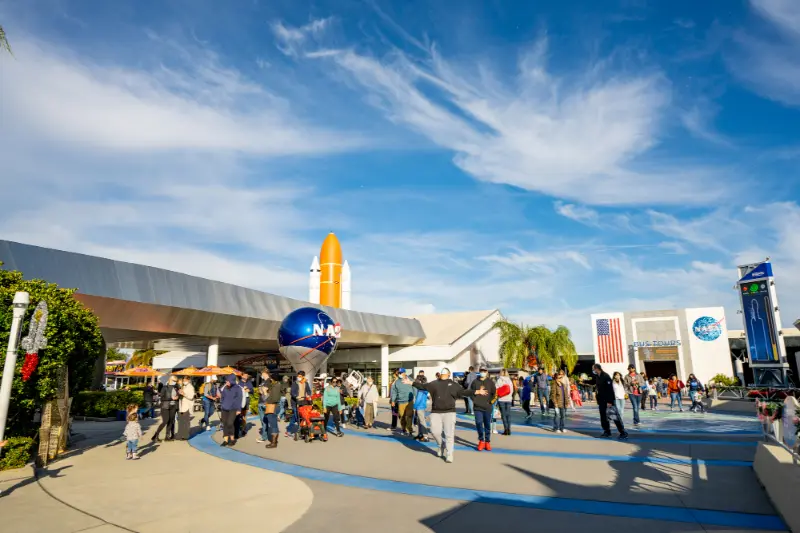
Florida’s Space Coast combines rockets, lagoons and long Atlantic beaches, but these experiences have very different access conditions. Kennedy Space Center Visitor Complex is a developed attraction with organized visitor services; Merritt Island National Wildlife Refuge includes driving routes and a limited number of accessible paths; Canaveral National Seashore provides ramps and some specialized beach access, while loose sand remains a real barrier. This three-day itinerary is designed for wheelchair users, people with mobility limitations, travelers who need frequent seated breaks and accompanying family members. Accessibility is personal: a route described as accessible by a park may still be unsuitable for a particular device or support need. Verify details before paying for tickets or committing to a transfer.
Choosing the right base and transport
Titusville provides convenient access to the refuge and Kennedy Space Center, while Cocoa Beach is practical for a resort-style Atlantic vacation. The best location depends on whether you prioritize science exhibits, nature viewing or the beach. Orlando is farther away and introduces a daily highway drive; it can still work if you have an adapted vehicle and want a familiar large hotel, but compare the total energy cost before booking. Ask the accommodation to confirm accessible parking, door widths, the bathroom configuration and whether the room’s bed height suits the traveler.
Do not rely on a booking site’s accessibility icon alone. Request photographs or a written description of the actual room you will occupy. A step-free lobby does not guarantee a roll-in shower, and a wheelchair-accessible room may have a tub instead. If renting a vehicle, arrange adapted features early, clarify how mobility equipment is secured and check airport handover logistics. Public transit and rideshares can work for selected journeys but do not provide the same flexibility for all dispersed refuge and national-seashore stops. Booking an adapted car or specialized transport may be the most practical solution.
Day one: Kennedy Space Center at a comfortable pace
Spend day one at Kennedy Space Center Visitor Complex, allowing most of the day rather than treating it as a short detour from Orlando. The official accessibility guide outlines parking, wheelchair and mobility scooter rentals, bus access, theater seating, and communication support. Equipment availability and rental prices may change; ask about current booking conditions and whether your personal wheelchair can be used for all parts of your chosen route. Give yourself enough time to approach the information desk and discuss your plan before rushing toward the first exhibit.
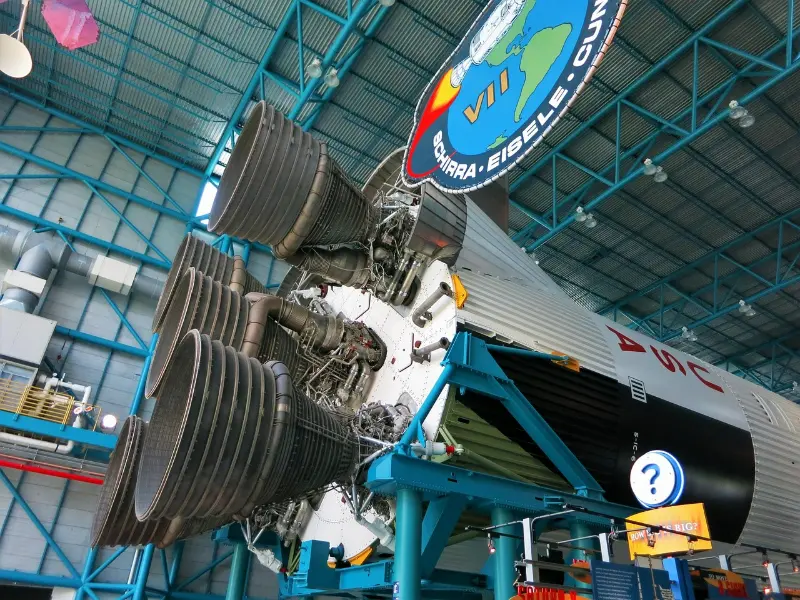
A strong first visit might focus on Space Shuttle Atlantis, the Apollo/Saturn V interpretation reached via the visitor bus experience when operating, and one indoor theater. This is already substantial. Some simulator experiences involve transfers, harnesses or sensory effects, and certain guests may choose a separate observation option instead. Check the actual requirements of each attraction, not just the site’s general accessibility claim. If a visitor is sensitive to noise, crowds or flashing imagery, ask staff about quiet areas and alternative ways to experience exhibits. The right day is one that allows everyone to participate meaningfully, not one that completes every attraction on the map.
Transportation and communication support inside the complex
The visitor complex’s accessibility page describes buses with wheelchair and scooter lifts and various accessible theater arrangements. It also explains that some vehicles or simulators require a transfer while others offer an alternative observation experience. Visitors with limited mobility should ask where to queue for lifts and what happens at the far end of a bus journey. Do not assume rental equipment automatically travels everywhere; clarify the process for your selected attractions. A family member should be able to stay close enough to assist without needing to negotiate this during a crowded departure.
For deaf or hard-of-hearing visitors, the official complex provides information about captions, the SmartGuide and advance arrangements for interpretation. Those who need American Sign Language support should check the lead time specified by the operator rather than arriving and expecting same-day availability. A traveler with low vision may benefit from the visitor orientation described on the same page. If your group includes a person using a service animal, review the attraction-specific restrictions as some simulations cannot admit animals even though other areas do. These details materially affect the route through the complex.
Day two: Merritt Island refuge from the car and selected boardwalks
Day two is deliberately quieter. Visit Merritt Island National Wildlife Refuge, where Black Point Wildlife Drive provides a way to experience managed wetlands without a long walk. The US Fish and Wildlife Service visitor guide gives fees, hours and an important caveat: NASA launch operations can temporarily restrict visitor access to refuge roads and facilities. A rocket launch date therefore does not guarantee that your planned wildlife drive will be open. Check notices in the morning and keep a coastal museum or café as a fallback.
The refuge’s walking routes vary widely in surface quality. The official trails page states that the visitor-center boardwalk is the wheelchair-accessible trail among its listed walking paths. Flat mowed-grass dikes are not equivalent to firm, step-free paths. Other viewing structures may be accessible, but parking, ramps and present condition should be confirmed individually. A slow vehicle tour with a few accessible observation stops is a perfectly valid wildlife day. Binoculars can reveal herons, shorebirds and other wetland animals without the need to approach them.
Wildlife, weather and dignity on a nature outing
Never feed wildlife, attempt a close selfie with an alligator or leave a safe surface to reach an animal. For a wheelchair user, standing water, sandy shoulders and unprotected edges can make such decisions especially hazardous. Follow posted refuge signs, stay within legal parking spots and use a companion for doors or steep surfaces only if that assistance is welcome. Wildlife experiences should not force a traveler to accept being lifted, pushed or photographed without permission. Plan breaks near known restrooms rather than hoping facilities will appear halfway around a driving loop.
The Space Coast can feel very hot even when a sea breeze makes the temperature seem moderate. Include sunshade, hydration and consideration for medication storage. In lightning weather, return to a safe building or vehicle instead of remaining on an exposed platform. Seasonal insects can be persistent, and some repellents or protective clothing may be more suitable than others depending on individual needs. Resting after a demanding first day is a feature of the itinerary, not wasted vacation time.
Day three: Canaveral National Seashore and accessible ocean views
Choose day three’s beach district carefully. Canaveral National Seashore has separate northern Apollo Beach and southern Playalinda Beach access areas; the road between them does not run along the coast inside the protected seashore. The National Park Service mobility page describes accessible ramps at Apollo Beach access points and an available beach wheelchair associated with the Apollo Visitor Center, subject to availability. It explicitly distinguishes this arrangement from Playalinda, where an equivalent beach wheelchair is not currently offered under the page’s guidance. Phone the park before promising a sand-level visit.
A ramp to a viewing platform or dune crossing is not the same as a paved path all the way across the beach. Soft sand may remain impossible for a standard chair without specialized equipment or assistance. Plan the day around what the traveler actually wants: feeling the sea breeze from an accessible overlook, watching the ocean from a platform or reaching the shoreline with suitable equipment and support. The Apollo Visitor Center offers an indoor interpretive option and can help orient the visit. Do not ask a companion to pull a heavy chair into soft sand as an improvised accessibility solution.
Alternatives if the shoreline is too difficult
A beach is not mandatory for a successful coastal holiday. If ramps are closed, specialized equipment unavailable or conditions windy, enjoy a shorter protected waterfront visit, a museum or an accessible nature observation point instead. The ideal alternative is nearby enough that it does not turn a low-effort day into a tiring drive. A seated meal with Atlantic views may provide the desired experience better than struggling over sand. Travelers with sensory sensitivities may also prefer a less crowded lookout to a popular beach access on a holiday weekend.
Families can split activities briefly if everybody agrees: one adult may accompany children for a designated beach play period while another enjoys the overlook with a traveler who prefers to remain out of the sand. Do not isolate the person with mobility limitations as the default arrangement. Ask everyone what they want from the day, then build activities around shared time. A pleasant afternoon watching birds from an accessible path can be more memorable than insisting on a particular beach photograph.
Accessible hotel checks beyond a wheelchair symbol
Before booking, ask for the exact room category, bathroom configuration, dimensions relevant to your equipment and whether accessible rooms can be guaranteed rather than merely requested. Check parking from the vehicle to the entrance, elevator access and whether there are steps between the hotel and any promoted pool or beach walkway. A hotel may advertise beach access when the final section is soft sand. For a traveler with limited hand strength or balance, the height of furniture and controls can matter more than the room’s size.
If you need an adjustable bed, a hoist, oxygen arrangements or a medical-equipment delivery, coordinate with an appropriate provider and the accommodation well in advance. Do not assume the hotel can supply specialized medical devices. Families with older adults should check for places to sit throughout the property’s public spaces, not only inside the room. Nighttime lighting, quiet corridors and nearby restaurants are practical comfort factors. A hotel with a slightly less dramatic sea view may be a much better choice if its daily logistics are reliable.
Costs, tickets and timing
The Kennedy Space Center visit will probably be the major admission expense; the refuge may require a vehicle entry pass, and the national seashore has its own entrance rules. Compare actual family ticket prices and any disability-related pass eligibility through official sites rather than assuming an overseas visitor qualifies for a US resident program. Extra cost may come from adapted vehicle rental, equipment transport, an accessible hotel room or advance equipment booking. Build those items into the budget before comparing resorts.
Choose a season based on the traveler’s temperature tolerance rather than assuming warm weather is always an advantage. Summer storms and heat can make long outdoor visits uncomfortable, while winter weekends can bring tourism crowds. The visitor complex’s high-attendance dates may require more time for queues. Schedule one primary activity each day, with the other options genuinely optional. This pacing helps toddlers, wheelchair users, people with chronic fatigue and seniors without suggesting that everybody with a disability needs the same level of assistance.
Service animals, companions and personal autonomy
At each site, distinguish service-animal rights from ordinary pet policies and review the detailed attraction-specific rules. A service animal may be allowed in most areas but excluded from particular simulations for safety. If an animal cannot participate in one experience, ask what alternative is provided; never make assumptions based on a generic marketing line. For a traveler requiring a companion’s assistance, confirm companion ticket and seating policies beforehand. Staff may offer accommodations that differ by exhibit or vehicle.
Ask the traveler directly before touching their wheelchair, moving equipment or changing their route. An accessible itinerary should provide choice and good information, not treat one person as a logistics problem for the rest of the group. This applies to visitors of every age, including older adults and young wheelchair users. A family can share a fulfilling day even when not everyone participates in the exact same simulator or beach activity, as long as the alternatives are planned respectfully.
Three-day itinerary table
| Day | Main area | Primary activity | Access question |
|---|---|---|---|
| 1 | Kennedy Space Center | Space exhibits, buses and theaters | Equipment, transfers and sensory alternatives |
| 2 | Merritt Island refuge | Wildlife drive and visitor-center boardwalk | Launch closures and path surfaces |
| 3 | Apollo Beach / Canaveral | Ocean overlook or beach wheelchair option | Availability and sand-level access |
Frequently asked questions
Is all of Kennedy Space Center fully accessible without transfers?
Not every experience is identical. The visitor complex provides many accommodations, but some simulators involve transfers or alternative viewing rooms. Check the specific attraction requirements.
Can I drive through Merritt Island Refuge on a rocket launch day?
Not necessarily. NASA operations can restrict access temporarily. Review current refuge notices and have a fallback activity ready.
Is there a beach wheelchair at Canaveral National Seashore?
The NPS describes an Apollo Beach visitor-center beach wheelchair that must be checked for availability. Do not assume the same equipment exists at Playalinda Beach.
Does an accessible beach ramp reach firm sand or the water?
Not necessarily. Many ramps reach a viewing platform or the edge of loose sand. Ask the park about the exact route and equipment required for shoreline access.
Can an older visitor enjoy this route without long walks?
Yes. Prioritize the Kennedy exhibits that matter most, enjoy the refuge from a vehicle and choose an ocean overlook rather than a sand crossing if appropriate.
Official accessibility sources
Read Kennedy Space Center's accessibility details, Merritt Island refuge visitor information, the refuge's trail accessibility descriptions, and Canaveral National Seashore mobility guidance. Prepared October 2026; accessibility equipment and route conditions must be verified before travel.