
An Orlando vacation can include a meaningful science day without requiring another roller coaster. Two popular options are Kennedy Space Center Visitor Complex on the Atlantic coast and Orlando Science Center in the city. The names sound related, yet the days are very different. Kennedy connects visitors with American space exploration, historic spacecraft, launch infrastructure, and the scale of the space program. Orlando Science Center focuses on interactive learning across a wider range of scientific topics. The choice is not simply about which one is more famous; it depends on travel time, the attention span of children, mobility, weather, and what adults want to learn.
In this guide
- The fundamental difference in experience
- The first decision is transportation
- Which option is best for preschoolers?
- Which option is best for school-age children and teens?
- Older travelers and mobility considerations
- Tickets and the cost of the whole day
- Is a rocket launch guaranteed?
- Weather and the ideal time of day
- A sensible Kennedy itinerary
- A sensible Orlando Science Center itinerary
- The real recommendation
The fundamental difference in experience
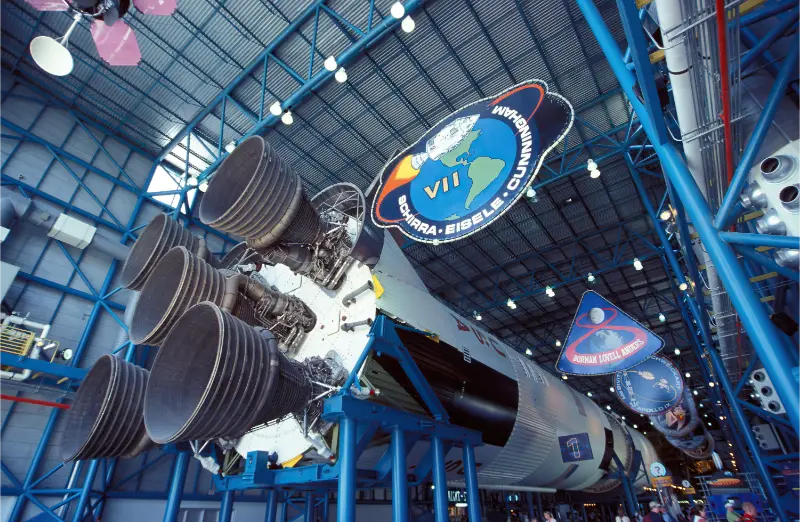
Kennedy Space Center Visitor Complex is a destination in itself. Visitors can see major spacecraft displays, exhibitions connected with astronauts and missions, and presentations that put American spaceflight into context. Certain experiences involve special-effect theaters, transport to areas within the visitor program, and timed presentations. Someone who has followed space exploration for decades may find that seeing an actual spacecraft is worth a full day and the drive from Orlando. A teenager interested in engineering may also appreciate the difference between a museum display and hardware designed for flight.

Orlando Science Center is more of an urban learning museum. Instead of focusing primarily on rockets, it provides hands-on exhibits and educational programming that may cover natural sciences, technology, discovery, and age-specific activities. The appeal is the chance to explore different subjects with less investment in a long transfer. A young child can be fascinated by a participatory display even when they would not appreciate the historical importance of a NASA mission. Neither approach is superior: one offers a distinctive place in Florida’s space story, and the other allows a broader, more flexible scientific visit.
The first decision is transportation
Kennedy Space Center is not in central Orlando. It is on Merritt Island, near the Space Coast, and normally requires a substantial road journey from Orlando hotels. Exact travel time depends on your starting point, traffic, weather, and route. Visitors without a rental car should investigate a reputable organized transfer or a private ride before buying admission. Ordinary local public transit from an International Drive hotel does not offer the same convenience as going to a city museum. The return journey matters too, especially if the party has spent many hours walking.
Orlando Science Center is in Orlando’s Loch Haven area. A short ride from many urban neighborhoods can make it a practical option for someone who is already staying in the city, although guests near Disney or the outer tourist districts must still calculate their own travel. Compare parking and rideshare expenses, not only the distance shown on a map. A family with car seats, a mobility aid, or a baby who sleeps in a stroller will appreciate a door-to-door plan. Choosing the closer museum can protect an entire afternoon for swimming, a playground, or dinner.
Which option is best for preschoolers?
Young children generally respond best to experiences they can manipulate, watch at close range, or revisit. Orlando Science Center often suits this style of learning, although parents should always check which galleries and programs are offered for the child’s age on the intended date. A smaller museum outing allows a family to stop for lunch and leave when a toddler is ready. It is less important to maximize admission value than to match a child’s energy and attention. Many families would rather enjoy two hours of discovery than six hours of repeated requests to be carried.
At Kennedy, a preschooler may be thrilled by the size of a rocket and the spectacle of spacecraft but lose interest in extended films, talks, or historical detail. Parents should identify a few visual highlights and offer simple explanations: this machine carried people into space, these suits protected astronauts, and these structures helped launch missions. Do not assume every simulation is appropriate for young children or every bus or theater experience welcomes strollers. Verify age, safety, and transfer information directly. A child can have a worthwhile visit without completing the full adult itinerary.
Which option is best for school-age children and teens?
Children beginning to study planets, physics, and engineering may get immense value from Kennedy, particularly if they have read or watched material about spaceflight beforehand. Encourage them to choose questions to investigate: How is a spacecraft protected during launch? Why are spacecraft shaped differently? What does an astronaut need for living in orbit? Seeing real objects makes these questions more concrete. Older teens may enjoy discussing engineering tradeoffs and the historical context of missions. However, do not treat one child’s enthusiasm as a reason to force younger siblings through every presentation.
Orlando Science Center may be the better day for children who like to experiment, move between topics, and ask questions not limited to astronomy. Its broad scope can engage siblings with different interests without dividing the family between separate destinations. Encourage children to explain what they discovered rather than rushing to the next display. Some experiences or special programs may have their own schedules or fees, so consult the current calendar. A child who likes biology, coding, chemistry, or general hands-on exploration may prefer this museum even if adults assumed a rocket attraction would be more impressive.
At a glance: practical differences
| What matters | First option | Second option |
|---|---|---|
| Focus | Spaceflight history and spacecraft | Broad hands-on science learning |
| Geography | Space Coast near Cape Canaveral | Loch Haven area in Orlando |
| Travel from Orlando | Significant road journey | Generally shorter city transfer |
| Young children | Choose a few visual highlights | Explore interactive exhibits at own pace |
| Launch viewing | Not guaranteed by admission | Not a space launch venue |
Older travelers and mobility considerations
Kennedy is large, and the scale of the experience can translate into a tiring visit. The official visitor complex provides accessibility information about wheelchair and scooter rentals, captioning, hearing assistance, accessible restrooms, and attractions that involve motion or transfer requirements. Reservations and availability may differ for various services. If a guest wants to avoid a launch simulation or prolonged standing, identify other exhibits that provide a full day of interest. A visitor in their eighties may enjoy spacecraft history just as much as a younger traveler, but a slow-paced route and a comfortable meal make the difference.
At Orlando Science Center, the opportunity to concentrate on selected galleries and leave more easily can be attractive to visitors who prefer shorter outings. Confirm elevator routes, drop-off areas, accessible parking, and available seating for any planned program. Do not equate a building described as accessible with every exhibit being equally usable for every guest. If someone has limited vision or hearing, call ahead about descriptive or captioned experiences and assistance. The best plan allows people to participate actively, not merely sit while other family members explore.
Tickets and the cost of the whole day
Admission prices and special offers change, and package descriptions can be confusing. Kennedy tickets may have optional add-on experiences, while organized transport from Orlando may be sold separately. Orlando Science Center may offer special exhibitions or events with additional pricing. Compare the exact calendar date and what the basic ticket includes. A visitor who books an expensive transport package for Kennedy without checking departure points could end up with an early pickup and a very long day. Ask whether cancellations, schedule changes, and transport delays are covered.
Calculate the real household total: tickets, any taxes and online fees, parking, driving fuel or transfer, food, and extras you actually want. For a family of five, a comparatively modest difference in per-person admission may become significant, while a long rideshare journey can change the result entirely. A family already visiting the Space Coast might find Kennedy more logical because the transfer is shorter. An Orlando family seeking a half-day museum often gets better value by choosing the science center and using the saved travel time for another activity.
Is a rocket launch guaranteed?
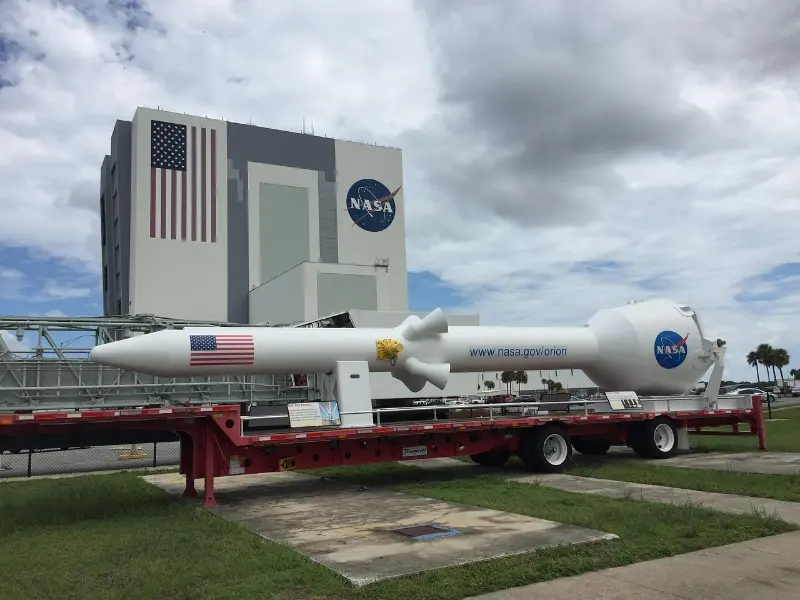
No. A launch is never guaranteed simply because you are visiting Kennedy Space Center. Mission dates and launch windows can change for technical reasons, weather, safety, or operational priorities. Public viewing arrangements also vary by mission; a visitor complex ticket does not automatically provide the best available viewing site or a special launch package. Make a Kennedy day worthwhile on the strength of its permanent exhibitions. If a launch happens during the trip and viewing is possible, treat it as an additional benefit rather than the foundation of a nonrefundable vacation plan.
The other useful distinction is that the visitor complex is not the entire operational NASA site. Some areas are restricted, and transportation within visitor experiences follows official routes and policies. Do not assume you can drive through launch areas or freely access a viewing location mentioned in an old blog post. Kennedy’s official launch schedule and visitor information should be consulted close to the trip. For those who mainly want to see a launch, separate planning about public viewing locations, weather, traffic, and safe parking is necessary.
Weather and the ideal time of day
Florida’s Atlantic coast can bring heat, rain, coastal wind, and afternoon storms. Kennedy offers substantial indoor exhibition time, but some movement between experiences occurs outdoors and certain transport programs may be affected by operating conditions. Bring water, a hat, rain protection, and appropriate footwear. It is worth arriving with a short list of priority indoor displays rather than attempting to cross the complex repeatedly during peak heat. Families should schedule meals according to the youngest guest’s routine, not only according to the next presentation.
Orlando Science Center can be a strong choice for a rainy or very hot day, but that also makes it appealing to other families who abandon outdoor plans. Popular school holidays and special events can affect attendance. Review the museum’s opening days and timed programs before departing. If rain is likely, allow extra travel time; driving around Orlando can be slow during a heavy thunderstorm. Neither destination should be sold as a guaranteed crowd-free refuge. A flexible start and a list of preferred activities work better than attempting to predict exactly where everyone will be at midday.
A sensible Kennedy itinerary
Begin with orientation and the exhibitions that matter most to the group. If the visitor bus tour or a scheduled presentation is central to the visit, investigate its current operating arrangements and queue requirements early rather than assuming unlimited departures throughout the day. Plan substantial time for the major spacecraft displays and allow teenagers to read the interpretive material without rushing. Schedule a proper lunch and an indoor rest. Families with preschoolers can choose fewer high-impact exhibits and depart before fatigue turns the return drive into a struggle.
Before leaving, check whether the group has enough energy for one final exhibit or whether a relaxed meal on the Space Coast would be more enjoyable. Do not reserve a fixed evening attraction back in Orlando that depends on ideal traffic. If the day includes a planned beach stop, consider the additional changing and safety requirements; the beach is not simply a roadside photo opportunity. Travelers with medical equipment, wheelchairs, or sensory needs should confirm the access requirements of any special attraction rather than assuming it is included with general entrance arrangements.
A sensible Orlando Science Center itinerary
For the science center, begin by choosing two or three exhibits that appeal to different members of the family. Let children spend real time interacting with displays; learning often happens through repetition rather than seeing every room. Check the schedule for any presentation you definitely want to attend, but otherwise avoid overprogramming. A lunch break can divide the visit naturally into a more active morning and a quieter afternoon. If young children become overwhelmed, use a less crowded area or finish early rather than turning the visit into a forced march.
The rest of the day can include a nearby park or garden if the weather cooperates, but verify the walking distance and suitable parking before promising that combination. Orlando has interesting neighborhoods beyond the resort corridors, and the museum can make a good anchor for exploring that side of the city. If driving from a theme-park hotel, plan the return before evening congestion. A shorter day is often a welcome change from several consecutive resort attractions and helps younger children recover for the following morning.
The real recommendation
Choose Kennedy Space Center if spaceflight, astronauts, rocket engineering, and iconic American missions are a major interest and your group is comfortable devoting a substantial day to travel and exploration. Choose Orlando Science Center if you want broad science learning, hands-on opportunities, a more flexible outing, or less time in the car. Children do not need to be a particular age to benefit, but their attention span and comfort should determine the schedule. The same principle applies to adults with mobility limitations and to older relatives.
If the decision remains close, review each site’s current exhibit list with your group and ask which three experiences they would miss most. That simple exercise usually makes the right answer clear. Confirm operating hours, special-program ticket terms, transport costs, and accessibility requests before booking. The most rewarding science day is not necessarily the largest or most expensive; it is the one that turns curiosity into an enjoyable shared experience without exhausting everyone involved.
Frequently asked questions
Can you visit Kennedy Space Center and Orlando Science Center in one day?
Technically possible under some schedules, but not a good plan for most families. Kennedy deserves ample time and involves a separate road journey from Orlando.
Does Kennedy Space Center admission guarantee a launch viewing?
No. Mission schedules, launch windows, viewing availability, and ticketed packages change. Plan around the exhibitions rather than assuming a launch.
Which museum is easier with a toddler?
Orlando Science Center may offer a more flexible, hands-on, shorter visit. Kennedy can still work with a child who enjoys rockets if adults adapt the day to their stamina.