Category: Florida Museums

  • Tallahassee Museum Guide: Hours, Wildlife, History, Zip Lines and Family Tips

    Tallahassee Museum Guide: Hours, Wildlife, History, Zip Lines and Family Tips

    Tallahassee Museum is not a traditional indoor museum. It is a large outdoor site that combines North Florida history, native wildlife, nature trails, reconstructed buildings and optional adventure courses. That mix makes it especially useful for families who want history without asking children to spend several hours reading labels indoors.

    Explore this guide

    Allow 3 to 5 hours for the standard museum experience, longer if adding Tree-to-Tree Adventures. The current museum schedule is 9:00 a.m.–5:00 p.m. Monday through Saturday and 11:00 a.m.–5:00 p.m. Sunday, with closures on major holidays.

    Quick planning summary

    • Current hours: Mon–Sat 9:00–5:00; Sun 11:00–5:00
    • Time needed: 3–5 hours without a long adventure-course session
    • Main experiences: regional history, wildlife, nature trails, historic buildings and optional aerial adventure
    • Best for: families, mixed-age groups, animal lovers and travelers who prefer outdoor museums
    • Heat factor: significant in summer because much of the visit is outside
    • Food: on-site food service can have seasonal or temporary schedule changes

    Important current-status note

    October 2026 information snapshot: this article is scheduled for 2028. Hours, fees, construction zones, exhibit access, boat-tour schedules, trail conditions and wildlife closures can change before publication. Use the practical details below as a verified planning baseline, then check the linked official source shortly before the trip.

    How the museum is organized

    Think of the site as several attractions sharing one landscape. Historic buildings tell the story of North Florida communities, wildlife exhibits focus on native species, and forest trails connect the areas. The experience feels closer to an open-air regional history park than to a single gallery building.

    Wildlife areas

    Animals are a major reason children enjoy the museum. Native species give the stop a stronger Florida identity than a generic zoo. Wildlife activity varies with heat, feeding times and season, so morning visits can be more rewarding in summer.

    Tree-to-Tree Adventures

    The aerial adventure component is a separate decision, not something every visitor should automatically add. Age, height, comfort with heights and available time matter. Families should check current course rules and pricing before promising children a zip-line experience.

    Best pacing for families

    Start with the most important outdoor section while everyone is fresh. Take a shaded or indoor break around midday, then continue with animals or historic structures. Trying to complete every loop in peak summer heat is rarely worth it.

    Official information

    Check Tallahassee Museum for current hours, tickets, food-service status and adventure-course requirements.

    Planning the visit for different ages

    For mixed-age groups, the best strategy is to combine one high-interest stop with one low-effort stop. Babies and toddlers usually need shade, reliable restrooms and room to reset. School-age children often respond well to animals, reconstructed history and interactive outdoor spaces. Teenagers may prefer zip lines, scenic drives, photography and less structured time. Older travelers often appreciate museums, gardens and boat tours where the experience does not depend on long walks. Accessibility varies widely, especially at archaeological and refuge sites, so check the official accessibility information when mobility is a major factor.

    Best season, heat and rain

    Late October through April is usually the easiest season for long walks, gardens and wildlife drives. Spring can be especially pleasant, although pollen is noticeable and popular gardens attract more visitors. Summer is hot, humid and storm-prone. Outdoor plans are usually better in the morning, with museums or lunch reserved for the hottest part of the day. The Big Bend coast can also be affected by tropical systems, prescribed burns, flooding and temporary wildlife closures. Check radar and official alerts before driving to a remote site.

    Accessibility and low-effort alternatives

    Tallahassee has several good choices for travelers who want meaningful sightseeing without long walks. The Historic Capitol, Goodwood grounds, short museum visits and a river boat at Wakulla Springs can all work well when heat, mobility or stamina limits a longer outdoor day. At nature preserves and archaeological parks, surface conditions may include roots, grass, sand or uneven ground. Never assume that a short trail is automatically stroller- or wheelchair-friendly.
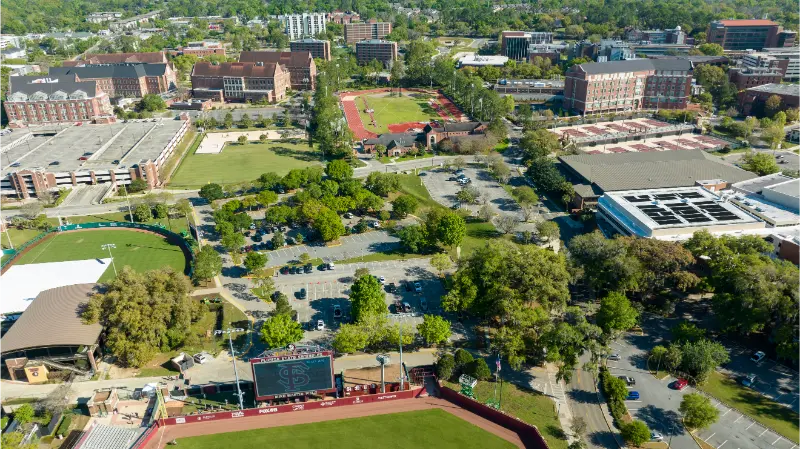
    Tallahassee Florida State Capitol Grounds Aerial

    What to bring

    • Refillable water bottle
    • Sun protection and sunglasses
    • Light rain layer from late spring through early fall
    • Insect repellent for refuges, wetlands and evening walks
    • Comfortable shoes for brick, grass, roots and museum floors
    • Binoculars for wildlife sites
    • Downloaded map for remote Big Bend locations
    • A light layer for heavily air-conditioned museums and boat rides

    How to combine it with nearby places

    Use Tallahassee Museum as the anchor for a family day. Pair it with a short downtown or park stop from the main Tallahassee guide rather than another large museum.

    Common planning mistakes

    • trying to combine downtown Tallahassee and the Gulf coast in a tightly timed half-day
    • assuming every museum is open seven days a week
    • arriving at a state park or refuge without checking current alerts
    • scheduling only outdoor stops during a summer afternoon
    • treating wildlife sightings as guaranteed
    • forgetting that government-area construction can change entrances and parking

    How this stop fits a longer Florida road trip

    Tallahassee works well as a two-night break between North Central Florida and the western Panhandle. Travelers coming from Cedar Key or Ocala should avoid treating the drive as dead time: the landscape changes noticeably as you move into pine forest, rolling terrain and the Big Bend. If you are continuing west, use Tallahassee for history and food, then dedicate a separate half-day to Wakulla Springs or St. Marks rather than squeezing them into departure morning.

    Final planning advice

    Build the day around one anchor experience and leave at least one hour unassigned. Tallahassee rewards curiosity more than speed: an unexpected legislative exhibit, wildlife sighting, garden in bloom or slower lunch often becomes more memorable than the attraction you originally thought would be the highlight.

    A more realistic way to plan the day

    Tallahassee and the surrounding Big Bend are easier to enjoy when you plan by geography rather than by attraction count. Downtown history, north-side gardens, west-side museums and the coastal wildlife corridor south of the city are not all next door to one another. Traffic is usually manageable compared with South Florida, but parking, state-government schedules, heat and afternoon storms can still turn an overpacked day into a rushed one.

    Florida State Capitol Tallahassee Government Building

    Count transitions as part of the itinerary. Parking, security checks, walking back to the car, changing clothes after water activities and waiting for a tour all consume time. A day with two strong stops and an unhurried meal is usually more satisfying than four attractions connected by constant driving. This is especially true in summer, when heat and thunderstorms make the middle of the day less predictable.

    Budget and value

    Tallahassee can be a relatively affordable Florida destination because several major sites are free or low-cost. Spend where it improves the experience: a guided boat at Wakulla Springs, a timed historic-house tour or a family attraction may be worth more than adding several minor paid stops. Free parks and museums are most valuable when they match your interests, not simply because they cost nothing.

    Photography and wildlife etiquette

    Use a longer lens or binoculars instead of approaching wildlife. At historic and archaeological sites, stay on public routes and do not move objects for photographs. Tripods, commercial shoots and drones may be restricted, especially on government property, in museums and on federal wildlife refuges. When in doubt, ask before setting up equipment.

    Food, water and restroom planning

    Downtown Tallahassee has many food options, but remote parks and refuges do not. Carry water in the car and never assume that a visitor center, cafe or vending area will be open simply because the outdoor site is accessible. Families with young children should identify the last reliable restroom before driving toward a refuge or spring.

    If the weather changes

    Keep one indoor backup in mind. The Historic Capitol, a house museum or another city attraction can replace a stormy outdoor block. After lightning passes, do not immediately resume swimming or exposed-trail activities unless staff or official alerts indicate conditions are safe. A flexible itinerary is a strength, not a failure to plan.

    Parking, arrival time and daily rhythm

    For city attractions, arriving close to opening usually solves more problems than hunting for a perfect parking space later. Government offices, university schedules and weekday commuters can make downtown feel busier between late morning and mid-afternoon. At parks and refuges, early arrival improves wildlife activity and lowers heat exposure. If your group includes a stroller, wheelchair, large cooler or several children, choose parking convenience over saving a few dollars or walking several extra blocks.

    Leave 15 to 30 minutes between major stops even when mapping apps show a short drive. That margin covers walking back to the car, finding the next entrance, restroom breaks and unexpected construction. It also keeps one delayed stop from pushing every meal and reservation later.

    Planning for multigenerational groups

    A multigenerational Tallahassee day works best when everyone shares the first anchor activity and the group has permission to split briefly afterward. Grandparents may prefer a shaded museum or garden bench while teenagers walk a longer trail or explore photography. Parents with toddlers may need an earlier lunch. Rejoining for one meal or one easy final stop keeps the trip social without requiring every traveler to move at the same speed.

    What is worth booking in advance

    Book anything that has a fixed departure, limited tour size or special access. River boats, historic-house tours, adventure courses and special programs are more vulnerable to selling out than open-air parks. Free museums and city parks usually need less advance planning, but event weekends can still change parking and opening patterns. Recheck reservations a day or two before travel if storms or construction are possible.

    When to skip this stop

    Skipping an attraction can be the right decision when the weather, construction status or interests of your group make the experience poor value. A garden outside bloom season, a wildlife refuge during intense midday heat or a history site with a tired toddler may be better saved for another trip. Wonderful Florida itineraries should help travelers choose, not create pressure to complete a checklist.

  • Florida Museum Discounts and Reciprocal Passes: Family Savings Beyond Theme Parks

    Florida Museum Discounts and Reciprocal Passes: Family Savings Beyond Theme Parks

    Florida has far more indoor attractions than theme parks, from science centers and art museums to historical houses and small local collections. Admission costs can accumulate when a family visits several museums during a road trip, especially if children need a break from intense sun or rainy weather. Membership reciprocity, community programs and carefully timed free admission can make cultural days more affordable. The complication is that each program has eligibility rules, participating venues and exclusions. This guide explains how to check them without assuming every membership works at every museum or promising a discount to international visitors who may not qualify.

    At a glance

    Planning stepPractical action
    ASTCCheck 90-mile exclusion and membership tier
    NARMCheck local restrictions and participant rules
    Museums for AllConfirm actual program eligibility
    TicketsBudget parking and special exhibitions

    Start with what kind of museum day you want

    A science center with hands-on exhibits suits some children, while others prefer aircraft, art, maritime history or quiet sculpture gardens. Ask how long your group can realistically stay; a two-hour museum stop is often more satisfying than paying for an attraction everyone leaves exhausted. Check whether special exhibitions, planetarium shows or guided tours require separate tickets. For very young children, evaluate stroller access and family bathrooms; for older relatives, look for seating and step-free routes. If rain is the reason for visiting, reserve enough time to reach the museum safely without driving through flooded roads. Admission savings matter most when the exhibit truly interests your group.

    Understand the ASTC Passport Program

    The Association of Science and Technology Centers operates the ASTC Passport Program for qualifying members of participating science centers and museums. Eligible memberships can provide benefits such as free general admission at participating institutions away from the member’s home area. Crucially, the program uses geographic exclusions: the standard rule involves 90 miles from both the home museum and the member’s residence. Rules and participating lists change, and the program’s details were updated for 2026. Check the current downloadable participant list, qualifying membership tier, guest limits and ID requirements. Buying the cheapest membership online without checking its eligibility can be a costly mistake.

    How NARM reciprocal museum benefits differ

    The North American Reciprocal Museum Association connects many arts, history and cultural institutions. A qualifying membership may provide general-admission privileges at participating venues, but not necessarily access to ticketed concerts, exhibitions or special tours. Some institutions apply local restrictions, including a 15-mile rule related to a member’s home institution; the NARM directory marks those conditions. Benefits are not the same as ASTC benefits, and a museum may participate in one, both or neither. Contact the receiving institution before traveling to confirm whether your membership level, household members and physical or digital card meet its requirements. A reciprocal benefit is not a guaranteed queue-jumping or parking privilege.

    Vizcaya Museum Historic Architecture Miami

    Museums for All has eligibility limits

    Museums for All is a nationwide initiative offering reduced-cost general admission at participating museums to qualifying people receiving SNAP benefits, subject to the program’s presentation requirements. It is not a universal tourist coupon available simply by showing any foreign bank or transit card. The rules specify acceptable documentation and may include a per-card admission limit. International visitors should not assume they qualify. If you are eligible, consult the official participant finder and verify current rates before arrival. Museums can also have separate programs for local residents, educators, students, military families or children; each discount requires its own documentation. Do not count on receiving the cheapest listed price without proving eligibility.

    Free days, library passes and local-resident deals

    Some Florida museums offer free hours or community days, while public libraries or municipal programs sometimes make passes available to qualifying cardholders. These arrangements can change with funding, special events or school schedules. A library-pass program may be restricted to local patrons, which makes it unsuitable as a guaranteed saving for a visitor from another country. Before planning a free day, check whether a reservation is required, if the special exhibition is excluded and whether parking remains chargeable. Free hours can also attract crowds, so visitors seeking quieter access may prefer an ordinary weekday ticket. An attraction that is permanently free can be more useful than a complex discount requiring several detours.

    Compare membership cost with actual expected use

    Do the calculation for your specific group. Add the normal admission costs at institutions you will realistically visit and compare them with a qualifying membership price, taking all guest and geographic exclusions into account. Do not buy a membership merely because the marketing page lists hundreds of institutions. If you have only one museum afternoon, regular tickets or a free public attraction may be cheaper. Multi-generational parties should check how many adults and children are covered; household definitions differ. Families with children under free-entry ages may receive less incremental value than expected. Remember membership benefits often exclude optional experiences, and annual dues can renew automatically unless cancelled.

    Museums by region: plan clusters, not random stops

    Orlando and Central Florida offer science, art and history choices that work between theme-park days. Tampa Bay has major cultural institutions plus smaller community venues. South Florida includes art museums, design collections, history sites and family science attractions, while St. Augustine and North Florida can reward visitors interested in regional heritage. Rather than naming a supposed universal pass, create a list of two or three museums near your actual route, then check their direct websites. Consider driving time, parking, wheelchair access and how much exhibit overlap exists. A museum a few miles off the route can save a rainy day; a distant one can consume the whole day in traffic.

    Verify participating venues before making the trip

    A directory entry does not guarantee that a museum is open today, has the listed exhibit or accepts a particular benefit at the door. Read the date of the program list and visit the individual museum’s official admission page. For reciprocal memberships, ask which household members enter free and whether guest limits apply. Confirm whether a timed-entry reservation is needed and how the discount is applied during booking. Record the staff confirmation if the situation is unusual. Never assume that an app-generated digital card is accepted in every institution. If a venue hosts a school event or private function, operating hours may differ from a normal Saturday. A small amount of verification prevents expensive transport surprises.

    Accessibility, sensory needs and family comfort

    Many museums provide accessibility information, but specifics matter more than a generic wheelchair icon. Check elevator status, accessible restrooms, quiet spaces, seating, captions, audio descriptions and whether exhibits are suitable for those with sensory sensitivities. Ask whether wheelchairs or sensory kits require advance booking. Families with babies should find out if strollers are permitted in all galleries and where feeding or changing rooms are located. If visiting with grandparents, avoid planning three large museums back-to-back just because membership makes entry free. Allow time for lunch, walking breaks and unhurried viewing. A reduced ticket price does not compensate for a visit that exceeds someone’s physical or emotional capacity.

    A rainy-day museum itinerary that works

    For a wet day in Orlando, start by checking museum hours and the weather radar, choose one major indoor activity, then schedule a nearby café or rest break. In Miami, cluster a cultural visit with a neighborhood you can explore when the rain eases, rather than repeatedly moving a rental car. On a Gulf Coast road trip, use a regional history museum as the day’s core and add another activity only if everyone remains enthusiastic. Book tickets when required; not every discount works on third-party platforms. Leave enough time to return safely before an evening attraction. A flexible cultural day should make the holiday easier, not become another high-pressure checklist.

    Vizcaya Museum Miami Garden Staircase

    Watch the hidden costs of ‘free’ admission

    Parking, service fees, temporary exhibits, audio guides, lockers and food can turn a nominally free entry into a substantial expense. Before selecting a membership, compare the total cost of visiting multiple museums and ask whether discounts extend to companion tickets. If a reciprocal policy applies only to general admission, budget separately for planetarium shows, IMAX presentations or special galleries. Families with young children may want the freedom to leave after an hour; visitors without children may prefer to book a longer guided visit. Bring a charged phone for ticket confirmations but keep proof of membership and ID available. A museum’s direct written policy should settle any conflict with a reseller description.

    Build a small museum savings plan before Florida

    Identify your likely regions, choose the top three institutions that genuinely interest you and check their accessibility and admission policies. Then review ASTC, NARM, Museums for All or local free-day options according to actual eligibility. Calculate savings only for museums you expect to visit, not theoretical destinations hundreds of miles away. Check program restrictions again shortly before travel, especially near a membership renewal or a new calendar year. Keep one fully free museum or cultural stop as a backup if a reciprocal plan falls through. Finally, allocate a reasonable budget for food and transport; the best museum savings may come from walking between nearby attractions rather than from buying an annual membership.

    Frequently asked questions

    Does an ASTC membership grant free entry to every science museum?

    No. Only qualifying memberships and participating venues are eligible, and the standard 90-mile exclusions must be considered.

    Is NARM the same as ASTC?

    No. They are separate programs with different participating institutions and reciprocal rules.

    Can foreign tourists use Museums for All?

    They must meet the program’s actual eligibility requirements; being an international visitor alone does not confer the discount.

    Do free museum days include special exhibitions?

    Not necessarily. Check the museum’s admission terms and any separate ticket or reservation requirement.

    Is buying a museum membership worthwhile for one week?

    Sometimes, but only after comparing valid admission benefits against the cost for the museums you will truly visit.

    Official sources and updates

    Confirm details on the ASTC Passport Program website, the NARM Association FAQ and the Museums for All program website. Check each institution’s own current admission page before committing money or travel time. Discounts and participant lists can change.

  • Florida Museum Memberships and Reciprocal Admission: When a Pass Saves Money

    Florida Museum Memberships and Reciprocal Admission: When a Pass Saves Money

    Florida families can easily spend a significant portion of their vacation budget on museum tickets. A science center one day, an art museum the next and a children’s museum on a rainy afternoon may cost more than expected. Memberships and reciprocal admission programs can reduce those costs, but they are not universal passes that make every participating attraction free. The rules depend on the network, the institution that issued your membership, your home address, the ages of your children and sometimes the exact exhibition you want to see.

    Before purchasing any membership for a Florida trip, understand the three major kinds of benefits that travelers encounter: admission at the home museum, reciprocal privileges at other institutions and separate discounts that may or may not apply to family members. The most practical approach is to list the places you actually intend to visit, then confirm eligibility with each receiving museum. Buying a membership because an online article promises ‘hundreds of free museums’ is a risky way to plan a holiday.

    Trip at a glance

    ASTCGeneral admission with 90-mile restrictions
    NARMQualifying museum-level membership
    ACM networkTypically 50% off up to six people
    Essential stepConfirm terms at the receiving museum

    Start with the museum experiences your group actually enjoys

    A family with children aged three and six may get more value from a hands-on children’s museum than from an institution designed for teenagers and adults. A couple who loves art and botanical gardens will evaluate a different mix. Grandparents traveling with grandchildren may need both a flexible entry time and a nearby place to rest. A reciprocal program only saves money when its participating venues fit the people traveling, and only when the benefits apply to your specific membership level.

    Vizcaya Museum Historic White Facade Miami

    Make a short list of three or four Florida institutions you are genuinely interested in. Identify which network, if any, each belongs to, and whether the benefits include free entry, a percentage discount or some other privilege. Not all museums belong to the same network, and membership in an association does not always equal participation in its reciprocal admission program. That distinction can prevent expensive misunderstandings at the ticket desk.

    ASTC Passport: science centers with distance restrictions

    The Association of Science and Technology Centers operates the ASTC Passport Program for eligible members of participating science centers and museums. Its core benefit is free general admission at participating institutions outside the member’s local area. The current ASTC rules include a 90-mile radius restriction measured as a straight line from both your primary residence and the science center or museum where you purchased the membership. An attraction within an excluded radius does not become free simply because you are on vacation.

    ASTC standardized its program guidelines in 2026, so an older guide may describe outdated membership qualifications. You must have an eligible membership from a participating institution, not merely an annual pass from any museum using science exhibits. The receiving institution may ask for a membership card and proof of residence. It is also allowed to refuse reciprocal entry if you forgot the card and cannot provide acceptable documentation. Contact your home institution before travel if the membership card has not arrived.

    What ASTC usually does not cover

    Free general admission is not the same as admission to everything on a museum’s schedule. Traveling exhibitions, large-format cinema presentations, planetarium sessions or special programs may have separate charges. The visitor policy of each museum also determines the number and ages of people covered, subject to network rules. A family of five should not rely on a brief online claim that one card always admits five people. Check the exact family admittance policy for the dates you are visiting.

    Some venues require advance reservations even for members or reciprocal visitors. Others accept entry at the desk until capacity is reached. If a timed exhibition is the purpose of your visit, call to ask whether you need a separate ticket. ASTC updates its participation lists for different periods of the year, so download the version that will be active during your Florida vacation rather than one linked from an article written several years earlier.

    NARM: a different network for arts, history and more

    The North American Reciprocal Museum Association connects participating cultural institutions, including museums, galleries and some related organizations. Individuals do not buy a universal NARM card directly from the association. Instead, they join a participating home institution at a qualifying NARM membership level. Benefits may include member-price admission and other discounts, but the precise privileges depend on the receiving institution. A regular low-tier museum membership may not include NARM even if a more expensive tier does.

    NARM also has geographic and special-event restrictions at certain venues. The association explains that some institutions limit reciprocity for members of nearby museums, including particular fifteen-mile restrictions marked in its listings. Exhibition tickets, lectures and other activities may be excluded. The safe procedure is to locate the intended Florida museum in NARM’s current directory and ask it directly what your membership covers. Do this before spending money on the home membership.

    Children's museums and the ACM Reciprocal Network

    For families with young children, the Association of Children’s Museums Reciprocal Network has its own structure. Participating venues currently describe a benefit of 50 percent off general admission for up to six people, including the cardholder, rather than the blanket free entry associated with some other networks. The membership card must show the reciprocal program eligibility, and the cardholder is expected to be present. Different children’s museums may offer different membership tiers, so the reciprocal benefit might need to be included or added deliberately.

    Do not confuse a children’s museum’s involvement in professional associations with its participation in the reciprocal network. The official network directory identifies participating locations, and the receiving museum can confirm whether the benefit applies on your desired date. Special programs, birthday parties, store purchases, parking and camps are commonly excluded. A parent planning a one-hour play visit should check whether an ordinary admission ticket is cheaper than buying a membership primarily for one discounted day.

    Why some families save more than others

    Imagine a household with two adults and two children that frequently visits its home science center, then spends a week in Florida visiting two eligible science museums. If its existing membership already includes ASTC Passport and the destination museums satisfy the distance rules, reciprocal admission could meaningfully reduce costs. Contrast this with tourists purchasing a new membership the day before departure to visit one museum that turns out to be inside an exclusion radius. The second family could spend more, not less.

    Vizcaya Museum Miami Garden Staircase

    This is why the calculation must use actual plans. Count the number of people covered, the price of ordinary admission for those ages, the cost of the eligible membership and any paid add-ons. Also count transport and parking, which membership usually does not eliminate. A free general entry that requires a lengthy detour may not be worth using. In Florida, a museum near your existing route can be more valuable than an impressive reciprocal attraction several hours away.

    A simple break-even calculation

    Suppose, as an illustrative example only, an eligible annual membership costs $120. You already plan three visits that would otherwise total $48, $42 and $50 for your household. The potential general-admission saving would be $140, before considering any restrictions. In that hypothetical case, the membership could produce a $20 difference. If one of those museums is ineligible or a special exhibition requires a separate $30 ticket, the result changes. Use the real current prices and benefits rather than treating these sample numbers as museum quotes.

    Also consider whether you would use the home museum after the Florida trip. An annual membership may be valuable because of local repeat visits, guest benefits or events. If you live outside the United States and will not return to the issuing museum, the calculation becomes much less forgiving. A vacation purchase should stand on its own financially unless you genuinely value supporting the museum as a charitable institution.

    Choose the right network, not the biggest advertised list

    ASTC tends to be relevant to science-focused itineraries, NARM to a wider range of cultural institutions, and ACM reciprocal benefits to families visiting children’s museums. There can be overlap among institutions, but coverage is not automatic. A Florida children’s museum may offer both scientific exhibits and an ACM network benefit, while another science museum has no reciprocal benefits for your card. Never decide based only on the words ‘science,’ ‘art’ or ‘children’s’ in the museum name.

    Look at the receiving museum’s admissions page for the actual program logo or policy. If the website is unclear, call or send an email with the name of your home institution, membership level, number and ages of visitors, and expected date. Ask whether general admission is covered and whether reservations are necessary. Save the confirmation when possible. This five-minute check can prevent a disappointed child and an unplanned family expense.

    What to bring to the ticket desk

    Carry a valid membership card in the form accepted by the receiving institution, proof of identity and, if necessary, proof of residence. If your membership was recently purchased and the physical card has not arrived, contact the home museum to ask whether it can issue an official confirmation; do not assume that a screenshot of an online checkout will be accepted. Some organizations specifically advise members to obtain a letter or email verifying their status if the card is missing.

    Have a payment method available in case the benefit is partial or an exhibition charges extra. Keep the current participant directory saved on your phone, but understand that the receiving museum’s admission staff have the final applicable policy. Be courteous if the staff need to confirm eligibility. Rules can vary by location even within the same network, and the person at the desk did not write the membership marketing materials.

    Sample Florida cultural itineraries where memberships may help

    A Miami-oriented trip might combine a science-oriented institution, an art museum and an interactive children’s experience, with eligibility verified separately for each. A Tampa Bay trip could use one central base and dedicate different days to science, history and art rather than driving across Florida chasing discounts. In Orlando, a family may prefer a smaller local science visit between theme park days. The key is to choose museums that fit the region and the weather, then see whether a reciprocal membership makes them more affordable.

    A family with a toddler may need a two-hour visit and a nap break afterward, while older children may spend half a day in hands-on galleries. Adults without children might find a history museum or gallery more rewarding than a family attraction despite the available discount. Free admission is not a good reason to force everyone through a venue that does not interest them. The trip is successful when the visits are worthwhile, not when the number of redeemed benefits is high.

    Accessibility, special exhibitions and quiet visits

    Membership can remove a ticket cost but does not remove physical or sensory barriers. Check whether the museum provides accessible parking, quiet rooms, captioning, elevators and seating for a visitor’s needs. A timed-entry exhibition may have a separate reservation process or limited capacity. Families with sensory-sensitive children may appreciate a quieter morning or a designated accommodation program; those benefits are independent of the reciprocal network and require direct confirmation.

    Some institutions offer community free days or reduced-price admission for residents, students, military personnel or qualifying groups. Those programs may be a better option than purchasing an annual membership. Visitors should not assume eligibility for a local resident discount without meeting its requirements. Compare the official offers honestly, and check whether discounts can be combined. Many cannot be stacked.

    Watch for changes and misleading advice

    Participant lists and individual membership tiers change over time. A museum that accepted your card last year may have different rules now, and a newly opened institution may not be part of any network. Avoid advice that lists dozens of ‘always free with membership’ museums without giving a date, source or restriction. The current ASTC Passport, NARM and ACM network pages are the authoritative starting points.

    Before paying for a membership specifically for Florida, make a four-column note: institution, planned date, benefit you confirmed and extra charges. Add the total admission you would otherwise pay. Only purchase when the numbers and the experiences both make sense. Used properly, reciprocal membership can make a Florida cultural holiday more affordable; used carelessly, it can turn a small hoped-for discount into an expensive misunderstanding.

    Frequently asked questions

    Does any science museum membership qualify for ASTC?

    No. Your membership tier and the issuing institution must meet current participating-program requirements.

    Is NARM a single card I buy directly?

    No. You join an eligible home institution at a qualifying NARM membership level.

    Does ACM reciprocity mean free entry?

    It generally offers a 50% discount on regular admission for an eligible group, subject to the participating museum rules.

    Official sources and useful information

  • Don Garlits Museum of Drag Racing Guide: Admission, Hours, Cars and Ocala Tips

    Don Garlits Museum of Drag Racing Guide: Admission, Hours, Cars and Ocala Tips

    Don Garlits Museum of Drag Racing is one of the easiest ways to add a completely different type of Florida experience to an Ocala trip. After several days of springs, horse farms and forest roads, walking through rows of dragsters, engines, memorabilia and classic cars is an indoor reset—and for motorsport fans it can be a destination in its own right.

    Allow 2–3 hours for a normal visit, or closer to 3–4 hours if you read exhibits carefully and spend equal time in the drag-racing and antique-car collections.

    Quick planning summary

    • Location: 13700 SW 16th Avenue, Ocala, FL 34473
    • Current hours: daily, 9 a.m.–5 p.m.; closed Thanksgiving and Christmas
    • Current adult admission: $22
    • Current discounts: seniors 60+, military/veterans/first responders, college students and teenagers currently $17; children 5–12 currently $10
    • How much time: 2–3 hours
    • Best for: motorsport fans, multigenerational families, rainy or very hot days and road-trip travelers

    Important current-status note

    October 2026 snapshot: The practical details in this guide reflect information published in October 2026. Because this article is scheduled for 2028, recheck admission, operating hours, closures, reservation rules, water conditions and event calendars shortly before traveling. In North Central Florida, spring access can also change after storms, high water, construction or capacity-control measures.

    The museum currently advertises daily 9 a.m.–5 p.m. hours and the admission schedule above. It also describes itself as pet-friendly for leashed pets or pets in strollers. Prices, holiday closures and policies can change before 2028, so verify directly before travel.

    Why this museum is more interesting than it sounds

    Even people who do not follow drag racing may recognize the value of seeing how rapidly the sport evolved. Early machines look almost improvised beside later purpose-built dragsters. That visual progression makes the museum work as an engineering and design story, not just a collection of famous names.

    The second strength is scale. This is not a single-room roadside display. The museum has enough vehicles and memorabilia that enthusiasts can spend several hours, while a less committed companion can still enjoy the color, craftsmanship and oddities without understanding every racing class.

    What to focus on during your visit

    • Historic dragsters: Look for the way chassis, engines, safety equipment and aerodynamics change across decades.
    • Don Garlits memorabilia: The personal history gives context to why the museum exists and why Ocala became its home.
    • Antique and classic cars: This section broadens the visit for travelers who care more about general automotive history than drag racing.
    • Engines and technical displays: Teenagers interested in mechanics may get more from these than from the trophy cases.
    • Photography: Allow extra time because dense rows of vehicles make quick phone photos easy but thoughtful compositions slower.

    Families, teenagers and older travelers

    This is a useful mixed-age stop. Young children may not read much, but they usually respond to brightly colored race cars and unusual shapes. Teenagers who enjoy engineering, gaming, motorsport or car culture can stay engaged far longer than at a traditional history museum. Older adults often connect the vehicles with eras they remember personally.

    Classic American Vintage Cars on a Florida Street

    For mixed-age groups, the most reliable rhythm is one demanding activity and one easy activity per day. Babies and toddlers need predictable shade and breaks; school-age children usually respond well to a clear mission such as spotting fish or horses; teenagers appreciate independence, photography and an activity with some movement; older adults benefit when heat, walking distance, seating and restroom access are considered before arrival.

    Accessibility and pace

    The museum is largely an indoor, walk-through experience and is generally easier on mobility than trails or spring parks. Visitors who require wheelchair access or a specific seating/rest schedule should still confirm current details directly. The most practical strategy is to slow down and use the visit as a low-heat day rather than rushing simply because the exhibits are indoors.

    Best time to visit

    Rainy afternoons and the hottest part of summer are obvious choices, but that also means the museum can be a valuable weather backup. If you are driving I-75, its south-Ocala location makes it easier to combine with a travel day than attractions deep inside the national forest.

    How it fits into an Ocala itinerary

    Pair the museum with Downtown Ocala for dinner and a walk, or use it after a short visit to Sholom Park. I would not pair it with a full spring-and-paddling day unless your group genuinely has the energy; the museum deserves attention rather than becoming an afterthought.

    Budget planning

    A family of four can spend noticeably more here than at free parks, but the visit is predictable: admission is the main expense, parking is straightforward, and there is no need to rent equipment. If only one person in the group is a serious motorsport fan, decide in advance whether everyone wants to visit or whether this is a good split-group activity.

    Common mistakes to avoid

    • assuming it is only interesting to professional racing fans
    • allowing less than an hour
    • saving every exhibit for the end and getting museum fatigue
    • forgetting to check holiday closures
    • trying to squeeze it between two large outdoor attractions with no recovery time

    Official information to check before you go

    Check the official Don Garlits Museum of Drag Racing website for current admission, hours, group policies and any special events before your visit.

    Final thoughts

    The museum works because it changes the texture of an Ocala trip. Springs explain the landscape, horse venues explain the local economy and identity, and Don Garlits explains another piece of Florida’s enthusiasm for speed and mechanical experimentation. Even if you are only moderately interested in cars, two hours here can be more memorable than adding a fourth similar outdoor stop.

    A simple way to organize the museum

    Instead of moving randomly from case to case, divide the visit into three questions: how did the cars become faster, how did safety evolve, and which personalities pushed the sport forward? That structure prevents exhibit fatigue and gives non-experts something concrete to look for. Children can choose a favorite car in each section; adults can compare engine placement, tires and body shape.

    If you have a serious motorsport fan in the group, agree on a meeting point and give that person extra time in the technical sections. Mixed-interest groups enjoy the museum more when nobody feels forced to read every label at the same pace.

    How to use the museum on a travel day

    Its location near the I-75 corridor makes the museum particularly useful on arrival or departure day. Check out of the hotel, spend two to three hours at the museum, have lunch nearby and continue south or north without crossing the entire county. That is often a better use of time than squeezing it into a day already devoted to springs or horse country.

    For visitors who are not drag-racing fans

    Give yourself a simple mission: choose one decade and compare the cars, or focus on the engineering progression from early machines to later aerodynamic designs. The museum becomes easier to enjoy when you stop trying to memorize names and instead look for how speed changed the shape and safety of vehicles.

    Couples with different interests can also split attention: one person reads technical displays while the other focuses on styling, photography and social history. You do not have to understand racing statistics to appreciate the collection.

    Practical planning checklist

    • save the official address and current operating information before leaving your hotel
    • check weather, heat index and lightning risk on the morning of the visit
    • keep water, dry clothing and basic first-aid supplies in the vehicle
    • confirm any reservation or timed-entry requirement separately from admission
    • leave enough time between activities for food, restrooms and traffic

    Ocala and Marion County are easiest to enjoy when the schedule has room to absorb a change. A delayed tour, full parking lot or sudden storm should alter the order of the day, not destroy the entire itinerary.

    Extra planning advice for a smoother Ocala trip

    Ocala looks compact when viewed on a statewide map, but the county spreads across horse country, the I-75 corridor, Silver Springs, Dunnellon and the Ocala National Forest. Before committing to a schedule, plot the exact entrances of the places you intend to visit. A route that appears to involve three nearby attractions can become several hours of driving when one stop is west of the city and another is deep in the forest. Grouping activities by area usually improves the trip more than adding one extra attraction.

    Weather deserves the same attention. From late spring through early fall, start strenuous outdoor activities early, protect the hottest part of the afternoon for lunch or an indoor stop, and keep a rain alternative available. Thunderstorms can arrive quickly and may close swimming areas, outdoor arenas or trails even when the morning was clear. In winter, the opposite problem appears: spring water remains relatively constant while cool air makes getting out of the water uncomfortable, especially for children and older travelers.

    Carry drinking water in the car even when the attraction sells beverages. Rural recreation areas may have limited service, and a short delay can become uncomfortable in heat. Download maps, reservation confirmations and important phone numbers before leaving strong cell coverage. If you have medication, mobility equipment or food that must stay cool, plan for those needs before entering the forest rather than assuming facilities will be equivalent to a city attraction.

    Finally, leave at least one flexible block in every day. Ocala is most enjoyable when a spring, horse event, museum or scenic drive has enough time to breathe. The region is not improved by rushing from one parking lot to another. A slower schedule also makes it easier to respond to capacity limits, delayed shows, a child who needs a rest, or a storm that changes the order of the day.

  • Florida Maritime Heritage Road Trip: Seven Days of Ports, Boats, and Coastal History

    Florida Maritime Heritage Road Trip: Seven Days of Ports, Boats, and Coastal History

    A Florida maritime vacation can be much more than boarding a cruise. Working fishing harbors, lighthouse keepers’ buildings, wreck archaeology, and port museums reveal how people lived from the sea long before modern resort development. This seven-day itinerary samples northeast Florida, the central Gulf Coast, and Key West. Those places are far apart: it is an educational road trip for travelers with a car and enough flexibility to spread the journey over a week, not a promise of leisurely daily driving. It also includes a particularly important 2026 caveat: the Florida Maritime Museum in Cortez reports its main building temporarily closed for rehabilitation, so this stop currently means exploring a historic working waterfront rather than assuming indoor exhibits are available.

    Day 1: Start with St. Augustine’s relationship with the sea

    In St. Augustine, use the harbor and St. Augustine Lighthouse & Maritime Museum to connect navigation, coastal defense, shipwrecks, and the everyday work of maritime families. The lighthouse grounds and exhibits provide alternatives for people who cannot climb the tower, and the site’s maritime archaeology interpretation is particularly valuable for teenagers. Do not assume that everyone in a multigenerational group can ascend the tower’s stairs. Ask about elevator-free areas, audio or visual interpretive materials, and access to the keeper’s house before purchasing tickets. Allow time for the harborfront itself: watching vessels move through the water is an easy way to link historical navigation methods with today’s channels, currents, and bridge operations.

    Day 2: Look beyond shipwreck treasure stories

    A second northeast Florida day gives room for the unglamorous but essential maritime themes: pilotage, navigation hazards, food supply, coastal storms, and the people whose jobs kept ports functioning. In the lighthouse museum, distinguish maritime archaeology from commercial treasure hunting: professionals document sites, conserve fragile objects, and study the context in which artifacts were deposited. This is also a useful place to discuss why visitors must not remove objects from protected historical sites or coastal waters. Children can compare a modern electronic chart with older navigation equipment. Families who need a gentler day can explore a small portion of the historic district rather than adding another long drive or a boat ride.

    Day 3: Move toward the Gulf and choose an overnight base

    Transfer toward Tampa Bay or the Bradenton area with a substantial break along the way. This is not a day to schedule timed museums at both ends: roadworks, storms, and parking can add unpredictability. Before leaving, check whether your next heritage stop is fully open and whether the building, grounds, or special programs operate under different schedules. If the group includes a baby or a traveler who finds transfers tiring, consider splitting the journey with an additional night. Choose accommodation based on total driving and parking cost rather than beach proximity alone. A practical base near Bradenton or Sarasota lets you visit a historic fishing community without committing to a premium barrier-island hotel.

    Day 4: Cortez and Florida’s working-fishing heritage

    Cortez, on the mainland side of Anna Maria Island, is one of the state’s memorable working waterfront communities. Its traditional fisheries are part of the living economy, not a themed exhibit constructed for tourists. The Florida Maritime Museum occupies a former schoolhouse and preserves stories of Gulf fisheries, boatbuilding, and local families, but as of October 2026 its interior is closed for building rehabilitation. The museum says grounds and some programming continue; check the official notice before traveling. Do not walk into active docks, private boatyards, or business workspaces for photographs. A worthwhile day can still include lawful public waterfront viewpoints, a meal from a local establishment, and careful observation of a fishing harbor at work.

    Florida Marina with Boats and Waterfront Resort

    Day 5: Coastal communities, weather, and fishing culture

    Spend another Gulf Coast day exploring the contrast between recreational marinas and working waterfronts. Ask local history centers about oral histories and exhibits rather than expecting every fishing vessel to welcome visitors. Seafood menus often use familiar names for fish whose actual availability changes seasonally; restaurants may source products from beyond the immediate port. If understanding local food is a priority, ask what is locally landed instead of assuming that every entrée reflects that day’s catch. With children, explain why commercial unloading areas require high-visibility safety habits and physical distance. A safer alternative is a dedicated harbor walk or licensed sightseeing cruise that does not interfere with commercial operations.

    Day 6: Drive toward the Keys without pretending it is nearby

    The transition from the central Gulf Coast to Key West takes a full day for many travelers. Plan fuel and restrooms before the long stretches of the Overseas Highway, respect changing speed limits, and never stop in an unauthorized shoulder just for a water photograph. Travelers who dislike long drives should fly or restructure the trip as a separate Keys vacation. On arrival, leave the car at legal parking and walk only as much of the historic center as suits your group. Accessible taxis or another appropriate local transfer can help, but check vehicle availability ahead. Keep the first evening simple, particularly after a late arrival or when traveling with children.

    Day 7: Key West’s wrecks, research, and maritime interpretation

    The Mel Fisher Maritime Museum at 200 Greene Street is a serious maritime-history institution, not merely a gallery of gold. Its exhibitions connect Florida and Caribbean shipwrecks, archaeological research, maritime trade, and difficult histories including the transatlantic slave trade. The museum advertises conservation lab experiences; those may require a separate ticket, reservation, or schedule check. Pair a museum visit with the historic seaport or a waterfront walk, allowing time for shade and seating. The goal is to understand how dangerous navigation, commerce, and human choices shaped coastal Florida. Avoid presenting artifacts as souvenirs to be collected; legal and ethical protections for cultural heritage matter.

    How to read a fishing harbor respectfully

    Harbors are workplaces with moving machinery, slippery surfaces, fuel systems, and heavy lines under tension. A waterfront that looks picturesque at sunset can be hazardous during landing or unloading. Keep children away from the water’s edge, do not obstruct ice trucks or seafood-processing access, and avoid photographing workers at close range without consent. Prefer designated public paths and legitimate visitor businesses. Accessible viewing areas differ from town to town, so call ahead rather than assuming a raised dock has a safe ramp. If a tour operator promises a behind-the-scenes visit, verify that it is authorized and does not interrupt normal fishing activity.

    Budget and visit strategy

    The itinerary includes free public viewpoints, ticketed museums, and optional boat experiences. The most expensive component is likely to be moving between distant regions, not admissions. Compare a three-day northeast Florida trip, a two-day Cortez and Tampa Bay visit, or a two-day Key West museum break before committing to the full seven days. This modular approach is particularly helpful for travelers aged 70 or older, groups with preschoolers, and anyone with limited vacation leave. Check parking fees and hotel deposits in waterfront areas. Photographing a harbor from a lawful sidewalk costs nothing; renting a private boat to reach the same harbor is usually unnecessary.

    Choose a boat excursion wisely

    Maritime history sometimes becomes clearer on the water, but a boat is optional. If you book one, ask whether the vessel has boarding steps, handrails, shade, a toilet, flotation devices in children’s sizes, and a weather cancellation policy. A non-swimmer can enjoy a properly managed passenger cruise without entering the sea, but should wear or have access to suitable safety equipment as directed. Anyone prone to motion sickness might prefer a harbor cruise in sheltered water rather than an offshore voyage. Check whether the operator is licensed and whether a history-focused guide is actually provided. Never substitute a private fishing charter for an accessible sightseeing tour without confirming the details.

    A maritime learning activity that works across generations

    At each waterfront, ask three questions: what was transported, who did the labor, and what made a voyage dangerous? In St. Augustine, the discussion may involve navigational aids, storms, and the heritage of lighthouse keepers. Cortez suggests a conversation about fishing boats, commercial catch, nets, processing, and the struggle to keep working harbors alive as tourism and real-estate values change. Key West offers a powerful opportunity to think about shipping lanes, Caribbean connections, archaeology, and the human cost of transatlantic trade. Children can draw a boat and label the tasks required before it can leave a harbor, while adults can pursue the more complex historical context.

    Not all ‘shipwreck museums’ present the same kind of scholarship. Look for information about artifact provenance, conservation laboratories, professional archaeological methods, and whether exhibitions distinguish a documented site from a dramatic legend. A treasure story can generate interest, but every object was part of a larger historical relationship involving people, goods, and sometimes violence. The Mel Fisher Maritime Museum’s conservation interpretation is a useful place to make that distinction. Avoid buying supposed ‘authentic salvaged artifacts’ whose legal origin or documentation is unclear; souvenirs should never encourage the destruction of underwater heritage.

    Coastal traffic and weather also shape the experience. A working harbor can be exposed to wind, salt spray, uneven pavement, and trucks. Families with strollers should ask where the safest continuous sidewalk is rather than assuming a pier connects to a public promenade. Persons with hearing differences may need written museum materials rather than a boat tour conducted entirely over loudspeakers. Older visitors who tire easily can focus on one interpreted building and one comfortable waterfront viewpoint. A successful maritime day ends with a clear story understood by everyone, not an exhaustive list of piers crossed.

    Practical planning table

    Region Best educational focus Key restriction
    St. Augustine Lighthouse keeping and shipwreck archaeology Tower climb is optional and not universally accessible
    Cortez Working fisheries and traditional boatbuilding Maritime museum building is temporarily closed
    Key West Conservation, wreck archaeology, Caribbean trade Lab tours have separate arrangements

    Frequently asked questions

    Is the Florida Maritime Museum in Cortez open now? Its official site currently reports the building closed for rehabilitation. Check for programs and grounds access before arriving.

    Can children visit maritime museums? Yes, although exhibits about wreck disasters, slavery, or other serious history may require parental context.

    Do I have to take a boat? No. All three regions provide meaningful shore-based cultural experiences.

    Can I climb the St. Augustine Lighthouse with limited mobility? The tower involves stairs; ask about accessible exhibits and alternatives on the grounds.

    Is this route practical without a car? Not as a seven-day multi-region circuit. Choose a single region or plan separate flights and transfers.

    Official sources

  • Florida Classic Car Museums: A Road Trip Through Vintage Vehicles and Automotive History

    Florida Classic Car Museums: A Road Trip Through Vintage Vehicles and Automotive History

    Florida's automobile museums offer a different kind of sightseeing day: instead of looking through a windshield at palm trees, visitors can see how the vehicles themselves changed. From early motoring to midcentury design and unusual engineering, car collections can appeal to dedicated enthusiasts, curious children and travelers who simply enjoy attractive objects with stories behind them. There is no need to plan a weeklong rally. One well-chosen museum near your vacation base can turn a hot or rainy afternoon into a memorable indoor experience. The key is understanding each collection's focus, admission rules and location before making a special trip.

    OptionBest fitCheck first
    TallahasseeAutomobile museumNorth Florida road trip
    StuartElliott MuseumTreasure Coast museum visit
    St. AugustineClassic Car MuseumDrive from historic downtown

    What makes an automobile museum worth visiting?

    A good collection is about more than polished paint. Cars can reveal how families traveled, how manufacturing evolved, what safety meant in different eras and why certain designs became cultural symbols. Look for interpretive panels or guided explanations rather than assuming the most expensive vehicles are the most interesting. An early vehicle with rudimentary controls may be more educational for a child than a luxurious sports car. A museum displaying unusual steering systems, compact European cars or early engines may be fascinating for adults who think they have already seen every classic American model.

    Decide which part of the story interests your group. A restored-car showroom emphasizes design and craftsmanship. A broader technology museum may cover inventions and transport alongside vehicles. A specialist historic collection can be small but rewarding if staff explain the engineering. For a family with different ages, a museum that offers seating, restrooms and a manageable route can work better than a huge collection that demands hours of walking. The best one is not necessarily the largest.

    Tallahassee Automobile Museum: cars in a wider collection

    The Tallahassee Automobile Museum is a recognizable stop for north Florida road travelers and offers classic vehicles within a broader collection of historical objects. It may suit visitors who enjoy eclectic displays and want something interesting to do along an Interstate 10 journey, although you should not assume every exhibit is exclusively automotive. Verify the current schedule and admission on the operator's official site before leaving. Large collections sometimes rotate displays, and a vehicle pictured in an old review may not be on view during your visit.

    For families, a useful approach is to choose a few favorite cars and ask what made each one distinctive: the body shape, engine size, passenger accommodations or technology of its era. Someone traveling with a person who tires easily can plan a shorter visit and focus on accessible sections. Never count on being allowed inside the vehicles or touching displays; polished paint and historic interiors can be damaged easily. Treat these artifacts as museum objects, not a dealership where doors and hoods may be opened casually.

    Stuart: the Elliott Museum and the Treasure Coast

    The Elliott Museum in Stuart presents a mix of history, innovation and classic automobiles, providing a different outing from a motorsport-focused venue. Its location on Hutchinson Island makes it possible to combine a museum visit with a coastal drive or a short waterfront break, provided the weather and traffic cooperate. Check which galleries are open and whether any special exhibitions affect the main vehicle displays. A museum's name or promotional photograph does not establish that every car is displayed every day.

    Visitors interested in early motoring may appreciate how a collection can reveal changing transportation habits. Children can compare seating layouts and imagine a family journey before modern climate control and navigation. Teenagers might be interested in mechanical controls, design choices and the way new inventions alter daily life. A history discussion need not become a technical lecture: asking which vehicle seems most comfortable, practical or surprising keeps the visit engaging. Build time for the rest of the museum if the collection also includes local heritage and other kinds of artifacts.

    St. Augustine: classic cars beyond the historic downtown

    St. Augustine is famous for Spanish colonial history, but its Classic Car Museum provides a different reason to step outside the busiest tourist streets. Visitor information describes a collection of restored vehicles and automotive memorabilia at a site on U.S. 1 south of the central historic district. This is not the kind of attraction you are likely to pass while strolling between old-town landmarks; plan transport deliberately rather than assuming it is a short walk from the main visitor garage.

    Classic American Vintage Cars on a Florida Street

    The museum has also been associated with community automotive events, which may include car gatherings or related programs on particular dates. Such events are not interchangeable with routine museum admission: start times, fees and which facilities are open can differ. If a child is fascinated by unusual vehicles, ask the staff whether any hands-on opportunities exist rather than touching exhibits without permission. After the museum, return to the historic area or plan a separate coastal stop to balance the indoor experience with a little fresh air.

    A classic car show is different from a permanent museum

    Florida's mild winter climate supports many informal car gatherings, cruise-ins and local shows, but events can be highly variable. At a show, vehicles may belong to private owners who enjoy answering questions, yet the lineup depends on who attends. A museum offers a more predictable display, controlled indoor conditions and interpretive information. Choose a show if you enjoy spontaneous conversations and outdoor atmosphere; choose a museum if you need reliable access, shelter and a defined experience. A family may enjoy both, but they are not substitutes when the weather is bad.

    When attending a car show, respect cones, cordons and owners' preferences. Do not lean against bodywork, open doors or encourage children to sit on fenders for photographs. Some events permit participants to bring dogs, while others use private properties with restrictions. Ask before photographing people at close range, particularly children. Outdoor events may provide little shade or seating and can feature loud engines. If a member of your group is sensitive to noise, an indoor museum is likely the easier option.

    How to plan a family visit without car fatigue

    A typical mistake is building a packed driving itinerary for people who already spend much of their vacation inside a rental car. Select one museum within a sensible distance and pair it with lunch or a short local attraction. For younger children, a focused 60–90-minute visit may be enough. Encourage them to look for details: round headlights, wooden steering wheels, seats without modern headrests and the way luggage was carried. A simple picture scavenger hunt helps without turning the museum into a race.

    Rusty Classic Pickup Truck in Florida

    For teens interested in design or engineering, ask them to compare two generations of vehicles and discuss what changed. Grandparents may have personal memories of a model or era; invite them to share if they wish, but never imply that they must know technical facts to appreciate the collection. The same car can inspire a discussion about art, family history, road travel or fuel economy. If someone needs a seated break, confirm whether benches or a café are available; not all museums provide the same facilities.

    Accessibility and comfort questions to ask

    Before booking, check accessible parking, entrance thresholds, elevator availability and whether every gallery can be reached without stairs. A museum with a historic building or vehicle platform may have obstacles even if the main lobby is accessible. Photographing cars often requires stepping back to see a complete vehicle; narrow aisles or crowded events can make that harder for wheelchair users. Ask the venue about quieter hours and whether mobility devices are welcome on the exhibition floor.

    Parking is another practical detail. A large building outside a downtown district may have convenient on-site spaces, while a museum near a popular waterfront can have more competition. If visiting on a special event day, ask whether normal parking remains available. A traveler with vision limitations may enjoy guided descriptions, tactile representations where permitted or an accessible audio program, but these services should be confirmed directly. Staff are often better equipped to answer specific questions than a brief online accessibility badge.

    Photography, preservation and visitor etiquette

    Many museums permit casual photography but restrict flash, tripods or commercial shoots. Check the posted policy. Historic paint, chrome and glass can produce reflections that make photography difficult; a slower visit, careful framing and natural light often work better than bright flash. Never reach over a barrier for a closer view of a badge or dashboard. Oils from hands and accidental scratches can harm finishes that are expensive to conserve. If you want to photograph a particular engine, ask whether the hood is normally displayed open rather than attempting to touch it.

    A car show may offer more relaxed photography opportunities, but cars remain private property. Ask owners before moving an object or stepping very close to an engine bay. Keep food and drinks away from exhibits. Children should remain supervised, especially where parked vehicles may move unexpectedly. Preserving the objects is part of the experience: a vehicle that survived decades deserves respectful treatment, whether it belongs to a public museum or an individual collector.

    Cost comparison and how to avoid disappointment

    Admission prices vary, and some locations offer discounts for children, seniors or members. Do not quote an old price as if it were guaranteed. Compare the museum ticket with the time you realistically plan to spend, and check whether special exhibitions require an additional payment. Some privately run collections may have unusual opening patterns or be closed for an event. Confirm that the attraction is open on your exact date and that the collection you want to see is included in the ordinary ticket.

    If your visit is tied to a unique vehicle, contact the museum to check whether it is on display. Collections rotate, buildings undergo maintenance and vehicles sometimes travel to events. A spontaneous stop is fine when the goal is simply exploring, but a special trip to see one model should be confirmed. For groups, ask about advance reservations and accessible transport; a museum that works for two adults may have different logistics for a busload of students or a large family party.

    A sensible two-stop automotive itinerary

    Rather than zigzagging across Florida in search of every museum, choose a region. In northeast Florida, pair St. Augustine's classic-car collection with historic downtown or a coastal viewpoint. On the Treasure Coast, place the Elliott Museum within a Stuart or Hutchinson Island day. In north Florida, the Tallahassee collection can fit a journey through the capital region. These regional combinations reduce driving and offer companions who do not share the car hobby something else to enjoy.

    If you truly want a themed road trip, use several overnight bases instead of attempting everything in one long day. Florida is geographically large, and museum stops separated by hundreds of miles should not be described as neighboring attractions. Give yourself travel breaks and respect opening days. Cars are best appreciated when the visitors themselves are not exhausted from the road. A thoughtful itinerary balances history, comfortable pacing and a little curiosity about the people who built and used the vehicles.

    FAQ

    Answers to common planning questions:

    Are Florida car museums only for automotive experts? No. Their displays can interest visitors who enjoy design, innovation, family history and craftsmanship.

    Can children sit inside the classic cars? Generally do not assume this. Follow each exhibit's rules and ask staff about any interactive displays.

    Are local car shows free? Some are, but rules and fees vary. Confirm each event directly.

    Should I reserve tickets? It depends on the museum and date. Check live admission and opening information before a special trip.

    Useful resources

  • Florida Historic Capitol Museum Guide: Free Admission, Hours, Exhibits and Tallahassee Tips

    Florida Historic Capitol Museum Guide: Free Admission, Hours, Exhibits and Tallahassee Tips

    The Florida Historic Capitol Museum is the best first stop for travelers who want to understand Tallahassee as the state capital rather than simply photograph the dome. The restored 1902 building sits directly in front of the modern Capitol and turns Florida political history into a compact, free museum visit. Its location also makes it one of the easiest attractions to combine with a downtown walk.

    Explore this guide

    Plan 60 to 90 minutes for the museum, or up to two hours if you read exhibitions carefully. Admission is currently free. The museum lists 9:00 a.m.–4:30 p.m. Monday through Friday, 10:00 a.m.–4:30 p.m. Saturday and noon–4:30 p.m. Sundays and holidays, with Thanksgiving and Christmas closures.

    Quick planning summary

    • Admission: free; donations appreciated
    • Current hours: Mon–Fri 9:00–4:30, Sat 10:00–4:30, Sun/holidays noon–4:30
    • Time needed: 60–90 minutes for most visitors
    • Best for: first-time visitors, history travelers, school-age children and rainy days
    • Accessibility: accessible entrance and elevator are available
    • Current construction note: Capitol-complex work can alter entrances and loading areas

    Important current-status note

    October 2026 information snapshot: this article is scheduled for 2028. Hours, fees, construction zones, exhibit access, boat-tour schedules, trail conditions and wildlife closures can change before publication. Use the practical details below as a verified planning baseline, then check the linked official source shortly before the trip.

    What you actually see

    The museum explains Florida’s government and political development through restored rooms, photographs, artifacts and rotating exhibits. The building itself is part of the experience: the cupola, legislative chambers and period interiors show how much smaller the state government complex once felt before the modern high-rise Capitol was built.

    Historic Capitol versus the modern Capitol

    Do not treat them as interchangeable. The Historic Capitol is a museum with curated interpretation. The modern Capitol is an operating government building, with security procedures and access that can change based on legislative activity, construction and events. If you have limited time, the Historic Capitol gives a more predictable visitor experience.

    Florida State Capitol Tallahassee Government Building

    Families and children

    School-age children usually do best if adults frame the visit around a few questions: What did the old House chamber look like? Why was the building almost demolished? How has Florida changed since 1902? Younger children may tire if adults try to read every panel. Keep the museum to about an hour and follow it with outdoor time at Cascades Park.

    Parking and arrival strategy

    Downtown parking can feel confusing if you arrive during weekday government hours. Use an official public garage or metered space rather than circling the Capitol blocks repeatedly. Build a few extra minutes for security zones, construction detours and one-way streets. Weekend visits often feel calmer, but restaurant and event patterns can still affect nearby parking.

    Official information

    Check the Florida Historic Capitol Museum visitor page for the latest hours, entrance instructions and construction notices.

    Planning the visit for different ages

    For mixed-age groups, the best strategy is to combine one high-interest stop with one low-effort stop. Babies and toddlers usually need shade, reliable restrooms and room to reset. School-age children often respond well to animals, reconstructed history and interactive outdoor spaces. Teenagers may prefer zip lines, scenic drives, photography and less structured time. Older travelers often appreciate museums, gardens and boat tours where the experience does not depend on long walks. Accessibility varies widely, especially at archaeological and refuge sites, so check the official accessibility information when mobility is a major factor.

    Best season, heat and rain

    Late October through April is usually the easiest season for long walks, gardens and wildlife drives. Spring can be especially pleasant, although pollen is noticeable and popular gardens attract more visitors. Summer is hot, humid and storm-prone. Outdoor plans are usually better in the morning, with museums or lunch reserved for the hottest part of the day. The Big Bend coast can also be affected by tropical systems, prescribed burns, flooding and temporary wildlife closures. Check radar and official alerts before driving to a remote site.

    Accessibility and low-effort alternatives

    Tallahassee has several good choices for travelers who want meaningful sightseeing without long walks. The Historic Capitol, Goodwood grounds, short museum visits and a river boat at Wakulla Springs can all work well when heat, mobility or stamina limits a longer outdoor day. At nature preserves and archaeological parks, surface conditions may include roots, grass, sand or uneven ground. Never assume that a short trail is automatically stroller- or wheelchair-friendly.

    What to bring

    • Refillable water bottle
    • Sun protection and sunglasses
    • Light rain layer from late spring through early fall
    • Insect repellent for refuges, wetlands and evening walks
    • Comfortable shoes for brick, grass, roots and museum floors
    • Binoculars for wildlife sites
    • Downloaded map for remote Big Bend locations
    • A light layer for heavily air-conditioned museums and boat rides

    How to combine it with nearby places

    Pair the Historic Capitol with the central Tallahassee sights and Cascades Park. Mission San Luis is better treated as a separate half-day because it offers a much deeper archaeological and living-history experience.

    Tallahassee Florida Capitol Square and Monument

    Common planning mistakes

    • trying to combine downtown Tallahassee and the Gulf coast in a tightly timed half-day
    • assuming every museum is open seven days a week
    • arriving at a state park or refuge without checking current alerts
    • scheduling only outdoor stops during a summer afternoon
    • treating wildlife sightings as guaranteed
    • forgetting that government-area construction can change entrances and parking

    How this stop fits a longer Florida road trip

    Tallahassee works well as a two-night break between North Central Florida and the western Panhandle. Travelers coming from Cedar Key or Ocala should avoid treating the drive as dead time: the landscape changes noticeably as you move into pine forest, rolling terrain and the Big Bend. If you are continuing west, use Tallahassee for history and food, then dedicate a separate half-day to Wakulla Springs or St. Marks rather than squeezing them into departure morning.

    Final planning advice

    Build the day around one anchor experience and leave at least one hour unassigned. Tallahassee rewards curiosity more than speed: an unexpected legislative exhibit, wildlife sighting, garden in bloom or slower lunch often becomes more memorable than the attraction you originally thought would be the highlight.

    A more realistic way to plan the day

    Tallahassee and the surrounding Big Bend are easier to enjoy when you plan by geography rather than by attraction count. Downtown history, north-side gardens, west-side museums and the coastal wildlife corridor south of the city are not all next door to one another. Traffic is usually manageable compared with South Florida, but parking, state-government schedules, heat and afternoon storms can still turn an overpacked day into a rushed one.

    Count transitions as part of the itinerary. Parking, security checks, walking back to the car, changing clothes after water activities and waiting for a tour all consume time. A day with two strong stops and an unhurried meal is usually more satisfying than four attractions connected by constant driving. This is especially true in summer, when heat and thunderstorms make the middle of the day less predictable.

    Budget and value

    Tallahassee can be a relatively affordable Florida destination because several major sites are free or low-cost. Spend where it improves the experience: a guided boat at Wakulla Springs, a timed historic-house tour or a family attraction may be worth more than adding several minor paid stops. Free parks and museums are most valuable when they match your interests, not simply because they cost nothing.

    Photography and wildlife etiquette

    Use a longer lens or binoculars instead of approaching wildlife. At historic and archaeological sites, stay on public routes and do not move objects for photographs. Tripods, commercial shoots and drones may be restricted, especially on government property, in museums and on federal wildlife refuges. When in doubt, ask before setting up equipment.

    Food, water and restroom planning

    Downtown Tallahassee has many food options, but remote parks and refuges do not. Carry water in the car and never assume that a visitor center, cafe or vending area will be open simply because the outdoor site is accessible. Families with young children should identify the last reliable restroom before driving toward a refuge or spring.

    If the weather changes

    Keep one indoor backup in mind. The Historic Capitol, a house museum or another city attraction can replace a stormy outdoor block. After lightning passes, do not immediately resume swimming or exposed-trail activities unless staff or official alerts indicate conditions are safe. A flexible itinerary is a strength, not a failure to plan.

    Parking, arrival time and daily rhythm

    For city attractions, arriving close to opening usually solves more problems than hunting for a perfect parking space later. Government offices, university schedules and weekday commuters can make downtown feel busier between late morning and mid-afternoon. At parks and refuges, early arrival improves wildlife activity and lowers heat exposure. If your group includes a stroller, wheelchair, large cooler or several children, choose parking convenience over saving a few dollars or walking several extra blocks.

    Leave 15 to 30 minutes between major stops even when mapping apps show a short drive. That margin covers walking back to the car, finding the next entrance, restroom breaks and unexpected construction. It also keeps one delayed stop from pushing every meal and reservation later.

    Planning for multigenerational groups

    A multigenerational Tallahassee day works best when everyone shares the first anchor activity and the group has permission to split briefly afterward. Grandparents may prefer a shaded museum or garden bench while teenagers walk a longer trail or explore photography. Parents with toddlers may need an earlier lunch. Rejoining for one meal or one easy final stop keeps the trip social without requiring every traveler to move at the same speed.

    What is worth booking in advance

    Book anything that has a fixed departure, limited tour size or special access. River boats, historic-house tours, adventure courses and special programs are more vulnerable to selling out than open-air parks. Free museums and city parks usually need less advance planning, but event weekends can still change parking and opening patterns. Recheck reservations a day or two before travel if storms or construction are possible.

    When to skip this stop

    Skipping an attraction can be the right decision when the weather, construction status or interests of your group make the experience poor value. A garden outside bloom season, a wildlife refuge during intense midday heat or a history site with a tired toddler may be better saved for another trip. Wonderful Florida itineraries should help travelers choose, not create pressure to complete a checklist.

  • Appleton Museum of Art Ocala Guide: Admission, Hours, Collections and Family Tips

    Appleton Museum of Art Ocala Guide: Admission, Hours, Collections and Family Tips

    The Appleton Museum of Art is one of the easiest Ocala attractions to underestimate. Travelers sometimes see it as a small local museum to fill an hour, but the collection is broad enough to support a real museum visit, with European, American, Asian, African, Islamic, contemporary and decorative arts represented across more than 24,000 objects. It is also an excellent counterweight to Ocala’s outdoor identity: after springs, trails and horse country, the museum adds a quieter cultural day without requiring a drive to Orlando or Tampa.

    Explore this guide

    For a first visit, allow 1.5–3 hours. The practical details below reflect conditions published for October 2026. As operating details can change before 2028, confirm prices, hours, closures, reservations and event schedules shortly before travel.

    Quick planning summary

    • Location: 4333 E. Silver Springs Blvd, Ocala, FL 34470
    • Current hours: Tuesday–Saturday 10 a.m.–5 p.m.; Sunday noon–5 p.m.; closed Monday
    • Current admission: Adults $10; seniors 55+ $8; youth 6–17 $5; children 5 and under free; several free-admission groups
    • How much time: 1.5–3 hours
    • Best for: art lovers, couples, senior travelers, rainy-day visitors and families wanting a calmer indoor stop

    Important current-status note

    October 2026 snapshot: Current visitor information lists Tuesday through Saturday hours of 10 a.m.–5 p.m., Sunday noon–5 p.m. and Monday closure. General admission is $10 for adults, $8 for seniors 55+ and several other discount groups, $5 for ages 6–17 and free for children five and under. Florida educators, U.S. veterans and some other groups currently qualify for free admission. Special exhibitions and programs can affect the best time to visit.

    For a future trip, use that snapshot only as a planning reference. Florida parks, museums and event venues can change schedules after storms, construction, seasonal demand or operational updates, so the official information closest to your travel date should take priority.

    Why this place is worth your time

    The Appleton is most valuable when you want a refined indoor attraction that still feels connected to the region. The building is comfortable, the collection is varied enough for different tastes, and the visit can be as short or as slow as your group needs. For travelers who dislike enormous museums, its manageable scale is an advantage rather than a limitation.

    The best way to judge this stop is not by how many boxes it checks, but by whether it adds a different experience to the rest of your itinerary. Ocala and North Central Florida are most rewarding when springs, horse country, local history, museums and quieter outdoor spaces are mixed rather than repeated back to back.

    What to see and do

    • Permanent collection galleries: Move by interest rather than trying to study every object. The geographic and historical range keeps the visit varied.
    • Special exhibitions: Temporary shows can be the strongest reason for repeat visits, so check the exhibition calendar before arrival.
    • Outdoor spaces and architecture: Allow a little time outside the galleries; the setting helps break up a long indoor visit.
    • Museum store: Useful for art-focused gifts and a short browse even if some members of the group finish the galleries earlier.
    • Programs and talks: Families and adults can get more from the museum when a workshop, tour or gallery program matches their schedule.

    You do not need to complete every option. Choose the two or three elements that best match your group, weather and energy level. A focused visit usually feels more satisfying than rushing through every possible activity.

    How to plan the visit

    A two-hour visit is comfortable for most travelers. Art enthusiasts can spend three hours or more, while families with young children may prefer a focused 60–90 minute loop followed by another activity. Because the museum is closed Monday, check the day before building a rainy-day backup plan around it.

    Henry B Plant Museum Tampa Historic Architecture

    Build a buffer for parking, restrooms, ticketing or check-in, and the short delays that come with traveling as a family. In this part of Florida, an extra 20–30 minutes can also protect the day from roadwork, event traffic or a summer shower.

    Families, teenagers and older travelers

    The museum is calmer than a science center and works best for children who can enjoy short looking games, colors, shapes and stories rather than hands-on play. Teenagers interested in art, design or photography may find it surprisingly strong. Older adults benefit from the indoor climate, seating opportunities and accessible layout.

    For mixed-age groups, one demanding activity and one easy activity per day is a useful rule. Babies and toddlers need shade and predictable breaks; school-age children respond well to a clear purpose; teenagers usually appreciate independence and photography; older adults benefit when seating, heat and walking distance are considered before arrival.

    Accessibility and mobility

    The museum emphasizes accessibility across its building, programs and services. If a specific mobility, sensory or service-animal accommodation is important, review the museum’s current accessibility information or call before visiting. Indoor routes are generally far easier than the region’s spring and trail attractions.

    Temporary maintenance can change an otherwise accessible route. If a wheelchair path, accessible restroom, assisted boarding option or short-distance parking space is essential, verify that specific feature instead of relying on a general accessibility label.

    Best season and weather strategy

    This is a year-round attraction and especially useful in peak summer heat, winter cold fronts or stormy afternoons. Rain can increase visitor demand, so do not assume bad weather guarantees an empty museum. Special exhibitions matter more than season for repeat visitors.

    North Central Florida can move quickly from comfortable morning temperatures to hot, humid afternoons. In summer, lightning risk matters as much as the temperature. During cooler months, cold fronts can make mornings surprisingly chilly even when the afternoon forecast looks mild.

    Parking, driving and arrival logistics

    The museum is east of central Ocala on State Road 40, so it is easier to reach by car than on foot from Downtown. Parking is much less complicated than downtown event parking. If you are combining it with Silver Springs, the two are on the same general side of town, which reduces unnecessary driving.

    Save the exact entrance or parking location before leaving Wi-Fi. Parks and equestrian properties may have multiple gates, and arriving at the wrong one can cost far more time than the driving distance suggests.

    Food, water and breaks

    The museum does not operate a full restaurant, so plan lunch before or after. Food and drink are restricted to designated areas. A museum morning followed by lunch in Ocala usually works better than trying to stretch the visit through a meal window.

    Carry more water than a short drive might suggest. Heat, cold spring water, cycling and long periods of standing at an event can all disguise fatigue until the group is already tired. A planned snack and a seated break often extend the day more effectively than adding another attraction.

    Safety and practical cautions

    The main practical issues are museum etiquette and supervision. Keep children close to artwork, follow photography rules and avoid food or drink in gallery areas. Non-flash photography is generally permitted in permanent-collection spaces, but temporary-exhibition policies can differ.

    Wildlife, water, horses and Florida weather all deserve more respect than a normal urban sightseeing day. Follow closures and staff instructions rather than looking for a workaround when conditions change.

    Common mistakes to avoid

    • planning the visit on Monday
    • assuming every special exhibition allows the same photography rules
    • expecting a full restaurant on site
    • rushing through every gallery just to say you saw it
    • overlooking discount or free-admission eligibility

    How to combine it with other North Central Florida experiences

    The Appleton is a strong climate-controlled complement to North Central Florida’s outdoor days. Travelers coming from Gainesville can compare it with Florida Museum of Natural History for natural history or Cade Museum for hands-on invention. Build each museum around a different interest rather than trying to visit all of them in a single day.

    On a two- or three-day regional stay, alternate indoor and outdoor experiences. That keeps the itinerary flexible when heat, storms, event schedules or water conditions force a change.

    Budget planning

    Admission is moderate and several categories receive discounts or free entry. Because parking and on-site spending are limited, this can be one of the easier Ocala attractions to budget precisely. Check current reciprocal museum programs if you already hold a qualifying membership elsewhere.

    Always compare the ticket price with the true cost of the day: parking, rentals, fuel, meals, reservations and equipment can matter more than admission. Free attractions still deserve careful scheduling if they require a long drive or a specific event window.

    Who should prioritize this stop?

    Prioritize the Appleton if you enjoy art, need a weather-proof attraction or want a quieter day between springs and horse events. Visitors who only want interactive children’s exhibits may prefer a different museum, but mixed-age groups often appreciate its manageable size.

    If your group has very different interests, let this attraction serve the travelers who will enjoy it most, then balance the day with a second activity chosen for everyone else. A complete Florida vacation does not require every person to love every stop equally.

    Official information to check before you go

    Before traveling, check the official visitor information for the latest hours, fees, closures, reservations, event calendars and weather-related changes. For a 2028 visit, current official information should override older screenshots, blogs and social posts.

    Final thoughts

    The Appleton gives an Ocala itinerary cultural depth. It is not trying to compete with a giant metropolitan museum; its strength is that you can spend a thoughtful two hours with art and still have enough energy for dinner, downtown or another light activity afterward.

    Ocala and North Central Florida reward travelers who arrive informed but keep the day flexible. The region is strongest when clear springs, local culture, horse country and outdoor time complement one another instead of competing for every hour.

  • Mel Fisher Maritime Museum in Key West: Shipwreck Treasure, Archaeology and History

    Mel Fisher Maritime Museum in Key West: Shipwreck Treasure, Archaeology and History

    Gold coins are an easy way to attract attention, but the Mel Fisher Maritime Museum in Key West is more interesting when approached as a place to examine what a shipwreck reveals about a complicated historical world. Its exhibitions explore maritime trade, the search for the Spanish galleon Nuestra Señora de Atocha, conservation of recovered objects and histories that extend beyond glamorous treasure stories. It is a strong cultural stop for travelers who want more context about Key West than a quick photograph on Duval Street can provide.

    Beyond the romance of sunken treasure

    The story of the Atocha is associated with Mel Fisher’s long search and the recovery of artifacts from a seventeenth-century Spanish shipwreck. The excitement of discovery is real, yet a shipwreck is not merely a chest of gold waiting to be opened. Its cargo, tools, weapons and everyday objects can reveal economic networks, technology, human labor and the dangers of transatlantic movement. Archaeologists ask where an item was found, what surrounded it and how it fits into the wreck’s story.

    The museum is an accredited nonprofit institution rather than simply a commercial treasure display. As you explore, distinguish the sensational story of finding valuable objects from the quieter work of documenting, researching and conserving them. This approach gives the visit substance for adults and older children. A glittering object may catch your eye, but the accompanying context tells you what historians can actually learn from it and what remains uncertain.

    Tickets, opening times and location

    The museum is located at 200 Greene Street, Key West, FL 33040, convenient for a walking itinerary in Old Town. Its official admissions page checked in October 2026 lists opening at 10 a.m. daily and the last visitor admitted at 4 p.m., with a published adult museum price of $17.50 and a separate child price. Tickets and special tours can change, so use the official page to verify your travel date and current admission categories.

    Conservation-lab tours are a distinct product. The museum publishes timed lab-tour opportunities, commonly on weekdays and weekends, with separate pricing and restrictions around holidays. A regular gallery ticket should not be assumed to include the laboratory. If seeing active conservation work is your main reason to visit, plan around a confirmed tour rather than arriving whenever convenient and hoping one is available. Allow at least one or two hours for the core exhibition, longer if taking a special tour.

    What the Atocha story can teach you

    The shipwreck belongs to the era of Spanish imperial trade, when enormous quantities of goods crossed the Atlantic in fleets exposed to severe storms, navigation challenges and military threats. The objects recovered are evidence of both trade routes and the people whose lives were entangled in them. A museum visit becomes richer when you think about who produced an artifact, who transported it, who profited from it and who might have experienced coercion or exploitation.

    Young children may initially see only “pirate treasure,” and that is an opportunity for careful explanation. A Spanish treasure fleet was not the same thing as a fictional pirate ship. Encourage children to think like detectives: What is the object made of? How might it have been used? How can researchers know its age? Older students can consider the difference between finding something historically important and proving a story about it. These questions transform the visit into historical investigation.

    Archaeology versus treasure hunting

    Archaeology values context. A coin alone may be visually impressive, but its location in relation to other remains can help explain how a vessel broke apart or how goods were stored. Removing objects without documentation can destroy information that money cannot replace. Museum interpretation is a useful way to discuss why permits, conservation procedures and professional recording matter when dealing with submerged heritage.

    This distinction is also important for travelers who dream of searching Florida beaches or wreck sites. Finding an artifact is not the same as owning it. Maritime archaeological sites can be legally protected, and collection rules differ by land, water and jurisdiction. Do not remove historical objects or disturb submerged structures during diving or snorkeling trips. If you encounter something that appears significant, document the location without moving it and seek guidance from responsible authorities.

    Conservation: what happens after an artifact is recovered?

    Saltwater and long burial can severely affect metal, wood, ceramic and other materials. An object may look stable underwater but deteriorate when exposed to air without proper treatment. Conservation work can include stabilization, careful cleaning, documentation and long periods of controlled processing. The museum’s lab tours offer a way to see why recovered objects do not simply go from the seabed to a display case overnight.

    For a family, conservation provides an excellent connection between chemistry, history and craftsmanship. Ask why corrosion occurs, why material identification matters and what conservators are trying to preserve. If children expect dramatic action like a movie, prepare them for patient scientific work instead. The lab is a professional environment, so follow instructions about movement, photographs and proximity to equipment. Its value lies in seeing the discipline behind the discoveries.

    Difficult histories deserve attention

    Florida and Caribbean maritime history includes forced labor, colonial expansion and the transatlantic slave trade, not just dramatic storms and valuable cargo. The museum’s broader mission includes interpreting these histories. Visitors should leave space for exhibits that challenge the romantic image of early Atlantic voyages. Treat accounts of enslaved people and exploitation as central historical evidence, not an optional footnote attached to a treasure adventure.

    When visiting with children, choose language suitable for their age while remaining truthful. Older visitors may find it useful to compare the narratives of wealth and exploration with the experiences of the people who were compelled to labor within those systems. A respectful museum visit recognizes that history can be fascinating and troubling at the same time. Avoid taking playful selfies beside displays commemorating suffering or turning these subjects into a joke.

    Planning for different ages and mobility needs

    Families with school-age children can start with a few distinctive artifacts before reading longer explanations. Give each child the task of choosing one object and explaining what it suggests about life aboard a ship. Teenagers interested in archaeology, chemistry or maritime technology may particularly enjoy the conservation discussion. Babies and toddlers may be more comfortable with a shorter visit and a walk outdoors afterward, since historic exhibits are not designed as an interactive playground.

    Travelers with limited mobility should contact the museum about entrances, floor access and whether the lab-tour route has restrictions. The official admissions information welcomes certified service animals, but that does not guarantee that every backstage space is suitable for every visitor. Ask about seating and the physical demands of a tour before booking. Comfortable, flexible timing is especially useful for families combining the museum with a hot waterfront walk.

    Combining it with a Key West walking day

    The museum’s Greene Street location makes it an attractive addition to Old Town. You might begin with the exhibits, break for lunch and then visit a nearby historic house or waterfront attraction. The Key West Aquarium and Audubon House are separate sites with distinct stories, tickets and schedules. Combining two cultural visits can work well, but attempting every museum and sunset stop in one afternoon rarely produces a satisfying experience.

    Key West Waterfront Neighborhood Aerial

    For cruise passengers, allow a substantial margin before ship boarding. Do not book a timed conservation-lab tour unless it fits your actual port window and return transport. Overnight visitors have the advantage of choosing a quieter morning and saving the late afternoon for strolling. Key West has limited parking in historic areas, so visitors staying centrally may prefer to walk rather than move a vehicle between attractions.

    How to engage thoughtfully with the exhibits

    A useful way to move through a maritime museum is to select an object, identify the evidence provided and then ask what the label cannot tell you. Is the interpretation based on written records, material analysis or inference? What might be missing because organic material decayed? Which lives are most visible in surviving historical archives, and which are harder to reconstruct? This method makes an exhibition feel like an investigation instead of a display of finished answers.

    Photography may be possible in some areas, but follow posted restrictions and never use flash where prohibited. Do not lean on cases or bring food close to historic materials. Encourage children to point and discuss rather than tap display glass. If a particular artifact is temporarily absent for conservation or loan, that is part of museum life. A thoughtful visit does not depend on seeing one famous object, but on understanding the wider process of recovering and interpreting the past.

    Practical planning table

    Consideration Recommendation
    Address 200 Greene Street, Old Town Key West
    Main theme Shipwreck archaeology and maritime history
    Basic visit Allow one to two hours
    Lab tour Separate scheduled product; confirm before booking
    Best for Older children, teens and history-loving adults
    Accessibility Check the exact exhibition and lab route
    Nearby pairings Waterfront or one other Old Town museum

    Frequently asked questions

    Is the museum only about gold and treasure?

    No. Its value includes maritime history, archaeology, preservation and wider histories connected to Atlantic trade and colonialism. The recovered objects provide evidence, not just spectacle.

    Does a standard ticket include the conservation laboratory?

    Do not assume so. The museum lists separate lab tours and combination options with set times and charges. Check the official ticket page for your chosen day.

    Is it suitable for children?

    Yes, especially children curious about ships, history and science. Adults should offer context about colonialism and treasure hunting rather than presenting the displays only as a pirate adventure.

    How much time should I allow?

    Around one or two hours for regular galleries, with extra time for a booked lab tour or for visitors who like reading detailed interpretation.

    Can I take artifacts found on Florida beaches?

    Do not remove suspected archaeological material without understanding the relevant legal protections and land or water rules. Record observations and consult the appropriate authority rather than disturbing a site.

    Official sources and final advice

    Consult the museum’s official homepage and hours, admission and laboratory tour information. The best reason to visit is the chance to see how objects recovered from the sea become historical evidence. Allow the museum to complicate the treasure story: behind the gold lie people, trade, technology, difficult histories and years of painstaking research.

  • Florida Science and Space Road Trip: Seven Days of Rockets, Museums and Ocean Discovery

    Florida Science and Space Road Trip: Seven Days of Rockets, Museums and Ocean Discovery

    A Florida vacation does not need a roller coaster to feel exciting. For children who ask how rockets fly, teenagers fascinated by the ocean and adults who enjoy hands-on museums, a science-focused road trip can be as memorable as a theme park holiday. This seven-day route connects Orlando, the Space Coast, West Palm Beach and Miami, mixing genuine learning experiences with easy outdoor breaks. It is designed for families, but the itinerary works for curious couples and multigenerational groups too.

    The most important trick is to avoid treating every museum as a two-hour stop. A planetarium show may have a fixed starting time, a Kennedy Space Center experience may occupy most of the day, and a child who has been exploring exhibits since breakfast will appreciate a swimming pool or quiet dinner more than another ticket. Plan one major attraction each day and use additional stops as bonuses, not obligations.

    Route overview and where to stay

    Use three bases rather than changing hotels daily. Spend two nights around Orlando, two near Cocoa Beach or Titusville, and two in West Palm Beach or Miami, depending on your return flight and favorite museum. A rental car is the most practical way to connect these areas; major-city transit is possible for selected local trips but is not a convenient substitute for the entire route. If you need fewer hotel changes, stay in Orlando for the first four nights and accept longer Space Coast driving days.

    The route is a one-way journey from Central Florida toward South Florida. Check whether a one-way car rental fee applies and compare flights into Orlando and out of Miami or Fort Lauderdale. If the fees are excessive, reverse part of the itinerary or add a return drive day. Rain and wind can affect launch-viewing plans, and some museums have timed tickets or specific opening days. Reserve the activities that matter most before making your schedule inflexible.

    Day 1: arrive in Orlando and start with a short science experience

    Orlando is a sensible arrival point because it has substantial airport services, varied family hotels and the Orlando Science Center. On your first day, resist the instinct to rush directly from an overnight flight into a long attraction visit. Check in, collect snacks and decide whether there is enough energy for a limited museum session or simply an exploratory walk around a nearby lake. If you have flown internationally, leaving the afternoon mostly free is often worth more than a discounted ticket.

    If your arrival is early and everyone is rested, the Orlando Science Center offers exhibits that can work for different ages. Families should review current exhibit ages, special-event schedules and parking before visiting. A preschooler may be happiest with interactive, low-level displays; a teenager might prefer a science demonstration or a more technical exhibit. Divide into pairs for an hour if interests differ, then meet at an agreed point. Do not assume all exhibits are open every day or included in basic admission.

    For dinner, choose somewhere near your hotel and keep the evening calm. Science travel is surprisingly tiring because visitors spend the day standing, reading, concentrating and changing rooms. Comfortable shoes, a lightweight stroller where needed, and a simple bedtime routine will help the next day’s visit feel enjoyable rather than rushed.

    Day 2: Orlando Science Center in depth, with a relaxed evening

    Give the Orlando Science Center a proper half-day or longer instead of squeezing it between unrelated stops. Check Orlando Science Center’s official website for tickets, parking, exhibit hours and any additional ticketed experiences. Its mix of demonstrations and hands-on galleries makes the visit adaptable: younger children may repeat favorite activities while adults and older children explore more detailed explanations. Many visitors benefit from beginning with the exhibit that has the strongest interest for their group rather than following a strict floor-by-floor route.

    An easy learning challenge can make the day more engaging without turning it into schoolwork. Invite each traveler to photograph or note one surprising thing, such as the way sound behaves or how an ecosystem responds to a change. Compare discoveries over lunch. This gives an eight-year-old and a grandparent equally meaningful ways to participate. Avoid taking flash photographs or recording where museum rules prohibit it, and remind children that displays are not all meant to be touched.

    Spend the late afternoon at a hotel pool, a shaded park or a leisurely local meal. Orlando has many paid attractions, but adding one more admission does not automatically improve the trip. If thunderstorms arrive, you have already chosen an indoor-focused day; if the skies stay clear, the rest of the afternoon can be genuinely restful.

    Day 3: head to the Space Coast and learn the story behind launches

    Travel east toward Titusville, Merritt Island or Cocoa Beach and allow enough time to settle in. Depending on your interests, use this day for the American Space Museum in Titusville, a visitor stop at the Merritt Island area where permitted, or time along the Indian River Lagoon. A smaller museum can be especially rewarding before Kennedy Space Center because it introduces the people, equipment and local history behind the more famous launch imagery.

    The space program is a working operation, not a stage show. Visitors should never expect access to active launch facilities beyond what their authorized tickets or tours expressly include. Roads and nature refuge areas can close for launch operations, and viewing areas may have different rules on different dates. Keep a realistic plan for where to park and be prepared to change course. A launch seen from a public location can be thrilling, but seeing one should be considered a bonus, not something the itinerary promises.

    Families staying in Cocoa Beach can end the day with a shoreline walk, observing local beach flags and conditions. Staying around Titusville reduces certain driving distances and may make an early start to the visitor complex easier. Choose the base by your priorities rather than assuming the beach town is always the best option.

    Day 4: give Kennedy Space Center Visitor Complex a full day

    Kennedy Space Center Visitor Complex is the central attraction of this journey. Its displays, vehicles, exhibits and experiences are spread across a large site, and some activities involve shuttle buses or timed entry. Check the official Kennedy Space Center Visitor Complex before traveling, including current operating hours, available bus tours, special experiences, launch-day procedures and accessibility services. Purchasing tickets through the official provider is safer than relying on unusually cheap, unverified resale offers.

    Kennedy Space Center Exploration Sign

    Pick your top three priorities. For one group, they might be spaceflight history, actual spacecraft and a bus-based behind-the-gates experience. For another, the highlight may be engineering exhibits and a simulated launch. Children who dislike dark theaters, motion simulators or loud effects should not be pressured to join every experience; the complex has enough variety for flexible alternatives. Check height and accessibility requirements rather than assuming that everything is suitable for toddlers or visitors with motion sensitivity.

    Bring refillable water, sun protection and patience with queues. Lunch and transport between sections consume more time than many first-timers expect. If an actual rocket launch is scheduled nearby, review the day’s special procedures because normal visitor schedules may change. A scrubbed launch is a normal possibility. The best mindset is to enjoy the visitor complex in its own right and celebrate a launch only if conditions allow.

    Day 5: coastal ecology on the way to the Palm Beaches

    Southbound travel offers a chance to shift from rockets to marine science. The Indian River Lagoon region has a rich ecological story, though specific boat tours and wildlife programs should be booked with legitimate operators and respect local conditions. A good morning option is a coastal nature walk at an authorized public site or a short visit to a conservation-oriented education center. Dolphins, manatees and sea turtles are wild animals; keep your distance and do not promise a sighting to children.

    Continue toward West Palm Beach with a planned lunch stop. Driving times depend on traffic and your chosen route. If you arrive early, take an easy waterfront stroll or spend time resting at the hotel. Families sometimes add multiple small attractions because the day looks empty on paper, but the combination of packing, driving, lunch and checking in can use most of the daylight. Keep the afternoon loose enough for delays.

    For an educational conversation, ask what distinguishes a coastal lagoon from the open ocean and why freshwater runoff matters. You do not need to lecture anyone; a few observations from the water’s edge may be enough to make the following day’s museum visit more interesting. Avoid entering closed mangrove habitats or disturbing nesting areas to improve a photograph.

    Day 6: Cox Science Center and Aquarium or onward to Miami

    Near West Palm Beach, the Cox Science Center and Aquarium is a strong choice for a day that combines demonstrations, exhibits and aquarium viewing. Verify current visitor information and any planetarium or special program schedules. If you are traveling with someone who uses a wheelchair, needs a quiet space or tires easily, contact the venue for practical information on routes, rest areas and program access. A museum being advertised as family-friendly does not mean every activity meets every family’s needs.

    Kennedy Space Center Spacecraft Exhibit

    An alternative is to drive south toward Miami and visit the Phillip and Patricia Frost Museum of Science on day seven. This option is sensible if your international flight departs from Miami and you would rather sleep close to the airport on the final night. Avoid attempting both major museums on one day, as tickets, parking and fatigue can make the result expensive and unsatisfying.

    If staying in the Palm Beaches, leave the evening for dinner and a gentle walk. An interesting vacation often benefits from conversation time after an attraction, especially with teenagers who need time to process what they saw. Let different family members choose one small part of the evening, from the restaurant to the dessert stop, to balance the itinerary across ages.

    Day 7: Miami science finale or a practical departure day

    If your departure time permits, the Frost Science museum brings the theme full circle with aquarium environments, interactive science and planetarium programming. Its waterfront Miami location makes the visit distinctive, but downtown traffic and parking require planning. Check the Frost Science official website for daily hours and admission options, then decide honestly whether the schedule works with baggage storage and the trip to the airport.

    A morning flight is a reason to skip the museum, not to squeeze it into an impossible day. Use a final afternoon only when you have a late departure or another night in Miami. Families with young children may prefer a casual breakfast, a short waterfront stroll and a comfortable airport buffer. Travelers carrying medication, medical equipment or fragile purchases should keep essentials accessible rather than packing everything into checked bags.

    If you have more time, Miami also offers cultural and environmental learning beyond science museums. That is an excellent reason to extend the stay, but this seven-day route is already full. The priority should be leaving with good memories and energy, not a final exhausted rush through a gallery.

    Budget and booking choices that matter

    The largest cost decisions are whether to buy premium Kennedy Space Center experiences, whether to add planetarium or theater tickets, and where to stay. Calculate the total including parking, taxes, service fees, meals and one-way car charges. Comparing total spending for one science-centered week with a major theme park itinerary can be enlightening, but the route is not automatically inexpensive. Several museums plus hotels and a rental car still add up.

    Look for legitimate museum memberships or reciprocal admission arrangements only after checking the exact program and restrictions. Some science centers have reciprocity rules based on distance or home institutions; a generic membership card does not guarantee free entry everywhere. Educational discounts may require identification. For children under school age, pay attention to admission age brackets and whether the most interesting exhibits are actually suitable for them.

    Accessibility, sensory needs and weather backups

    Museums are often convenient in Florida’s heat, yet they can also be crowded, noisy or visually intense. Ask about elevators, accessible seating, captioned programs, sensory kits, quiet areas and stroller parking where these matter. For a child who becomes overwhelmed, establish a meeting place and an easy exit plan. The same planning helps older adults who simply want a place to sit without missing the group all day.

    Space Coast activities involve outdoor walking and exposed areas, so carry water and monitor thunderstorms. Florida lightning is dangerous even when rain has not started near you. Follow venue closures and never shelter under an isolated tree during a storm. A rocket launch may be postponed, and the museum day remains worthwhile without it.

    Frequently asked questions

    Is this trip suitable for a five-year-old? Yes, if you choose a few age-appropriate exhibits, allow breaks and do not expect a young child to enjoy a full day of technical displays without rest.

    Do we need to book Kennedy Space Center ahead? Booking in advance is generally wise, particularly for special experiences or busy dates. Always use the current official admission information.

    Can we see a rocket launch on demand? No. Launch times change and may be canceled for operational or weather reasons.

    Can we do this without a car? Individual museums can be reached using selected local transport options, but the complete multi-city itinerary is far easier with a rental car or arranged transfers.

    Could we replace Miami with more beach time? Absolutely. Two beaches and three good science days may be better for some families than attempting every museum listed here.

    For accurate operating information use Orlando Science Center, Kennedy Space Center Visitor Complex, Cox Science Center and Aquarium and Frost Science. Check every venue’s current calendar before purchasing travel arrangements.