Category: Florida Museums

  • Kennedy Space Center vs Orlando Science Center: The Best Science Day for Your Family

    Kennedy Space Center vs Orlando Science Center: The Best Science Day for Your Family

    An Orlando vacation can include a meaningful science day without requiring another roller coaster. Two popular options are Kennedy Space Center Visitor Complex on the Atlantic coast and Orlando Science Center in the city. The names sound related, yet the days are very different. Kennedy connects visitors with American space exploration, historic spacecraft, launch infrastructure, and the scale of the space program. Orlando Science Center focuses on interactive learning across a wider range of scientific topics. The choice is not simply about which one is more famous; it depends on travel time, the attention span of children, mobility, weather, and what adults want to learn.

    The fundamental difference in experience

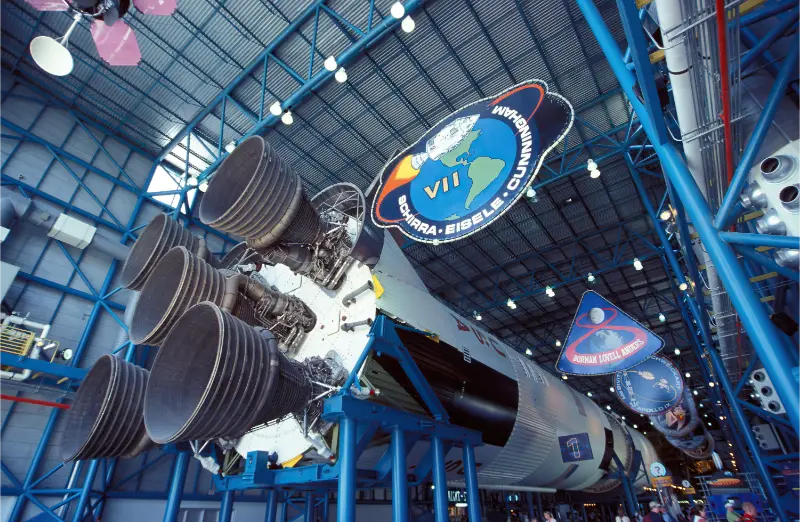
    Kennedy Space Center Visitor Complex is a destination in itself. Visitors can see major spacecraft displays, exhibitions connected with astronauts and missions, and presentations that put American spaceflight into context. Certain experiences involve special-effect theaters, transport to areas within the visitor program, and timed presentations. Someone who has followed space exploration for decades may find that seeing an actual spacecraft is worth a full day and the drive from Orlando. A teenager interested in engineering may also appreciate the difference between a museum display and hardware designed for flight.

    Kennedy Space Center Exploration Sign

    Orlando Science Center is more of an urban learning museum. Instead of focusing primarily on rockets, it provides hands-on exhibits and educational programming that may cover natural sciences, technology, discovery, and age-specific activities. The appeal is the chance to explore different subjects with less investment in a long transfer. A young child can be fascinated by a participatory display even when they would not appreciate the historical importance of a NASA mission. Neither approach is superior: one offers a distinctive place in Florida’s space story, and the other allows a broader, more flexible scientific visit.

    The first decision is transportation

    Kennedy Space Center is not in central Orlando. It is on Merritt Island, near the Space Coast, and normally requires a substantial road journey from Orlando hotels. Exact travel time depends on your starting point, traffic, weather, and route. Visitors without a rental car should investigate a reputable organized transfer or a private ride before buying admission. Ordinary local public transit from an International Drive hotel does not offer the same convenience as going to a city museum. The return journey matters too, especially if the party has spent many hours walking.

    Orlando Science Center is in Orlando’s Loch Haven area. A short ride from many urban neighborhoods can make it a practical option for someone who is already staying in the city, although guests near Disney or the outer tourist districts must still calculate their own travel. Compare parking and rideshare expenses, not only the distance shown on a map. A family with car seats, a mobility aid, or a baby who sleeps in a stroller will appreciate a door-to-door plan. Choosing the closer museum can protect an entire afternoon for swimming, a playground, or dinner.

    Which option is best for preschoolers?

    Young children generally respond best to experiences they can manipulate, watch at close range, or revisit. Orlando Science Center often suits this style of learning, although parents should always check which galleries and programs are offered for the child’s age on the intended date. A smaller museum outing allows a family to stop for lunch and leave when a toddler is ready. It is less important to maximize admission value than to match a child’s energy and attention. Many families would rather enjoy two hours of discovery than six hours of repeated requests to be carried.

    At Kennedy, a preschooler may be thrilled by the size of a rocket and the spectacle of spacecraft but lose interest in extended films, talks, or historical detail. Parents should identify a few visual highlights and offer simple explanations: this machine carried people into space, these suits protected astronauts, and these structures helped launch missions. Do not assume every simulation is appropriate for young children or every bus or theater experience welcomes strollers. Verify age, safety, and transfer information directly. A child can have a worthwhile visit without completing the full adult itinerary.

    Which option is best for school-age children and teens?

    Children beginning to study planets, physics, and engineering may get immense value from Kennedy, particularly if they have read or watched material about spaceflight beforehand. Encourage them to choose questions to investigate: How is a spacecraft protected during launch? Why are spacecraft shaped differently? What does an astronaut need for living in orbit? Seeing real objects makes these questions more concrete. Older teens may enjoy discussing engineering tradeoffs and the historical context of missions. However, do not treat one child’s enthusiasm as a reason to force younger siblings through every presentation.

    Orlando Science Center may be the better day for children who like to experiment, move between topics, and ask questions not limited to astronomy. Its broad scope can engage siblings with different interests without dividing the family between separate destinations. Encourage children to explain what they discovered rather than rushing to the next display. Some experiences or special programs may have their own schedules or fees, so consult the current calendar. A child who likes biology, coding, chemistry, or general hands-on exploration may prefer this museum even if adults assumed a rocket attraction would be more impressive.

    At a glance: practical differences

    What mattersFirst optionSecond option
    FocusSpaceflight history and spacecraftBroad hands-on science learning
    GeographySpace Coast near Cape CanaveralLoch Haven area in Orlando
    Travel from OrlandoSignificant road journeyGenerally shorter city transfer
    Young childrenChoose a few visual highlightsExplore interactive exhibits at own pace
    Launch viewingNot guaranteed by admissionNot a space launch venue

    Older travelers and mobility considerations

    Kennedy is large, and the scale of the experience can translate into a tiring visit. The official visitor complex provides accessibility information about wheelchair and scooter rentals, captioning, hearing assistance, accessible restrooms, and attractions that involve motion or transfer requirements. Reservations and availability may differ for various services. If a guest wants to avoid a launch simulation or prolonged standing, identify other exhibits that provide a full day of interest. A visitor in their eighties may enjoy spacecraft history just as much as a younger traveler, but a slow-paced route and a comfortable meal make the difference.

    At Orlando Science Center, the opportunity to concentrate on selected galleries and leave more easily can be attractive to visitors who prefer shorter outings. Confirm elevator routes, drop-off areas, accessible parking, and available seating for any planned program. Do not equate a building described as accessible with every exhibit being equally usable for every guest. If someone has limited vision or hearing, call ahead about descriptive or captioned experiences and assistance. The best plan allows people to participate actively, not merely sit while other family members explore.

    Tickets and the cost of the whole day

    Admission prices and special offers change, and package descriptions can be confusing. Kennedy tickets may have optional add-on experiences, while organized transport from Orlando may be sold separately. Orlando Science Center may offer special exhibitions or events with additional pricing. Compare the exact calendar date and what the basic ticket includes. A visitor who books an expensive transport package for Kennedy without checking departure points could end up with an early pickup and a very long day. Ask whether cancellations, schedule changes, and transport delays are covered.

    Calculate the real household total: tickets, any taxes and online fees, parking, driving fuel or transfer, food, and extras you actually want. For a family of five, a comparatively modest difference in per-person admission may become significant, while a long rideshare journey can change the result entirely. A family already visiting the Space Coast might find Kennedy more logical because the transfer is shorter. An Orlando family seeking a half-day museum often gets better value by choosing the science center and using the saved travel time for another activity.
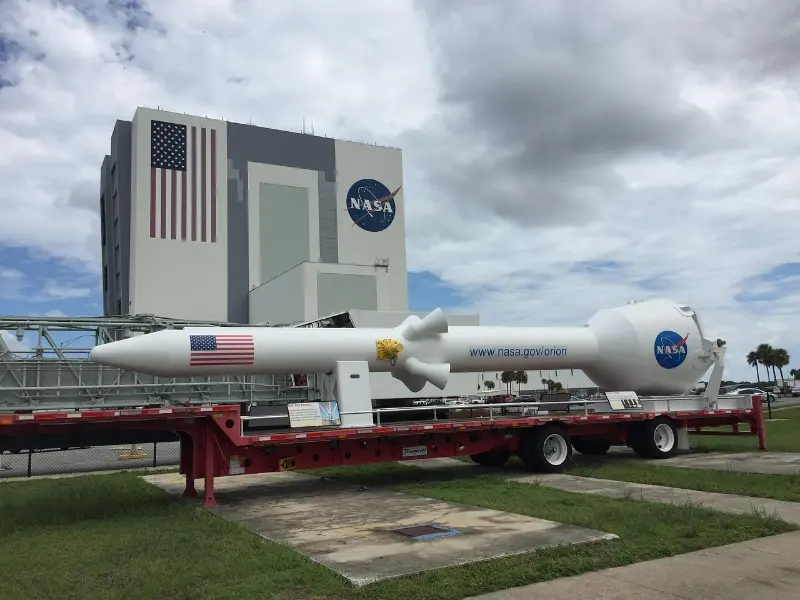
    NASA Kennedy Space Center Spacecraft Hangar

    Is a rocket launch guaranteed?

    No. A launch is never guaranteed simply because you are visiting Kennedy Space Center. Mission dates and launch windows can change for technical reasons, weather, safety, or operational priorities. Public viewing arrangements also vary by mission; a visitor complex ticket does not automatically provide the best available viewing site or a special launch package. Make a Kennedy day worthwhile on the strength of its permanent exhibitions. If a launch happens during the trip and viewing is possible, treat it as an additional benefit rather than the foundation of a nonrefundable vacation plan.

    The other useful distinction is that the visitor complex is not the entire operational NASA site. Some areas are restricted, and transportation within visitor experiences follows official routes and policies. Do not assume you can drive through launch areas or freely access a viewing location mentioned in an old blog post. Kennedy’s official launch schedule and visitor information should be consulted close to the trip. For those who mainly want to see a launch, separate planning about public viewing locations, weather, traffic, and safe parking is necessary.

    Weather and the ideal time of day

    Florida’s Atlantic coast can bring heat, rain, coastal wind, and afternoon storms. Kennedy offers substantial indoor exhibition time, but some movement between experiences occurs outdoors and certain transport programs may be affected by operating conditions. Bring water, a hat, rain protection, and appropriate footwear. It is worth arriving with a short list of priority indoor displays rather than attempting to cross the complex repeatedly during peak heat. Families should schedule meals according to the youngest guest’s routine, not only according to the next presentation.

    Orlando Science Center can be a strong choice for a rainy or very hot day, but that also makes it appealing to other families who abandon outdoor plans. Popular school holidays and special events can affect attendance. Review the museum’s opening days and timed programs before departing. If rain is likely, allow extra travel time; driving around Orlando can be slow during a heavy thunderstorm. Neither destination should be sold as a guaranteed crowd-free refuge. A flexible start and a list of preferred activities work better than attempting to predict exactly where everyone will be at midday.

    A sensible Kennedy itinerary

    Begin with orientation and the exhibitions that matter most to the group. If the visitor bus tour or a scheduled presentation is central to the visit, investigate its current operating arrangements and queue requirements early rather than assuming unlimited departures throughout the day. Plan substantial time for the major spacecraft displays and allow teenagers to read the interpretive material without rushing. Schedule a proper lunch and an indoor rest. Families with preschoolers can choose fewer high-impact exhibits and depart before fatigue turns the return drive into a struggle.

    Before leaving, check whether the group has enough energy for one final exhibit or whether a relaxed meal on the Space Coast would be more enjoyable. Do not reserve a fixed evening attraction back in Orlando that depends on ideal traffic. If the day includes a planned beach stop, consider the additional changing and safety requirements; the beach is not simply a roadside photo opportunity. Travelers with medical equipment, wheelchairs, or sensory needs should confirm the access requirements of any special attraction rather than assuming it is included with general entrance arrangements.

    A sensible Orlando Science Center itinerary

    For the science center, begin by choosing two or three exhibits that appeal to different members of the family. Let children spend real time interacting with displays; learning often happens through repetition rather than seeing every room. Check the schedule for any presentation you definitely want to attend, but otherwise avoid overprogramming. A lunch break can divide the visit naturally into a more active morning and a quieter afternoon. If young children become overwhelmed, use a less crowded area or finish early rather than turning the visit into a forced march.

    The rest of the day can include a nearby park or garden if the weather cooperates, but verify the walking distance and suitable parking before promising that combination. Orlando has interesting neighborhoods beyond the resort corridors, and the museum can make a good anchor for exploring that side of the city. If driving from a theme-park hotel, plan the return before evening congestion. A shorter day is often a welcome change from several consecutive resort attractions and helps younger children recover for the following morning.

    The real recommendation

    Choose Kennedy Space Center if spaceflight, astronauts, rocket engineering, and iconic American missions are a major interest and your group is comfortable devoting a substantial day to travel and exploration. Choose Orlando Science Center if you want broad science learning, hands-on opportunities, a more flexible outing, or less time in the car. Children do not need to be a particular age to benefit, but their attention span and comfort should determine the schedule. The same principle applies to adults with mobility limitations and to older relatives.

    If the decision remains close, review each site’s current exhibit list with your group and ask which three experiences they would miss most. That simple exercise usually makes the right answer clear. Confirm operating hours, special-program ticket terms, transport costs, and accessibility requests before booking. The most rewarding science day is not necessarily the largest or most expensive; it is the one that turns curiosity into an enjoyable shared experience without exhausting everyone involved.

    Frequently asked questions

    Can you visit Kennedy Space Center and Orlando Science Center in one day?

    Technically possible under some schedules, but not a good plan for most families. Kennedy deserves ample time and involves a separate road journey from Orlando.

    Does Kennedy Space Center admission guarantee a launch viewing?

    No. Mission schedules, launch windows, viewing availability, and ticketed packages change. Plan around the exhibitions rather than assuming a launch.

    Which museum is easier with a toddler?

    Orlando Science Center may offer a more flexible, hands-on, shorter visit. Kennedy can still work with a child who enjoys rockets if adults adapt the day to their stamina.

    Official information to check before your trip

  • Florida Museum Ships and Maritime History: How to Visit Real Ships in Tampa and Jacksonville

    Florida Museum Ships and Maritime History: How to Visit Real Ships in Tampa and Jacksonville

    Florida's maritime history is not limited to pirates, fishing boats and cruise terminals. Visitors can board preserved vessels, explore the spaces where crews once worked and learn how ships carried cargo or performed military duties. Two especially interesting options are the American Victory ship in Tampa and the USS Orleck in Jacksonville. They are not conventional museums with wide, level galleries: their historical character is part of the attraction and part of the challenge. Narrow routes, stairs, low clearances and waterfront weather may make a shipboard tour unsuitable for some visitors. This guide explains how to select a vessel, plan a comfortable visit and learn from maritime history without promising that everyone can access every deck.

    ChoiceBest fitCheck before visiting
    TampaAmerican VictoryMerchant ship and maritime supply history
    JacksonvilleUSS OrleckFormer Navy destroyer exhibits
    Mixed-mobility partyCall both museumsHistoric stairs and gangways

    What makes a museum ship different from a land-based museum?

    When a historic vessel becomes a museum, it retains much of the layout created for sailors rather than tourists. Door thresholds can be high, ladders may be steep, passageways narrow and the distance between stops unexpectedly tiring. That gives the experience an authenticity no display case can match. You may see how limited the available living space was, how machinery was placed and why daily tasks demanded cooperation. Yet it also means that a stroller is rarely practical aboard and that visitors who cannot climb may be unable to reach substantial parts of a tour. Before arranging transportation, read the museum's access statement, identify which decks are included and ask whether a shore-side exhibit is available. The attraction is also different from a sightseeing cruise: a stationary museum ship generally does not depart on a passenger excursion. Children should understand that they are visiting a protected historic object with boundaries, not a playground or an operating warship. A calm visit rewards curiosity much more than racing through compartments.

    The American Victory ship in downtown Tampa

    The American Victory ship is a preserved World War II-era merchant vessel and a floating memorial and museum in Tampa. Its story offers a way to discuss the role of merchant mariners, shipbuilding, wartime supply lines and the civilian and military work of keeping materials moving. The setting is particularly useful when your family is also visiting attractions around the downtown waterfront. However, treat it as a separate visit with its own ticketing and operating hours. Check the official museum website for currently available tours, seasonal interruptions and any work being done aboard. Unlike a modern cruise ship, a cargo vessel was not designed for broad corridors, escalators and family entertainment decks. Ask staff which areas are open that day and how demanding the onboard route is. If you have a small child who needs a stroller or a companion who cannot negotiate steep steps, confirm what can be experienced from the accessible areas before buying a ticket. The nearby waterfront can provide an alternative for part of the group while others tour.

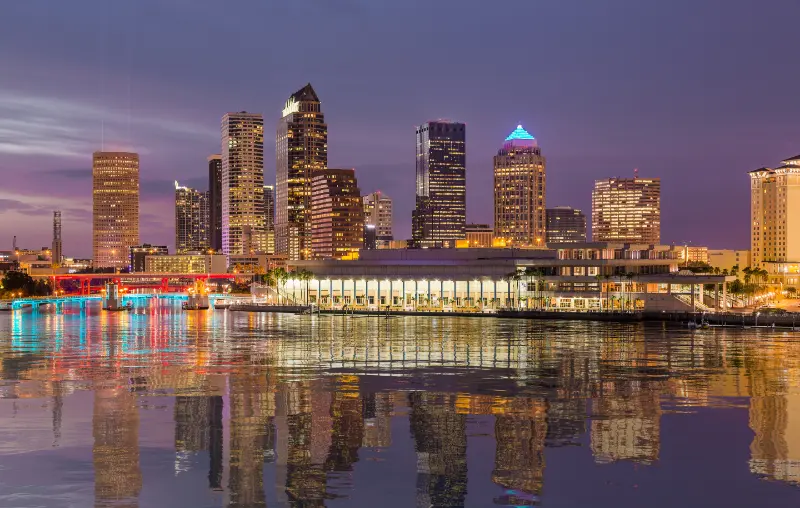
    Downtown Tampa Skyline Illuminated at Night

    USS Orleck in Jacksonville

    USS Orleck is a former U.S. Navy destroyer preserved as a museum in Jacksonville. The Florida Historic Naval Ship Association manages visitor information through its official site. A naval vessel offers a different story from a merchant ship: combat operations, crew duties, weapons systems and the routines of life at sea are central subjects. The vessel also presents different physical constraints. If the group includes younger children, discuss in advance that some exhibits concern warfare and military service rather than only the mechanics of a ship. For a history-loving teenager, it can be an opportunity to connect textbook events to a real environment. For a grandparent or a visitor with restricted mobility, practical details may be decisive: where does boarding begin, are steps unavoidable, is there a seated or dockside interpretation and how long does the recommended circuit take? Museum arrangements, mooring locations and open sections can change. Use the museum's official directions rather than an old photo showing a former berth.

    Choosing between Tampa and Jacksonville

    The decision is largely about location and historical interest. If you are vacationing around Tampa Bay, the American Victory ship makes sense without a long journey. Jacksonville travelers have the USS Orleck nearby. Driving from one city to the other only for a museum ship will consume much of a day, especially when stops, traffic and a lunch break are included. The ships also tell different stories: one emphasizes merchant service and supplies, the other naval operations. Families interested in commercial shipping may prefer the merchant vessel. Visitors interested in destroyers and naval history may lean toward USS Orleck. There is no need to turn this into a contest about which is more impressive. Start by deciding whether your group can physically and comfortably use the available route. Then compare admissions, open hours, proximity to the hotel and the amount of time the youngest person can stay engaged. A smaller, well-timed visit beats a longer excursion that leaves half the group waiting outside.

    What children can learn on board

    Museum ships make abstract ideas concrete. Why are passageways narrow? Why do vessels need watertight compartments? Where did crew members sleep, prepare food and organize supplies? How did they communicate during an emergency? Choose two or three questions rather than expecting young children to remember every display. A school-age child may enjoy locating a kitchen, sleeping quarters or a bridge if those areas are open. Teenagers may be interested in the jobs of merchant mariners, wartime logistics or the technology of a destroyer. Ask guides where the displays are most relevant to your child's curiosity and remember that historic exhibits can include subjects that younger visitors find frightening. A prepared adult can explain military history honestly without overwhelming children with details. If a child becomes anxious in enclosed compartments, leave that section and move to a more open area when permitted. Learning does not require completing the entire route. Take a few pictures where allowed, then discuss what surprised everyone afterward.

    Access needs deserve a specific conversation

    The word 'accessible' is not detailed enough for a shipboard attraction. One visitor may need wheelchair access to the gangway; another can walk independently but cannot use ladder-like steps; someone else may have vertigo, impaired balance or reduced stamina. Ask the museum about the exact boarding path, slope of any gangway, available railings, the location of bathrooms, seating and areas that require ladders. Conditions may differ by water level and weather. If you use an assistive device, explain its dimensions and ask whether access is possible without relying on other visitors to carry it. Historic ships frequently have preservation constraints that limit structural alterations. Do not interpret a lack of access to some compartments as a reason to abandon all maritime learning. Ask about photographs, interpretation panels, educational materials or nearby land-based museums that tell related stories. Families traveling together can divide briefly, with a clear meeting place and estimated time, so nobody feels forced to attempt an unsafe staircase.

    Weather, heat and clothing

    A museum ship is partly an indoor experience but not a climate-controlled building throughout. Metal surfaces can become hot in direct sun; decks can be slippery after rain; enclosed spaces may feel warm or stuffy. Check the weather and the museum's notices, especially during summer thunderstorms or periods of tropical weather. Closed-toe shoes with reliable traction are better than flip-flops for gangways and stairs. Loose bags can make tight corridors awkward; carry the minimum you need, while keeping medications and drinking water where permitted. Hats are helpful on open decks but may need to be removed or secured in windy conditions. Avoid visiting immediately after a heavy restaurant meal if anyone is prone to nausea in enclosed spaces. Although the ship may not move much, a historic setting with steep routes can challenge balance. If thunderstorms approach, follow staff instructions rather than standing on an exposed deck to finish taking photographs.

    Add a sensible waterfront experience

    The best companion activity is often a short, relaxed waterfront walk or a casual lunch rather than another major museum. In Tampa, the downtown district provides choices for a post-visit break, but check walking distances and bridge crossings before assuming everything is adjacent. Around Jacksonville, look at the location of the current museum berth and identify an appropriate public riverside space. The purpose is to compare the ship's working environment with the modern waterfront, not to fill every hour with sightseeing. If your group includes someone who cannot board, plan an enjoyable parallel stop that does not require them to wait in a parking lot. Agree on when to meet and maintain phone contact. A ship museum can leave adults and children with more questions than answers; lunch is a good time to discuss the crew's daily routines or how cargo moved between ports. That kind of conversation gives the visit more value than an extra rushed attraction.

    Ticketing, group tours and special events

    Use the official operator's site for admission, guided-tour availability and upcoming events. Historical vessels occasionally close sections for maintenance, educational visits or special programs. A ticket that includes a self-guided visit may not guarantee access to every machinery space. Check whether advance reservations are needed for a school group, large family or visitors requiring assistance. Confirm the refund and weather policy before choosing a nonflexible schedule. Military or senior discounts may exist, but age thresholds and documentation can change; never assume an advertised rate applies to all visitors. If you book a private guide, specify the ages and mobility needs of the group so the route can be discussed beforehand. Travel insurance is not a substitute for checking these details. For cruise passengers visiting a ship museum during a short port call, make sure transportation and return deadlines leave generous margins. A fascinating historic ship is not worth missing your onward departure.

    A one-page planning checklist

    First, choose the ship nearest your Florida base and confirm the exact address. Second, check its opening calendar, whether tickets are required and which sections are available. Third, discuss stairs and boarding requirements with everyone traveling; no one should feel pressured to proceed through a difficult space. Fourth, reserve suitable parking or transport and allow a few minutes to orient yourselves on the dock. Fifth, pack practical shoes, water and minimal bags while following site rules. Finally, decide whether this is a one-hour introduction or a longer history visit, and have a nearby break in mind. If the museum cannot accommodate someone in your group, consider an alternative maritime exhibition rather than improvising an unsafe route. A preserved ship is most memorable when its history is appreciated at a comfortable pace and the practical demands are understood in advance.

    FAQ

    Do the museum ships take passengers on cruises? Normal museum admission is for visiting a preserved vessel. Do not assume a sailing is included; check the operator for any separately advertised event.

    Can a baby or stroller go aboard? The route may contain ladders and narrow spaces. Contact the museum directly about age, stroller and boarding restrictions.

    Which ship should I visit from Orlando? Either is a substantial trip. Choose based on your broader route and be realistic about driving time.

    Are museum ships accessible to wheelchair users? Access varies significantly by vessel and area. Ask for a precise description of gangways, decks and alternative interpretation before paying.

    Official resources

  • Florida Maritime Museums Beyond Boats: Coastal Stories in St. Augustine, Key West and Cortez

    Florida Maritime Museums Beyond Boats: Coastal Stories in St. Augustine, Key West and Cortez

    Florida's coastline has been shaped by shipbuilding, fishing, navigation, trade, storms, tourism and the lives of communities who depended on the water. A maritime museum helps connect these subjects without requiring visitors to climb aboard a moving vessel or book a boat excursion. Exhibits may include shipwreck artifacts, lighthouse equipment, photographs of working waterfronts and demonstrations of how wooden boats were made. For families, the objects make history tangible; for older travelers, they provide a comfortable alternative to a long, exposed harbor cruise; for curious adults, they reveal how much happened on the water before modern beach resorts appeared.

    Three contrasting places can anchor a Florida maritime itinerary: the St. Augustine Lighthouse & Maritime Museum, the shipwreck heritage museums of Key West and the Florida Maritime Museum in the fishing village of Cortez. They are far apart, so they belong to different regional holidays rather than one hurried afternoon. There is also a crucial current restriction: the Cortez museum's historic schoolhouse is temporarily closed for building rehabilitation, although its grounds and some events may still be accessible. Check that status directly instead of relying on an older guide describing normal indoor gallery hours.

    At a glance: which option is right for you?

    OptionBest forCheck before going
    St. AugustineLighthouse and maritime archaeologyTower steps optional
    Key WestShipwreck collectionsSeparate tickets and crowded streets
    CortezFishing-village heritageIndoor museum closed for restoration

    What counts as a maritime museum?

    A maritime museum may concentrate on the practical life of people who worked at sea: knots, navigation tools, ship design, fisheries and storms. Another may explore famous shipwrecks and the trade that moved goods between continents. A lighthouse museum combines architecture, navigation and the lives of keepers, while an archive or conservation lab can reveal how artifacts are preserved once recovered. These themes intersect, but a day in a working fishing village feels different from an afternoon exploring a reconstructed wrecking scene in a tourist district.

    Before purchasing a ticket, identify what the admission actually includes. Some attractions offer a tower climb, guided talk or extra demonstration; others are primarily self-guided indoor displays. Accessibility can vary between ground-floor exhibits, preserved historic rooms, tight stairways and elevated viewpoints. A person unable to climb steps should not have to skip maritime history altogether. The quality of exhibits and interpretation matters more than reaching the highest platform, and an official museum map usually helps families choose the most comfortable route.

    St. Augustine Lighthouse & Maritime Museum

    St. Augustine's lighthouse complex provides far more than a climb up a tower. The museum's exhibits describe local shrimping, shipwreck archaeology, lighthouse keepers and coastal life through changing centuries. Collections are spread across the keeper's house, grounds, Maritime Archaeology & Education Center and other historic structures. Visitors can learn about the city's maritime history and the people who built and operated vessels without committing to the tower's 219 steps. That distinction matters for families with very young children or adults with mobility concerns.

    The official museum describes a 'View from the Top' video experience, hands-on learning for children and conservation work visible through its artifact facilities. The tower may be the landmark in photographs, but a visit focused on ground-level exhibits can still be worthwhile. Confirm which buildings, demonstrations and children's activities are open on your date; a heritage boatbuilding demonstration, for example, should not be promised as running every hour. The museum is on Anastasia Island, so allow time for local traffic and parking if you are staying in downtown St. Augustine.

    How to make the lighthouse museum work for different ages

    For preschoolers, choose a short loop through hands-on exhibits or the maritime-themed play area rather than demanding quiet attention through every historical label. Older children can investigate how lenses work, why a keeper monitored weather and what shipwreck objects tell archaeologists about trade. Teenagers may appreciate the less romantic elements of a working port, including how maritime industries supported and exploited labor. An adult history enthusiast can linger over conservation displays while another companion enjoys the grounds. A split-and-rejoin plan can prevent frustration in a mixed-age group.

    If someone wants to climb the tower, confirm the rules and make sure the rest of the group has a comfortable alternative and meeting point. Tall stairs in a historic lighthouse are not comparable to a modern elevator. People with heart, knee or balance concerns should judge their own limitations and seek appropriate advice, rather than trying to keep up with enthusiastic relatives. Photography may be restricted in certain exhibits, and staff instructions take precedence over social-media examples. Consider combining the museum with a relaxed coastal lunch rather than another strenuous attraction on the same day.

    Key West: shipwreck history without a day at sea

    Key West's history includes a maritime economy built around salvage, navigation and the dangerous reefs surrounding the Florida Keys. Museums devoted to shipwrecks help explain why finding and recovering cargo was once central to the island's identity. Depending on the venue, visitors may see artifacts, reconstructed scenes and interpretation about life in the era of sailing ships. The Key West Shipwreck Treasure Museum emphasizes the nineteenth-century wrecking industry, while the Mel Fisher Maritime Museum presents artifacts associated with maritime archaeology and recovered shipwrecks.

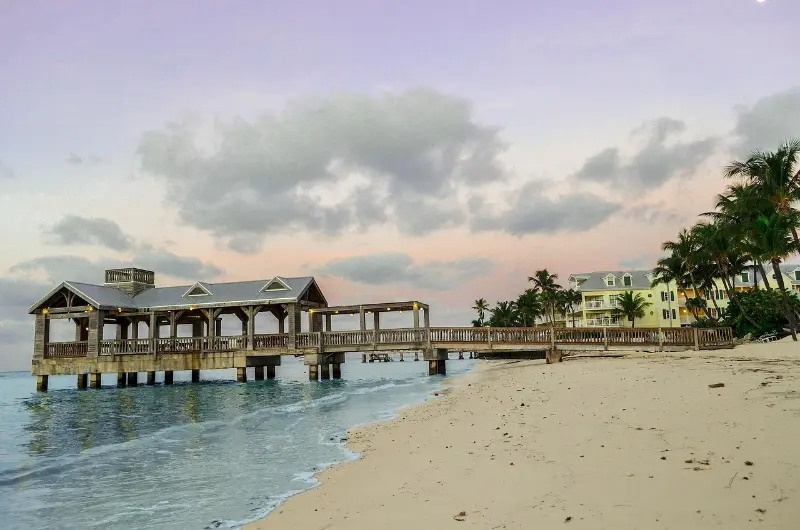
    Key West Wooden Pier and Calm Water

    These are separate institutions with different approaches and admission policies. The story of a treasure recovered from the sea can be exciting, but good interpretation also asks who owned the cargo, whose labor supported the trade and what responsibilities accompany recovering historic objects. An older child can compare the two museums' presentations; a history-minded adult may prefer a slower visit to a collections-focused institution. Do not assume one entry ticket includes both sites, and check the accessibility of upper floors or observation areas before purchasing.

    Making a Key West museum afternoon manageable

    Key West is compact in some areas but can feel hot and crowded, particularly when several cruise ships are in port. Plan museums around midday shade, restroom breaks and a simple route rather than walking back and forth across Old Town. If you are arriving by car from the Upper Keys, remember that the drive itself can consume several hours; a full museum itinerary after arrival may be unrealistic. For a cruise stop, check the ship's all-aboard time and avoid a museum visit that depends on a long queue to reach an optional rooftop viewpoint.

    A family with small children might choose one shipwreck-focused museum, leave time for an ice cream or shaded waterfront stop and then return to the hotel. Adults who enjoy archives or artifacts can spend longer comparing displays. Read the signs rather than treating historical objects solely as treasure props. The Caribbean and Gulf routes around Key West connected many communities and economies, and a balanced interpretation can reveal both fascinating seamanship and human hardship. The museums are a starting point for those conversations.

    Florida Maritime Museum in Cortez: verify closure before traveling

    The Florida Maritime Museum in Cortez preserves and shares the fishing and maritime heritage of the Gulf Coast, with an emphasis on the people and skills of the traditional working waterfront. Its historic 1912 schoolhouse has housed exhibits and educational programming. However, the museum's current official website states that indoor galleries are closed for necessary building rehabilitation. It also reports that the grounds remain accessible and that some programming and events continue. These are different experiences. A traveler should not book a day expecting the building's normal galleries to be open while the renovation notice remains in effect.

    If you are visiting Anna Maria Island or Bradenton, check the museum's event calendar and contact the organization to ask what is genuinely available. Cortez itself remains an interesting community with commercial fishing history, but treat docks, fish houses and working yards as active workplaces, not public photo sets. Avoid entering private property or blocking boats and vehicles. A short visit to a public event may be meaningful; driving for hours to see an indoor exhibit that is closed would not. The distinction protects both visitor expectations and the work of local preservation staff.

    Working waterfront culture versus tourist displays

    A museum often presents historical tools after their active use has ended. A working waterfront still contains boats, repair shops, commercial gear and people earning a living. When visiting Cortez or another fishing town, observe from public places and respect the difference between an educational attraction and someone else's workplace. Ask permission before photographing identifiable workers closely, and never walk onto docks or vessels without an invitation. The goal is to understand how coastal communities adapted to changing markets, fishing practices and storms, not to treat residents as a living exhibition.

    Children can connect museum objects with waterfront observation by identifying features like hull shape, nets or docks from a safe vantage point. Adults can explore how shipbuilding knowledge passed between generations and why fishing economies need harbors, cold storage and transportation links. Marine conservation is also part of the story: healthy estuaries and responsible resource management help determine the future of fishing communities. This perspective makes a museum visit more meaningful than a simple collection of boats and dramatic shipwreck stories.

    Choosing the best museum for your interests

    If a child is fascinated by lighthouses and wants hands-on activities, St. Augustine has a useful combination of indoor exhibits and grounds. If an adult is interested in shipwreck discoveries and archival collections, the Key West maritime museums may be a better fit. If your goal is understanding the Gulf Coast's fishing heritage, Cortez has a compelling history, but the closure means you must confirm the exact program before traveling. Location should also influence your choice; there is no sense in driving from Miami to St. Augustine just for a single museum visit on a short holiday.

    A visitor using a wheelchair should ask not only about building entrances but also the actual exhibits included with admission. A tower climb, historic staircase or uneven outdoor path may be optional rather than essential. Families with toddlers should look for changing facilities and a short route that allows children to move between exhibits and open spaces. Teenagers might appreciate archaeological stories or the ethics of recovering historic objects. The best choice depends on the people in your group, not a generic ranking.

    Plan costs and opening times carefully

    Museum tickets can involve separate charges for tower climbs, special tours, guided talks or seasonal events. Some institutions offer reduced tickets for children, seniors or service members, but eligibility and online booking rules change. Always use the official ticket page for your travel date, not an old price table. Check whether a timed entry is required, whether re-entry is allowed and whether the museum closes earlier on holidays. Historic sites sometimes use different hours for individual buildings, and a gallery can close for preservation work without the entire site shutting.

    Transportation is part of the budget. St. Augustine's lighthouse is not in the center of the historic district, and parking patterns change during busy weekends. Key West has limited parking and can be easier to explore on foot or using suitable local transportation if you are already staying in town. Cortez can involve bridge congestion when traffic from the barrier islands is heavy. Keep an alternate attraction in mind for each region, so an unexpected closure does not waste the day. Supporting a museum should never require ignoring posted restrictions or visiting a closed construction site.

    A St. Augustine day with maritime history

    Begin with the lighthouse complex during its operating hours, when the group is comfortable walking through the outdoor grounds. Choose two or three main exhibits, such as the shipwreck archaeology displays and keeper's house, then consider the tower only for those who want and are able to climb. After lunch, explore public waterfront viewpoints or a small part of the historic town. This creates a logical story: navigation and shipwrecks in the morning, the city's broader port history later. It is a manageable day for adults and school-age children.

    For younger visitors, schedule more play and fewer exhibits. For seniors, identify seating and restroom locations in advance. If visiting during the warmer months, the indoor elements can provide useful relief but outdoor waiting areas remain hot. Check for lightning before walking to an exposed tower. A photograph of the lighthouse is memorable, yet the more interesting lesson may come from a story about the keeper's family or a recovered artifact whose purpose the children had to figure out.

    An easy Key West history afternoon

    Stay within a compact part of Old Town and choose one museum as your main activity. Confirm the current admission and any recommended visiting time, then plan a second stop nearby that does not demand another long tour. If the group includes someone with limited stamina, do not assume that short blocks between attractions always mean effortless walking; pavements, curb transitions, heat and crowds can add up. A seated lunch and indoor museum exhibits can make the afternoon more relaxed than an exposed waterfront walk during peak sun.

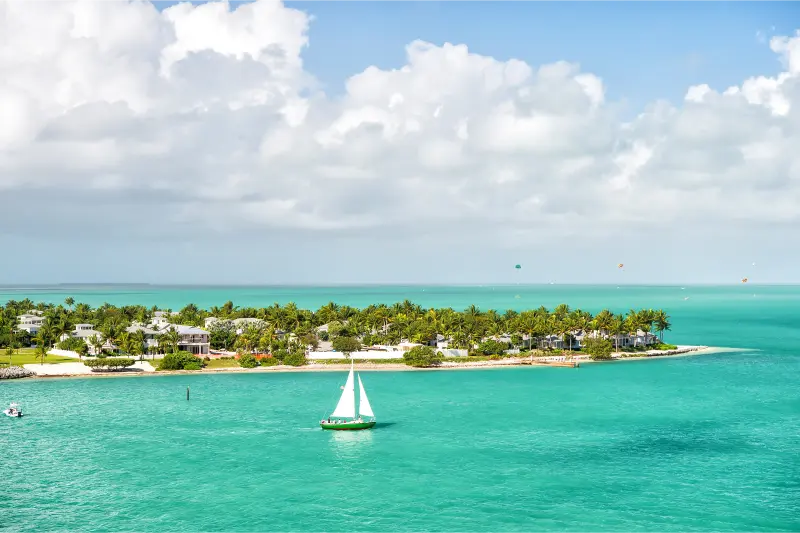
    Key West Florida Harbor and Sailboat

    If you are a dedicated maritime history fan, visit the second museum on a different morning or later in the stay. Compare the way each tells the story of salvaging, trade and underwater archaeology. Avoid purchasing tickets from unofficial sellers if you cannot verify the venue and refund conditions. Keep digital reservations accessible offline, particularly if mobile service is unreliable. Let children choose one artifact to remember, and talk about why that object mattered to the people who used it rather than only its monetary value.

    Responsible history travel

    Shipwrecks and fishing histories include uncomfortable as well as inspiring stories. Trade connected distant peoples, and some ships carried people in bondage or goods produced by exploitative labor. Fishing communities experienced boom times, changing regulations, devastating storms and struggles to preserve their identity. Good museum visits make space for that complexity. Ask whose experiences are represented and whose voices may be missing, and resist treating historic events as entertainment without context.

    Respect conservation rules inside galleries. Flash photography, food and touching fragile artifacts can damage exhibits. Follow instructions from staff and keep children's hands away from cases unless a display is explicitly hands-on. If a museum is closed for restoration, seek public lectures or online resources rather than trying to gain access to the building. The best contribution a visitor can make is to learn carefully and support the institutions that protect these histories for future generations.

    FAQ

    Can I enjoy the St. Augustine Lighthouse museum without climbing the tower? Yes. The official museum lists maritime exhibits, a keeper's house, ground-level activities and interpretive alternatives to the tower climb.

    Is the Florida Maritime Museum in Cortez currently open? Its official website currently reports temporary closure of indoor galleries for schoolhouse rehabilitation. Grounds and some events may still be available; check before traveling.

    Are Key West's shipwreck museums suitable for children? Many children enjoy the artifacts and storytelling, but check individual exhibits, accessibility and the family's attention span before buying tickets.

    Do these museums offer the same admission ticket? No. They are separate institutions, often in different cities. Check each venue's official ticketing information and policies.

    Official resources

  • Florida Museum Road Trip: Eight Days of Art, Science and History From Orlando to Miami

    Florida Museum Road Trip: Eight Days of Art, Science and History From Orlando to Miami

    A vacation organized around museums can reveal Florida’s identity just as vividly as its beaches and theme parks. Science centers explain landscapes and space exploration; art collections show how artists interpreted their worlds; museums of local history ask visitors to notice the communities beneath famous skylines. Museums also provide welcome indoor hours when summer heat or thunderstorms make outdoor plans uncomfortable. This eight-day route begins in Orlando, continues through Tampa and Sarasota, and finishes with Fort Lauderdale and Miami. It is a driving itinerary rather than a claim that every museum can be reached on foot. Each day recommends one major institution plus optional neighborhood time, so travelers of different ages and interests can adapt the pace.

    First choose the kind of museum traveler you are

    Families with young children often value hands-on exhibits, restrooms and places to eat nearby. Teenagers may prefer science demonstrations, photography or contemporary art; adults interested in history may want time to read archival interpretation. Older travelers might prioritize seating, hearing support and accessible routes. Before booking, ask each person to pick a theme: science, visual arts, local history, natural history or performance culture. This makes choosing between several museums easier when time is limited. A good museum vacation is not a contest to enter the greatest number of buildings, because each institution has its own story and deserves more than a rushed walk-through.

    Research museum hours carefully. Many close on selected weekdays, and special exhibitions, guided visits or planetarium shows may have additional reservation requirements. Never assume an event advertised months ago is still running. Look at the official visitor page for bag rules, stroller access and any restrictions on flash photography. If a traveler uses a mobility device or requires sensory accommodations, confirm the specific facilities rather than relying on a broad accessibility logo. Museums can be noisy during school visits and extremely quiet at other hours; choosing the right time can change the experience substantially.

    Day 1: arrive in Orlando and leave time for recovery

    Arrive at your Orlando accommodation and explore a compact neighborhood only if energy permits. Downtown or the Loch Haven cultural area can work for travelers interested in museums, but check actual parking and lodging locations. Airport arrival, car collection and hotel check-in are sufficient activities for the first day. If traveling internationally, allow for fatigue and avoid buying nonrefundable museum tickets that depend on a punctual flight. Choose an easy local meal and use the evening to review the next day’s exhibition timetable and forecast.

    For families, give each child a notebook or small camera to record one interesting detail per museum. This is more manageable than asking them to read every display. Adults may create a different challenge, such as looking for unexpected connections between Florida’s ecology and its history. Travelers sensitive to crowded galleries can choose an opening-time visit and plan a quiet lunch. Whatever the approach, decide in advance when to stop: two or three attentive hours may be enough, especially on the first full day after travel.

    Day 2: Orlando Science Center and curiosity-led exploration

    Orlando Science Center provides a strong beginning because it combines interactive learning with exhibits for different ages. Its official exhibit directory covers areas devoted to nature, technology, engineering, dinosaurs and younger children’s discovery. Choose two or three halls that interest your group and check live demonstrations or films upon arrival. Children may want to repeat the same experiment several times, which is a legitimate way of learning. Teens can explore engineering and science challenges with less adult direction, while adults may appreciate the links between exhibits and Florida’s natural environments.

    The visitor information explains parking, building access and planning. Review it for current admission and special programming. A planetarium-style film or science presentation may have timed seating; do not promise a show until the day’s timetable is confirmed. After lunch, enjoy a small outdoor break if weather allows, then return to your hotel. Avoid adding a second major museum purely because it is nearby. A hands-on visit can be more tiring than visitors anticipate, especially for young children or people sensitive to lights and sound.

    Day 3: Tampa Museum of Art and a city waterfront

    Drive toward Tampa and devote your main cultural time to the Tampa Museum of Art near Curtis Hixon Waterfront Park. The official visit page provides opening details, exhibitions, admission information and accessibility guidance. Its collections and rotating shows may appeal particularly to adults and teens who enjoy art history or contemporary interpretation. Begin by looking at the exhibitions currently on display; do not assume a work mentioned in an older review remains in the same gallery. Choose a few pieces to discuss rather than trying to absorb every label in one pass.

    Miami Beach Ocean Drive Art Deco Facades

    After the museum, use the adjacent downtown area for a relaxed lunch and waterfront walk. If traveling with younger children, consider replacing part of the art visit with Glazer Children’s Museum, which is nearby but offers a very different hands-on experience. The Glazer visitor page publishes age-oriented practical details and a calendar. These museums are alternatives for many families, not automatically a pair to complete one after another. Stay in Tampa Bay overnight and allow for traffic rather than adding a lengthy late transfer to Sarasota.

    Day 4: The Ringling in Sarasota, where art meets circus history

    Travel south to Sarasota and spend the day at The Ringling estate. Its official venue information distinguishes the Museum of Art, Circus Museum, historic mansion, gardens and other areas of the campus. This variety makes the location particularly good for groups with different interests, but it also creates a planning challenge: admission categories, tour access and opening conditions can differ. Decide whether the art collection or circus history is the main reason for visiting and give that part the most time. Do not expect to see the whole estate comprehensively in a hurried two-hour stop.

    The circus exhibits can provoke interesting conversations about performance, travel, labor and entertainment, while the art museum offers an entirely different encounter. Children may enjoy visual displays; older visitors may prefer a quieter gallery pace. Check accessibility across the extensive grounds, particularly if somebody cannot walk long distances. A garden walk in strong heat may be more demanding than time inside a gallery. Leave the afternoon unscheduled and consider a simple downtown dinner. The aim is to let the museum’s different histories speak rather than reducing it to a photo opportunity at a decorative building.

    Day 5: an unhurried Sarasota day or a second art perspective

    Keep a second Sarasota day for deeper engagement or rest. If a temporary exhibition at The Ringling deserves another visit, consider returning according to ticket conditions; otherwise look at the Sarasota Art Museum’s contemporary programming. The city’s museum scene offers contrasts between historical collections and the work of artists addressing present-day ideas. Check the specific exhibition list and age suitability. Some installations can be immersive, loud or emotionally challenging, so families should read venue descriptions before buying admission.

    A museum-free afternoon is also an excellent choice. Visit a developed public waterfront, have lunch in the shade and consider how the first half of the trip has changed your understanding of Florida. If someone in the party is tired, take advantage of the hotel’s facilities. Planning two consecutive cultural days does not require every moment to be instructional. A relaxed conversation about which museum surprised everyone is a meaningful part of a family vacation. Prepare for the longer drive across to South Florida on the next day, and avoid carrying unsecured artwork or fragile souvenirs in the car.

    Day 6: a transfer toward Fort Lauderdale with one optional stop

    Drive toward Fort Lauderdale without pretending that a statewide transfer leaves room for multiple major attractions. Highways may be affected by congestion, thunderstorms or construction, and the route itself requires rest stops. Choose accommodation near downtown Fort Lauderdale if you intend to visit a central museum or waterfront district. Beachfront accommodation is possible, but it may add travel to the museums you want. Do not confuse the city’s main cultural district with the beaches; each has its own practical parking and access conditions.

    If arrival is early, choose a short visit to a local gallery or a walk along the New River, but keep it optional. The Museum of Discovery and Science is a possible main destination for science-focused families on the following morning; check its current visitor information, exhibits and any theater schedules before making a firm plan. Those primarily interested in art can research different Fort Lauderdale cultural institutions instead. Children often need an activity with hands-on elements after two days of more traditional galleries, but the family’s actual interests should drive the choice.

    Day 7: Fort Lauderdale science and an evening in Miami

    Spend the morning in Fort Lauderdale at one selected museum. For young visitors, interactive science exhibits can make an energetic change from Sarasota’s art collections. Adult travelers may prefer a shorter visit and time exploring local history or an urban waterfront. Do not try to combine two full-sized museums with a beach afternoon and a drive to Miami unless everyone genuinely wants a very busy day. Choose a lunchtime departure to Miami that allows a rest break before evening. The next hotel should be close to the final day’s museum or your departure transport.

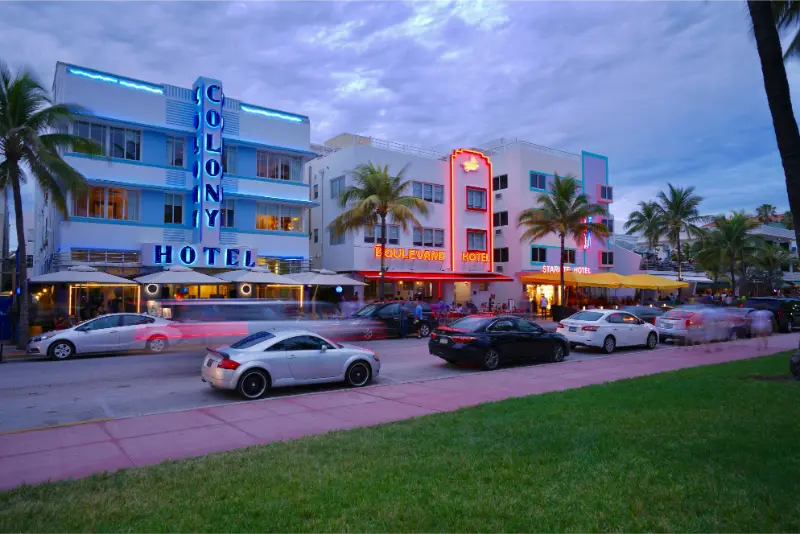
    Ocean Drive Miami Beach Art Deco Hotels at Night

    When selecting a Miami base, remember that downtown Miami, Miami Beach and Coral Gables are not interchangeable. A hotel near the ocean can be excellent for swimming but inconvenient for visiting downtown museums. Public transit serves some central districts, while a rental car adds parking costs; compare actual routes rather than a headline distance. A dinner in the hotel’s neighborhood is sufficient after travel. Take time to review tickets and any timed entry for the following morning, keeping the departure schedule in mind.

    Day 8: Frost Science and the waterfront in downtown Miami

    Finish with the Phillip and Patricia Frost Museum of Science near Miami’s waterfront. The institution combines science learning with major exhibition experiences, and its official visiting tips encourage advance ticket planning and explain how to use the site. If a planetarium show matters to your group, verify its current reservation procedure and availability. Museum tickets and specific programs can have distinct conditions, so do not assume every experience is included automatically. Allocate enough time for the exhibits your group values most rather than trying to cover all of them before an early flight.

    The neighboring waterfront offers a pleasant way to end the trip if conditions permit, but avoid walking exposed areas during thunderstorms. If departing from Miami International Airport, protect time for rental-car return, traffic, security and airline check-in. An international flight on the same afternoon may mean a shorter museum visit or none at all. A satisfying museum-focused Florida vacation does not require the last day to be overfilled. The best ending is leaving with a clearer understanding of the state’s scientific, artistic and social stories—and enthusiasm to return for another region.

    Make a museum trip work for mixed ages

    Toddlers learn through short bursts of exploration and need regular food and restroom breaks. Children in elementary school may enjoy collecting facts or drawing an object they saw. Teenagers can be invited to select an exhibition and lead the conversation. Adults may enjoy deeper reading, but should not insist that everyone shares identical interests. Older travelers often appreciate benches, accessible galleries and the ability to leave early without feeling they have wasted a ticket. If the party’s needs are very different, agree on one shared institution per day and leave other interests for optional time.

    Pay attention to sensory environments. Planetarium shows, immersive art and interactive science centers can involve darkness, loud sound and flashing visual effects. Review event descriptions and ask visitor services about quiet spaces, hearing support or accessible entrances. A traveler using a wheelchair may need to reserve a specific show seat, while a family with a stroller may need to know where it can be stored. Museums are generally indoor attractions, but some campuses include long outdoor distances. Checking the full route from parking to exhibit is more useful than assuming all indoor venues are effortless.

    Tickets, memberships and costs without misleading promises

    Museum prices vary by institution, age and date; special exhibitions can change the total. Some organizations offer membership reciprocity or discounts, but not every program applies to every museum or every traveler. Review the official ticket page for each venue and compare a family’s full cost rather than assuming a multi-attraction pass always saves money. Booking online may be convenient, yet strict timed tickets can be a problem when traveling during severe weather season. Include hotel taxes, parking and meals when calculating daily expenditure.

    Build a food plan around museums that may not allow outside meals in gallery spaces. Check whether there is a café or a suitable picnic area and plan for children with allergies. Carry a power bank because museum tickets and maps are often digital, while some exhibits may restrict photography or device use. Keep one quieter day between long drives and high-stimulation museums. The point of a cultural vacation is not to spend the highest possible amount on admission; it is to create meaningful encounters with ideas, objects and stories.

    Museum road trip table

    DayAreaMain museum themeFlexible option
    1OrlandoArrivalLocal dinner
    2OrlandoScience CenterShorter exhibits
    3TampaArt museumGlazer for young children
    4SarasotaRingling art and circus historySelect one section
    5SarasotaContemporary art or restWaterfront outing
    6Fort LauderdaleTransfer and settle inRiverwalk
    7Fort Lauderdale to MiamiScience or local cultureSingle museum only
    8MiamiFrost ScienceAirport priority

    Frequently asked questions

    Is this itinerary suitable for people who dislike traditional art museums?

    Yes. It includes science centers, circus history and interactive exhibits, with options to focus more on the kind of learning your group enjoys.

    Do museums stay open during Florida thunderstorms?

    Many indoor exhibits can continue operating, but weather can affect access, outdoor areas and travel. Follow the institution’s safety directions and recheck operating notices.

    Can we complete the route without a car?

    It requires changes. Some metro areas offer rail or buses, but transfers between Tampa, Sarasota and South Florida are less convenient than the itinerary suggests for a driver. A shorter two-city museum trip may be better.

    Are all museums equally good for preschoolers?

    No. Orlando Science Center and Glazer Children’s Museum provide dedicated young-child experiences, while other institutions may suit older children better. Assess exhibits and walking distances.

    Should I buy a museum membership for a one-week vacation?

    Possibly if you will revisit a site or qualify for genuine reciprocal benefits. Check the membership’s exact admission privileges and compare against individual tickets before purchasing.

    Official planning resources

    Review Orlando Science Center, Tampa Museum of Art, The Ringling and Frost Science for current exhibitions and accessibility. This guide was prepared with information checked in October 2026; schedules and fees may change.

  • Florida Aviation Heritage Road Trip: Six Days from Pensacola to Lakeland

    Florida Aviation Heritage Road Trip: Six Days from Pensacola to Lakeland

    Florida’s aviation story is much larger than the space program. Pensacola trained naval aviators, the northwest Gulf Coast developed airpower technologies, and central Florida became a meeting place for recreational pilots, engineers, and families curious about flight. This six-day route connects that history without implying that an operational military base is a regular tourist attraction. It works best with a rental car, because the museums are dispersed and public transport is not designed for a cross-state aviation itinerary. A wheelchair user, a grandparent, or a child fascinated by airplanes can all enjoy much of the journey, but simulator access, hangars, loud demonstrations, and walking distances differ by site.

    Day 1: Begin with Pensacola’s maritime and naval setting

    Start in historic Pensacola and explain the geography before examining an aircraft. Pensacola Bay has long been a strategic harbor, and Naval Air Station Pensacola lies southwest of downtown. The National Naval Aviation Museum houses aircraft and exhibits that connect early flight, carrier aviation, and training. Its admission is free, but it is inside an active military installation and cannot be treated like an ordinary open-access museum. Do not drive to the gate assuming that a foreign passport guarantees entry. The museum currently explains that foreign visitors require specific documentation and an eligible U.S.-citizen escort, with security procedures subject to change. Travelers unable to meet the criteria should plan a Pensacola history day instead and use online exhibits to explore naval aviation.

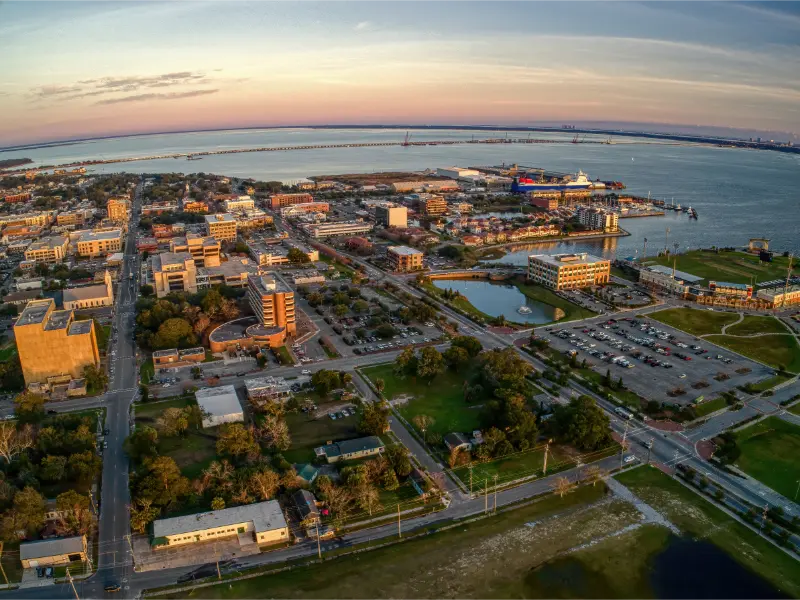
    Pensacola Florida Waterfront City Sunset Aerial

    Day 2: Choose an accessible Panhandle aviation stop

    Drive east toward the Fort Walton Beach area, allowing time for Gulf Coast traffic and a proper lunch break. The Air Force Armament Museum near Eglin Air Force Base tells a different story from Pensacola: aircraft systems, armament development, and the changing demands placed on aircrews. Check the museum’s official visitor information before departure because exhibit access and event schedules can change. This is a good day to help children compare two aircraft designed for different missions rather than trying to memorize dozens of model numbers. Allow older visitors plenty of indoor pauses, especially if the previous day involved extensive walking. Overnight around Fort Walton Beach or Destin instead of rushing east late in the afternoon.

    Day 3: Make the journey part of the education

    The move from the Panhandle toward central Florida is the longest component of this route, so resist adding a full museum visit before a major drive. Split the transfer with short stops at authorized rest areas and a meal away from heavy traffic. The landscape changes from Gulf shore and pine flatwoods to inland farms and towns. A family can use this driving day to discuss what made aviation practical in Florida: comparatively mild weather, large areas suitable for airfields, and a connection between military bases and civilian technology. For children, keep a simple notebook with sketches of wings, landing gear, and cockpit instruments. For visitors who dislike highways, this is the day to shorten the itinerary and stay in one region rather than forcing the full circuit.

    Day 4: Explore Lakeland’s Florida Air Museum

    Lakeland’s Florida Air Museum at the Aerospace Center for Excellence is one of the route’s most useful stops for visitors who want to understand general aviation rather than only military history. Its displays and educational mission link airplane design, hands-on learning, and the culture of flight. The museum advises visitors that it sometimes closes for special events; confirm availability directly. As of March 2026 it is cashless, so bring a payment card rather than relying on cash. Check which aircraft are approved for interactive use: the museum’s orange ‘Cleared to Fly’ marker identifies exhibits visitors may enter, while other historic airplanes must not be climbed on. The museum also describes accessible galleries, an advantage for mixed-age families.

    Day 5: Put the aircraft into historical context

    Spend the fifth day in Lakeland and the surrounding region rather than treating the museum as a brief roadside attraction. Compare civilian pilot training and the aviation events associated with SUN ‘n FUN against the military-focused stops in the Panhandle. If traveling around an airshow, reserve accommodation well ahead and expect altered access, road congestion, and loud aircraft demonstrations. Outside event weeks, choose a relaxed museum visit, a walkable downtown meal, and a second activity suitable for the youngest or oldest person in the group. Travelers with sensory sensitivities should ask whether demonstrations or unusually loud activities will take place; noise-canceling headphones can help, but a quiet day is a more reliable accommodation.

    Day 6: Optional Space Coast extension or a gentle departure

    The Space Coast and Kennedy Space Center Visitor Complex form a logical educational extension, but not a convenient short detour from Lakeland. If you have another two or three days, relocate east, book the space center for a separate full day, and monitor launch schedules without assuming a rocket will depart during your visit. If you have only six days, finish in central Florida and depart from an airport appropriate to your rental-car arrangements. An overnight flight home is not compatible with a long drive and an ambitious museum schedule. For a child, reviewing the five most memorable exhibits at breakfast may produce more learning than squeezing in one final rushed stop.

    What to verify before buying tickets

    The most important planning difference on this route is public museum access versus military installation access. The National Naval Aviation Museum’s current foreign-national rules are unusually restrictive and may prevent an international tourist from entering even when the museum itself is operating. The Air Force Armament Museum and Florida Air Museum have their own visitor procedures and may close for events. Separately verify identification, accessibility, opening days, photography policy, bag restrictions, parking, and whether tours or simulators carry additional charges. A history enthusiast may value detailed guided interpretation; a preschooler may need only two exhibits and a quiet outdoor break. Treat a web timetable as a starting point rather than a guarantee.

    Costs, lodging, and route choices

    Keep the budget in three columns: transport, accommodation, and paid experiences. Military and public institutions can offer low-cost exhibits, but interstate driving, parking, meals, and changing hotels can exceed the museum admission bill. For a more economical version, stay around Pensacola for two days and choose only the northwest Florida stops; for a central Florida short break, concentrate on Lakeland and possibly the Space Coast on separate days. Hotels in major beach towns are often more expensive than inland options and may add parking or resort fees. If booking an accessible room, obtain a written description of the bed, bathroom, route from parking, and emergency procedures rather than assuming the word ‘accessible’ answers every question.

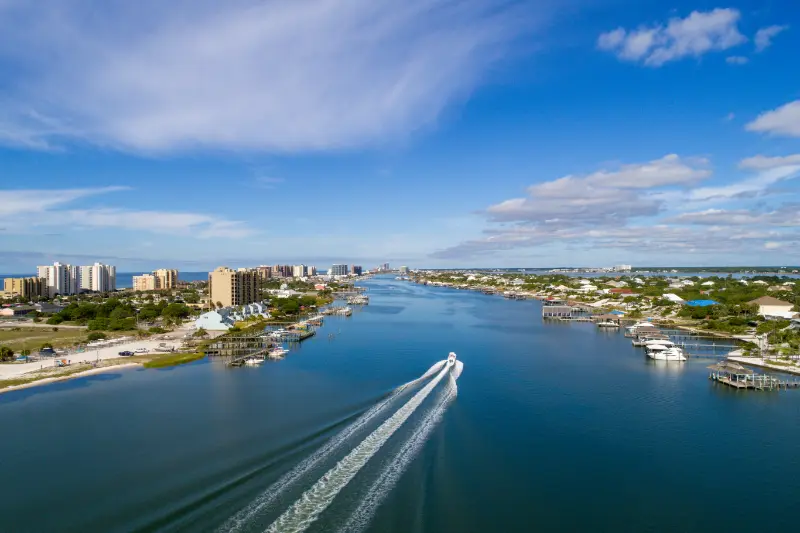
    Boat Passing Near Perdido Key Beach Pensacola Florida

    Visiting with children, older adults, and different mobility needs

    Aircraft museums invite visitors to look upward, lean into tight spaces, and climb into displays. Not everyone can comfortably do those things. Ask whether essential information is available at floor level, whether a simulator has transfer requirements, and whether a loaner wheelchair or quiet area exists. Provide age-appropriate choices: young children can look for propellers and colorful liveries, teenagers may enjoy propulsion and engineering stories, and older relatives may prefer guided talks with seating. Do not promise that an entire aircraft cabin is wheelchair-accessible simply because the museum entrance is. Build one genuine rest break into each morning and afternoon, and avoid hot outdoor aircraft aprons at midday.

    Why this journey is worth the time

    The payoff is not a checklist of airplanes but an understanding of how Florida became connected to naval operations, military research, civilian flying, and aerospace education. Each location tells a different chapter, and the longest drive should be justified by the travelers’ actual interests. Those who want a mainly beach vacation should select one aviation museum as an afternoon excursion; enthusiasts can take the six-day plan slowly. Before publishing or traveling, revisit official notices, particularly temporary closures and military gate requirements. A responsible itinerary makes room for disappointment at a closed gate and still offers a satisfying day nearby.

    A useful museum-learning plan for different ages

    For a group with several age ranges, divide each museum into three passes rather than trying to see every panel. In the first fifteen minutes, identify a single aircraft that everyone can observe from a comfortable distance. Ask a young child how it stays in the air, a teenager which materials and engines might have changed its performance, and an adult what its original mission demanded. In the second pass, select one exhibit about the people behind the technology, including mechanics, navigators, instructors, and test crews. In the third pass, return to a favorite artifact for a more detailed look. A short educational exercise creates an itinerary with a purpose and prevents museum fatigue.

    Aviation exhibits sometimes use simulators that look harmless but involve motion, sudden noise, or steps into a cockpit. Ask about height requirements, accessible seating, motion sensitivity, and whether a visitor may watch without participating. Some older aircraft interiors are small, and not every museum allows guests to enter them. Never lift a child into an aircraft without permission or let an excited visitor touch a propeller. Photography is often allowed for personal use, but a military-adjacent museum may restrict particular areas. A camera policy and a security access policy are separate questions.

    If the Pensacola base visit is impossible for an overseas tourist, the trip has not failed. Replace that museum with public maritime or local-history interpretation in downtown Pensacola; keep Fort Walton Beach as a separate museum stop if available. This is particularly important for visitors whose citizenship or immigration documentation does not satisfy military entry conditions. Do not buy a nonrefundable tour or schedule an overseas guest’s only free day around an access route that cannot be confirmed in writing. Build flexibility into the itinerary from the beginning, not after the car reaches the security checkpoint.

    Practical planning table

    Stop Main reason to visit Planning caution
    Pensacola area Naval aviation history NAS entry is restricted, especially for foreign visitors
    Fort Walton Beach area Airpower and technology Confirm current museum operating status
    Central Florida transfer Scenic and logistical break Long drive; avoid over-scheduling
    Lakeland General aviation, educational exhibits Event closures and cashless payment
    Optional Space Coast Civilian spaceflight context Requires extra days; launch not guaranteed

    Frequently asked questions

    Can tourists from other countries enter the Naval Aviation Museum? Not automatically. The museum publishes specific base-entry requirements for foreign nationals and escorts. Read them before building the itinerary around that stop.

    Is six days enough to include Kennedy Space Center? Only if you shorten other stops. A more comfortable plan adds extra nights for the Space Coast.

    Are all aviation exhibits suitable for toddlers? No. Some cockpits have stairs, moving simulators, or loud sounds. Ask staff which exhibits are appropriate.

    Do I need to rent a car? A car is strongly recommended for this dispersed route. Several individual museums can be visited from nearby cities, but the full sequence is not a practical transit itinerary.

    When is the best season? Cooler months can make outdoor aircraft displays more comfortable, while special air events may increase crowds and hotel rates.

    Official sources

  • Florida Cultural Road Trip: Seven Days of Museums from St. Augustine to Sarasota

    Florida Cultural Road Trip: Seven Days of Museums from St. Augustine to Sarasota

    Florida is easier to appreciate when you spend time with its art, science and history—not only its beaches and theme parks. A museum-focused vacation works especially well when summer heat is intense, rain interrupts outdoor plans or different generations want activities with seating and comfortable indoor spaces. It can also reveal stories that a fast road trip misses: Spanish settlement, the railroad era, exploration, technological change and the cultures that shaped modern cities.

    This seven-day museum road trip from St. Augustine to Sarasota follows a reasonably connected route through Central and West Florida. It uses five overnight regions rather than encouraging long backtracking drives, and you can shorten it to four days by selecting fewer stops. Check individual museum hours immediately before booking: even major institutions can close for renovations or private events. This guide deliberately avoids promising entry to museums whose normal galleries are temporarily unavailable.

    The route at a glance

    Day Base or transfer Main cultural stop Optional quieter experience
    1 St. Augustine Lightner Museum Short historic plaza walk
    2 St. Augustine to Orlando Historic streets or a small local exhibit Rest and hotel check-in
    3 Orlando Orlando Science Center Loch Haven park area
    4 Orlando to Lakeland Lake Mirror and local history Hollis Garden
    5 Lakeland to Tampa Tampa Bay History Center Short Riverwalk section
    6 Tampa Bay / St. Petersburg The Dalí Museum St. Pete Pier waterfront
    7 Sarasota The Ringling Departure or extra night

    Do not treat this as a fixed ticket package. Its strength is the combination of different themes, not seeing every museum in Florida. If you enjoy art more than science, spend less time in Orlando. If traveling with children who love experiments, allow an extra science day instead of another gallery visit. The itinerary also allows one person to explore independently while others rest.

    Day 1: St. Augustine and the Lightner Museum

    Start in St. Augustine, one of Florida’s most rewarding cities for exploring history in a compact setting. The Lightner Museum occupies the former Hotel Alcazar, a Gilded Age building connected with Henry Flagler’s development of Florida’s East Coast tourism. The exhibits combine art, material culture and architecture, so even visitors who don’t usually choose a museum may find the building itself interesting.

    Check exhibitions, admission and accessibility on the Lightner Museum website. The museum describes visitor seating, a family guide and some stroller restrictions in particular galleries. Younger children need active supervision around objects and stairways. Pair the visit with a short walk to the historic plaza or waterfront; there is no need to add three paid attractions to the afternoon. Parking in central St. Augustine can be busy, and uneven paving may make some routes tiring.

    Day 2: history at street level, then a gentle drive to Orlando

    Use the morning for a small piece of St. Augustine history that you did not have time for on day one. The Castillo de San Marcos offers a direct connection with the city’s colonial past, while the surrounding streets reveal later layers of Florida’s story. Choose whether your priority is a fort, a guided historic experience or simply a slower look at the old-town buildings.

    Leave after lunch for Orlando, allowing realistic traffic time and a relaxed check-in. Orlando is not only a theme-park destination, but the cultural attractions are spread across neighborhoods. Choose lodging convenient to tomorrow’s museum rather than automatically booking a resort far from the city center. After checking in, take a short walk or eat near the hotel. A transfer day does not need another entrance ticket to feel worthwhile.

    Day 3: Orlando Science Center for all ages

    Orlando Science Center in the Loch Haven area is useful for families and adults who enjoy interactive exhibits. It features hands-on learning, demonstrations and immersive programs; visitors can select a few appealing areas instead of trying to complete every activity. Check the official visiting information for opening days, prices, parking and stroller requirements. As of October 2026, its normal schedule generally excludes Wednesdays, except for some school breaks.

    A child aged eight may enjoy experiments, while a grandparent might prefer a science demonstration or carefully chosen exhibit. Agree on a meeting point and breaks; large interactive museums can be noisy and physically tiring. The center’s guidance explains that oversized strollers and wagons may be difficult to use in some spaces. Afterward, have a calm lunch and a brief park stroll if weather permits. Keep the evening open rather than driving to a distant attraction.

    Day 4: Lakeland, Lake Mirror and artful public spaces

    The Orlando-to-Tampa corridor offers a chance to stop in Lakeland, which has attractive lakeside public spaces and a city center that deserves more attention than a highway exit. The Lake Mirror complex includes the Frances Langford Promenade, formal landscaping and nearby public amenities. This is a cultural day in the wider sense: architecture, civic space, public art and the story of a developing inland Florida city.

    Visit Lake Mirror Complex and check whether Hollis Garden is open at your intended time. Walk only the length that suits your group. A garden stop can be a welcome break after three museum-heavy days, especially for children or anyone uncomfortable standing in galleries. Lakeland’s downtown restaurants offer a practical lunch option before a relaxed overnight stay or onward transfer.

    Day 5: Tampa Bay History Center and the Riverwalk

    The Tampa Bay History Center presents regional stories in a setting along the downtown waterfront. Its collections cover a long span of Florida history, including Indigenous communities, trade, settlement, regional growth and popular culture. It is a useful counterbalance to an itinerary focused only on cities and modern attractions. Check the official museum planning page for current hours, gallery admission and any special closures; private events can affect normal access.

    Sarasota Bay Marina and Downtown Buildings at Sunset

    The center is near the Tampa Riverwalk, which means you can combine a museum morning with a short waterside walk or a comfortable lunch. Do not commit to the full multi-mile Riverwalk unless everyone enjoys walking that distance. Choose a nearby segment and take time for the view. Travelers with limited stamina should look up parking and walking access in advance; the nearest available space may still involve several blocks outdoors. A short, thoughtful museum day leaves energy for dinner and the next destination.

    Day 6: St. Petersburg and a different kind of art

    Crossing into St. Petersburg brings a different cultural mood. The Dalí Museum is a major destination for art lovers and offers an opportunity to talk about imagination, interpretation and the role of museums in a city. Check current exhibitions and visitor information before choosing a date, particularly if you want a special gallery or guided program.

    After the museum, the St. Pete Pier district provides a waterside change of pace. The district itself has free public access, although individual activities and restaurants may charge. See the official pier FAQ. If rain is forecast for the afternoon, keep the museum for later and enjoy the waterfront first. The idea is to spend one pleasant day in St. Petersburg, not race between every art venue in the city. A couple or senior visitor may appreciate an unrushed lunch as much as a second exhibition.

    Day 7: Sarasota and The Ringling

    Finish in Sarasota with The Ringling, a museum complex where art, architecture and gardens can easily occupy much of the day. The property includes different spaces, so decide what you most want to see before buying tickets. Its grounds can require substantial walking; look at accessibility information and any current tour availability on the official site.

    For an afternoon flight, a full museum visit may not be practical. Add an overnight stay in Sarasota instead of rushing, or use this day as the starting point of a longer Gulf Coast vacation. If traveling with children, consider one major section and time outdoors rather than insisting they appreciate every artwork. The Ringling is a strong conclusion because it connects visual culture with Florida’s history as a destination for wealthy visitors, performers and artists.

    Downtown Sarasota Florida Marina Aerial

    How to shorten the trip to four days

    With less time, choose two bases instead of five. One option is two nights around St. Augustine and two around Orlando, focusing on the Lightner Museum, city history and Orlando Science Center. Another is a Tampa Bay and Sarasota cultural break, combining the History Center, The Dalí Museum and The Ringling with relaxed waterfront time. Both alternatives avoid long travel days and allow a museum visit to remain the day’s central experience.

    Do not cut the route by making every museum a thirty-minute stop. Larger collections are more meaningful when you give them time. If you travel with a mobility aid or children, allow generous pauses between galleries. In a short trip, the quality of the stops is more important than checking off the longest possible list.

    What this route costs and how to save

    Museum admission is the main variable after hotels and transport. Prices change by institution, exhibition, age and membership. Check discounts directly, including student, senior, military, reciprocal membership or Museums for All options where relevant; never assume an international visitor automatically qualifies for resident discounts. Parking can cost extra, and convenient hotels in historic or waterfront areas may charge more than suburban accommodation.

    Save money by selecting one paid museum per day and using free public spaces between them. An afternoon at Lake Mirror or a short Riverwalk segment gives you contrast without a second major ticket. Reserve refundable accommodation if weather or personal circumstances may force changes, and compare total lodging cost including taxes and resort or parking fees. Bring a refillable water bottle and check whether food is allowed in galleries before packing snacks.

    Accessibility and traveling with children

    Museums are generally easier to navigate than wilderness trails, but that does not make every exhibit fully accessible. Historic buildings can have awkward transitions, and special exhibitions may use different lighting or sound. Check ramps, elevators, accessible restrooms, seating, captioning, sensory programs and wheelchair policies at the specific institution. Families should also look up stroller rules and changing facilities.

    For children, choose a simple question to explore rather than trying to cover the collection: What did people use before modern transportation? Why did communities settle near water? How do artists show movement or emotion? Allow the children to choose a favorite object and discuss it over lunch. Adults can choose a different interest. A varied, conversational visit is usually more rewarding than a long lecture.

    Weather, closures and good timing

    This route is excellent for hot or rainy weather because much of it is indoors, but walking between parking and museum entrances still involves outdoor exposure. Afternoon thunderstorms can disrupt the waterfront portions, so be willing to swap their order. Hurricane-related disruptions can affect museums and roads; always check the weather and attraction alerts before driving. Major holidays, school breaks and private museum events may affect openings.

    Do not rely solely on old itineraries for museum availability. For example, Daytona Beach’s Museum of Arts & Sciences announced closure to normal daily visitors during its expansion preparations in 2026, with selected special programs continuing. That is a reminder to verify status rather than treating a museum pin on a map as evidence it is open. The institutions selected for this route still require a final current-hours check before departure.

    Frequently asked questions

    Can I do this museum route without renting a car?

    It would be difficult to follow all seven days efficiently without one because the cities are spread out. A shorter single-city cultural vacation can work better with local transport and rideshares.

    Is the itinerary suitable for grandparents and children together?

    Yes, with flexible museum time, seating breaks and age-appropriate exhibits. The route is not designed for nonstop sightseeing.

    Should I buy all tickets in advance?

    Reserve major experiences when advance entry is required or dates are busy, but preserve some flexibility for weather and energy levels. Check cancellation and change rules before paying.

  • Best Museums in Florida: Art, Science, History, Space and Family-Friendly Picks

    Best Museums in Florida: Art, Science, History, Space and Family-Friendly Picks

    Florida’s museum scene is easy to underestimate because beaches and theme parks dominate the travel image of the state. Yet a well-chosen museum can explain Florida better than another afternoon of driving: art in St. Petersburg and Miami, circus and European collections in Sarasota, science centers in major cities, space history on the Space Coast and local museums that connect visitors with Indigenous, maritime, military and civil-rights stories. I would use museums as anchor experiences rather than rainy-day leftovers, especially when a trip includes children, senior travelers or several generations with different interests.

    Quick planning summary

    • Florida museums range from major art institutions to science centers, historic houses and highly specialized local collections.
    • The best museum for a family is usually the one that matches attention span and interests, not the biggest building.
    • Major cities make it easy to pair a museum with dining, a park or a walkable neighborhood.
    • Museums are excellent weather backups, but popular timed-entry venues can still require advance planning.
    • Accessibility, parking and seating vary, so check directly when those details are essential.

    In this guide

    St. Petersburg is one of Florida’s strongest art-museum bases

    The Dalí Museum is the headline attraction, but St. Petersburg works especially well because art can be combined with the waterfront, murals, restaurants and other museums without a long drive between every stop. Travelers who are not normally museum-focused often respond well to a destination where the museum is one part of a walkable day. Give a major collection at least two hours instead of squeezing it between beach activities.

    Sarasota rewards travelers who want art and architecture

    The Ringling combines art, circus history, architecture and grounds in a way that works for mixed-interest groups. Sarasota also makes it easy to pair cultural time with gardens, St. Armands or Gulf beaches. That combination is useful for couples and senior travelers who want more than a resort week, and for families whose children may enjoy circus history more than a conventional gallery visit.

    Miami and South Florida cover art, science and historic estates

    Miami offers contemporary art, science and design alongside historic properties such as Vizcaya. Frost Science is especially useful for families because it combines aquarium and science-center experiences in a modern waterfront setting. In Palm Beach County, institutions such as the Norton Museum of Art and Flagler Museum add a different perspective. Instead of crossing the entire metro area for several museums in one day, choose one geographic cluster.

    Central Florida has more than theme-park entertainment

    Orlando Science Center gives families a substantial indoor day away from the parks, while nearby communities add smaller history and art museums. The Kennedy Space Center Visitor Complex on the Space Coast is larger than a conventional museum experience, but it belongs in any Florida culture-and-science plan because it combines historic spacecraft, exhibits and working spaceflight context. Give it most of a day rather than treating it as a quick indoor stop.

    Kennedy Space Center NASA Headquarters Building

    North Florida and the Panhandle tell different parts of the state story

    Jacksonville’s Cummer Museum combines art with riverfront gardens, while St. Augustine offers museums and historic sites tied to centuries of settlement. Pensacola’s National Naval Aviation Museum is a major aviation destination, and Tallahassee has institutions connected with state history, natural history and government. These museums are especially valuable on road trips because they give context to regions that can otherwise become only highway stops.

    Children need interactivity and pacing

    A four-year-old and a sixteen-year-old do not experience the same museum. Science centers, children’s museums, aquariums and transport or space collections often work better for younger visitors than a long sequence of quiet galleries. Teenagers may engage more with photography, design, military history, technology or an exhibit they help select. Plan a real meal or outdoor break after a long indoor visit instead of immediately adding another museum.

    Museums are strong options for heat and thunderstorms

    Florida weather makes indoor attractions strategically useful. A museum can protect a summer afternoon from heat or turn a stormy beach day into a memorable part of the trip. Keep one nearby museum or historic house saved for each travel region rather than building a statewide list you will never use. If the forecast changes, choose the closest strong option and keep the day geographically simple.

    How to choose among hundreds of institutions

    Start with subject matter, then location, then practical details. Art lovers may travel specifically for Dalí or a major exhibition; families may prioritize science and children’s museums; history travelers may prefer St. Augustine, Pensacola or Tallahassee. Check temporary exhibits, closing days, parking and timed-entry rules shortly before the visit. Smaller museums often have limited hours, which makes spontaneous arrival less reliable than at a major city institution.

    Families, seniors and accessibility

    Museums are excellent multigenerational attractions because most provide climate-controlled space, restrooms and seating, but not every gallery or historic building has the same accessibility. Confirm elevators, wheelchair routes and accessible entrances if needed. Families should identify one or two must-see exhibits before arrival and accept that younger children may not want to complete every floor. Senior travelers often enjoy a slower visit with a café or garden break rather than a museum marathon.

    Kennedy Space Center Spacecraft Exhibit

    For a mixed-age group, protect the needs that are hardest to change: heat tolerance, medication timing, mobility, naps and the ability to stand in lines. Split the group when that creates a better day instead of treating separation as a planning failure. Confirm accessibility directly with the attraction, hotel, park or operator when a specific feature is essential, because the word accessible can describe very different real-world conditions.

    Budget and booking

    Many museums charge admission, while others have free days or free permanent collections. Do not build a trip around a promotional free period without verifying the current rules. Membership reciprocal benefits can be useful for frequent museum visitors, and city attraction passes may offer value only if the included venues match your actual itinerary. Parking can be a meaningful extra cost in downtown Miami, Tampa and other urban areas, so include it in the comparison.

    Compare total trip cost rather than headline price. Parking, resort fees, taxes, cleaning charges, rideshares, rental-car costs and food can change which option is genuinely affordable. Keep weather-sensitive elements flexible when possible, and save confirmation numbers in one place. If one experience is the main reason for the trip, secure that first before building nonrefundable lodging around it.

    How to build a realistic day

    Start with one anchor activity and place it at the time when the group has the most energy and conditions are usually best. Leave enough space for parking, meals and unexpected delays rather than stacking timed reservations back to back. In warm months, a morning outdoor block followed by lunch and an indoor or shaded afternoon is often more comfortable than continuous sightseeing. On driving days, stop before fatigue becomes a problem and keep water, sun protection and a simple snack available.

    Keep one nearby backup plan that does not require crossing a major metro area. A museum, shopping district, hotel pool, scenic drive or relaxed meal can rescue a day when weather or energy changes. The goal is not to complete the maximum number of attractions; it is to finish the day with enough energy to enjoy the next one. This approach is particularly valuable for children, older travelers and anyone visiting Florida for the first time.

    Common mistakes to avoid

    • Treating museums only as emergency rainy-day options.
    • Crossing a large metro area for several unrelated museums in one day.
    • Expecting young children to enjoy the same pacing as adults.
    • Ignoring limited opening days at smaller institutions.
    • Assuming every historic building is fully step-free.
    • Buying an attraction pass without checking whether the included museums fit the itinerary.

    Florida travel guide for first-time visitors, Florida with kids, Florida in summer, St. Petersburg and Clearwater travel guide, Sarasota and Siesta Key travel guide.

    Official resources to check

    Rules, opening hours, prices, transport schedules, access arrangements and weather-related operations can change. If a detail is essential to the trip, confirm it with the responsible operator or public agency shortly before travel rather than relying on an old screenshot, saved social post or third-party summary.

    Final planning advice

    The strongest Florida itineraries are clear about priorities without becoming rigid. Choose what genuinely matters, keep the day geographically compact and allow conditions to change. A trip with a little breathing room usually produces better meals, easier family decisions and more memorable experiences than a schedule that depends on perfect traffic, perfect weather and perfect energy from morning to night.

  • Best Indoor Things to Do in Florida: Museums, Aquariums, Space, Culture and Rainy-Day Ideas

    Best Indoor Things to Do in Florida: Museums, Aquariums, Space, Culture and Rainy-Day Ideas

    Florida is famous for outdoor days, but some of its best experiences happen under a roof. Heat, thunderstorms, a cold front or simple travel fatigue can make an indoor plan more appealing than another beach or theme-park marathon. I like to keep one indoor option near every major overnight base because it turns bad weather into a change of pace instead of a lost day. The strongest choices are not only emergency backups: museums, aquariums, space exhibits, historic houses, galleries and performing arts can be highlights in their own right.

    Quick planning summary

    • Keep one indoor backup within 20–30 minutes of each overnight base.
    • Museums and aquariums work best when chosen for genuine interest, not only because it is raining.
    • In summer, an indoor afternoon can be useful even on a sunny day because of heat and thunderstorms.
    • Book timed-entry attractions only when they are important enough to justify losing flexibility.
    • For multigenerational groups, prioritize seating, elevators, food and easy parking as well as exhibits.

    In this guide

    Orlando: theme-park alternatives, science and resort time

    Orlando has more indoor options than most visitors need. Large theme parks include extensive indoor rides and shows, but a true weather backup can also mean a science center, aquarium-style attraction, shopping complex, bowling, interactive entertainment or simply returning to the resort for a pool-and-rest afternoon between storms. The key is geography: an indoor attraction on the opposite side of the metro area may create more stress than the weather itself.

    If a storm interrupts a park day, follow the park’s safety procedures rather than racing to another reservation. Florida thunderstorms can move quickly, and many outdoor operations resume after conditions improve. On a deliberately lighter day, a museum or indoor attraction can give children and older adults a break from long outdoor walking.

    Miami and South Florida: art, science and aquariums

    Miami, Fort Lauderdale and the Palm Beaches have enough museums and cultural venues to fill several rainy days. Art museums, science exhibits, historic estates and aquariums let a trip continue without requiring perfect beach weather. I would choose a venue near the neighborhood you already planned to visit, then combine it with lunch rather than treating rain as a reason to cross the entire metro area.

    South Florida rain can be intense and localized. A wet morning does not always mean a wet evening, so keep the second half of the day flexible. Parking garages and covered drop-off areas can make a major difference for travelers with mobility needs or families handling strollers in heavy rain.

    Space Coast: Kennedy Space Center as a major all-weather anchor

    Kennedy Space Center Visitor Complex includes substantial indoor exhibits and is one of the rare places that can justify a full destination day even when the beach forecast is poor. Outdoor elements and bus operations can still be affected by severe weather, so check current conditions, but the scale of the indoor content makes the Space Coast less dependent on sunshine than many beach regions.

    Kennedy Space Center NASA Globe Monument

    Pair the space center with a flexible Cocoa Beach plan rather than locking the day into multiple timed stops. If a launch is part of the trip, remember that launch schedules can change. Treat the launch as a bonus unless you have built enough flexibility to wait for a new attempt.

    Tampa Bay, St. Petersburg and Sarasota: museums and cultural depth

    Tampa Bay and Sarasota are particularly strong for visitors who enjoy art, history and marine life. St. Petersburg has major art institutions, Tampa has museums and an aquarium, and Sarasota adds The Ringling and other cultural venues. These are not consolation prizes for bad weather; they are among the reasons to visit the region.

    A good Gulf Coast rainy-day plan keeps one district together. Museum, lunch and a nearby gallery or shopping street usually work better than driving from Tampa to Sarasota and back because the beach is wet. If conditions clear late, finish with a waterfront walk rather than forcing a full beach session.

    St. Augustine, Jacksonville and North Florida: history indoors

    Historic houses, museums, galleries and visitor centers make North Florida easier to enjoy during cold rain or summer storms. St. Augustine is especially useful because many indoor sites sit close together in the historic core. Jacksonville offers larger museums and cultural venues, while Tallahassee combines state history, science and museums.

    Historic buildings may have stairs or narrow passages, so visitors who need step-free access should check the individual site. A compact historic district is also easier on a rainy day when the hotel is nearby; long suburban drives reduce the value of an otherwise good backup plan.

    Aquariums, wildlife centers and marine science

    Aquariums and indoor wildlife facilities can be strong choices for children, but not every animal attraction has the same conservation standards or amount of indoor space. Look for accredited institutions, clear educational programs and transparent animal-care practices. In coastal regions, smaller marine science centers can offer a meaningful two-hour visit without the cost or scale of a major aquarium.

    NASA Kennedy Space Center Spacecraft Hangar

    Weather can also affect animal programs, outdoor touch areas or boat-linked experiences. Check the day’s schedule before purchasing add-ons. The best family backup is one that still feels worthwhile if some outdoor components are closed.

    Shopping, food halls and entertainment districts

    Shopping is an obvious indoor fallback in Orlando and South Florida, but it works best when the group actually wants it. Outlets can be crowded during storms because everyone has the same idea. A local market, food hall, bookstore or neighborhood shopping street may create a more relaxed afternoon than a giant mall.

    For teenagers and mixed groups, indoor entertainment such as bowling, interactive games or cinemas can be useful after several museum-heavy days. I would keep these as flexible options rather than prebooking every hour. Sometimes the most restorative rainy-day plan is lunch, laundry and an early night.

    How to read the forecast without cancelling the whole day

    Florida forecasts often show a chance of rain or thunderstorms even when much of the day is usable. Look at hourly timing and radar, not only the weather icon. In warm months, outdoor mornings and indoor afternoons often work well. When lightning is present, follow safety guidance immediately; do not wait under a beach umbrella or open shelter for a storm to pass.

    If the weather system is widespread and persistent, commit to the indoor day and enjoy it. Repeatedly driving between beaches in search of a dry patch can waste more time than the rain itself. Keep one strong indoor choice close to the hotel and treat sunshine later as a bonus.

    Families, seniors and accessibility

    Indoor attractions are especially valuable for families with small children, older travelers and anyone who needs climate-controlled breaks. Check seating, elevators, sensory accommodations, stroller rules and the walking distance from parking. A museum that looks small online can still require several hours of standing. For mixed-age groups, choose places with multiple layers of interest so one person can focus on art or history while another prefers interactive exhibits, animals or a café break.

    Budget and booking

    Indoor attractions range from free museums and historic buildings to major ticketed aquariums and entertainment complexes. Compare the total day cost, including parking and food, rather than admission alone. If bad weather is only a possibility, avoid locking every backup option into a nonrefundable ticket. City passes can help only when you would genuinely visit enough included attractions; otherwise one carefully chosen museum and a good meal may cost less and feel less rushed.

    How to build a realistic day

    Choose one substantial indoor attraction, not four. Pair it with lunch and one flexible stop nearby. If the weather improves, add a short outdoor walk rather than crossing the city for a second reservation. When storms are moving through, keep the route compact so you are not driving repeatedly in heavy rain. A hotel pool, café or movie can be a legitimate part of the day when everyone is tired.

    Common mistakes to avoid

    • Driving across a metro area just because an attraction is indoors.
    • Buying multiple nonrefundable backup tickets before seeing the forecast.
    • Treating every rainy forecast as an all-day washout.
    • Forgetting parking, timed-entry and security requirements.
    • Choosing only child-focused venues in a multigenerational group.
    • Assuming indoor means low walking or guaranteed seating.

    Best museums in Florida, Florida botanical gardens, Florida with kids, Florida shopping guide, Florida weather guide.

    Official resources to check

    Rules, schedules, access arrangements, fees and weather-related operations can change. If a detail is essential to the trip, confirm it with the responsible public agency, attraction, venue or operator shortly before travel rather than relying on an old screenshot or third-party summary.

    Final planning advice

    The strongest Florida trips balance ambition with flexibility. Choose the experiences that genuinely matter, keep each day geographically sensible and leave room for weather, traffic and energy to change. A little breathing space usually produces a better vacation than a schedule that depends on everything running perfectly.