

Florida’s museum scene is easy to underestimate because beaches and theme parks dominate the travel image of the state. Yet a well-chosen museum can explain Florida better than another afternoon of driving: art in St. Petersburg and Miami, circus and European collections in Sarasota, science centers in major cities, space history on the Space Coast and local museums that connect visitors with Indigenous, maritime, military and civil-rights stories. I would use museums as anchor experiences rather than rainy-day leftovers, especially when a trip includes children, senior travelers or several generations with different interests.
Quick planning summary
- Florida museums range from major art institutions to science centers, historic houses and highly specialized local collections.
- The best museum for a family is usually the one that matches attention span and interests, not the biggest building.
- Major cities make it easy to pair a museum with dining, a park or a walkable neighborhood.
- Museums are excellent weather backups, but popular timed-entry venues can still require advance planning.
- Accessibility, parking and seating vary, so check directly when those details are essential.
In this guide
- Quick planning summary
- St. Petersburg is one of Florida’s strongest art-museum bases
- Sarasota rewards travelers who want art and architecture
- Miami and South Florida cover art, science and historic estates
- Central Florida has more than theme-park entertainment
- North Florida and the Panhandle tell different parts of the state story
- Children need interactivity and pacing
- Museums are strong options for heat and thunderstorms
- How to choose among hundreds of institutions
- Families, seniors and accessibility
- Budget and booking
- How to build a realistic day
- Common mistakes to avoid
- Related Wonderful Florida guides
- Official resources to check
- Final planning advice
St. Petersburg is one of Florida’s strongest art-museum bases
The Dalí Museum is the headline attraction, but St. Petersburg works especially well because art can be combined with the waterfront, murals, restaurants and other museums without a long drive between every stop. Travelers who are not normally museum-focused often respond well to a destination where the museum is one part of a walkable day. Give a major collection at least two hours instead of squeezing it between beach activities.
Sarasota rewards travelers who want art and architecture
The Ringling combines art, circus history, architecture and grounds in a way that works for mixed-interest groups. Sarasota also makes it easy to pair cultural time with gardens, St. Armands or Gulf beaches. That combination is useful for couples and senior travelers who want more than a resort week, and for families whose children may enjoy circus history more than a conventional gallery visit.
Miami and South Florida cover art, science and historic estates
Miami offers contemporary art, science and design alongside historic properties such as Vizcaya. Frost Science is especially useful for families because it combines aquarium and science-center experiences in a modern waterfront setting. In Palm Beach County, institutions such as the Norton Museum of Art and Flagler Museum add a different perspective. Instead of crossing the entire metro area for several museums in one day, choose one geographic cluster.
Central Florida has more than theme-park entertainment
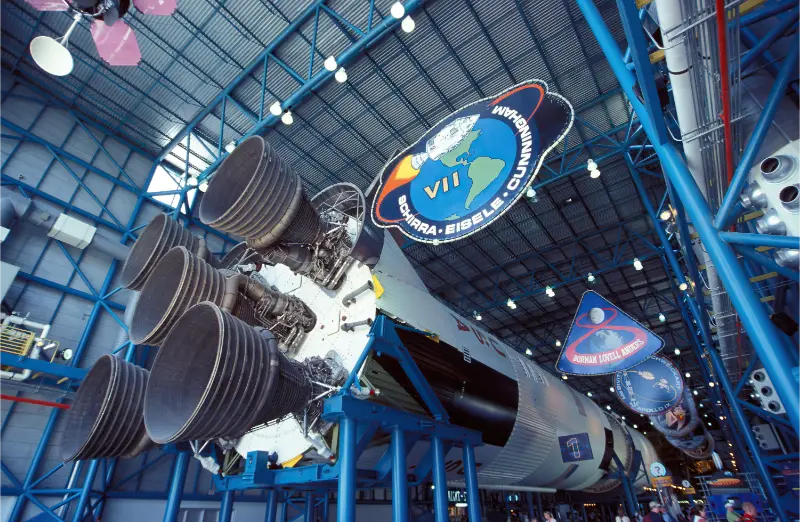
Orlando Science Center gives families a substantial indoor day away from the parks, while nearby communities add smaller history and art museums. The Kennedy Space Center Visitor Complex on the Space Coast is larger than a conventional museum experience, but it belongs in any Florida culture-and-science plan because it combines historic spacecraft, exhibits and working spaceflight context. Give it most of a day rather than treating it as a quick indoor stop.

North Florida and the Panhandle tell different parts of the state story
Jacksonville’s Cummer Museum combines art with riverfront gardens, while St. Augustine offers museums and historic sites tied to centuries of settlement. Pensacola’s National Naval Aviation Museum is a major aviation destination, and Tallahassee has institutions connected with state history, natural history and government. These museums are especially valuable on road trips because they give context to regions that can otherwise become only highway stops.
Children need interactivity and pacing
A four-year-old and a sixteen-year-old do not experience the same museum. Science centers, children’s museums, aquariums and transport or space collections often work better for younger visitors than a long sequence of quiet galleries. Teenagers may engage more with photography, design, military history, technology or an exhibit they help select. Plan a real meal or outdoor break after a long indoor visit instead of immediately adding another museum.
Museums are strong options for heat and thunderstorms
Florida weather makes indoor attractions strategically useful. A museum can protect a summer afternoon from heat or turn a stormy beach day into a memorable part of the trip. Keep one nearby museum or historic house saved for each travel region rather than building a statewide list you will never use. If the forecast changes, choose the closest strong option and keep the day geographically simple.
How to choose among hundreds of institutions
Start with subject matter, then location, then practical details. Art lovers may travel specifically for Dalí or a major exhibition; families may prioritize science and children’s museums; history travelers may prefer St. Augustine, Pensacola or Tallahassee. Check temporary exhibits, closing days, parking and timed-entry rules shortly before the visit. Smaller museums often have limited hours, which makes spontaneous arrival less reliable than at a major city institution.
Families, seniors and accessibility
Museums are excellent multigenerational attractions because most provide climate-controlled space, restrooms and seating, but not every gallery or historic building has the same accessibility. Confirm elevators, wheelchair routes and accessible entrances if needed. Families should identify one or two must-see exhibits before arrival and accept that younger children may not want to complete every floor. Senior travelers often enjoy a slower visit with a café or garden break rather than a museum marathon.
For a mixed-age group, protect the needs that are hardest to change: heat tolerance, medication timing, mobility, naps and the ability to stand in lines. Split the group when that creates a better day instead of treating separation as a planning failure. Confirm accessibility directly with the attraction, hotel, park or operator when a specific feature is essential, because the word accessible can describe very different real-world conditions.
Budget and booking
Many museums charge admission, while others have free days or free permanent collections. Do not build a trip around a promotional free period without verifying the current rules. Membership reciprocal benefits can be useful for frequent museum visitors, and city attraction passes may offer value only if the included venues match your actual itinerary. Parking can be a meaningful extra cost in downtown Miami, Tampa and other urban areas, so include it in the comparison.
Compare total trip cost rather than headline price. Parking, resort fees, taxes, cleaning charges, rideshares, rental-car costs and food can change which option is genuinely affordable. Keep weather-sensitive elements flexible when possible, and save confirmation numbers in one place. If one experience is the main reason for the trip, secure that first before building nonrefundable lodging around it.
How to build a realistic day
Start with one anchor activity and place it at the time when the group has the most energy and conditions are usually best. Leave enough space for parking, meals and unexpected delays rather than stacking timed reservations back to back. In warm months, a morning outdoor block followed by lunch and an indoor or shaded afternoon is often more comfortable than continuous sightseeing. On driving days, stop before fatigue becomes a problem and keep water, sun protection and a simple snack available.
Keep one nearby backup plan that does not require crossing a major metro area. A museum, shopping district, hotel pool, scenic drive or relaxed meal can rescue a day when weather or energy changes. The goal is not to complete the maximum number of attractions; it is to finish the day with enough energy to enjoy the next one. This approach is particularly valuable for children, older travelers and anyone visiting Florida for the first time.
Common mistakes to avoid
- Treating museums only as emergency rainy-day options.
- Crossing a large metro area for several unrelated museums in one day.
- Expecting young children to enjoy the same pacing as adults.
- Ignoring limited opening days at smaller institutions.
- Assuming every historic building is fully step-free.
- Buying an attraction pass without checking whether the included museums fit the itinerary.
Related Wonderful Florida guides
Florida travel guide for first-time visitors, Florida with kids, Florida in summer, St. Petersburg and Clearwater travel guide, Sarasota and Siesta Key travel guide.
Official resources to check
Rules, opening hours, prices, transport schedules, access arrangements and weather-related operations can change. If a detail is essential to the trip, confirm it with the responsible operator or public agency shortly before travel rather than relying on an old screenshot, saved social post or third-party summary.
Final planning advice
The strongest Florida itineraries are clear about priorities without becoming rigid. Choose what genuinely matters, keep the day geographically compact and allow conditions to change. A trip with a little breathing room usually produces better meals, easier family decisions and more memorable experiences than a schedule that depends on perfect traffic, perfect weather and perfect energy from morning to night.