
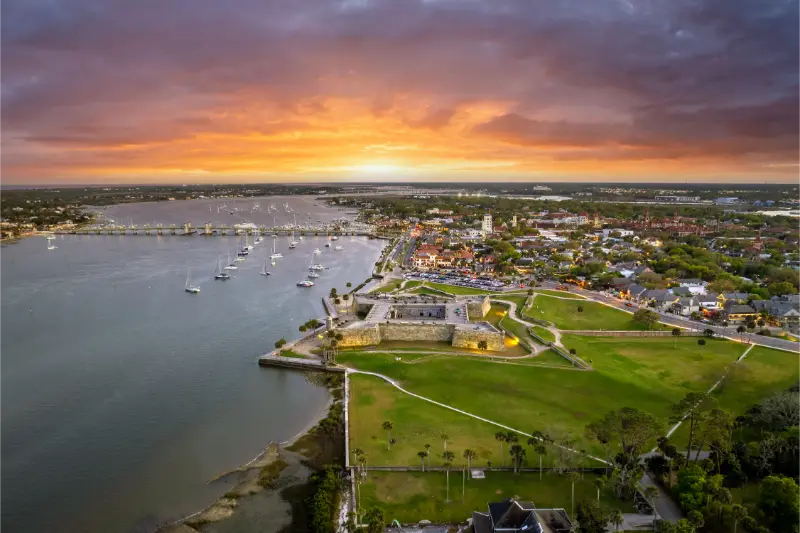
Mission Nombre de Dios is easy to pass when visitors focus only on St. George Street and the fort, yet it offers one of the clearest ways to understand St. Augustine before the city became a tourism destination. The waterfront grounds combine religious history, open space, a small museum, chapels and the landmark Great Cross.
This is not a conventional attraction with a single entrance and a fixed route. Some travelers come as pilgrims, some for history, some for architecture and others simply because the grounds are peaceful. That flexibility is part of its appeal, but it also means you should know what you want from the visit before arriving.
Because the site is close to the northern edge of the historic district, it works well as a first stop before downtown or as a quiet reset after a busy morning among the central attractions.
Quick planning summary
- Best for: history travelers, Catholic pilgrims, architecture lovers, photographers, multigenerational groups and visitors who want a quieter stop close to downtown
- How much time: 1–1.5 hours for the grounds, chapel, church and museum; longer if attending Mass or spending quiet time on site.
- Current cost: No general admission fee. The official FAQ currently states that parking is free for the first hour and during scheduled Masses, confessions and Eucharistic exposition; fees can apply afterward.
- Current hours/status: Grounds are currently open daily from dawn to dusk. The museum, gift shop, Shrine Church and Historic Chapel have posted daytime hours that vary by component, so check the official schedule before travel.
- Location: 101 San Marco Avenue, St. Augustine, FL 32084
Why this stop is worth including
The mission grounds connect the 1565 founding story of St. Augustine with the religious traditions that accompanied Spanish settlement. That context helps explain why churches, missions and military defenses are so intertwined in the city’s history.
The outdoor setting gives families and senior travelers more room than many small historic interiors. You can adjust the visit to energy level without feeling that you have abandoned a paid tour halfway through.
Photographers also get a different visual side of St. Augustine: marsh, bay, chapels, mature trees and the Great Cross rather than only narrow streets and colonial facades.
What to see and do
Begin with the Great Cross and waterfront
The Great Cross is the visual landmark most visitors notice first. Use it to orient yourself geographically and to appreciate how exposed this shoreline once was.
Early morning and late afternoon usually offer softer light, while midday can be hot with limited shade in open areas.
Visit the Historic Chapel
The small chapel creates a very different atmosphere from the large modern Shrine Church. Even visitors who are not religious can appreciate the scale, materials and continuity of worship associated with the site.
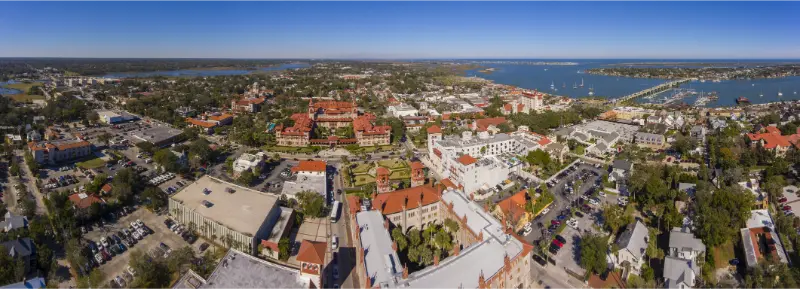
Enter quietly and avoid treating an active devotional space like a museum gallery.
See the Shrine Church
The larger Shrine Church accommodates pilgrim services and modern visitors while continuing the site’s religious role.
Check the current liturgical schedule if you want to avoid arriving during Mass or if attending Mass is part of your plan.
Use the museum for context
The museum helps connect the site to St. Augustine’s founding story and religious history.
Read enough to understand the sequence, then return outside; the landscape is an important part of the visit.
Walk the grounds slowly
Paths, statues and devotional areas are spread across the property, so the experience is better when treated as a walk rather than a checklist.
Families can let children focus on landmarks and open space rather than expecting them to absorb every historical detail.
Pair the mission with nearby history
The mission sits close enough to downtown that it can be paired with the Castillo, Fountain of Youth or the northern end of St. George Street without a long drive.
The best combination depends on whether you want religious history, archaeology or military history to be the main theme of the day.
Current costs, hours and reservations
The official Mission and Shrine website currently lists the grounds as open daily from dawn to dusk. It separately publishes hours for the museum, gift shop, Shrine Church and Historical Chapel, plus a schedule for Mass, confession and devotional services. The site states that there is no admission fee. Parking is free for the first hour and during scheduled religious services; other parking rules and fees can apply after that first hour.
Hours, prices, tour schedules, weather policies and temporary closures can change. Because this article is scheduled for future publication, recheck the official source shortly before travel and again on the day of any weather-sensitive visit.
Parking and getting there
Use the on-site parking according to the current posted rules and pay attention to the one-hour free period if you are visiting only as a tourist. Do not assume a religious service parking exception applies to a general sightseeing visit. The site is also walkable from the northern historic district for travelers who have already parked downtown.
Best time of day and best season
Morning gives you cooler temperatures and a quieter feel. Late afternoon can be beautiful on the water, but confirm indoor closing times before arriving because the grounds remain open longer than the museum and chapels.
Spring and fall often provide the easiest balance of temperature and crowds in northeast Florida. Summer brings long daylight but also stronger heat, humidity and thunderstorms. Winter can be excellent for walking, although cold fronts and wind sometimes make outdoor stops feel much cooler than the forecast suggests.
Families with babies and young children
This is a good low-pressure stop with children because the outdoor spaces let them move. The museum and devotional interiors are less suitable for restless toddlers, so keep those portions brief.
Family tipFor families with babies or young children, plan around attention span rather than the advertised length of a tour. Bathrooms, shade, food and opportunities to move often determine whether a stop feels successful. A one-hour historic attraction followed by a park or beach can work better than stacking two information-heavy visits back to back. Teenagers usually respond better when they have a specific question, photo challenge or story to follow instead of being asked to read every panel.
Teenagers and older children
Teenagers interested in early colonial history may engage more if you connect the site to the founding of St. Augustine, Spanish Florida and the nearby fort rather than presenting it only as a religious stop.
Senior travelers and multigenerational groups
The official site states that accessible parking, restrooms and walkways are available. The open grounds still involve distance, sun and weather, so shorten the loop if heat or fatigue becomes a factor.
For senior travelers and groups with different mobility levels, remove unnecessary walking before removing the attraction itself. Park strategically, ask about step-free entrances, use benches and schedule outdoor sites for cooler hours. Historic buildings may have narrow stairs or uneven floors, while natural areas can include sand, roots or gravel. Let the least mobile traveler set the base pace, then allow more active members to add a longer trail, tower climb or beach walk.
Accessibility and comfort
Accessible parking, restrooms and walkways are available according to the official visitor information. Contact the site before travel for any specific mobility requirement involving chapel entrances or seating.
Food, water and practical breaks
Treat this as a sightseeing stop rather than a meal destination. Bring water for the grounds and plan food in the historic district afterward. Keep food and drinks out of worship spaces unless current rules say otherwise.
Photography tips
The Great Cross, chapel and shoreline work well in wide compositions. Be discreet around services and people praying, and avoid photographing worshippers without permission.
How it compares with nearby alternatives
Choose Mission Nombre de Dios when you want the city’s founding and religious story in a calm setting. Fountain of Youth Archaeological Park is more archaeology-oriented and family-interactive, while Castillo de San Marcos is the stronger choice for military history.
How to combine it with other Wonderful Florida guides
A logical half day is Mission Nombre de Dios, then Fountain of Youth Archaeological Park, followed by a walk toward St. George Street and the bayfront.
How to fit this stop into a St. Augustine trip
St. Augustine works best when you organize each day by area instead of driving back and forth between isolated attractions. The historic core is compact, while the wider destination reaches north toward Ponte Vedra, west toward the St. Johns River and south along Anastasia Island. Parking once and walking usually saves more time than moving the car between nearby downtown stops. A good itinerary also alternates concentrated history with something lighter: a garden, beach, waterfront walk, animal experience or relaxed meal. That rhythm is especially useful for families, teenagers and multigenerational groups who do not all absorb museums at the same pace.
If you have only one day
Choose one major historic anchor, one smaller cultural or natural stop and one flexible outdoor period. Keep downtown activities walkable and avoid stacking several reserved tours so tightly that a parking delay ruins the sequence.
If you have two or three days
Separate the historic core from beach, wildlife or river experiences. This reduces driving, keeps indoor attractions from feeling repetitive and gives the group time to recover between information-heavy visits.
Budget and value
St. Augustine can become expensive if every hour includes an admission ticket. Decide which paid experiences genuinely match your interests, then use free churches, plazas, scenic streets, parks, beaches and waterfront areas to create contrast. Compare current direct prices with any combination pass you are considering, but only buy a bundle if you realistically have time for all the included stops. Free attractions are not automatically quick: some of the best low-cost places deserve an hour or more when the weather is pleasant.
Weather and seasonal planning
Northeast Florida weather can change the value of a visit. Late spring through early fall brings heat, humidity and frequent afternoon thunderstorms, while winter can be sunny but surprisingly cool and windy near open water. Lightning matters at beaches, parks and exposed historic grounds, so treat thunder as a reason to change plans rather than something to wait out under a tree. Carry water, sun protection and a light rain layer, and check same-day conditions. During hurricane season, confirm operating status before driving because coastal sites and outdoor attractions may close even when the storm center is far away.
A realistic half-day plan
Arrive in the morning
Use the cooler part of the day for the outdoor grounds and Great Cross.
Add the chapel, church and museum
Check which interiors are open and whether a service affects access.
Continue toward downtown
Walk or drive a short distance to the Fountain of Youth, Castillo or St. George Street depending on your interests.
Where to stay for this part of northeast Florida
Stay in or beside the historic district if evening walking, restaurants and major downtown sights are your priority. Anastasia Island and St. Augustine Beach are better for ocean access and a quieter end to the day. Vilano and Ponte Vedra work well for north-coast itineraries, while northwest St. Johns County is more convenient for river, golf and I-95-area stops. For a short trip, one well-chosen base is usually better than changing hotels to save a few driving miles.
Common mistakes to avoid
- Assuming the grounds and every indoor component keep identical hours.
- Treating an active shrine as if it were only a tourist museum.
- Ignoring the current parking rules after the free period.
- Scheduling an outdoor visit at the hottest part of a summer day.
- Trying to combine too many downtown admissions immediately afterward.
Practical questions before you go
Is Mission Nombre de Dios free?
The official site currently states there is no general admission fee.
How long should I allow?
About 60–90 minutes works for most sightseeing visits.
Are the grounds open every day?
The official schedule currently lists the grounds from dawn to dusk daily.
Is it accessible?
The site lists accessible parking, restrooms and walkways.
Can non-Catholics visit?
Yes. Visitors should simply respect active worship and devotional areas.
Official resource to check before you go
Use the official visitor information for current hours, prices, reservations, access rules, closures and event schedules before travel.
Extra planning notes for a smoother visit
If the stop has a fixed tour, worship service, guided entry or seasonal program, build the day around that constraint first. Flexible activities such as a plaza walk, beach time or lunch can move around it. This prevents the common mistake of arriving just after the only program your group wanted.
Keep a fifteen- to thirty-minute buffer between major stops. Historic-district traffic, full parking lots, bridge openings, weather changes and ticket lines can make short map distances take longer than expected.
Save the official address, confirmation email and parking instructions before leaving the hotel. Mobile reception is usually good in the city, but having the essentials available offline prevents avoidable stress when a group is trying to navigate together.
For multigenerational travel, agree on a reduced version of the visit. One person can skip a sandy path, stair climb or long gallery while the rest continue, then everyone can meet at a clearly defined bench, lobby, pavilion or café.
Think about the return trip before you begin. After a hot beach session, long guided tour or museum visit with children, the group is less patient with parking searches and restaurant queues. Keep water in the car and know which meal options are nearby.
Respect the setting. Churches, shrines, wildlife facilities, museums, dunes and historic homes all have different rules for photography, touching, food and movement. Following those rules usually improves the experience for everyone rather than limiting it.
Final thoughts
Mission Nombre de Dios is valuable precisely because it feels different from St. Augustine’s busiest ticketed attractions. Give it enough time to understand the setting, then let the open grounds provide a quieter transition into the rest of the city.