

There is no single best month to visit Florida because the state stretches across very different climates, coastlines and travel styles. January can feel beautifully mild in Miami and the Florida Keys while northern Florida may be cool enough for a jacket. July is convenient for school-age families but brings heat, humidity and frequent afternoon thunderstorms. Spring can be almost ideal for beaches and road trips, yet school breaks and major events can raise prices and crowds. Autumn often offers warm water and lighter crowds, but it also overlaps with the Atlantic hurricane season.
The smartest way to choose your dates is to start with the Florida experience you want rather than with a month on the calendar. A theme-park trip, a Keys escape, an Everglades wildlife visit, a Panhandle beach holiday and a multigenerational road trip do not have exactly the same sweet spot. This guide compares seasons and regions so you can choose a period that fits your priorities, your tolerance for heat, your budget and the ages in your group.
Quick planning summary
- Best all-round balance: For many travelers, late winter through spring offers comfortable temperatures and a good mix of outdoor activities, although school-break weeks can be busy.
- Best for South Florida winter sun: December through March is popular in Miami, the Keys and the southern Gulf Coast because humidity is generally lower and outdoor sightseeing feels easier.
- Best for school-age families: Summer works if school calendars dictate the dates, but plan around heat, thunderstorms, hydration and indoor breaks.
- Best for lower crowds: Parts of late spring and autumn can be calmer outside holiday periods, but weather and hurricane-season flexibility become more important.
- Most important rule: Choose the region first. North Florida, Central Florida, South Florida and the Keys can feel very different on the same day.
Winter in Florida: December to February
Winter is one of Florida’s most appealing seasons for travelers who want to spend long days outdoors without the intense humidity of summer. In South Florida and the Keys, this is prime time for walking neighborhoods, eating outdoors, boating, beach time on mild days and combining cities with nature. Miami, Key West, Naples and the Everglades are especially attractive when you want sunshine but do not need midsummer heat.

Central Florida is also comfortable for theme parks because walking for hours is usually easier than in July or August. Temperatures can still vary, however, and a cool front can make early mornings and evenings surprisingly chilly. A light layer is useful even when the afternoon forecast looks warm. Families with very young children and older travelers often appreciate this season because the lower heat load makes long sightseeing days more manageable.
Northern Florida and the Panhandle are cooler. St. Augustine, Amelia Island, Tallahassee and Pensacola can still be excellent winter destinations, especially for history, food and uncrowded walks, but they should not be treated as guaranteed hot-beach escapes. If swimming is the central goal, southern Florida is the safer winter choice.
Winter is also important for nature travel. The Everglades’ drier season generally makes trails, wildlife viewing and mosquito management easier than during the wettest months. Manatee-viewing opportunities can also improve when cold weather pushes animals toward warmer spring-fed waters. The trade-off is demand: winter is a high season in many southern destinations, so good-value accommodation may require earlier booking.
Spring in Florida: March to May
Spring is one of the most versatile periods for a Florida trip. March and April often combine warm days with lower humidity than midsummer, and they work well for road trips that mix beaches, cities, parks and nature. The exact feel depends on where you go: South Florida can already be very warm, while the Panhandle and Northeast Florida may still have cooler mornings.
The biggest planning issue is the school-break calendar. Spring break does not happen on one statewide week, and different colleges, schools and regions create several waves of demand. Beach towns, theme parks and popular nightlife destinations can become much busier. Easter and holiday weekends can add another layer of demand. Travelers who prefer a quieter atmosphere should compare local calendars rather than assuming all of March is equally crowded.
April can be an excellent compromise for many adults, couples and multigenerational groups. Water temperatures improve, daylight is generous and the most oppressive summer humidity has often not yet arrived. May can also offer strong value, especially before Memorial Day weekend, but heat and afternoon storm patterns begin to feel more summery as the month progresses.
For a statewide road trip, spring is particularly useful because it reduces the climate contrast between north and south. You can move from Miami and the Keys to Orlando, St. Augustine or the Panhandle without feeling as though you have crossed between two completely different seasons.
Summer in Florida: June to August
Summer is not a bad time to visit Florida; it is simply a season that rewards a different rhythm. School holidays make it the practical choice for many families, and the beaches, springs, water parks and resort pools are in full summer mode. The challenge is heat, humidity, strong sun and frequent thunderstorms, often developing later in the day.
A successful summer itinerary starts earlier. Outdoor attractions, beach walks, wildlife activities and theme-park touring are easier in the morning. Midday is a good time for lunch, a museum, an aquarium, an indoor attraction or a hotel break. Evenings can become enjoyable again after a storm passes, although lightning safety always comes before a schedule.
Hydration and sun protection matter for every age, but especially for babies, toddlers, people taking medicines that affect heat tolerance and older adults. Do not judge a day only by the air temperature; humidity and direct sun can make a moderate-looking forecast feel much harder. Build more rest into the plan than you think you need.
Summer also overlaps with the Atlantic hurricane season, which officially runs from June 1 through November 30. That does not mean a hurricane will affect your holiday, but refundable or changeable bookings become more valuable. Follow official forecasts as the trip approaches and avoid making irreversible decisions based on social-media weather speculation.
Fall in Florida: September to November
Autumn can be one of Florida’s most rewarding value seasons, but it requires realistic weather planning. September remains hot and humid across much of the state, ocean and Gulf water is warm, and many family destinations become quieter once schools are back in session. At the same time, the climatological peak of Atlantic hurricane activity falls around early September, with much of the basin’s activity historically concentrated from mid-August through mid-October.
October often starts to feel more comfortable, particularly later in the month and farther north. Theme-park events, Halloween programming and festivals can create busy weekends even when general tourism is lighter. November is especially attractive for city breaks, road trips and outdoor sightseeing, with lower humidity becoming more common and Thanksgiving week creating a predictable demand spike.
If you travel in fall, flexibility is more important than trying to predict a storm months in advance. Choose sensible cancellation terms, know where to find official National Hurricane Center information and keep a backup plan for indoor attractions or an altered route. Most trips will not be disrupted by a major storm, but a flexible booking strategy is still good travel planning.
Florida’s regional differences matter more than many first-time visitors expect
North Florida and the Panhandle have more pronounced seasonal changes than Miami or the Keys. Winter can be genuinely cool, while late spring and early autumn can be excellent for beaches without peak-summer intensity. Destin, Pensacola, Panama City Beach and the Forgotten Coast therefore have a different seasonal personality from Key West.
Central Florida, including Orlando, is inland enough that afternoons can become very hot and stormy in summer. Winter and spring are popular for theme parks because visitors spend so much time walking outdoors. Central Florida’s freshwater springs, however, are especially appealing during hot months because their clear water provides a completely different experience from the coast.
South Florida has a subtropical feel, with warm winters and a more distinct wet summer season. Miami, Fort Lauderdale, Palm Beach County, Naples and the Everglades are especially popular during the northern winter. The Florida Keys are maritime and breezy but can still be hot, humid and storm-prone in the warmer months.
For a trip covering several regions, pack for variation. A January itinerary that begins in Key West and ends in St. Augustine may need swimwear, sun protection and a light jacket. A summer itinerary needs rain flexibility everywhere, but the timing and intensity of storms can differ from coast to coast.
Best time for Orlando and the theme parks
For Orlando, weather is only one part of the equation. School holidays, major events, new attraction openings and ticket-pricing calendars can matter just as much. Winter outside the Christmas and New Year period can offer comfortable walking weather. Spring is pleasant but spring-break weeks are busy. Summer gives families the most calendar freedom but demands an early-start, midday-break strategy. Autumn can bring lighter school-term crowds on some dates, while Halloween and holiday events create strong demand on others.
There is no permanently ’empty’ theme-park season. Instead of chasing a mythical lowest-crowd week, choose dates that fit your family, book the most important experiences early and build enough time into the itinerary that one crowded or rainy day does not ruin the trip. For small children and seniors, shorter park days with rest periods are often better than trying to maximize every operating hour.
Best time for Florida beaches
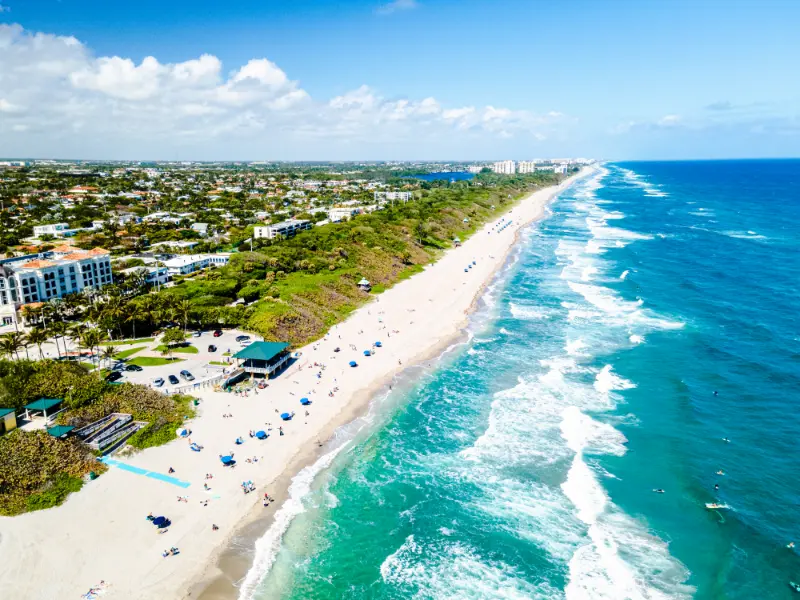
Beach conditions vary by coast. The Gulf Coast is often favored by families who value generally gentler surf and broad sandy beaches, while the Atlantic Coast attracts travelers who enjoy waves, surfing and energetic beach towns. Water temperature, wind, currents, red-tide conditions, sargassum, jellyfish and local beach flags can all affect the experience on a specific day, so no month guarantees perfect water everywhere.
Winter swimming is most reliable in far South Florida and the Keys, although individual comfort varies. Spring is a strong statewide beach season as water warms. Summer brings warm water but also intense sun and storms. Early autumn keeps the water warm, while late autumn can be particularly pleasant for shore walks and outdoor dining.
If accessibility is important, seasonal timing can also affect comfort. Cooler months reduce heat stress on long boardwalks and parking areas. Many communities offer beach wheelchairs or mobility mats, but services vary, so confirm details directly with the municipality or beach operator before the trip.
Hurricane season: plan without panic
The Atlantic hurricane season officially runs from June 1 through November 30. The season covers half the year, so avoiding Florida for all six months is unnecessary for most travelers. What matters is having a plan. Choose travel insurance or flexible booking terms that you understand, especially for flights, vacation rentals and prepaid activities.
As departure approaches, use the National Hurricane Center and local emergency-management sources rather than long-range social-media forecasts. If a storm threatens the area you are visiting, follow official evacuation orders and accommodation instructions. Rental-car availability, fuel, airport operations and bridge access can all change quickly during a serious event.
For a normal summer or autumn trip with no active threat, simply keep weather awareness in your daily routine. Florida thunderstorms can also produce dangerous lightning and localized flooding even when no tropical system is nearby. A flexible itinerary makes ordinary weather easier to manage.
Best time to visit Florida by travel style
The best season changes when the traveler changes. Couples who want restaurants, neighborhoods and beach walks may love February or April. Families tied to the school calendar may prefer June but should design shorter outdoor blocks. Retirees and older travelers often appreciate January through March or late autumn for lower humidity. Wildlife travelers may prioritize the Everglades’ drier season. Surfers may watch swell patterns rather than average air temperature.
- First Florida trip: late winter or spring is an easy introduction if your schedule is flexible.
- Theme parks: prioritize manageable weather and your school/work calendar, then plan around known holiday peaks.
- South Florida and the Keys: winter is especially attractive for outdoor sightseeing.
- Panhandle beaches: late spring through early autumn offers warmer beach conditions, with summer heat and storms as the trade-off.
- Road trips: spring and late autumn make long driving days and walking stops more comfortable.
- Budget-focused travel: compare shoulder-season dates, but do not choose a cheaper hurricane-season rate without understanding cancellation rules.
Common timing mistakes to avoid
The first mistake is treating Florida as one climate zone. The second is looking only at average temperature while ignoring humidity, sun exposure, storms and water temperature. The third is assuming a low hotel rate automatically means good value; a cheaper trip can become frustrating if the weather does not suit the activities you actually want.
Another mistake is overreacting to hurricane season by trying to predict specific storms months ahead. Plan for uncertainty instead. Finally, do not underestimate holiday periods. Christmas, New Year, Presidents’ Day weekend, spring breaks, Easter, Memorial Day, July 4, Labor Day and Thanksgiving can influence prices and crowds in very different destinations.
Useful Wonderful Florida guides to read next
Continue planning with Best Beaches in Florida, Orlando Travel Guide, Everglades National Park Guide and Florida Keys and Key West Travel Guide.
Official resources to check before you travel
Opening hours, road conditions, park rules, transportation services, weather alerts and reservation requirements can change. Check the official source again shortly before the trip whenever a specific attraction, route or service is essential to your plans.
Final thoughts
The best time to visit Florida is the period that matches your region, your activities and the people traveling with you. For many first-time visitors, late winter and spring offer the easiest balance of weather and outdoor time. Summer is entirely workable with a heat-smart rhythm, and autumn can offer excellent value when you preserve flexibility for tropical weather. Choose the experience first, then the month—and Florida becomes much easier to plan.