
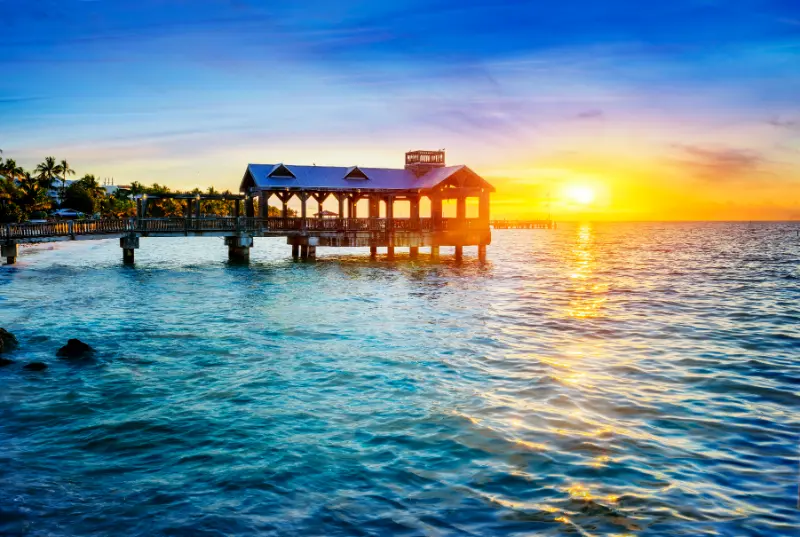
At the southwest side of Key West, Fort Zachary Taylor Historic State Park brings together a historic coastal fortress, a swimming beach and an unusual opportunity to slow down away from the busiest shopping streets. It is one of the few Key West attractions where a family might learn about nineteenth-century fortifications, picnic under trees and end the afternoon watching changing light over the water without changing destination. The fort and beach do not share identical access hours, however. Visitors who arrive late for a sunset may find that the historic fort has already closed, so building the day in the right order matters.
At a glance
Fort Zachary Taylor Historic State Park | 601 Howard England Way, Key West, FL 33040 | Best planned around Civil War-era fort, sandy and pebbly beach and accessible picnic facilities.
Contents
- The story of Fort Taylor and the harbor
- Seeing the fort before it closes
- The beach: swimming and snorkeling expectations
- Shaded picnics and a low-pressure family visit
- Accessible areas, beach wheelchairs and fort surfaces
- Sunset without forgetting park logistics
- How to visit responsibly around historic structures
- Planning around families, heat and varied interests
- Fees, services and an honest day-trip budget
- Understanding the historic fort in context
- Water safety beside a historic landmark
- A practical visit without a rental car
- What to do when family interests differ
- Small planning details with big consequences
- Practical planning table
- Frequently asked questions
- Official sources and current alerts
The story of Fort Taylor and the harbor
Construction on the fort began in the nineteenth century as the United States expanded its coastal defenses. Its history connects the development of Key West harbor with the Civil War and later conflicts, and the preserved cannon installations provide a physical sense of how maritime defense once worked. A strong visit asks what a coastal fort was designed to protect and why its position mattered. The brick walls and gun rooms are not just photo backdrops; they illustrate strategy, military technology and the human effort of construction. Interpretive panels can help visitors think about those subjects without glorifying warfare.
Seeing the fort before it closes
The historic fort normally closes at 5 p.m., earlier than the park’s sunset-based closing. That difference is easy to overlook if you arrive thinking only about a famous Key West sunset. Enter earlier, visit the fort while there is plenty of time for the exhibits and then decide whether to stay for beach time. The park offers self-guided interpretation and has advertised a regular fort tour; confirm today’s schedule with staff, since programs can change. Comfortable shoes help on old surfaces. Remind children not to climb on historic structures or enter closed rooms simply because they seem like an adventure.
The beach: swimming and snorkeling expectations
The state park has a popular beach made up of sand and pebbles, with adjacent structures and marine habitat that attract snorkelers. It is different from the soft, uniform sand people sometimes imagine when booking a Caribbean-style resort. Water shoes can improve comfort on rocky patches, and visitors should assess currents, visibility and water advisories before entering. A snorkeling outing begins with a properly fitted mask, a buddy and staying in an area suited to your ability. There is no guarantee of seeing a particular tropical fish. Never pursue wildlife or stand on living reef or sensitive seagrass.
Shaded picnics and a low-pressure family visit
Picnic areas and grills make it possible to turn a short history visit into a longer beach day without buying food for every family member at restaurant prices. Follow restrictions on fires and food storage, and clean your space completely. Families can bring a simple meal, cool drinking water and a shaded rest plan. Small children may enjoy the fort’s open-air corridors but can tire quickly after walking and swimming, so choose one main educational objective rather than a lengthy lecture. Older adults may appreciate benches and picnic shade while more active family members explore the beach. Everyone should have a clear meeting location.
Accessible areas, beach wheelchairs and fort surfaces
The park lists accessible parking, picnic facilities, restrooms, a café, ground-level fort areas and a beach wheelchair that may be borrowed at no charge. This is encouraging, but it does not make every historic stair, gun room or rocky shore accessible. Contact park staff about which interpretive panels can be reached on a level path, where the beach wheelchair is obtained and whether assistance is available on your date. Someone with reduced stamina can enjoy a short fort introduction and picnic without attempting every walkway. For families, it is better to choose an accessible partial experience than to assume the historic building offers the same movement options as a new museum.
Sunset without forgetting park logistics
Key West sunsets attract crowds, but a park sunset visit must follow the gate, parking and beach rules. Check the official sunset closing time for your date and understand how much time is needed to walk back to the car. If you are staying downtown, consider the transport arrangement rather than assuming a short-looking map distance will be comfortable after a hot beach day. Bring a flashlight only for legitimate exit needs and avoid shining lights at wildlife. A sunset photograph is not a reason to remain in a closed area. The most relaxed ending comes from leaving enough time to gather belongings calmly.
How to visit responsibly around historic structures
Fort Taylor is an irreplaceable historic site. Avoid touching fragile masonry unnecessarily, climbing over barriers or moving objects from their original positions. At the beach, remove all fishing line, packaging and disposable items. A swimming break should not disturb nesting or resting wildlife, and shells containing living animals should stay in the habitat. If a guided interpreter is available, ask about the fort’s changing functions rather than turning the visit into a search for dramatic war stories. A conversation about the history of Key West, including labor and trade, can add valuable context to what visitors see in the fort.
Planning around families, heat and varied interests
The best order for a mixed-age group is usually fort first, break second and beach later. This prevents the most tired person from having to climb historic paths after hours in saltwater. Set aside a rest period before the sun reaches its strongest afternoon intensity. If someone in the party is interested only in history, they may enjoy the fort tour and a brief shoreline view; if another visitor wants to snorkel, arrange a shared picnic rather than making everyone remain in the water area. Children need direct supervision along both the fort and the beach, and nobody should enter the water during lightning.
Fees, services and an honest day-trip budget
The Florida State Parks website provides the standard entry fee, but cafés, concessions and other services may charge separately. Do not assume a park pass includes meals or equipment. For a couple or family based in Key West, this park can represent strong value because historic interpretation, picnic space and a beach share one entrance. It may be less convenient when a traveler has only a narrow window before departure or cannot tolerate walking outdoors. Verify the current fort tour, café and wheelchair availability before booking transportation. Prioritizing a few meaningful experiences is better than trying to force every Key West attraction into one afternoon.
Understanding the historic fort in context
Fort Zachary Taylor’s role changed over time as defense priorities and technology evolved. A cannon line that once formed a serious coastal defense is now part of a preserved historical setting. Visitors can consider how the harbor’s strategic position influenced military planning without treating warfare as entertainment. Ask which elements survive from different periods and how interpretive panels explain change. Children often understand history better through questions about what daily life inside the fort required than through lists of battle dates. Looking at the building as a workplace and a defensive system makes the experience more human and less abstract.
Water safety beside a historic landmark
The beach offers opportunities for swimming and snorkeling, yet the fort’s historical significance does not make the adjacent water safer than another shoreline. Check posted conditions, weather and the swimming area before entering. A rocky or pebbly bottom can surprise visitors used to very soft sand. Snorkel with a buddy, use flotation appropriate to your ability and keep inexperienced children close to shore. Do not chase fish or stand on sensitive marine habitat. If water visibility is poor, enjoy the shore and fort instead of taking unnecessary risks. A rewarding park visit does not require everyone to enter the sea.
A practical visit without a rental car
Key West is compact in some areas, but walking distances feel much longer in heat and after a day in saltwater. Check the actual distance from your lodging to the park gate, not simply the distance to the nearest map marker. If using a bicycle, confirm safe parking and cycling rules within the park. For rideshare pickup, identify an authorized location so that your group is not stranded at closing. Travelers staying near Duval Street may find a half-day visit manageable without a car, provided they include a rest and a water break. Never assume that a sunset crowd means transport will be immediately available.
What to do when family interests differ
A family with history enthusiasts, swimmers and small children can split an outing into manageable parts. Start together at the fort, then agree on a shaded picnic area as the shared base. Some adults can watch the shoreline while others explore additional history panels, provided child supervision remains clear. Check accessible routes rather than asking a mobility-limited family member to attempt rough steps. A shared lunch and short photo stop can reconnect the group before sunset. When everyone has an alternative to their least favorite activity, the day becomes more enjoyable and safer.
Small planning details with big consequences
Pack drinking water, protective footwear, a towel and a place to store wet items. Know when the historic fort closes so you do not miss the very part that makes this beach destination distinct. Check park rules before bringing grills, fishing equipment or large group decorations. If a storm develops, leave the water and exposed beach promptly, even when a sightseeing schedule is full. Carry a park map or save one offline and set a realistic departure time before sundown. Leaving the park clean and staying on permitted paths ensures that both the historical setting and coastal environment remain available to future visitors.
Practical planning table
| Question | Planning guidance |
|---|---|
| Best for | Fort history, beach, picnics and family day trips |
| Fort timing | Historic fort normally closes at 5 p.m. |
| Park timing | Park generally stays open until sundown |
| Water | Beach has pebbles and sandy areas; check conditions |
| Accessibility | Ask about ground-floor fort areas and beach wheelchair |
Frequently asked questions
Is Fort Zachary Taylor just a beach?
No. It combines a nineteenth-century historic fort with beach recreation and picnic facilities.
Can I visit the fort at sunset?
Not usually. The fort closes at 5 p.m., while the park remains open until sundown.
Is the beach all soft sand?
No. Parts are sandy and pebbly; water shoes can be useful.
Are beach wheelchairs available?
The park lists a complimentary beach wheelchair service; ask about availability and assistance.
Do you have to join a guided history tour?
No. Self-guided interpretation is also offered, subject to open areas and park rules.
Official sources and current alerts
Information checked 10 October 2026. Hours, fees, closures, accessibility arrangements and concession schedules can change. Always confirm the current status directly before traveling.
Important current note: Park hours extend to sundown, but the historic fort closes at 5 p.m.; plan the fort visit before beach sunset time.