

Understand the appeal of a small Miami-area beach town
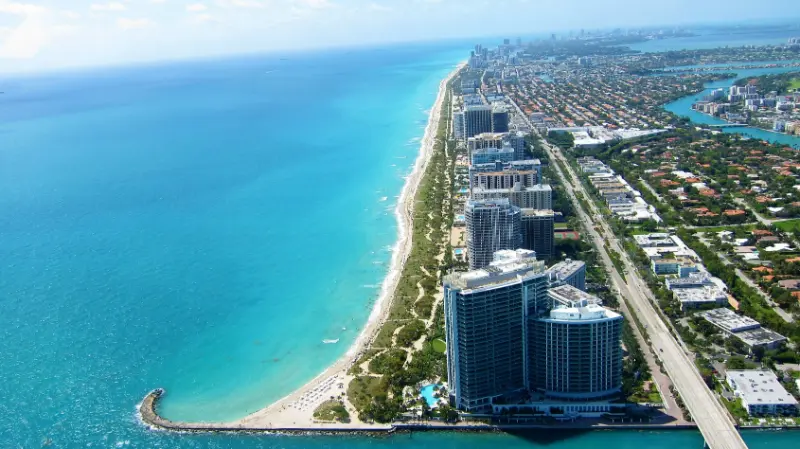
Surfside occupies a compact stretch between Miami Beach and Bal Harbour, with an Atlantic shoreline and a pedestrian-friendly commercial district. It suits travelers seeking an easy beach-and-meal routine rather than nightlife and extensive sightseeing. The town is small enough to explore at a measured pace, but that should not be mistaken for a guarantee that every hotel, restaurant and beach crossing is accessible to everyone. There are busy vehicle routes and hot exposed sidewalks, and a place that looks close on a map may still involve a tiring walk. Start by identifying the beach entrance nearest your accommodation, the location of the restroom and the best way back. The strong appeal is the ability to combine a supervised beach period, public art, neighborhood dining and rest without crossing the entire Miami metropolitan area. It can work for a family weekend or as an alternative base for someone avoiding South Beach crowds.
Choose a public beach entrance and check conditions
The town publishes beach information including rip-current guidance and access arrangements. A beautiful sunny morning does not mean swimming is safe; offshore systems can produce strong currents even when the local sky appears clear. Follow the posted flags and lifeguard directions and never allow children to swim without active adult supervision. Non-swimmers can enjoy the sand from a safe distance and take a shoreline stroll during cooler hours, with no need to enter the water. The town identifies wheelchair-friendly beach entrances at 88th and 96th streets. Visitors should ask where an available beach wheelchair can be collected, who qualifies to borrow it and whether an attendant is required. Municipal policies distinguish residents and approved hotel guests for some facilities, and access to the equipment cannot be assumed without meeting those conditions. After storms, seek the latest notice about sand and entry paths.
Explore Turtle Walk and the neighborhood on foot
Surfside promotes a public-art Turtle Walk that helps turn an ordinary stroll into a short cultural experience. It also references a Mother Turtle sculpture at the beach entrance around 95th Street. Consider choosing a few artwork locations rather than trying to find every installation in the heat. This is especially effective with children, who can look for patterns and discuss turtle nesting without disturbing actual nests or wildlife. Public artwork can move or be temporarily unavailable, so the town tourism page is a better source than a dated social-media map. Around the commercial streets, allow time for coffee and a meal, reading current menus instead of relying on once-popular named restaurants that may have closed. When photographing buildings, remember that private residential entrances are not attractions. The town’s intimacy is most enjoyable when visitors give residents space and follow pedestrian crossings rather than stopping suddenly in traffic.
Know what the parks and community center actually offer
Surfside’s 96th Street Park is a major recreation space with fields, play features and a kayak launch according to the municipality. The town also lists a tot lot, a dog park, and other amenities with distinct operating conditions. A family traveling with a toddler might combine an early playground session with a shaded meal, reserving the beach for later when the child is rested. An adult seeking activity may prefer a longer walk, but bicycles and scooters have their own restrictions in parks and on paths. The oceanfront Community Center has recreation and pool facilities, yet some privileges are limited to eligible users or depend on fees and registration. Do not treat it as a freely accessible resort pool for all tourists. Check the town page directly before planning an indoor or aquatic activity. A short playground stop offers useful variety on an ocean day, particularly if waves are unsafe for swimming.
What different generations can do on the same day
The most useful group itinerary is not one in which a three-year-old and a ninety-year-old are expected to take the same long walk. In Surfside, toddlers may need playground time and shelter rather than a prolonged beach session; meanwhile, teenagers may enjoy public art and a self-paced commercial street walk. A second group might be interested in the opposite pace: non-swimmers can prioritize views and restaurants instead of entering the Atlantic, while older visitors need a suitable beach entrance and dependable shade. Decide at the start who wants to remain at the most comfortable stop and how everyone will regroup. Young children should always be supervised around roads and water even when a park looks quiet. Teenagers benefit from one genuine choice of activity instead of being asked to follow a checklist. Visitors managing fatigue can shorten an out-and-back path at any moment, unlike a complicated loop with no immediate exit. Before traveling, identify an indoor place for medication, diaper changes or cooling down, and carry drinking water for everyone.
Match the outing to seasonal weather and daylight
Season changes the value of Surfside’s outdoor spaces. In hot months, the period shortly after opening is often preferable to early afternoon; in cooler months, a leisurely midmorning arrival can be pleasant, but darkness comes sooner. The relevant local checks are rip currents, swimming flags, beach-access restrictions, hotel-guest qualifications and parking controls. When a thunderstorm approaches, leave water edges, open lawns and exposed pathways for a substantial building or enclosed vehicle. Do not postpone that decision until the rain actually begins: lightning may precede the heaviest shower. A windy or cloudy day is not automatically unsafe, but conditions can alter walking comfort and facility operations. Bring sun protection, suitable footwear and a spare dry layer for children. On a long trip, schedule this outing on a day that can be swapped with another activity rather than lock it to a tightly timed airport transfer. This preserves room for the unexpected without reducing the trip to waiting indoors.
Build a day around the weather rather than a checklist
A sensible itinerary starts with beach conditions. On a calm morning, enjoy the sand, then move to the commercial area for lunch and a rest. In the afternoon, choose Turtle Walk or a park if heat and energy permit. If rip-current warnings make swimming unsuitable, use the morning for art and dining and return to the shore only to enjoy the view from a safe position. Visitors who do not swim can have a complete Surfside day without any water activity. Families traveling with grandparents should agree on a meeting point and a realistic walking limit; one person can remain seated while others take a short beach stroll. Avoid assuming a north-to-south town walk is effortless under intense summer sunshine. During thunderstorms, leave the beach immediately and use proper indoor shelter rather than hiding under a palm tree or open pavilion.
Decide where to stay and how to reach Surfside
An oceanfront hotel can minimize beach carrying distance but may charge substantial resort, parking or service fees. Staying a few blocks inland might cost less, yet guests with young children or restricted mobility should compare the actual walking route and crossing points. If your trip emphasizes downtown Miami, Everglades or theme parks farther north, Surfside is not necessarily the most efficient base. Check transportation to the airport and the final arrival hour, because congestion on Collins Avenue and nearby bridges can extend journeys. A traveler without a car should compare local buses and ride-hail options, allowing for a return trip after dinner. Drivers need to verify lawful parking and payment hours instead of assuming a street space remains free overnight. Ask hotels about step-free entrances, accessible showers and beach equipment separately; marketing adjectives do not replace practical answers.

How to get there without wasting the day in transfers
The journey that best fits this destination is morning beach or shoreline views, a midday food stop, Turtle Walk and a short park visit if weather permits. Start by entering the precise attraction address, not simply the name Surfside, into the navigation app. Distances within Florida communities can be deceptive when a river, interstate, causeway or large residential tract separates sites. Drivers should read signs at the actual car park and allow time to return to the vehicle before closing. People using ride-hail need a confirmed pickup point and a return plan, particularly after dark or in a rural area. Where public transit exists, check the schedule for the exact travel day as well as the location of the return stop. Do not promise that a bus will reach a remote nature entrance merely because a line crosses the same municipality. Anyone carrying a stroller or mobility aid should compare transfers, walking distance and the cost of a direct booked ride.
A realistic spending plan, not a misleading headline price
The trip’s meaningful expenses are accommodation fees, parking, food and mobility support rather than assuming all coastal facilities are open to every visitor. A park or shoreline may be open to pedestrians without charge, while parking, aquatic activities, evening events, special exhibitions, fishing or equipment hire have completely different arrangements. Separate necessary spending from choices that can be removed, and confirm costs from the operator immediately before visiting. A family with several children may spend more on transport and meals than admission. Travelers on a tight budget can bring water, arrange a single restaurant meal and avoid driving between distant attractions simply to fill a printed itinerary. Do not make a nonrefundable booking based only on a third-party calendar that may be stale. For a multiday stay, compare the total accommodation bill including taxes and resort or cleaning fees against the transport savings it creates. This makes an apparently inexpensive outlying property easier to evaluate fairly.
Choose accommodation to match the whole vacation
For overnight planning, compare a hotel close to a suitable beach entrance after comparing full resort and parking fees, or an inland Miami base for broader sightseeing. The correct choice depends on where you will wake up for the following three days, not only on the afternoon you intend to spend in Surfside. Open the route to the airport and the principal attractions, then look at traffic patterns around typical departure hours. Families should verify cribs, refrigerator access, laundry and suitable bed layouts before paying. A hotel described as accessible may still require clarification about the specific room’s entrance, bathroom and elevator route. Those traveling with older adults should request a realistic account of how far the restaurant, vehicle pickup and usable beach or park entrance are from the room. Do not assume that the least expensive listing is the least tiring. If Surfside is only a day trip, a hotel change may produce more work than any potential benefit.
Practical stop-by-stop table
| Stage | Recommended focus | Check |
|---|---|---|
| Before the visit | Verify opening conditions | rip currents, swimming flags, beach-access restrictions, hotel-guest qualifications and parking controls |
| Start of the day | Choose a public beach entrance and check conditions | Follow the official entrance and signs |
| Next optional stop | Explore Turtle Walk and the neighborhood on foot | Shorten the route if conditions change |
| Midday | Food and rest | Carry water; avoid exposed heat |
| Overnight decision | Compare actual door-to-door journeys | a hotel close to a suitable beach entrance after comparing full resort and parking fees, or an inland Miami base for broader sightseeing |
Frequently asked questions
Is Surfside worth a day trip?
Yes, if you are interested in choose a public beach entrance and check conditions and keep the number of stops realistic. Travelers whose priority is elsewhere should evaluate the return journey before making this a mandatory detour.
What is the best first stop in Surfside?
The first site to check is the location described in the official source: The town states that 88th and 96th Street entrances provide wheelchair beach access. Verify its operating status before visiting.
Can someone with limited mobility enjoy Surfside?
Often yes, if the outing is built around a suitable entrance and short route. Non-swimmers can prioritize views and restaurants instead of entering the atlantic. Ask the venue about the exact conditions rather than relying only on a general label.
Is Surfside suitable for families with young children?
The plan should emphasize rest, shade and direct supervision. Toddlers may need playground time and shelter rather than a prolonged beach session, while older children may want different activities.
What should be checked just before departure?
Confirm rip currents, swimming flags, beach-access restrictions, hotel-guest qualifications and parking controls; then check the route, costs and local weather from current official information.