

A first Florida vacation becomes easier when you choose a base for the activities you actually want, not for a famous place name. Florida stretches for hundreds of miles. A hotel near Walt Disney World is not a sensible base for daily Miami beach visits, and a beautiful Naples resort will not make Kennedy Space Center an easy morning outing. The best starting point is a short list of nonnegotiable experiences, followed by a realistic look at airports, driving, lodging costs and daily energy. Use this comparison to choose one region for a short trip or two well-connected regions for a longer one. It is written for people traveling with children, couples, solo visitors and older guests, including anyone who wants to avoid excessive walking or long drives.
On this page
- Start with activities, not a hotel deal
- Orlando: theme parks, resort pools and easy family infrastructure
- Miami: culture, beaches and an urban vacation
- Tampa Bay and St. Petersburg: a flexible city-and-coast mix
- Fort Lauderdale: waterways, beaches and cruise connections
- Naples and Southwest Florida: slower coastal days
- Jacksonville and Northeast Florida: history, broad beaches and less theme-park focus
- Match the airport to your real destination
- Compare accommodation by total cost, not advertised nightly price
- Plan for driving times and Florida weather
- Three sample plans for different travelers
- Final decision checklist
- Quick comparison
- Frequently asked questions
- Official sources
Start with activities, not a hotel deal
Write down three experiences that would make the trip worthwhile. For a young family, those might be a theme park, a hotel pool and a protected nature walk. For a couple, they could be interesting restaurants, a coastal neighborhood and one museum. For grandparents traveling with children, easy transfers, elevators and nearby places to rest may matter more than a glamorous beachfront address. Rank each experience as essential, optional or not important. A discounted room in the wrong location can create an expensive daily commute and leave little energy for attractions.
Then look at the nights available. With four nights, choose one metropolitan area and perhaps a nearby beach. With seven nights, one base still works if your priorities are clustered; otherwise split the stay once. With ten to fourteen nights, two or three bases can be manageable, but treat every hotel change as a half-day activity once packing, checkout, driving and check-in are included. The goal is not to collect as many Florida cities as possible. It is to spend time enjoying the places you came to see.
Orlando: theme parks, resort pools and easy family infrastructure
Orlando is the practical choice when Disney, Universal or LEGOLAND are central to the holiday. It also offers gardens, museums, shopping districts and access to Central Florida springs. However, the metropolitan area is spread out. The tourist corridors of International Drive, Lake Buena Vista and Kissimmee are not the same place, and the hotel advertised as ‘near Orlando’ might require a substantial drive to your actual park. Compare door-to-door travel, parking and any promised shuttle against the locations you plan to visit. Ask whether the shuttle needs reservations or runs only at selected times.
The best Orlando lodging depends on how many park days you plan. A park-area resort may justify its higher price through convenience for families taking midday breaks. An apartment with a kitchen can help on longer stays, but cleaning fees and transportation can offset savings. Travelers who do not want roller coasters should not assume Orlando is unsuitable: botanical gardens, smaller attractions, Winter Park and the nearby Space Coast provide a different pace. Summer afternoons are hot and prone to storms; schedule flexible downtime rather than promising a full-day outdoor marathon.
Miami: culture, beaches and an urban vacation
Choose Miami when you want museums, food shaped by Caribbean and Latin American communities, lively neighborhoods and access to South Florida. Miami Beach is a separate city connected by bridges, so a hotel in downtown Miami and one near South Beach offer very different day-to-day experiences. A beachfront stay works when sand and ocean walks are your priority. Downtown or Brickell may suit visitors who favor city sights and certain transit connections. Neighborhood character, noise levels and building accessibility vary widely even within a small area.
If you are renting a car, check the full parking charge before reserving the room. Parking can be expensive in dense neighborhoods, and traffic can make short distances surprisingly slow. Visitors who prefer not to drive may find selected areas practical with a combination of walking, transit and rideshare, but Miami is not universally walkable. Plan indoor breaks during hot weather, and treat a trip to the Everglades as a separate planned excursion with transport back to the city. Do not assume a rideshare will be easy to summon from a remote park entrance.
Tampa Bay and St. Petersburg: a flexible city-and-coast mix
Tampa Bay is not one beachfront strip. Tampa brings urban museums, Ybor City and Busch Gardens; St. Petersburg has a walkable downtown waterfront, art museums and neighborhoods worth exploring; Clearwater and nearby barrier islands offer beach vacations. The bridges and causeways make some cross-bay trips longer than they look on a map. A family that expects daily sand time should consider staying closer to the coast. Travelers seeking restaurants and museums may prefer central Tampa or downtown St. Petersburg.
This region is an especially useful compromise for groups who disagree about spending every day at a theme park. One person can prioritize a museum, another can choose a waterfront park, and an entire group can reserve a beach day when weather cooperates. Look at the exact parking arrangement at waterfront lodging and whether a beachfront property’s advertised pool is heated in cooler months. A hotel in the Tampa airport area may be convenient for one-night arrivals but less attractive for a week of sightseeing without a car.
Fort Lauderdale: waterways, beaches and cruise connections
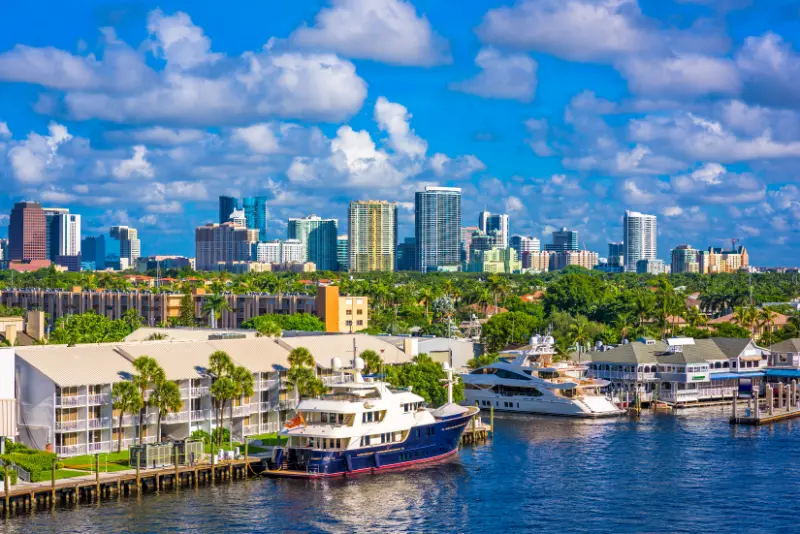
Fort Lauderdale can be a strong choice for an Atlantic beach stay with restaurants, canals and connections to South Florida. It is useful for some cruise travelers and for visitors who want access to both Fort Lauderdale and nearby communities without sleeping in Miami. Decide whether you want a beachfront room, a quieter inland neighborhood or a hotel selected primarily for cruise-port transfer logistics. These are three different kinds of trip, and they create different transport needs.

The walk from a beach hotel to restaurants may be comfortable in mild weather but exhausting at midday in summer. When comparing accommodation, check for crossings, elevators, pool access, accessible bathrooms and realistic distances to dining rather than relying on the label ‘beach area.’ If you expect to visit Miami more than Fort Lauderdale, compare train and car connections before committing to the cheaper room. Rail tickets, station transfers and rideshare costs can add up; a convenient nightly rate is only one part of the total cost.
Naples and Southwest Florida: slower coastal days
Naples suits people who picture calm mornings, coastal sunsets, botanical gardens and unhurried meals. It can work for adults who prefer a quieter environment or families looking for a pool-centered resort stay rather than multiple daily attractions. The greater Southwest Florida area includes Fort Myers, Sanibel, Sarasota and other destinations, but these communities are not interchangeable. Many enjoyable nature sites and beaches require driving, and some accommodations have very different parking or access arrangements.
For beach plans, verify current access and facilities, especially where storm recovery work or seasonal conditions affect parking. For travelers with limited stamina, check the distance from the room to the beach and whether a beach wheelchair or firm access route is available where needed. Nature preserves are rewarding but not always shaded or level. Naples is not the best overnight base for multiple Orlando theme-park days; pick the region because you actually want Southwest Florida’s slower rhythm.
Jacksonville and Northeast Florida: history, broad beaches and less theme-park focus
Jacksonville, Amelia Island and St. Augustine provide another kind of first Florida vacation: historic districts, Atlantic beaches, riverfronts and protected coastal landscapes. Jacksonville itself is geographically large, so the word ‘Jacksonville’ on a hotel listing does not tell you whether you are by the beach, downtown or far inland. St. Augustine is a separate historic city with its own parking and walkability challenges. Consider staying near the attraction cluster you intend to explore, then make an intentional day trip rather than commuting casually across the region.
Northeast Florida can have cooler winter weather than Miami or Naples, making it appealing for sightseeing but less reliable for a warm-water swimming holiday. The historic streets of St. Augustine contain uneven surfaces in places; travelers with walkers, strollers or mobility limitations should research accessible entrances and sensible parking locations. This region makes an excellent alternative for visitors who value history and nature above all-day pool time, provided their expectations match the season.
Match the airport to your real destination
A cheap flight can become expensive if it lands several hours from your hotel. Orlando International is usually the logical entry point for many Central Florida trips, Miami International for Miami, Fort Lauderdale-Hollywood for much of Broward County, Tampa International for Tampa Bay and Southwest Florida International for Fort Myers-area stays. Jacksonville International suits many Northeast Florida itineraries. Other airports may be useful depending on airline and exact destination. Do not compare airfare before adding baggage charges, rental-car days, fuel, tolls and the additional travel time from an alternative airport.
International passengers should allow for immigration, baggage collection and possible lines at the car-rental counter. Arriving after a long flight is a poor moment to begin a demanding highway drive, particularly with children or when you are tired. The best first-night hotel may be a simple property close to the airport or near your first activity. For a two-region holiday, consider flying into one airport and out of another, but check one-way car rental fees before assuming an open-jaw itinerary saves money.
Compare accommodation by total cost, not advertised nightly price
Create a small spreadsheet with the same columns for every hotel: room total including taxes, resort or destination fees, parking, breakfasts, kitchen availability, expected transport, cancellation deadline and any deposit. A vacation rental needs a similar calculation with cleaning, service charges, access rules and security deposits included. Some hotels promote complimentary shuttles but operate limited schedules. Others charge separately for parking even when the property is outside the urban core.
Families might save money with a room that has a refrigerator and laundry access. Couples with only two nights may value a central room over a large rental requiring check-in arrangements. Travelers with accessibility needs should contact the property about the exact bathroom layout, bed height, lift access and distance to transport before making a nonrefundable reservation. A property labeled ‘accessible’ does not necessarily provide every feature a specific guest requires.
Plan for driving times and Florida weather
Travel times on a map are estimates, not promises. Orlando to Tampa might fit a day trip, while Orlando to Miami is a major intercity journey. Roadworks, beach traffic, special events, school vacations and storms can increase the time substantially. Build your day around one main attraction and nearby secondary stops rather than jumping between distant neighborhoods. If your party includes small children, consider the need for car seats, snacks, bathrooms and shaded stops. Travelers who do not drive should choose accommodation where the essential experiences can actually be reached by the transport they intend to use.
Florida weather changes by region and month. Northern Florida can be chilly in winter; summer is hot, humid and stormy in many areas; the Atlantic hurricane season runs from June through November. A southern destination offers better odds of warm winter weather, but warm weather and calm ocean swimming are not identical. Check the National Weather Service for forecasts and warnings shortly before each outdoor outing rather than relying on a promotional climate chart.
Three sample plans for different travelers
For a four-night family trip built around one or two theme parks, stay in the Orlando area, reserve nonpark time for the pool and keep a weather-adjustable museum or garden option. Do not change hotels. For a seven-night beach-and-culture trip, consider three or four nights in Miami and three or four in Fort Lauderdale, or stay in just one city if transfers feel unnecessary. For a ten-night slower trip, five nights around St. Petersburg and five around Sarasota or Southwest Florida can provide coastal variety without extreme driving.

None of these outlines is a guarantee that particular attractions will be open. Confirm operating calendars, booking requirements, access rules and any temporary closures. When traveling with older relatives or someone who needs frequent rest, shorten the sightseeing list before shortening the time spent at meals, sleep and safe transfers. A smaller schedule often creates more memorable time together than a long itinerary that nobody can comfortably finish.
Final decision checklist
Before paying, answer five questions in ordinary language. What are the three experiences we most want? How long can everyone comfortably travel on an ordinary day? Can we reach food, essentials and at least one attraction without a lengthy drive? Does the accommodation’s total cost still fit after transport and fees? What will we do if a full afternoon is lost to storms, fatigue or a delayed flight? A region that answers those questions clearly is a better choice than one selected because a search engine calls it Florida’s ‘best destination.’
Quick comparison
| Option | Good for | Check before you go |
|---|---|---|
| Orlando | Theme parks and resorts | Check park-to-hotel journey |
| Miami | Urban culture and Atlantic beaches | Allow for parking and traffic |
| Tampa Bay | Art, museums and Gulf access | Choose a side of the bay |
| Fort Lauderdale | Beaches and waterways | Review beach and cruise distances |
| Naples | Slow coastal stays | Expect to drive between sites |
| Jacksonville area | History and wide beaches | Northern winters can be cooler |
Frequently asked questions
Which Florida city is best for a first-time family vacation?
Orlando is often convenient if theme parks matter, but beach-first families may prefer Tampa Bay, Fort Lauderdale or another coastal base. The children’s ages and tolerance for long days matter more than a universal ranking.
Can I stay in Miami and visit Disney World for the day?
That is not a sensible regular day trip. Travel between Miami and Orlando is a substantial journey. Stay in the Orlando region for a park-focused portion of the vacation.
Where should I stay without renting a car?
Choose a specific walkable neighborhood rather than a large city name. Verify transit, accessible routes and airport transfers before reserving; no Florida metropolitan area is convenient everywhere without a vehicle.
What is the safest way to compare deals?
Calculate the full charge including taxes and fees, then add local transport and the effect of longer journeys on your time. Read cancellation policies before paying.
Official sources
Official sources and planning details reviewed in October 2026. Confirm current admission rules, accessibility, opening hours and conditions before visiting.