
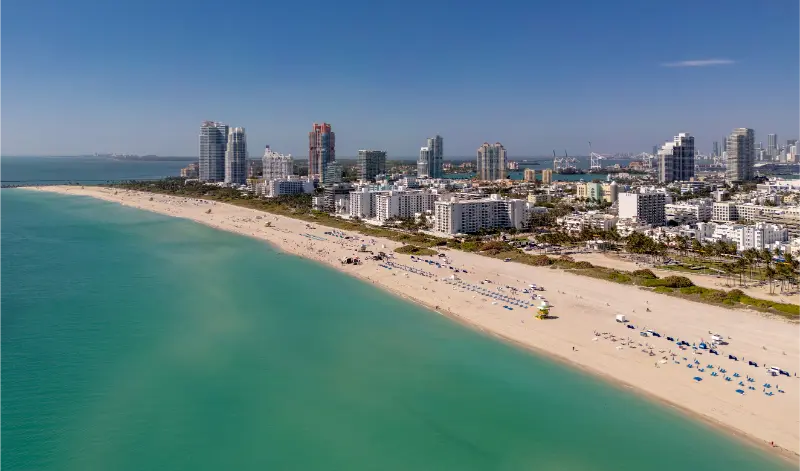
The stretch from Miami to West Palm Beach is one of Florida’s more realistic places to plan a multi-city vacation without driving. Trains connect major downtown stations, local transit covers selected neighborhoods and a few well-chosen hotel locations can remove much of the need for parking. But a rail station is not the same as a beach hotel, and Florida sidewalks, summer thunderstorms and luggage transfers can complicate an itinerary that looks simple on a map. This seven-day route keeps travel days modest and focuses on exploring three urban areas rather than pretending that every attraction in South Florida is easily reachable by public transport.
On this page
- Understand the train network before booking
- Choose two hotel bases, not three or four
- Day 1: Arrive in Miami and explore close to the hotel
- Day 2: A focused Miami culture day
- Day 3: Miami Beach with no unrealistic expectations
- Day 4: Train to Fort Lauderdale and enjoy the waterways
- Day 5: Choose a Fort Lauderdale beach or museum day
- Day 6: West Palm Beach by train
- Day 7: Plan the airport connection backward
- Budget, accessibility and who should adjust this route
- Frequently asked questions
- Official planning resources
Understand the train network before booking
Brightline links downtown Miami, Aventura, Fort Lauderdale, Boca Raton, West Palm Beach and Orlando. For this week, the important segment is Miami–Fort Lauderdale–West Palm Beach. Check the operator’s schedule and baggage policy, including the first and last departures for your dates. Brightline is not a local subway: trains run between stations, and you must still arrange the connection to your hotel or chosen attraction. Prices are dynamic, so do not build a budget from a single example fare seen online.
Tri-Rail is another South Florida rail system, with a different network and different stations. It may help with some airport and regional journeys, but the station location and connecting bus can determine whether it is practical for a tourist. Miami-Dade Transit runs Metrorail and buses, while the downtown Metromover is a separate, fare-free system. Broward and Palm Beach counties have their own transit agencies. Do not confuse the different tickets, timetables or station names. Plan each day from hotel door to attraction entrance, not merely from one rail logo to another.
Choose two hotel bases, not three or four
A straightforward week can use Miami for three nights and Fort Lauderdale for four, with West Palm Beach as a day trip. Alternatively, stay in Miami for three nights and West Palm Beach for four if gardens, culture and a slower second half are more important than beach nightlife. The central question is whether your hotel sits near a usable rail, trolley or bus connection and whether the final short transfer is safe and comfortable with luggage.
Downtown Miami offers good access to Metromover and regional transport, but it is not the same as sleeping beside the Atlantic Ocean. Miami Beach hotels can be pleasant for a beach-focused vacation, yet the transfer to downtown rail services takes additional planning. In Fort Lauderdale, a hotel around downtown or Las Olas may be practical for dining and waterways, whereas many oceanfront properties are farther from Brightline. Compare nightly rates plus rideshare costs; the cheapest hotel is not always the cheapest car-free base.
Day 1: Arrive in Miami and explore close to the hotel
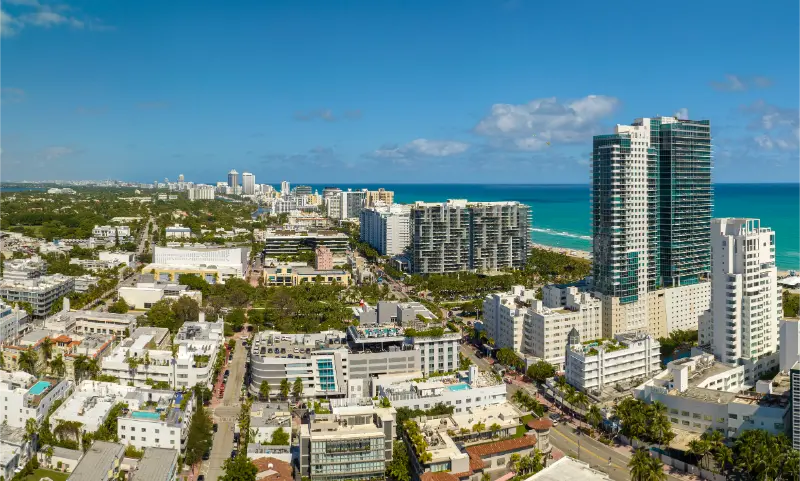
Keep the first day intentionally compact. From Miami International Airport, review the current official Metrorail and airport transfer options, and compare those with a direct taxi or rideshare if traveling with substantial luggage. Miami Beach is not directly served by Metrorail. If staying downtown, explore a comfortable block or two, get groceries and identify the nearest transport stop before committing to a longer excursion. International visitors should set up mobile data and keep the hotel address accessible offline.
An afternoon around Biscayne Bay, Bayfront Park or a downtown museum can be enjoyable without crossing the region. The free Metromover serves downtown and Brickell areas; its presence does not mean that every attraction is within a short walk of a stop. Check service alerts and the exact direction of travel. For dinner, choose somewhere easy to reach after dark. If the flight arrives late, skip sightseeing entirely. Sleeping well on the first night can make the remaining six days much more rewarding.
Day 2: A focused Miami culture day
Use the second day to explore one connected cluster. Downtown and the Pérez Art Museum Miami area can be combined with waterfront walking and a meal, subject to museum hours and admission. Another choice is Little Havana, where food, neighborhood history and cultural experiences reward time, but the transport from the hotel may require a bus or rideshare. Do not attempt Little Havana, Wynwood, Miami Beach and Coral Gables all in one day simply because they appear near one another in a search result.
Pick a morning attraction and plan lunch nearby. In humid weather, build in an indoor option and a place to refill water. A guided food or walking tour can be useful for someone who wants context without managing every turn, but check its meeting point and walking distance. If traveling with children or an older relative, choose shorter segments and a backup plan. Miami is better enjoyed as a collection of distinct neighborhoods than as a checklist of landmarks photographed from a moving car.
Day 3: Miami Beach with no unrealistic expectations
A day on Miami Beach is worth organizing properly, even if it requires an extra transfer from downtown. Choose a particular stretch of beach, such as the South Beach area, based on restrooms, shade, food options and the kind of atmosphere you enjoy. Public transportation can work, but travel times and stops vary. If a traveler has mobility limitations, confirm the location of an accessible beach entrance or beach-mobility service with local officials rather than assuming every sandy pathway is easy to use.
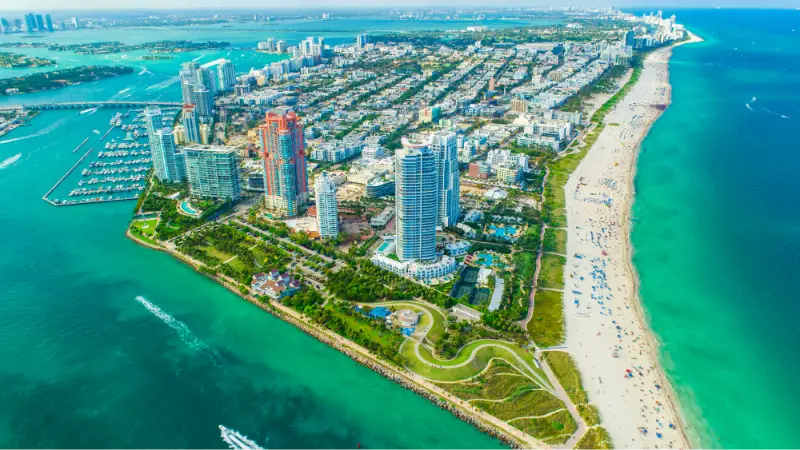
Spend the morning on the beach or looking at Art Deco architecture, then select one nearby attraction or café. Follow beach-warning flags and leave exposed areas when lightning threatens. Keep electronics and valuables secure rather than leaving them unattended while swimming. Restaurants near popular waterfront blocks can be expensive, so read menus and check whether an automatic service charge has already been added. Return to your accommodation before the last convenient connection, especially if you have an early train the next morning.
Day 4: Train to Fort Lauderdale and enjoy the waterways
Check out, allow time for the station transfer and take the train to Fort Lauderdale. A rail journey is short compared with driving through regional traffic, but the total door-to-door time will include waiting, luggage and another transfer to the hotel. Store bags only through the hotel’s confirmed luggage service. Once settled, focus on Las Olas Boulevard or the nearby riverfront. A Water Taxi outing can provide a pleasant view of the canals; confirm operating routes, fares, boarding access and service hours directly with the operator.
A common mistake is to treat Fort Lauderdale Beach, downtown, the cruise port and the rail station as one walkable district. They are separate locations, and sunshine or a convenient-looking map can disguise uncomfortable distances. Decide whether the afternoon should be a downtown stroll or a beach visit, not both by default. Enjoy a relaxed dinner close to your base. This transfer day should feel like the start of the second half of the holiday, not a logistical race.
Day 5: Choose a Fort Lauderdale beach or museum day
If the ocean is the priority, spend most of the day around an accessible stretch of Fort Lauderdale Beach and select a nearby lunch spot. Verify lifeguard coverage and current surf conditions. Early starts help with heat and allow more freedom to leave when a storm arrives. For travelers who want a different experience, consider the Museum of Discovery and Science or historic attractions subject to current schedules. The chosen activity should connect sensibly to your hotel by a known route.
This can also be the most flexible day of the week. If somebody feels tired, stay nearer the hotel and explore shops or cafés around Las Olas. Do not build the itinerary around a tour whose last departure leaves you without an easy ride back. Check any vessel’s access conditions in advance. For a group with different interests, splitting for a few hours is perfectly reasonable. Car-free travel works best when each day includes one main location, not when every free minute becomes another transit connection.
Day 6: West Palm Beach by train
West Palm Beach makes a good regional day trip for culture, dining and a waterfront change of scene. Travel by train to the downtown station, then check the walking route or local transfer to your chosen attraction. The Norton Museum of Art and downtown Clematis Street area are possible anchors, but they should be checked for opening times and special-event closures. Palm Beach island, Worth Avenue and beaches require additional transport from the downtown station; do not describe them as being immediately beside the train.
A visitor who prefers easy days might spend the morning in one museum and the afternoon by the waterfront, with lunch between. Travelers seeking gardens or wildlife attractions farther inland may find that a dedicated rideshare or guided transfer is needed. Set an unhurried return train time and remember that evening service patterns can change. If this looks too demanding, remain in Fort Lauderdale for a rest day and save West Palm Beach for another trip. A day trip is an option, not an obligation.
Day 7: Plan the airport connection backward
Before the final day, confirm which airport the return flight uses. A journey from Fort Lauderdale to Miami International Airport is not equivalent to walking from a hotel to FLL, even though both airports serve South Florida. Work backward from check-in time and add a reasonable cushion for traffic, transfers, luggage and security. When using public transit, verify whether the first or last segment requires a shuttle, and have a paid alternative in case of disrupted service.
Keep the final morning free of prepaid distant attractions. A short breakfast, a familiar waterfront walk or an easy local museum is enough if time permits. Pack chargers, travel documents and medications where they remain accessible. If a train is delayed, official operator updates are more useful than a screenshot saved weeks earlier. The success of a car-free trip depends as much on its final connection as on the fun in the middle. Leave the region with time to spare rather than a final sprint.
Budget, accessibility and who should adjust this route
Account for rail tickets, local transit, luggage arrangements, occasional rideshare, hotel parking only if it applies, and attraction fees. A no-car trip can save substantially on rental and parking costs but still be expensive if the hotel is poorly located. For accessibility, contact rail and transit operators about wheelchair spaces, boarding assistance, audio and visual announcements and station elevators. Train access does not guarantee the sidewalk route to a particular restaurant will be suitable; check the entire trip.
This itinerary suits travelers who enjoy cities, museums, waterfronts and manageable regional transfers. It is less useful if the main goal is isolated state parks, the Everglades backcountry, remote springs or a quiet beach cottage far from transit. In that case, a different base with an organized excursion or a vehicle may be wiser. A traveler does not need to avoid cars at all costs to have a successful car-free vacation; an occasional direct transfer is often the practical choice.
Quick planning snapshot
| Planning point | What to know |
|---|---|
| Route | Miami → Fort Lauderdale → West Palm Beach day trip |
| Main transport | Brightline and local transit, occasional direct transfer |
| Accommodation | Two carefully chosen urban bases |
| Main caution | Stations are not beachfront hotels |
Frequently asked questions
Can I explore all of Miami without a rental car? Some central and well-connected neighborhoods are accessible by transit, but not every attraction. Choose a suitable base and budget for occasional transfers.
Does Brightline stop on the beach? No. Its stations are urban transportation hubs; the beach usually requires another journey.
Should I use Brightline or Tri-Rail? Compare the exact stations, schedule, total fare and last-mile connections. They serve different travel needs, and one is not automatically better for every route.
Is a car-free plan suitable with a wheelchair? It can be, but verify each operator’s accessibility provisions, hotel placement and the sidewalks or vehicles used between stations and attractions.
Official planning resources
Check Brightline departures, Brightline accessibility information, Miami-Dade Transit and the regional transit providers’ current route maps. Service, fares and station access can change, so confirm details shortly before travel.
Leave a Reply